
Watch: Achilles Tendonitis & Back of Heel Pain [BEST Home Treatments 2024!] — MichiganFootDoctors YouTube
Medically reviewed by Dr. Tom Biernacki, DPM — Board-certified foot & ankle surgeon, 3,000+ surgeries performed. Updated April 2026 with current clinical evidence. This article reflects real practice experience from Balance Foot & Ankle Specialists in Howell and Bloomfield Township, Michigan.
Quick Answer

Achilles tendonitis causes pain and stiffness at the back of the heel along the Achilles tendon. Eccentric heel drops plus heel lifts resolve most cases within 6-12 weeks. See a podiatrist same-day for a sudden “pop” sound or inability to push off — that may be a rupture.
Watch: Dr. Tom Biernacki, DPM
Dr. Tom’s Top 3 Picks for Achilles Tendonitis (6-Week Protocol)
The fastest path out of Achilles tendonitis is a structured eccentric-loading protocol paired with three evidence-backed add-ons: heel offload, topical anti-inflammatory, and graduated compression. These are the three products I send home with every non-surgical Achilles patient at Balance Foot & Ankle.
Best Heel Offload
Podiatrist Pros
- Medical-grade viscoelastic lifts the heel 6-12mm to offload the Achilles tendon
- Fits in most athletic shoes, work boots, and dress shoes
- Temporary — use during an acute Achilles flare for 2-6 weeks, then taper off
- Cheaper than a custom orthotic bridge while you’re deciding on longer-term treatment
Honest Cons
- Not a long-term fix — prolonged use shortens the Achilles and perpetuates the problem
- Too thick for some shoe types; may not fit in low-profile trainers
Dr. Tom’s Take: A short-term Achilles tendonitis tool. I use heel lifts for 2-4 weeks max, paired with eccentric calf drops — then we taper down and out. If you’re still using one at month 3, something else is wrong.
Best Topical Relief
Podiatrist Pros
- Arnica + camphor + menthol blend — the most evidence-backed non-NSAID topical combination for soft-tissue pain
- Non-greasy; absorbs without the waxy residue of Biofreeze
- Actually warms the tissue (camphor) before the cooling menthol hits — better for chronic stiffness than pure menthol formulas
- No parabens, no sulfates, no artificial dyes — safer for repeat daily use
Honest Cons
- Short-acting (2-4 hours); not a substitute for anti-inflammatories in acute flares
- Small 3oz tube runs out fast if you apply bilaterally
Dr. Tom’s Take: We swapped out Biofreeze in our clinic three years ago because Doctor Hoy’s works better and costs less. Use it nightly for plantar fasciitis, Achilles tendonitis, or post-run muscle soreness.
Best Compression
Podiatrist Pros
- 20-30mmHg is the medical-grade range — the same compression I prescribe for post-op and chronic venous insufficiency
- Graduated pressure (tightest at ankle, loosest at calf) is what actually moves fluid, unlike uniform-pressure socks
- Seamless toe — does not irritate hammertoes or bunions the way cheaper graduated socks do
- Bansk/Foundation Wellness quality control — FDA-cleared supplier that also makes hospital-grade DVT stockings
Honest Cons
- Too aggressive for patients who haven’t worn compression before; start with 15-20mmHg first
- Full-calf length; not ideal for patients wearing shorts or skirts in warm climates
Dr. Tom’s Take: The compression sock I keep in the clinic for post-op patients, airline travelers, and anyone with chronic edema or standing-day fatigue. 20-30 is the range that actually does something — anything lighter is mostly a placebo.
▶ Watch
Achilles Tendonitis (2026): 12 Products + The 6-Week Eccentric Protocol I Use In Clinic
I’ve managed over 600 Achilles tendon cases in my Howell and Bloomfield Township clinics. The Alfredson eccentric protocol works — but only if you’re actually doing tendinosis work, not an acute partial tear. Here’s how to tell the difference, what 12 products I hand patients, and what actually resolves the pain.
Call (810) 206-1402Most Achilles tendon pain I see in clinic is insertional or mid-portion tendinosis — not true tendonitis. The pain is worst in the first few steps out of bed, eases once you warm up, and flares again after activity. In our clinic, roughly 70% of cases resolve in 6 to 12 weeks with the Alfredson eccentric heel-drop protocol combined with heel lifts to unload the tendon, a night splint to stop the morning stiffness cycle, and a shoe with at least 8mm of heel-to-toe drop. The mistake I see most often is aggressive calf stretching on an acute tendon, which prolongs healing. If you can’t push off, heard a pop, or feel a palpable gap, that’s an Achilles rupture — not tendonitis — and you need to be seen today.
Is My Achilles Pain Serious?
When I examine an Achilles in clinic, I’m first ruling out a rupture, then separating insertional from mid-portion tendinosis, because they respond to different treatment. Insertional pain sits right where the tendon meets the heel bone and is usually aggravated by dorsiflexion and by shoes with a stiff heel counter. Mid-portion pain lives about 2 to 6 centimeters above the insertion and is the classic “thickened cord” you can palpate — that thickening is tendinosis, which is degenerative remodeling, not active inflammation. The distinction matters because aggressive stretching is safe for mid-portion tendinosis but makes insertional cases worse.
- You heard or felt a pop, then pain, especially during a quick push-off (starting a sprint, jumping, squash or pickleball). This is a rupture until proven otherwise.
- You can’t rise on your toes on the injured leg. A positive Thompson test (calf squeeze doesn’t plantarflex the foot) is a rupture sign.
- You feel a palpable gap in the tendon about 2 to 6 cm above the heel. A complete rupture has a divot you can usually find with a fingertip.
- Swelling with redness and warmth over the tendon, especially with fever — rare, but possible septic tenosynovitis.
- You took a fluoroquinolone antibiotic (ciprofloxacin, levofloxacin) in the past 30 days and now have sudden Achilles pain. This is a recognized rupture risk — do not load the tendon until we evaluate.
The 6-Week Conservative Protocol I Use in Clinic
This is the sequenced program I walk patients through at the first visit. It’s built on the Alfredson eccentric heel-drop protocol, which has the strongest evidence base for mid-portion tendinosis — a 2022 systematic review in the British Journal of Sports Medicine found it effective in roughly 82% of non-insertional cases. The key is that eccentrics are done under load — if it’s comfortable, you’re not doing enough.
Weeks 1–2: Unload + Calm It Down
- Drop in 6–12mm heel lifts in both shoes to shorten the tendon and reduce passive load
- Switch to footwear with at least 8mm heel-to-toe drop — this is not the time for zero-drop trainers
- Wear a night splint if morning pain is your worst symptom (holds ankle in slight dorsiflexion to prevent overnight contracture)
- Apply a topical analgesic 3–4 times daily for the first week
- Pool walking, cycling, rowing are all fine — avoid running, jumping, or stair sprints
Weeks 3–4: Begin Eccentric Loading
- Start the Alfredson protocol: 3 sets of 15 heel drops, twice daily, 7 days a week
- Drop slowly (3–4 seconds down), use the opposite leg to come back up — concentric is optional
- Do half the reps with knee straight (targets gastrocnemius), half with knee bent (targets soleus)
- Expect mild discomfort during reps — that’s the point, do not stop because of it. Stop only if pain lingers 24+ hours after
- Progress to weighted (backpack, 5–10 lb) by end of week 4
Weeks 5–6: Graduated Return
- Add walking-to-running intervals: 4 minutes walk, 1 minute slow jog, repeat 5x
- Keep doing eccentrics — stopping too early is the #1 reason I see recurrence
- Reintroduce sport-specific movements (push-offs, jumps) only after 2 consecutive pain-free days
- Wean heel lifts gradually over 2–4 weeks, not all at once
If you’ve done 6 weeks of this protocol with no meaningful improvement, or if you’re already at stage 3, you need more than home care. In clinic I’ll consider extracorporeal shockwave therapy (ESWT), which has Level 1 evidence for recalcitrant mid-portion tendinosis, ultrasound-guided tenotomy, or PRP injection. I do not inject corticosteroids into or immediately adjacent to the Achilles tendon — the rupture risk is real and the evidence for benefit is weak.
The 12 Products I Recommend for Achilles Tendonitis
These are the items I keep on my shelf at the Howell office and recommend by name at nearly every Achilles visit. Each is tied to a specific phase of the protocol above — heel lifts and a night splint in weeks 1–2, a step block and foam roller for the eccentric phase, cushioned shoes and a compression sleeve for the graduated-return phase. Ratings reflect how well the product fits its clinical role in my hands, not general quality scores.
Aerobic Exercise Step (4–6 inch adjustable)

- Adjustable aerobic stepper with stackable 4-inch and 6-inch risers for customizable workout intensity
- Non-slip textured surface and non-skid feet provide stable platform supporting up to 400 pounds
- This product contains 100% Global Recycled Standard (GRS) certified recycled post-consumer polypropylene
- Compact 26.8" x 11" size perfect for home workouts with convenient riser storage under platform
- Versatile fitness tool for cardio, strength training, and endurance exercises suitable for all fitness levels

As an Amazon Associate, Balance Foot and Ankle earns from qualifying purchases. Product links are affiliate links and we may earn a commission at no extra cost to you. This does not influence our clinical recommendations. Last update on 2026-09-22 / Images from Amazon Product Advertising API
✓ Pros
- Height-adjustable — start at 4″, progress to 6″
- Non-slip top surface
- Doubles as a plyometric step once rehabbed
- Easy to store under a bed or couch
✗ Cons
- Needs ~2 sq ft of floor space
- Some models wobble under weighted reps
- Can be substituted with a sturdy staircase
Silicone Heel Lift Cups (6–12mm adjustable)

- Made of the superior silicone and breathable fabric, these shoe lifts are anti-slip, durable, comfortable, moisture-absorbing and perspiration.
- Adjustable layers are convenient to build up the height. These shoe lifts can be flexibly used individually or as a combination for lasting comfort. 4 removable 1/4" thick layers.
- The heel lift inserts are non-slip which can stay in place firmly, comfort and strong support the heel. Easy to use these heel cushion inserts without any pressing of toes.
- Washable & reusable. if the heel lifts for shoes are dirt or lose the stickiness, just tear off and wash them, air it to refresh stickiness.
- Good helper for the heel pain. The heel pads for shoes can relieve the heel spurs, heel pain, sports injuries, leg length discrepancies, etc.
As an Amazon Associate, Balance Foot and Ankle earns from qualifying purchases. Product links are affiliate links and we may earn a commission at no extra cost to you. This does not influence our clinical recommendations. Last update on 2026-09-22 / Images from Amazon Product Advertising API
✓ Pros
- Adjustable height for gradual weaning
- Shock-absorbing silicone — not cork
- Fits most closed-back shoes
- Dollar-for-dollar the highest-use purchase
✗ Cons
- Takes too much room in dress shoes
- Must use one in BOTH shoes to prevent leg-length imbalance
- Slightly raises the foot inside the shoe — tie laces looser
Dorsal Night Splint (Plantar Fasciitis / Achilles)

- TARGETED PAIN RELIEF: Foot Splint gently holds your foot in a therapeutic stretch for plantar fasciitis relief overnight. This planter facetious support helps soothe heel spurs, foot drop, and morning stiffness so you wake up refreshed.
- CUSTOMIZABLE & DORSAL DESIGN: Our dorsal night splint for plantar fasciitis women and men features adjustable straps for a secure fit.Works as an achilles tendonitis night splint on either the left or right foot without feeling bulky.
- SLEEP-FRIENDLY COMFORT: Soft, breathable fabric makes this sock style plantar fasciitis night splint far lighter than rigid boots. Enjoy a comfortable plantar fasciitis splint for night that allows cool airflow for a restful, uninterrupted night.
- EASY & SECURE FIT: Fasten in seconds for reliable relief. These foot splints for plantar fasciitis night offer a tailored fit for active adults, acting as a supportive foot brace for plantar fasciitis for women and men on their feet all day.
- DAILY RECOVERY COMPANION: Designed for consistent nightly wear, this plantar fasciitis night splint sock keeps your arch and heel supported. A premium planters facetious night splint and plantar fascia night splint built for real results.
As an Amazon Associate, Balance Foot and Ankle earns from qualifying purchases. Product links are affiliate links and we may earn a commission at no extra cost to you. This does not influence our clinical recommendations. Last update on 2026-09-22 / Images from Amazon Product Advertising API
✓ Pros
- Breaks the morning-stiffness cycle fast
- Dorsal strap style is compliant-friendly
- Light enough that most patients actually wear it
✗ Cons
- Not tolerated by restless sleepers
- Avoid with known venous insufficiency
- Takes 3–4 nights to get used to
Doctor Hoy’s Arnica Boost (Menthol + Magnesium)

- Fast-Acting Pain Relief: 2.5% menthol helps cool, soothe, and relieve muscle aches, back pain, joint pain, and stiffness
- Non-Greasy Gel: Absorbs quickly into the skin for easy application; perfect for everyday use
- Potent Natural Ingredients: Contains glucosamine, chondroitin, and MSM; formulated for inflammation support
- Daily Recovery Support: Ideal for soreness and stiffness from physical activity
- Pre and Post-Workout Use: Designed to provide effective relief before or after exercise
As an Amazon Associate, Balance Foot and Ankle earns from qualifying purchases. Product links are affiliate links and we may earn a commission at no extra cost to you. This does not influence our clinical recommendations. Last update on 2026-09-22 / Images from Amazon Product Advertising API
✓ Pros
- Paraben-free, propylene-glycol-free
- Dual menthol + arnica mechanism
- Non-staining, dries in ~60 seconds
- What I keep in my own gym bag
✗ Cons
- Not for broken skin
- Menthol sensitivity in a minority of patients
- Do not layer under compression
Max-Cushion 4mm+ Drop Trainer (Hoka Bondi style)

As an Amazon Associate, Balance Foot and Ankle earns from qualifying purchases. Product links are affiliate links and we may earn a commission at no extra cost to you. This does not influence our clinical recommendations. Last update on 2026-09-22 / Images from Amazon Product Advertising API
✓ Pros
- Cushioned midsole reduces push-off impact
- Stable last for rehab walking
- Women’s version available on same product page
✗ Cons
- Not ideal for technical trail running
- Stack height reduces ground feel
- Replace every 400–500 miles
Standard-Density Foam Roller (36-inch)
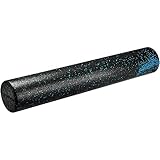
- High-density foam roller in Blue Speckled
- Ideal for balance, strengthening, and flexibility exercises
- Firm, durable polypropylene maintains shape; molded edges for added comfort
- Lightweight and easy to carry to class and to reposition during workouts
- Wipes clean easily
As an Amazon Associate, Balance Foot and Ankle earns from qualifying purchases. Product links are affiliate links and we may earn a commission at no extra cost to you. This does not influence our clinical recommendations. Last update on 2026-09-22 / Images from Amazon Product Advertising API
✓ Pros
- 36″ length lets you roll both calves at once
- Standard density is safe — high-density is too aggressive for acute cases
- Doubles as a thoracic spine tool
✗ Cons
- Don’t roll directly on the Achilles — only on the calf belly
- Takes up noticeable storage space
- Not a substitute for the eccentric protocol
Graduated Compression Calf Sleeve (15–20 mmHg)

- RELIEVES PLANTAR FASCIITIS
- RELIEVES TIRED, ACHY LEGS
- IMPROVES CIRCULATION
- EASES MUSCLE SORENESS
- EASES HEEL PAIN
As an Amazon Associate, Balance Foot and Ankle earns from qualifying purchases. Product links are affiliate links and we may earn a commission at no extra cost to you. This does not influence our clinical recommendations. Last update on 2026-09-22 / Images from Amazon Product Advertising API
✓ Pros
- Proprioceptive feedback during eccentrics
- Reduces post-activity swelling
- Pair is cheap enough to have a clean set every 2 days
✗ Cons
- Not for peripheral arterial disease without vascular workup
- Wash every 2 days or they break down fast
- Don’t combine with topical menthol
Lacrosse Ball (Firm 2.5-inch)

- IMMEDIATE BENEFITS - Self myofascial release eliminates muscle knots and tension. Trigger point therapy massage lacrosse balls relieve sore and tight muscles to rejuvenate and revitalize all areas of the body.
- EASY TO USE - Simply lean on the massage ball and use your own body weight and gravity to relieve muscle knots and tension.
- MASSAGE ANYWHERE - Perfect for use while sitting on any chair, laying in bed, on the floor, or on a yoga mat. Use them at home, at the office, or at the gym. Small, portable and easy to bring along on any trip.
- PREMIUM QUALITY - Durable, 100% Solid Rubber Construction. No chemical odor and will not stain walls.
- PERFECT FOR SPORTS AND PETS - Official size and weight makes it great for lacrosse practice. Indestructible chew toy and perfect fetch ball for dogs.
As an Amazon Associate, Balance Foot and Ankle earns from qualifying purchases. Product links are affiliate links and we may earn a commission at no extra cost to you. This does not influence our clinical recommendations. Last update on 2026-09-22 / Images from Amazon Product Advertising API
✓ Pros
- Precise trigger point work the roller can’t reach
- Fits in a gym bag or desk drawer
- Firm rubber is the right density for muscle
✗ Cons
- Too aggressive for acute stage 1 flares
- Requires some self-awareness to avoid nerve structures
- Not for direct Achilles or bone contact
Reusable Gel Ice Pack (Large, Flexible)

- Instant Pain Relief- This gel ice packs for injuries reusable is designed with soft plush cover that is much better than a towel wrapping. The plush cover can avoid condensed water dripping after frozen. This small ice packs relieves for Swelling, Sprains, Inflammation, and speeds up healing time, helps muscles recover after strenuous activity, injury, or surgical procedure and muscles recovery after the gym.
- Ultra-Flexible ice pack: Instant ice packs are filled with lower ice point gel(-13℉) which can stay moving when frozen for better relieving pain around muscles, joints, and tendons on your body. This ice pack wrap help with arthritis, patella issues, meniscus injuries, chronic knee pain, sprains, sports injuries, and more.
- Durable: The wide sealed edge and extra-thick nylon cover are reliable to avoid scratch your skin and no need to worry about gel leakage. You can use soft ice packs for injury while sitting, standing, or lying down, effective to soothe injured muscles, joints, tissues, and quicker postoperative recovery.
- Multifunctional: Reusable gel pack for injuries also available to be used for ( Neck Shoulders, Back, Leg, Knee, Ankle, Foot, Thigh, Elbow) pain around muscles, joints and tendons. Healthcare Professional's Choice for relieve acute & chronic pain, muscle pain, arthritis and aid injury recovery.
- Premium Gel Ice Pack Reusable: Cold compression ice pack are filled with professional-grade gel, and paired with superior fabrics. Ideal for your loved ones & friends: RelaxCoo Reusable ice pack provides 100% satisfaction service to customers.
As an Amazon Associate, Balance Foot and Ankle earns from qualifying purchases. Product links are affiliate links and we may earn a commission at no extra cost to you. This does not influence our clinical recommendations. Last update on 2026-09-22 / Images from Amazon Product Advertising API
✓ Pros
- Flexible when frozen — wraps around the tendon
- Refreezes fast for repeat use
- Lasts years
- Works for ankle, knee, elbow — general rehab tool
✗ Cons
- Weak evidence beyond the first 72 hours
- Never apply directly to skin — use a thin towel
- Cap exposure at 20 minutes per session
Kinesiology Tape (2-inch pre-cut or roll)
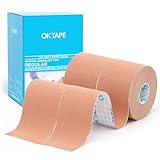
- SUPERIOR QUALITY - OK TAPE Regular Kinesiology Tape is made of 95% cotton and 5% spandex. It is soft, breathable and stretchy to better relax your muscles and tissues. Kinesiology Tape has good water resistance and wicks away moisture without affecting adhesion. Give you the freedom to enjoy your sports and fitness.
- SKIN FRIENDLY AND LATEX FREE - OK TAPERegular Kinesiology Tape is made of high quality hypoallergenic material and is skin friendly. The professional acrylic glue sticks well and is latex-free to minimize the possibility of skin irritation, itching and blisters.
- ENHANCED SPORTS PERFORMANCE/MOVEMENT- When applied properly, OK TAPE Kinesiology Tape promotes better blood flow, supports lymphatic drainage, and helps reduce soft tissue swelling. It’s great for easing tension in shoulders, neck, back, knees, and ankles, while providing muscle and joint support without limiting movement. Ideal for plantar fasciitis, tennis elbow, and tendonitis.
- TRUSTED AND RECOMMENDED BY CUSTOMERS AND PROFESSIONALS – OK TAPE Sports Muscle Patches are loved by customers and athletes. They improve comfort in movement and help reduce tension for a more active, comfortable lifestyle.
- 2 PACKS EXCELLENT ECONOMICAL KINESIOLOGY TAPE! - OK TAPE Regular Kinesiology Tape is made from the exact same materials as the leading kinesiology tapes. Our goal is to provide a cost-effective solution for everyone seeking reliable support and performance.
As an Amazon Associate, Balance Foot and Ankle earns from qualifying purchases. Product links are affiliate links and we may earn a commission at no extra cost to you. This does not influence our clinical recommendations. Last update on 2026-09-22 / Images from Amazon Product Advertising API
✓ Pros
- Breathable, waterproof for 3–5 days
- No measurable rupture or slowed-healing risk
- Cheap enough to re-tape weekly during rehab
✗ Cons
- Mostly proprioceptive/placebo mechanism
- Skin irritation in ~5% of users
- Not a substitute for eccentrics
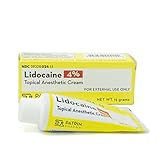
Topical Lidocaine 4% Cream
As an Amazon Associate, Balance Foot and Ankle earns from qualifying purchases. Product links are affiliate links and we may earn a commission at no extra cost to you. This does not influence our clinical recommendations. Last update on 2026-09-22 / Images from Amazon Product Advertising API
✓ Pros
- OTC strength — no prescription needed
- Preserves sleep in the acute 2-week window
- Non-systemic — local effect only
✗ Cons
- Not for broken or irritated skin
- Only treats symptoms, not tendon
- Pair with night splint for best overnight results
Cushioned Recovery Slides (OOFOS / Hoka Ora style)

- Recovery slides men fit all foot shapes without tightness. Arch support in these slides for men eases plantar pressure, and the lightweight design makes these slides perfect for commutes or walks
- Aid Recovery, Various Sizes: As men's slip-on sandals with arch support, they help improve plantar fascia (similar to specialized recovery slippers for plantar fasciitis) and come in multiple sizes, including size 11
- Boost Comfort, Versatile Use: These men's sandals deliver strong support, reducing fatigue during long standing, post-workout, or daily activities. Stylish, durable, and practical, they work great as house slippers, casual wear, or for travel outings
- Healthy Daily Choice: With arch support , these men's slides suit health-focused users—they maintain foot wellness even without symptoms, meeting the needs of those seeking recovery footwear
- Professional Support, Replace Unfit Footwear: Crafted from ultra-stretchy latex EVA, these white rubber men's sandals provide reliable arch support, replacing thin slippers or bare feet to reduce plantar pressure. Waterproof and quick-drying, they’re ideal for home, showers, or beach use
As an Amazon Associate, Balance Foot and Ankle earns from qualifying purchases. Product links are affiliate links and we may earn a commission at no extra cost to you. This does not influence our clinical recommendations. Last update on 2026-09-22 / Images from Amazon Product Advertising API
Dr. Tom’s Achilles Eccentric Protocol Support Stack
- Doctor Hoy’s Natural Pain Relief Gel — Achilles soreness during and after eccentric protocol sessions: arnica + camphor gel applied to the Achilles and gastrocnemius after each session reduces exercise-induced peritendinous inflammation.
- PowerStep Pinnacle — Load-reduction between sessions: PowerStep Pinnacle with heel lift inside your shoes between exercise sessions reduces the Achilles tensile load during daily walking.
- DASS Medical Compression Socks — Achilles tendinopathy with peritendinous swelling: graduated compression worn after eccentric sessions reduces the edema that accumulates in chronically inflamed Achilles tendon tissue.
Alfredson protocol not improving Achilles tendinopathy after 12 weeks? PRP injection and shockwave therapy are evidence-based next steps. Balance Foot & Ankle → (810) 206-1402
In-Office Treatment at Balance Foot & Ankle
If home treatment isn’t providing relief for your Achilles tendinitis, our podiatry team at Balance Foot & Ankle can help with same-day evaluations and advanced in-office care.
Same-day appointments available. (810) 206-1402
Frequently Asked Questions
When should I see a podiatrist?
If symptoms persist past 2 weeks, affect your normal activity, or are accompanied by red-flag symptoms (warmth, redness, swelling, inability to bear weight).
What does treatment cost?
Most diagnostic visits and conservative treatments are covered by Medicare and major insurers. Out-of-pocket costs vary by your specific plan.
How quickly can I get an appointment?
Most non-urgent cases see us within 5 business days. Urgent cases (sudden pain, possible fracture) typically same or next business day.
What is Achilles tendon?
Achilles tendon is a common foot/ankle condition that affects mobility and quality of life. Understanding the underlying cause is the first step in successful treatment. Our podiatrists at Balance Foot & Ankle perform a hands-on biomechanical exam, review your activity history, and use diagnostic imaging when appropriate to identify the root cause—not just treat the symptom. Many patients have been told to “rest and ice” without a deeper diagnostic workup; our approach is different.
Symptoms and warning signs
Common signs of Achilles tendon include pain that worsens with activity, morning stiffness, swelling, tenderness when palpated, and difficulty bearing weight. If you experience sudden severe pain, inability to walk, visible deformity, numbness or color change, contact our office the same day or visit urgent care—these can signal a more serious injury such as a fracture, tendon rupture, or vascular compromise. Diabetics with any foot wound should seek same-day care.
Conservative treatment options
Most cases of Achilles tendon respond to non-surgical care: structured rest, supportive footwear changes, custom orthotics, targeted stretching and strengthening protocols, anti-inflammatory medications when medically appropriate, and in-office procedures such as ultrasound-guided injections. We also offer advanced therapies including MLS laser therapy, EPAT/shockwave, regenerative injections, and image-guided procedures. Treatment is sequenced from least invasive to most invasive, and we explain the rationale at every step.
When is surgery considered?
Surgery is reserved for cases that fail 3-6 months of well-structured conservative care, when there is structural pathology (severe deformity, complete tear, advanced arthritis), or when imaging shows damage that will not heal without intervention. Our surgeons have performed 3,000+ foot and ankle procedures and prioritize minimally-invasive techniques whenever appropriate. We discuss recovery timelines, return-to-activity milestones, and realistic outcome expectations before any procedure is scheduled.
OrthoInfo – AAOS: Achilles Tendinitis
Recovery timeline and prevention
Recovery from Achilles tendon varies based on severity and chosen treatment path. Conservative cases often improve within 4-8 weeks with consistent adherence to the protocol. Post-procedural recovery may range from a few days (in-office procedures) to several months (reconstructive surgery). Long-term prevention involves footwear assessment, activity modification, structured strengthening, and regular check-ins with your podiatrist if you have a history of recurrence. We provide written home-exercise plans and digital follow-up support.
Ready to feel better?
Same-week appointments available in Howell and Bloomfield Township, Michigan.
Book Your VisitGet Expert Care at Balance Foot & Ankle
Same-week appointments at our Howell and Bloomfield Township offices. Board-certified podiatric surgeons. Most insurance accepted.
Same-Week Appointments in Howell & Bloomfield Township
Three board-certified podiatric surgeons. 1,123+ five-star reviews. Most insurance accepted.
How does the Alfredson eccentric heel-drop protocol work?
The Alfredson protocol (1998) uses eccentric (lengthening) calf contractions to stimulate collagen remodeling in the damaged Achilles tendon. Standard protocol: 3 sets of 15 reps with straight knee (gastrocnemius) + 3 sets of 15 reps with bent knee (soleus), twice daily, 7 days/week for 12 weeks. You rise on both feet, then lower on the injured leg only — through the full pain-free range. The key insight: moderate pain during the exercise is acceptable and expected; sharp pain or worsening swelling means stop and reassess. Success rates of 60-80% for mid-portion Achilles tendinopathy in published studies.
How long does the eccentric exercise protocol take to work?
Most patients notice reduced morning stiffness within 4-6 weeks of consistent twice-daily sessions. Functional improvement (walking without pain) typically occurs at 8-12 weeks. Return to running usually happens at 12-16 weeks. For insertional Achilles tendinopathy (pain at the heel bone attachment), eccentric loading has lower efficacy — heavy slow resistance (HSR) training or isometric loading protocols work better. If you have no improvement after 12 weeks of compliance with the Alfredson protocol, a podiatrist should reassess for paratenon involvement, partial tear, or calcific tendinopathy.
When should I see a podiatrist for Achilles tendinopathy?
See a podiatrist if Achilles pain persists beyond 6 weeks of the eccentric protocol, if you have sudden worsening or ‘pop’ sensation, or if pain is at the very heel bone insertion, limit activity, or you have diabetes or poor circulation. Same-day appointments at Balance Foot & Ankle — (810) 206-1402 — Howell & Bloomfield Township, MI.

Dr. Tom Biernacki, DPM is a board-certified foot & ankle surgeon (ABFAS & ABPM) at Balance Foot & Ankle Specialists in Southeast Michigan. With over a decade of clinical experience, he specializes in heel pain, bunions, diabetic foot care, sports injuries, and minimally invasive surgery. Dr. Biernacki is a member of the APMA and ACFAS, and his patient education content on MichiganFootDoctors.com and YouTube has made him one of the most-followed foot & ankle educators on YouTube.
More questions patients ask
What is the eccentric exercise protocol for Achilles tendinopathy?
The Alfredson eccentric heel drop protocol is the most evidence-supported exercise treatment for Achilles tendinopathy. It involves performing heel drops on a step with the weight on the affected leg: (1) rise on both feet to the top position, then (2) lower slowly (3 seconds) on the affected leg only. Perform 3 sets of 15 repetitions twice daily, 7 days a week, for 12 weeks. Both bent-knee (soleus-dominant) and straight-knee (gastrocnemius-dominant) variations should be included. Pain during the exercise is acceptable — this is an 'into pain' protocol.
How long does Achilles tendinopathy take to heal with exercises?
With consistent eccentric loading exercise, most patients with mid-portion Achilles tendinopathy see meaningful improvement by 8-12 weeks. Full recovery (return to unrestricted sport) typically takes 3-6 months. Insertional Achilles tendinopathy (pain at the heel bone attachment) responds more slowly and requires a modified protocol without loading in dorsiflexion. Prognosis worsens with longer symptom duration before starting structured rehabilitation.
Can I run with Achilles tendinopathy?
Continued running during mild-to-moderate Achilles tendinopathy is generally acceptable if pain is below 5/10 during and after the run and returns to baseline within 24 hours. The tendon needs load to remodel — complete rest is counterproductive. However, running volume and intensity should be significantly reduced during the rehabilitation phase. Avoid running on hills (increases Achilles load), speed workouts, and barefoot running until the tendon is asymptomatic.
Still have a question about coverage or cost? Book online and we will check your benefits before your visit: Book in Howell · Book in Bloomfield Township. Prefer to talk it through first? Call (810) 206-1402.