
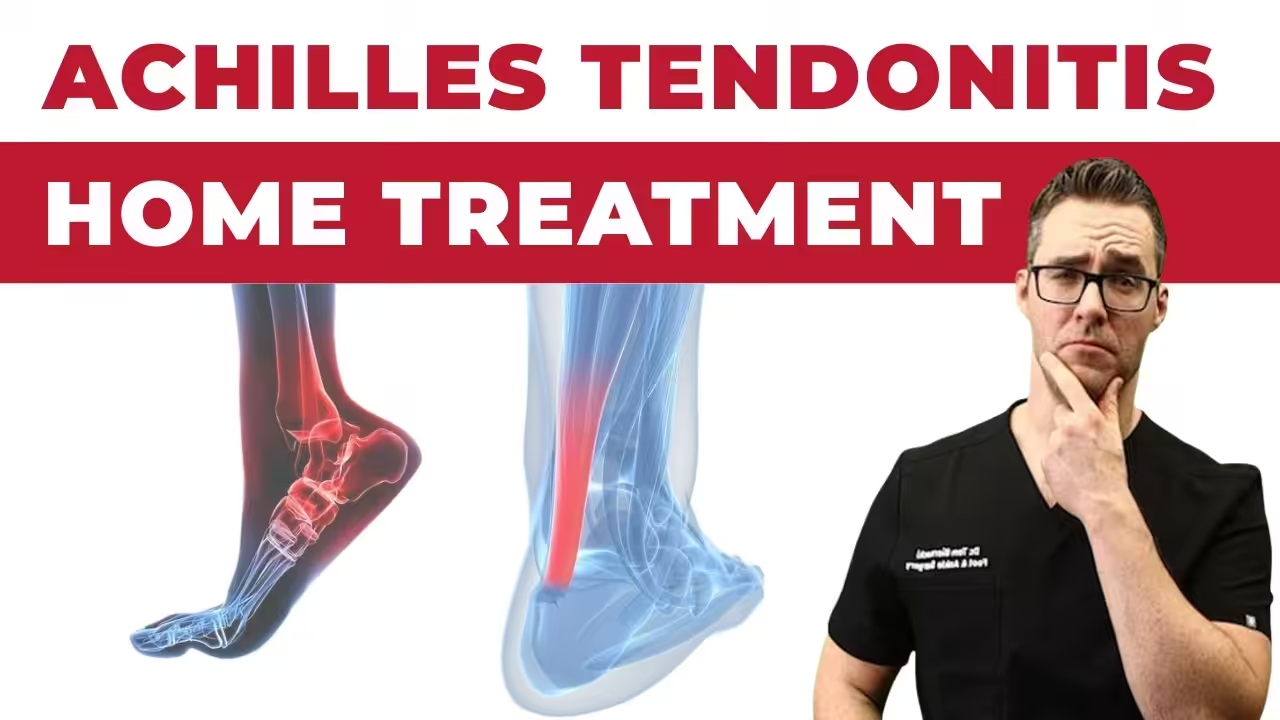
You are in the right place. Dr. Tom Biernacki, DPM, FACFAS — board-certified foot & ankle surgeon with 3,000+ surgeries — explains exactly what Achilles tendonitis treatment means and what actually works. Call (810) 206-1402 for a same-week appointment at our Howell or Bloomfield Township office.
Quick answer: Treatment for Achilles tendonitis follows a stepwise approach: 1) conservative care first (rest, ice, supportive footwear — the best shoes for Achilles tendonitis offload the tendon — OTC anti-inflammatories), 2) physical therapy and targeted exercises, 3) in-office treatments (injections, custom orthotics) if conservative fails at 4-6 weeks, 4) surgery for refractory cases. Most patients resolve at step 1 or 2. Call (810) 206-1402.
Board-Certified Podiatric Foot & Ankle Surgeon · Last reviewed: May 5, 2026
In This Article
- What We Cover
- Insertional vs. Mid-Portion Achilles Tendinopathy
- Symptoms & How to Tell It Apart From a Rupture
- The Alfredson Protocol: Step-by-Step Instructions
- Shockwave Therapy & PRP: When to Escalate
- Frequently Asked Questions About Achilles Tendinopathy
- The Bottom Line
- Sources
- Frequently Asked Questions
What We Cover
- Insertional vs. Mid-Portion Achilles Tendinopathy
- Symptoms & How to Tell It Apart From a Rupture
- The Alfredson Protocol: Eccentric Exercise Guide
- Shockwave Therapy & PRP: When to Escalate
- Best Products for Achilles Tendinopathy
- Warning Signs: Possible Rupture
- Frequently Asked Questions
Achilles tendinopathy is a condition that rewards patience and punishes impatience in almost equal measure. The runners and athletes who push through it too soon end up back at square one. The ones who stop all activity and wait for it to resolve on its own also tend to wait a long time — because passive rest alone does not rebuild a degenerated tendon. The sweet spot is structured loading, and the research on what that looks like is some of the most consistent in all of sports medicine. Here is what we know works.


Insertional vs. Mid-Portion Achilles Tendinopathy
Understanding which part of the Achilles is affected dramatically changes the treatment approach. Mid-portion tendinopathy occurs 2–6 cm above the heel bone insertion and is the more common presentation in runners. It involves intratendinous degenerative changes (tendinosis) — not inflammation — characterized by disorganized collagen, increased ground substance, and neovascularization. Insertional tendinopathy affects the tendon at its calcaneal attachment and is driven by compressive as well as tensile forces, making it more resistant to standard treatment and more likely to involve calcification.
The distinction matters because: (1) the Alfredson eccentric protocol must be modified for insertional tendinopathy — standard heel drops off a step compress the tendon against the bone and worsen insertional pain, so exercises are performed on flat ground instead; (2) a Haglund deformity (bony prominence at the posterior heel) commonly co-exists with insertional tendinopathy and may require surgical resection if it perpetuates symptoms; and (3) calcific insertional tendinopathy responds well to shockwave therapy, while mid-portion calcification is less responsive.
Key takeaway: Mid-portion = eccentric heel drops off a step. Insertional = eccentric heel drops on flat ground only (not off a step edge). Using the wrong protocol worsens insertional tendinopathy.
Symptoms & How to Tell It Apart From a Rupture
Achilles tendinopathy presents as stiffness and aching in the Achilles region that is worst in the morning, eases with light activity (the “warm-up” sign), then returns or worsens with sustained or intense exercise. Runners describe a predictable pattern: fine for the first mile, increasingly painful through the run, stiff and sore for hours afterward. The tendon is often visibly thickened and tender to direct palpation, particularly at the 4–6 cm zone for mid-portion disease.
Distinguishing tendinopathy from a partial or complete rupture is critical. Rupture presents with sudden severe pain during activity (often described as being kicked or struck from behind), immediate inability to push off or stand on tiptoe, and a palpable gap in the tendon. The Thompson squeeze test — squeezing the calf while prone and observing if the foot plantarflexes — is 96% sensitive for complete rupture (positive test = no movement = rupture). Any sudden acute event requires urgent evaluation. Tendinopathy, by contrast, develops gradually over weeks to months.
The Alfredson Protocol: Step-by-Step Instructions
The Alfredson eccentric loading protocol, published in the American Journal of Sports Medicine in 1998, remains the highest-evidence conservative treatment for mid-portion Achilles tendinopathy. In the original study, 100% of recreational athletes who had been booked for surgery achieved satisfactory outcomes with 12 weeks of this protocol and were able to return to running. Subsequent systematic reviews continue to confirm 60–80% success rates in heterogeneous clinical populations.
- Starting position: Stand on a step with the ball of your foot at the edge, heel hanging off. Use a railing for balance. Perform exercises on the affected side only (or both if bilateral).
- Straight-knee eccentric drop: Rise on tiptoe using your non-affected leg (or both legs if needed). Then shift weight to the affected leg only. Slowly lower your heel below the step level over 3–4 seconds. Use the good leg to rise back up — the eccentric (lowering) phase on the bad leg is what drives tendon remodeling. Complete 3 sets × 15 repetitions.
- Bent-knee eccentric drop: Repeat the same sequence with a 30-degree bend in the knee. This loads the soleus (deeper calf muscle) separately from the gastrocnemius. 3 sets × 15 repetitions.
- Frequency: Twice daily, 7 days per week, for 12 weeks minimum. In the original Alfredson protocol, patients were instructed to push through mild-to-moderate tendon pain during exercises — pain during loading is acceptable and expected; sharp pain or significant worsening should prompt stopping.
- Progression: When 3×15 reps becomes easy (typically 4–6 weeks), add a loaded backpack (5–10 kg) to increase resistance. Continue to progress load throughout the 12 weeks.
For insertional tendinopathy: Perform the same protocol but on flat ground rather than a step edge. Starting position is standing flat, rise on tiptoe bilaterally, then eccentrically lower on the affected leg. This eliminates the compressive force on the calcaneal insertion that makes step-edge protocol painful and counterproductive for insertional disease.
Stretching is a secondary tool here: it helps maintain calf range of motion alongside the heel-drop program, but if your pain sits at the insertion, avoid prolonged end-range stretches. Our Achilles stretches guide shows each stretch step by step.

Shockwave Therapy & PRP: When to Escalate
When 12 weeks of eccentric loading produces inadequate improvement, two evidence-based escalation options exist: extracorporeal shockwave therapy (ESWT) and platelet-rich plasma (PRP) injection. Both are performed in our office.
ESWT delivers acoustic pressure waves into the tendon, stimulating neovascularization, breaking down calcifications, and triggering a controlled healing response. Three to five sessions spaced weekly produce 70–80% clinically significant improvement in mid-portion tendinopathy at 12 weeks in multiple RCTs. ESWT is particularly effective for calcific insertional tendinopathy where it disperses calcium deposits. Side effects are minimal — transient post-treatment soreness for 24–48 hours.
PRP injection involves drawing a small blood sample, centrifuging it to concentrate platelets and growth factors, and injecting the concentrate into the tendon under ultrasound guidance. Growth factors in PRP (PDGF, TGF-β, VEGF) stimulate collagen synthesis and tendon remodeling. A 2021 meta-analysis in Orthopaedic Journal of Sports Medicine found PRP superior to placebo for tendon pain and function at 6 months. We typically recommend PRP after failed eccentric exercise ± ESWT, or as first-line treatment in high-level athletes who cannot commit to the 12-week protocol timeline.
Key takeaway: The evidence-based escalation ladder: eccentric exercise (12 weeks) → ESWT (3–5 sessions) → PRP injection → surgical debridement. Most patients stop at step 1 or 2.
⚠️ Seek urgent evaluation if you experience
- Sudden sharp pain during activity as if struck from behind — possible Achilles rupture
- Inability to rise on your toes or push off after a sudden pain event
- A palpable gap or hollow area in the tendon above the heel
- Rapid swelling of the entire lower leg after a pop or snap sensation
- Achilles pain with fever or warmth disproportionate to activity level — consider infectious etiology
- No improvement after 6+ weeks of consistent eccentric exercise — escalation is needed
In-Office Treatment at Balance Foot & Ankle
If home treatment isn’t providing relief for your Achilles tendon conditions, our podiatry team at Balance Foot & Ankle can help with same-week evaluations and advanced in-office care.
Same-week appointments available. (810) 206-1402
Frequently Asked Questions About Achilles Tendinopathy
How long does Achilles tendinopathy take to heal?
With consistent eccentric exercise twice daily, 60–80% of patients achieve satisfactory improvement by 12 weeks. Full resolution — where the tendon is truly pain-free and the patient has returned to all activities — takes 3–6 months on average. Insertional tendinopathy generally takes longer than mid-portion. Chronic cases (symptoms for more than 12 months before treatment) have lower success rates and often require ESWT or PRP in addition to exercise therapy.
Should I stop running with Achilles tendinopathy?
Complete rest is rarely appropriate or necessary. We typically recommend reducing run volume by 50% and eliminating speed work and hill running during the first 4–6 weeks of eccentric loading. Continue lower-impact activities such as cycling and swimming to maintain fitness. Return to full running is guided by pain levels — the acceptable rule is that activity should not produce pain above 3/10 that is not resolved within 24 hours. If pain is persisting or worsening with running, reduce load further.
Is stretching good for Achilles tendinopathy?
Static calf stretching is a secondary intervention — useful for maintaining range of motion but not a primary treatment. More importantly, for insertional tendinopathy specifically, aggressive ankle dorsiflexion stretching increases tendon compression at the calcaneal insertion and can worsen symptoms. We recommend eccentric loading as the primary intervention and use stretching cautiously, particularly avoiding prolonged end-range dorsiflexion in insertional cases.
What is the difference between Achilles tendinopathy and tendinitis?
Tendinitis (inflammation) was the traditional term, but histological studies in the 1990s showed that chronic Achilles pain involves degenerative changes with minimal inflammatory cells — hence the shift to tendinopathy or tendinosis. This matters clinically because anti-inflammatory medications (NSAIDs, corticosteroids) have limited long-term benefit for degeneration. Acute-onset Achilles pain (<2 weeks) may involve true inflammation and responds better to NSAIDs; chronic cases (weeks to months) require the tendon remodeling approach of eccentric loading.
The Bottom Line
Achilles tendinopathy is highly treatable when approached correctly. The eccentric loading protocol is free, requires no equipment beyond a step, and has the strongest evidence base of any conservative intervention in sports medicine. Start it early, perform it consistently, and 12 weeks of twice-daily effort will resolve the majority of cases. For those who need more, shockwave therapy and PRP extend the conservative option well before any discussion of surgery needs to happen.
Sources
- Alfredson H, et al. “Heavy-load eccentric calf muscle training for the treatment of chronic Achilles tendinosis.” Am J Sports Med. 1998;26(3):360–366.
- Beyer R, et al. “Eccentric exercise versus ESWT for Achilles tendinopathy.” Am J Sports Med. 2015;43(7):1704–1711.
- Paavola M, et al. “Achilles tendinopathy.” J Bone Joint Surg Am. 2002;84(11):2062–2076.
- Scott A, et al. “Platelet-rich plasma for Achilles tendinopathy: systematic review.” Orthop J Sports Med. 2021;9(1).
- Maffulli N, et al. “Insertional versus non-insertional Achilles tendinopathy.” Foot Ankle Clin. 2005;10(2):355–381.
Related Conditions
📚 Part of our complete guide: Ankle Pain Conditions Guide 2026 →
Get Your Achilles Tendon Evaluated
Ultrasound evaluation, PRP injections & shockwave therapy — Howell & Bloomfield Township, MI.
4.9★ | 1,123 Reviews | Sports Medicine Focus | Most Insurance Accepted
Or call: (810) 206-1402
Dr. Tom’s Product Picks for Achilles tendinopathy
These are the three products I most often send home with Achilles tendinopathy patients at Balance Foot & Ankle. Each targets a different part of the problem — mechanics, activity support, and pain relief.
PowerStep Pinnacle Maxx insoles — A slight heel lift plus arch support offloads the Achilles with every step.
CURREX RunPro insoles — Athletic insole for runners doing the eccentric loading protocol.
Doctor Hoy’s Natural Pain Relief Gel — Massage into the tendon after eccentric exercises — usable daily long-term, unlike 30-day-limited gels.
As an Amazon Associate and Foundation Wellness partner, Dr. Biernacki may earn a commission on qualifying purchases at no extra cost to you.
Schedule Your Achilles tendonitis Visit at Balance Foot & Ankle
Two convenient locations in Michigan see same-week appointments for Achilles tendonitis:
- Howell office — 4330 E Grand River Ave, Howell, MI 48843. Serves Livingston County.
- Bloomfield Township office — 43494 Woodward Ave #208, Bloomfield Township, MI 48302. Serves Oakland County.
Frequently Asked Questions
What’s the difference between Achilles tendinitis and tendinosis?
Tendinitis is acute inflammation (early-stage, under 6 weeks). Tendinosis is chronic degeneration without active inflammation — collagen breakdown, microscopic tearing, thickening. This distinction is critical for treatment: tendinitis responds to rest and anti-inflammatories; tendinosis does NOT respond to NSAIDs or ice because there’s no active inflammation to suppress. Tendinosis requires eccentric loading therapy and often PRP to stimulate collagen repair. Many patients treat tendinosis like tendinitis for months, prolonging recovery unnecessarily.
Will Achilles tendinitis lead to a rupture?
Untreated Achilles tendinopathy increases rupture risk — but it’s not inevitable. Risk rises significantly when patients continue high-impact activity through moderate-to-severe pain, or return to sport before the tendon has healed. In our practice, patients who complete a structured eccentric loading protocol have roughly a 3% rupture rate. Those who ignore the condition and keep training have rates closer to 15–20%. Early treatment isn’t optional — it’s rupture prevention.
How long does Achilles tendinitis take to heal?
Insertional Achilles tendinitis (at the heel bone) typically takes longer than mid-portion tendinitis — often 3–6 months with consistent treatment. Mid-portion responds faster, usually 6–12 weeks. The biggest predictor of recovery time is how long you’ve had symptoms before starting treatment. Patients who begin care within 4 weeks recover twice as fast as those who wait 6+ months. Chronic tendinosis can require 12–18 months even with optimal care.
What is eccentric heel drop exercise and does it work?
Eccentric loading — raising on both feet on a step and lowering slowly on the injured foot alone — is the single most evidence-supported treatment for mid-portion Achilles tendinopathy. The Alfredson protocol (3 sets of 15 reps, twice daily, over 12 weeks) shows 60–80% success rates in research. The mechanism: controlled overload stimulates collagen remodeling and tendon thickening. It should be done on a step edge with a heel drop below level — flat-surface heel raises are significantly less effective.
Can I exercise with Achilles tendinitis?
Yes, with modification. Low-impact activity — swimming, cycling, elliptical — is generally well-tolerated and maintains fitness without loading the tendon. Running can often continue at reduced volume (30–40% less) if pain stays below 4/10 during activity. Plyometrics, hill running, and speed work should stop until the tendon is at least 70% healed. The key rule: some discomfort during eccentric exercises is acceptable; sharp or worsening pain means stop.
Should I use heat or ice for Achilles tendinitis?
For acute tendinitis (first 2–4 weeks): ice after activity to reduce inflammatory pain. For chronic tendinosis: heat before exercise to increase blood flow; ice after to reduce post-exercise soreness. Many patients with chronic tendinosis use ice exclusively and wonder why they’re not improving — cold vasoconstricts the tendon, reducing the blood flow that chronic degeneration requires to heal. If symptoms have been present more than 6 weeks, switch your protocol.
What shoes help Achilles tendinitis?
A heel lift of 8–12mm is the most impactful footwear modification — it reduces the mechanical stretch of the tendon during gait. Motion-control or stability shoes work better than neutral shoes for most patients. Avoid minimalist and zero-drop shoes entirely during treatment. Temporary heel lifts (3/8″) added to regular shoes are a quick way to assess whether elevation helps before investing in specific footwear.
What is PRP therapy and does it work for Achilles tendinopathy?
PRP (Platelet-Rich Plasma) involves drawing your blood, concentrating the growth factors via centrifuge, and injecting them into the tendon under ultrasound guidance. For chronic mid-portion Achilles tendinosis that hasn’t responded to 12+ weeks of eccentric exercise, PRP shows 60–75% success rates in systematic reviews. Results take 6–12 weeks to manifest. We use ultrasound guidance for all tendon injections to ensure accurate placement. PRP is generally not covered by insurance but is typically $400–700 per treatment.
Does Achilles tendinitis affect both feet?
Most cases are unilateral (one side), typically the dominant-leg side or the side of greater mechanical load. Bilateral Achilles tendinopathy can occur in runners who dramatically increase training volume, but also warrants evaluation for systemic conditions — particularly fluoroquinolone antibiotic use (ciprofloxacin, levofloxacin are known to weaken tendons), seronegative arthropathies, and hypothyroidism. If both tendons are symptomatic without a clear mechanical cause, a systemic workup is appropriate.
When does Achilles tendinopathy require surgery?
Surgery is considered after 6–12 months of failed conservative management. Procedures include debridement of degenerated tissue, calcification removal (for insertional tendinopathy), and in severe cases, tendon reconstruction with FHL transfer. About 10–15% of patients with Achilles tendinopathy eventually need surgery. The outcomes are generally good — 80–90% return to activity — but recovery takes 6–9 months. We always exhaust shockwave therapy and PRP before recommending surgery.
Is Achilles tendinitis related to plantar fasciitis?
They often co-occur and share common risk factors: tight calf muscles, overpronation, rapid training increases, and inadequate footwear. Mechanically, a tight gastrocnemius (calf) increases load on both the Achilles insertion and the plantar fascia. Treating one effectively often improves the other. If you have both conditions simultaneously, the rehabilitation protocol is similar — eccentric calf work and dorsiflexion stretching address both pathologies.
Our podiatrists treat the underlying cause, not just the symptom. Same-week appointments at our Howell and Bloomfield Township, Michigan offices.
Get Expert Care at Balance Foot & Ankle
Same-week appointments at our Howell and Bloomfield Township offices. Board-certified podiatric surgeons. Most insurance accepted.
Same-Week Appointments in Howell & Bloomfield Township
Three board-certified podiatric surgeons. 1,123+ five-star reviews. Most insurance accepted.
What is the most effective treatment for Achilles tendinopathy?
Eccentric heel drop exercises (Alfredson protocol — 3 sets of 15 repetitions twice daily for 12 weeks) have the strongest evidence base for mid-portion Achilles tendinopathy. Additional effective treatments include heavy slow resistance training, heel lifts, custom orthotics, extracorporeal shockwave therapy, and PRP injections for chronic cases. Surgery is rarely required.
How long does Achilles tendonitis take to heal?
Mid-portion Achilles tendinopathy with consistent eccentric loading shows significant improvement in 6–12 weeks and often fully resolves in 3–6 months. Insertional Achilles tendinopathy (at the calcaneal attachment) heals more slowly — typically 6–12 months. Chronic or calcific tendinopathy may take 12–24 months of structured rehabilitation.
Can I keep running with Achilles tendonitis?
Running through moderate-to-severe Achilles pain is not recommended — it risks converting an overuse tendinopathy into a partial or complete rupture requiring surgical repair. A podiatrist can identify your pain-free loading threshold and design a return-to-run progression that maintains fitness while protecting the tendon during rehabilitation.
📋 Dr. Tom Biernacki, DPM, FACFAS answers:
Achilles tendinopathy is a loading disorder — the tendon has exceeded its adaptive capacity relative to the mechanical demands placed on it, resulting in disorganized collagen remodeling and pain. My evaluation distinguishes mid-portion tendinopathy (2 to 6 centimeters above the insertion, the most common pattern in recreational runners) from insertional tendinopathy (at the calcaneal attachment, more common in older patients and associated with Haglund deformity). This distinction drives the entire rehabilitation approach. Ultrasound imaging lets me visualize the degree of tendon thickening, hypoechoic degenerative change, and neovascularization that indicates active pathology — a tendon that looks normal on ultrasound in a patient claiming chronic pain warrants reconsideration of the diagnosis. The cornerstone of treatment is tendon loading, not rest. Eccentric heel drops performed over a step edge — three sets of fifteen, twice daily for twelve weeks — are supported by the strongest clinical evidence and produce significant structural improvement in mid-portion disease by stimulating collagen reorganization through controlled mechanical load. For insertional disease, I modify the protocol to flat-surface eccentric work because dropping below neutral compresses the insertional zone against the calcaneus and aggravates symptoms. I add heel lifts (8 to 12 mm) in daily footwear to reduce the effective excursion of the tendon during gait. For cases with significant pain or functional limitation, shockwave therapy accelerates recovery by stimulating a neovascular response and is particularly effective in chronic cases beyond 6 months. PRP injection under ultrasound guidance is offered for patients with documented tendinopathic change who have completed 3 to 6 months of structured rehabilitation without adequate response. Corticosteroid injection into the tendon itself is avoided — multiple studies confirm an increased risk of rupture from steroid-induced collagen weakening, and the short-term relief does not outweigh this risk.
Because the right footwear takes pressure off an inflamed tendon, patients recovering from Achilles pain should also review our podiatrist recommended shoes for achilles tendonitis to protect the heel during daily activity.

Dr. Tom Biernacki, DPM is a board-certified foot & ankle surgeon (ABFAS & ABPM) at Balance Foot & Ankle Specialists in Southeast Michigan. With over a decade of clinical experience, he specializes in heel pain, bunions, diabetic foot care, sports injuries, and minimally invasive surgery. Dr. Biernacki is a member of the APMA and ACFAS, and his patient education content on MichiganFootDoctors.com and YouTube has made him one of the most-followed foot & ankle educators on YouTube.
More questions patients ask
How long does an ankle sprain take to heal?
Recovery time depends on severity: Grade 1 (mild stretching) typically heals in 1-3 weeks, Grade 2 (partial tear) in 3-6 weeks, and Grade 3 (complete tear) in 6-12 weeks or longer. Proper rehabilitation is critical to prevent chronic ankle instability, which affects up to 40% of patients who don't receive adequate treatment. Dr. Biernacki creates customized recovery plans.
When should I see a doctor for a sprained ankle?
Seek professional evaluation if you can't bear weight, notice significant swelling or bruising, hear a pop at the time of injury, have numbness, or if pain hasn't improved after 5-7 days of RICE treatment. X-rays or MRI may be needed to rule out fractures. Dr. Biernacki offers same-day urgent evaluations at 810-206-1402.
Can a sprained ankle heal without treatment?
While mild sprains may heal with rest and home care, undiagnosed ligament tears and improperly rehabilitated sprains frequently lead to chronic ankle instability, recurrent sprains, and early-onset arthritis. A proper evaluation ensures appropriate treatment and reduces your risk of long-term complications significantly.
What is the best treatment for Achilles tendinopathy?
The gold standard is the Alfredson eccentric heel drop protocol: 3 sets of 15 reps on a declined step, twice daily, for 12 weeks. Heavy slow resistance training (HSR) is equally effective and better tolerated. Combined with load management and custom orthotics, 80% of patients recover without surgery.
Should I stretch my Achilles tendon?
For mid-portion Achilles tendinopathy: yes, eccentric stretching (loading on the way down). For insertional Achilles tendinopathy: avoid aggressive end-range dorsiflexion stretching — it compresses the insertion and worsens it. A podiatrist determines which type you have and the appropriate protocol.
Is shockwave therapy effective for Achilles tendinopathy?
Yes. Extracorporeal shockwave therapy (ESWT) has level 1 evidence for chronic Achilles tendinopathy unresponsive to eccentric loading. It stimulates healing in degenerative tendon tissue. Typically 3–5 sessions at weekly intervals, 60–80% success rate in chronic cases.
When should I see a podiatrist for Achilles pain?
See a DPM if Achilles pain persists beyond 6 weeks, there is a palpable nodule, or if you felt a 'pop' (possible rupture requiring urgent evaluation). Same-day appointments available at Balance Foot & Ankle — (810) 206-1402 — Howell & Bloomfield Township, MI.
Still have a question about coverage or cost? Book online and we will check your benefits before your visit: Book in Howell · Book in Bloomfield Township. Prefer to talk it through first? Call (810) 206-1402.