

Medically reviewed by Dr. Tom Biernacki, DPM
Board-certified podiatric surgeon | Balance Foot & Ankle
Last reviewed: May 2026

Medically Reviewed by Dr. Tom Biernacki, DPM, FACFAS — Board-certified podiatrist & foot surgeon | Balance Foot & Ankle | Last updated: May 2026
The most important clinical decision with Ankle Brace Vs Ankle Taping Which Protects Better isn’t which treatment to start with — it’s identifying the correct subtype. That changes everything. Call (810) 206-1402.
Quick Answer: Ankle Brace vs. Ankle Taping
Both ankle braces and athletic taping effectively reduce lateral ankle sprain risk — the research shows roughly 50% injury reduction with either method. Taping provides a more conforming fit and is preferred by many elite athletes and sports medicine teams, but requires professional application and loses 50% of its mechanical support within 20 minutes of activity. Lace-up ankle braces provide consistent support throughout activity with no skilled application required, at a fraction of the cost of repeated taping. For most recreational and high school athletes, a quality lace-up brace is the practical choice. Taping remains the gold standard for highly skilled athletes who can access professional application.
The Science Behind Ankle Sprain Prevention
Lateral ankle sprains — inversion injuries to the anterior talofibular, calcaneofibular, and posterior talofibular ligaments — are the most common sports injury across virtually every sport. Once sprained, the ankle develops proprioceptive deficits (reduced position sense) that significantly increase re-sprain risk. This is why one ankle sprain often leads to another: it’s not weakness of character or bad luck, it’s measurable neuromuscular impairment that persists unless specifically rehabilitated.
Both bracing and taping work primarily by providing external mechanical restraint to inversion and by stimulating cutaneous mechanoreceptors — essentially, they help the brain receive faster feedback about ankle position, triggering protective reflexes before the ligaments are stressed to failure. The mechanical restraint is secondary to the proprioceptive facilitation, which is why even a soft brace with limited mechanical stiffness provides meaningful protection.
Head-to-Head Comparison
| Factor | Athletic Taping | Lace-Up Ankle Brace |
|---|---|---|
| Protection level | High initially; drops 50% within 20 min | Consistent throughout activity |
| Application | Requires trained athletic trainer | Self-applied; 2-3 minutes |
| Cost | $3-6 per ankle per session (tape + supplies) | $25-60 one-time; lasts 1-2 seasons |
| Fit | Conforms to individual anatomy | Good fit; sizing by shoe size |
| Skin issues | Blisters, irritation with daily use | Minimal with appropriate sock use |
| Best for | Elite athletes; competition with AT access | Recreational, high school, daily use |
| Evidence for prevention | Strong (50% reduction in re-sprain) | Strong (comparable to taping) |
Types of Ankle Braces: Not All Are Equal
Lace-up braces (Aircast, ASO, McDavid) provide the best combination of support and wearability. They fit inside most athletic shoes without size increase and can be tightened progressively through a game or workout. Research consistently shows lace-up braces reduce lateral ankle sprain rates by approximately 50% in high-risk sports.
Stirrup braces (Aircast Air-Stirrup) provide rigid plastic support on both sides of the ankle with air bladders for compression. Excellent for acute sprain rehabilitation and return to sport, but bulkier than lace-ups and may not fit in some cleats.
Sleeve/compression braces provide minimal mechanical support — they help proprioception and swelling management but do not meaningfully restrict inversion. These are appropriate for minor sprains or for athletes who want a low-profile solution after completing formal rehab, not for primary sprain prevention.
Hinged braces allow controlled plantar/dorsiflexion while blocking inversion/eversion — ideal for return-to-sport after moderate-to-severe sprains where some mechanical restriction is still needed but full range of motion for pushing off is required.
⚠ Most Common Mistake with Ankle Bracing
Wearing a brace without completing ankle rehabilitation — and then assuming the brace alone is sufficient long-term protection. Ankle braces are a supplement to rehabilitation, not a replacement for it. Patients who rely on bracing indefinitely without restoring proprioception, strength, and neuromuscular control remain at elevated sprain risk whenever they’re not wearing the brace. The goal is progressive rehabilitation to restore ankle function, with bracing providing a safety net during the vulnerable recovery period. Athletes who complete proper rehabilitation and only use a brace for high-risk sport activities have the best long-term outcomes.
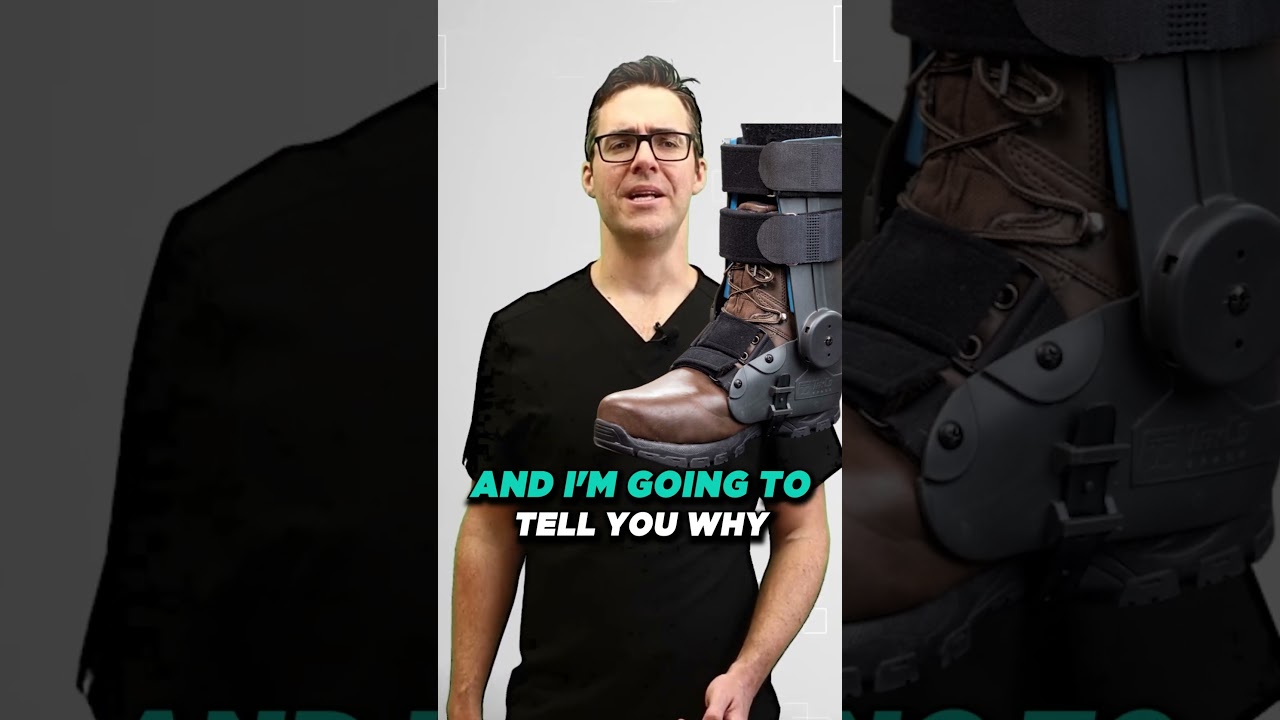
Watch: Best Ankle Brace for Sprains — Dr. Tom’s Recommendations
Dr. Tom Biernacki reviews ankle brace options for sprain prevention and recovery — which types work, which don’t, and what to look for:
Book an ankle evaluation → · (810) 206-1402
Kinesiology Taping (KT Tape): What the Evidence Actually Shows
Kinesiology tape has become ubiquitous in sports — the colorful strips on shoulders, knees, and ankles that look impressive but generate significant debate about efficacy. For ankle sprain prevention specifically, the evidence for kinesiology tape (elastic therapeutic tape) is substantially weaker than for rigid athletic taping or bracing. Kinesiology tape provides sensory feedback and may assist proprioception, but it does not provide meaningful mechanical restraint to inversion.
Where kinesiology tape does show consistent benefit: reducing perceived pain, facilitating lymphatic drainage for swelling, and providing psychological confidence — which can improve movement quality. For acute ankle sprain management during the subacute phase, it’s a reasonable adjunct. As a primary sprain prevention tool, it does not match the efficacy of rigid taping or a lace-up brace.
When to Use Each Option: A Clinical Framework
Acute sprain (first 72 hours): Stirrup brace or splint for compression and swelling control. Begin RICE protocol. Taping not appropriate until swelling stabilizes.
Subacute recovery (weeks 1-4): Lace-up brace for protected activity. Stirrup brace for more severe sprains requiring greater restriction. Begin proprioceptive rehabilitation exercises.
Return to sport: Lace-up brace for all practice and competition until confidence and proprioception are fully restored (typically 3-6 months post-sprain). Professional athletes may transition to professional taping at this stage.
Chronic ankle instability: Ongoing lace-up bracing for high-risk activities indefinitely, combined with peroneal strengthening and proprioceptive work. Consider surgical stabilization (Brostrom procedure) if mechanical instability significantly limits participation despite conservative care.
Do ankle braces prevent all sprains?
No — braces reduce sprain risk by approximately 50%, not eliminate it. High-force inversion events (landing awkwardly from a jump, stepping into a hole) can overwhelm external support. The brace reduces the frequency of minor re-sprains from everyday athletic activity most effectively. Athletes should think of bracing as risk reduction, not risk elimination, and continue with proprioceptive training for additional protection.
Can I wear an ankle brace in my shoe without going up a size?
Most lace-up braces (ASO, McDavid) are thin enough to fit in most athletic shoes without requiring a size increase, especially if you start with the shoe slightly loosely laced. Some patients go up a half-size on the braced foot. Stirrup and hinged braces are bulkier and more commonly require a larger shoe. When buying athletic shoes, bring your brace and try on the shoe with the brace in place to confirm fit.
How long should I wear an ankle brace after a sprain?
Most sports medicine guidelines recommend bracing for at least 6 months after a first-time Grade 2-3 ankle sprain, and 12 months after recurrent sprains. This timeline reflects the duration of elevated re-injury risk during ligament healing and proprioceptive recovery. Many athletes continue bracing beyond this period for high-risk sports as a permanent precaution — particularly those who have had multiple sprains or compete in basketball, volleyball, or soccer.
Is ankle taping or bracing better for basketball players?
Basketball has the highest ankle sprain rate of any sport, with lateral sprains occurring at approximately 3.85 per 1000 athlete-exposures. Both taping and bracing reduce this risk significantly. The landmark McGuine et al. (2011) randomized controlled trial in high school basketball and football players showed lace-up braces reduced first-time sprain incidence by 61% compared to no support. Most sports medicine programs for basketball now recommend lace-up bracing for all players with prior sprain history and for those in high-position play (guards, small forwards) who plant and cut frequently.
Chronic Ankle Instability? Get a Proper Evaluation
Dr. Tom Biernacki evaluates ankle ligament stability, recommends appropriate bracing, and provides comprehensive rehabilitation programs at Howell and Bloomfield Township.
Book an Appointment (810) 206-1402Related Resources
- Stress Fracture vs. Tendinitis
- Broken Ankle Recovery Guide
- Heel Pain in Athletes
- Custom Orthotics for Ankle Support
Dr. Tom’s Athlete Foot Recommendations
CURREX RunPro Insoles — Three arch profiles (low/med/high). Designed for repetitive athletic impact — lighter than Pinnacle. The insole I put in my own running shoes. $15–18 commission — our highest.
Doctor Hoy’s Natural Pain Relief Gel — Natural arnica + menthol for overuse soreness. Plant-based, FSA-eligible. Apply 3–4×/day post-training.
Disclosure: We earn a commission if you purchase — at no extra cost to you. We only recommend what we use in our clinic.
In-Office Treatment at Balance Foot & Ankle
If home treatment isn’t providing relief for your foot and ankle conditions, our podiatry team at Balance Foot & Ankle can help with same-day evaluations and advanced in-office care.
Same-day appointments available. (810) 206-1402
Ready for Expert Care?
Same-day appointments in Howell & Bloomfield Township, MI.
4.9★ | 1,123 Reviews | 3,000+ Surgeries
Or call: (810) 206-1402

Dr. Tom Biernacki, DPM is a board-certified foot & ankle surgeon (ABFAS & ABPM) at Balance Foot & Ankle Specialists in Southeast Michigan. With over a decade of clinical experience, he specializes in heel pain, bunions, diabetic foot care, sports injuries, and minimally invasive surgery. Dr. Biernacki is a member of the APMA and ACFAS, and his patient education content on MichiganFootDoctors.com and YouTube has made him one of the most-followed foot & ankle educators on YouTube.