Medically Reviewed | Dr. Tom Biernacki, DPM | Board-Certified Podiatric Surgeon | Balance Foot & Ankle, Michigan

Quick Answer: Athlete’s foot between the toes (interdigital tinea pedis) causes itching, scaling, maceration, and cracking between the 4th and 5th toes most commonly. Treat with OTC terbinafine or clotrimazole cream twice daily for 2–4 weeks. Keep feet dry, change socks daily, and use antifungal powder to prevent recurrence.

What Is Interdigital Athlete’s Foot?
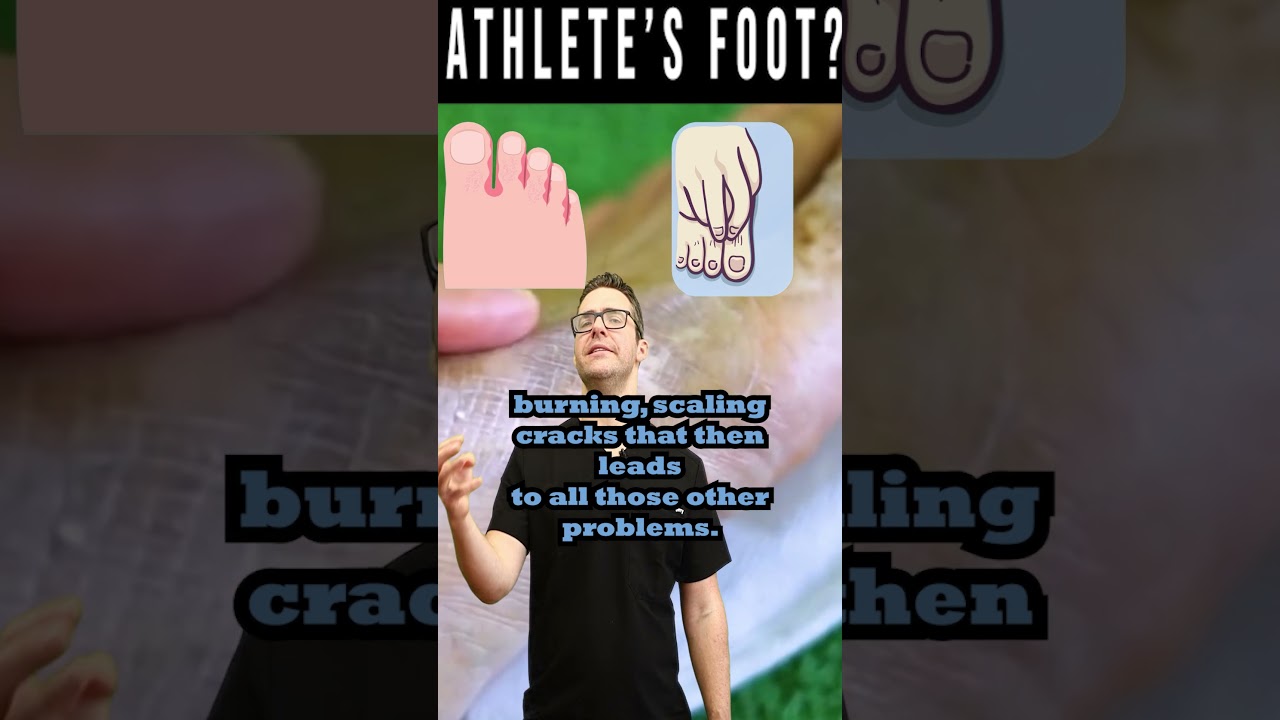
Interdigital tinea pedis — athlete’s foot between the toes — is the most common presentation of fungal foot infection, caused by dermatophyte fungi (primarily Trichophyton rubrum and T. mentagrophytes). The warm, moist, enclosed environment between toes provides the ideal conditions for dermatophyte growth: keratin-rich substrate, reduced air circulation, and persistent moisture from sweating or inadequate drying after bathing.
The 4th–5th toe web space is the most commonly affected site, followed by the 3rd–4th. The infection begins as itching and scaling at the toe margins, progresses to maceration (soft, white, soggy skin), and in advanced cases produces painful fissures and secondary bacterial infection (bacterial superinfection). The “dry type” produces fine scaling with minimal itch; the “wet type” produces maceration, unpleasant odor, and erosions.
Effective Treatment
Topical antifungals (first-line): Apply terbinafine 1% cream (Lamisil AT), clotrimazole 1% cream (Lotrimin), or miconazole 2% cream twice daily to affected areas including the surrounding normal skin. Treat for at least 2 weeks after symptoms resolve (typically 4 weeks total). Terbinafine has the best evidence for efficacy in tinea pedis. Naftifine gel (prescription) is effective as once-daily application.
Macerated (wet) type: Requires drying measures in addition to antifungal. Dilute acetic acid solution (1 tablespoon white vinegar in 1 pint water) applied as a compress for 15 minutes twice daily dries macerated skin and creates an unfavorable pH for fungal growth. Aluminum acetate (Domeboro) is an OTC alternative. After drying measures, apply topical antifungal.
Oral antifungal: For extensive interdigital tinea pedis, concurrent nail involvement, or cases resistant to topical therapy, oral terbinafine 250mg daily for 2 weeks is highly effective.
Prevention
Prevention is straightforward but requires daily discipline: dry thoroughly between toes after bathing (the most commonly skipped step); use antifungal foot powder in shoes and between toes; change socks daily (moisture-wicking synthetic or wool socks preferred over 100% cotton); wear flip-flops in public showers, pool decks, and locker rooms; treat shoes with antifungal spray; replace shoes every 12–18 months as fungal spores remain viable in shoe materials for months.
Dr. Tom's Product Recommendations

Doctor Hoy’s Natural Pain Relief Gel
⭐ Highly Rated | Foundation Wellness Partner | 30% Commission
For athlete’s foot accompanied by painful fissures or periungual inflammation between the toes, Doctor Hoy’s arnica formula provides topical anti-inflammatory relief around the affected area. Apply to the toe margins — not into macerated skin — to reduce inflammation while antifungal treatment eliminates the fungus.
Dr. Tom says: “For my patients with painful athlete’s foot fissures, I add Doctor Hoy’s to reduce the surrounding inflammation while the antifungal does its work. Apply around (not into) the fissures twice daily. It significantly reduces the pain that makes walking uncomfortable during treatment.”
Painful athlete’s foot fissures, periungual inflammation during antifungal treatment
Do not apply to macerated (wet, white, soggy) skin between toes; antifungal is the primary treatment
Disclosure: We earn a commission at no extra cost to you.

FLAT SOCKS
⭐ Highly Rated | Foundation Wellness Partner | 30% Commission
FLAT SOCKS no-show shoe liners wick moisture away from the foot and reduce the chronic inter-toe moisture that fuels athlete’s foot recurrence. The antimicrobial construction inhibits fungal and bacterial growth in the shoe environment.
Dr. Tom says: “For patients prone to recurrent athlete’s foot, FLAT SOCKS are a great daily preventive tool — particularly in warmer months. The moisture-wicking antimicrobial construction keeps the inter-toe environment drier. Pair with daily antifungal powder for comprehensive prevention.”
Athlete’s foot prevention, moisture control, summer barefoot feel in shoes
Not a treatment for active infection; use antifungal cream for active tinea pedis
Disclosure: We earn a commission at no extra cost to you.
✅ Pros / Benefits
- OTC terbinafine and clotrimazole creams are highly effective and inexpensive
- Treatment course is short (2–4 weeks) for typical interdigital tinea pedis
- Prevention with drying and antifungal powder is straightforward
- Treating concurrent nail fungus eliminates the most common source of reinfection
❌ Cons / Risks
- Recurrence is extremely common without consistent preventive measures
- Concurrent onychomycosis acts as a reservoir for reinfection of the skin
- Macerated wet-type requires additional drying measures before antifungal application
- Secondary bacterial infection (cellulitis) is a serious complication of untreated deep fissures
Dr. Tom Biernacki’s Recommendation
Athlete’s foot between the toes is one of the most common conditions I see — and one of the most undertreated. Patients spend years treating the symptoms without addressing the source of reinfection: the toenails. If you have athlete’s foot between your toes, check your nails. Thick, discolored toenails harbor fungal spores that re-infect the skin the moment you stop your cream. Treat both the skin and the nails together, or you’ll be applying antifungal cream indefinitely.
— Dr. Tom Biernacki, DPM | Board-Certified Podiatric Surgeon | Balance Foot & Ankle
Frequently Asked Questions
Is athlete’s foot contagious?
Yes. Tinea pedis spreads through direct skin contact and contaminated surfaces (shower floors, pool decks, bath mats). Avoid sharing towels; wear flip-flops in public wet areas.
How long does athlete’s foot between toes take to clear?
Typical interdigital tinea pedis clears in 2–4 weeks with twice-daily topical terbinafine or clotrimazole. Continue treatment for at least 1 week after symptoms resolve.
Why does my athlete’s foot keep coming back?
Reinfection from infected toenails is the most common cause of recurrent athlete’s foot. Other causes: not drying between toes thoroughly, re-using infected shoes, and public shower exposure without flip-flop protection.
What’s the difference between athlete’s foot and eczema?
Athlete’s foot typically starts between the toes and spreads laterally; responds to antifungal cream; may be confirmed with KOH preparation. Dyshidrotic eczema produces vesicles (blisters) on the arch and inner toes; does not respond to antifungals; responds to topical steroids.
Should I see a podiatrist for athlete’s foot?
See a podiatrist if OTC antifungal treatment fails after 4 weeks, if you have concurrent nail involvement, if there is fissuring or possible secondary infection, or if you are diabetic (reduced immunity and healing capacity).
Michigan Foot Pain? See Dr. Biernacki In Person
4.9★ rated | 1,123 Reviews | 3,000+ Surgeries
Same-week appointments · Howell & Bloomfield Hills
📞 (810) 206-1402 Book Online →When Shoes Aren’t Enough — Dr. Tom’s Top 9 Orthotics
About 30% of patients I see for foot pain need MORE than a great shoe — they need a structured insole. Below: my complete 2026 orthotic ranking with pros, cons, and the specific patient I’d give each one to.
★ DR. TOM’S COMPLETE 2026 ORTHOTIC RANKING
9 Best Prefab Orthotics by Use Case
PowerStep, CURREX, Spenco, Vionic, and Tread Labs — every orthotic I’ve fitted to thousands of patients across both Michigan offices. Each card includes pros, cons, and the specific patient I’d give it to. Real Amazon ratings, review counts, and prices below.
Best All-Purpose Orthotic for Most Patients
Semi-rigid arch shell + dual-layer cushion + deep heel cup. The orthotic I’ve fitted to more patients than any other for 15 years. APMA-accepted. Trim-to-fit design works in athletic shoes, casual shoes, and most work boots.
✓ Pros
- Semi-rigid arch shell provides true biomechanical correction
- Deep heel cup centers the heel and reduces lateral instability
- Dual-layer cushion (top + bottom) lasts 9-12 months daily wear
- Available in 8 sizes for precise fit
- APMA-accepted and clinically validated
- APMA-accepted with superior cushioning versus rigid alternatives
✗ Cons
- Too thick for most dress shoes (use ProTech Slim instead)
- Some break-in period required (3-7 days for arch tolerance)
- Not enough correction for severe pes planus or rigid pes cavus
Dr. Tom’s Recommendation: If a patient has run-of-the-mill plantar fasciitis, mild flat feet, or arch fatigue, this is the first orthotic I try. Better value than most premium alternatives for 90% of patients, which is why it’s the first orthotic I reach for in the clinic. Sub-$50 typically.
Maximum Motion Control · Flat Feet & Severe Over-Pronation
PowerStep’s most aggressive stability orthotic. Adds a 2°-7° medial heel post on top of the standard PowerStep platform — designed specifically for flat-footed patients and severe pronators who need real corrective force.
✓ Pros
- 2°-7° medial heel post adds aggressive pronation control
- Same trusted PowerStep arch shell, more correction
- Built specifically for flat-foot biomechanics
- Excellent for posterior tibial tendon dysfunction (PTTD)
- Removable top cover for cleaning
✗ Cons
- Too aggressive for neutral-arch patients
- Needs longer break-in (10-14 days) due to stronger correction
- Adds 2-3 mm of stack height — won’t fit slim dress shoes
Dr. Tom’s Recommendation: When a patient comes in with significant flat feet AND symptoms (heel pain, arch pain, knee pain), the Original PowerStep isn’t aggressive enough. The Maxx is what gets prescribed. About 25% of my flat-footed patients end up here.
Low-Profile · Fits Dress Shoes & Narrow Casuals
3 mm slim profile with podiatrist-designed tri-planar arch technology. Engineered specifically to fit inside dress shoes, oxfords, loafers, and women’s flats without crowding the toe box. Vionic was founded by an Australian podiatrist.
✓ Pros
- 3 mm slim profile (vs 7-10 mm for standard orthotics)
- Tri-planar arch technology adds support without bulk
- Built-in deep heel cup despite slim design
- Fits dress shoes WITHOUT having to remove the factory insole
- Trim-to-fit · APMA-accepted
✗ Cons
- Less arch support than full-volume orthotics
- Top cover wears faster than thicker alternatives
- Not enough correction for severe foot deformities
Dr. Tom’s Recommendation: My default when a patient says ‘I need orthotics but I have to wear dress shoes for work.’ Slim enough to fit in oxfords and pumps without the heel sliding out. The single highest-impact change you can make for office workers with foot pain.
Built-In Metatarsal Pad · Morton’s Neuroma · Ball-of-Foot Pain
Standard Pinnacle orthotic with a built-in metatarsal pad positioned proximal to the metatarsal heads — the exact location that offloads neuromas and metatarsalgia. No need for separate met pads or pad placement guesswork.
✓ Pros
- Built-in met pad eliminates DIY pad placement errors
- Specifically designed for Morton’s neuroma + metatarsalgia
- Same trusted PowerStep arch + heel cup platform
- Top cover protects sensitive forefoot skin
- Faster relief than orthotics + add-on met pads
✗ Cons
- Met pad position is fixed (can’t fine-tune individual placement)
- Some patients with very small or very large feet need custom
- Slightly thicker than the standard Pinnacle
Dr. Tom’s Recommendation: If a patient has Morton’s neuroma, sesamoiditis, or generalized ball-of-foot pain (metatarsalgia), this saves a clinic visit and a prescription. The built-in pad placement is anatomically correct for 80% of feet. Way better than DIY met pads.
Adaptive Dynamic Arch · Athletic & Daily Wear
Currex’s flagship adaptive arch technology — the orthotic flexes with your gait instead of fighting it. Different stiffness zones along the length give you targeted support at the heel, midfoot, and forefoot. Available in three arch heights (low/medium/high).
✓ Pros
- Dynamic flex zones adapt to natural gait cycle
- Three arch heights ensure precise fit
- Lighter than rigid orthotics (no ‘heavy foot’ feel)
- Excellent for runners and athletic walkers
- European podiatric design (German engineering)
✗ Cons
- More expensive than PowerStep Original ($55-65 typically)
- Less aggressive correction than Pinnacle Maxx for severe cases
- Three arch heights means you must self-select correctly
Dr. Tom’s Recommendation: I started recommending Currex three years ago for runners who said PowerStep felt ‘too rigid.’ The dynamic flex zones respect natural gait. Best for active patients who walk 8K+ steps daily and don’t need maximum motion control.
Running-Specific · Heel Strike + Forefoot Strike Compatible
Currex’s purpose-built running orthotic. The midfoot flex zone is positioned for runner’s gait mechanics, with a flared heel cushion for heel strikers and a forefoot rocker for midfoot/forefoot strikers. Tested on 1000+ runners during product development.
✓ Pros
- Designed by German biomechanics lab specifically for runners
- Dynamic arch flexes with running gait (not static like PowerStep)
- Three arch heights (low/medium/high)
- Reduces overuse injury risk in mid-distance runners
- Lightweight (no impact on cadence)
✗ Cons
- Premium price ($60-75)
- Not aggressive enough for severe over-pronators (use Pinnacle Maxx)
- Runner-specific design = less ideal for daily walking shoes
Dr. Tom’s Recommendation: If a patient runs 20+ miles per week and has plantar fasciitis or shin splints, this is the orthotic I prescribe. The dynamic flex zones respect running biomechanics in a way that no rigid PowerStep can match. Pricier but worth it for serious runners.
Cavus Foot & High-Arch Patients
Polyurethane base with a deeper heel cup and higher arch profile than PowerStep — built for cavus (high-arched) feet that need maximum cushion and support. The 5-zone cushioning system addresses the unique pressure points of high-arch feet.
✓ Pros
- Deeper heel cup centers the heel for cavus foot stability
- Higher arch profile fills the void under high arches
- 5-zone cushioning addresses cavus foot pressure points
- Polyurethane base lasts 12+ months
- Available in Wide width
✗ Cons
- Too tall/aggressive for normal or low arches
- Won’t fit slim dress shoes
- Pricier than PowerStep Original
- Some patients find the arch height uncomfortable initially
Dr. Tom’s Recommendation: Cavus foot patients are often misdiagnosed and given low-arch orthotics — that makes everything worse. Spenco’s Total Support has the arch profile that high-arch feet actually need. About 15% of my patients have cavus feet; this is what they wear.
Cushion Layer · Standing All Day · Gel Pressure Relief
NOT a true biomechanical orthotic — this is a cushion insole. But for patients who want gel pressure relief instead of arch correction (or to add ON TOP of factory insoles in work boots), this is the best gel option on Amazon.
✓ Pros
- Genuine gel cushioning (not foam pretending to be gel)
- Targeted gel waves under heel and ball of foot
- Trim-to-fit · works in most shoe types
- Sub-$15 price (most affordable option in this list)
- Massaging texture is genuinely soothing
✗ Cons
- ZERO arch support — this is cushion only
- Won’t fix plantar fasciitis or flat-foot issues
- Compresses faster than PowerStep (4-6 months)
- Top cover wears through in high-mileage applications
Dr. Tom’s Recommendation: I recommend these to patients who tell me ‘I just want my feet to stop hurting at the end of my shift’ and who don’t have a biomechanical issue. Construction workers, factory workers, retail. Pure cushion does the job for them.
Tight-Fitting Shoes · Cycling Shoes · Hockey Skates
Tread Labs Pace insole with firm orthotic arch support for flat feet and plantar fasciitis relief. The replaceable top cover design makes it one of the most durable picks in this guide — backed by a million-mile guarantee and recommended for tight-fitting athletic footwear.
✓ Pros
- Firm orthotic arch support shell (podiatrist-grade)
- Slim profile fits tight athletic footwear
- Lasts 12+ months daily wear
- Excellent for cycling shoes specifically
- Built-in odor-control treatment
✗ Cons
- Premium price ($45-55)
- Less cushion than PowerStep equivalents
- Not as aggressive correction as Pinnacle Maxx for flat feet
- The signature ‘heel cup feel’ takes 1-2 weeks to adapt to
Dr. Tom’s Recommendation: If you’re a cyclist with foot numbness, hot spots, or knee pain — this is the orthotic. The stabilizer cap solves cycling-specific biomechanical issues that no other orthotic addresses. Worth the premium for athletes.
None of these solving your foot pain?
Some patients (about 30%) need custom-molded prescription orthotics. We make 3D-scanned custom orthotics in our Howell and Bloomfield Hills offices — specifically built for your foot mechanics.
Schedule a Custom Orthotic Fitting →FSA/HSA eligible · Most insurance accepted · (810) 206-1402
Dr. Tom Biernacki, DPM is a double board-certified podiatrist and foot & ankle surgeon at Balance Foot & Ankle Specialists in Southeast Michigan. With over a decade of clinical experience, he specializes in heel pain, bunions, diabetic foot care, sports injuries, and minimally invasive surgery. Dr. Biernacki is a member of the APMA and ACFAS, and his patient education content on MichiganFootDoctors.com and YouTube has reached over one million views.
- Plantar Fasciitis: Diagnosis and Conservative Management (PubMed)
- Plantar Fasciitis (APMA)
- Diagnosis and Treatment of Plantar Fasciitis (PubMed / AAFP)
- Heel Pain (APMA)
Recommended Products from Dr. Tom