

Quick answer: Baxter Nerve Entrapment Heel is a common foot/ankle topic that affects many patients. The 2026 evidence-based approach combines proper diagnosis, conservative-first treatment, and escalation only when needed. We treat this regularly at our Howell and Bloomfield Township practices. Call (810) 206-1402.
Medically Reviewed | Dr. Tom Biernacki, DPM | Board-Certified Podiatric Surgeon | Balance Foot & Ankle, Michigan


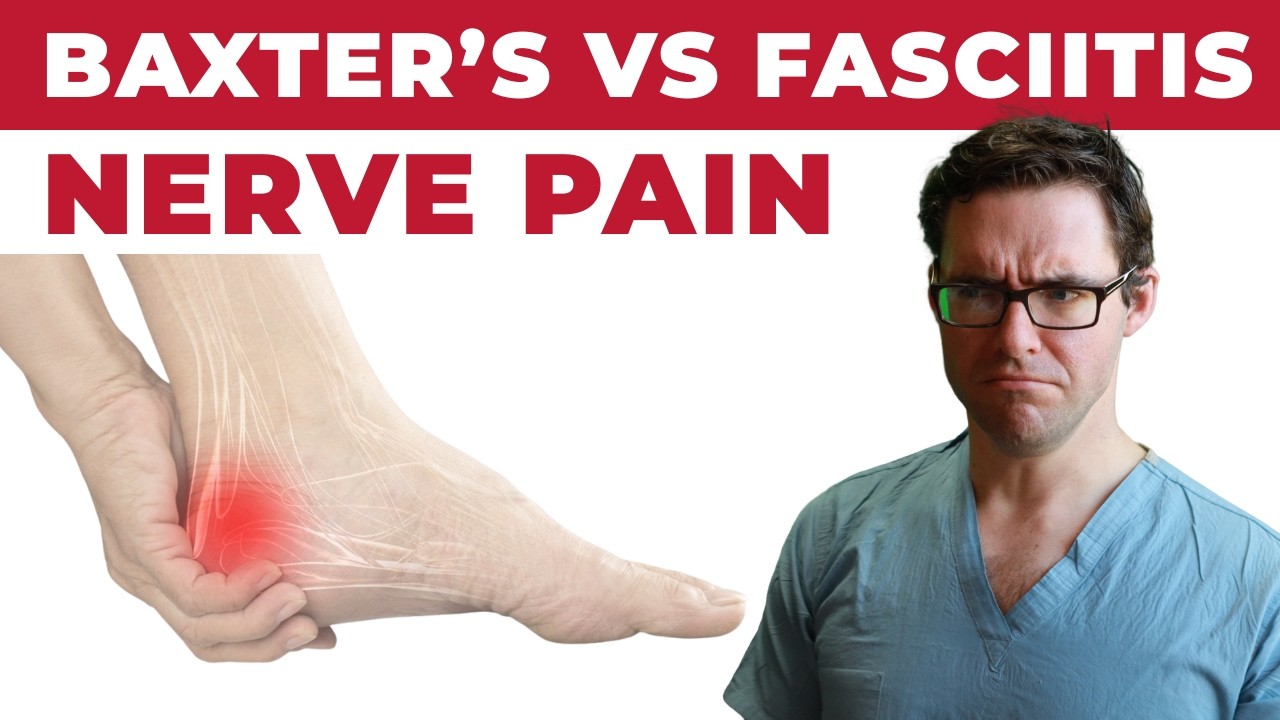
Watch: Baxter Nerve Entrapment or Plantar Fasciitis Heel Pain — MichiganFootDoctors YouTube
The most important clinical decision with Baxter Nerve Entrapment Heel isn’t which treatment to start with — it’s identifying the correct subtype. That changes everything. Call (810) 206-1402.
What Is Baxter’s Nerve and Why It Gets Entrapped
Baxter’s nerve—the inferior calcaneal nerve, also called the first branch of the lateral plantar nerve—is a small nerve that runs from behind the medial malleolus, curves around the heel, and supplies the abductor digiti minimi muscle (the small muscle on the outer side of the heel). Along its path, it can be compressed between the abductor hallucis muscle and the quadratus plantae muscle—a narrow anatomical corridor that makes this nerve vulnerable to entrapment.
Baxter’s nerve entrapment is estimated to account for approximately 10–20% of chronic heel pain cases—making it the second most common cause of heel pain after plantar fasciitis, and the most commonly missed. Because the symptoms overlap significantly with plantar fasciitis and the diagnosis requires specific clinical suspicion, many patients with Baxter’s nerve entrapment are treated for plantar fasciitis for months or years without improvement.
Risk factors: flatfoot (excessive pronation increases tension on the nerve at the entrapment site); obesity (increased plantar tissue bulk compresses the nerve corridor); calcaneal spurs (bone spur at the inferior calcaneus may directly compress the nerve pathway); and previous cortisone injections for presumed plantar fasciitis that didn’t help—this treatment failure is a classic red flag for Baxter’s nerve entrapment.
How to Distinguish Baxter’s Nerve from Plantar Fasciitis
Clinical distinctions: (1) Location—plantar fasciitis is maximally tender at the medial calcaneal tubercle (where the plantar fascia inserts on the heel bone); Baxter’s nerve entrapment is tender slightly lateral and inferior to this point, near the abductor digiti minimi muscle belly. (2) Pain quality—plantar fasciitis produces a dull aching with sharp first-step component; Baxter’s entrapment produces burning, tingling, or electric sensations into the heel—nerve-type pain. (3) Response to treatment—plantar fasciitis responds to stretching, orthotics, and cortisone within weeks; Baxter’s entrapment does not respond meaningfully to plantar fasciitis-directed treatment.
Diagnostic testing: EMG/NCS may show slowed conduction velocity in the inferior calcaneal nerve, though sensitivity is limited by the nerve’s small size and distal location. MRI may show atrophy of the abductor digiti minimi muscle (denervation from chronic Baxter’s compression) and can identify structural causes (ganglion cysts, heel spur configuration) contributing to entrapment. Diagnostic ultrasound-guided nerve block of the inferior calcaneal nerve confirming pain relief strongly supports the diagnosis.
The treatment failure test: a patient who has received 2–3 cortisone injections at the plantar fascia insertion, uses orthotics consistently, and stretches daily but still has significant heel pain after 6 months should be evaluated specifically for Baxter’s nerve entrapment.
Treatment: Conservative and Surgical
Conservative management: custom orthotics with medial arch support and heel cushion to reduce nerve tension from flatfoot; anti-inflammatory measures; and nerve-specific analgesics (gabapentin, duloxetine for neuropathic pain component). Ultrasound-guided corticosteroid injection at the entrapment site (not the plantar fascia insertion) is more specifically therapeutic than standard heel injection.
Surgical decompression: when conservative care fails after 6 months, decompression of the inferior calcaneal nerve through release of the abductor hallucis fascia and the fibrous band compressing the nerve pathway relieves entrapment. Success rates of 80–90% are reported in appropriately selected patients. Surgery can be performed through a small medial heel incision and is a reliable procedure for confirmed entrapment.
Combined pathology: Baxter’s nerve entrapment frequently coexists with plantar fasciitis rather than being mutually exclusive. Both conditions may require treatment simultaneously—standard plantar fasciitis measures plus nerve decompression injection or surgery for the entrapment component.
Dr. Tom's Product Recommendations
✅ Pros / Benefits
- Surgical decompression for confirmed Baxter’s nerve entrapment achieves 80-90% success—excellent outcomes when correctly diagnosed
- Recognizing Baxter’s nerve as a distinct diagnosis prevents years of ineffective plantar fasciitis treatment
❌ Cons / Risks
- The diagnosis is frequently missed because symptoms overlap with plantar fasciitis and specific clinical knowledge of the nerve anatomy is required
Dr. Tom Biernacki’s Recommendation
Baxter’s nerve entrapment is one of my favorite diagnoses to make—not because it’s fun for the patient to have a nerve problem, but because patients who’ve been told for 2 years that they have plantar fasciitis that ‘won’t respond’ finally have an explanation. The tip-off is the burning quality to the heel pain, the slightly lateral tender point, and the treatment failure history. Once I identify it and address the nerve specifically, these patients get better when nothing else worked.
— Dr. Tom Biernacki, DPM | Board-Certified Podiatric Surgeon | Balance Foot & Ankle
Frequently Asked Questions
How common is Baxter’s nerve entrapment?
It accounts for approximately 10–20% of chronic heel pain cases—making it the second most common cause of heel pain. It is significantly underdiagnosed because it mimics plantar fasciitis.
What makes Baxter’s nerve different from plantar fasciitis pain?
Baxter’s nerve produces burning, tingling, or electric nerve-type pain in the heel with a slightly more lateral and inferior tender point. Plantar fasciitis produces aching heel pain specifically at the medial calcaneal insertion that is worst with first steps.
Is surgery necessary for Baxter’s nerve?
Only after 6+ months of conservative care fails. Surgical decompression is highly effective (80–90% success) when performed for confirmed entrapment.
⚕ Doctor Recommended
Doctor Hoy’s Natural Pain ReliefTopical relief for foot & ankle pain
View Product →In-Office Treatment at Balance Foot & Ankle
If home treatment isn’t providing relief for your baxter nerve entrapment heel, our podiatry team at Balance Foot & Ankle can help with same-day evaluations and advanced in-office care.
Same-day appointments available. (810) 206-1402
Learn about our plantar fasciitis treatment → | Book online →
Get Expert Care at Balance Foot & Ankle
Same-week appointments at our Howell and Bloomfield Township offices. Board-certified podiatric surgeons. Most insurance accepted.

Dr. Tom Biernacki, DPM is a board-certified foot & ankle surgeon (ABFAS & ABPM) at Balance Foot & Ankle Specialists in Southeast Michigan. With over a decade of clinical experience, he specializes in heel pain, bunions, diabetic foot care, sports injuries, and minimally invasive surgery. Dr. Biernacki is a member of the APMA and ACFAS, and his patient education content on MichiganFootDoctors.com and YouTube has made him one of the most-followed foot & ankle educators on YouTube.