
You are in the right place. Dr. Tom Biernacki, DPM, FACFAS — board-certified foot & ankle surgeon with 3,000+ surgeries — explains exactly what best insoles for construction workers means and what works. Call (810) 206-1402 for same-day appointment at Howell or Bloomfield Township.
Medically reviewed by Dr. Tom Biernacki, DPM
Board-certified podiatric surgeon | Balance Foot & Ankle | Last reviewed: May 2026
Doctor Hoy’s Natural Pain Relief Gel
Natural topical pain relief I use in our clinic. Arnica + camphor formula — apply directly to the area 3–4x daily. ($20–25)
Shop Doctor Hoy’s →PowerStep Pinnacle Insoles
Medical-grade arch support. The OTC insole I recommend most in our clinic. Reduces stress on the foot with every step. ($25–35)
Shop PowerStep →The most important clinical decision with Best Insoles For Construction Workers isn’t which treatment to start with — it’s identifying the correct subtype. That changes everything. Call (810) 206-1402.
In-Office Treatment at Balance Foot & Ankle
If home treatment isn’t providing relief for your foot support, our podiatry team at Balance Foot & Ankle can help with same-day evaluations and advanced in-office care.
Same-day appointments available. (810) 206-1402
Related Conditions
In This Article
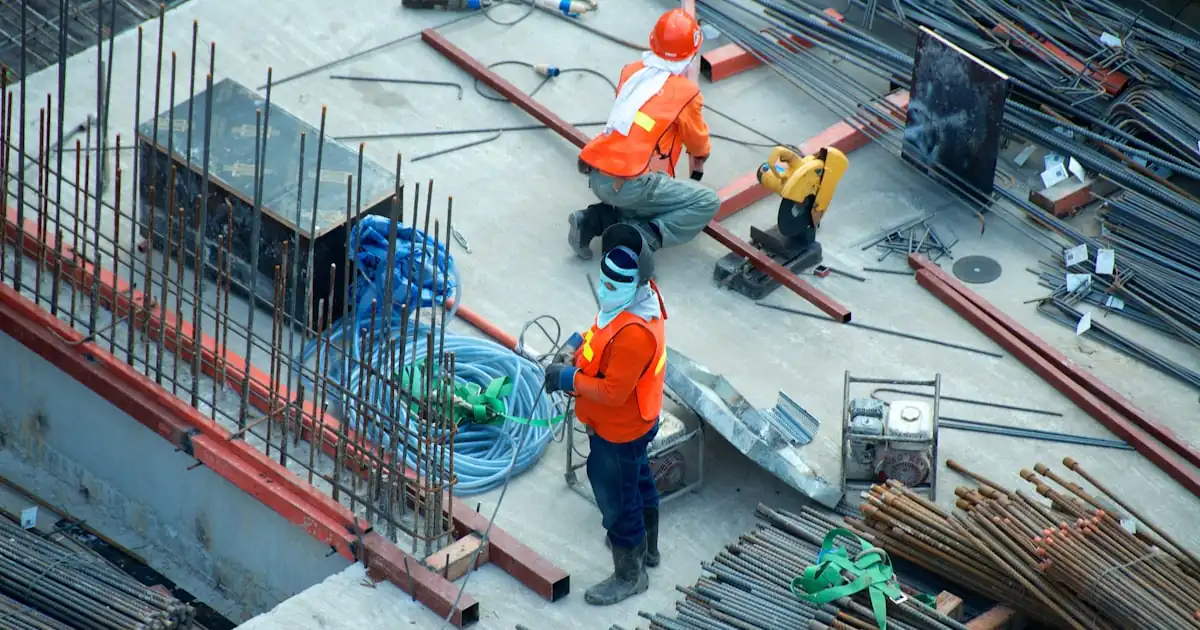
If you work in construction, you already know that your feet take a beating. Standing on concrete for 8–10 hours, carrying heavy loads, climbing ladders, and navigating uneven terrain — all in a steel-toed work boot that offers zero cushioning from the factory. At Balance Foot & Ankle, construction workers are among our most frequent patients, and the right insole is often the single highest-impact change we recommend before reaching for prescriptions or procedures.
What Makes a Good Insole for Construction Work?
Construction work creates a specific set of biomechanical demands that separate it from running or general athletic use. A good construction insole must deliver shock absorption for hard surfaces, arch support for prolonged standing, metatarsal offloading to prevent ball-of-foot pain, and a firm enough base to remain stable inside a work boot — which typically has a wide, boxy last that doesn’t grip a soft foam insert.
The four features we evaluate when recommending insoles to our construction worker patients are: heel cup depth (deeper = better shock absorption), arch height (medium is best for most workers — too low doesn’t support, too high causes fatigue), top cover durability (leather or EVA lasts longer than thin fabric in sweaty boots), and overall insole length (full-length outperforms 3/4 length for standing work).
Top Insole Picks for Construction Workers (2026)
1. Superfeet GREEN — Best Overall for High Arches and Overpronation
Superfeet GREEN is the insole we recommend most often to construction workers with flat feet or overpronation. The high-profile arch support and deep heel cup provide exceptional rearfoot control — crucial when you’re climbing ladders or walking on uneven ground for hours. The stabilizer cap (the rigid shell under the arch) keeps it from compressing flat under load, which is the death of most foam-only insoles within a few weeks. The biomechanical EVA foam layer absorbs shock effectively. Best for: flat feet, overpronation, plantar fasciitis, Achilles tendon pain. Runs about $55.
2. Powerstep Pinnacle — Best for Plantar Fasciitis in Work Boots
The Powerstep Pinnacle has become our go-to recommendation for construction workers dealing with plantar fasciitis. It combines a semi-rigid arch support with a cushioned, dual-layer foam base — more forgiving underfoot than Superfeet for workers on concrete all day. The angled heel platform reduces tension on the plantar fascia throughout the push-off phase of each step. Best for: plantar fasciitis, heel pain, moderate arch support needs. Around $40.
3. Sof Sole WORK — Best Budget Insole for Light Duty
Not everyone needs a $55 insole, and for workers with no specific foot pathology who just want better cushioning, the Sof Sole WORK is a solid choice at around $20. It uses gel heel and forefoot pads for targeted cushioning and fits most standard work boots without trimming. The downside: it lacks meaningful arch support, so it’s not appropriate for flat feet or plantar fasciitis. Best for: general cushioning, normal arches, light construction or maintenance work.
4. Timberland PRO Anti-Fatigue Insole — Best for Extreme Standing
Designed specifically for work boot use, the Timberland PRO Anti-Fatigue insole uses an inverted cone geometry in the heel that converts impact energy into return energy — similar to the technology in high-end running shoes. Workers who stand on hard concrete for full 10-hour shifts consistently report less end-of-day foot fatigue with this insole. It’s thicker than most, so boots may fit slightly tighter. Best for: extreme standing, concrete and hard surfaces, fatigue reduction. Around $45.
5. Custom Orthotics (Prescription) — Best for Persistent Pain
If you’ve tried 2–3 quality OTC insoles over 6–8 weeks without significant relief, it’s time to consider custom orthotics. We fabricate custom devices in both our Howell and Bloomfield Township offices. For construction workers, we typically use a polypropylene shell with a cushioned top cover — firm enough to control motion under load, with adequate cushioning for all-day wear. Medicare and most commercial insurance plans cover custom orthotics when medically necessary.
Key takeaway: For construction workers with plantar fasciitis or flat feet, start with Superfeet GREEN or Powerstep Pinnacle — both have a semi-rigid arch support that holds up under the sustained loading of a physical job. Soft foam insoles compress quickly and lose their effectiveness within 2–4 weeks on hard surfaces.
Common Foot Problems in Construction Workers
The top five conditions we treat in construction workers at our practice are plantar fasciitis (heel pain worst in the morning and after rest), metatarsalgia (ball-of-foot pain from prolonged forefoot loading), posterior tibial tendon dysfunction (inner ankle pain and progressive flat foot), stress fractures (particularly in the metatarsals from repetitive impact), and heel bursitis. A well-fitted insole with appropriate arch support addresses the root biomechanical cause of all five.
How to Fit Insoles in Work Boots
Remove the factory insole before inserting an aftermarket one — stacking insoles makes the boot too tight and creates pressure points. Trace your foot or the factory insole and trim the aftermarket insole to fit. Most work boots have a volume that accommodates a full-length insole, but if the fit feels tight in the toe box, a 3/4-length insole is your best option.
Break in new insoles gradually — wear them 2–3 hours the first day, increase by an hour each day over the first week. Jumping straight to a 10-hour shift with a new high-arch insole frequently causes calf soreness and forefoot fatigue as your body adapts to the new alignment.
⚠️ See a podiatrist if you experience:
- Heel pain that doesn’t improve after 6 weeks of insole use and stretching
- Numbness or burning in the ball of the foot (possible Morton’s neuroma)
- Sharp pain in the forefoot that worsens with activity — possible stress fracture
- Inner ankle pain and progressive foot flattening — posterior tibial tendon dysfunction
- Any foot wound that isn’t healing normally — especially critical if you have diabetes
Frequently Asked Questions
How long do insoles last in work boots? Quality insoles in construction use typically last 6–12 months before losing structural support. Replace when the heel cup feels flat or the arch no longer provides feedback when you press on it. The top cover usually wears out before the structural support does.
Can insoles replace a good work boot? No — insoles supplement footwear; they can’t compensate for a collapsed boot. If your work boots are over 18 months old or the midsole feels flat, a new boot will do more than any insole. Look for boots with a polyurethane or EVA midsole — they retain cushioning better than rubber alone.
Will my insurance cover custom orthotics? Most commercial insurance plans and Medicare Part B cover custom orthotics when prescribed for a covered diagnosis (plantar fasciitis, posterior tibial tendon dysfunction, diabetic neuropathy, etc.). Our office handles prior authorization and billing for all major Michigan insurers.
The Bottom Line
The right insole for a construction worker combines firm arch support, a deep heel cup, and durable cushioning that holds up under sustained load on hard surfaces. Superfeet GREEN and Powerstep Pinnacle are the two we recommend most often. If you’ve tried quality OTC insoles without lasting relief, custom orthotics are the next step — and they’re usually covered by insurance. Your feet support every hour of your workday; a $40–55 insole is one of the best ROI investments in your body.
Sources
- Gagnier JJ, et al. “Foot orthotics for treating plantar fasciitis.” Cochrane Database Syst Rev. 2021.
- Lewinson RT, Stefanyshyn DJ. “Biomechanical factors associated with the development of tibial stress fractures.” Sports Medicine. 2016;46(9):1281–1292.
- Mickle KJ, Munro BJ. “Is the foot structure of construction workers different from the general population?” Applied Ergonomics. 2009;40(6):1023–1027.
- American Podiatric Medical Association. “Orthotics.” 2023. https://www.apma.org
Ready to Get Relief?
Same-day appointments available in Howell & Bloomfield Township, MI
4.9★ | 1,123 Reviews | 3,000+ Surgeries
Or call: (810) 206-1402
How long do orthotics last?
OTC orthotics: 9-12 months. Custom orthotics: 3-5 years. Replace when the heel cup softens or you no longer feel arch support.
Are OTC or custom orthotics better?
For mild issues OTC works. For chronic plantar fasciitis, severe overpronation, or post-surgical recovery, custom orthotics outperform OTC by a wide margin.
Do orthotics weaken your foot muscles?
No clinical evidence supports this. Orthotics offload painful structures so you can move more, which strengthens muscles indirectly.
Foot pain typically responds best to early podiatrist evaluation, conservative treatments such as supportive footwear and targeted physical therapy, and—when needed—custom orthotics or in-office procedures. Most patients see meaningful improvement within 4-6 weeks of starting a structured treatment plan. Schedule an evaluation at our Howell or Bloomfield Township office for a clinical assessment.
Recovery from foot pain varies based on severity and chosen treatment path. Conservative cases often improve within 4-8 weeks with consistent adherence to the protocol. Post-procedural recovery may range from a few days (in-office procedures) to several months (reconstructive surgery). Long-term prevention involves footwear assessment, activity modification, structured strengthening, and regular check-ins with your podiatrist if you have a history of recurrence. We provide written home-exercise plans and digital follow-up support.
Ready to feel better?
Same-week appointments available in Howell and Bloomfield Township, Michigan.
Book Your VisitReady to fix this for good?
Reading goes so far. The fastest path is a 30-minute office visit. Same-day Howell or Bloomfield Township. Call (810) 206-1402.
Get Expert Care at Balance Foot & Ankle
Same-week appointments at our Howell and Bloomfield Township offices. Board-certified podiatric surgeons. Most insurance accepted.
Same-Week Appointments in Howell & Bloomfield Township
Three board-certified podiatric surgeons. 1,123+ five-star reviews. Most insurance accepted.
📖 Read next: Boots are only half the equation — the podiatrist-recommended orthotics guide covers when a work-boot insole is enough and when custom support pays off.

Dr. Tom Biernacki, DPM is a board-certified foot & ankle surgeon (ABFAS & ABPM) at Balance Foot & Ankle Specialists in Southeast Michigan. With over a decade of clinical experience, he specializes in heel pain, bunions, diabetic foot care, sports injuries, and minimally invasive surgery. Dr. Biernacki is a member of the APMA and ACFAS, and his patient education content on MichiganFootDoctors.com and YouTube has made him one of the most-followed foot & ankle educators on YouTube.