

The most important clinical decision with Metatarsalgia isn’t which treatment to start with — it’s identifying the correct subtype. That changes everything. Call (810) 206-1402.
Metatarsalgia: Causes, Diagnosis & Treatment from a Podiatrist
Medically reviewed by Dr. Tom Biernacki, DPM
Board-certified podiatric surgeon | Balance Foot & Ankle
Last reviewed: May 2026
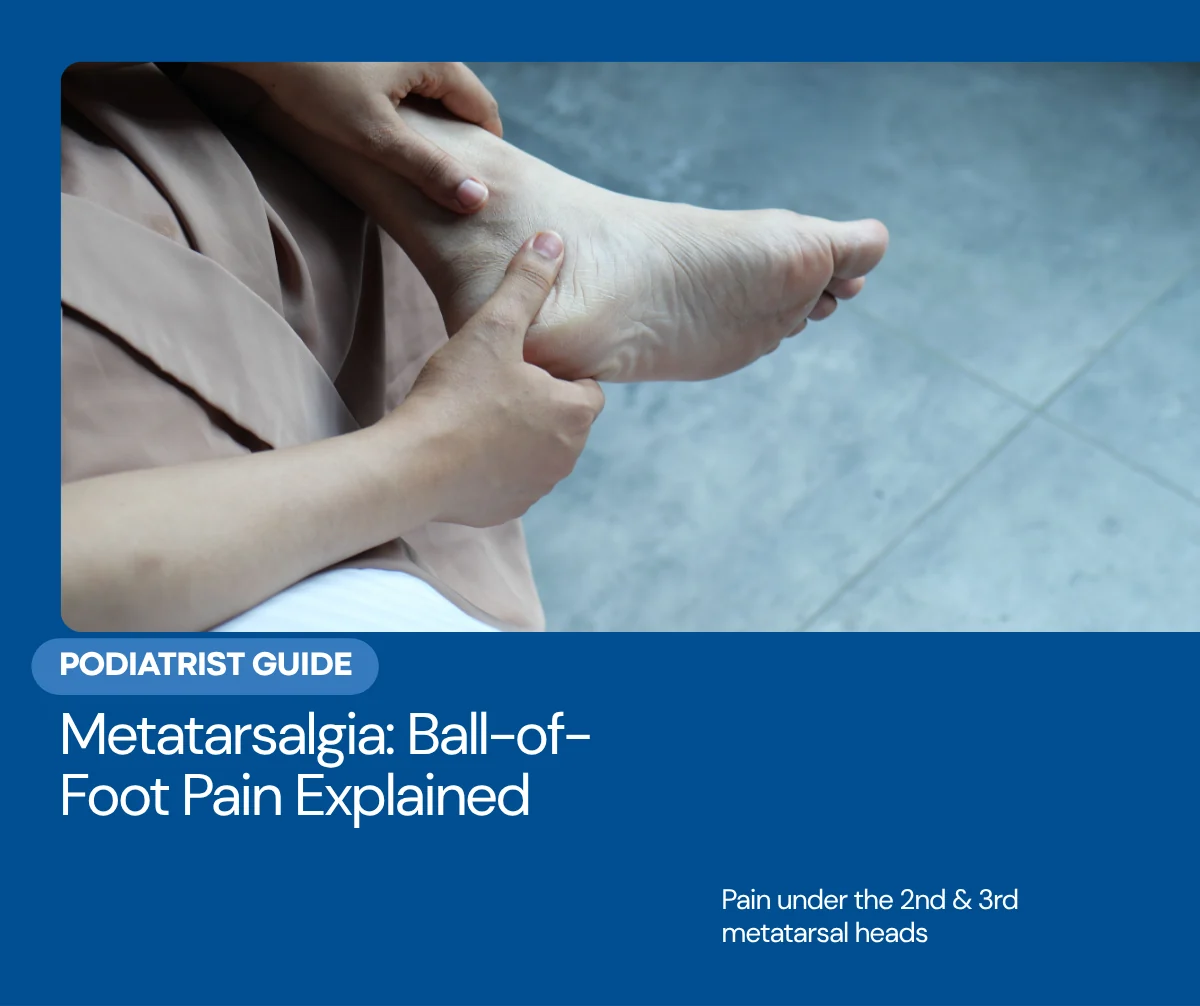
That burning, aching, or sharp pain under the ball of your foot — like walking on pebbles or marbles — has a name: metatarsalgia. It’s one of the most common foot complaints we treat, and also one of the most frequently undertreated, because “metatarsalgia” describes a location of pain rather than a specific diagnosis. Identifying the actual cause — Morton’s neuroma, plantar plate tear, sesamoid stress fracture, fat pad atrophy, or simple overload from a high-arched foot — is the only way to achieve lasting relief. Our Morton’s neuroma vs. metatarsalgia guide walks through how we separate the two most commonly confused causes.
What Is Metatarsalgia?
Metatarsalgia refers to pain localized to the plantar aspect of the forefoot, beneath the metatarsal heads (the rounded ends of the five metatarsals that bear weight). The term describes a symptom complex rather than a specific pathology — it is analogous to “knee pain” rather than “meniscus tear.” The second and third metatarsal heads are the most commonly affected because they carry the highest proportion of peak plantar pressure during the push-off phase of gait.
Metatarsalgia is classified as primary (caused by intrinsic foot structure — high arch, long second metatarsal, hallux valgus transferring load) or secondary (caused by systemic conditions — RA, gout, stress fracture, avascular necrosis of the metatarsal head/Freiberg’s infraction). Understanding which type drives treatment selection.
Common Causes of Metatarsalgia
- Plantar plate tear — the plantar plate is the fibrocartilaginous stabilizer of the MTP joint; partial or complete tears produce 2nd/3rd MTP joint pain, “V-sign” toe splaying, and dorsal joint instability on the Lachman drawer test. Increasingly recognized as a primary cause of second MTP joint pain
- Morton’s neuroma — interdigital nerve entrapment, typically between the 3rd and 4th metatarsal heads; produces burning, radiating pain and numbness into the web space
- Sesamoid pathology — sesamoiditis, sesamoid stress fracture, or avascular necrosis beneath the first MTP joint
- Fat pad atrophy — age-related loss of the plantar fat pad reduces cushioning under the metatarsal heads; most pronounced in patients over 60 and in runners with very high mileage
- High-arched (cavus) foot — increased forefoot load from rigid supinated foot type
- Freiberg’s infraction — avascular necrosis of a metatarsal head (usually 2nd), most common in adolescent females; produces a flattened, distorted metatarsal head on X-ray
- Hallux valgus or rigidus — transfers weight laterally to the lesser metatarsals when the first ray loses its normal load-bearing function
Key takeaway: Plantar plate tears are the most commonly missed cause of second MTP joint metatarsalgia. Clinical signs include a positive Lachman/drawer test (dorsal instability of the 2nd toe MTP joint), V-sign (gap between 2nd and 3rd toes), and pain reproduced with plantar compression at the MTP joint. MRI confirms the diagnosis.
Metatarsalgia Diagnosis
Our evaluation protocol includes: detailed history of onset, footwear, activity level, and systemic conditions; weight-bearing examination with gait analysis; specific clinical tests (Mulder’s click for neuroma, MTP Lachman for plantar plate, sesamoid grind test); plantar pressure mapping to identify pressure overload patterns; and weight-bearing X-rays to assess structural alignment and look for Freiberg’s infraction or sesamoid pathology. MRI is reserved for plantar plate tear evaluation, suspected avascular necrosis, or persistent metatarsalgia not responding to 6-8 weeks of conservative care.
Metatarsalgia Treatment
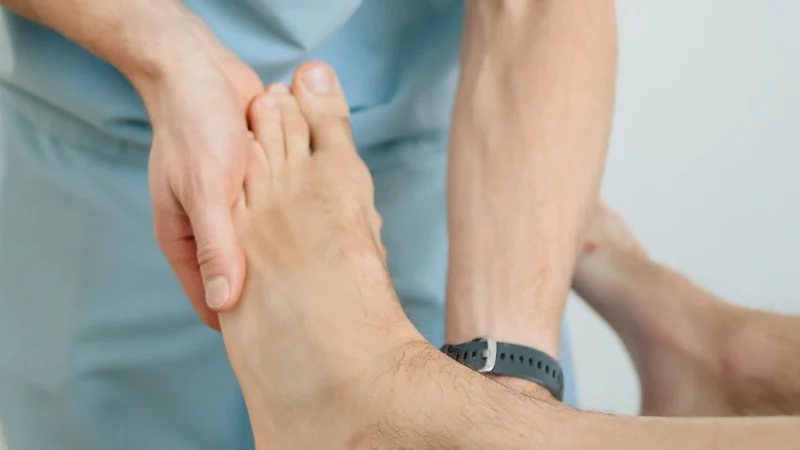
First-line conservative treatment addresses the mechanical overload mechanism directly. Custom orthotics with a metatarsal pad positioned just proximal to the metatarsal heads redistribute plantar pressure away from the painful area — this is one of the most effective interventions for primary metatarsalgia. Footwear with adequate forefoot depth, wide toe box, and cushioned midsole reduces impact loading. Relative activity modification reduces cumulative load during the acute phase.
Cause-specific treatments: Morton’s neuroma — corticosteroid injection or sclerosing alcohol injections; surgical excision for refractory cases. Plantar plate tears — buddy taping, metatarsal offloading pad, and MTP joint capsule injection; surgical plantar plate repair for full-thickness tears. Freiberg’s infraction — offloading in acute stage; dorsiflexion osteotomy of the metatarsal head for symptomatic late-stage disease. Fat pad atrophy — cushioned orthotics and supportive footwear; autologous fat transfer is emerging as a surgical option in selected cases.
The Most Common Mistake We See
The most common error is treating metatarsalgia generically with “metatarsal pads from the pharmacy” without identifying which of the seven different causes is actually present. A metatarsal pad placed in the wrong position — or used when the actual diagnosis is a plantar plate tear requiring taping and specific offloading — may provide no relief or even worsen symptoms. Diagnosis-specific treatment produces dramatically better outcomes than generic forefoot padding.
A typical case from our Howell office: a 61-year-old retired teacher arrived with six months of ball-of-foot pain and a drawer full of pharmacy metatarsal pads — every one of them positioned directly under the sore spot, which increases pressure on the inflamed metatarsal heads. Repositioning the pad about a centimeter behind the metatarsal heads and switching her to a rocker-sole walking shoe resolved her pain within three weeks — no injection required. The pad was never the problem; the placement was.
⚠️ See a podiatrist for ball-of-foot pain if:
- Pain has been present more than 4-6 weeks without improvement
- You notice a gap developing between the 2nd and 3rd toes (possible plantar plate tear)
- Numbness or burning radiates into the toes (possible Morton’s neuroma)
- Pain is localized under the big toe area (possible sesamoid pathology)
- You have diabetes — forefoot pain in diabetics warrants prompt evaluation to rule out Charcot or ulceration
Frequently Asked Questions
Will metatarsalgia go away on its own?
Simple overload metatarsalgia from a single bout of excessive activity may resolve with a few days of rest and footwear change. Structural causes — plantar plate tears, Freiberg’s infraction, fat pad atrophy — do not resolve without targeted treatment. Pain persisting more than 4-6 weeks needs professional evaluation.
What is the best shoe for metatarsalgia?
Wide toe box, adequate forefoot depth (to avoid compression), supportive midsole with cushioning, and a rocker-bottom or moderately stiff forefoot. Maximalist running shoes (thick cushioned midsoles) reduce impact force. Thin-soled shoes and high heels both increase metatarsal head pressure and worsen metatarsalgia.
Can metatarsalgia require surgery?
Rarely for primary overload metatarsalgia. Surgery is considered for: full-thickness plantar plate tears, refractory Morton’s neuroma, Freiberg’s infraction with joint destruction, and structural deformities (Weil metatarsal osteotomy for metatarsal length inequality) that cannot be accommodated conservatively.
The Bottom Line
Metatarsalgia is a symptom that demands a diagnosis — not generic padding. Once the specific cause is identified, targeted treatment with orthotics, footwear modification, and procedure-specific interventions relieves the vast majority of cases without surgery. Persistent ball-of-foot pain needs a systematic evaluation to rule out plantar plate tears, neuroma, and sesamoid pathology before settling on a treatment plan.
Sources
- Highlander P et al. Metatarsalgia. Clin Podiatr Med Surg. 2021.
- Nery C et al. Plantar plate tears. Foot Ankle Int. 2022.
- Espinosa N et al. Metatarsalgia. JAAOS. 2023.
- Effectiveness of customised orthotic treatment in plantar pressure reduction of the central metatarsals: systematic review & meta-analysis. Journal of Orthopaedics. 2024.
- Do orthotics with a metatarsal pad decrease pain in older adults? Randomized controlled trial. Phys Occup Ther Geriatr. 2023.
Ready to Get Relief? Same-Day Appointments Available.
Howell & Bloomfield Hills, MI
4.9★ | 1,123 Reviews | 3,000+ Surgeries
Or call: (810) 206-1402
Pain on top of the foot? See our condition guide: Extensor Tendonitis — Michigan podiatrist explains causes, exam findings, and the fastest treatment options.
A stone bruise (metatarsal fat pad contusion) produces focal pain very similar to metatarsalgia and should be ruled out. See our guide: Stone Bruise vs. Metatarsalgia: Key Differences.
Toe separation is a key warning sign of plantar plate injury — a common metatarsalgia complication. See our guide: Toes Spreading Apart: What It Means for Your Forefoot Health.
Severe metatarsalgia sometimes requires short-term offloading in a walking boot — here is how to use one correctly. See our guide: Tips for Wearing a Walking Boot After Foot Injury.
For a complete clinical overview: Foot & Ankle Pain — Complete Guide — all common foot conditions explained by a board-certified podiatrist
What causes ball of foot pain (metatarsalgia)?
Metatarsalgia — pain and inflammation under the ball of the foot — has multiple causes: excessive pressure on the metatarsal heads from high heels, narrow shoes, or high-impact activities; age-related fat pad atrophy (the protective cushion under the metatarsals thins with age); Morton’s neuroma (nerve entrapment between the 3rd and 4th metatarsals); metatarsal stress fractures; sesamoiditis; and systemic conditions like rheumatoid arthritis. A podiatrist can identify the specific cause through examination and imaging.
How long does metatarsalgia take to heal?
Mild metatarsalgia from overuse typically improves in 2–4 weeks with reduced activity, metatarsal pads, and cushioned footwear. Moderate cases may take 6–8 weeks. Morton’s neuroma (a common cause of metatarsalgia) may require 3–6 months of conservative treatment, corticosteroid injections, or occasionally surgical intervention. Fat pad atrophy is a chronic condition managed long-term with cushioned orthotics and accommodative footwear rather than cured.
Can metatarsalgia be cured permanently?
It depends on the underlying cause. Metatarsalgia from overuse or footwear errors fully resolves with appropriate treatment and prevention. Morton’s neuroma can be permanently resolved with surgical neurectomy in resistant cases (>90% success rate). Fat pad atrophy is a degenerative condition — managed effectively with orthotics and appropriate footwear but not reversible. Identifying and correcting the underlying mechanical cause (overpronation, tight calf muscles, inappropriate shoes) is essential for lasting relief.
What is the best treatment for ball of foot pain?
The most effective conservative treatments include: metatarsal pads placed proximal (behind) the metatarsal heads to redistribute pressure; cushioned insoles or custom orthotics with metatarsal support; switching to wide, low-heeled shoes with adequate forefoot depth; stretching the plantar intrinsic muscles; and reducing high-impact activities. For Morton’s neuroma, corticosteroid or alcohol sclerosing injections provide good relief. Custom orthotics with metatarsal accommodation are the cornerstone of long-term management.
Complete Metatarsalgia Resource Library
- Best Shoes for Metatarsalgia 2026 · Best Metatarsalgia Shoes
- Best Metatarsal Pads — Podiatrist Guide — gel pads, felt pads, and custom metatarsal accommodation reviewed and ranked.
- Best Shoes for Ball-of-Foot Pain — broad category overview including Morton’s neuroma, capsulitis, and fat pad atrophy.
When ball-of-foot pain keeps coming back
Metatarsalgia is a symptom, not a diagnosis. The real driver is usually a long metatarsal, a plantar plate tear, a neuroma, or a fat-pad shift. Generic gel pads rarely fix it because they are not placed where the load actually is. We map plantar pressure in office, identify the overloaded metatarsal head, and build a targeted metatarsal pad or orthotic offload that resolves most cases without surgery.
Balance Foot & Ankle — Howell & Bloomfield Hills, MI: board-certified podiatrists, same-week appointments, most insurance accepted.
Book a Forefoot Evaluation → or call (810) 206-1402
Related reading: best metatarsalgia shoes · Morton toe · podiatrist-recommended metatarsal pads
📋 Dr. Tom Biernacki, DPM, FACFAS answers:
Metatarsalgia is pain under the ball of the foot caused by excessive pressure on the metatarsal heads. Common causes include high-arched feet (which concentrate load on the metatarsals), tight calf muscles, shoes with thin soles or high heels, excess body weight, and biomechanical conditions like hallux limitus or hammer toes that transfer load to the lesser metatarsals. Treatment centers on pressure redistribution: metatarsal pads placed just behind (proximal to) the metatarsal heads are inexpensive and highly effective. Custom orthotics with metatarsal accommodation address the underlying biomechanics. Wide toe-box, cushioned shoes are essential. In cases where a specific metatarsal is depressed or a neuroma has developed, a podiatrist can offer targeted injection or, as a last resort, metatarsal osteotomy.
Clinical sources
- Overview of Metatarsalgia. StatPearls / NCBI. PubMed
- Metatarsalgia — clinical review article. Foot and Ankle Surgery. Reference
One specific and often-missed cause of pain under the ball of the foot is sesamoiditis, inflammation of the two small bones beneath the big-toe joint, which needs its own targeted treatment.
When forefoot pain centers under the second toe, splinting the joint helps — our guide to capsulitis of the second toe taping walks through the buddy-taping technique step by step.
Getting Care at Balance Foot & Ankle
Treated at our Howell and Bloomfield Township offices — same-week appointments available.
- 5 Signs You Need to See a Podiatrist
- What Happens at Your First Visit
- Morton’s Neuroma Non-Surgical Treatment — Conservative Options Michigan
- Stress Reaction in Foot: Causes 2026 | DPM
- Bump on Top of Foot: Causes, Diagnosis & Best Treatment (2026)
- Extensor Tendon Injuries of the Foot: Lacerations, Ruptures, and Surgical Repair
- Best Walking Shoes With Wide Toe Box — Bunions & Hammertoes 2026
- Hammer Toe Pain Relief 2026: Complete Guide | Podiatrist

Dr. Tom Biernacki, DPM is a board-certified foot & ankle surgeon (ABFAS & ABPM) at Balance Foot & Ankle Specialists in Southeast Michigan. With over a decade of clinical experience, he specializes in heel pain, bunions, diabetic foot care, sports injuries, and minimally invasive surgery. Dr. Biernacki is a member of the APMA and ACFAS, and his patient education content on MichiganFootDoctors.com and YouTube has made him one of the most-followed foot & ankle educators on YouTube.