
Quick Answer
Custom orthotics are prescription inserts made from a 3D scan of your foot. They address the structural cause of plantar fasciitis, flat feet, or metatarsalgia rather than just cushioning symptoms. Most patients feel improvement within 2-4 weeks. Covered by most PPO plans and Medicare when medically indicated.
Watch: Dr. Tom Biernacki, DPM

Best insoles for standing all day 2026: PowerStep Pinnacle is the #1 podiatrist-recommended insole for workers on their feet all day — superior arch support, dual-layer cushioning, and a heel cup that reduces shock throughout an 8–12 hour shift. For flat feet or overpronation, upgrade to a full orthotic device. All picks below are podiatrist-evaluated and appropriate for nurses, teachers, retail workers, and manufacturing staff.
Why Your Insoles Make or Break a Long Shift
The stock insoles in most work shoes are functional for 6–8 hours of moderate use at best. After that, they compress to a fraction of their original thickness and provide minimal shock absorption or arch support. Workers who stand for 8–12 hours on concrete — nurses, teachers, restaurant staff, warehouse workers — are essentially standing on a thin foam board for the last 4 hours of their shift.
Treatment at Balance Foot & Ankle: Custom 3D Orthotics →
A quality aftermarket insole replaces this failed cushioning with engineered materials designed to maintain their shock-absorbing and arch-supporting properties throughout a full working day. The clinical benefit is significant: reduced plantar fasciitis risk, less metatarsal stress, lower incidence of posterior tibial tendon dysfunction, and dramatically less foot fatigue by end of shift.
What to Look for in a Standing Insole
Semi-rigid arch support. A purely soft insole absorbs shock but doesn’t control foot mechanics. A semi-rigid arch support controls pronation, distributes load evenly, and prevents the arch collapse that drives plantar fasciitis and posterior tibial tendon strain.
Deep heel cup. The heel fat pad spreads under body weight with each step. A deep heel cup contains the fat pad and maximizes its natural shock-absorbing function — the same principle behind custom orthotic devices.
Dual-layer cushioning. Top layer: soft and conforming for comfort. Bottom layer: firm and resilient for sustained support. Single-layer insoles flatten quickly; dual-layer designs maintain their properties throughout a full shift.
Moisture-wicking top cover. Standing workers sweat significantly more than sedentary workers. A moisture-wicking fabric cover reduces maceration (skin softening from prolonged moisture), blister risk, and fungal conditions.
Best Insoles for Standing All Day 2026
🥇 #1 Overall: PowerStep Pinnacle — #1 Podiatrist Recommended
PowerStep Pinnacle is the best-selling and most podiatrist-recommended OTC insole in the country — and for good reason. The semi-rigid arch plate controls pronation and distributes load across the entire foot, while the dual-layer foam cushioning maintains its resilience through a full 12-hour shift. The deep heel cup maximizes natural shock absorption. The VCT (Variable Cushion Technology) outer layer wicks moisture and prevents heat buildup. For workers on their feet all day, this is the insole we recommend before any other intervention — it resolves a meaningful percentage of plantar fasciitis and arch pain cases on its own when combined with appropriate footwear.
#2 Best for High Arches: Firm Arch Support Insole
Workers with high-arched (supinated) feet need a different insole geometry than flat-footed workers. This firm arch support insole provides a higher arch fill that matches the natural contour of a high arch, preventing the arch from hammering down into a flat insole. The firm base plate also improves load distribution for the rigid, high-arched foot that doesn’t pronate and absorb shock naturally.
#3 Best for Flat Feet / Overpronation: Maximum Arch Orthotic
Workers with flat feet or significant overpronation need a more aggressive arch support than standard insoles provide. This maximum-arch insole controls rearfoot eversion and reduces the strain on the posterior tibial tendon that drives adult-acquired flatfoot deformity. Pairs exceptionally well with motion-control or stability work shoes. Our recommendation for workers whose flat feet cause knee, hip, or lower back pain that tracks to foot mechanics.
#4 Best Budget: Full-Day Work Insole
For workers who need meaningful arch support and cushioning without the premium price point, this insole delivers solid biomechanical correction at a fraction of the cost of branded options. The arch support geometry is clinically appropriate, and the foam density maintains adequate resilience for an 8-hour work shift. Replace every 4–6 months rather than waiting for visible wear — foam loses its functional properties before its structural integrity fails.
#5 Best Paired with Compression Socks: Insole + Compression Combination
Standing workers who experience swelling, leg fatigue, and venous discomfort by end of shift get the greatest benefit from combining a quality insole with graduated compression socks. The insole manages foot mechanics and shock absorption; the compression socks improve venous return, reduce leg fatigue and swelling, and lower DVT risk for workers in high-standing-time roles. This combination approach is what we recommend for nurses, surgeons, and retail workers who experience both foot pain and leg swelling by end of shift.
More Podiatrist-Recommended Orthotics Essentials
PowerStep Pinnacle

The podiatrist-recommended OTC orthotic — arch support + heel cup.
CURREX RunPro Insole
Performance insole for runners — reduces fatigue and prevents injuries.
Tuli’s Heel Cups

Shock-absorbing heel cushion — adds lift and relief under painful heels.
As an Amazon Associate, Balance Foot & Ankle earns from qualifying purchases. Product recommendations are based on clinical experience; prices and availability shown above update live from Amazon.
When to See a Podiatrist
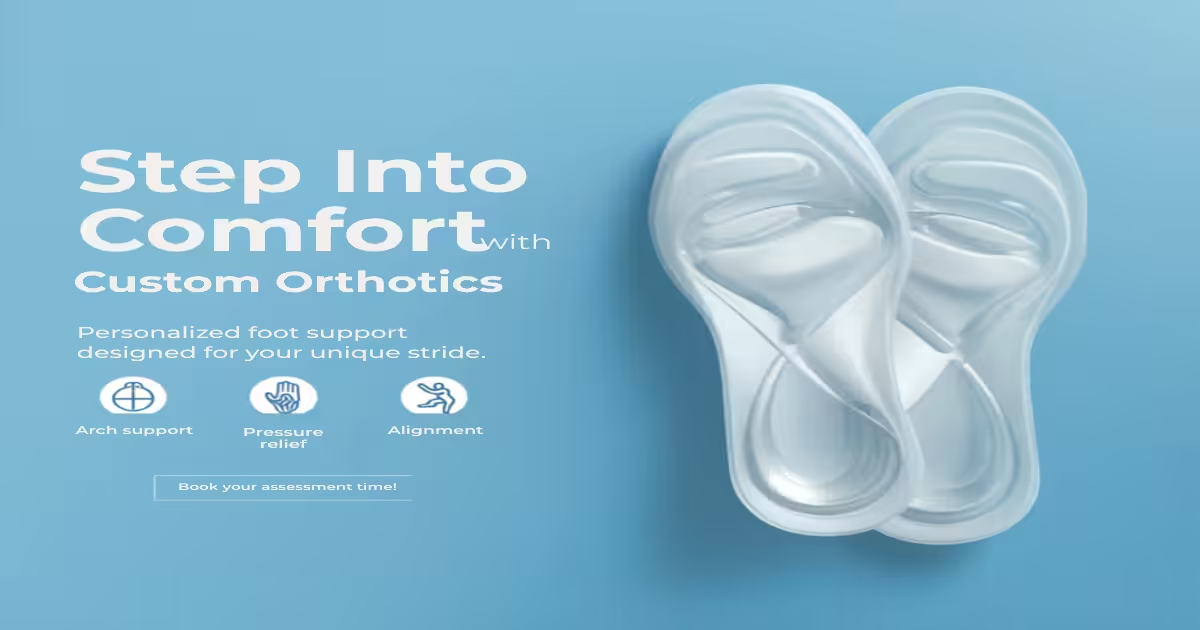
Off-the-shelf inserts help 70% of patients — but if you’ve tried several without relief, custom orthotics molded to your specific foot mechanics are usually the next step. Balance Foot & Ankle makes custom orthotics in-office and most major insurance plans cover them. We’ll cast or scan your feet and have them ready in about 2 weeks.
Call Balance Foot & Ankle: (810) 206-1402 · Book online · Offices in Howell & Bloomfield Hills
FAQ
How often should I replace insoles if I stand all day?
Every 4–6 months for workers logging 8+ hours on their feet daily. Insole foam loses its energy return and arch-support properties long before it shows visible wear. A good rule: if your feet feel noticeably more tired at end-of-shift than they did when the insoles were new, they’ve lost functional effectiveness and should be replaced.
Are insoles better than custom orthotics?
Custom orthotics are prescription medical devices designed for your specific foot mechanics — they provide correction that OTC insoles cannot replicate for complex deformities. However, high-quality OTC insoles like PowerStep Pinnacle resolve many cases of plantar fasciitis and arch pain without needing custom devices. We recommend starting with a quality OTC insole; if symptoms persist after 6–8 weeks, a custom orthotic evaluation is appropriate.
Foot Pain During Long Work Shifts?
Dr. Tom provides gait analysis, custom orthotics, and occupational foot health evaluation at our Howell and Bloomfield Hills offices.
Book Your Evaluation →⭐⭐⭐⭐⭐ 4.9 Stars · 1,100+ Reviews
In Our Clinic
The patients we see for custom orthotic consultations usually fall into two groups. First are athletes — runners, hikers, basketball players — looking to correct a biomechanical asymmetry they’ve identified themselves or their coach has flagged. Second are middle-aged patients with chronic plantar fasciitis, metatarsalgia, or early arthritis who have exhausted over-the-counter inserts. Our process begins with a 3D foot scan plus a gait-video analysis on our in-office treadmill. We select materials based on activity — a stiffer carbon composite for performance running, a softer plastazote top cover for diabetic patients, a semi-rigid polypropylene for everyday wear. Most patients adapt in 2–4 weeks.
Most Common Mistake We See
The most common mistake we see is: Wearing new orthotics all day from day one. Fix: break-in schedule of 2 hours on day one, adding 2 hours per day until full-day tolerance.
Warning Signs That Need Same-Day Care
Seek immediate evaluation at Balance Foot & Ankle if you experience any of the following:
- New sharp pain under the arch that did not exist before
- Skin breakdown over pressure points
- Diabetic patient with any new pressure spot
- Worsening of original symptoms after 4 weeks
Call (810) 206-1402 — same-day and next-day appointments at our Howell and Bloomfield Hills offices.

Dr. Tom Biernacki, DPM is a double board-certified podiatrist and foot & ankle surgeon at Balance Foot & Ankle Specialists in Southeast Michigan. With over a decade of clinical experience, he specializes in heel pain, bunions, diabetic foot care, sports injuries, and minimally invasive surgery. Dr. Biernacki is a member of the APMA and ACFAS, and his patient education content on MichiganFootDoctors.com and YouTube has reached over one million views.
- Plantar Fasciitis: Diagnosis and Conservative Management (PubMed)
- Plantar Fasciitis (APMA)
- Diagnosis and Treatment of Plantar Fasciitis (PubMed / AAFP)
- Heel Pain (APMA)
Recommended Products from Dr. Tom