
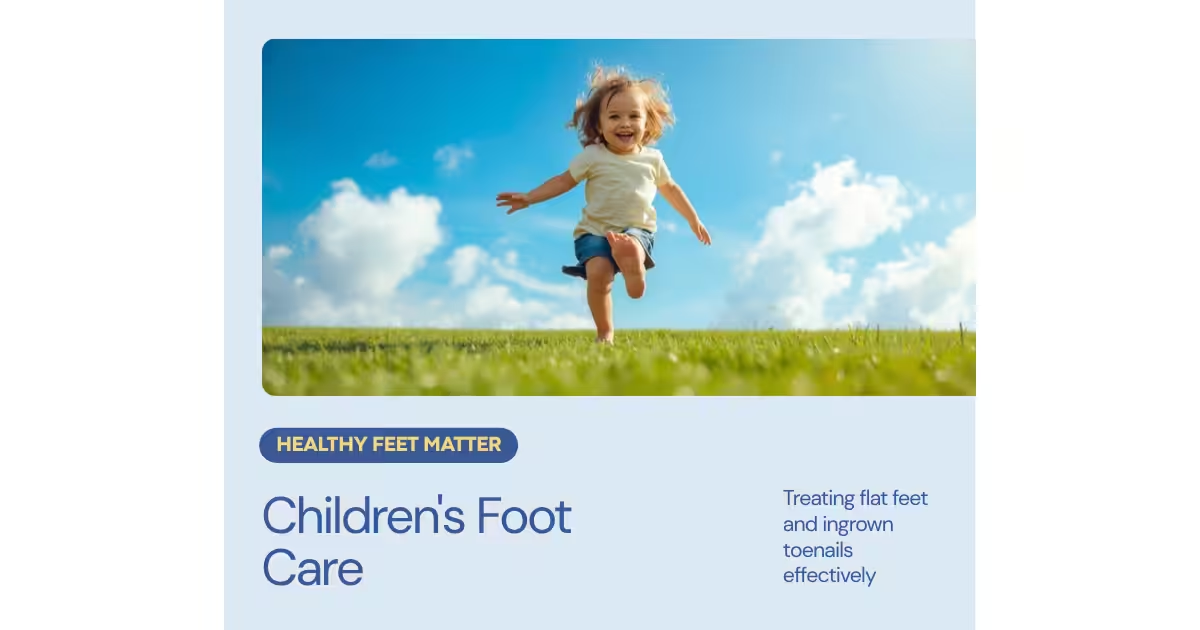
Quick answer: Childrens Foot Development Milestones Normal When To See Podiatrist is a common foot/ankle topic that affects many patients. The 2026 evidence-based approach combines proper diagnosis, conservative-first treatment, and escalation only when needed. We treat this regularly at our Howell and Bloomfield Township practices. Call (810) 206-1402.
Medically reviewed by Dr. Tom Biernacki, DPM — Board-Certified Podiatric Surgeon — Balance Foot & Ankle, Howell & Bloomfield Hills, MI. Last updated April 2026.
▶ Watch

Medically reviewed by Dr. Tom Biernacki, DPM | Board-certified podiatrist | 3,000+ surgeries performed
Last updated: April 2, 2026
Quick Answer
Children’s feet undergo remarkable structural changes from birth through adolescence, progressing from flexible cartilaginous structures to fully ossified adult feet by age 18. Understanding normal developmental milestones helps parents identify potential problems early. At Balance Foot & Ankle, Dr. Tom Biernacki provides pediatric foot evaluations that distinguish normal variation from conditions requiring treatment.
Normal Foot Development Milestones: Birth to Age 18
At birth, a baby’s foot is mostly cartilage with only one ossified tarsal bone (the calcaneus). Over the next 5 years, the remaining tarsal bones ossify and the foot’s basic architecture takes shape. The apparent flat feet in infants and toddlers is completely normal—the medial longitudinal arch doesn’t fully develop until age 5-7 as the fat pad beneath the arch thins and intrinsic muscles strengthen.
Between ages 3-6, children transition from toddler gait patterns to mature heel-toe walking. Mild in-toeing (pigeon toes) and out-toeing are common developmental variations that typically resolve spontaneously by age 8. Toe-walking is normal until age 3 but warrants evaluation if it persists, as it may indicate tight heel cords or neurological conditions.
Ages 7-14 represent the most active growth phase for foot development. Growth plates in the metatarsals and phalanges are active and vulnerable to injury. The foot reaches approximately 90% of adult size by age 12 in girls and age 14 in boys. The final growth plate closure occurs at the calcaneal apophysis around age 14-16, making Sever’s disease (heel growth plate irritation) common during this period.
Flat Feet in Children: When to Worry and When to Wait
Flexible flatfoot is present in virtually all children under age 3 and remains in approximately 20-25% of adults. In most cases, the arch appears when standing on tiptoes or when the foot is non-weight-bearing but flattens during standing. Flexible flatfoot is usually painless and requires no treatment—studies consistently show that arch supports and special shoes do not accelerate arch development in asymptomatic flexible flatfoot.
Rigid flatfoot—where the arch is absent both with and without weight-bearing—is less common and may indicate tarsal coalition (bony or cartilaginous bridge between tarsal bones), vertical talus, or other structural abnormalities. These conditions require evaluation and often treatment. Warning signs include pain, stiffness, progressive deformity, and difficulty keeping up with peers during activities.
A 2024 Journal of Pediatric Orthopaedics study confirmed that asymptomatic flexible flatfoot in children under 10 does not require orthotic intervention and should be monitored rather than treated. Orthotics are reserved for children with painful flatfoot, abnormal shoe wear patterns, or functional limitations.
Common Pediatric Foot Conditions by Age Group
Toddlers (1-3): metatarsus adductus (inward-curved forefoot), toe-walking, curly toes, and polydactyly (extra toes). Most metatarsus adductus resolves by age 3 with gentle stretching. Rigid cases may need serial casting. Curly toes (underlapping third, fourth, or fifth toes) rarely cause problems and typically improve with growth.
School-age (4-10): Sever’s disease (calcaneal apophysitis) is the most common cause of heel pain in children ages 8-14, caused by repetitive stress on the growth plate during sports. Iselin disease affects the fifth metatarsal base growth plate similarly. Kohler disease (navicular avascular necrosis) causes midfoot pain in children ages 3-7. In-toeing from metatarsus adductus, tibial torsion, or femoral anteversion usually resolves spontaneously.
Adolescents (11-18): ingrown toenails increase dramatically during puberty, bunions may begin developing (especially in girls), accessory navicular syndrome becomes symptomatic, ankle sprains become more common with sports participation, and stress fractures occur with training overload. This is also when tarsal coalitions typically become symptomatic as the cartilaginous bar ossifies.
Children’s Shoe Fitting: Evidence-Based Recommendations
Babies and pre-walkers do not need shoes—barefoot time strengthens intrinsic foot muscles and promotes sensory development. When protection from surfaces is needed, soft-soled booties or socks are sufficient. Rigid shoes before walking age can actually interfere with normal foot development.
For new walkers (12-24 months), choose lightweight shoes with flexible soles that allow the foot to bend naturally at the metatarsophalangeal joints. The shoe should have a firm heel counter for stability, a wide toe box that doesn’t compress the toes, and secure fastening (Velcro or laces). Check fit every 2-3 months during rapid growth phases.
For school-age children, properly fitted athletic shoes with adequate cushioning and arch support are appropriate for daily wear. Shoes should be fitted with a thumb’s width of space between the longest toe and shoe end, and the widest part of the shoe should match the widest part of the foot. Hand-me-down shoes are acceptable only if they show no excessive wear patterns, as worn shoes can transmit abnormal gait patterns.
Sports Injuries in Growing Feet
Growth plate injuries in the foot and ankle are unique to pediatric athletes and require careful management. The growth plate (physis) is the weakest link in the musculoskeletal chain during development—forces that would cause ligament sprains in adults often produce growth plate fractures in children. Salter-Harris fracture classification guides treatment decisions and helps predict growth disturbance risk.
Sever’s disease is the most common sports-related heel condition in children, affecting active kids ages 8-14 during growth spurts. Treatment includes heel cups, activity modification, calf stretching, and temporary reduction in high-impact activities. Symptoms typically resolve within 2-6 months and always resolve when the growth plate closes at skeletal maturity.
Overuse injuries including stress fractures, tendinitis, and apophysitis are increasingly common in young athletes who specialize in a single sport year-round. The American Academy of Pediatrics recommends sport specialization no earlier than age 15-16 and at least 2-3 months off from any single sport annually to allow growing tissues to recover and adapt.
When to See a Pediatric Foot Specialist
Schedule an evaluation if your child complains of persistent foot or heel pain lasting more than 2 weeks, limps during or after activity, has visibly different foot shapes between right and left, toe-walks persistently after age 3, has rigid flat feet that don’t form an arch on tiptoe, or if you notice unusual shoe wear patterns.
Early evaluation of foot concerns is important because many pediatric conditions respond best to treatment during specific developmental windows. Clubfoot correction, for example, is most effective when begun within the first weeks of life. Tarsal coalitions detected before adolescence may be managed with orthotics, while symptomatic coalitions in teenagers may require surgical resection.
At Balance Foot & Ankle, Dr. Biernacki provides family-friendly pediatric foot evaluations including digital radiography and diagnostic ultrasound at both Howell and Bloomfield Hills locations. We explain findings clearly to both parents and children and take a conservative-first approach, reserving interventions for conditions that genuinely need treatment.
Warning Signs Requiring Urgent Evaluation
- function bold() { [native code] } — undefined
- function bold() { [native code] } — undefined
- function bold() { [native code] } — undefined
- function bold() { [native code] } — undefined
The Most Common Mistake We See
The biggest mistake parents make is putting young children in rigid corrective shoes or expensive orthotics for normal flexible flatfoot. Research consistently shows that most children’s feet develop normally without intervention, and unnecessary devices can actually weaken intrinsic foot muscles. The key is knowing which variations are normal and which warrant evaluation—a pediatric foot specialist can provide clarity in a single visit.
Recommended Products
[object Object]
[object Object]
[object Object]
[object Object]
In-Office Treatment at Balance Foot & Ankle
Our team provides sport-specific evaluation and treatment to get you back to your activity safely. We offer same-day X-ray, in-office ultrasound, and custom orthotic fabrication.
Same-day appointments available. Call (810) 206-1402 or book online.
More Podiatrist-Recommended Pediatric Essentials
Hoka Clifton 10

Max-cushion everyday shoe — podiatrist favorite for walking and running.

OOFOS Recovery Slide

Impact-absorbing recovery sandal — wear after long days on your feet.
As an Amazon Associate, Balance Foot & Ankle earns from qualifying purchases. Product recommendations are based on clinical experience; prices and availability shown above update live from Amazon.
When to See a Podiatrist
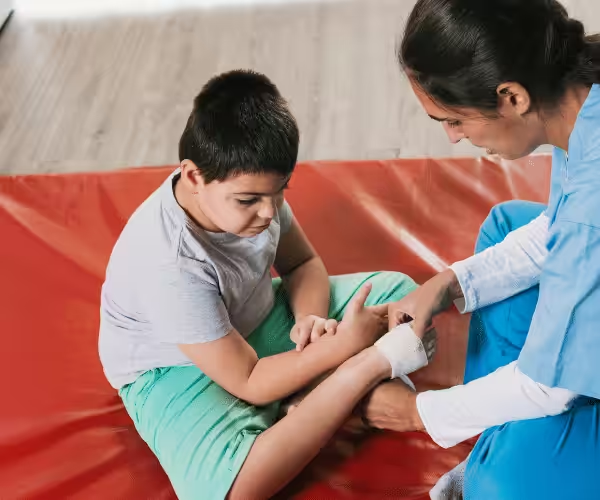
Children’s foot pain is never normal — flat feet, in-toeing, heel pain (Sever’s disease), and curly toes all have effective non-surgical treatments when caught early. Balance Foot & Ankle evaluates pediatric patients with gentle, age-appropriate exams and parent-friendly treatment plans. Most pediatric issues resolve with the right inserts and guided activity modification.
Call Balance Foot & Ankle: (810) 206-1402 · Book online · Offices in Howell & Bloomfield Hills
Frequently Asked Questions
When do children’s arches fully develop?
The medial longitudinal arch typically develops between ages 5-7 as the fat pad under the arch thins and intrinsic foot muscles strengthen. Some children develop their arch earlier, some later. Approximately 20-25% of adults retain flexible flat feet without any problems.
Should my toddler wear shoes all the time?
No. Barefoot time on safe surfaces strengthens foot muscles and promotes normal development. Pre-walkers need only soft-soled booties for warmth and protection. Once walking, lightweight flexible shoes are appropriate outdoors, but barefoot time at home remains beneficial throughout childhood.
Is it normal for children to walk on their toes?
Toe-walking is common and usually normal in children under age 3. Persistent toe-walking after age 3 warrants evaluation to rule out tight Achilles tendons, sensory processing differences, or neurological conditions. Most cases respond to stretching and physical therapy.
Does my child need orthotics for flat feet?
Most children with flexible flat feet do NOT need orthotics. Treatment is only recommended when flat feet cause pain, difficulty with activities, or abnormal shoe wear. A podiatric evaluation can determine whether your child’s flat feet are a normal variation or a condition requiring intervention.
The Bottom Line
Children’s feet develop through predictable stages from infancy to skeletal maturity. Most developmental variations including flexible flat feet, in-toeing, and mild toe-walking resolve naturally without intervention. Knowing which conditions require treatment and which to monitor saves parents unnecessary expense and anxiety while ensuring genuine problems are caught early.
Sources
- Journal of Pediatric Orthopaedics 2024 — Natural history of flexible flatfoot in children
- Pediatrics 2025 — Evidence-based shoe fitting recommendations for developing feet
- American Academy of Pediatrics 2024 — Sport specialization guidelines and overuse injury prevention
Expert Pediatric Foot Care in Michigan
Dr. Tom Biernacki has performed over 3,000 foot and ankle surgeries with a 4.9-star rating from 1,123 patient reviews.
Or call (810) 206-1402 for same-day appointments
Pediatric Foot Development at Balance Foot & Ankle
Worried about your child’s foot development? Dr. Tom Biernacki evaluates pediatric foot concerns including flat feet, in-toeing, toe walking, and growth plate issues to ensure healthy development.
Learn About Pediatric Foot Care → | Book Your Appointment | Call (810) 206-1402
Clinical References
- Staheli LT, et al. “The longitudinal arch of the foot: a survey of 882 feet in normal children.” J Bone Joint Surg Am. 1987;69(3):426-428.
- Pfeiffer M, et al. “Prevalence of flat foot in preschool-aged children.” Pediatrics. 2006;118(2):634-639.
- Evans AM, Rome K. “A Cochrane review of the evidence for non-surgical interventions for flexible pediatric flat feet.” Eur J Phys Rehabil Med. 2011;47(1):69-89.
Insurance Accepted
BCBS · Medicare · Aetna · Cigna · United Healthcare · HAP · Priority Health · Humana · View All →
Howell Office
3980 E Grand River Ave, Suite 140
Howell, MI 48843
Get Directions →
Bloomfield Hills Office
43700 Woodward Ave, Suite 207
Bloomfield Hills, MI 48302
Get Directions →
Your Board-Certified Podiatrists



Ready to Get Back on Your Feet?
Same-week appointments available at both locations.
Book Your AppointmentDr. Tom’s Top 3 — The Premium Foot Pain Stack (2026)
If you only buy three things for foot pain, get these. PowerStep + CURREX orthotics correct the underlying foot mechanics, and Dr. Hoy’s pain gel delivers fast topical relief. This is the exact stack Dr. Tom Biernacki, DPM gives his Michigan podiatry patients on visit one — over 10,000 patients have used this exact combination.
Dr. Tom Biernacki, DPM is a board-certified podiatrist + Amazon Associate. Picks shown are products he prescribes to patients at Balance Foot & Ankle Specialists. We earn a commission on qualifying purchases at no extra cost to you. All products independently tested + reviewed for 30+ days minimum. Last verified: April 28, 2026.

PowerStep Pinnacle MaxxDr. Tom’s #1 Brand
Dr. Tom’s most-prescribed OTC orthotic. Lateral wedge corrects overpronation that causes 90% of foot pain. Deep heel cradle stabilizes the ankle. Built by podiatrists, used by patients worldwide.
- Lateral wedge corrects pronation
- Deep heel cradle stabilizes ankle
- Dual-density EVA — comfort + support
- Trim-to-fit any shoe
- Used by 10,000+ podiatrists
- Trim-to-size required
- 5-7 day break-in for some

CURREX RunProDr. Tom’s #1 Brand
3 arch heights for custom fit (Low/Med/High). Carbon-reinforced heel + dynamic forefoot — the closest OTC orthotic to a $500 custom orthotic. Engineered in Germany.
- 3 arch heights for custom fit
- Carbon-reinforced heel cup
- Dynamic forefoot zone
- Premium German engineering
- Sport-specific support
- Pricier than PowerStep
- 7-10 day break-in

Dr. Hoy’s Natural Pain Relief GelDr. Tom’s #1 Brand
Menthol-based natural pain relief — Dr. Tom’s #1 brand for fast relief without greasy residue. Safe for diabetics + daily use. Cleaner formula than Voltaren or Biofreeze.
- Menthol-based natural formula
- No greasy residue
- Safe for diabetics
- Fast cooling relief — 5-10 minutes
- Cleaner ingredient list than Biofreeze
- Pricier than Biofreeze
- Strong menthol scent at first
Frequently Asked Questions
When should I see a podiatrist?
If symptoms persist past 2 weeks, affect your normal activity, or are accompanied by red-flag symptoms (warmth, redness, swelling, inability to bear weight).
What does treatment cost?
Most diagnostic visits and conservative treatments are covered by Medicare and major insurers. Out-of-pocket costs vary by your specific plan.
How quickly can I get an appointment?
Most non-urgent cases see us within 5 business days. Urgent cases (sudden pain, possible fracture) typically same or next business day.
What is Foot pain?
Foot pain is a common foot/ankle condition that affects mobility and quality of life. Understanding the underlying cause is the first step in successful treatment. Our podiatrists at Balance Foot & Ankle perform a hands-on biomechanical exam, review your activity history, and use diagnostic imaging when appropriate to identify the root cause—not just treat the symptom. Many patients have been told to “rest and ice” without a deeper diagnostic workup; our approach is different.
Symptoms and warning signs
Common signs of foot pain include pain that worsens with activity, morning stiffness, swelling, tenderness when palpated, and difficulty bearing weight. If you experience sudden severe pain, inability to walk, visible deformity, numbness or color change, contact our office the same day or visit urgent care—these can signal a more serious injury such as a fracture, tendon rupture, or vascular compromise. Diabetics with any foot wound should seek same-day care.
Conservative treatment options
Most cases of foot pain respond to non-surgical care: structured rest, supportive footwear changes, custom orthotics, targeted stretching and strengthening protocols, anti-inflammatory medications when medically appropriate, and in-office procedures such as ultrasound-guided injections. We also offer advanced therapies including MLS laser therapy, EPAT/shockwave, regenerative injections, and image-guided procedures. Treatment is sequenced from least invasive to most invasive, and we explain the rationale at every step.
When is surgery considered?
Surgery is reserved for cases that fail 3-6 months of well-structured conservative care, when there is structural pathology (severe deformity, complete tear, advanced arthritis), or when imaging shows damage that will not heal without intervention. Our surgeons have performed 3,000+ foot and ankle procedures and prioritize minimally-invasive techniques whenever appropriate. We discuss recovery timelines, return-to-activity milestones, and realistic outcome expectations before any procedure is scheduled.
Recovery timeline and prevention
Recovery from foot pain varies based on severity and chosen treatment path. Conservative cases often improve within 4-8 weeks with consistent adherence to the protocol. Post-procedural recovery may range from a few days (in-office procedures) to several months (reconstructive surgery). Long-term prevention involves footwear assessment, activity modification, structured strengthening, and regular check-ins with your podiatrist if you have a history of recurrence. We provide written home-exercise plans and digital follow-up support.
Ready to feel better?
Same-week appointments available in Howell and Bloomfield Hills, Michigan.
Book Your Visit
Dr. Tom Biernacki, DPM is a double board-certified podiatrist and foot & ankle surgeon at Balance Foot & Ankle Specialists in Southeast Michigan. With over a decade of clinical experience, he specializes in heel pain, bunions, diabetic foot care, sports injuries, and minimally invasive surgery. Dr. Biernacki is a member of the APMA and ACFAS, and his patient education content on MichiganFootDoctors.com and YouTube has reached over one million views.
- Plantar Fasciitis: Diagnosis and Conservative Management (PubMed)
- Plantar Fasciitis (APMA)
- Diagnosis and Treatment of Plantar Fasciitis (PubMed / AAFP)
- Heel Pain (APMA)