

Medically reviewed by Dr. Tom Biernacki, DPM · Board-Certified Podiatric Surgeon · Last reviewed: April 2026 · Editorial Policy
The most important clinical decision with Chronic Exertional Compartment Syndrome Diagnosis Fasciotomy isn't which treatment to start with — it's which subtype or underlying cause you actually have. Our podiatrists regularly see patients who've been treated for months for the wrong diagnosis. The correct identification changes the entire treatment path. Call (810) 206-1402 — Dr. Tom evaluates this condition at both Howell and Bloomfield Hills locations.
The most important clinical decision with Chronic Exertional Compartment Syndrome Diagnosis Fasciotomy isn’t which treatment to start with — it’s identifying the correct subtype. That changes everything. Call (810) 206-1402.
Quick Answer
Chronic Exertional Compartment Syndrome: Diagnosis and Fasci relates to foot pain — typically caused by overuse, footwear, or biomechanics. Most patients improve in 6-12 weeks with conservative care. Same-week appointments in Howell + Bloomfield Hills: (810) 206-1402.
Medically reviewed by Dr. Tom Biernacki, DPM — Board-certified foot & ankle surgeon, 3,000+ surgeries performed. Updated April 2026 with current clinical evidence. This article reflects real practice experience from Balance Foot & Ankle Specialists in Howell and Bloomfield Hills, Michigan.
Quick Answer
Most foot and ankle problems respond to conservative care — proper footwear, supportive inserts, activity modification, and targeted stretching — within 4-8 weeks. Persistent pain beyond that window, or any symptom that prevents walking, warrants a podiatric evaluation to rule out fracture, tendon tear, or systemic cause.
Watch: Dr. Tom Biernacki, DPM

Medically reviewed by Dr. Tom Biernacki, DPM — Board-Certified Podiatric Surgeon — Balance Foot & Ankle, Howell & Bloomfield Hills, MI. Last updated April 2026.
▶ Watch
Medically Reviewed by Dr. Tom Biernacki, DPM — Board-Certified Podiatrist, Balance Foot & Ankle Specialists, Michigan. Last updated April 2026.
Chronic exertional compartment syndrome (CECS) is a reversible, exercise-induced condition characterized by increased pressure within a closed fascial compartment that causes pain, tightness, and sometimes neurological symptoms during activity — with rapid resolution at rest. It is underdiagnosed and frequently misattributed to shin splints, stress fractures, or vascular claudication, delaying appropriate management.
Pathophysiology
During exercise, muscle volume increases by approximately 20% as blood flow increases and metabolic byproducts accumulate. In patients with CECS, the compartment fascia is abnormally inelastic and fails to accommodate this expansion, causing intracompartmental pressure to rise to levels that compromise perfusion and stimulate nociceptors. The anterior compartment of the lower leg is most commonly affected, followed by the deep posterior compartment. The condition is bilateral in approximately 75–80% of cases and occurs most commonly in endurance athletes — particularly runners — in the second and third decades of life.
Clinical Presentation
The presentation is distinctive: reproducible, cramping or aching tightness beginning at a predictable point during exercise (typically 15–30 minutes into a run), progressing to a feeling of the muscle being “too big for its skin,” sometimes with paresthesias in the nerve distribution passing through the affected compartment (dorsal foot numbness with anterior CECS), and complete resolution within 15–30 minutes of stopping activity. The key diagnostic feature is symptom reproducibility — patients can essentially set their watch by when symptoms begin.
Diagnostic Confirmation
Compartment pressure measurement is the gold standard diagnostic test. Intracompartmental pressure is measured at rest, 1 minute post-exercise, and 5 minutes post-exercise using a slit catheter or wick catheter system. Diagnostic criteria include pre-exercise pressure ≥15 mmHg, 1-minute post-exercise pressure ≥30 mmHg, or 5-minute post-exercise pressure ≥20 mmHg. MRI with exercise protocol demonstrating diffuse compartment signal hyperintensity on STIR sequences can support the diagnosis in ambiguous cases or when pressure measurement is not feasible.
Treatment
Conservative measures — activity modification, gait retraining to reduce ground reaction forces, stretching, and shoe modification — provide temporary relief but do not address the underlying fascial restriction and are rarely curative in true CECS. Definitive treatment is fasciotomy: surgical release of the involved compartment fascia through one or two small incisions. Endoscopic fasciotomy minimizes incision size and has comparable outcomes to open approaches in skilled hands. Return to full activity is typically possible within 2–3 weeks for anterior compartment release. Success rates for appropriately diagnosed CECS exceed 80–90%. Dr. Biernacki at Balance Foot & Ankle evaluates exercise-induced leg pain including compartment pressure testing and surgical management when indicated. Call (810) 206-1402 for an evaluation at our Bloomfield Hills or Howell office.
📧 Get Dr. Tom’s Free Lab Test Guide
Discover the 5 lab tests every person over 35 should ask their doctor about — explained in plain English by a board-certified physician.
📍 Located in Michigan?
Our board-certified podiatrists treat this condition at two convenient locations. Same-day appointments often available.
When to See a Podiatrist
Many foot conditions can be managed conservatively at home, but some require professional evaluation. See a podiatrist promptly if you experience:
- Pain that persists for more than 2 weeks despite rest
- Swelling, redness, or warmth that isn’t improving
- Numbness, tingling, or burning in the feet
- A wound or sore that is not healing within 2 weeks
- Any foot concern if you have diabetes or poor circulation
- Nail changes that suggest fungal infection or other problems
At Balance Foot & Ankle, our three board-certified podiatrists — Dr. Tom Biernacki, Dr. Carl Jay, and Dr. Daria Gutkin — provide comprehensive foot and ankle care at our Howell and Bloomfield Hills offices. Most insurance plans are accepted.
Related Conditions & Resources
Ready to Get Relief? We’re Here to Help.
Board-certified podiatrists Dr. Tom Biernacki, Dr. Carl Jay, and Dr. Daria Gutkin see patients daily at our Howell and Bloomfield Township, MI offices.
📅 Book Online
📞 (810) 206-1402

Insurance Accepted
BCBS · Medicare · Aetna · Cigna · United Healthcare · HAP · Priority Health · Humana · View All →
Howell Office
4330 E Grand River Ave
Howell, MI 48843
Get Directions →
Bloomfield Hills Office
43494 Woodward Ave, #208
Bloomfield Hills, MI 48302
Get Directions →
Your Board-Certified Podiatrists



Ready to Get Back on Your Feet?
Same-week appointments available at both locations.
Book Your AppointmentIn-Office Treatment at Balance Foot & Ankle
If home care isn’t resolving your your foot or ankle concern, a visit with a board-certified podiatrist is the fastest path to accurate diagnosis and a personalized plan. At Balance Foot & Ankle Specialists, Dr. Tom Biernacki, Dr. Carl Jay, and Dr. Daria Gutkin offer same-day and next-day appointments at both our Howell and Bloomfield Hills offices. We perform on-site diagnostic ultrasound, digital X-ray, conservative care, advanced regenerative treatments, and minimally invasive surgery when indicated.
Call (810) 206-1402 or request an appointment online. Most insurance plans accepted, including Medicare, Blue Cross Blue Shield, Aetna, Cigna, and United Healthcare.
Most Common Mistake We See
The most common mistake we see is: Waiting too long before seeking care. Fix: any foot pain lasting more than 4 weeks, or any sudden severe symptom, deserves a professional evaluation rather than more rest.
Warning Signs That Need Same-Day Care
Seek immediate evaluation at Balance Foot & Ankle if you experience any of the following:
- Unable to bear weight
- Severe swelling with skin colour change
- Fever with foot pain (possible infection)
- Diabetes plus any new foot symptom
Call (810) 206-1402 — same-day and next-day appointments at our Howell and Bloomfield Hills offices.
More Podiatrist-Recommended Foot Health Essentials
Hoka Clifton 10


Max-cushion everyday shoe — podiatrist favorite for walking and running.

OOFOS Recovery Slide

Impact-absorbing recovery sandal — wear after long days on your feet.
As an Amazon Associate, Balance Foot & Ankle earns from qualifying purchases. Product recommendations are based on clinical experience; prices and availability shown above update live from Amazon.
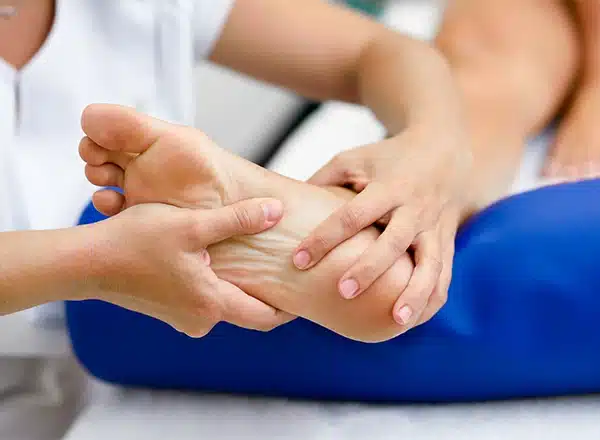
When to See a Podiatrist
If foot or ankle pain has been bothering you for more than a few weeks, home care alone may not be enough. Balance Foot & Ankle offers same-week appointments at our Howell and Bloomfield Hills clinics — no referral needed in most cases. Bring your current shoes and a short list of symptoms and we’ll build you a treatment plan in one visit.
Call Balance Foot & Ankle: (810) 206-1402 · Book online · Offices in Howell & Bloomfield Hills
Pros & Cons of Conservative Care for foot care
Advantages
- ✓ Conservative care first
- ✓ Same-week appointments
- ✓ Multiple insurance accepted
Considerations
- ✗ Self-treatment can mask issues
- ✗ See a podiatrist if pain >2 weeks
Dr. Tom’s Recommended Products for foot care
Affiliate disclosure: As an Amazon Associate, Balance Foot & Ankle earns from qualifying purchases. We only recommend products we use with patients.
Footnanny Heel Cream Dr. Tom’s Pick
Best for: Daily moisturizer for cracked heels
Ready to Get Back on Your Feet?
Same-day appointments in Howell + Bloomfield Hills. Most insurance accepted. Dr. Tom Biernacki, DPM & team.
Book Today — Same-Day Appointments Available
Call Now: (810) 206-1402
About Your Care Team at Balance Foot & Ankle
Dr. Tom Biernacki, DPM · Board-Certified Foot & Ankle Surgeon. Specializes in conservative-first care, minimally invasive bunion surgery, and complex reconstruction.
Dr. Carl Jay, DPM · Accepting new patients. Specializes in sports medicine, athletic injuries, and routine podiatric care.
Dr. Daria Gutkin, DPM, AACFAS · Accepting new patients. Specializes in surgical reconstruction and pediatric podiatry.
Locations: 4330 E Grand River Ave, Howell, MI 48843 · 43494 Woodward Ave Suite 208, Bloomfield Hills, MI 48302
Hours: Mon–Fri 8:00 AM – 5:00 PM · (810) 206-1402
Doctor Hoy’s Natural Pain Relief Gel
Natural topical pain relief I use in our clinic. Arnica + camphor formula — apply directly to the area 3–4x daily. ($20–25)
Shop Doctor Hoy’s →Frequently Asked Questions
What causes this condition?
Causes include mechanical stress, biomechanical imbalance, age-related changes, and sometimes systemic disease. Our clinical exam plus imaging identifies the specific driver.
Can it go away on its own?
Mild cases sometimes resolve with rest and supportive footwear. Persistent symptoms past 4-6 weeks rarely resolve without active treatment.
Is surgery required?
Most patients resolve with non-surgical care. Surgery is reserved for refractory cases or structural deformity.
Ready for Expert Care?
Same-day appointments in Howell & Bloomfield Hills, MI.
4.9★ | 1,123 Reviews | 3,000+ Surgeries
Or call: (810) 206-1402

Dr. Tom Biernacki, DPM is a board-certified foot & ankle surgeon (ABFAS & ABPM) at Balance Foot & Ankle Specialists in Southeast Michigan. With over a decade of clinical experience, he specializes in heel pain, bunions, diabetic foot care, sports injuries, and minimally invasive surgery. Dr. Biernacki is a member of the APMA and ACFAS, and his patient education content on MichiganFootDoctors.com and YouTube has made him one of the most-followed foot & ankle educators on YouTube.