
Medically Reviewed by Dr. Jeffery Agnoli, DPM — Board-Certified Podiatrist, Balance Foot & Ankle Specialists, Michigan. Last updated April 2026.
Corns vs. Calluses: The Basic Difference
Both corns and calluses are areas of thickened skin caused by repeated friction or pressure — the body’s protective response. The key distinction is location and structure:
- Calluses are broad, flat areas of thickened skin that develop on the bottom of the foot (plantar surface), especially under the heel and ball of the foot. They are generally not painful and serve a protective function.
- Corns are smaller, focused areas of thickened skin with a hard, dense central core (the “nucleus”). They develop on the tops or sides of toes (hard corns) or between toes (soft corns), and they ARE usually painful because the hard core presses inward on underlying nerves.
Types of Corns
Hard Corns (Heloma Durum)
The most common type. They appear on the tops or tips of toes, especially over bony prominences like hammertoe joints. The overlying skin is dry and firm with a visible hard center. They form where shoes press against raised toe joints.
Soft Corns (Heloma Molle)
Found between the toes — most commonly between the 4th and 5th toes. Appear whitish and rubbery due to the moist environment between toes. Caused by bony prominences from adjacent toes pressing together. Can become infected if the macerated skin breaks down.
Seed Corns (Heloma Miliare)
Tiny, discrete corns on the bottom of the foot — often at the heel or ball of foot. Usually painless or mildly uncomfortable. Caused by dry skin with focal areas of concentrated pressure.
Vascular Corns
Corns with blood vessels extending into the core. These bleed easily when debrided and can be confused with warts. Require professional evaluation to differentiate from plantar warts (which have disrupted skin lines and pinpoint bleeding) vs. vascular corn (which has a smooth, layered appearance).
What Causes Corns and Calluses?
- Ill-fitting shoes — too tight, too narrow, or seams that rub against toes
- Hammertoes, bunions, and other foot deformities that create bony prominences
- Walking barefoot (thickens the plantar skin as a protective response)
- High heels — shift weight onto the ball of the foot creating forefoot calluses
- Manual labor or activity that places sustained pressure on specific areas
- Abnormal gait mechanics that concentrate pressure on certain spots
How to Treat Calluses
- Pumice stone: After soaking feet in warm water for 5–10 minutes, gently rub the callus with a pumice stone or foot file. Always move in one direction; don’t over-file.
- Moisturizing: Apply urea cream (20–40%) or ammonium lactate lotion nightly to soften thick skin
- Cushioning: Moleskin or gel padding under callused areas distributes pressure
- Footwear: Switch to shoes with better cushioning and roomier toe boxes
- Custom orthotics: If calluses are driven by abnormal pressure from gait mechanics
How to Treat Corns
- Padding: Donut-shaped corn pads cushion around (not over) the corn to reduce pressure
- Wider shoes: Eliminate the source of pressure for toe corns
- Toe separators: For soft corns between toes — keep toes apart to reduce friction and allow drying
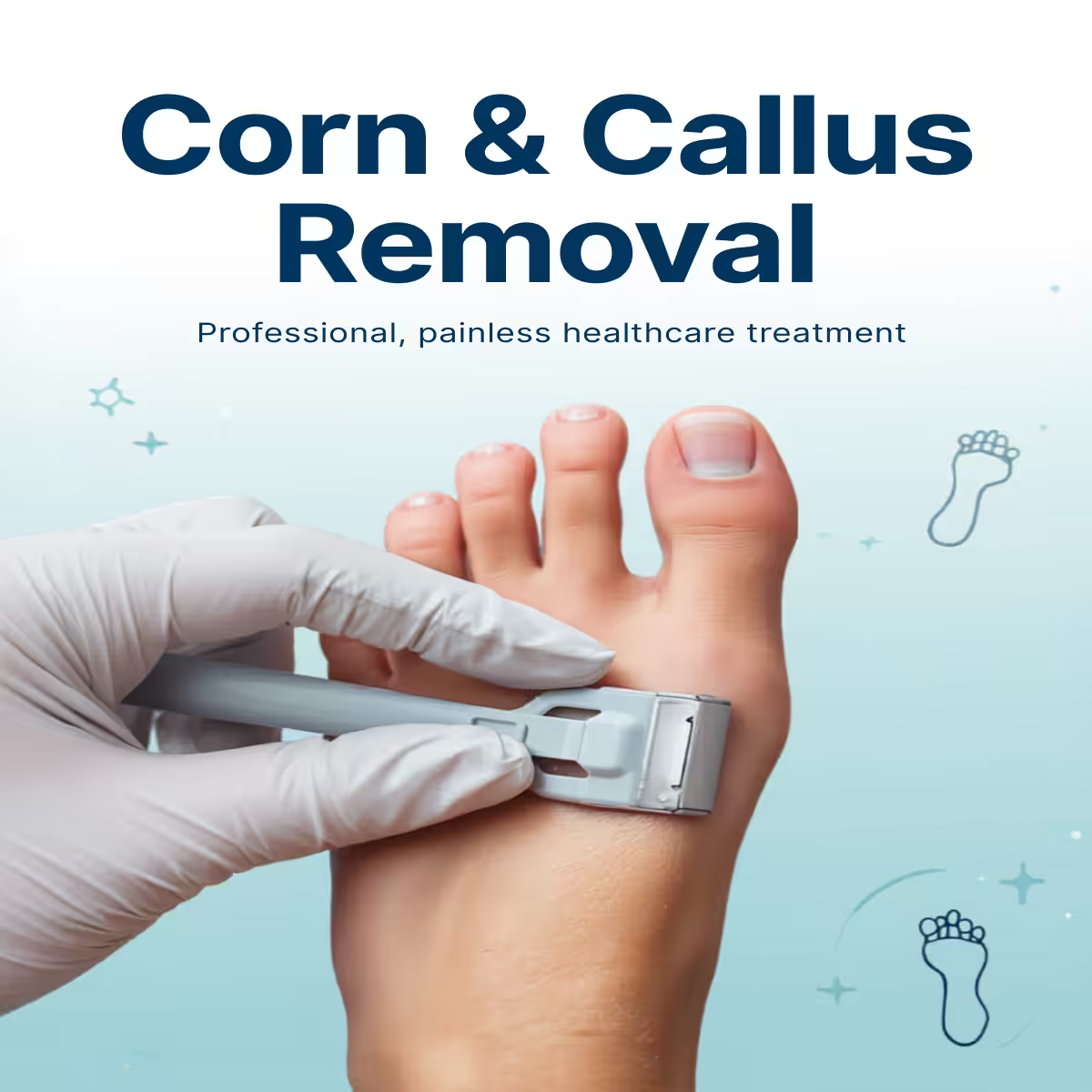
- Professional debridement: A podiatrist can safely remove the corn nucleus with a sterile blade — providing immediate pain relief. This is not something to attempt at home with sharp instruments.
What About Corn-Removing Pads With Salicylic Acid?
Over-the-counter salicylic acid pads can soften corns and calluses. However, they should be used with caution — the acid affects all surrounding tissue, not just the corn. People with diabetes, peripheral vascular disease, or neuropathy should NEVER use salicylic acid corn removers — the risk of chemical burns and non-healing wounds is significant. Always use with protective padding around the corn.
When to See a Podiatrist
See a podiatrist if: the corn or callus is painful and limiting activity, you have diabetes or poor circulation (don’t self-treat), you’re unsure if you have a corn, callus, or plantar wart, or home treatments are not controlling the problem. Podiatrists can debride safely, prescribe appropriate offloading devices, and address the underlying structural cause (hammertoe correction, custom orthotics) to prevent recurrence. At Balance Foot & Ankle, corn and callus management is a routine part of our practice — and preventing the underlying cause is always our ultimate goal.
Foot or Ankle Pain? We Can Help.
Balance Foot & Ankle — Howell & Bloomfield Township, MI
📅 Book Online
📞 (810) 206-1402

Dr. Tom Biernacki, DPM is a double board-certified podiatrist and foot & ankle surgeon at Balance Foot & Ankle Specialists in Southeast Michigan. With over a decade of clinical experience, he specializes in heel pain, bunions, diabetic foot care, sports injuries, and minimally invasive surgery. Dr. Biernacki is a member of the APMA and ACFAS, and his patient education content on MichiganFootDoctors.com and YouTube has reached over one million views.