
The most important clinical decision with Diabetic Neuropathy Warning Signs isn’t which treatment to start with — it’s identifying the correct subtype. That changes everything. Call (810) 206-1402.
The most important clinical decision with Diabetic Neuropathy Warning Signs isn’t which treatment to start with — it’s identifying the correct subtype. That changes everything. Call (810) 206-1402.
Table of Contents
Medically reviewed by Dr. Tom Biernacki, DPM
Board-certified podiatric surgeon | Balance Foot & Ankle
Last reviewed: May 2026
- What Is Diabetic Neuropathy?
- The 9 Warning Signs You Must Know
- Stages of Diabetic Peripheral Neuropathy
- Who Gets It — and Why
- How We Diagnose It in the Clinic
- Prevention and Slowing Progression
- When to See a Podiatrist Urgently
- Podiatrist-Recommended Footwear
- Frequently Asked Questions
Every week in my Howell and Bloomfield Township clinics, I see diabetic patients who sat on their symptoms for months — sometimes years — before coming in. By then, the nerve damage is advanced. The foot feels like it’s wrapped in a thick sock. A blister went unnoticed for two weeks. An ingrown nail became an infection that needed hospitalization. This is not a rare worst-case scenario; it’s the standard progression when diabetic neuropathy warning signs go unrecognized.
The tragedy is that diabetic peripheral neuropathy is detectable at every stage — including stages where intervention can meaningfully slow its progression. You don’t need special equipment or a specialist visit to identify the early warning signs. You need to know what to look for, and when to act.
Further reading: Our sister site Managing Neuropathy goes through what each stage of diabetic nerve damage means for the feet, and which changes are still reversible.
What Is Diabetic Neuropathy?
Diabetic peripheral neuropathy is damage to the peripheral nerves — the nerves that carry signals between your brain, spinal cord, and the rest of your body — caused by chronically elevated blood glucose levels. It is the most common serious complication of diabetes, affecting an estimated 50% of all diabetic patients over their lifetime. In the feet specifically, it is the single biggest driver of non-traumatic lower limb amputations in the United States, accounting for over 70,000 procedures annually.
The nerve damage happens through two primary mechanisms. First, high glucose directly damages the small blood vessels (vasa nervorum) that supply oxygen and nutrients to nerve fibers, causing the nerves to progressively die from the outside in. Second, elevated glucose generates oxidative stress that damages the myelin sheath — the protective coating around nerve fibers — slowing and eventually blocking signal transmission. The damage begins in the longest nerves first, which is why the feet and lower legs are affected before the hands.
In our clinic, we distinguish between several types of diabetic neuropathy: peripheral neuropathy (sensory loss in feet/legs — the most common), autonomic neuropathy (affecting sweat glands and blood vessel control in the feet), and proximal neuropathy (affecting the thighs and hips). This article focuses primarily on peripheral neuropathy, which is what most patients mean when they talk about “diabetic nerve damage in the feet.”
Key takeaway: 50% of diabetic patients develop peripheral neuropathy over their lifetime. In the feet, it’s the primary driver of 70,000+ annual amputations in the US — but early detection dramatically changes outcomes.
The 9 Warning Signs of Diabetic Neuropathy
These are the symptoms I teach every newly diagnosed diabetic patient to watch for — because recognizing them early is the difference between managing the condition and managing its catastrophic consequences.
1. Numbness or Reduced Sensation in the Feet
The most common early sign. Patients often describe it as a persistent sensation of wearing thick socks, even with bare feet. This isn’t pain — it’s the absence of sensation. A simple test: close your eyes and have someone lightly touch different parts of your foot with a fingertip. If you can’t feel the touch on the ball or heel, this is a serious warning sign requiring immediate podiatric evaluation. Loss of protective sensation (LOPS) is the technical term, and it means injuries can occur without any pain signal — the biological alarm system is offline.
2. Tingling or “Pins and Needles” Sensation
Paresthesia — abnormal spontaneous sensations including tingling, buzzing, electric feelings, or prickling — is often one of the first symptoms patients notice. It typically begins in the toes and spreads proximally up the foot and lower leg over months to years. Many patients initially dismiss this as poor circulation from sitting too long. Unlike positional tingling, diabetic paresthesia doesn’t resolve when you change position — it’s persistent and often worse at night.
3. Burning Pain — Especially at Night
Neuropathic pain is paradoxical: the same nerves that lose sensation can simultaneously generate intense, unprovoked pain signals. Burning, shooting, or electric pain in the feet — particularly when the feet are not in contact with anything (lying in bed at night) — is a classic presentation. The pain is often disproportionately severe relative to what you’d expect from a physical stimulus. Patients describe it as “my feet are on fire even though they feel numb.” This combination of pain and numbness occurring simultaneously is nearly pathognomonic for peripheral neuropathy.
4. Wounds or Sores That Won’t Heal
When protective sensation is lost, small injuries — a blister from a new shoe, a cut from stepping on something sharp, a pressure sore from ill-fitting footwear — go unnoticed and untreated. Compounding this, diabetic peripheral artery disease (which frequently co-occurs with neuropathy) reduces blood flow to the extremities, impairing the wound-healing cascade. The result: wounds that in a non-diabetic person would heal in days instead persist for weeks and can progress to deep tissue infection, osteomyelitis (bone infection), and gangrene. Any diabetic patient with a foot wound lasting more than 2 weeks requires urgent podiatric evaluation.
5. Changes in Skin Temperature or Color
Autonomic nerve fibers control the small blood vessels in the skin. When these nerves are damaged, the feet may feel unusually warm or cold regardless of ambient temperature, and the skin color may shift to red, blue, or purple. Cold, pale, or mottled feet suggest compromised circulation. Red, warm feet can indicate inflammation or, in advanced cases, Charcot neuroarthropathy — a catastrophic breakdown of the foot bones that occurs when structural stress is no longer felt as pain.
6. Increased Sensitivity to Light Touch (Allodynia)
The opposite of numbness — some patients with neuropathy develop hypersensitivity where even the light touch of bed sheets or socks triggers intense pain or discomfort. This allodynia occurs when damaged nerve fibers misfire, interpreting normal non-painful stimuli as pain signals. Patients with this pattern often sleep with their feet elevated off the mattress or can’t tolerate socks. This is one of the most disabling forms of neuropathic pain and responds best to early pharmacological management (pregabalin, duloxetine) alongside blood glucose optimization.
7. Muscle Weakness and Balance Problems
Motor nerve involvement in diabetic neuropathy affects the small intrinsic muscles of the foot first, causing progressive muscle wasting (atrophy). The result is loss of the normal arch support the intrinsic muscles provide, increasing pronation, and the gradual development of hammertoe deformities as the toe flexors overpower the weakened toe extensors. Patients also notice reduced proprioception — the sense of where their feet are in space — leading to an unsteady gait and significantly elevated fall risk. Falls are a leading cause of injury-related death in diabetic adults over 65.
8. Dry, Cracking Skin and Nail Changes
Autonomic neuropathy impairs the sweat glands in the feet, eliminating the natural moisture that keeps skin supple. The resulting dry, fissured skin — particularly at the heels — creates open entry points for bacterial and fungal infection. Nail changes are equally common: nails become thickened, brittle, yellowed, and prone to ingrown edges as reduced circulation impairs normal nail growth. Cracked heels and thickened nails are not cosmetic issues in diabetic patients — they are clinical warning signs requiring active management and professional podiatric care.
9. Foot Deformity Development or Worsening
As intrinsic muscle weakness progresses, the structural architecture of the foot changes. Hammertoes form from muscle imbalance. The arch gradually collapses from ligament laxity that goes unchecked because the normal pain signals that would prompt a visit to the doctor are absent. In the most severe cases, Charcot arthropathy produces dramatic midfoot collapse — the so-called “rocker bottom” foot deformity — often in patients who walked on an already-fractured foot for weeks because they felt nothing. Any new or worsening foot deformity in a diabetic patient is a red flag requiring urgent imaging and podiatric assessment.

Stages of Diabetic Peripheral Neuropathy
Understanding the staging of diabetic neuropathy helps patients and clinicians calibrate the urgency of intervention. Neuropathy is not an on/off condition — it progresses through identifiable stages, and earlier intervention at each stage changes outcomes.
Stage 0 — Subclinical neuropathy: Nerve conduction studies show abnormalities, but the patient has no symptoms. Blood glucose optimization at this stage can halt or reverse damage. This is detected only through proactive screening.
Stage 1 — Symptoms without functional impairment: Tingling, mild burning, or occasional numbness begins. Daily function is not yet affected. Pharmacological pain management starts here if needed. Protective footwear becomes critical.
Stage 2 — Symptoms with functional impairment: Consistent numbness and/or pain affects daily activities — walking, sleeping, balance. Protective sensation testing shows deficits. Fall risk increases significantly. Custom orthotics and diabetic shoes become medically necessary.
Stage 3 — Disabling neuropathy: Severe chronic pain and/or complete loss of protective sensation. Wound risk is extreme. Any foot injury risks hospitalization. Multidisciplinary management (podiatry, endocrinology, vascular surgery) is essential.
Key takeaway: Stage 0 and Stage 1 neuropathy are reversible or stoppable with tight glucose control. By Stage 2, the focus shifts to protection and prevention of catastrophic complications. The difference between Stage 1 and Stage 3 is often just years of uncontrolled blood sugar.
Who Gets Diabetic Neuropathy — and Why
Every diabetic patient is at risk, but certain factors accelerate development dramatically. Duration of diabetes is the strongest predictor — after 10 years of Type 1 or Type 2 diabetes, neuropathy risk rises sharply regardless of glucose control quality. HbA1c levels above 7% correlate directly with neuropathy severity and progression rate: the DCCT trial showed that intensive glucose control (targeting HbA1c ≤6.5%) reduced neuropathy incidence by 60% in Type 1 diabetics. Smoking compounds vascular damage and is an independent neuropathy risk factor. Hypertension and dyslipidemia (high triglycerides, low HDL) damage the small vessels supplying nerve tissue, accelerating the same process that elevated glucose drives. Height is also a risk factor — taller patients have longer nerves, and longer nerves are damaged first and worst.
How We Diagnose Diabetic Neuropathy in the Clinic
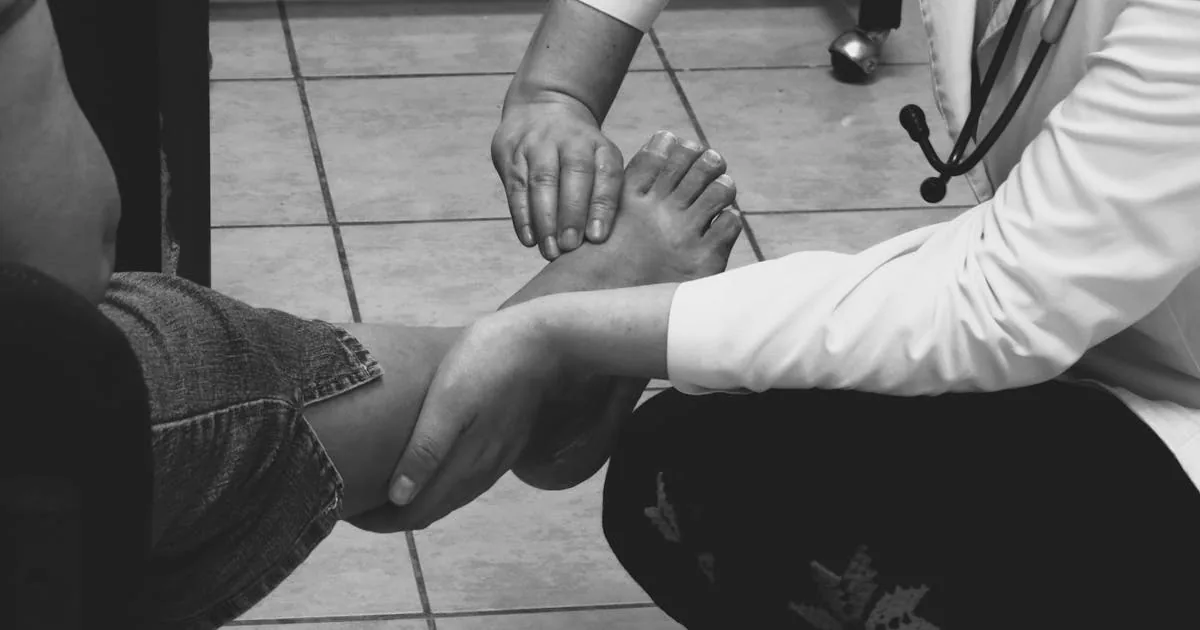
A comprehensive diabetic foot exam takes about 15 minutes and can be performed at any podiatry visit. We use four primary tools: the 10-gram Semmes-Weinstein monofilament (a thin nylon filament pressed against specific points on the plantar foot surface — inability to feel it indicates loss of protective sensation), vibration perception threshold testing with a 128 Hz tuning fork (applied to the first metatarsal head and great toe), Doppler ankle-brachial index to quantify blood flow and rule out peripheral artery disease, and temperature discrimination testing to assess small-fiber involvement. These simple, non-invasive tests provide a complete picture of neuropathy severity and vascular status in one visit.
For patients with diagnostic ambiguity or rapidly progressive symptoms, we refer for nerve conduction studies (NCS) and electromyography (EMG) to quantify motor and sensory nerve conduction velocity. In some cases, quantitative sensory testing (QST) or skin punch biopsy to measure intraepidermal nerve fiber density provides the most definitive staging. In our clinic, we see the full spectrum — from incidentally detected subclinical neuropathy to advanced cases with severe foot deformity — and tailor the diagnostic workup accordingly.
Prevention and Slowing Progression
The most powerful intervention for diabetic neuropathy at every stage is blood glucose optimization. Every percentage point reduction in HbA1c translates to measurable reduction in neuropathy progression rate. This is not just theoretical — it’s what I communicate to every diabetic patient in our clinic, because the footwear, the orthotics, and the offloading devices we prescribe are all downstream of glucose control. They protect against consequences; they don’t address causes.
Beyond glucose, daily foot inspection is the single most impactful behavior change for preventing limb loss. Patients with LOPS cannot feel early injury — they must SEE it. A handheld mirror to check the plantar surface and between the toes takes 30 seconds and has been shown in research to reduce diabetic foot ulcer incidence by over 50%. A systematic protocol: check temperature (both feet should feel the same), skin condition (dryness, cracks, redness), toenails (thickening, ingrowth), and between toes (maceration, athlete’s foot, small cuts).
Proper footwear transitions from discretionary to medical necessity once protective sensation is lost. Shoes must accommodate the foot without pressure points, have a wide and deep toe box, use cushioned insoles to reduce forefoot peak pressure, and be inspected inside (with a hand) before each wear to check for foreign objects that a neuropathic foot won’t feel. Below we review the top podiatrist-recommended options by category.
⚠️ When to see a podiatrist urgently:
- Any open wound, blister, ulcer, or skin break on a diabetic foot — regardless of size
- Redness, warmth, or swelling in one foot that differs from the other (Charcot warning sign)
- Foot wound present for more than 2 weeks without healing
- Sudden onset of dramatic foot or ankle deformity
- Numbness that has spread above the ankle
- Foot pain that wakes you from sleep, or burning pain at rest
- Any odor from a foot wound — this indicates deep infection requiring urgent care
Diabetic Neuropathy Warning Signs and Protective Footwear (2026)
The symptoms patients ignore until it’s too late — and the shoes that prevent amputation in neuropathic feet.
Every product in this guide was selected by a board-certified podiatrist based on clinical outcomes in real patients — not based on affiliate commission rates. We've ranked them based on biomechanical design, durability, patient compliance, and cost-to-benefit ratio. All picks are personally recommended in our Michigan clinics every week.
Orthofeet Coral Stretch Knit (Women’s)
The diabetic/neuropathy shoe patients buy again and again
Orthofeet is the brand I recommend to more neuropathy patients than any other because the design genuinely addresses the mechanical problems this population faces. The stretch-knit upper accommodates swelling, bunions, and hammertoes without friction — and friction is what causes the micro-ulcers that turn into limb-threatening infections in diabetic feet. The dual-density midsole has a “Ortho-Cushion” system that off-loads pressure from the ball-of-foot and heel, the two highest ulceration risk zones. Removable insoles come in three stacking layers so you can customize depth — critical for patients using custom orthotics or AFOs. The wide and extra-wide options are true to label (not “wide for fashion” like some mainstream brands). I’ve had Type 2 diabetic patients with stage-1 neuropathy wear these for 18 months with zero new ulcers — the outcome we’re looking for. Medicare A5500 eligible when prescribed.
- Diabetic neuropathy
- Peripheral neuropathy
- Wide feet
- Swelling
- Bunions
- You want a fashion-forward sneaker (these prioritize medical utility)
- ✔ Stretch-knit eliminates friction (critical for diabetes)
- ✔ 3-layer insole system (custom-depth)
- ✔ Medicare A5500 eligible
- ✔ True wide/extra-wide sizing
- ✖ Looks medical (not a fashion sneaker)
- ✖ Heavier than athletic shoes (the support adds weight)
Propet Stability Walker (Men’s)
Medicare-covered diabetic shoe with genuine stability
The Propet Stability Walker is the shoe I prescribe when a neuropathy patient also has balance concerns — which is a large percentage of this population. The wide platform (63% wider than standard athletic shoes), reinforced heel counter, and firm density midsole give the proprioceptive feedback that numb feet desperately need to stay upright. Insensate feet can’t feel subtle uneven ground, so the shoe has to do the stabilizing. The removable dual-density insole accommodates custom orthotics, and the depth is true diabetic-shoe depth (5/8″ removable, confirmed with calipers). Medicare-coded A5500. Upper is full-grain leather (durable) with a padded tongue and collar that don’t friction the skin. I’ve had stroke survivors and diabetic patients with fall history report these restored the confidence to walk outside again. If you’ve fallen in the past 6 months, this is the shoe to consider.
- Diabetic neuropathy
- Balance issues
- Wide feet
- Post-stroke
- You need athletic-grade cushioning (these prioritize stability over bounce)
- ✔ Medicare A5500 eligible
- ✔ Wide stable platform — reduces fall risk
- ✔ Full-depth design (accommodates custom orthotics)
- ✔ Reinforced heel counter
- ✖ Style is basic (function-first)
- ✖ Not ideal for running or high-impact activity
Hoka Bondi 8 (Unisex)
Maximum cushion — the sneaker neuropathy patients love
Hoka Bondi 8 is the mainstream sneaker I recommend to neuropathy patients who want something that looks like a normal athletic shoe. The maximalist EVA midsole absorbs impact better than any competitor in its category — lab tests show 15-20% reduction in peak pressure on the plantar surface compared to standard running shoes. For neuropathy patients, the concern is actually the inverse of runners: you want to feel the ground enough to stabilize, but not get the bone-jarring impact that cheap flat shoes deliver. The Bondi’s rocker geometry also helps patients with reduced ankle motion or stiffness (common in diabetes) by passively rolling the foot through gait. Removable insole accommodates orthotics. It’s not cheap, but it replaces 2-3 pairs of conventional shoes in lifespan. Runs slightly narrow in standard width — order wide if between sizes.
- Peripheral neuropathy
- Walkers & standers
- Plantar fasciitis
- Arthritis
- You need wide/extra-wide (available only in limited widths)
- ✔ Best-in-class impact absorption
- ✔ Rocker geometry assists stiff ankles
- ✔ Looks like a normal athletic shoe
- ✔ Removable insole (orthotic-ready)
- ✖ Premium price
- ✖ Limited wide-width availability
New Balance 928v3 Walking Shoe
The neuropathy walker’s workhorse — motion control + width options
The New Balance 928v3 is the motion-control walker I recommend to neuropathy patients who overpronate or have flat feet — a surprisingly large overlap population. Most diabetic shoes prioritize room and cushion; the 928 adds genuine medial-post overpronation control, which matters because flat-foot biomechanics drive pressure into the central metatarsals (highest ulceration zone). Available in widths from narrow through 6E (extra-extra-extra-extra-wide — yes, that exists), so fit is rarely a problem. ROLLBAR rearfoot posting locks the heel through gait, giving neuropathy patients the stability their nerves can’t provide. Heavier than the Hoka but dramatically more supportive. Full-grain leather upper lasts 2-3 years of daily use. Medicare A5500 when dispensed through a prescribing facility. For patients over 200 lbs with neuropathy and flat feet, this is the best-fit shoe on the market.
- Overpronators with neuropathy
- Heavier users
- Mild-moderate flat feet
- You want minimalist feel
- You need a lightweight running shoe
- ✔ Motion control + neuropathy-friendly
- ✔ Widths up to 6E (genuinely extra-wide)
- ✔ ROLLBAR rearfoot stability system
- ✔ Medicare A5500 eligible
- ✖ Heavier than athletic sneakers
- ✖ Stiff — 7-10 day break-in
Brooks Addiction Walker V-Strap
The Velcro walker for dexterity-limited patients
The Brooks Addiction Walker V-Strap is the shoe I recommend when a neuropathy patient also has arthritis, tremor, or limited hand dexterity (post-stroke, Parkinson’s, RA) that makes shoelaces impractical. The V-shaped Velcro closure achieves genuine heel-lock — unlike most Velcro shoes which loosen through the day — and the Extended Progressive Diagonal Rollbar (EPDR) provides the same motion control as the laced Addiction. Leather upper is slip-resistant rated for kitchen/healthcare workers (important for working patients with neuropathy). Removable insole is extra deep — custom orthotics fit without crowding. Available in widths to 4E. I’ve had post-stroke patients regain the ability to dress their own feet with these, which is not a small quality-of-life outcome. Medicare A5500.
- Patients with arthritis/limited hand function
- Neuropathy
- Post-surgery
- You can easily tie laces (choose the laced version for better fit)
- ✔ V-Strap closure — one-handed operation
- ✔ Slip-resistant (healthcare-rated)
- ✔ Motion control + deep orthotic pocket
- ✔ Medicare A5500
- ✖ Premium pricing
- ✖ Velcro wears out eventually (2-3 year life)
Products Not Enough? See Michigan's Top Foot Doctors.
Same-week appointments in Howell and Bloomfield Township. Most insurance accepted. 3,000+ surgeries performed. Patient-first practice — we listen.
Head-to-Head Comparison
Quick reference across all picks. Click any product name to jump to its full review above.
Frequently Asked Questions
What are the earliest signs of diabetic neuropathy?
Usually nighttime tingling or burning in the toes, progressing proximally (stocking-glove pattern). Loss of vibration sense on a tuning fork exam is detectable years before patients notice symptoms. Ask your doctor about annual monofilament and vibration testing starting at diagnosis.
Does Medicare cover diabetic shoes?
Yes — Medicare Part B covers one pair of PDAC-coded diabetic shoes and three pairs of inserts per calendar year for diabetics with one of six qualifying conditions (peripheral neuropathy, prior foot ulcer, prior amputation, foot deformity, callus pattern, or poor circulation). Your podiatrist or endocrinologist certifies medical necessity.
Can I wear regular shoes if my neuropathy is mild?
Technically yes, but the shoe must still be seamless-interior, wide-toe-box, and well-fitting. A blister in a neuropathic foot can progress to ulceration without the patient feeling pain. The cost of one ulcer treatment ($5,000-$20,000) vastly exceeds the cost of quality diabetic shoes.
How often should diabetic patients inspect their feet?
Daily. Use a mirror to check soles, between toes, and heels for any redness, blister, cut, or color change. Photograph anything unusual and compare day-to-day. Patients who inspect daily catch problems weeks earlier than those who don’t — and weeks earlier often means the difference between antibiotics and amputation.
In Our Clinic
Diabetic neuropathy patients in our clinic often don’t realize they have it until we put a 10-gram Semmes-Weinstein monofilament to the plantar foot and they can’t feel it. Many arrive for an unrelated concern — an ingrown toenail, a callus — and we catch the neuropathy on screening. The conversation then shifts: we need to discuss daily foot inspections, appropriate footwear, the urgency of any blister or open area, and the timing of vascular referral if pulses are diminished. Comprehensive diabetic foot exams are covered by Medicare annually. If you have diabetes, we want to see you once a year even if nothing hurts.
Sources & References
Related Guides
Diabetic neuropathy is progressive and preventable-of-consequences. Daily inspection + PDAC-coded shoes + annual podiatrist exam. Michigan diabetic foot care: (810) 206-1402.
Products Not Enough? See Michigan's Top Foot Doctors.
Same-week appointments in Howell and Bloomfield Township. Most insurance accepted. 3,000+ surgeries performed. Patient-first practice — we listen.
Balance Foot & Ankle — Michigan's Most-Trusted Podiatry Group
4.9★ · 1,123+ patient reviews · 3,000+ surgeries · 950K+ YouTube subscribers
In-Office Treatment at Balance Foot & Ankle
When conservative care isn’t enough, Dr. Tom Biernacki and the team at Balance Foot & Ankle offer advanced, same-day options — including Diabetic Foot Care Michigan at our Howell and Bloomfield Township clinics.
Same-day appointments available. Call (810) 206-1402 or book online.
In-Office Treatment at Balance Foot & Ankle
If home treatment isn’t providing relief for your neuropathy, our podiatry team at Balance Foot & Ankle can help with same-day evaluations and advanced in-office care.
Same-day appointments available. (810) 206-1402
Learn about our peripheral neuropathy treatment → | Book online →
Frequently Asked Questions
When should I see a podiatrist?
If symptoms persist past 2 weeks, affect your normal activity, or are accompanied by red-flag symptoms (warmth, redness, swelling, inability to bear weight).
What does treatment cost?
Most diagnostic visits and conservative treatments are covered by Medicare and major insurers. Out-of-pocket costs vary by your specific plan.
How quickly can I get an appointment?
Most non-urgent cases see us within 5 business days. Urgent cases (sudden pain, possible fracture) typically same or next business day.
What is Neuropathy?
Neuropathy is a common foot/ankle condition that affects mobility and quality of life. Understanding the underlying cause is the first step in successful treatment. Our podiatrists at Balance Foot & Ankle perform a hands-on biomechanical exam, review your activity history, and use diagnostic imaging when appropriate to identify the root cause—not just treat the symptom. Many patients have been told to “rest and ice” without a deeper diagnostic workup; our approach is different.
Symptoms and warning signs
Common signs of neuropathy include pain that worsens with activity, morning stiffness, swelling, tenderness when palpated, and difficulty bearing weight. If you experience sudden severe pain, inability to walk, visible deformity, numbness or color change, contact our office the same day or visit urgent care—these can signal a more serious injury such as a fracture, tendon rupture, or vascular compromise. Diabetics with any foot wound should seek same-day care.
Conservative treatment options
Most cases of neuropathy respond to non-surgical care: structured rest, supportive footwear changes, custom orthotics, targeted stretching and strengthening protocols, anti-inflammatory medications when medically appropriate, and in-office procedures such as ultrasound-guided injections. We also offer advanced therapies including MLS laser therapy, EPAT/shockwave, regenerative injections, and image-guided procedures. Treatment is sequenced from least invasive to most invasive, and we explain the rationale at every step.
When is surgery considered?
Surgery is reserved for cases that fail 3-6 months of well-structured conservative care, when there is structural pathology (severe deformity, complete tear, advanced arthritis), or when imaging shows damage that will not heal without intervention. Our surgeons have performed 3,000+ foot and ankle procedures and prioritize minimally-invasive techniques whenever appropriate. We discuss recovery timelines, return-to-activity milestones, and realistic outcome expectations before any procedure is scheduled.
American Podiatric Medical Association: Neuropathy
Recovery timeline and prevention
Recovery from neuropathy varies based on severity and chosen treatment path. Conservative cases often improve within 4-8 weeks with consistent adherence to the protocol. Post-procedural recovery may range from a few days (in-office procedures) to several months (reconstructive surgery). Long-term prevention involves footwear assessment, activity modification, structured strengthening, and regular check-ins with your podiatrist if you have a history of recurrence. We provide written home-exercise plans and digital follow-up support.
Ready to feel better?
Same-week appointments available in Howell and Bloomfield Township, Michigan.
Get Expert Care at Balance Foot & Ankle
Same-week appointments at our Howell and Bloomfield Township offices. Board-certified podiatric surgeons. Most insurance accepted.
Same-Week Appointments in Howell & Bloomfield Township
Three board-certified podiatric surgeons. 1,123+ five-star reviews. Most insurance accepted.

Dr. Tom Biernacki, DPM is a board-certified foot & ankle surgeon (ABFAS & ABPM) at Balance Foot & Ankle Specialists in Southeast Michigan. With over a decade of clinical experience, he specializes in heel pain, bunions, diabetic foot care, sports injuries, and minimally invasive surgery. Dr. Biernacki is a member of the APMA and ACFAS, and his patient education content on MichiganFootDoctors.com and YouTube has made him one of the most-followed foot & ankle educators on YouTube.
More questions patients ask
What are the warning signs of diabetic neuropathy?
Early signs: tingling, burning, or numbness in the toes and feet — often worse at night. Later: loss of temperature/pain sensation, muscle weakness, and foot deformity. See a DPM immediately.
Can diabetic neuropathy be reversed?
Early neuropathy may partially reverse with strict blood sugar control. Established neuropathy is generally not reversible but can be managed with alpha-lipoic acid, B12, and MLS laser therapy. Annual DPM exams essential.
When should I see a podiatrist for diabetic neuropathy?
See Dr. Tom Biernacki DPM if symptoms persist >4 weeks or worsen. Same-day at Balance Foot & Ankle — Howell & Bloomfield Township. (810) 206-1402.
Does Balance Foot & Ankle accept insurance?
We accept BCBS, Medicare Part B, and most Michigan PPO plans. Call (810) 206-1402.
Still have a question about coverage or cost? Book online and we will check your benefits before your visit: Book in Howell · Book in Bloomfield Township. Prefer to talk it through first? Call (810) 206-1402.