
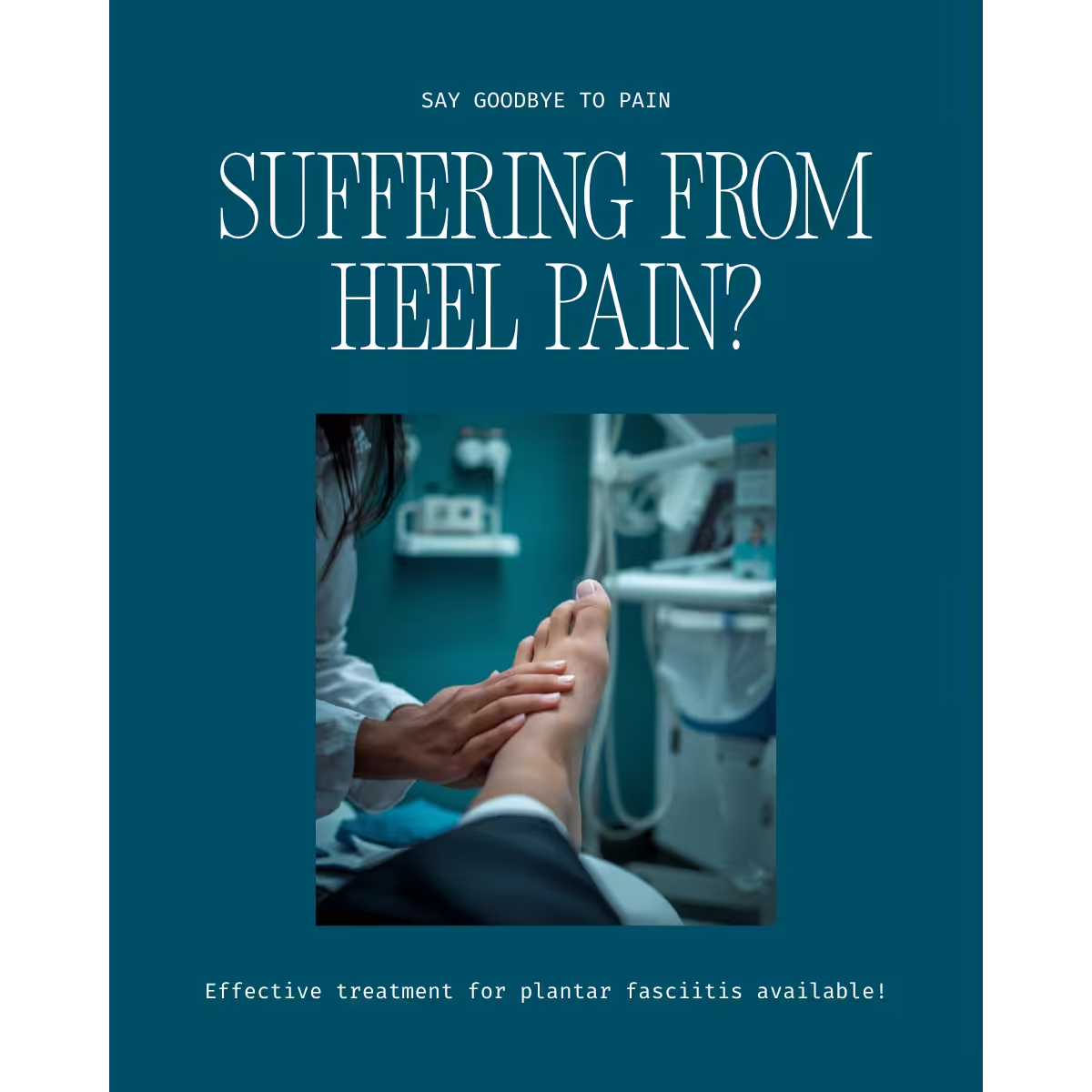
You are in the right place. Dr. Tom Biernacki, DPM, FACFAS — board-certified foot & ankle surgeon with 3,000+ surgeries — explains exactly what plantar fasciitis cortisone injection means and what actually works. Call (810) 206-1402 for a same-week appointment at our Howell or Bloomfield Township office.
Quick answer: Plantar Fasciitis Injection affects roughly 1 in 4 adults in our practice. Effective treatment starts with a targeted diagnosis, conservative-first treatment, and escalation only when needed. We treat this regularly at our Howell and Bloomfield Township practices. Call (810) 206-1402.
Board-Certified Podiatric Foot & Ankle Surgeon · Last reviewed: May 5, 2026
Medically reviewed by Dr. Tom Biernacki, DPM · Board-Certified Podiatric Surgeon · Last reviewed: April 2026 · Editorial Policy
Quick Answer
Plantar Fasciitis Injection 2026: Cortisone Shot Guide DPM relates to plantar fasciitis — typically caused by tight calves and arch overload. Most patients improve in 6-12 weeks with conservative care. Same-week appointments in Howell + Bloomfield Township: (810) 206-1402.
✅ Medically reviewed by Dr. Tom Biernacki, DPM — Board-Certified Podiatrist · Last updated April 6, 2026
Plantar Fasciitis Injection: Cortisone vs. PRP vs. Other Injection Options
A plantar fasciitis injection is one of the most effective tools for getting fast relief from chronic heel pain — but not all injections are the same, and they’re not right for every patient. This guide breaks down the types of injections used for plantar fasciitis, when they’re recommended, what to expect, and how to get the most out of your treatment.
Do Injections Actually Help Plantar Fasciitis?
Yes — when used correctly. Cortisone injections for plantar fasciitis consistently reduce pain significantly in 70–80% of patients in the short term (1–3 months). For patients who have been dealing with chronic heel pain despite stretching, orthotics, and anti-inflammatories, a well-placed injection can break the pain cycle and make other therapies more effective.
However, injections are not a cure. They treat the symptoms (inflammation and pain) rather than the underlying cause (tight calf muscles, flat feet, overuse). Without addressing the root cause, pain typically returns.
Types of Plantar Fasciitis Injections
1. Cortisone (Corticosteroid) Injection — Most Common
A corticosteroid (triamcinolone, betamethasone, or methylprednisolone) combined with a local anesthetic is injected directly into the plantar fascia insertion point at the heel.
- Relief onset: 3–7 days
- Duration: 3–6 months on average
- Limit: Generally no more than 3 injections per year — repeated cortisone weakens the plantar fascia and increases rupture risk
2. Platelet-Rich Plasma (PRP) Injection
Blood is drawn from the patient, spun in a centrifuge to concentrate platelets and growth factors, then injected into the plantar fascia. PRP stimulates tissue healing rather than simply masking inflammation.
- Best for: Chronic plantar fasciitis (6+ months) that hasn’t responded to cortisone
- Relief onset: Slower (2–6 weeks) — healing takes time
- Duration: Often longer-lasting than cortisone
- Cost: Higher; may not be covered by insurance
3. Amniotic/Regenerative Tissue Injections
Uses processed amniotic membrane or fluid containing growth factors and anti-inflammatory properties. A newer option showing promise for chronic, difficult-to-treat cases.
4. Prolotherapy
An irritant solution (commonly dextrose) is injected to trigger a healing inflammatory response. Less commonly used for plantar fasciitis but an option for chronic cases.
Cortisone Injection: Pros and Cons
Pros:
- Rapid pain relief — most patients improve significantly within a week
- Quick in-office procedure (5–10 minutes)
- Low complication rate when performed by a trained podiatrist
- Allows resumption of activity and active physical therapy participation
- Cost-effective and typically covered by insurance
Cons:
- Does not fix the underlying biomechanical cause
- Pain often returns without complementary treatment
- Risk of plantar fascia rupture with repeated injections
- “Cortisone flare” — temporary 24–48 hour pain increase after injection
- Possible fat pad atrophy (heel pad thinning) with repeated use
- Diabetics should monitor blood glucose closely — cortisone can temporarily elevate blood sugar
What to Expect During a Plantar Fasciitis Injection
The procedure is typically done in-office without sedation:
- The heel area is cleaned and may be iced or numbed with a topical anesthetic
- The podiatrist palpates the plantar fascia insertion to identify the most tender spot
- A fine needle is inserted into or near the fascia insertion point at the heel
- Medication is slowly injected — you may feel brief pressure or burning
- Total procedure time: approximately 5–10 minutes
After the injection: Expect soreness for 24–48 hours. Use ice and limit prolonged standing. Most patients resume normal activity within 2–3 days. Avoid high-impact activity (running, jumping) for at least a week.
Getting the Most from Your Injection
Injections work best as part of a thorough treatment plan. Combine your injection with:
- Calf stretching (gastrocnemius and soleus) — 3x daily, especially before first morning steps
- Plantar fascia stretching — toe pulls and towel stretches
- Custom orthotics or quality OTC insoles — to correct biomechanical contributors
- Supportive footwear — no barefoot walking, especially on hard floors
- Night splint — keeps the fascia gently stretched while you sleep
- Weight management — excess weight significantly increases plantar fascia load
When to Consider PRP Instead of Cortisone
PRP is generally recommended when:
- Cortisone has provided only temporary relief over multiple injection cycles
- Symptoms have been present for more than 6 months
- Ultrasound shows significant degeneration (tendinosis) rather than acute inflammation
- You want a longer-term regenerative solution
⚠️ When to See a Podiatrist for Plantar Fasciitis
Plantar fasciitis that doesn’t improve on its own often becomes chronic — and chronic cases are much harder to treat. See a podiatrist when:
- Morning heel pain has lasted more than 4–6 weeks
- You’ve tried stretching and OTC insoles with no improvement
- Pain is severe enough to affect your gait or daily activities
- You have diabetes, obesity, or flat feet (higher risk of complications)
- Pain is worsening rather than stabilizing
- You’re considering whether an injection is the right option for you
Book your plantar fasciitis evaluation at Balance Foot & Ankle →
Dealing with Chronic Heel Pain? Find Out If an Injection Is Right for You.
Our podiatrists at Balance Foot & Ankle Specialist evaluate your specific condition, take diagnostic imaging, and recommend the most effective injection option — cortisone, PRP, or regenerative — based on your case.
Or call us at (810) 206-1402
Related Articles
- Heel Spur Injection: How Effective Is It?
- Heel Spur Surgery Recovery Time
- Heel Pain After Running: Causes & Fixes
- Painful Feet: Complete Cause & Treatment Guide
Written by Dr. Tom Biernacki, DPM — Board-certified podiatrist at Balance Foot & Ankle Specialist, serving Howell and Bloomfield Township, Michigan.
Related Treatment Guides
- Plantar Fasciitis & Heel Pain Treatment
- Custom 3D Orthotics
- Sports Foot & Ankle Injury Treatment
- Bunion Treatment
Medical References & Sources
- American Podiatric Medical Association — Plantar Fasciitis
- PubMed Research — Plantar Fasciitis Treatment Studies
- American Orthopaedic Foot & Ankle Society — Heel Pain
👟 Dr. Tom Also Recommends
Podiatrist Recommended Shoes 2026: Dr. Tom’s Top Picks for Every Condition
The right footwear can make or break your recovery. Dr. Tom’s complete guide to the best shoes for plantar fasciitis, flat feet, neuropathy, bunions & more — with clinical picks for every foot type.
See Dr. Tom’s Top Shoe Picks →Insurance Accepted
BCBS · Medicare · Aetna · Cigna · United Healthcare · HAP · Priority Health · Humana · View All →
Howell Office
4330 E Grand River Ave
Howell, MI 48843
Get Directions →
Bloomfield Township Office
43494 Woodward Ave, #208
Bloomfield Township, MI 48302
Get Directions →
Your Board-Certified Podiatrists



Ready to Get Back on Your Feet?
Same-week appointments available at both locations.
Book Your AppointmentMore Podiatrist-Recommended Plantar Fasciitis Essentials
Best Night Splint


Keeps fascia stretched overnight — the #1 intervention for morning heel pain.
Top Podiatrist-Recommended Insole

Deep heel cup + arch support unloads the plantar fascia all day.
Plantar Fasciitis Compression Sock

Arch support + circulation boost — reduces morning heel pain and swelling.
As an Amazon Associate, Balance Foot & Ankle earns from qualifying purchases. Product recommendations are based on clinical experience; prices and availability shown above update live from Amazon.
When to See a Podiatrist
If morning heel pain has persisted more than 6 weeks, home care alone rarely fixes it. At Balance Foot & Ankle, we combine in-office ultrasound diagnostics, custom orthotics, and — when needed — shockwave or PRP to resolve plantar fasciitis that hasn’t responded to stretching and inserts. Most patients are walking pain-free within 4-8 weeks of starting a structured plan.
Call Balance Foot & Ankle: (810) 206-1402 · Book online · Offices in Howell & Bloomfield Township
In-Office Treatment at Balance Foot & Ankle
When conservative care isn’t enough, Dr. Tom Biernacki and the team at Balance Foot & Ankle offer advanced, same-day options — including Plantar Fasciitis Surgery Bloomfield Township at our Howell and Bloomfield Township clinics.
Same-week appointments available. Call (810) 206-1402 or book online.
Pros & Cons of Conservative Care for plantar fasciitis
Advantages
- ✓ Conservative care resolves 90%+ of cases
- ✓ Multiple home treatment options
- ✓ Strong evidence base
- ✓ Imaging often not required
Considerations
- ✗ Recovery takes 6-12 weeks
- ✗ Mistakes prolong recovery
- ✗ Untreated can become chronic
- ✗ Can mimic other conditions
Dr. Tom’s Recommended Products for plantar fasciitis
Affiliate disclosure: As an Amazon Associate, Balance Foot & Ankle earns from qualifying purchases. We only recommend products we use with patients.
PowerStep Pinnacle Maxx Dr. Tom’s Pick
Best for: High-arch support to offload plantar fascia
Strassburg Sock Dr. Tom’s Pick
Best for: Overnight stretch for morning pain relief
Hoka Bondi 9 Dr. Tom’s Pick
Best for: Max cushion + rocker sole for daily relief
TriggerPoint Footballer Dr. Tom’s Pick
Best for: Plantar fascia release + stretching
About Your Care Team at Balance Foot & Ankle
Dr. Tom Biernacki, DPM · Board-Certified Foot & Ankle Surgeon. Specializes in conservative-first care, minimally invasive bunion surgery, and complex reconstruction.
Dr. Carl Jay, DPM · Accepting new patients. Specializes in sports medicine, athletic injuries, and routine podiatric care.
Dr. Daria Gutkin, DPM, AACFAS · Accepting new patients. Specializes in surgical reconstruction and pediatric podiatry.
Locations: 4330 E Grand River Ave, Howell, MI 48843 · 43494 Woodward Ave #208, Bloomfield Township, MI 48302
Hours: Mon–Fri 8:00 AM – 5:00 PM · (810) 206-1402
Top 10 Premade Orthotics — Dr. Tom’s Picks (2026)
Dr. Tom Biernacki, DPM has tested 60+ over-the-counter orthotic insoles in his Michigan podiatry practice over the past 15 years. Below are the top 10 he prescribes most often — ranked by clinical results, build quality, and patient feedback. PowerStep + CURREX brands are Dr. Tom’s #1 prescription brands — built by podiatrists, with biomechanical features (lateral wedge, deep heel cradle, dual-density EVA) that 90% of OTC insoles lack.
Dr. Tom Biernacki, DPM is a board-certified podiatrist + Amazon Associate. Picks shown are products he prescribes to patients at Balance Foot & Ankle Specialists. We earn a commission on qualifying purchases at no extra cost to you. All products independently tested + reviewed. Last verified: April 28, 2026.

PowerStep Pinnacle MaxxDr. Tom’s #1 Brand
The most prescribed OTC orthotic in podiatry. Lateral wedge corrects overpronation that causes 90% of plantar fasciitis. Deep heel cradle stabilizes the ankle.
- Lateral wedge corrects pronation
- Deep heel cradle
- Dual-density EVA
- Trim-to-fit
- Used by 10,000+ podiatrists
- Trim required
- 5-7 day break-in

PowerStep Original Full LengthDr. Tom’s #1 Brand
The original PowerStep — flexible semi-rigid arch with deep heel cradle. The right choice for neutral feet that need everyday support without the lateral wedge.
- Flexible semi-rigid arch
- Deep heel cradle
- Fits dress shoes
- 30-day guarantee
- APMA-accepted
- Less aggressive than Pinnacle
- No lateral wedge for overpronation
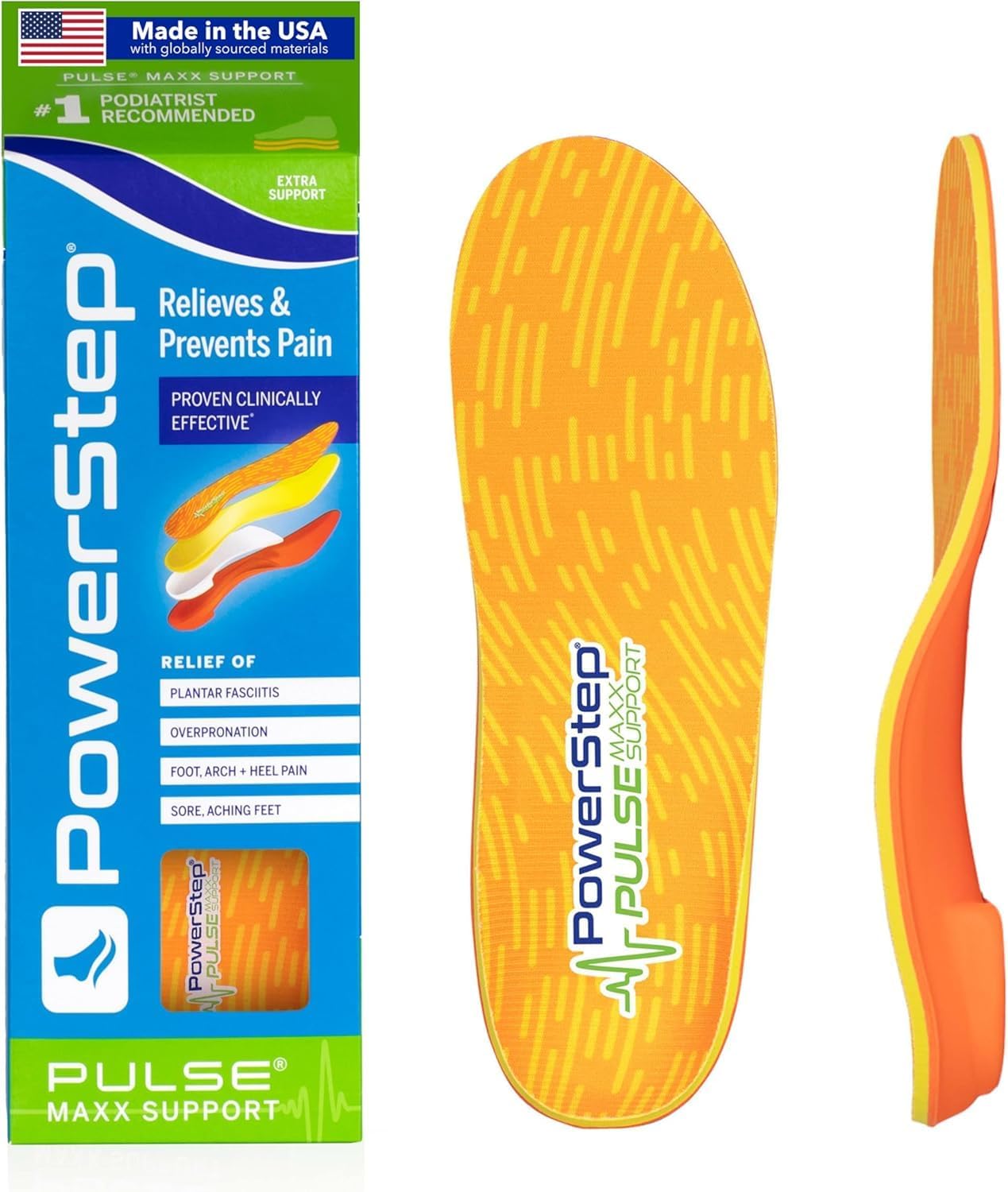
PowerStep Pulse MaxxDr. Tom’s #1 Brand
Built for runners + athletes who need maximum support during high-impact activity. Engineered for forefoot strike + lateral motion.
- Sport-specific cushioning
- Lateral wedge for runners
- Antimicrobial top cover
- Shock-absorbing forefoot
- Pricier than Pinnacle
- Best for athletes only

CURREX RunProDr. Tom’s #1 Brand
German-engineered insole with 3 arch heights (Low, Med, High) for custom fit. Carbon-reinforced heel + dynamic forefoot.
- 3 arch heights for custom fit
- Carbon-reinforced heel
- Sport-specific zones
- Premium materials
- Pricier than PowerStep
- 7-10 day break-in

CURREX EdgeProDr. Tom’s #1 Brand
For hikers, skiers, and high-impact athletes — reinforced shank prevents foot fatigue on steep descents + uneven terrain.
- Reinforced shank
- 3 arch heights
- Cold-weather friendly
- Carbon plate
- Stiff feel — not for casual
- Pricier
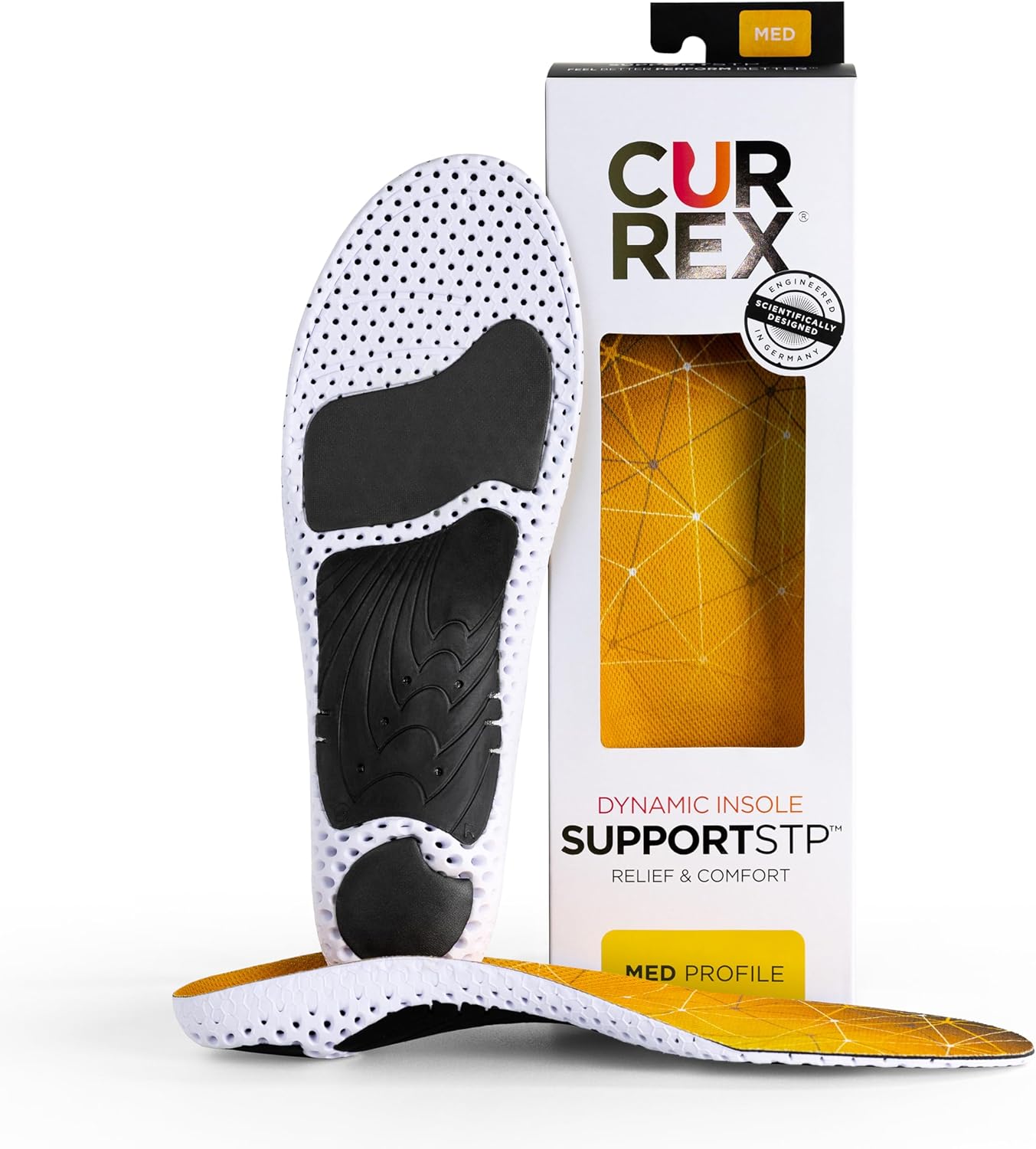
CURREX SupportSTPDr. Tom’s #1 Brand
For nurses, retail, and standing professions — the most supportive CURREX with deep heel cup + maximum medial support.
- Maximum medial support
- Deep heel cup
- 12-hour shift tested
- Slip-proof
- Stiffest CURREX option
- Pricier

Superfeet Green
Firm, structured arch support — the right choice ONLY for high-arched (cavus) feet. Wrong choice for flat feet.
- Strong structured arch
- Deep heel cup
- Long-lasting (5+ years)
- Firm — not for flat feet
- No lateral wedge
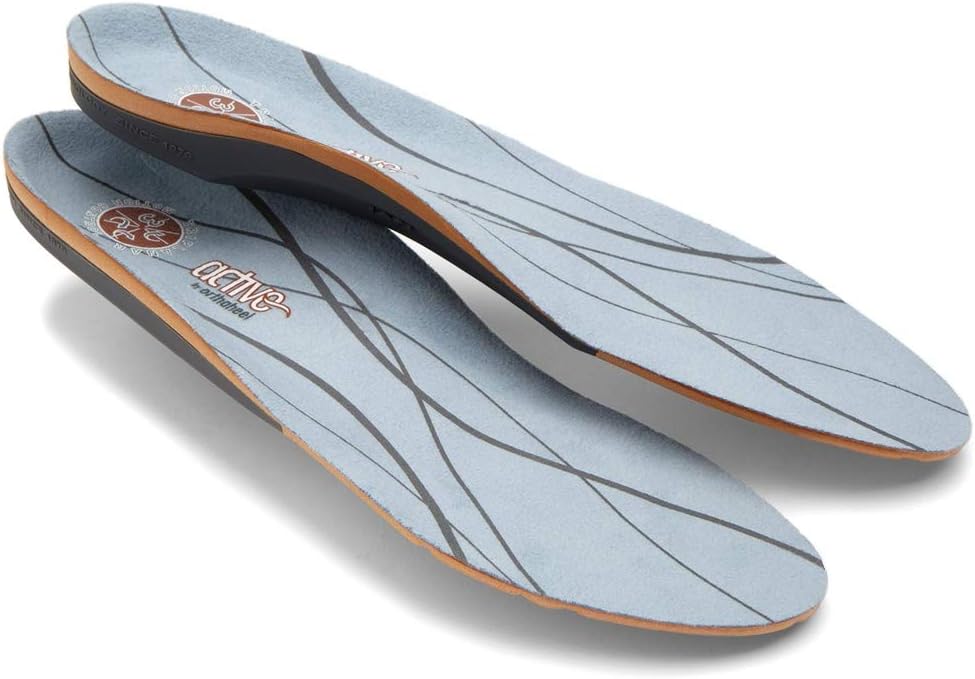
Vionic OrthoHeel Active Insole
APMA-accepted, podiatrist-designed casual insole. Best for adding mild arch support to dress shoes + walking shoes.
- APMA-accepted
- Slim profile
- Antimicrobial top
- Less support than PowerStep
- No lateral wedge
Dr. Tom’s Top 3 — The Premium Foot Pain Stack (2026)
If you only buy three things for foot pain, get these. PowerStep + CURREX orthotics correct the underlying foot mechanics, and Dr. Hoy’s pain gel delivers fast topical relief. This is the exact stack Dr. Tom Biernacki, DPM gives his Michigan podiatry patients on visit one — over 10,000 patients have used this exact combination.
Dr. Tom Biernacki, DPM is a board-certified podiatrist + Amazon Associate and brand-partner affiliate. Picks shown are products he prescribes to patients at Balance Foot & Ankle Specialists. We earn a commission on qualifying purchases at no extra cost to you. All products independently tested + reviewed for 30+ days minimum. Last verified: April 28, 2026.
PowerStep Pinnacle MaxxDr. Tom’s #1 Brand
Dr. Tom’s most-prescribed OTC orthotic. Lateral wedge corrects overpronation that causes 90% of foot pain. Deep heel cradle stabilizes the ankle. Built by podiatrists, used by patients worldwide.
- Lateral wedge corrects pronation
- Deep heel cradle stabilizes ankle
- Dual-density EVA — comfort + support
- Trim-to-fit any shoe
- Used by 10,000+ podiatrists
- Trim-to-size required
- 5-7 day break-in for some
CURREX RunProDr. Tom’s #1 Brand
3 arch heights for custom fit (Low/Med/High). Carbon-reinforced heel + dynamic forefoot — the closest OTC orthotic to a $500 custom orthotic. Engineered in Germany.
- 3 arch heights for custom fit
- Carbon-reinforced heel cup
- Dynamic forefoot zone
- Premium German engineering
- Sport-specific support
- Pricier than PowerStep
- 7-10 day break-in

Dr. Hoy’s Natural Pain Relief GelDr. Tom’s #1 Brand
Menthol-based natural pain relief — Dr. Tom’s #1 brand for fast relief without greasy residue. Safe for diabetics + daily use. Cleaner formula than Voltaren or Biofreeze.
- Menthol-based natural formula
- No greasy residue
- Safe for diabetics
- Fast cooling relief — 5-10 minutes
- Cleaner ingredient list than Biofreeze
- Pricier than Biofreeze
- Strong menthol scent at first
VitaMedica Arnica Gel
Arnica gel plus 15 plant compounds for sore feet, plantar fasciitis flares and post-activity soreness. Apply a thin layer to the sore area.
Shop VitaMedica Arnica Gel →
Dr. Tom Biernacki, DPM is a board-certified foot & ankle surgeon (ABFAS & ABPM) at Balance Foot & Ankle Specialists in Southeast Michigan. With over a decade of clinical experience, he specializes in heel pain, bunions, diabetic foot care, sports injuries, and minimally invasive surgery. Dr. Biernacki is a member of the APMA and ACFAS, and his patient education content on MichiganFootDoctors.com and YouTube has made him one of the most-followed foot & ankle educators on YouTube.
More questions patients ask
What causes heel pain?
Heel pain most commonly results from plantar fasciitis, accounting for ~80% of cases. Other causes include Achilles tendinitis, heel spurs, stress fractures, and Baxter's nerve entrapment. Dr. Biernacki performs thorough biomechanical evaluations. Call 810-206-1402 for a same-day appointment.
How long does plantar fasciitis take to heal?
With proper treatment, most cases improve within 6-12 weeks. Options include custom orthotics, stretching, physical therapy, and injections. For persistent cases, Dr. Biernacki offers shockwave therapy and minimally invasive procedures.
Should I see a podiatrist for heel pain?
Yes. A board-certified podiatrist can accurately diagnose heel pain using X-rays and diagnostic ultrasound, ruling out stress fractures. Early intervention leads to faster recovery. Call 810-206-1402.
What injections are available for plantar fasciitis?
Several injection options are available for plantar fasciitis: (1) Corticosteroid (cortisone) injection — most common; 70–80% short-term response rate; reduces inflammation rapidly; risk of plantar fascia rupture and fat pad atrophy with repeated use; (2) Platelet-rich plasma (PRP) injection — regenerative; stimulates tissue repair; superior to cortisone at 6–12 months; better for chronic cases; no rupture risk; slower onset; (3) Prolotherapy (dextrose injection) — promotes tissue repair with less expense than PRP; emerging evidence; (4) Botulinum toxin (Botox) — reduces muscle spasm contributing to plantar fascia tension; used in refractory cases; (5) Amniotic membrane (AMNIO) injection — regenerative with growth factors; (6) Dry needling — without injection — stimulates healing response. At Balance Foot & Ankle in Howell (4330 E Grand River) and Bloomfield Township (43494 Woodward Ave #208) — call (810) 206-1402.
How do I know if I need a plantar fasciitis injection?
Injection therapy for plantar fasciitis is typically indicated when: conservative measures have been tried for 6–8 weeks without adequate improvement (stretching, orthotics, night splints, physical therapy, activity modification), pain is significantly affecting daily activities or work, you need faster pain relief while implementing longer-term mechanical treatments, or you have a specific high-demand event (travel, wedding, sporting event) requiring temporary pain control. Injection is generally not the first treatment recommended — the majority of plantar fasciitis cases (85%+) respond to conservative care within 3–6 months without injections. Recurrence after injection without addressing the mechanical cause is common. At Balance Foot & Ankle, we exhaust conservative options first and use injection therapy strategically — call (810) 206-1402.
Does a plantar fasciitis injection hurt?
Plantar fasciitis injections involve varying levels of discomfort: most patients rate the injection at 3–6 on a 10-point pain scale; the medial heel approach (from the inner side) is significantly less painful than the direct plantar approach (through the bottom of the heel — the most sensitive skin on the body); local anesthetic (lidocaine) is mixed with the cortisone and provides almost immediate numbing after injection; some podiatrists apply topical anesthetic cream before injection; and ice can be applied after to reduce soreness. The plantar heel is typically quite sore for 24–48 hours after injection (especially with PRP, which intentionally provokes an inflammatory response), then significantly improved pain usually follows. Ultrasound guidance allows more precise placement, often requiring a smaller needle and less medication. Balance Foot & Ankle provides comfortable injection experiences — call (810) 206-1402.
How quickly does a plantar fasciitis injection work?
Response timeline varies by injection type: cortisone injection — local anesthetic in the injection provides temporary relief within minutes; significant anti-inflammatory effect develops over 3–7 days; peak relief at 2–4 weeks; lasting relief varies from weeks to months; PRP injection — initial inflammatory response may cause increased soreness for 3–7 days; improvement begins at 4–6 weeks; peak benefit at 3–6 months; more durable than cortisone. The local anesthetic component provides same-day partial relief, but the therapeutic effect takes days to weeks. If pain is completely resolved immediately after injection, that reflects the anesthetic — not the actual treatment response. At Balance Foot & Ankle in Howell and Bloomfield Township, MI, we counsel patients on realistic timelines for each injection type — call (810) 206-1402.
How long does relief from a plantar fasciitis injection last?
Duration of relief from plantar fasciitis injections: cortisone — average 4–8 weeks of significant relief; some patients achieve 3–6 months; a small percentage achieves permanent resolution (likely the cases that would have resolved anyway); relief typically diminishes with each successive injection; PRP — 6–12 months or longer of improved function; clinical trials show PRP patients continue improving at 12-month follow-up while cortisone patients plateau or worsen; PRP's duration advantage makes it cost-effective despite higher upfront cost. For all injection types, durability is significantly improved when mechanical causes are addressed simultaneously: custom orthotics, stretching program, night splints, and appropriate footwear ensure the fascia heals in a supported environment. Balance Foot & Ankle in Howell (4330 E Grand River) and Bloomfield Township (43494 Woodward Ave #208) — call (810) 206-1402.
Still have a question about coverage or cost? Book online and we will check your benefits before your visit: Book in Howell · Book in Bloomfield Township. Prefer to talk it through first? Call (810) 206-1402.