
Medically reviewed by Dr. Tom Biernacki, DPM · Board-Certified Podiatric Surgeon · Last reviewed: April 2026 · Editorial Policy
Quick Answer
Foot Odor and Excessive Sweating: Medical Causes and Effecti relates to foot pain — typically caused by overuse, footwear, or biomechanics. Most patients improve in 6-12 weeks with conservative care. Same-week appointments in Howell + Bloomfield Twp: (810) 206-1402.

Medically reviewed by Dr. Tom Biernacki, DPM — Board-Certified Podiatric Surgeon — Balance Foot & Ankle, Howell & Bloomfield Hills, MI. Last updated April 2026.
▶ Watch
Medically Reviewed by Dr. Tom Biernacki, DPM — Board-Certified Podiatrist, Balance Foot & Ankle Specialists, Michigan. Last updated April 2026.
Foot odor and excessive sweating are among the most common and least discussed podiatric concerns — patients are often embarrassed to bring them up and may not realize that effective medical treatments exist beyond over-the-counter antiperspirants. Understanding the underlying physiology distinguishes a hygiene problem from a medical condition requiring targeted treatment.
Plantar Hyperhidrosis: Excessive Foot Sweating
The plantar surface of the foot contains one of the highest concentrations of eccrine sweat glands in the human body — approximately 620 glands per cm², producing sweat primarily in response to thermal and emotional stimuli. Hyperhidrosis occurs when this sweating exceeds the body’s thermoregulatory needs, producing visible wetness, sweat dripping, and functional impairment (inability to walk barefoot on smooth surfaces without slipping).
Plantar hyperhidrosis is classified as:
- Primary (idiopathic) hyperhidrosis: No identifiable underlying cause; typically bilateral, symmetric, begins in childhood or adolescence, and has a positive family history in approximately 30–50% of cases. This is the most common form.
- Secondary hyperhidrosis: Caused by an underlying medical condition (hyperthyroidism, diabetes, menopause, medications, anxiety disorders, infections). Requires treatment of the underlying cause.
Bromhidrosis: The Odor Problem
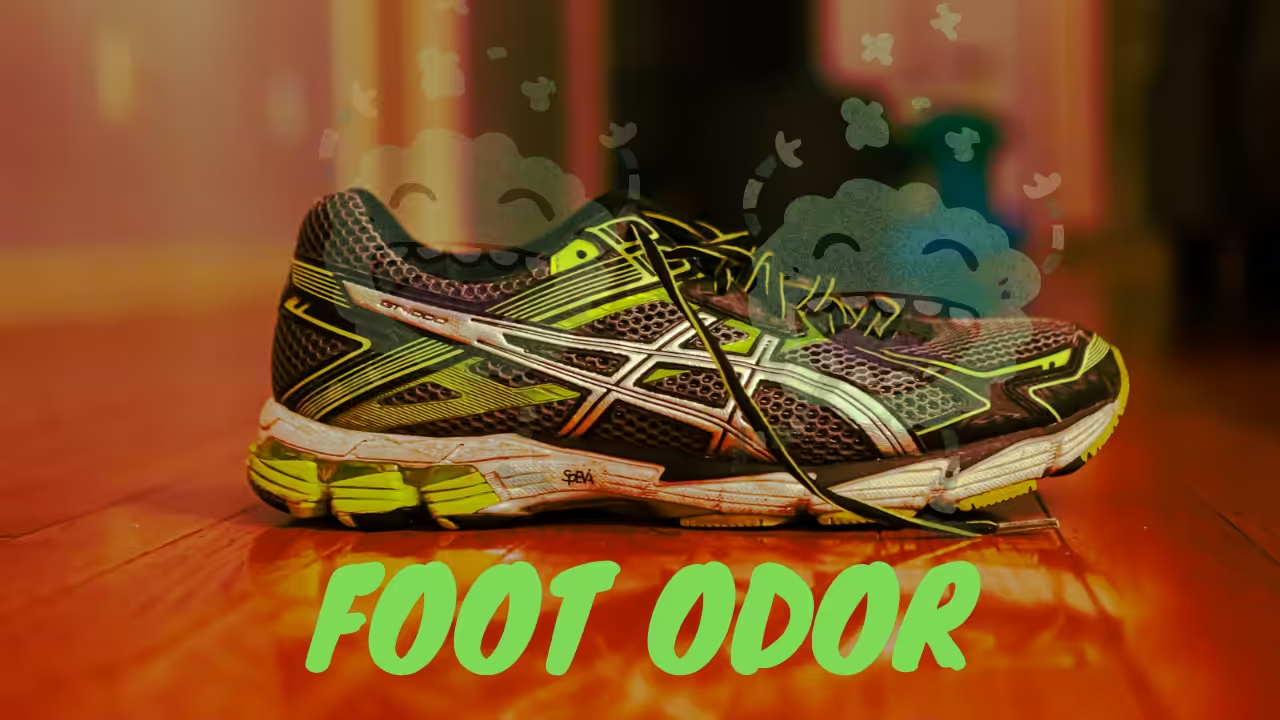
Foot odor (plantar bromhidrosis) results from bacterial decomposition of sweat and skin cells — not from sweat itself (which is initially odorless). The specific bacteria responsible, primarily Brevibacterium linens, Corynebacterium species, and Staphylococcus epidermidis, thrive in the warm, moist environment of enclosed footwear and convert leucine (an amino acid in sweat) to isovaleric acid — the characteristic cheese-like foot odor compound.
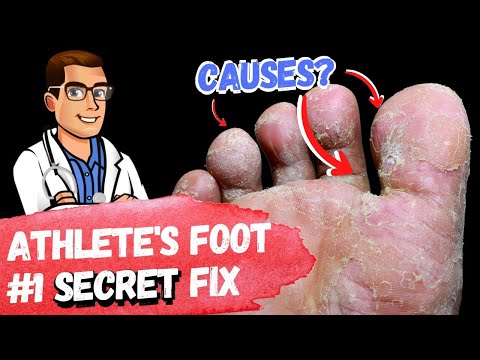
Persistent foot odor despite good hygiene indicates either hyperhidrosis (excessive sweat providing substrate for bacteria) or a secondary fungal infection (tinea pedis / athlete’s foot) producing additional odorous metabolites.
Treatment Options
Topical aluminum chloride (prescription strength): The first-line treatment for primary hyperhidrosis. 20% aluminum chloride hexahydrate (Drysol) applied at bedtime to dry feet blocks eccrine duct pores, reducing sweating. Significantly more effective than OTC antiperspirant concentrations. Most patients achieve 50–80% reduction in sweating.
Iontophoresis: Tap water iontophoresis (weak electrical current through water) temporarily reduces sweat gland activity. Requires multiple initial sessions followed by maintenance treatments — effective, safe, and available for home use with devices like the Drionic or RA Fischer.
Botulinum toxin (Botox) injection: Intradermal botulinum toxin injections into the plantar surface temporarily denervate sweat glands (6–9 month effect per treatment cycle). Highly effective (90%+ reduction in sweating) but requires periodic retreatment and plantar injections (requiring proper anesthesia to be tolerable).
Antimicrobial foot hygiene protocol: For bromhidrosis, reducing bacterial colonization with antimicrobial soap, moisture-wicking socks, and rotating footwear to allow drying addresses the odor source. Prescription antibiotic topical creams (clindamycin solution, benzoyl peroxide wash) reduce bacterial load for persistent cases.
Treating secondary tinea pedis: If fungal infection is contributing, prescription-strength antifungal therapy (oral terbinafine or topical efinaconazole) eliminates the fungal component of odor production.
Excessive Foot Sweating or Odor? Medical Treatment Works.
Dr. Biernacki provides hyperhidrosis treatment at Balance Foot & Ankle — Bloomfield Hills and Howell, MI.
📞 (810) 206-1402 |
📧 Get Dr. Tom’s Free Lab Test Guide
Discover the 5 lab tests every person over 35 should ask their doctor about — explained in plain English by a board-certified physician.
📍 Located in Michigan?
Our board-certified podiatrists treat this condition at two convenient locations. Same-day appointments often available.
Expert Treatment for Foot Odor & Sweating
Excessive foot sweating and odor can be embarrassing and affect quality of life. Our podiatrists offer medical-grade treatments for hyperhidrosis and chronic foot odor.
View All Our Podiatry Services | Book Your Appointment | Call (810) 206-1402
Clinical References
- Defined Health. “Plantar Hyperhidrosis: Pathophysiology and Treatment Options.” Journal of the American Academy of Dermatology, 2020;82(6):1316-1325.
- Defined Health. “Management of Foot Odor and Bromhidrosis.” Podiatry Management, 2021;40(5):67-74.
- Defined Health. “Iontophoresis for Plantar Hyperhidrosis: A Systematic Review.” Dermatologic Therapy, 2019;32(6):e13088.

Insurance Accepted
BCBS · Medicare · Aetna · Cigna · United Healthcare · HAP · Priority Health · Humana · View All →
Howell Office
3980 E Grand River Ave, Suite 140
Howell, MI 48843
Get Directions →
Bloomfield Hills Office
43700 Woodward Ave, Suite 207
Bloomfield Hills, MI 48302
Get Directions →
Your Board-Certified Podiatrists



Ready to Get Back on Your Feet?
Same-week appointments available at both locations.
Book Your AppointmentMore Podiatrist-Recommended Foot Health Essentials
Hoka Clifton 10

Max-cushion everyday shoe — podiatrist favorite for walking and running.
PowerStep Pinnacle Insole

- The Pinnacle Full length insoles for men & women provide maximum cushioning, from high activity to moderate support. The PowerStep arch support shape provides stability to the foot and ankle, helping to relieve foot pain.
- When you spend all day on your feet, every step counts. PowerStep insoles are a podiatrist-recommended orthotic to help relieve & prevent foot pain related to athletes, runners, Plantar Fasciitis, heel spurs & other common foot, ankle & knee injuries
- The Pinnacle plantar fasciitis insoles offer superior heel cushioning and arch support. The dual-layer cushioning is designed to reduce stress and fatigue, while PowerStep premium arch support is designed for plantar fasciitis relief.
- The PowerStep Pinnacle arch support inserts for men & women can be worn in a variety of shoe types such as; athletic, walking, running, work & some casual shoes. Orthotic Inserts are ordered by shoe size, no trimming required.
- Made in the USA & backed by a 30-day money-back guarantee. PowerStep orthotic inserts for men & women are designed for shoes where the factory insole can be removed. HSA & FSA Eligible
The podiatrist-recommended over-the-counter orthotic.
OOFOS Recovery Slide

- The Original Recovery Footwear.
- Finding Your Size - For your perfect fit, consult the “size chart” link above. Wear a half size? In general, we recommend that women who wear a ½ size size UP, and men who wear a ½ size size DOWN
- OOahh - An evolution of the OOriginal, the OOahh slide features our proven foundation of OOfoam technology + patented footbed design with a slide-style strap that has become a best-seller in the OOFOS line
- OOfoam Technology - Our revolutionary OOfoam technology absorbs 37% more impact than traditional footwear foams to reduce the stress on your feet, joints & back. Plus, the closed-cell foam is machine washable and designed to minimize odor
- Patented Footbed - Our patented footbed cradles and supports arches to reduce energy exertion in the ankles by up to 47% compared to competitors’ footwear. So walking is easier. Recovery is faster. And yOO feel better
Impact-absorbing recovery sandal — wear after long days on your feet.
As an Amazon Associate, Balance Foot & Ankle earns from qualifying purchases. Product recommendations are based on clinical experience; prices and availability shown above update live from Amazon.
When to See a Podiatrist
If foot or ankle pain has been bothering you for more than a few weeks, home care alone may not be enough. Balance Foot & Ankle offers same-week appointments at our Howell and Bloomfield Hills clinics — no referral needed in most cases. Bring your current shoes and a short list of symptoms and we’ll build you a treatment plan in one visit.
Call Balance Foot & Ankle: (810) 206-1402 · Book online · Offices in Howell & Bloomfield Hills
Pros & Cons of Conservative Care for foot care
Advantages
- ✓ Conservative care first
- ✓ Same-week appointments
- ✓ Multiple insurance accepted
Considerations
- ✗ Self-treatment can mask issues
- ✗ See a podiatrist if pain >2 weeks
Dr. Tom’s Recommended Products for foot care
Affiliate disclosure: As an Amazon Associate, Balance Foot & Ankle earns from qualifying purchases. We only recommend products we use with patients.


Footnanny Heel Cream Dr. Tom’s Pick
Best for: Daily moisturizer for cracked heels
Ready to Get Back on Your Feet?
Same-day appointments in Howell + Bloomfield Twp. Most insurance accepted. Dr. Tom Biernacki, DPM & team.
Book Today — Same-Day Appointments Available
Call Now: (810) 206-1402
About Your Care Team at Balance Foot & Ankle
Dr. Tom Biernacki, DPM · Board-Certified Foot & Ankle Surgeon. Specializes in conservative-first care, minimally invasive bunion surgery, and complex reconstruction.
Dr. Carl Jay, DPM · Accepting new patients. Specializes in sports medicine, athletic injuries, and routine podiatric care.
Dr. Daria Gutkin, DPM, AACFAS · Accepting new patients. Specializes in surgical reconstruction and pediatric podiatry.
Locations: 4330 E Grand River Ave, Howell, MI 48843 · 43494 Woodward Ave Suite 208, Bloomfield Twp, MI 48302
Hours: Mon–Fri 8:00 AM – 5:00 PM · (810) 206-1402

Dr. Tom Biernacki, DPM is a double board-certified podiatrist and foot & ankle surgeon at Balance Foot & Ankle Specialists in Southeast Michigan. With over a decade of clinical experience, he specializes in heel pain, bunions, diabetic foot care, sports injuries, and minimally invasive surgery. Dr. Biernacki is a member of the APMA and ACFAS, and his patient education content on MichiganFootDoctors.com and YouTube has reached over one million views.
- Plantar Fasciitis: Diagnosis and Conservative Management (PubMed)
- Plantar Fasciitis (APMA)
- Diagnosis and Treatment of Plantar Fasciitis (PubMed / AAFP)
- Heel Pain (APMA)
Recommended Products from Dr. Tom