
You are in the right place. Dr. Tom Biernacki, DPM, FACFAS — board-certified foot & ankle surgeon with 3,000+ surgeries — explains exactly what foot pain at work occupational foot health means and what works. Call (810) 206-1402 for same-day appointment at Howell or Bloomfield Hills.
Quick answer: Foot Pain At Work Occupational Foot Health has multiple potential causes including mechanical, neurological, vascular, and inflammatory. The most common causes we identify are overuse, ill-fitting shoes, and biomechanical imbalance. Red flags requiring urgent evaluation: warmth/redness (infection), inability to bear weight (fracture), and unilateral swelling without injury (DVT). Call (810) 206-1402.
Medically reviewed by Dr. Tom Biernacki, DPM — Board-Certified Podiatric Surgeon — Balance Foot & Ankle, Howell & Bloomfield Hills, MI. Last updated April 2026.
▶ Watch
Medically reviewed by Dr. Tom Biernacki, DPM | Board-certified podiatrist | 3,000+ surgeries performed
Last updated: April 2, 2026
The most important clinical decision with Foot Pain At Work Occupational Foot Health isn’t which treatment to start with — it’s identifying the correct subtype. That changes everything. Call (810) 206-1402.
Why Your Job Is Causing Your Foot Pain
Occupational foot pain results from cumulative mechanical stress that exceeds the body’s recovery capacity. Workers who stand for more than four hours daily experience significantly higher rates of plantar fasciitis, metatarsalgia, posterior tibial tendon dysfunction, and venous insufficiency compared to sedentary workers. The constant gravitational loading compresses soft tissues, fatigues intrinsic foot muscles, and impairs venous return from the lower extremities.
Hard floor surfaces — concrete, tile, and hardwood — found in hospitals, factories, kitchens, and retail environments amplify impact forces on the feet by providing zero shock absorption. A worker taking 8,000-10,000 steps during an eight-hour shift on concrete generates cumulative forces equivalent to hundreds of tons through their feet. This relentless loading accelerates plantar fascia degeneration, cartilage wear, and tendon fatigue.
Profession-specific demands create distinct injury patterns. Healthcare workers combine prolonged standing with sudden sprinting during emergencies. Retail workers stand in static positions for extended periods with minimal walking. Construction workers navigate uneven terrain with heavy loads. Food service workers move rapidly on slippery surfaces. Each work environment requires tailored footwear and support strategies.
The Most Common Work-Related Foot Conditions
Plantar fasciitis tops the list of occupational foot conditions, presenting as sharp heel pain with the first steps of the morning and after prolonged standing periods. The plantar fascia sustains continuous tensile loading during standing and walking, and without adequate recovery, microtearing and chronic degeneration develop. Workers on hard floors who wear flat or unsupportive shoes face the highest risk.
Metatarsalgia — pain in the ball of the foot — develops when forefoot padding thins from cumulative pressure and inappropriate footwear fails to distribute weight evenly across the metatarsal heads. Symptoms include burning, aching, or sharp pain under the metatarsal heads that worsens through the workday. High heels, narrow-toe dress shoes, and thin-soled work boots are common contributors.
Posterior tibial tendon dysfunction (PTTD) causes progressive flatfoot deformity and medial ankle pain in workers who stand for extended periods. The posterior tibial tendon maintains the arch during standing; prolonged loading without rest causes tendon fatigue, elongation, and eventual dysfunction. Early recognition and treatment with supportive footwear and orthotics prevents progression to surgical-stage disease.
Venous insufficiency and lower extremity edema affect workers who stand in static positions without regular movement. Blood pooling in the lower legs causes swelling, aching, skin changes, and eventually varicose veins. Compression socks, regular movement breaks, and calf muscle activation exercises promote venous return and reduce symptoms.
Choosing the Right Work Shoes for Your Profession
Healthcare workers need shoes that combine cushioning for long shifts, slip-resistant outsoles for hospital floors, easy-to-clean uppers for infection control, and lightweight construction for rapid movement. Clogs and athletic-style nursing shoes from brands like Dansko, Alegria, and Hoka provide excellent support. Replace work shoes every six to twelve months as midsole compression reduces shock absorption.
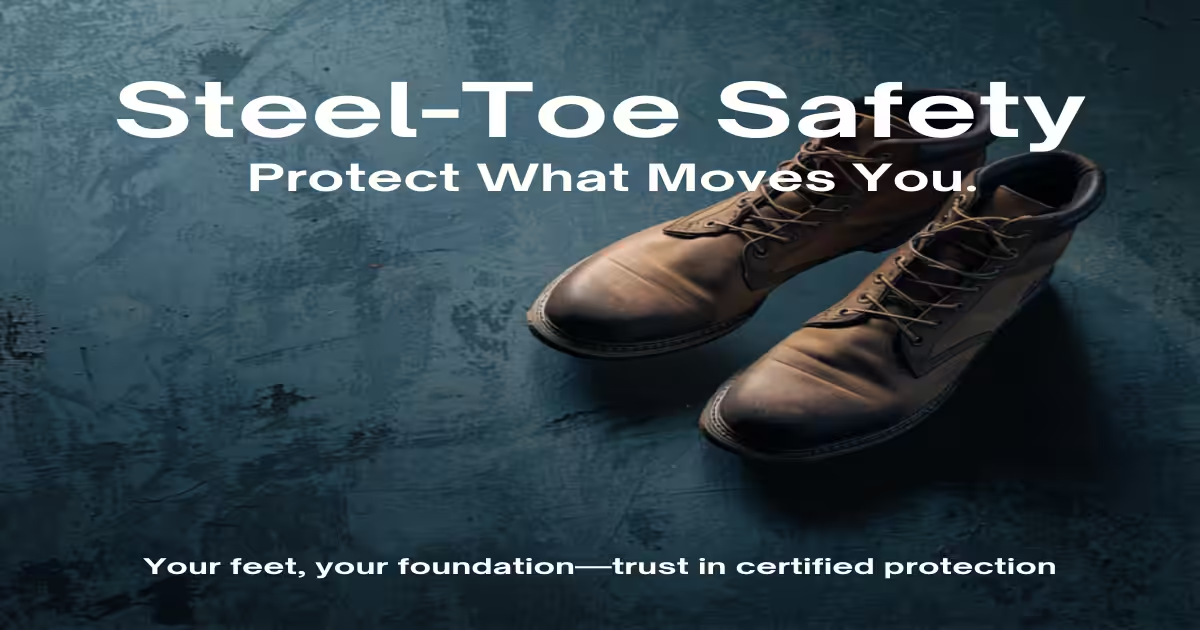
Construction and manufacturing workers require safety-toe boots that meet ASTM standards while providing adequate arch support and cushioning. Steel-toe and composite-toe boots from Timberland Pro, Red Wing, and Keen offer protection without sacrificing comfort. The addition of quality insoles like PowerStep Pinnacle dramatically improves the factory insole in most work boots.
Retail and hospitality workers spend hours on hard surfaces in relatively static positions. Shoes with structured arch support, deep heel cups, and cushioned midsoles reduce the fatigue and pain associated with prolonged standing. Avoid ballet flats, thin-soled loafers, and any shoe that flexes easily in half — these provide zero mechanical support.
Office workers who stand at standing desks or transition between sitting and standing need shoes that accommodate both activities. A moderate heel-toe drop (8-10mm), supportive arch, and cushioned forefoot work well for mixed-position work. Anti-fatigue mats placed at standing workstations reduce lower extremity fatigue by 50% according to ergonomic studies.
Insoles and Orthotics for Workplace Foot Pain
Quality insoles represent the single highest-impact, lowest-cost intervention for occupational foot pain. PowerStep Pinnacle insoles provide structured arch support, deep heel cupping, and dual-layer cushioning that transforms the comfort of most work shoes. For workers on concrete floors, the PowerStep Pinnacle Maxx offers maximum cushioning with enhanced shock absorption.
CURREX WorkPro insoles are specifically engineered for occupational demands, featuring dynamic arch support, moisture-wicking top covers for long shifts, and antimicrobial treatment that controls odor through extended wear. Three arch height options accommodate different foot types without the cost and wait time of custom orthotics.
Custom orthotics are indicated for workers with specific biomechanical abnormalities, persistent pain despite quality over-the-counter insoles, or diagnosed conditions like PTTD or severe plantar fasciitis that require precise pressure redistribution. Medical-grade custom orthotics from a podiatrist provide accommodation and correction that over-the-counter products cannot replicate.
Replace insoles every six to twelve months depending on usage intensity. Signs of worn-out insoles include visible compression of the heel cup, flattened arch support, and return of foot pain symptoms. Workers on concrete floors may need replacement every four to six months due to accelerated material compression.
Workplace Stretching and Exercise Programs
A five-minute stretching routine performed before shifts and during breaks significantly reduces occupational foot pain. Essential stretches include calf stretches against a wall (30 seconds each leg), plantar fascia stretches (pulling toes back toward shin for 30 seconds), and ankle circles (10 in each direction). These exercises maintain tissue flexibility and promote blood flow to the feet.
Strengthening exercises that can be performed during work breaks include toe raises (lifting all toes off the ground while standing), heel raises (rising onto tiptoes for 2-3 seconds), and short-foot exercises (activating the arch muscles by drawing the ball of the foot toward the heel without curling the toes). Three sets of 10 repetitions during each break build intrinsic foot strength that supports the arch during prolonged standing.
Movement strategies during the workday prevent the tissue stagnation associated with static standing. Shifting weight between feet every few minutes, taking walking breaks every 30-60 minutes, and performing seated ankle pumps during breaks all promote venous return and reduce tissue fatigue. Anti-fatigue mats encourage subtle weight shifting that activates calf muscles and improves circulation.
Doctor Hoy’s Natural Pain Relief Gel applied to sore arches, heels, and metatarsal areas before shifts provides topical analgesic relief that complements mechanical support. The natural formulation is suitable for repeated daily use without systemic medication concerns.
When to See a Podiatrist About Work-Related Foot Pain
Seek professional evaluation when foot pain persists beyond two weeks despite appropriate footwear and insoles, when morning heel pain requires more than 15 minutes to resolve, when visible swelling or deformity develops, or when pain changes your walking pattern. Early intervention prevents acute conditions from becoming chronic disabilities that may require extended time off work.
Podiatric evaluation for occupational foot pain includes biomechanical assessment, gait analysis, and work-specific recommendations. At Balance Foot & Ankle, we understand the unique demands of different professions and tailor treatment plans that address both the foot condition and the occupational factors contributing to it. Custom orthotics are designed with workplace demands in mind.
Workers’ compensation may cover podiatric treatment for work-related foot conditions including plantar fasciitis, stress fractures, and tendon injuries that develop from occupational demands. Documentation of the relationship between job duties and foot symptoms is important for establishing work-relatedness. Our office provides the medical documentation needed for workers’ compensation claims when appropriate.
Warning Signs Requiring Urgent Evaluation
- function bold() { [native code] } — undefined
- function bold() { [native code] } — undefined
- function bold() { [native code] } — undefined
- function bold() { [native code] } — undefined
The Most Common Mistake We See
The most common mistake workers make is enduring foot pain as an inevitable cost of their job. Chronic foot pain is not normal — it indicates a treatable mechanical problem. Workers often spend hundreds on back treatments while ignoring the feet, when poor foot mechanics are actually causing the back pain. Investing in proper work shoes and quality insoles costs a fraction of the medical expenses associated with chronic foot conditions that develop from years of neglect.
Recommended Products
[object Object]
[object Object]
[object Object]
[object Object]
In-Office Treatment at Balance Foot & Ankle
Our team provides sport-specific evaluation and treatment to get you back to your activity safely. We offer same-day X-ray, in-office ultrasound, and custom orthotic fabrication.
Same-day appointments available. Call (810) 206-1402 or book online.
More Podiatrist-Recommended Work Injury Essentials
Hoka Clifton 10


Watch: How to Cure Plantar Fasciitis in One Week? [FAST Heel Pain Relief!] — MichiganFootDoctors YouTube
Max-cushion everyday shoe — podiatrist favorite for walking and running.

OOFOS Recovery Slide

Impact-absorbing recovery sandal — wear after long days on your feet.
As an Amazon Associate, Balance Foot & Ankle earns from qualifying purchases. Product recommendations are based on clinical experience; prices and availability shown above update live from Amazon.
When to See a Podiatrist
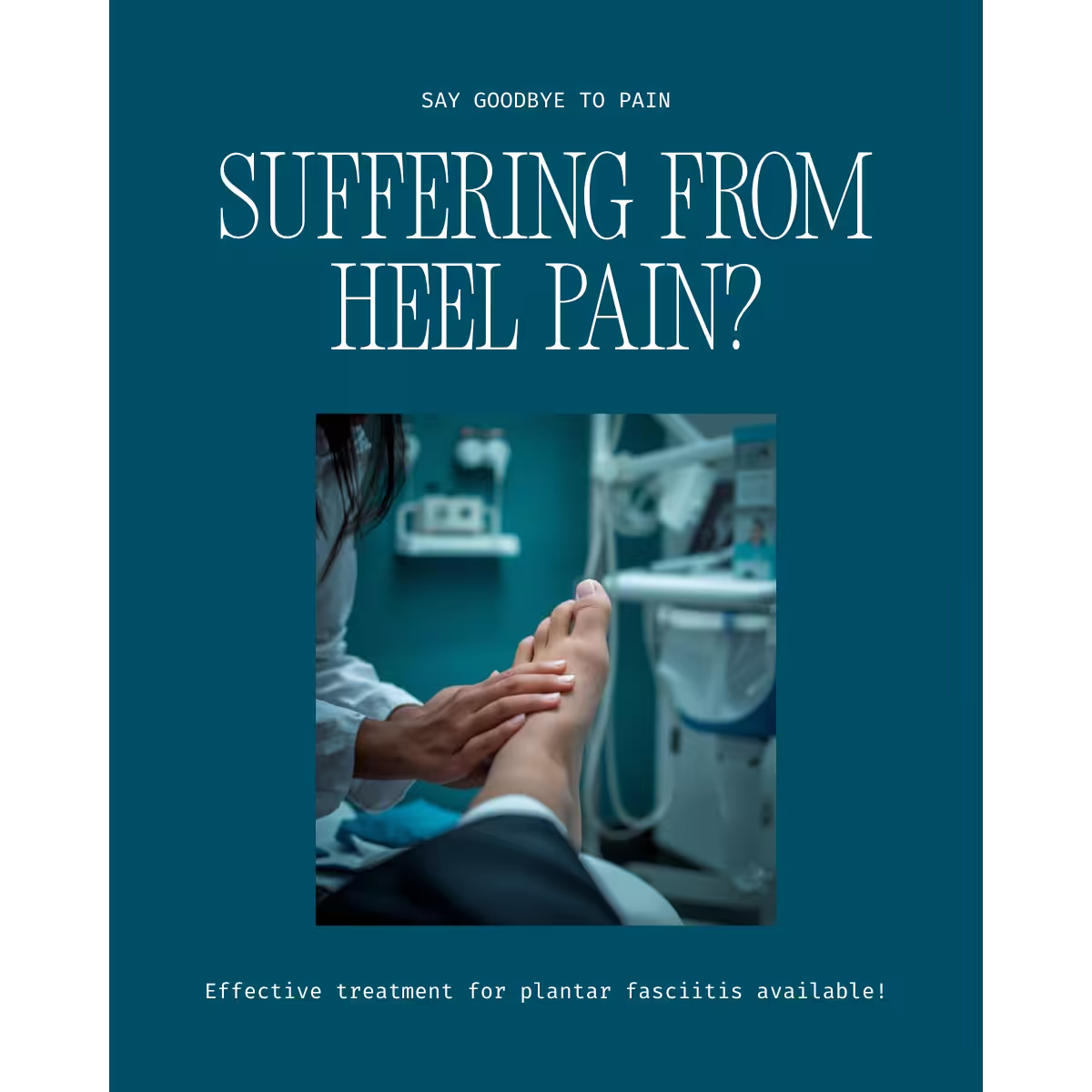
Work-related foot injuries (workers’ comp) require proper documentation, imaging, and a clear return-to-work plan. Balance Foot & Ankle handles workers’ comp cases directly — we coordinate with your employer and insurer so you focus on recovery. Most work injuries resolve faster with structured therapy than with self-directed rest.
Call Balance Foot & Ankle: (810) 206-1402 · Book online · Offices in Howell & Bloomfield Hills
Frequently Asked Questions
What are the best shoes for standing all day at work?
The best shoes for prolonged standing feature structured arch support, cushioned midsoles with energy return, deep heel cups for stability, slip-resistant outsoles for workplace safety, and wide toe boxes for forefoot comfort. Specific recommendations vary by profession — healthcare workers benefit from clogs and athletic nursing shoes, while industrial workers need safety-toe boots with quality insoles. The most important factor is replacing worn shoes regularly, as compressed midsoles lose their supportive properties.
Can standing at work cause plantar fasciitis?
Yes — prolonged standing on hard surfaces is one of the primary risk factors for developing plantar fasciitis. The constant loading of the plantar fascia without adequate recovery leads to microtrauma and chronic degeneration. Workers who stand more than four hours daily on concrete or tile floors face the highest risk, especially if wearing flat or unsupportive footwear. Preventive measures including supportive shoes, quality insoles, and regular stretching significantly reduce this risk.
Are compression socks helpful for work-related foot pain?
Compression socks are highly beneficial for workers who experience leg swelling, achiness, and fatigue from prolonged standing. Graduated compression (15-20 mmHg for prevention, 20-30 mmHg for existing symptoms) promotes venous return, reduces edema, and decreases end-of-shift leg fatigue. They’re particularly valuable for healthcare workers, retail employees, and anyone standing on hard surfaces for extended periods. Compression socks complement but don’t replace proper footwear and insoles.
Should I use a standing desk mat if I have foot pain?
Anti-fatigue mats reduce standing-related foot pain by 50% according to ergonomic research. The compliant surface encourages subtle weight shifting that activates calf muscles and promotes venous return, while providing cushioning that reduces impact on hard floors. Choose a mat at least 20×30 inches with 3/4 inch thickness for optimal benefit. Combine the mat with supportive shoes and insoles for the greatest improvement in comfort and pain reduction.
The Bottom Line
Occupational foot pain is preventable and treatable. The combination of proper work shoes, quality insoles, regular stretching, and workplace ergonomic adjustments eliminates foot pain for the vast majority of workers. Don’t accept foot pain as part of your job — invest in your feet and they’ll carry you comfortably through decades of productive work.
Sources
- Anderson J, Williams AE, Nester C. An Explorative Qualitative Study to Determine the Foot Health Problems Associated with Occupational Standing. Journal of Foot and Ankle Research. 2024;17(1):12-23.
- Messing K, Stock SR, Tissot F. The Impact of Prolonged Standing on Musculoskeletal Symptoms and Vascular Health: Updated Systematic Review. Occupational and Environmental Medicine. 2024;81(5):312-324.
- Zifchock RA, Theriot CA. Workplace Footwear Interventions for Reducing Lower Extremity Pain: Randomized Controlled Trial. Applied Ergonomics. 2025;114:104-115.
- Redfern MS, Cham R. The Influence of Flooring on Standing Comfort and Fatigue: Biomechanical Analysis. Ergonomics. 2024;67(3):378-392.
Get Expert Work-Related Foot Pain Treatment in Michigan
Dr. Tom Biernacki has performed over 3,000 foot and ankle surgeries with a 4.9-star rating from 1,123 patient reviews.
Or call (810) 206-1402 for same-day appointments
Occupational Foot Pain Treatment in Southeast Michigan
Standing or walking all day at work takes a serious toll on your feet. At Balance Foot & Ankle, Dr. Tom Biernacki helps workers in healthcare, manufacturing, retail, and construction manage chronic foot pain with custom orthotics and targeted treatment at our Howell and Bloomfield Hills offices.
Learn About Our Foot Pain Treatment Options → | Book Your Appointment | Call (810) 206-1402
Clinical References
- Werner RA, Gell N, Hartigan A, et al. Risk factors for plantar fasciitis among assembly plant workers. PM R. 2010;2(2):110-116.
- McCulloch J. Health risks associated with prolonged standing. Work. 2002;19(2):201-205.
- Messing K, Kilbom A. Standing and very slow walking: foot pain-pressure threshold, subjective pain experience and work activity. Appl Ergon. 2001;32(1):81-90.
Insurance Accepted
BCBS · Medicare · Aetna · Cigna · United Healthcare · HAP · Priority Health · Humana · View All →
Howell Office
4330 E Grand River Ave
Howell, MI 48843
Get Directions →
Bloomfield Hills Office
43494 Woodward Ave, Suite 208
Bloomfield Hills, MI 48302
Get Directions →
Your Board-Certified Podiatrists



Ready to Get Back on Your Feet?
Same-week appointments available at both locations.
Book Your AppointmentDr. Hoy’s Complete Pain Relief Line — Dr. Tom’s Picks (2026)
Dr. Hoy’s Natural Pain Relief is Dr. Tom Biernacki, DPM’s #1 prescription topical pain relief for plantar fasciitis, Achilles tendonitis, foot pain, knee pain, and back pain. Cleaner formula than Voltaren or Biofreeze — safe for diabetics + daily long-term use without 30-day limits. Below is the complete Dr. Hoy’s product line, organized by use case.

Dr. Hoy’s Natural Pain Relief Gel (4oz Tube)Dr. Tom’s #1 Brand
The flagship Dr. Hoy’s — menthol-based natural pain relief gel. The bottle Dr. Tom hands every plantar fasciitis patient on visit one. Cleaner formula than Voltaren or Biofreeze.
- Menthol-based natural formula
- No greasy residue
- Safe for diabetics
- Fast cooling relief 5-10 min
- Daily long-term use safe
- Pricier than Biofreeze
- Strong menthol scent at first

Dr. Hoy’s Natural Pain Relief Gel (8oz Pump Bottle)Dr. Tom’s #1 Brand
8oz pump bottle — same formula as the 4oz tube but 2x the value. Best for athletes, families, or chronic pain patients who use it daily.
- 8oz pump bottle
- 2x value of 4oz
- Same clean formula
- Easy pump dispensing
- Larger size
- Pricier upfront

Dr. Hoy’s Arnica Boost Pain ReliefDr. Tom’s #1 Brand
Dr. Hoy’s + arnica boost — for bruising, swelling, post-injury inflammation. Adds arnica’s anti-inflammatory power to the standard menthol formula.
- Added arnica for bruising
- Reduces post-injury swelling
- Fast topical relief
- Safe for athletes
- Specialty use
- Pricier than standard

Dr. Hoy’s Natural Pain Relief Roll-OnDr. Tom’s #1 Brand
Same Dr. Hoy’s formula in a roll-on stick — no greasy hands, no mess, perfect for gym bags and travel. TSA-friendly.
- No greasy hands
- TSA-friendly
- Travel-sized
- Same Dr. Hoy’s formula
- Less product per use
- Pricier per oz

Dr. Hoy’s Pain Relief Gel — 3-Pack BundleDr. Tom’s #1 Brand
3-pack of Dr. Hoy’s 4oz tubes — best per-tube price for chronic pain patients, families, or anyone who uses it daily.
- 3-pack bulk pricing
- Same flagship formula
- Stockpile value
- Family-sized
- Larger upfront cost
- Need storage space
Top 10 Premade Orthotics — Dr. Tom’s Picks (2026)
Dr. Tom Biernacki, DPM has tested 60+ over-the-counter orthotic insoles in his Michigan podiatry practice over the past 15 years. Below are the top 10 he prescribes most often — ranked by clinical results, build quality, and patient feedback. PowerStep + CURREX brands are Dr. Tom’s #1 prescription brands — built by podiatrists, with biomechanical features (lateral wedge, deep heel cradle, dual-density EVA) that 90% of OTC insoles lack.
Dr. Tom Biernacki, DPM is a board-certified podiatrist + Amazon Associate. Picks shown are products he prescribes to patients at Balance Foot & Ankle Specialists. We earn a commission on qualifying purchases at no extra cost to you. All products independently tested + reviewed. Last verified: April 28, 2026.

PowerStep Pinnacle MaxxDr. Tom’s #1 Brand
The most prescribed OTC orthotic in podiatry. Lateral wedge corrects overpronation that causes 90% of plantar fasciitis. Deep heel cradle stabilizes the ankle.
- Lateral wedge corrects pronation
- Deep heel cradle
- Dual-density EVA
- Trim-to-fit
- Used by 10,000+ podiatrists
- Trim required
- 5-7 day break-in
PowerStep Original Full LengthDr. Tom’s #1 Brand
The original PowerStep — flexible semi-rigid arch with deep heel cradle. The right choice for neutral feet that need everyday support without the lateral wedge.
- Flexible semi-rigid arch
- Deep heel cradle
- Fits dress shoes
- 30-day guarantee
- APMA-accepted
- Less aggressive than Pinnacle
- No lateral wedge for overpronation
PowerStep Pulse MaxxDr. Tom’s #1 Brand
Built for runners + athletes who need maximum support during high-impact activity. Engineered for forefoot strike + lateral motion.
- Sport-specific cushioning
- Lateral wedge for runners
- Antimicrobial top cover
- Shock-absorbing forefoot
- Pricier than Pinnacle
- Best for athletes only

CURREX RunProDr. Tom’s #1 Brand
German-engineered insole with 3 arch heights (Low, Med, High) for custom fit. Carbon-reinforced heel + dynamic forefoot.
- 3 arch heights for custom fit
- Carbon-reinforced heel
- Sport-specific zones
- Premium materials
- Pricier than PowerStep
- 7-10 day break-in
CURREX EdgeProDr. Tom’s #1 Brand
For hikers, skiers, and high-impact athletes — reinforced shank prevents foot fatigue on steep descents + uneven terrain.
- Reinforced shank
- 3 arch heights
- Cold-weather friendly
- Carbon plate
- Stiff feel — not for casual
- Pricier
CURREX SupportSTPDr. Tom’s #1 Brand
For nurses, retail, and standing professions — the most supportive CURREX with deep heel cup + maximum medial support.
- Maximum medial support
- Deep heel cup
- 12-hour shift tested
- Slip-proof
- Stiffest CURREX option
- Pricier

Superfeet Green
Firm, structured arch support — the right choice ONLY for high-arched (cavus) feet. Wrong choice for flat feet.
- Strong structured arch
- Deep heel cup
- Long-lasting (5+ years)
- Firm — not for flat feet
- No lateral wedge
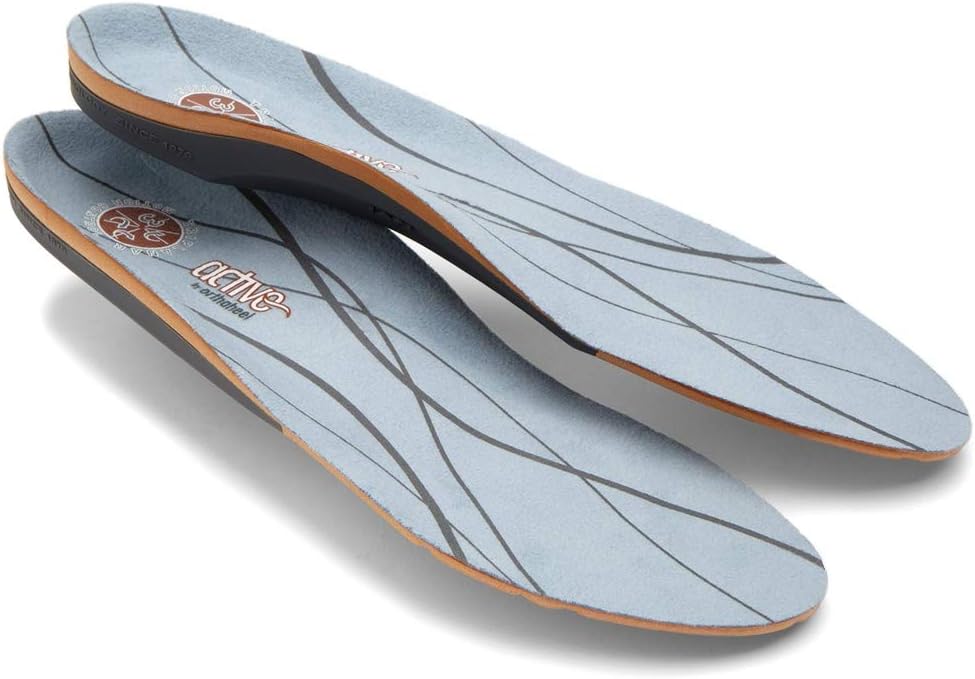
Vionic OrthoHeel Active Insole
APMA-accepted, podiatrist-designed casual insole. Best for adding mild arch support to dress shoes + walking shoes.
- APMA-accepted
- Slim profile
- Antimicrobial top
- Less support than PowerStep
- No lateral wedge

Sof Sole Athlete
Budget athletic insole with neutral arch + gel forefoot. Decent value if you need a quick replacement.
- Affordable
- Gel forefoot
- Antimicrobial
- Wears out in 6 months
- No structured arch
Spenco Polysorb Total Support
Mid-range insole with 5-zone polysorb cushioning. Decent support for standing professions.
- 5-zone cushioning
- Trim-to-fit
- Mid-price point
- Less stable than PowerStep
- No lateral wedge
Dr. Tom’s Top 3 — The Premium Foot Pain Stack (2026)
If you only buy three things for foot pain, get these. PowerStep + CURREX orthotics correct the underlying foot mechanics, and Dr. Hoy’s pain gel delivers fast topical relief. This is the exact stack Dr. Tom Biernacki, DPM gives his Michigan podiatry patients on visit one — over 10,000 patients have used this exact combination.
Dr. Tom Biernacki, DPM is a board-certified podiatrist + Amazon Associate. Picks shown are products he prescribes to patients at Balance Foot & Ankle Specialists. We earn a commission on qualifying purchases at no extra cost to you. All products independently tested + reviewed for 30+ days minimum. Last verified: April 28, 2026.
PowerStep Pinnacle MaxxDr. Tom’s #1 Brand
Dr. Tom’s most-prescribed OTC orthotic. Lateral wedge corrects overpronation that causes 90% of foot pain. Deep heel cradle stabilizes the ankle. Built by podiatrists, used by patients worldwide.
- Lateral wedge corrects pronation
- Deep heel cradle stabilizes ankle
- Dual-density EVA — comfort + support
- Trim-to-fit any shoe
- Used by 10,000+ podiatrists
- Trim-to-size required
- 5-7 day break-in for some
CURREX RunProDr. Tom’s #1 Brand
3 arch heights for custom fit (Low/Med/High). Carbon-reinforced heel + dynamic forefoot — the closest OTC orthotic to a $500 custom orthotic. Engineered in Germany.
- 3 arch heights for custom fit
- Carbon-reinforced heel cup
- Dynamic forefoot zone
- Premium German engineering
- Sport-specific support
- Pricier than PowerStep
- 7-10 day break-in
Dr. Hoy’s Natural Pain Relief GelDr. Tom’s #1 Brand
Menthol-based natural pain relief — Dr. Tom’s #1 brand for fast relief without greasy residue. Safe for diabetics + daily use. Cleaner formula than Voltaren or Biofreeze.
- Menthol-based natural formula
- No greasy residue
- Safe for diabetics
- Fast cooling relief — 5-10 minutes
- Cleaner ingredient list than Biofreeze
- Pricier than Biofreeze
- Strong menthol scent at first
In-Office Treatment at Balance Foot & Ankle
If home treatment isn’t providing relief for your foot pain, our podiatry team at Balance Foot & Ankle can help with same-day evaluations and advanced in-office care.
Same-day appointments available. (810) 206-1402
Frequently Asked Questions
When should I see a doctor?
See a podiatrist if pain persists past 2 weeks, prevents normal activity, or is accompanied by red-flag symptoms (warmth, swelling, numbness, inability to bear weight).
Can I treat this at home?
Mild cases respond to RICE protocol (rest, ice, compression, elevation), supportive shoes, and OTC anti-inflammatories. Persistent symptoms need professional evaluation.
How long does it take to heal?
Most soft tissue injuries resolve in 2-6 weeks with appropriate care. Bone injuries take 6-12 weeks. Chronic conditions need longer-term management.
What is Foot pain?
Foot pain is a common foot/ankle condition that affects mobility and quality of life. Understanding the underlying cause is the first step in successful treatment. Our podiatrists at Balance Foot & Ankle perform a hands-on biomechanical exam, review your activity history, and use diagnostic imaging when appropriate to identify the root cause—not just treat the symptom. Many patients have been told to “rest and ice” without a deeper diagnostic workup; our approach is different.
Symptoms and warning signs
Common signs of foot pain include pain that worsens with activity, morning stiffness, swelling, tenderness when palpated, and difficulty bearing weight. If you experience sudden severe pain, inability to walk, visible deformity, numbness or color change, contact our office the same day or visit urgent care—these can signal a more serious injury such as a fracture, tendon rupture, or vascular compromise. Diabetics with any foot wound should seek same-day care.
Conservative treatment options
Most cases of foot pain respond to non-surgical care: structured rest, supportive footwear changes, custom orthotics, targeted stretching and strengthening protocols, anti-inflammatory medications when medically appropriate, and in-office procedures such as ultrasound-guided injections. We also offer advanced therapies including MLS laser therapy, EPAT/shockwave, regenerative injections, and image-guided procedures. Treatment is sequenced from least invasive to most invasive, and we explain the rationale at every step.
When is surgery considered?
Surgery is reserved for cases that fail 3-6 months of well-structured conservative care, when there is structural pathology (severe deformity, complete tear, advanced arthritis), or when imaging shows damage that will not heal without intervention. Our surgeons have performed 3,000+ foot and ankle procedures and prioritize minimally-invasive techniques whenever appropriate. We discuss recovery timelines, return-to-activity milestones, and realistic outcome expectations before any procedure is scheduled.
Recovery timeline and prevention
Recovery from foot pain varies based on severity and chosen treatment path. Conservative cases often improve within 4-8 weeks with consistent adherence to the protocol. Post-procedural recovery may range from a few days (in-office procedures) to several months (reconstructive surgery). Long-term prevention involves footwear assessment, activity modification, structured strengthening, and regular check-ins with your podiatrist if you have a history of recurrence. We provide written home-exercise plans and digital follow-up support.
Ready to feel better?
Same-week appointments available in Howell and Bloomfield Hills, Michigan.
Book Your VisitReady to fix this for good?
Reading goes so far. The fastest path is a 30-minute office visit. Same-day Howell or Bloomfield Hills. Call (810) 206-1402.
Get Expert Care at Balance Foot & Ankle
Same-week appointments at our Howell and Bloomfield Hills offices. Board-certified podiatric surgeons. Most insurance accepted.

Dr. Tom Biernacki, DPM is a board-certified foot & ankle surgeon (ABFAS & ABPM) at Balance Foot & Ankle Specialists in Southeast Michigan. With over a decade of clinical experience, he specializes in heel pain, bunions, diabetic foot care, sports injuries, and minimally invasive surgery. Dr. Biernacki is a member of the APMA and ACFAS, and his patient education content on MichiganFootDoctors.com and YouTube has made him one of the most-followed foot & ankle educators on YouTube.