
Medically reviewed by Dr. Tom Biernacki, DPM
Board-certified podiatric surgeon | Balance Foot & Ankle
Last reviewed: April 2026
Quick answer: Pain behind the big toe (under the 1st metatarsal head) is most commonly caused by sesamoiditis, sesamoid fracture, hallux rigidus (big toe arthritis), or plantar plate inflammation. The sesamoid bones—two small bones embedded under the joint—are the most frequent culprit, especially in runners, dancers, and people who spend long hours on their feet. Treatment starts with offloading pads, stiff-soled shoes, and rest.
Pain directly behind the big toe—in the fleshy area under the ball of the foot—can make every step feel like you’re stepping on a bruise, a pebble, or a sharp point. This specific location corresponds to the 1st metatarsophalangeal (MTP) joint and its underlying sesamoid bones, one of the most mechanically stressed areas of the entire foot. It absorbs up to 50% of your body weight during the push-off phase of every step.
At Balance Foot & Ankle, this is one of the most common complaints we evaluate. The good news is that most causes of pain behind the big toe respond well to treatment—especially when diagnosed early. Let’s explore the anatomy, the most likely conditions, and how our podiatrists approach diagnosis and treatment.
Anatomy Behind the Big Toe
The 1st MTP joint is the largest and most complex toe joint. Underneath it sit two sesamoid bones—the medial (tibial) sesamoid and the lateral (fibular) sesamoid—each roughly the size of a kidney bean. These bones are embedded within the flexor hallucis brevis tendons and function as a pulley system, increasing the mechanical advantage of the muscles that power push-off.
Between the sesamoids runs the flexor hallucis longus tendon—the powerful tendon that flexes the big toe during walking and running. The sesamoids also bear significant weight: during normal walking, the medial sesamoid absorbs roughly twice the load of the lateral sesamoid. During running and jumping, peak pressures on the sesamoids can reach 300% of body weight. This extreme loading is why the sesamoid area is so vulnerable to injury, inflammation, and stress fracture.
Sesamoiditis
Sesamoiditis is inflammation of the sesamoid bones and their surrounding tissues (tendons, joint capsule, and bursa). It’s the most common cause of pain directly under the 1st metatarsal head and develops from chronic overload—repetitive impact from running, dancing, jumping, or prolonged standing on hard surfaces.
The pain is typically gradual in onset, centered under the ball of the foot behind the big toe, and worse during push-off. You may notice it most when walking barefoot on hard floors, wearing thin-soled shoes, or during activities that load the forefoot (rising on tiptoes, running, high heels). The area may be swollen and tender to direct palpation. Flexing the big toe upward (dorsiflexion) often reproduces or worsens the pain by compressing the sesamoids against the metatarsal head.
Treatment revolves around offloading the sesamoids. A dancer’s pad (a felt or foam pad with a cutout under the sesamoid area) is the most immediately effective intervention—it redistributes weight away from the painful sesamoids to the surrounding metatarsal heads. Stiff-soled shoes or carbon fiber plates limit big toe dorsiflexion, reducing sesamoid compression during push-off. Rest from aggravating activities, ice, and NSAIDs address acute inflammation. Most sesamoiditis resolves within 4-8 weeks of consistent offloading.
Sesamoid Fracture
Sesamoid fractures come in two varieties: acute fractures from a sudden forceful impact (landing from a height, a mis-step) and stress fractures from repetitive overload over weeks to months. Stress fractures are more common and often develop as a progression from untreated sesamoiditis—the chronically inflamed bone eventually develops a fatigue crack.
Symptoms are similar to sesamoiditis but typically more intense and persistent. An acute fracture causes sudden, sharp pain with immediate swelling and bruising. A stress fracture causes gradually worsening pain that eventually becomes present with normal walking and may ache at rest. The pain is precisely localized to one sesamoid (usually the medial/tibial sesamoid, which bears more weight).
An important diagnostic challenge is distinguishing a fractured sesamoid from a bipartite sesamoid—a congenital variation where the sesamoid develops as two separate pieces (present in approximately 10-30% of people). X-rays may look similar. Key differentiators include: a bipartite sesamoid has smooth, rounded edges while a fracture has irregular, sharp edges; bipartite sesamoids are often bilateral (both feet); and MRI can show bone edema (inflammation) in a fractured sesamoid but not in a normal bipartite variant.
Treatment for stress fractures includes 4-6 weeks in a walking boot or cast to allow healing, followed by gradual return to activity with dancer’s pad offloading and stiff-soled shoes. Acute fractures with minimal displacement heal similarly. Displaced fractures or non-unions (fractures that fail to heal after 3-6 months) may require surgical intervention—either bone grafting, internal fixation, or sesamoidectomy (removal of the sesamoid) as a last resort.
Hallux Rigidus
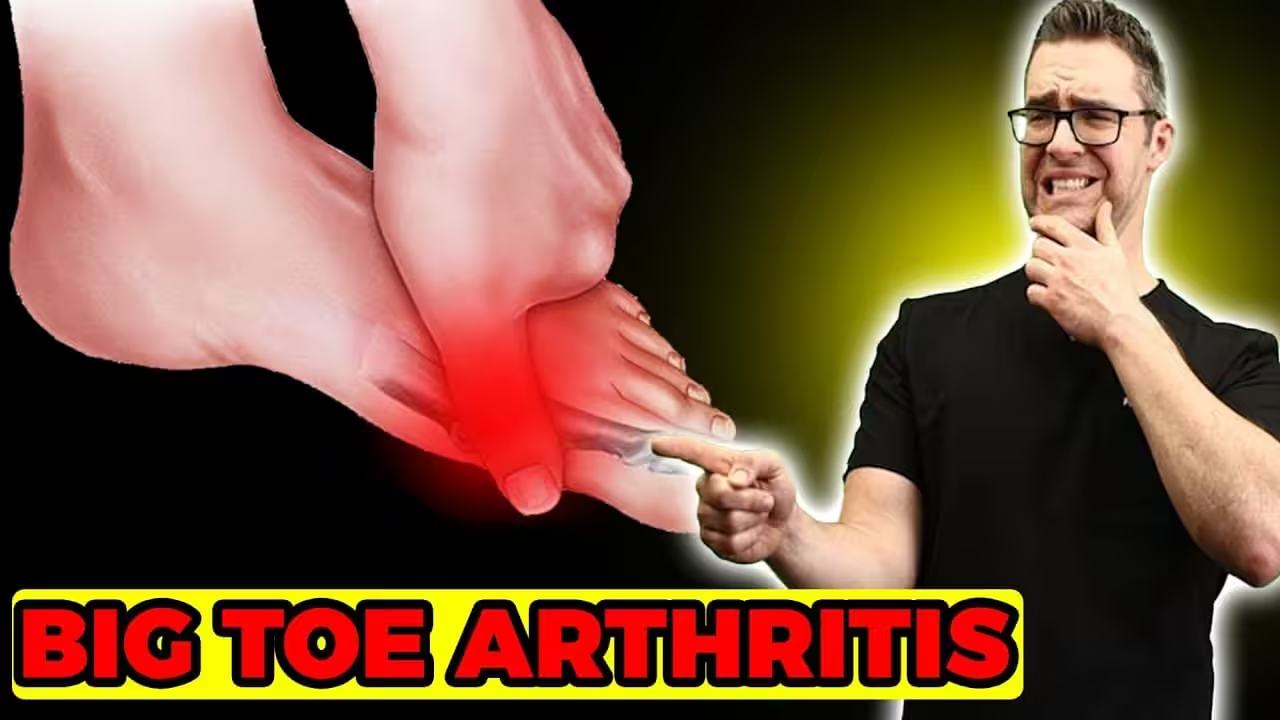
Hallux rigidus (arthritis of the 1st MTP joint) can cause pain behind the big toe, particularly on the dorsal (top) aspect of the joint but also plantarly when bone spurs and joint degeneration affect the sesamoid articulation. As the cartilage wears away, bone-on-bone contact during push-off creates deep, aching pain that worsens with activity.
The hallmark of hallux rigidus is progressively decreasing big toe dorsiflexion (upward bending). Normal range is about 65-70 degrees; as arthritis advances, this may decrease to 30 degrees or less. You’ll notice stiffness when trying to bend the toe upward, a bony bump on the top of the joint from osteophyte (bone spur) formation, and pain with push-off activities. Unlike sesamoiditis, which causes pain predominantly on the bottom of the joint, hallux rigidus causes pain around the entire joint—top, sides, and bottom.
Conservative treatment includes rocker-sole shoes (HOKA Bondi), carbon fiber plates, orthotics with a Morton’s extension, and anti-inflammatory measures. Surgical options range from cheilectomy (bone spur removal) for mild-moderate cases to arthrodesis (joint fusion) for severe disease. Both procedures provide excellent pain relief and are performed regularly by our podiatrists at Balance Foot & Ankle.
Gout
The 1st MTP joint is the single most common site for gout attacks, and pain behind the big toe during an acute gout episode is intense and unmistakable. Gout occurs when uric acid crystals deposit in the joint, triggering an explosive inflammatory response. The attack typically strikes suddenly—often in the middle of the night—with severe throbbing pain, dramatic redness and swelling, warmth to touch, and exquisite tenderness where even a bedsheet touching the toe is unbearable.
Gout attacks are managed acutely with colchicine, NSAIDs (indomethacin), or corticosteroids. Long-term prevention requires urate-lowering therapy (allopurinol or febuxostat) to keep uric acid below the crystallization threshold. If you’ve had a sudden, severe onset of 1st MTP joint pain with visible inflammation, gout should be strongly suspected—blood work for uric acid and joint aspiration for crystal analysis can confirm the diagnosis.
Other Causes
Plantar plate inflammation: While plantar plate dysfunction most commonly affects the 2nd MTP joint, the 1st MTP joint’s plantar plate can also become inflamed from chronic overload. Symptoms overlap significantly with sesamoiditis—a deep ache under the joint that worsens with push-off.
Flexor hallucis longus (FHL) tendinitis: The FHL tendon runs between the sesamoids and can become inflamed from overuse, especially in dancers and runners. Pain is similar to sesamoiditis but may be slightly more posterior (closer to the arch) and is worsened by active big toe flexion against resistance.
Bursitis: A bursa (fluid-filled sac) under the 1st metatarsal head can become inflamed, causing a soft, swollen, tender area under the joint. Bursitis often coexists with sesamoiditis.
Fat pad atrophy: Age-related thinning of the plantar fat pad under the 1st metatarsal head exposes the sesamoids to increased pressure, creating a chronic deep ache. This is particularly common in patients over 60.
How It’s Diagnosed
Diagnosis begins with pinpointing the exact location and character of the pain. Your podiatrist will palpate each sesamoid individually, assess MTP joint range of motion, test flexor hallucis longus strength, and evaluate for swelling, warmth, and deformity. Weight-bearing X-rays evaluate joint space, bone spurs, sesamoid fracture, and alignment. A sesamoid axial view (tangential X-ray) gives the clearest picture of sesamoid integrity. MRI is the gold standard for distinguishing sesamoiditis from stress fracture from bipartite sesamoid, and for evaluating soft tissue conditions like FHL tendinitis and plantar plate pathology. Blood work (uric acid, inflammatory markers) is ordered when gout or inflammatory arthritis is suspected.
Treatment Options
The majority of conditions causing pain behind the big toe respond to conservative treatment, and our approach follows a stepwise protocol.
Step 1 — Offloading: Dancer’s pads (with a sesamoid cutout), metatarsal pads, and stiff-soled shoes or carbon fiber inserts reduce mechanical stress on the 1st MTP complex. This alone provides significant relief for most sesamoid conditions within days.
Step 2 — Anti-inflammation: Ice for 15-20 minutes several times daily, oral NSAIDs (ibuprofen, naproxen) for 7-14 days, and activity modification during the acute phase. For persistent inflammation, a corticosteroid injection under ultrasound guidance delivers medication precisely to the affected area.
Step 3 — Immobilization (if needed): Sesamoid stress fractures and severe sesamoiditis may require a walking boot for 4-6 weeks to allow complete rest. Hallux rigidus flares may benefit from 1-2 weeks of immobilization followed by a rocker-soled shoe.
Step 4 — Long-term management: Custom orthotics with built-in dancer’s pad, Morton’s extension (for hallux rigidus), or first ray cutout provide ongoing offloading. Appropriate footwear becomes a permanent consideration. Physical therapy for intrinsic foot strengthening and FHL flexibility completes the conservative protocol.
Step 5 — Surgery (when needed): Cheilectomy for hallux rigidus, sesamoidectomy for non-healing fractures, and joint fusion for end-stage arthritis are effective surgical options performed at our practice.
Podiatrist-Recommended Products
These products are recommended by our podiatrists at Balance Foot & Ankle for pain behind the big toe.
- PowerStep Pinnacle Insoles — Firm arch support reduces 1st MTP joint loading; a good base for adding dancer’s pad modifications
- HOKA Bondi 8 — Rocker sole rolls over the big toe joint, dramatically reducing push-off forces on the sesamoids
- OOFOS Recovery Sandals — Rocker design offloads the 1st MTP joint; ideal for at-home recovery wear
- Metatarsal Pads — Placed just proximal to the 1st metatarsal head to redistribute pressure away from the sesamoids
- Brooks Ghost Running Shoes — Cushioned midsole absorbs impact at the forefoot; wide enough to accommodate orthotics with dancer’s pad
Affiliate disclosure: We may earn a commission at no extra cost to you. Every product listed is tested or recommended in our clinic.
Frequently Asked Questions
Why does the bottom of my foot hurt behind my big toe?
Pain on the bottom of the foot directly behind the big toe almost always involves the sesamoid bones or the 1st MTP joint’s plantar structures. The sesamoids bear enormous load during walking—up to 300% of body weight during running—and are prone to inflammation (sesamoiditis) and stress fracture. A deep, bruise-like ache that worsens when walking barefoot on hard floors and during push-off is the classic presentation. Less commonly, flexor hallucis longus tendinitis, plantar plate inflammation, or fat pad atrophy causes pain in this exact location. An X-ray and examination by a podiatrist can distinguish between these conditions.
How long does sesamoiditis take to heal?
Mild sesamoiditis with consistent offloading (dancer’s pad, stiff shoes, activity modification) typically improves within 4-6 weeks. Moderate cases may take 8-12 weeks. Sesamoid stress fractures require 6-12 weeks in a walking boot for healing, followed by a gradual return to activity over another 4-6 weeks. The key factor in recovery speed is how consistently the sesamoids are offloaded—patients who maintain offloading with every step (including at home) heal faster than those who only pad their shoes for exercise. Complete avoidance of barefoot walking on hard surfaces during the healing period accelerates recovery.
What is a dancer’s pad and where do I put it?
A dancer’s pad is a flat, U-shaped or oval pad (typically felt or foam) with a cutout positioned directly under the sesamoid bones. The pad is placed inside the shoe, adhesive side down, so that the surrounding metatarsal area is elevated while the sesamoid area sits in the cutout—effectively transferring weight away from the painful sesamoids. Your podiatrist can custom-cut a dancer’s pad during your visit and show you exactly where to place it. Pre-made versions are also available, but custom placement produces better results because everyone’s sesamoid position varies slightly.
Can I still exercise with pain behind the big toe?
Yes, but you’ll need to modify your activities to avoid loading the 1st MTP joint. Swimming and cycling are excellent alternatives that keep you active without forefoot impact. Upper body and core exercises are generally fine. If your condition allows some weight-bearing activity (mild sesamoiditis rather than a fracture), walking in cushioned, rocker-soled shoes with a dancer’s pad may be tolerable. Avoid running, jumping, high heels, and activities that require pushing off the ball of the foot until pain has resolved. Your podiatrist can provide specific guidance based on your diagnosis and severity.
The Bottom Line
Pain behind the big toe is usually a sesamoid problem—and sesamoid problems respond beautifully to proper offloading. A dancer’s pad, stiff-soled shoe, and activity modification resolve the vast majority of cases within weeks. If pain persists or worsens despite these measures, imaging can identify stress fractures, arthritis, or other conditions that need targeted treatment. Don’t push through this pain—the sesamoid area is unforgiving when overloaded, and early treatment prevents minor inflammation from progressing to a stress fracture.
Pain Behind Your Big Toe? Get Expert Diagnosis
Same-week appointments in Howell & Bloomfield Hills, MI. Three board-certified podiatrists.
4.9★ | 1,100+ Reviews | 3,000+ Surgeries
Or call: (810) 206-1402

Dr. Tom Biernacki, DPM is a double board-certified podiatrist and foot & ankle surgeon at Balance Foot & Ankle Specialists in Southeast Michigan. With over a decade of clinical experience, he specializes in heel pain, bunions, diabetic foot care, sports injuries, and minimally invasive surgery. Dr. Biernacki is a member of the APMA and ACFAS, and his patient education content on MichiganFootDoctors.com and YouTube has reached over one million views.