


Quick answer: Gastrocnemius Recession Strayer Procedure Equinus Calf is a common foot/ankle topic that affects many patients. The 2026 evidence-based approach combines proper diagnosis, conservative-first treatment, and escalation only when needed. We treat this regularly at our Howell and Bloomfield Hills practices. Call (810) 206-1402.
Medically Reviewed by Dr. Tom Biernacki, DPM, FACFAS
Board-certified podiatrist & foot surgeon | Balance Foot & Ankle, Howell & Bloomfield Hills, MI | Last updated: May 2026
Gastrocnemius recession (Strayer procedure) is a minimally invasive surgical procedure that lengthens the gastrocnemius muscle-tendon unit to correct equinus — a condition where calf tightness limits ankle dorsiflexion to less than 10°. It is performed through a small incision behind the calf, with most patients walking the same day. Gastrocnemius recession is highly effective for plantar fasciitis, Achilles tendinopathy, metatarsalgia, diabetic forefoot ulcers, and other conditions driven by chronic calf tightness. Recovery is 6–10 weeks to full activity.
Conditions Caused or Worsened by Equinus (Calf Tightness)
Equinus — insufficient ankle dorsiflexion — is one of the most under-recognized drivers of chronic foot and ankle problems. When the calf is too tight, the body compensates during gait by pronating the foot, loading the forefoot excessively, and transferring stress to structures not designed to handle it. Many patients have seen multiple providers without recognizing equinus as the root cause.
| Condition | How Equinus Drives It | Evidence for Recession |
|---|---|---|
| Plantar Fasciitis | Tight calf increases plantar fascia tension via windlass mechanism | Strong — significant improvement in chronic cases |
| Achilles Tendinopathy | Gastrocnemius overload transfers to Achilles insertion | Good — reduces tendon load at insertion |
| Diabetic Forefoot Ulcers | Equinus shifts peak pressure to metatarsal heads | Strong — reduces ulcer recurrence rates significantly |
| Metatarsalgia | Forefoot overloading from insufficient heel-strike | Good — reduces forefoot pressure measurably |
| Flatfoot / PTTD | Calf tightness drives excessive pronation and arch collapse | Used adjunctively with flatfoot reconstruction |
The Strayer Procedure — Surgical Details and Recovery
The Strayer procedure (isolated gastrocnemius recession) is distinguished from Achilles lengthening by targeting only the gastrocnemius — preserving soleus function and significantly reducing the risk of weakness or tendon complications associated with more proximal Achilles procedures.
- Surgical approach: A 2–4 cm incision is made in the posterior calf, typically at the musculotendinous junction of the gastrocnemius. The gastrocnemius aponeurosis is identified and partially transected, allowing the muscle belly to slide proximally and the ankle to achieve full dorsiflexion range.
- Endoscopic option: Select surgeons perform gastrocnemius recession endoscopically through a single 5mm portal, reducing scar formation and recovery time further. Outcomes are comparable to the open technique in experienced hands.
- Anesthesia and setting: Typically performed under local or regional anesthesia with sedation as an outpatient procedure. Total operative time is 20–30 minutes.
- Immediate post-op: Most patients are placed in a walking boot and permitted weight-bearing the same day. The boot is typically worn 2–4 weeks.
- Physical therapy: Gentle calf stretching begins at 2–3 weeks. Physical therapy focusing on calf strengthening, proprioception, and return to function runs from weeks 4–10.
- Return to activity: Walking without a boot at 3–4 weeks, low-impact activity at 6 weeks, full return to sports and high-impact activity at 10–12 weeks. Long-term outcomes are excellent with appropriate rehabilitation.
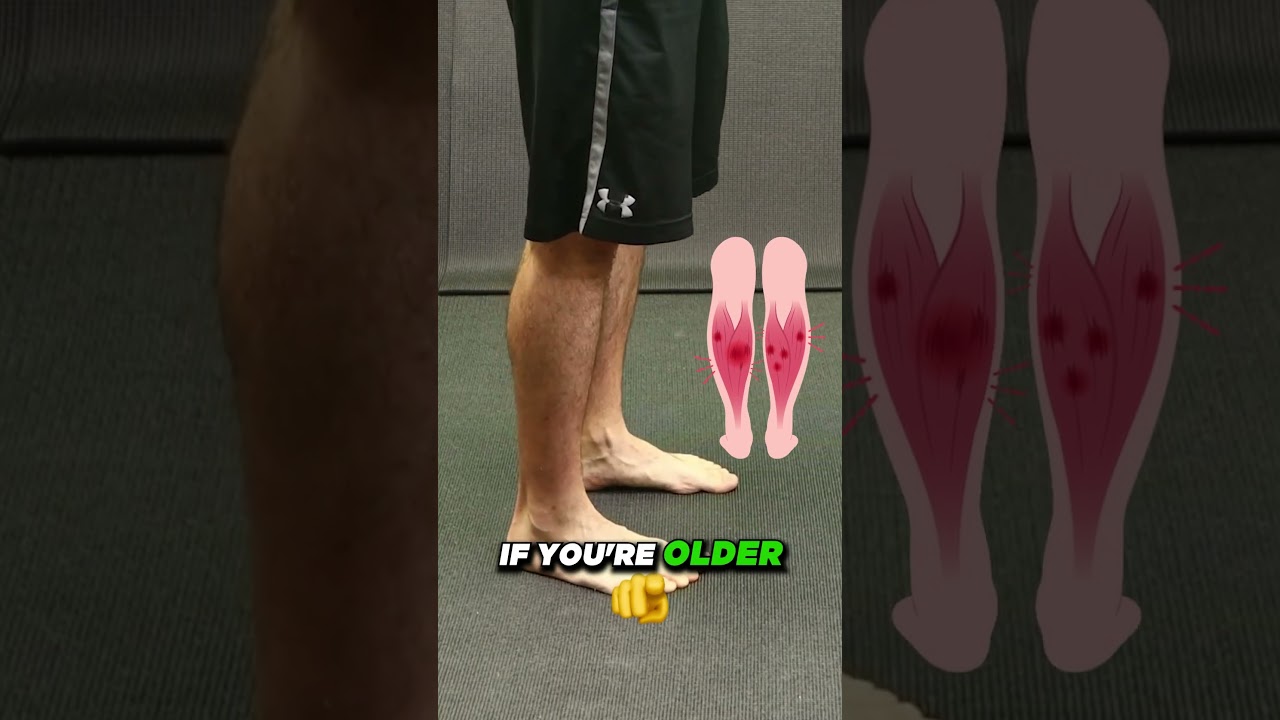
Watch: Achilles & Calf Tendon Exercises — Understanding Your Calf-Foot Connection
Dr. Tom Biernacki explains the relationship between calf tightness, Achilles tendon health, and foot pain — including why the gastrocnemius is so frequently the hidden driver of chronic foot problems:
Book a surgical consultation → · (810) 206-1402
The most common mistake with equinus-driven foot conditions is treating the foot without addressing the calf. A patient with plantar fasciitis and true equinus who receives cortisone injections and custom orthotics may get temporary relief, but the underlying mechanical driver — a gastrocnemius that limits ankle dorsiflexion to 5° — continues to load the plantar fascia excessively with every step. The orthotics and injection address the output of the problem, not the input. In our practice, we screen for equinus in every new plantar fasciitis patient because identifying and treating it changes long-term outcomes dramatically. A simple clinical test — the Silfverskiöld test, performed in 30 seconds — distinguishes isolated gastrocnemius tightness from combined gastrocnemius-soleus equinus, which determines the appropriate surgical approach.
Frequently Asked Questions — Gastrocnemius Recession
How do I know if I have equinus?
The Silfverskiöld test is the clinical standard for equinus assessment. Your podiatrist dorsiflexes your ankle (pulls the foot toward the shin) with the knee both straight and bent. Normal ankle dorsiflexion is 10° or more. If dorsiflexion is limited with the knee straight (gastrocnemius tight) but improves with the knee bent (soleus flexible), isolated gastrocnemius equinus is confirmed. This takes 30 seconds in the office. Many patients with chronic plantar fasciitis, Achilles pain, or metatarsalgia have never been tested for equinus despite being treated for months or years.
Is gastrocnemius recession permanent?
Yes — the lengthening achieved by gastrocnemius recession is permanent. The transected aponeurosis heals in an elongated position, maintaining the increased dorsiflexion range. Unlike stretching, which provides temporary flexibility improvements that reverse within hours, surgical recession produces durable biomechanical change. Long-term studies show maintained dorsiflexion range and sustained clinical improvements at 5–10 year follow-up in appropriately selected patients.
Will I lose calf strength after gastrocnemius recession?
Temporary calf weakness is expected during recovery — typically returning to baseline by 3–4 months with physical therapy. The Strayer procedure targets only the gastrocnemius aponeurosis, preserving soleus function and the majority of push-off power. Unlike Achilles tendon lengthening (which weakens the entire calf complex and risks overlengthening), isolated gastrocnemius recession carries a much lower risk of permanent weakness. Most athletes return to full sport-specific function including running, jumping, and cutting movements.
Can gastrocnemius recession be done at the same time as other foot surgery?
Yes — gastrocnemius recession is frequently combined with other foot procedures as part of comprehensive foot reconstruction. It is routinely performed alongside flatfoot reconstruction (PTTD repair), plantar fascia release, diabetic forefoot offloading procedures, and Achilles tendon repairs. Combining procedures in a single operative session reduces total recovery time and anesthesia exposure compared to staged surgeries. Dr. Biernacki will discuss whether combined surgery is appropriate based on your specific anatomy and conditions.
Does insurance cover gastrocnemius recession?
Most PPO insurance plans cover gastrocnemius recession when medically indicated — typically defined as documented equinus with less than 10° dorsiflexion, failure of conservative treatment including stretching for 3–6 months, and a condition directly attributable to equinus (plantar fasciitis, Achilles tendinopathy, forefoot ulcer, etc.). Medicare Part B covers the procedure under CPT 27687 when criteria are met. Prior authorization is typically required. Our billing team will verify your coverage and obtain authorization before scheduling surgery. Call (810) 206-1402 to begin the process.
Chronic Foot Pain Despite Conservative Treatment?
Undiagnosed equinus may be the reason your plantar fasciitis, Achilles pain, or forefoot problems keep returning. Dr. Biernacki performs the Silfverskiöld test at every evaluation — schedule a consultation at Howell or Bloomfield Hills today.
Book a Consultation (810) 206-1402Related Surgical & Calf-Foot Guides
- Plantar Fasciitis — When Conservative Care Fails
- Achilles Tendon Rupture Surgery
- Foot Surgery Preparation Checklist
- Post-Surgery Foot Wound Care Guide
- Custom Orthotics — Before Considering Surgery
🦶 Dr. Tom’s Recommended Products
These are the at-home products I recommend most often to patients at Balance Foot & Ankle in Howell, MI.
The OTC orthotic I recommend most in our clinic. Medical-grade arch support at a fraction of custom orthotic cost.
View on Amazon →
Natural topical pain relief I use in our clinic. Arnica + menthol formula — apply directly to the area 3-4x daily. FSA-eligible.
View on Amazon →
FTC Disclosure: As an Amazon Associate and Foundation Wellness affiliate, we earn from qualifying purchases. This never affects our clinical recommendations.
American Academy of Orthopaedic Surgeons: Gastrocnemius Recession
In-Office Treatment at Balance Foot & Ankle
If home treatment isn’t providing relief for your Achilles tendinitis, our podiatry team at Balance Foot & Ankle can help with same-day evaluations and advanced in-office care.
Same-day appointments available. (810) 206-1402
Get Expert Care at Balance Foot & Ankle
Same-week appointments at our Howell and Bloomfield Hills offices. Board-certified podiatric surgeons. Most insurance accepted.
Same-Week Appointments in Howell & Bloomfield Hills
Three board-certified podiatric surgeons. 1,123+ five-star reviews. Most insurance accepted.

Dr. Tom Biernacki, DPM is a board-certified foot & ankle surgeon (ABFAS & ABPM) at Balance Foot & Ankle Specialists in Southeast Michigan. With over a decade of clinical experience, he specializes in heel pain, bunions, diabetic foot care, sports injuries, and minimally invasive surgery. Dr. Biernacki is a member of the APMA and ACFAS, and his patient education content on MichiganFootDoctors.com and YouTube has made him one of the most-followed foot & ankle educators on YouTube.