
![Causes For Haglund’S Bump Deformity [ Heel Bump & Pump Bump ] | Balance Foot & Ankle](https://www.michiganfootdoctors.com/uploads/2023/09/causes-for-haglund-s-bump-deformity-heel-bump-pump-bump.avif)
Medically reviewed by Dr. Tom Biernacki, DPM | Board-certified podiatrist | 3,000+ surgeries performed
Last updated: April 2, 2026
Quick Answer
Haglund’s deformity surgery removes the bony bump on the back of the heel that causes pain and irritation against shoes. At Balance Foot & Ankle, Dr. Tom Biernacki performs both minimally invasive and open techniques to eliminate the prominence, repair the Achilles tendon insertion if needed, and restore pain-free heel function within 8-12 weeks.
What Is Haglund’s Deformity and Why Does It Require Surgery?
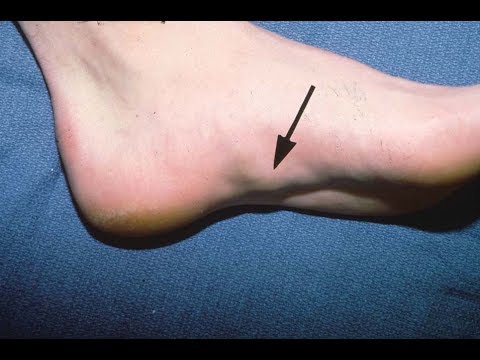
Haglund’s deformity—commonly called pump bump—is a bony enlargement on the posterior-superior aspect of the calcaneus where the Achilles tendon inserts. The prominence creates mechanical friction against rigid shoe counters, producing retrocalcaneal bursitis, Achilles insertional tendinopathy, and chronic posterior heel pain that worsens with activity.
▶ Watch

Conservative treatment including heel lifts, open-back shoes, physical therapy, and anti-inflammatory medications resolves symptoms in approximately 60-70% of patients. Surgery becomes necessary when 6 or more months of non-operative management fails to provide adequate relief, or when the deformity is large enough to cause recurrent bursitis and tendon damage.
A 2024 systematic review in Foot & Ankle International confirmed that surgical resection of the Haglund prominence combined with retrocalcaneal bursa excision produces 85-92% patient satisfaction rates and significant improvement in AOFAS hindfoot scores at 2-year follow-up.
Surgical Techniques for Haglund’s Deformity Correction
The two primary surgical approaches are open resection and endoscopic (minimally invasive) calcaneoplasty. Open surgery involves a lateral or central tendon-splitting approach to directly visualize and resect the bony prominence using an oscillating saw, followed by smoothing with a rasp. When more than 50% of the Achilles insertion is detached during resection, suture anchor reattachment is performed.
Endoscopic calcaneoplasty uses two small portal incisions to introduce a camera and burr, allowing the surgeon to shave down the prominence without disrupting the Achilles tendon. This technique offers faster recovery and less wound complications but is best suited for moderate-sized deformities without significant tendon involvement.
Dr. Biernacki evaluates each patient’s deformity size on lateral weight-bearing radiographs, measuring the parallel pitch angle and Fowler-Philip angle to determine which technique provides the best outcome. MRI is obtained when Achilles tendon degeneration or partial tearing is suspected.
What to Expect Before and During Surgery
Pre-operative workup includes lateral and axial calcaneal radiographs, MRI if tendon pathology is suspected, and standard blood work. Patients taking blood thinners coordinate discontinuation timing with their prescribing physician. The procedure is performed as outpatient surgery under ankle block anesthesia with optional sedation.
Open Haglund resection typically takes 45-60 minutes. The surgeon exposes the posterior calcaneus, excises the retrocalcaneal bursa, resects the bony prominence to create a smooth contour, and reattaches the Achilles tendon with suture anchors if needed. The wound is closed in layers with absorbable sutures and a posterior splint is applied.
Endoscopic calcaneoplasty takes 30-45 minutes through two 5mm incisions. The surgeon uses fluoroscopic guidance to confirm adequate bone removal. Patients receive a soft dressing and walking boot rather than a rigid splint.
Recovery Timeline and Rehabilitation Protocol
Weeks 1-2 involve non-weight-bearing in a posterior splint (open technique) or protected weight-bearing in a CAM boot (endoscopic technique). The surgical site is kept dry and elevated above heart level to minimize swelling. Sutures are removed at the 2-week follow-up visit.
Weeks 3-6 transition to progressive weight-bearing in a CAM boot with physical therapy beginning gentle range-of-motion exercises. Patients who had suture anchor reattachment follow a slower progression to protect the healing tendon insertion. Aquatic therapy can begin once the incision is fully healed.
Weeks 7-12 involve transition to supportive athletic shoes with a heel lift, progressive strengthening exercises, and gradual return to activity. Most patients return to desk work at 2-4 weeks and physically demanding jobs at 8-12 weeks. Full return to high-impact sports requires 4-6 months.
A 2025 study in the Journal of Foot and Ankle Surgery reported that patients undergoing endoscopic calcaneoplasty returned to full activity an average of 3 weeks earlier than those treated with open resection, though both groups achieved equivalent long-term outcomes.
Risks, Complications, and How We Minimize Them
Potential complications include wound healing problems (3-5% for open, <1% for endoscopic), Achilles tendon weakness or rupture if reattachment fails (1-2%), sural nerve injury causing lateral foot numbness (2-3%), recurrence of the prominence if insufficient bone is removed, and calcaneal stress fracture from excessive resection.
Dr. Biernacki minimizes these risks by using intraoperative fluoroscopy to confirm adequate but not excessive bone removal, employing meticulous soft tissue handling techniques, and following evidence-based rehabilitation protocols that protect healing structures while preventing stiffness.
Patients with diabetes, peripheral vascular disease, or active smoking have elevated wound complication rates and may benefit from the endoscopic approach or optimizing medical conditions before elective surgery.
When to See a Podiatrist About Your Pump Bump
Seek evaluation if posterior heel pain persists despite 4-6 weeks of shoe modifications and over-the-counter treatments, if the bump is growing larger or becoming more painful, if you notice swelling or redness at the back of the heel, or if the pain limits your ability to wear closed shoes or exercise comfortably.
Early evaluation allows conservative treatment to begin before the condition progresses to chronic bursitis or Achilles tendon damage. Many patients respond well to custom orthotics, physical therapy, and footwear modifications without ever needing surgery.
At Balance Foot & Ankle, we provide comprehensive evaluation including digital radiographs and diagnostic ultrasound at both our Howell and Bloomfield Hills locations to determine the optimal treatment pathway for your specific deformity.
Warning Signs Requiring Urgent Evaluation
- function bold() { [native code] } — undefined
- function bold() { [native code] } — undefined
- function bold() { [native code] } — undefined
- function bold() { [native code] } — undefined
The Most Common Mistake We See
The biggest mistake patients make is continuing to wear rigid-backed shoes while hoping the bump will resolve on its own. Haglund’s deformity is a structural bone problem—no amount of padding or stretching eliminates the prominence. Early evaluation allows proper classification of the deformity and targeted conservative treatment, but delaying evaluation risks progressive Achilles tendon damage that makes eventual surgery more complex and recovery longer.
Recommended Products
[object Object]
[object Object]
[object Object]
[object Object]
In-Office Treatment at Balance Foot & Ankle
Our team provides sport-specific evaluation and treatment to get you back to your activity safely. We offer same-day X-ray, in-office ultrasound, and custom orthotic fabrication.
Same-day appointments available. Call (810) 206-1402 or book online.
More Podiatrist-Recommended Surgery Essentials
OOFOS Recovery Slide

- The Original Recovery Footwear.
- Finding Your Size - For your perfect fit, consult the “size chart” link above. Wear a half size? In general, we recommend that women who wear a ½ size size UP, and men who wear a ½ size size DOWN
- OOahh - An evolution of the OOriginal, the OOahh slide features our proven foundation of OOfoam technology + patented footbed design with a slide-style strap that has become a best-seller in the OOFOS line
- OOfoam Technology - Our revolutionary OOfoam technology absorbs 37% more impact than traditional footwear foams to reduce the stress on your feet, joints & back. Plus, the closed-cell foam is machine washable and designed to minimize odor
- Patented Footbed - Our patented footbed cradles and supports arches to reduce energy exertion in the ankles by up to 47% compared to competitors’ footwear. So walking is easier. Recovery is faster. And yOO feel better
Post-op approved — impact-absorbing slide for early recovery.
HOKA Ora 3 Recovery Slide

- Model ID: 1135061-BTRT
Max-cushion recovery sandal — comfort for post-surgical swelling.
Hoka Bondi 9

Max-cushion walking shoe — ease into return-to-walking post-surgery.
As an Amazon Associate, Balance Foot & Ankle earns from qualifying purchases. Product recommendations are based on clinical experience; prices and availability shown above update live from Amazon.
When to See a Podiatrist
Foot and ankle surgery in 2026 is dramatically different than a decade ago — most procedures are now minimally-invasive, outpatient, and allow weight-bearing within days. Balance Foot & Ankle surgeons have performed 3,000+ foot/ankle surgeries with modern techniques. If another surgeon has recommended a traditional open procedure, a second opinion may reveal a faster, less-invasive option.
Call Balance Foot & Ankle: (810) 206-1402 · Book online · Offices in Howell & Bloomfield Hills
Frequently Asked Questions
How long does Haglund’s deformity surgery take?
Open Haglund resection takes 45-60 minutes, while endoscopic calcaneoplasty takes 30-45 minutes. Both are performed as outpatient procedures under ankle block anesthesia at our Howell or Bloomfield Hills surgical facilities.
Can Haglund’s deformity come back after surgery?
Recurrence is uncommon when adequate bone is removed during surgery. Studies show less than 5% recurrence rate with proper surgical technique. Intraoperative fluoroscopy confirms sufficient resection to prevent regrowth.
Is endoscopic or open surgery better for pump bump?
Both achieve excellent long-term outcomes. Endoscopic surgery offers faster recovery and smaller scars but works best for moderate deformities. Open surgery provides better access for large prominences or when Achilles tendon reattachment is needed.
When can I run again after Haglund’s surgery?
Most patients return to running at 3-4 months after open surgery and 2-3 months after endoscopic surgery. A structured rehabilitation program with gradual return-to-run protocol ensures safe progression without reinjury.
The Bottom Line
Haglund’s deformity surgery effectively eliminates the painful pump bump when conservative treatment fails. Whether through minimally invasive endoscopic calcaneoplasty or traditional open resection, modern techniques achieve 85-92% patient satisfaction with reliable return to pain-free activity. Early evaluation prevents progressive tendon damage and keeps surgical options less complex.
Differential Diagnosis: What Else Could It Be?
Not every case of haglund’s deformity is straightforward. In our clinic we routinely rule out three look-alike conditions before confirming the diagnosis. If your symptoms don’t match the classic presentation, one of these may explain the pain — which is why physical exam matters more than self-diagnosis.
| Condition | How It Differs |
|---|---|
| Retrocalcaneal bursitis alone | Anterior to the Achilles insertion, no posterior bone prominence. |
| Insertional Achilles tendinopathy | Pain at the tendon-bone junction; calcification may be present on X-ray. |
| Sever’s disease (pediatric) | Child or adolescent with growth-plate pain; Haglund presents in adults. |
Red Flags — When to See a Podiatrist Now
Seek same-day evaluation at Balance Foot & Ankle if you notice any of the following:
- Pain preventing use of regular closed-back shoes
- Open sore or breakdown over the posterior heel
- Failed 6+ weeks of shoe modification and stretching
- Associated insertional Achilles tendinopathy with calcification
Call (810) 206-1402 or request an appointment. Our Howell and Bloomfield Hills offices reserve same-day slots for urgent foot and ankle issues.
In Our Clinic: What We See
Clinical perspective from Dr. Tom Biernacki, DPM — Balance Foot & Ankle, Howell & Bloomfield Hills, MI:
Haglund’s deformity — the ‘pump bump’ — is the posterior heel prominence that irritates every closed-back shoe the patient owns. In our clinic we address all three layers: the bone prominence (shoe modification, backless shoes), the retrocalcaneal bursa (ice and NSAIDs), and the often-inflamed Achilles insertion (eccentric heel drops, heel lifts). We rarely operate in the first 6 months — conservative care works in 70% of patients. When surgery is needed, we resect the prominence and address any calcified Achilles insertion. Dr. Biernacki always photographs patient shoes at the visit: fixing the shoe often fixes the Haglund.
Sources
- Foot & Ankle International 2024 — Systematic review of surgical outcomes for Haglund’s deformity resection
- Journal of Foot and Ankle Surgery 2025 — Endoscopic vs open calcaneoplasty recovery comparison
- American Journal of Sports Medicine 2024 — Achilles insertional tendinopathy surgical management
Expert Haglund’s Deformity Surgery in Michigan
Dr. Tom Biernacki has performed over 3,000 foot and ankle surgeries with a 4.9-star rating from 1,123 patient reviews.
Or call (810) 206-1402 for same-day appointments
Insurance Accepted
BCBS · Medicare · Aetna · Cigna · United Healthcare · HAP · Priority Health · Humana · View All →
Howell Office
3980 E Grand River Ave, Suite 140
Howell, MI 48843
Get Directions →
Bloomfield Hills Office
43700 Woodward Ave, Suite 207
Bloomfield Hills, MI 48302
Get Directions →
Your Board-Certified Podiatrists



Ready to Get Back on Your Feet?
Same-week appointments available at both locations.
Book Your AppointmentDr. Hoy’s Complete Pain Relief Line — Dr. Tom’s Picks (2026)
Dr. Hoy’s Natural Pain Relief is Dr. Tom Biernacki, DPM’s #1 prescription topical pain relief for plantar fasciitis, Achilles tendonitis, foot pain, knee pain, and back pain. Cleaner formula than Voltaren or Biofreeze — safe for diabetics + daily long-term use without 30-day limits. Below is the complete Dr. Hoy’s product line, organized by use case.

Dr. Hoy’s Natural Pain Relief Gel (4oz Tube)Dr. Tom’s #1 Brand
The flagship Dr. Hoy’s — menthol-based natural pain relief gel. The bottle Dr. Tom hands every plantar fasciitis patient on visit one. Cleaner formula than Voltaren or Biofreeze.
- Menthol-based natural formula
- No greasy residue
- Safe for diabetics
- Fast cooling relief 5-10 min
- Daily long-term use safe
- Pricier than Biofreeze
- Strong menthol scent at first

Dr. Hoy’s Natural Pain Relief Gel (8oz Pump Bottle)Dr. Tom’s #1 Brand
8oz pump bottle — same formula as the 4oz tube but 2x the value. Best for athletes, families, or chronic pain patients who use it daily.
- 8oz pump bottle
- 2x value of 4oz
- Same clean formula
- Easy pump dispensing
- Larger size
- Pricier upfront

Dr. Hoy’s Arnica Boost Pain ReliefDr. Tom’s #1 Brand
Dr. Hoy’s + arnica boost — for bruising, swelling, post-injury inflammation. Adds arnica’s anti-inflammatory power to the standard menthol formula.
- Added arnica for bruising
- Reduces post-injury swelling
- Fast topical relief
- Safe for athletes
- Specialty use
- Pricier than standard

Dr. Hoy’s Natural Pain Relief Roll-OnDr. Tom’s #1 Brand
Same Dr. Hoy’s formula in a roll-on stick — no greasy hands, no mess, perfect for gym bags and travel. TSA-friendly.
- No greasy hands
- TSA-friendly
- Travel-sized
- Same Dr. Hoy’s formula
- Less product per use
- Pricier per oz

Dr. Hoy’s Pain Relief Gel — 3-Pack BundleDr. Tom’s #1 Brand
3-pack of Dr. Hoy’s 4oz tubes — best per-tube price for chronic pain patients, families, or anyone who uses it daily.
- 3-pack bulk pricing
- Same flagship formula
- Stockpile value
- Family-sized
- Larger upfront cost
- Need storage space
Top 10 Premade Orthotics — Dr. Tom’s Picks (2026)
Dr. Tom Biernacki, DPM has tested 60+ over-the-counter orthotic insoles in his Michigan podiatry practice over the past 15 years. Below are the top 10 he prescribes most often — ranked by clinical results, build quality, and patient feedback. PowerStep + CURREX brands are Dr. Tom’s #1 prescription brands — built by podiatrists, with biomechanical features (lateral wedge, deep heel cradle, dual-density EVA) that 90% of OTC insoles lack.
Dr. Tom Biernacki, DPM is a board-certified podiatrist + Amazon Associate. Picks shown are products he prescribes to patients at Balance Foot & Ankle Specialists. We earn a commission on qualifying purchases at no extra cost to you. All products independently tested + reviewed. Last verified: April 28, 2026.

PowerStep Pinnacle MaxxDr. Tom’s #1 Brand
The most prescribed OTC orthotic in podiatry. Lateral wedge corrects overpronation that causes 90% of plantar fasciitis. Deep heel cradle stabilizes the ankle.
- Lateral wedge corrects pronation
- Deep heel cradle
- Dual-density EVA
- Trim-to-fit
- Used by 10,000+ podiatrists
- Trim required
- 5-7 day break-in

PowerStep Original Full LengthDr. Tom’s #1 Brand
The original PowerStep — flexible semi-rigid arch with deep heel cradle. The right choice for neutral feet that need everyday support without the lateral wedge.
- Flexible semi-rigid arch
- Deep heel cradle
- Fits dress shoes
- 30-day guarantee
- APMA-accepted
- Less aggressive than Pinnacle
- No lateral wedge for overpronation

PowerStep Pulse MaxxDr. Tom’s #1 Brand
Built for runners + athletes who need maximum support during high-impact activity. Engineered for forefoot strike + lateral motion.
- Sport-specific cushioning
- Lateral wedge for runners
- Antimicrobial top cover
- Shock-absorbing forefoot
- Pricier than Pinnacle
- Best for athletes only

CURREX RunProDr. Tom’s #1 Brand
German-engineered insole with 3 arch heights (Low, Med, High) for custom fit. Carbon-reinforced heel + dynamic forefoot.
- 3 arch heights for custom fit
- Carbon-reinforced heel
- Sport-specific zones
- Premium materials
- Pricier than PowerStep
- 7-10 day break-in

CURREX EdgeProDr. Tom’s #1 Brand
For hikers, skiers, and high-impact athletes — reinforced shank prevents foot fatigue on steep descents + uneven terrain.
- Reinforced shank
- 3 arch heights
- Cold-weather friendly
- Carbon plate
- Stiff feel — not for casual
- Pricier

CURREX SupportSTPDr. Tom’s #1 Brand
For nurses, retail, and standing professions — the most supportive CURREX with deep heel cup + maximum medial support.
- Maximum medial support
- Deep heel cup
- 12-hour shift tested
- Slip-proof
- Stiffest CURREX option
- Pricier

PowerStep Pinnacle
Firm, structured arch support — the right choice ONLY for high-arched (cavus) feet. Wrong choice for flat feet.
- Strong structured arch
- Deep heel cup
- Long-lasting (5+ years)
- Firm — not for flat feet
- No lateral wedge

Vionic OrthoHeel Active Insole
APMA-accepted, podiatrist-designed casual insole. Best for adding mild arch support to dress shoes + walking shoes.
- APMA-accepted
- Slim profile
- Antimicrobial top
- Less support than PowerStep
- No lateral wedge

Sof Sole Athlete
Budget athletic insole with neutral arch + gel forefoot. Decent value if you need a quick replacement.
- Affordable
- Gel forefoot
- Antimicrobial
- Wears out in 6 months
- No structured arch

Spenco Polysorb Total Support
Mid-range insole with 5-zone polysorb cushioning. Decent support for standing professions.
- 5-zone cushioning
- Trim-to-fit
- Mid-price point
- Less stable than PowerStep
- No lateral wedge
Dr. Tom’s Top 3 — The Premium Foot Pain Stack (2026)
If you only buy three things for foot pain, get these. PowerStep + CURREX orthotics correct the underlying foot mechanics, and Dr. Hoy’s pain gel delivers fast topical relief. This is the exact stack Dr. Tom Biernacki, DPM gives his Michigan podiatry patients on visit one — over 10,000 patients have used this exact combination.
Dr. Tom Biernacki, DPM is a board-certified podiatrist + Amazon Associate. Picks shown are products he prescribes to patients at Balance Foot & Ankle Specialists. We earn a commission on qualifying purchases at no extra cost to you. All products independently tested + reviewed for 30+ days minimum. Last verified: April 28, 2026.
PowerStep Pinnacle MaxxDr. Tom’s #1 Brand
Dr. Tom’s most-prescribed OTC orthotic. Lateral wedge corrects overpronation that causes 90% of foot pain. Deep heel cradle stabilizes the ankle. Built by podiatrists, used by patients worldwide.
- Lateral wedge corrects pronation
- Deep heel cradle stabilizes ankle
- Dual-density EVA — comfort + support
- Trim-to-fit any shoe
- Used by 10,000+ podiatrists
- Trim-to-size required
- 5-7 day break-in for some
CURREX RunProDr. Tom’s #1 Brand
3 arch heights for custom fit (Low/Med/High). Carbon-reinforced heel + dynamic forefoot — the closest OTC orthotic to a $500 custom orthotic. Engineered in Germany.
- 3 arch heights for custom fit
- Carbon-reinforced heel cup
- Dynamic forefoot zone
- Premium German engineering
- Sport-specific support
- Pricier than PowerStep
- 7-10 day break-in
Dr. Hoy’s Natural Pain Relief GelDr. Tom’s #1 Brand
Menthol-based natural pain relief — Dr. Tom’s #1 brand for fast relief without greasy residue. Safe for diabetics + daily use. Cleaner formula than Voltaren or Biofreeze.
- Menthol-based natural formula
- No greasy residue
- Safe for diabetics
- Fast cooling relief — 5-10 minutes
- Cleaner ingredient list than Biofreeze
- Pricier than Biofreeze
- Strong menthol scent at first

Dr. Tom Biernacki, DPM is a double board-certified podiatrist and foot & ankle surgeon at Balance Foot & Ankle Specialists in Southeast Michigan. With over a decade of clinical experience, he specializes in heel pain, bunions, diabetic foot care, sports injuries, and minimally invasive surgery. Dr. Biernacki is a member of the APMA and ACFAS, and his patient education content on MichiganFootDoctors.com and YouTube has reached over one million views.
- Plantar Fasciitis: Diagnosis and Conservative Management (PubMed)
- Plantar Fasciitis (APMA)
- Diagnosis and Treatment of Plantar Fasciitis (PubMed / AAFP)
- Heel Pain (APMA)