

Quick answer: Need a podiatrist’s opinion on this? Call Balance Foot & Ankle at (810) 206-1402 for same-week appointments in Howell or Bloomfield Township, Michigan. Most insurance accepted, including Medicare.

Medically Reviewed by Dr. Tom Biernacki, DPM, FACFAS — Board-certified podiatrist & foot surgeon | Balance Foot & Ankle | Last updated: May 2026
Quick Answer: High Ankle Sprain Recovery Time
High ankle sprains (syndesmotic sprains) heal significantly slower than lateral ankle sprains: Grade 1 injuries take 4–6 weeks; Grade 2 injuries require 6–10 weeks; Grade 3 (complete syndesmotic disruption) may require surgery and 3–6 months for return to sport. Athletes should not return to competition until they pass functional criteria — pain-free single-leg hop test and full proprioceptive recovery. Premature return is the leading cause of chronic syndesmotic instability.
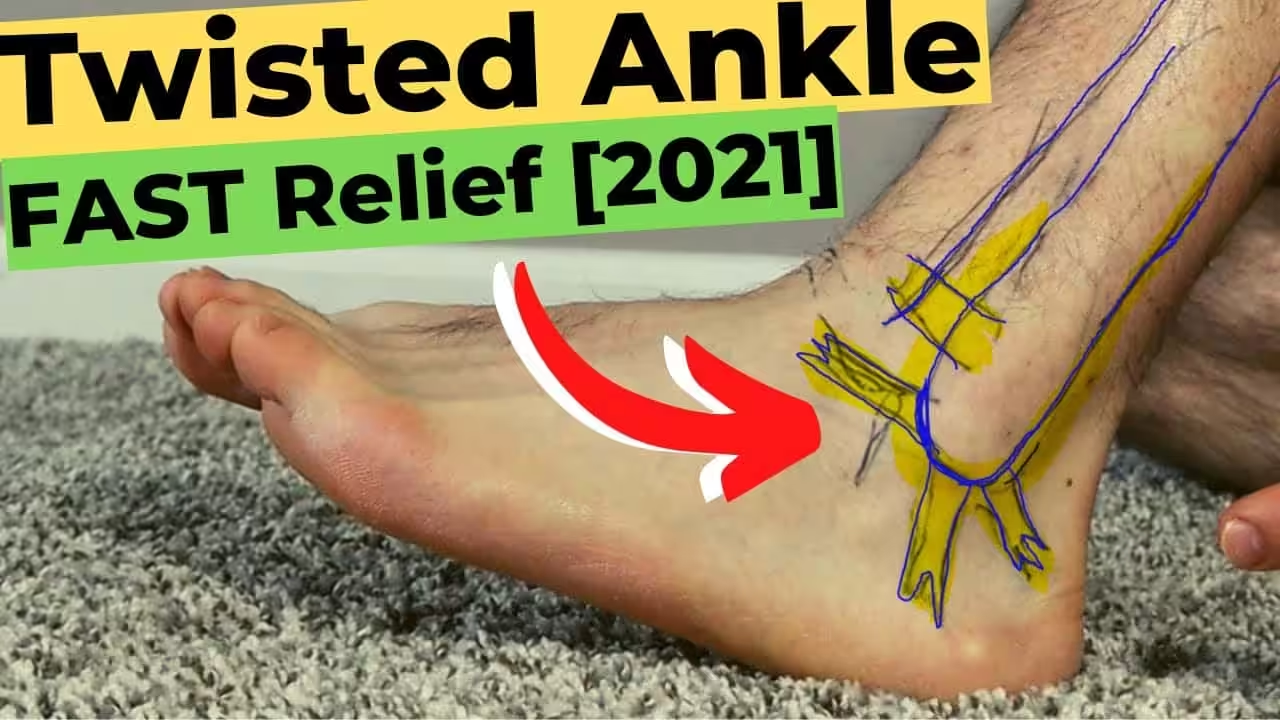
A high ankle sprain injures the syndesmosis — the ligamentous complex that holds the tibia and fibula together just above the ankle joint. Unlike the more familiar lateral ankle sprain (which twists outward), a high ankle sprain typically occurs from an outward rotation of the foot while the leg is planted, a common mechanism in football, basketball, skiing, and rugby.
High ankle sprains are less common than lateral sprains but significantly more serious. They are frequently misdiagnosed as routine ankle sprains in the ER, leading to inadequate treatment and prolonged recovery. In our podiatry clinics, we see athletes who have been “treated for an ankle sprain” for weeks with no improvement — and imaging confirms a missed syndesmotic injury.
High Ankle Sprain vs. Lateral Ankle Sprain: Key Differences
| Feature | High Ankle Sprain | Lateral Ankle Sprain |
|---|---|---|
| Ligaments injured | AITFL, PITFL, interosseous membrane | ATFL, CFL, PTFL |
| Pain location | Above ankle, along shin/fibula | Outside of ankle, below malleolus |
| Mechanism | External rotation of planted foot | Inversion (rolling inward) |
| Squeeze test | Positive (pain at syndesmosis) | Negative |
| Recovery time | 4–12+ weeks | 1–6 weeks |
| Surgery rate | Grade 3: often required | Rarely needed |
Recovery Timeline by Grade
Recovery from a high ankle sprain depends heavily on grade severity and whether the syndesmosis remains stable. Instability — where the fibula and tibia can be separated — requires surgical fixation with screws or a tightrope suture construct before rehabilitation can begin.
| Grade | Injury | Return to Walking | Return to Sport |
|---|---|---|---|
| Grade 1 | AITFL sprain, stable | 1–2 weeks | 4–6 weeks |
| Grade 2 | Partial syndesmotic tear, borderline stable | 3–4 weeks | 6–10 weeks |
| Grade 3 | Complete disruption, unstable — often needs surgery | 6–8 weeks post-op | 4–6 months |
Watch: High Ankle Sprain Treatment & Recovery
Dr. Tom explains syndesmotic injuries, why they’re different from regular sprains, and the full recovery roadmap:
Book a same-day ankle evaluation → | (810) 206-1402
Rehabilitation Phases for High Ankle Sprain
Structured rehabilitation follows a phased approach. Phase 1 (weeks 1–3) focuses on controlling inflammation, protected weight-bearing in a walking boot, and gentle range-of-motion exercises. Phase 2 (weeks 3–6) introduces progressive weight-bearing, proprioception training on a balance board, and calf strengthening. Phase 3 (weeks 6–10) adds sport-specific drills, cutting movements, and agility work. Return to competition requires completion of functional criteria — not a calendar date.
⚠️ When to see a podiatrist or sports medicine specialist:
- Complete inability to bear weight after the ankle injury
- High ankle sprain with no improvement after 2 weeks of treatment
- Persistent clicking, instability, or giving-way sensation
- Athlete with recurrent ankle injuries before full healing
⭐ 4.6★ | 30K+ Sold
Essential for high ankle sprain recovery — provides the rigid syndesmotic support needed for proper healing.
⭐ 4.4★ | 5K+ Sold
Offloads the ankle during acute recovery — reduces weight-bearing stress on the healing syndesmosis.
Ready to Get Relief? Same-Week Appointments Available
Board-certified podiatric surgeon | Howell & Bloomfield Township, MI | Most Insurance Accepted
4.9★ | 1,123 Reviews | 3,000+ Surgeries
Or call: (810) 206-1402
Frequently Asked Questions
How do I know if I have a high ankle sprain vs. a regular sprain?
The key clinical test is the squeeze test: squeezing the tibia and fibula together at mid-calf reproduces syndesmotic pain in a positive high ankle sprain. Pain location above the ankle joint (rather than below the lateral malleolus) and the external rotation mechanism (planted foot, body rotating outward) are also strong indicators. X-rays can check for fibula fracture, and an MRI definitively evaluates syndesmotic ligament integrity.
Can a high ankle sprain heal without surgery?
Grade 1 and most Grade 2 high ankle sprains heal with conservative management — walking boot immobilization, physical therapy, and gradual return to activity. Grade 3 injuries with frank syndesmotic instability (measurable widening of the mortise on stress X-ray) typically require surgical fixation with screws or a suture-button construct to maintain fibula-tibia alignment during healing.
Is a high ankle sprain worse than a regular ankle sprain?
Yes — in virtually every measurable way. High ankle sprains involve more critical stabilizing structures, take 2–4 times longer to heal, have a higher surgery rate, and carry a greater risk of chronic instability if inadequately treated. An NFL study found that high ankle sprains caused an average of 45 days missed versus 10 days for lateral sprains of comparable initial severity.
What does a high ankle sprain feel like?
Pain is typically felt above the ankle joint along the front of the lower leg, aggravated by external rotation of the foot (turning the foot outward). There is often less acute swelling than a lateral sprain, which can falsely reassure patients that the injury is minor. Deep aching pain with walking — particularly on push-off and toe-off — is characteristic.
When can I run after a high ankle sprain?
For Grade 1 injuries, light jogging typically resumes around week 4–6 once full pain-free walking is established. For Grade 2 injuries, running begins around week 8. For post-surgical Grade 3 repairs, running typically starts at 3 months with sport-specific work at 4–5 months. Never return to running based on how it feels at rest — the ankle must be stress-tested under progressive load first.
Suspected High Ankle Sprain? Get Properly Diagnosed.
Dr. Tom Biernacki, DPM offers same-day ankle evaluations with imaging at Howell and Bloomfield Township.
Related: Twisted Ankle First Aid | Signs of a Broken Ankle | Strained Ankle Ligaments | Chipped Ankle Bone
In-Office Treatment at Balance Foot & Ankle
If home treatment isn’t providing relief for your ankle condition, our podiatry team at Balance Foot & Ankle can help with same-week evaluations and advanced in-office care.
Doctor Hoy’s Natural Pain Relief Gel
Natural topical pain relief I use in our clinic. Arnica + camphor formula — apply directly to the area 3–4x daily. ($20–25)
Shop Doctor Hoy’s →What is Ankle sprain?
Ankle sprain is a common foot/ankle condition that affects mobility and quality of life. Understanding the underlying cause is the first step in successful treatment. Our podiatrists at Balance Foot & Ankle perform a hands-on biomechanical exam, review your activity history, and use diagnostic imaging when appropriate to identify the root cause—not just treat the symptom. Many patients have been told to “rest and ice” without a deeper diagnostic workup; our approach is different.
Symptoms and warning signs
Common signs of ankle sprain include pain that worsens with activity, morning stiffness, swelling, tenderness when palpated, and difficulty bearing weight. If you experience sudden severe pain, inability to walk, visible deformity, numbness or color change, contact our office the same day or visit urgent care—these can signal a more serious injury such as a fracture, tendon rupture, or vascular compromise. Diabetics with any foot wound should seek same-day care.
Conservative treatment options
Most cases of ankle sprain respond to non-surgical care: structured rest, supportive footwear changes, custom orthotics, targeted stretching and strengthening protocols, anti-inflammatory medications when medically appropriate, and in-office procedures such as ultrasound-guided injections. We also offer advanced therapies including laser therapy, EPAT/shockwave, regenerative injections, and image-guided procedures. Treatment is sequenced from least invasive to most invasive, and we explain the rationale at every step.
When is surgery considered?
Surgery is reserved for cases that fail 3-6 months of well-structured conservative care, when there is structural pathology (severe deformity, complete tear, advanced arthritis), or when imaging shows damage that will not heal without intervention. Our surgeons have performed 3,000+ foot and ankle procedures and prioritize minimally-invasive techniques whenever appropriate. We discuss recovery timelines, return-to-activity milestones, and realistic outcome expectations before any procedure is scheduled.
Recovery timeline and prevention
Recovery from ankle sprain varies based on severity and chosen treatment path. Conservative cases often improve within 4-8 weeks with consistent adherence to the protocol. Post-procedural recovery may range from a few days (in-office procedures) to several months (reconstructive surgery). Long-term prevention involves footwear assessment, activity modification, structured strengthening, and regular check-ins with your podiatrist if you have a history of recurrence. We provide written home-exercise plans and digital follow-up support.
Ready to feel better?
Same-week appointments available in Howell and Bloomfield Township, Michigan.
Book Your VisitGet Expert Care at Balance Foot & Ankle
Same-week appointments at our Howell and Bloomfield Township offices. Board-certified podiatric surgeons. Most insurance accepted.

Dr. Tom Biernacki, DPM is a board-certified foot & ankle surgeon (ABFAS & ABPM) at Balance Foot & Ankle Specialists in Southeast Michigan. With over a decade of clinical experience, he specializes in heel pain, bunions, diabetic foot care, sports injuries, and minimally invasive surgery. Dr. Biernacki is a member of the APMA and ACFAS, and his patient education content on MichiganFootDoctors.com and YouTube has made him one of the most-followed foot & ankle educators on YouTube.
More questions patients ask
How long does an ankle sprain take to heal?
Grade 1: 1-3 weeks. Grade 2: 3-6 weeks. Grade 3: 6-12 weeks. Proper rehabilitation prevents chronic instability, which affects up to 40% of inadequately treated patients.
When should I see a doctor for a sprained ankle?
See a professional if you can't bear weight, notice significant swelling, heard a pop, have numbness, or pain hasn't improved after 5-7 days. Dr. Biernacki offers same-day urgent evaluations: 810-206-1402.
Can a sprained ankle heal without treatment?
Mild sprains may heal with rest, but undiagnosed tears frequently lead to chronic instability and early arthritis. Proper evaluation reduces long-term complication risk significantly.
Still have a question about coverage or cost? Book online and we will check your benefits before your visit: Book in Howell · Book in Bloomfield Township. Prefer to talk it through first? Call (810) 206-1402.
Let us know if this helped with your high ankle sprain pain!