
Medically reviewed by Dr. Tom Biernacki, DPM — Board-Certified Podiatric Surgeon — Balance Foot & Ankle, Howell & Bloomfield Township, MI. Last updated April 2026.
▶ Watch
Medically reviewed by Dr. Tom Biernacki, DPM
Board-certified podiatric surgeon | Balance Foot & Ankle
Last reviewed: April 4, 2026
QUICK ANSWER
A Jones fracture is a break at the base of the fifth metatarsal with poor blood supply, leading to high non-union rates (25-30%) with casting alone. Intramedullary screw fixation surgery allows faster return to activity (6-8 weeks vs 12+ for casting) and is preferred for athletes and active patients.
What Is a Jones Fracture?
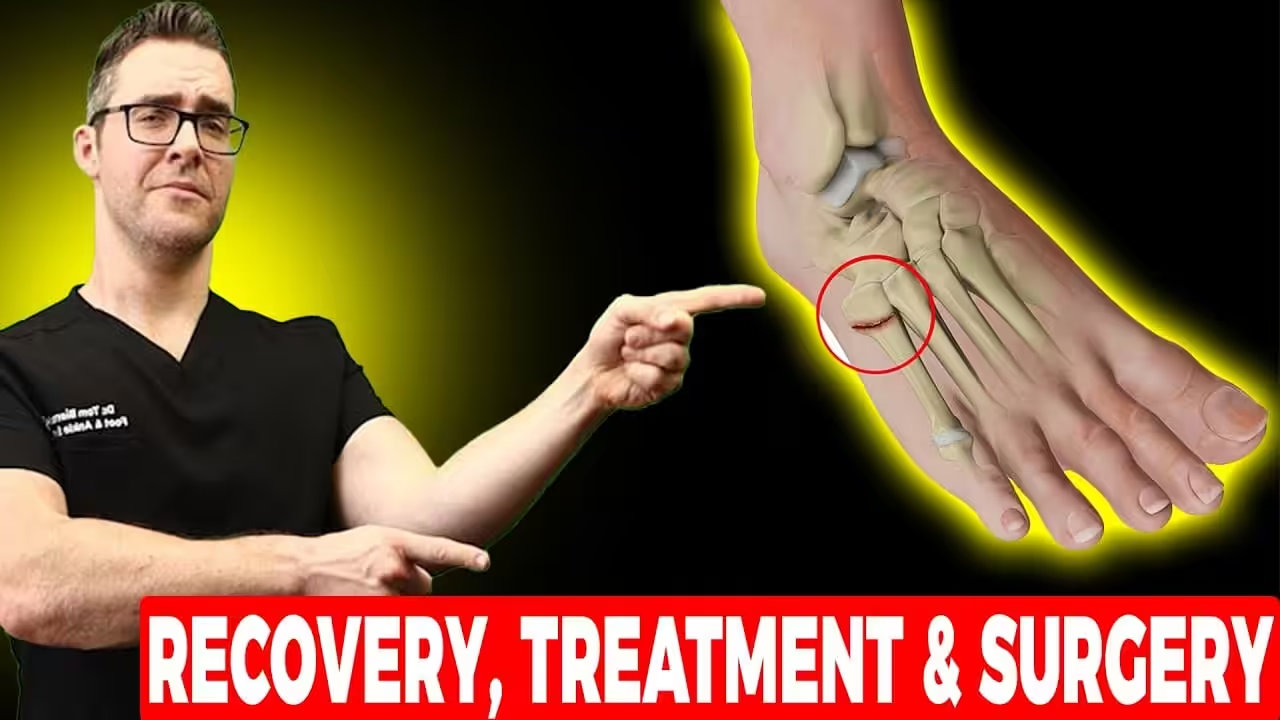
A Jones fracture is a fracture at the metaphyseal-diaphyseal junction of the fifth metatarsal — the bone on the outer edge of the foot — in a specific zone approximately 1.5 to 2 centimeters from the tip of the fifth metatarsal base. This zone has notoriously poor blood supply and a high rate of delayed healing, non-union, and refracture that distinguishes Jones fractures from other fifth metatarsal fractures. The injury is named for Sir Robert Jones, who described the fracture in 1902 — based on his own injury sustained while dancing.
At Balance Foot & Ankle, our Michigan foot surgeons provide both conservative management for select patients and surgical fixation for athletes and those requiring reliable, timely healing throughout Southeast Michigan.
Why Jones Fractures Are Different From Other Fifth Metatarsal Fractures
The fifth metatarsal is commonly fractured, but location matters enormously for prognosis and treatment. Avulsion fractures at the very tip of the fifth metatarsal base — Zone 1 — occur from ankle inversion injury pulling the peroneus brevis tendon and are generally treated conservatively with good outcomes. Jones fractures — Zone 2 — occur in a watershed area of blood supply where the proximal nutrient artery and the diaphyseal arterial supply meet without significant anastomosis, creating a zone that heals slowly and unreliably with non-surgical treatment. Zone 3 diaphyseal stress fractures carry similar healing challenges.
Who Needs Surgery?
Surgical fixation is strongly recommended for athletes wishing to return to sport, active individuals who cannot tolerate 6 to 10 weeks of non-weight bearing, patients with delayed union or refracture, and anyone with Zone 3 stress fracture. Non-surgical treatment with non-weight bearing cast immobilization for 6 to 8 weeks is an option for low-demand patients willing to accept the higher rate of delayed union and the possibility of requiring surgery if conservative management fails. The evidence strongly favors surgical fixation for competitive athletes given the faster and more reliable return to sport.
The Intramedullary Screw Technique
The standard surgical treatment is intramedullary screw fixation. A small incision is made at the base of the fifth metatarsal. Under fluoroscopic guidance, a guidewire is inserted into the medullary canal of the fifth metatarsal and advanced across the fracture site to the distal metatarsal. The canal is then drilled and a solid or cannulated titanium or stainless steel screw is inserted to compress the fracture fragments and provide stable fixation. Screw diameter selection is important — undersized screws have higher refracture rates, and surgeons typically use the largest diameter screw that the medullary canal accommodates.
Recovery After Jones Fracture Surgery
Protected weight bearing in a CAM boot for 4 to 6 weeks is typical following intramedullary screw fixation. Progressive return to activity begins with low-impact walking, then jogging, then cutting and jumping activities as X-ray evidence of healing confirms fracture consolidation. Most athletes return to sport at 8 to 12 weeks post-surgery — substantially faster than the 12 to 20 weeks typically required with conservative management. Refracture is significantly reduced compared to non-operative treatment.
If you have outer foot pain after a twisting injury or suspect a Jones fracture, contact Balance Foot & Ankle for evaluation. Our foot surgeons provide Jones fracture care throughout Southeast Michigan with same-week appointments.
Ready to Relieve Your Foot Pain?
Board-certified podiatrists serving Southeast Michigan. Same-week appointments available.
Warning
Jones fractures have a 25-30% non-union rate with casting alone due to poor blood supply at the fracture site. Delayed diagnosis or inadequate treatment can lead to chronic fracture, re-fracture, and need for complex revision surgery.
More Podiatrist-Recommended Surgery Essentials
OOFOS Recovery Slide


Watch: Metatarsalgia Treatment [BEST Ball of Foot Pain RELIEF 2024] — MichiganFootDoctors YouTube
Post-op approved — impact-absorbing slide for early recovery.
HOKA Ora 3 Recovery Slide
Max-cushion recovery sandal — comfort for post-surgical swelling.
Hoka Bondi 9
Max-cushion walking shoe — ease into return-to-walking post-surgery.
As an Amazon Associate, Balance Foot & Ankle earns from qualifying purchases. Product recommendations are based on clinical experience; prices and availability shown above update live from Amazon.

When to See a Podiatrist
Foot and ankle surgery in 2026 is dramatically different than a decade ago — most procedures are now minimally-invasive, outpatient, and allow weight-bearing within days. Balance Foot & Ankle surgeons have performed 3,000+ foot/ankle surgeries with modern techniques. If another surgeon has recommended a traditional open procedure, a second opinion may reveal a faster, less-invasive option.
Call Balance Foot & Ankle: (810) 206-1402 · Book online · Offices in Howell & Bloomfield Township
Frequently Asked Questions
How long is recovery after Jones fracture surgery?
After intramedullary screw fixation, most patients are weight bearing in a boot at 2 weeks, transitioned to shoes at 6-8 weeks, and return to running and sports at 3-4 months. Athletes treated surgically return to full activity roughly twice as fast as those treated with casting.
Can a Jones fracture heal without surgery?
Yes, but 25-30% of Jones fractures fail to heal with casting alone (non-union) due to poor blood supply. Non-athletic, sedentary patients may try 6-8 weeks of non-weight-bearing casting, but athletes and active adults typically benefit from surgical fixation.
What is the difference between Jones fracture and avulsion fracture?
An avulsion fracture is at the very tip of the fifth metatarsal base from ligament pull and heals well with walking boot. A Jones fracture is 1.5-3cm distally at the metaphyseal-diaphyseal junction, has poor blood supply, and often requires surgery.
Fifth Metatarsal Fracture? See a Foot Surgeon
Dr. Biernacki performs intramedullary screw fixation for Jones fractures with proven return-to-activity protocols. Same-week consultations at 7 Michigan locations.
Book AppointmentJones Fracture Treatment at Balance Foot & Ankle
A Jones fracture at the base of the fifth metatarsal is notoriously slow to heal due to poor blood supply in this area. Dr. Tom Biernacki at Balance Foot & Ankle offers both conservative and surgical treatment including intramedullary screw fixation at our Howell and Bloomfield Township offices.
Learn About Our Fracture Treatment Options | Book Your Appointment | Call (810) 206-1402
Clinical References
- Roche AJ, Calder JDF. “Treatment and return to sport following a Jones fracture of the fifth metatarsal: a systematic review.” Knee Surgery, Sports Traumatology, Arthroscopy. 2013;21(6):1307-1315.
- Mologne TS, et al. “Early screw fixation versus casting in the treatment of acute Jones fractures.” American Journal of Sports Medicine. 2005;33(7):970-975.
- Dean BJ, et al. “The management of Jones fractures.” British Medical Bulletin. 2019;129(1):43-52.
Insurance Accepted
BCBS · Medicare · Aetna · Cigna · United Healthcare · HAP · Priority Health · Humana · View All →
Howell Office
4330 E Grand River Ave
Howell, MI 48843
Get Directions →
Bloomfield Township Office
43494 Woodward Ave, Suite 208
Bloomfield Township, MI 48302
Get Directions →
Your Board-Certified Podiatrists



Ready to Get Back on Your Feet?
Same-week appointments available at both locations.
Book Your AppointmentWatch: Jones Fracture Surgery
Dr. Tom explains Jones fracture surgery — intramedullary screw fixation for 5th metatarsal base injury.
Jones Fracture Recovery Kit
Jones fracture surgery requires strict NWB 6-8 weeks. Dr. Tom’s recovery kit:
As an Amazon Associate, Balance Foot & Ankle earns from qualifying purchases. This supports our free patient education content.
Essential for strict NWB phase.
Post-op swelling at lateral forefoot.
Inflammation control weeks 1-4.
Lateral column offload during return-to-walk.
Related: Foot & Ankle Surgery · Sports Injury Treatment · Book Surgical Consultation
Differential Diagnosis: What Else Could It Be?
Not every case of jones fracture (5th metatarsal base) is straightforward. In our clinic we routinely rule out three look-alike conditions before confirming the diagnosis. If your symptoms don’t match the classic presentation, one of these may explain the pain — which is why physical exam matters more than self-diagnosis.
| Condition | How It Differs |
|---|---|
| Pseudo-Jones / avulsion fracture | Fracture proximal to metaphyseal-diaphyseal junction; heals faster with conservative care. |
| Peroneal tendonitis | Tenderness along the tendon sheath, not bone; no fracture on X-ray. |
| Cuboid syndrome | Pain slightly proximal on lateral column; no cortical disruption on imaging. |
Red Flags — When to See a Podiatrist Now
Seek same-day evaluation at Balance Foot & Ankle if you notice any of the following:
- Inability to bear weight on lateral foot
- Pain at the 5th metatarsal base after inversion injury
- Delayed union or nonunion beyond 8 weeks
- Recurring fracture at the same location
Call (810) 206-1402 or request an appointment. Our Howell and Bloomfield Township offices reserve same-day slots for urgent foot and ankle issues.
In Our Clinic: What We See
Clinical perspective from Dr. Tom Biernacki, DPM — Balance Foot & Ankle, Howell & Bloomfield Township, MI:
Jones fractures look like ankle sprains when the patient walks in — they rolled the foot, lateral pain persisted, and the X-ray shows a break at the 5th metatarsal base. In our clinic we carefully distinguish true Jones (at the metaphyseal-diaphyseal junction, high non-union rate) from pseudo-Jones avulsions (proximal tip, heal reliably). True Jones fractures in athletes often need screw fixation; sedentary patients may heal in a boot over 8-12 weeks. Dr. Biernacki counsels every Jones patient: a missed Jones or a non-healed Jones will sideline you far longer than 6 weeks of strict non-weight-bearing upfront.
In-Office Treatment at Balance Foot & Ankle
When conservative care isn’t enough, Dr. Tom Biernacki and the team at Balance Foot & Ankle offer advanced, same-day options — including Foot & Ankle Fracture Repair Michigan at our Howell and Bloomfield Township clinics.
Same-week appointments available. Call (810) 206-1402 or book online.
In-Office Treatment at Balance Foot & Ankle
If home treatment isn’t providing relief for your metatarsalgia, our podiatry team at Balance Foot & Ankle can help with same-week evaluations and advanced in-office care.
Same-week appointments available. (810) 206-1402
VitaMedica Arnica Gel
Arnica gel plus 15 plant compounds for sore feet, plantar fasciitis flares and post-activity soreness. Apply a thin layer to the sore area.
Shop VitaMedica Arnica Gel →
Dr. Tom Biernacki, DPM is a board-certified foot & ankle surgeon (ABFAS & ABPM) at Balance Foot & Ankle Specialists in Southeast Michigan. With over a decade of clinical experience, he specializes in heel pain, bunions, diabetic foot care, sports injuries, and minimally invasive surgery. Dr. Biernacki is a member of the APMA and ACFAS, and his patient education content on MichiganFootDoctors.com and YouTube has made him one of the most-followed foot & ankle educators on YouTube.