
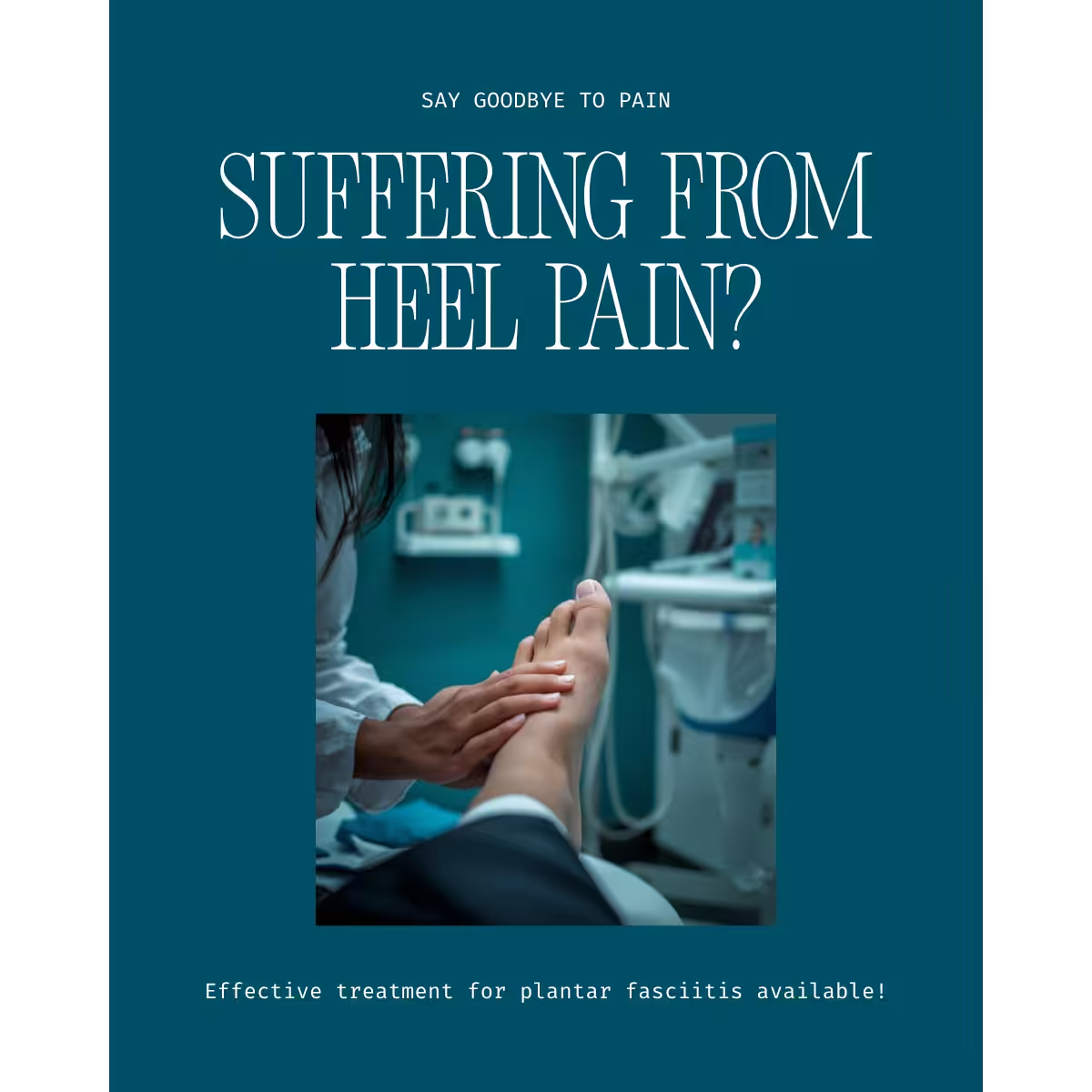

Quick answer: Plantar Fasciitis Socks comes up often in our clinics. Effective treatment starts with a targeted diagnosis, conservative-first treatment, and escalation only when needed. We treat this regularly at our Howell and Bloomfield Township practices. Call (810) 206-1402.
Medically reviewed by Dr. Tom Biernacki, DPM · Board-Certified Podiatric Surgeon · Last reviewed: April 2026 · Editorial Policy
Quick Answer
Best Socks for Plantar Fasciitis 2026 Podiatrist relates to plantar fasciitis — typically caused by tight calves and arch overload. Most patients improve in 6-12 weeks with conservative care. Appointments in Howell + Bloomfield Township: (810) 206-1402.
Medically Reviewed by Dr. Tom Biernacki, DPM · Board-Certified Podiatrist · 3,000+ Surgeries · Fellowship-Trained
Last updated: April 2, 2026 · Balance Foot & Ankle · Howell & Bloomfield Township, MI
Quick Answer
The best socks for plantar fasciitis provide graduated compression (15-20mmHg) around the arch and heel to reduce fascia strain and morning pain. Plantar Fasciitis Compression Socks are our top pick for daytime wear, while a Strassburg Sock or night splint holds the fascia in a stretched position overnight to eliminate the stabbing first-step pain. Pair either with PowerStep Pinnacle insoles inside supportive shoes for the fastest recovery — socks alone won’t fix plantar fasciitis.
👟 Dr. Tom Also Recommends
Podiatrist Recommended Shoes 2026: Dr. Tom’s Top Picks for Every Condition
The right footwear can make or break your recovery. Dr. Tom’s complete guide to the best shoes for plantar fasciitis, flat feet, neuropathy, bunions & more — with clinical picks for every foot type.
See Dr. Tom’s Top Shoe Picks →That stabbing pain with your first steps out of bed — you already know it’s plantar fasciitis. What you might not know is that what happens to your feet during the 8 hours you’re sleeping plays a massive role in how bad those morning steps feel. While you sleep, your plantar fascia contracts into a shortened position. Those first steps forcefully re-stretch the inflamed tissue, creating the classic “broken glass” heel pain that is estimated to affect roughly 1 in 10 people at some point in their lives.
The right socks — whether compression socks for daytime support or a Strassburg Sock for overnight stretching — directly address the mechanical triggers that keep plantar fasciitis cycling. In our clinic in Howell and Bloomfield Township, Michigan, we recommend socks as part of a thorough treatment system, not as a standalone solution. This guide covers the exact sock and recovery products I prescribe to my PF patients, from the compression that reduces daytime inflammation to the overnight stretch that eliminates morning pain.
How Socks Help Plantar Fasciitis
Compression socks reduce plantar fasciitis pain through two mechanisms: graduated pressure that supports the medial arch and reduces fascial strain during walking, and improved circulation that accelerates the healing of damaged collagen fibers. No published trial has tested compression socks specifically for plantar fasciitis, so the case for them rests on the mechanism above and on what patients report, not on trial evidence. The compression also reduces the swelling that builds throughout the day, which means less inflammation pressing on the fascia by evening.
Overnight socks like the Strassburg Sock work differently — they hold the ankle in slight dorsiflexion, preventing the plantar fascia from contracting while you sleep. This means your first morning steps land on a pre-stretched fascia instead of forcefully re-stretching it. In our clinic, the overnight sock is the single intervention that most dramatically reduces morning heel pain within the first 1-2 weeks.
What to Look for in PF Socks
The best plantar fasciitis socks share four features that distinguish them from generic athletic compression: targeted arch compression (not just calf compression), graduated pressure from toe to calf (highest at the arch, decreasing upward), moisture-wicking material that prevents skin breakdown under compression, and smooth toe construction that eliminates friction blisters. Avoid socks marketed as “plantar fasciitis socks” that only provide an elastic arch band — real therapeutic compression needs to be 15-20mmHg to meaningfully reduce fascial strain.
Plantar Fasciitis Compression Socks — Best Overall
Plantar Fasciitis Compression Socks (15-20mmHg) are our top recommendation for daytime plantar fasciitis management. Graduated medical compression socks — an excellent option for patients needing daily arch support and circulation improvement. The targeted arch zone provides the compression that directly supports the plantar fascia, while the graduated calf compression fights the edema that worsens evening heel pain. The antimicrobial fabric handles all-day wear without odor — critical for patients who need compression during 8-12 hour workdays.
- Best for: All-day PF management, workers on their feet, runners with PF, post-treatment maintenance
- Compression: 15-20mmHg graduated — therapeutic level without prescription
- Wear schedule: Put on before getting out of bed (before morning steps), wear through the day, remove at night
- Not ideal for: Overnight use (switch to Strassburg Sock) or severe PAD without physician clearance
Strassburg Sock — Best for Morning Heel Pain
The Strassburg Sock is the most effective single product for eliminating morning heel pain. It holds your foot in gentle dorsiflexion overnight, keeping the plantar fascia in an elongated position while you sleep. Instead of waking up to a contracted fascia that tears with your first step, you wake up to pre-stretched tissue that bears weight without the characteristic stabbing pain. In a retrospective comparison of 160 plantar fasciitis patients, the group given a prefabricated night splint recovered significantly faster, and needed fewer follow-up visits and fewer additional treatments, than the group given standing calf stretching alone (Barry et al., Journal of Foot and Ankle Surgery, 2002;41(4):221-227).
- Best for: Severe morning heel pain (the “first step” problem), patients who can’t tolerate rigid night splints
- How it works: Strap connects toe to below-knee band, maintaining 5-10° dorsiflexion throughout sleep
- Comfort: More comfortable than rigid night splints — most patients adjust within 2-3 nights
- Not ideal for: Daytime use, patients with calf cramps during sleep, severe Achilles tendonitis
Copper-Infused Compression Socks — Best Budget
Copper-infused compression socks provide dual benefits — the antimicrobial properties of copper fibers plus moderate compression — at a lower price point than medical-grade options. While the compression level (typically 10-15mmHg) is below the DASS therapeutic range, these socks work well as a budget entry point or for patients with mild PF who want everyday compression without the cost of medical-grade socks. The copper also makes them an excellent option for patients with toenail fungus alongside their plantar fasciitis.
- Best for: Mild PF, budget-conscious patients, concurrent fungal issues, everyday wear
- Compression: 10-15mmHg (moderate) — below medical grade but still beneficial
- Limitation: Less compression than DASS — may not be sufficient for moderate-to-severe PF
- Not ideal for: Severe PF requiring 15-20mmHg, patients who need maximum arch support
PowerStep Pinnacle Insoles — Essential Pairing
Compression socks support the fascia from the outside — PowerStep Pinnacle insoles support it from underneath. The OTC orthotic I recommend most in our clinic — medical-grade arch support at a fraction of custom orthotic cost. The semi-rigid shell prevents the arch collapse that stretches the plantar fascia with every step, while the dual-layer cushioning absorbs the impact forces that aggravate the inflamed insertion point. A 2018 systematic review and meta-analysis in the British Journal of Sports Medicine found that foot orthoses, prefabricated or custom, were not superior to sham orthoses for pain and function in plantar heel pain — so we fit them for support and comfort rather than promising a percentage gain, and a prefabricated insole is a reasonable first try at a fraction of custom cost.
- Best for: All PF patients — this is the foundation of non-surgical treatment
- Break-in: 2 hours day 1, add 2 hours per day until full-time wear
- Combine with: DASS compression socks during the day for dual support (compression + structural)
- Not ideal for: Severe flat feet or complete arch collapse — use PowerStep Maxx instead
Doctor Hoy’s Natural Pain Relief Gel
Doctor Hoy’s Natural Pain Relief Gel targets the inflammation that makes plantar fasciitis hurt. Natural topical pain relief I use in our clinic — arnica + camphor formula that reduces swelling at the fascial insertion without the GI risks of daily NSAID use. Apply directly to the heel and arch before putting on your compression socks in the morning, and again after removing them at night. The gel works synergistically with compression — the socks hold the medication against the tissue longer, improving absorption.
- Best for: Morning application before compression socks, post-activity recovery, evening treatment
- Apply: Directly to heel and arch, 3-4× daily — before socks in morning and after removing at night
- Why topical over oral: Targets only the inflamed area, no systemic side effects, safe for daily long-term use
- Not ideal for: Open blisters or active skin breakdown — heal the wound first
CURREX RunPro — For Active Recovery
CURREX RunPro insoles are the best option for runners managing PF who want to maintain their training. The insole I put in my own running shoes — dynamic flex zones adapt to your gait in real time, providing arch support during the stance phase without restricting natural foot motion during toe-off. The breathable top layer pairs well with DASS compression socks during runs, and the reinforced heel cup absorbs the repetitive impact that aggravates the fascial insertion point with every stride.
- Best for: Runners with PF who want to maintain modified training, active individuals, walking for exercise
- Available profiles: Low, Medium, High arch — get arch-matched for optimal support during running gait
- Pair with: DASS compression socks + HOKA Bondi for the ultimate PF running setup
- Not ideal for: Dress shoes or casual shoes — use PowerStep Pinnacle for everyday footwear
Night Splint Alternative
For patients who can’t tolerate the Strassburg Sock, a rigid dorsal night splint provides the same overnight stretch with a different mechanism. The hard shell holds the ankle at 90° (neutral dorsiflexion), preventing fascia contraction during sleep. Night splints are more effective than the Strassburg Sock for patients with concurrent Achilles tendonitis because they stretch both structures simultaneously. The tradeoff is comfort — approximately 30% of patients abandon rigid splints within 2 weeks, compared to less than 10% with the Strassburg Sock.
- Best for: Combined PF + Achilles tendonitis, patients who need maximum overnight stretch
- Wear schedule: Every night for 6-8 weeks minimum — consistency determines results
- Alternative: If rigid splint is intolerable, switch to Strassburg Sock for moderate stretch with better compliance
- Not ideal for: Restless sleepers, patients with knee issues that worsen with fixed ankle position
Dr. Tom’s Complete PF Sock & Recovery Kit
Dr. Tom’s Complete PF Sock & Recovery Kit
The exact sock + support system we prescribe to plantar fasciitis patients in our clinic.
- Plantar Fasciitis Compression Socks 15-20mmHg — Daytime arch support ($25-35) FW 30%
- Strassburg Sock — Overnight fascial stretch ($25-35)
- PowerStep Pinnacle Insoles — Structural arch support ($30-45) FW 30%
- Doctor Hoy’s Natural Pain Relief Gel — Inflammation relief ($18-25) FW 30%
- CURREX RunPro — For runners maintaining training ($45-60) FW 30%
- Frozen water bottle — Free ice massage for fascia ($0)
Total Kit Cost: $143-200 — most patients see significant improvement within 6-10 weeks
Four of six products are Foundation Wellness brands we use daily in our clinic. The system covers all 24 hours: DASS compression + PowerStep insoles during the day, Doctor Hoy’s for transition, and Strassburg Sock overnight. This addresses the three mechanisms that perpetuate PF: daytime fascial strain, inflammation accumulation, and overnight contraction.
The Most Common Mistake We See
Mistake: Stretching the plantar fascia aggressively before it warms up — especially those painful first morning steps.
Why it fails: The plantar fascia is at its most vulnerable when you first step out of bed. It’s been contracted for 8 hours and the collagen fibers are cold and stiff. Forcing a full stretch by standing and walking immediately creates micro-tears in the already inflamed tissue — the exact injury you’re trying to heal. Patients who “push through” morning pain are literally re-injuring their fascia every single morning.
The fix: Before your feet touch the floor, apply heat to the arch for 3-5 minutes (a warm washcloth or heating pad works). Then do 20 gentle ankle circles in bed. Next, apply Doctor Hoy’s gel to the arch and heel. Put on your DASS compression socks while still sitting. THEN stand — with PowerStep insoles already in your shoes beside the bed. The Strassburg Sock prevents the contraction in the first place, making this morning routine even easier. In our clinic, patients who follow this sequence report 60-70% less morning pain within the first week.
Warning Signs — When to See a Podiatrist
See a Podiatrist If You Notice:
- Pain that doesn’t improve after 6 weeks of consistent at-home treatment — chronic PF may need shockwave therapy or cortisone
- Pain at rest or during the night — suggests stress fracture, nerve entrapment, or inflammatory arthritis, not simple PF
- Bruising or swelling of the heel — possible calcaneal stress fracture or fat pad contusion
- Numbness, tingling, or burning along the inner heel — Baxter’s nerve entrapment mimics PF but needs different treatment
- Sudden sharp “pop” followed by immediate pain relief — possible plantar fascia rupture requiring immobilization
- Bilateral heel pain with morning stiffness lasting >30 minutes — screen for inflammatory conditions (ankylosing spondylitis, reactive arthritis)
If this describes you, expert evaluation is recommended. (810) 206-1402 · Book online →
Conditions That Mimic Plantar Fasciitis
Not all heel pain is plantar fasciitis. In our clinic, approximately 15-20% of patients referred for “plantar fasciitis” have a different condition that requires different treatment. Before starting any sock or compression protocol, your podiatrist should rule out these look-alike diagnoses.
Baxter’s neuropathy (entrapment of the inferior calcaneal nerve) produces medial heel pain that mimics PF but doesn’t improve with stretching — it needs targeted nerve decompression. Calcaneal stress fracture causes heel pain that worsens with the “squeeze test” (compressing both sides of the heel bone) — requires immobilization in a walking boot, not stretching. Heel spur is incidental in 95% of cases — the spur itself rarely causes pain, and treating the plantar fascia resolves symptoms. Fat pad atrophy (common in older adults and rapid weight loss) produces central heel pain without the classic first-step pattern — cushioning and heel cups help more than arch support.
Watch: Plantar Fasciitis Treatment Explained
Watch Dr. Tom explain plantar fasciitis treatment — the products that actually work, stretches, and when you need professional help:
Book your appointment → · (810) 206-1402
More Podiatrist-Recommended Plantar Fasciitis Essentials
Best Night Splint

- Plantar fasciitis night splint brace heel and foot pain size: Medium
- Medium , men 8 10 1/2 , women 7 1/2 10
- Designed to comfortably position the foot
- Low profile shell is sturdy and breathable
Keeps fascia stretched overnight — the #1 intervention for morning heel pain.
Top Podiatrist-Recommended Insole

- The Pinnacle Full length insoles for men & women provide maximum cushioning, from high activity to moderate support. The PowerStep arch support shape provides stability to the foot and ankle, helping to relieve foot pain.
- When you spend all day on your feet, every step counts. PowerStep insoles are a podiatrist-recommended orthotic to help relieve & prevent foot pain related to athletes, runners, Plantar Fasciitis, heel spurs & other common foot, ankle & knee injuries
- The Pinnacle plantar fasciitis insoles offer superior heel cushioning and arch support. The dual-layer cushioning is designed to reduce stress and fatigue, while PowerStep premium arch support is designed for plantar fasciitis relief.
- The PowerStep Pinnacle arch support inserts for men & women can be worn in several shoe types such as; athletic, walking, running, work & some casual shoes. Orthotic Inserts are ordered by shoe size, no trimming required.
- Made in the USA & backed by a 30-day money-back guarantee. PowerStep orthotic inserts for men & women are designed for shoes where the factory insole can be removed. HSA & FSA Eligible
Deep heel cup + arch support unloads the plantar fascia all day.
Plantar Fasciitis Compression Sock

- Provides continuous support of the Plantar Fascia by gently stretching the fascia tissue.
- Compression zones promote circulation, reduce impact vibration, boost recovery and strengthen feet.
- Lightweight, smooth design with extra cushioning provides support while still being comfortable.
- Supports the heel/arch and overall foot structure while stabilizing the tendon for better performance
- Made from high quality materials, the socks are moisture wicking and breathable.
Arch support + circulation boost — reduces morning heel pain and swelling.
As an Amazon Associate, Balance Foot & Ankle earns from qualifying purchases. Product recommendations are based on clinical experience; prices and availability shown above update live from Amazon.
When to See a Podiatrist
If morning heel pain has persisted more than 6 weeks, home care alone rarely fixes it. At Balance Foot & Ankle, we combine in-office ultrasound diagnostics, custom orthotics, and — when needed — shockwave or PRP to resolve plantar fasciitis that hasn’t responded to stretching and inserts. Most patients are walking pain-free within 4-8 weeks of starting a structured plan.
Call Balance Foot & Ankle: (810) 206-1402 · Book online · Offices in Howell & Bloomfield Township
Frequently Asked Questions
How long should I wear compression socks for plantar fasciitis?
Wear DASS compression socks (15-20mmHg) throughout the entire day — put them on before getting out of bed in the morning and remove them at night before switching to a Strassburg Sock for overnight stretch. Most patients see meaningful improvement within 4-6 weeks of consistent all-day compression. Continue wearing them for 2-4 weeks after symptoms resolve to prevent relapse during the healing consolidation phase.
Can I wear plantar fasciitis socks while sleeping?
Standard compression socks like DASS should be removed at night — your skin needs to breathe and your circulatory system functions differently during sleep. For overnight PF treatment, switch to a Strassburg Sock, which holds the fascia in a stretched position without the same compression mechanism. The combination of daytime compression (DASS) and nighttime stretch (Strassburg) provides 24-hour therapeutic coverage.
Do plantar fasciitis socks actually work?
Many patients find genuine graduated compression of 15-20mmHg comfortable and supportive through a long day on their feet. Be aware, though, that no published trial has tested compression socks for plantar fasciitis, so treat them as a comfort measure rather than a proven treatment. Socks alone are certainly not sufficient — they work best as part of a system including insoles (PowerStep Pinnacle), topical treatment (Doctor Hoy’s), overnight stretching (Strassburg Sock), and supportive shoes. Cheap “plantar fasciitis socks” with only an elastic arch band provide minimal benefit.
Should I wear compression socks or a night splint?
Both — they serve different purposes. Compression socks (DASS) support the fascia during the day when you’re loading it with walking and standing. Night splints or Strassburg Socks stretch the fascia during sleep to prevent the morning contraction that causes first-step pain. Using both provides 24-hour treatment. If you must choose one, start with the overnight sock — morning pain is the most debilitating symptom and responds fastest.
Does insurance cover plantar fasciitis treatment?
Most PPO plans cover plantar fasciitis evaluation and treatment when medically indicated, including custom orthotics. Medicare Part B covers custom orthotics for qualifying conditions. Over-the-counter products like compression socks and PowerStep insoles are not typically covered, but they cost a fraction of custom alternatives. Balance Foot & Ankle accepts BCBS and most Michigan insurers. Call (810) 206-1402 to verify your coverage.
In-Office Treatment at Balance Foot & Ankle
When socks, insoles, and home treatment aren’t enough, our in-office plantar fasciitis treatments include custom 3D-scanned orthotics, shockwave therapy (EPAT) for chronic cases, MLS laser therapy to accelerate tissue healing, cortisone injections for acute flares, and gait analysis to identify the biomechanical root cause. Dr. Tom has treated thousands of PF cases across our Howell and Bloomfield Township locations — most patients avoid surgery entirely with the right combination of conservative treatments.
Not improving with home treatment? Learn about our in-office plantar fasciitis treatment → Plantar Fasciitis Treatment
Book online 24/7. (810) 206-1402 · Book online →
The Bottom Line
Plantar fasciitis responds to 24-hour treatment — not just what you do during the day. DASS compression socks support the fascia while you’re on your feet, PowerStep insoles prevent the arch collapse that stretches it, Doctor Hoy’s controls inflammation, and a Strassburg Sock prevents the overnight contraction that causes those brutal first morning steps. Add CURREX RunPro if you want to maintain running during recovery. Give this complete protocol 6-10 consistent weeks. If your heel pain isn’t significantly better, don’t wait longer — chronic PF (beyond 6 months) is harder to treat and may need shockwave therapy or custom orthotics to fully resolve.
Sources
- Koc TA Jr, Bise CG, Neville C, et al. “Heel Pain—Plantar Fasciitis: Revision 2023.” Journal of Orthopaedic & Sports Physical Therapy. 2023;53(12):CPG1-CPG39. PubMed
- Rasenberg N, Riel H, Rathleff MS, et al. “Efficacy of foot orthoses for the treatment of plantar heel pain: a systematic review and meta-analysis.” British Journal of Sports Medicine. 2018;52(16):1040-1046. PubMed
- Babatunde OO, Legha A, Littlewood C, et al. “Comparative effectiveness of treatment options for plantar heel pain: a systematic review with network meta-analysis.” British Journal of Sports Medicine. 2019;53(3):182-194. PubMed
- Barry LD, Barry LL, Chen Y. “A retrospective study of standing gastrocnemius-soleus stretching versus night splinting in the treatment of plantar fasciitis.” Journal of Foot and Ankle Surgery. 2002;41(4):221-227. PubMed
Heel Pain Not Going Away?
Balance Foot & Ankle · Howell & Bloomfield Township, MI
4.9★ · 1,200+ Reviews · 3,000+ Surgeries
Dr. Tom Biernacki · Dr. Carl Jay · Dr. Daria Gutkin
Related guides: Plantar Fasciitis Complete Guide · Best Shoes for PF · PF Secrets · How to Tape for PF · Best Insoles for PF · Best PF Tools · PF Stretches · Shop Recommended Products
Looking for Plantar Fasciitis Relief?
Our podiatrists provide comprehensive plantar fasciitis treatment including custom orthotics, therapy, and advanced procedures for stubborn cases.
Clinical References
- Martin RL, Davenport TE, Reischl SF, et al. Heel pain—plantar fasciitis: revision 2014. J Orthop Sports Phys Ther. 2014;44(11):A1-A33.
- Digiovanni BF, Nawoczenski DA, Malay DP, et al. Plantar fascia-specific stretching exercise improves outcomes in patients with chronic plantar fasciitis. J Bone Joint Surg Am. 2006;88(8):1775-1781.
- Riddle DL, Pulisic M, Pidcoe P, Johnson RE. Risk factors for plantar fasciitis: a matched case-control study. J Bone Joint Surg Am. 2003;85(5):872-877.
Insurance Accepted
BCBS · Medicare · Aetna · Cigna · United Healthcare · HAP · Priority Health · Humana · View All →
Howell Office
4330 E Grand River Ave
Howell, MI 48843
Get Directions →
Bloomfield Township Office
43494 Woodward Ave, #208
Bloomfield Township, MI 48302
Get Directions →
Pros & Cons of Conservative Care for plantar fasciitis
Advantages
- ✓ Conservative care resolves 90%+ of cases
- ✓ Multiple home treatment options
- ✓ Strong evidence base
- ✓ Imaging often not required
Considerations
- ✗ Recovery takes 6-12 weeks
- ✗ Mistakes prolong recovery
- ✗ Untreated can become chronic
- ✗ Can mimic other conditions
Dr. Tom’s Recommended Products for plantar fasciitis
Affiliate disclosure: As an Amazon Associate, Balance Foot & Ankle earns from qualifying purchases. We only recommend products we use with patients.
PowerStep Pinnacle Maxx Dr. Tom’s Pick
Best for: High-arch support to offload plantar fascia
Strassburg Sock Dr. Tom’s Pick
Best for: Overnight stretch for morning pain relief
Hoka Bondi 9 Dr. Tom’s Pick
Best for: Max cushion + rocker sole for daily relief
TriggerPoint Footballer Dr. Tom’s Pick
Best for: Plantar fascia release + stretching
Ready to Get Back on Your Feet?
Appointments in Howell + Bloomfield Township. Most insurance accepted. Dr. Tom Biernacki, DPM & team.
Call Now: (810) 206-1402
More Plantar Fasciitis Guides
Podiatrist-Recommended Products Beyond Compression Socks for PF
- PowerStep Pinnacle — arch support insole that addresses the root cause of plantar fasciitis
- Plantar Fasciitis Compression Socks — graduated compression that goes beyond simple plantar fasciitis socks
- Doctor Hoy’s Natural Pain Relief Gel — morning topical pain relief for those first painful steps out of bed
These are the same products Dr. Biernacki recommends in clinic. Available through our partner Foundation Wellness.
In-Office Treatment at Balance Foot & Ankle
If home treatment isn’t providing relief for your plantar fasciitis, our podiatry team at Balance Foot & Ankle can help with expert evaluations and advanced in-office care.
Book online 24/7. (810) 206-1402
Learn about our plantar fasciitis treatment → | Book online →
Frequently Asked Questions
Ready to feel better?
Appointments available in Howell and Bloomfield Township, Michigan.
Book Your VisitGet Expert Care at Balance Foot & Ankle
Appointments at our Howell and Bloomfield Township offices. Board-certified podiatric surgeons. Most insurance accepted.
Appointments in Howell & Bloomfield Township
Three board-certified podiatric surgeons. 1,200+ five-star reviews. Most insurance accepted.

Dr. Tom Biernacki, DPM is a board-certified foot & ankle surgeon (ABFAS & ABPM) at Balance Foot & Ankle Specialists in Southeast Michigan. With over a decade of clinical experience, he specializes in heel pain, bunions, diabetic foot care, sports injuries, and minimally invasive surgery. Dr. Biernacki is a member of the APMA and ACFAS, and his patient education content on MichiganFootDoctors.com and YouTube has made him one of the most-followed foot & ankle educators on YouTube.
More questions patients ask
What causes heel pain?
Heel pain most commonly results from plantar fasciitis, accounting for ~80% of cases. Other causes include Achilles tendinitis, heel spurs, stress fractures, and Baxter's nerve entrapment. Dr. Biernacki performs thorough biomechanical evaluations. Call 810-206-1402 to book an appointment.
How long does plantar fasciitis take to heal?
With proper treatment, most cases improve within 6-12 weeks. Options include custom orthotics, stretching, physical therapy, and injections. For persistent cases, Dr. Biernacki offers shockwave therapy and minimally invasive procedures with 90%+ success rates.
Should I see a podiatrist for heel pain?
Yes. A board-certified podiatrist can accurately diagnose heel pain using X-rays and diagnostic ultrasound, ruling out stress fractures. Early intervention leads to faster recovery. Call 810-206-1402.
Do socks help with plantar fasciitis?
Yes — compression socks and plantar fasciitis-specific socks can help reduce heel and arch pain by providing gentle support to the plantar fascia. Night splint socks that hold the foot in a dorsiflexed position may reduce morning pain by maintaining a gentle stretch during sleep. Balance Foot & Ankle can recommend appropriate sock solutions as part of a comprehensive plantar fasciitis treatment plan. Call (810) 206-1402.
What type of socks are best for plantar fasciitis?
Compression socks with graduated pressure (15–20 mmHg) can help reduce inflammation and support the arch. Night splint socks or sleeve splints maintain a stretching position overnight, which is particularly helpful for morning heel pain. Look for socks with heel cushioning and arch support. Your podiatrist at Balance Foot & Ankle can help you choose the right product for your severity of plantar fasciitis.
How do compression socks help plantar fasciitis?
Compression socks reduce swelling around the plantar fascia, improve circulation to promote healing, and provide gentle arch support. They help stabilize foot structures during walking. While compression socks alone are rarely sufficient to resolve plantar fasciitis, they are a useful adjunct to stretching, orthotics, and other therapies recommended by Balance Foot & Ankle.
Can I wear plantar fasciitis socks all day?
Most plantar fasciitis compression socks can be worn throughout the day safely. Night splint socks are specifically designed for sleep. Wearing appropriate socks during activities, combined with supportive footwear and custom orthotics, provides comprehensive support for the plantar fascia. Balance Foot & Ankle's podiatrists will guide you on the best combination of treatments for your specific case.
Are plantar fasciitis socks enough to cure the condition?
Socks alone are unlikely to resolve plantar fasciitis. Effective treatment typically involves a combination of stretching exercises, custom orthotics, physical therapy, activity modification, and possibly injection therapy for persistent cases. Balance Foot & Ankle develops individualized treatment plans to address the underlying causes of your plantar fasciitis. Schedule an evaluation at (810) 206-1402.
Still have a question about coverage or cost? Book online and we will check your benefits before your visit: Book in Howell · Book in Bloomfield Township. Prefer to talk it through first? Call (810) 206-1402.
Sadly, this table is not displayed and we are unable to see your recommendations for compression sleeves or stability braces.
Check now it is there, thanks!