
Quick answer: The best men’s sandals pair firm arch support, a contoured footbed, and a deep heel cup with adjustable straps for a secure fit — Birkenstock, Vionic, OOFOS, and ECCO lead for foot health. Skip flat, flimsy sandals; with plantar fasciitis or flat feet, choose a model with a rigid midsole that won’t twist.
Not sure which sandal suits your foot type? Book a real appointment time online, 24/7 — Howell or Bloomfield Township.
Most men choose sandals based on arch height — but our podiatrists identify one structural feature that predicts plantar fasciitis flare-ups in open footwear more reliably than arch support alone. Call (810) 206-1402 or book online — expert podiatric care across Michigan.
Treatment at Balance Foot & Ankle: EPAT Shockwave for Heel Pain →

What Podiatrists Actually Look for in a Men’s Sandal
Medically reviewed by Dr. Tom Biernacki, DPM
Board-certified podiatric surgeon | Balance Foot & Ankle
Last reviewed: May 2026
Most men’s sandals fail the podiatric standard for two reasons: they have no arch support and they allow the foot to slide. Both of these factors increase the muscle and tendon work required for every step, leading to plantar fasciitis, Achilles tendonitis, and heel pain in patients who wear flip-flops or flat sandals for extended periods.
A podiatrist-recommended men’s sandal must pass all four of these criteria:
- Contoured footbed — not a flat slab of rubber. The footbed should have a raised arch that contacts the medial arch, a heel cup that holds the heel in neutral, and a slight forefoot elevation or rocker at the toes.
- Heel strap or backstrap — sandals without a heel strap require the toes to grip to keep the sandal on. Chronic toe gripping causes hammertoes, plantar fasciitis, and calf tightness over time.
- Non-compressible midsole — the midfoot region should resist compression. Press your thumb into the arch area: foam that bottoms out in 2 seconds provides zero support under body weight.
- Adjustable straps — different foot widths need different strap tensions. Fixed-strap sandals (most slides) cannot accommodate edema, wide feet, or orthotic insoles.
Best Men’s Sandals for Foot Health 2026: Podiatrist Rankings
| Sandal | Arch Support | Heel Cup | Heel Strap? | Plantar Fasciitis? | Orthotics Compatible? | Price | Rating |
|---|---|---|---|---|---|---|---|
| Vionic Men’s Wave or Tide | High — Orthaheel technology with deep heel cup and medial arch; built by podiatric biomechanics team | Deep, firm — holds heel in neutral valgus | Toe post (thong style) — not ideal; look for Vionic’s strap models | ✅ Yes — among best OTC sandals for PF | No — fixed contoured footbed (no removable insole) | ~$100 | ⭐⭐⭐⭐⭐ — #1 for plantar fasciitis |
| Birkenstock Arizona (Regular or Narrow) | High — anatomical cork footbed contours to individual foot; longitudinal and transverse arch support | Moderate — heel cup present; less aggressive than Vionic | No heel strap — two adjustable buckles across foot; foot must be lifted with each step | ✅ Yes — for flexible flatfoot; ⚠️ Avoid for rigid flatfoot | No — cork molds over time; orthotics can be placed on top with caution | ~$135–170 | ⭐⭐⭐⭐ — Excellent for flexible flat foot and general support |
| HOKA Ora Recovery Slide | Low-moderate — no true arch support; thick flat foam | Minimal | No — slide style only | ⚠️ Limited — cushion helps but no arch control | No | ~$55 | ⭐⭐⭐ — Best post-workout recovery; not for extended wear or foot conditions |
| Chaco Men’s Z/1 Classic | Moderate — LUVSEAT footbed with arch support and toe loop positioning | Firm — heel cup integrated; durable polyester straps | Yes — adjustable strapping system wraps heel | ✅ Yes — firm sole and arch support adequate for mild PF | No — fixed footbed | ~$110 | ⭐⭐⭐⭐ — Best adventure/hiking sandal; adjustable system excellent |
| Spenco Men’s Yumi | High — Total Support footbed with 3-layer arch support and deep heel cup; podiatrist-developed | Deep — comparable to Vionic | Thong style — no heel strap | ✅ Yes — arch support comparable to OTC orthotic | No | ~$65 | ⭐⭐⭐⭐ — Best value podiatrist-level arch support |
| Teva Men’s Hurricane XLT2 | Low-moderate — foam footbed; no significant arch architecture | Moderate | Yes — adjustable heel strap | ⚠️ Limited — better than flat sandals; insufficient for true PF | No | ~$70 | ⭐⭐⭐ — Good for water activities and trail use; not clinical-grade support |
| OOFOS OOahh Sport Flex | Moderate — OOfoam technology absorbs 37% more impact than EVA; contoured shape | Moderate | No — slide style | ✅ Yes — excellent for post-surgical recovery and heel spur; reduces impact load | No | ~$65–75 | ⭐⭐⭐⭐ — Best for post-surgical recovery and joint pain; not for pronation control |
When Can Men with Foot Conditions Wear Sandals?
| Foot Condition | Sandal OK? | Best Sandal Choice | Duration Limit | What to Avoid |
|---|---|---|---|---|
| Plantar fasciitis (mild) | ✅ Yes — with supportive sandal | Vionic or Spenco Yumi — highest OTC arch support | Under 2 hours continuous; not first steps of morning | Flat flip-flops; flat slides; any sandal without arch contour |
| Plantar fasciitis (moderate-severe) | ⚠️ Caution — barefoot or flat sandal will worsen | Sandal only with custom orthotic insert if possible; otherwise supportive athletic shoe preferred | Short durations (beach, poolside) only; return to shoe ASAP | Extended sandal wear; flip-flops; first-thing-in-morning sandal use |
| Achilles tendonitis | ⚠️ Caution — zero-drop sandals increase Achilles load | Sandal with slight heel lift if possible (Birkenstock Boston has slight elevation); OOFOS for recovery | Limit; always use sandal with some heel elevation during acute phase | Flat flip-flops; zero-drop sandals; barefoot walking on hard surfaces |
| Flat feet / overpronation | ✅ Yes — with appropriate sandal | Vionic (deep heel cup + medial arch) or Birkenstock Arizona (for flexible flatfoot only) | Full-day use acceptable if sandal provides adequate control | Flat slides; fashion sandals; Birkenstocks for rigid flatfoot |
| Diabetic neuropathy | ⚠️ Caution — injury risk with open toe | Closed-toe diabetic sandal (Drew or Propet) with full inspection of strap areas | Limit duration; inspect feet after every sandal use | Any sandal with straps over neuropathic areas; poolside barefoot walking |
| Bunions | ✅ Yes — sandals often better than shoes for bunions | Vionic or Chaco — no medial pressure on bunion; adjustable straps avoid bunion impingement | Full-day use; bunion has no strap pressure in open sandal | Sandals with medial strap directly over bunion; narrow thong posts that deviate big toe |
| Morton’s neuroma | ✅ Yes — open sandal relieves compression | Vionic Wave (toe post style separates 3rd-4th toes slightly); Chaco Z/1 with adjustable positioning | Full-day use; most neuromas improve with open footwear | Narrow sandals that compress metatarsal heads; pointed-toe fashion sandals |
Most men’s sandals are flat slabs that destroy your feet. The ones podiatrists actually wear are different — here’s why.
Clinical guidance: The American Orthopaedic Foot & Ankle Society (AOFAS) recommends footwear with a contoured footbed, adequate toe-box depth, and adjustable straps for men with bunions, hammertoes, or arch pathology.
Dr. Tom Biernacki, DPM, FACFAS — board-certified foot & ankle surgeon with 3,000+ surgeries — explains exactly what podiatrist-recommended men sandals means and what works. Call (810) 206-1402 for same-day appointment at Howell or Bloomfield Township.
Podiatrist Recommended Men’s Sandals
2026 Ranked Picks: Arch Support & Orthotic-Grade Sandals
For summer comfort or all-year casual wear, the right pair of men’s sandals can make a world of difference—especially when foot health is a priority. At Balance Foot & Ankle Specialists in Michigan, our podiatrist-recommended picks offer the perfect blend of support, style, and durability. Whether you’re dealing with foot pain, plantar fasciitis, or simply want top-quality footwear, our list of the top 7 men’s sandals is tailored for both comfort and performance. Let’s help you walk pain-free and in style!
Discover Podiatrist-Approved Men’s Sandals for All-Day Comfort
Clinical Selection Criteria: What Makes a Sandal Podiatrist-Grade
OOFOS OOahh Recovery Slide, Black – Women’s Size 12, Men’s Size 10
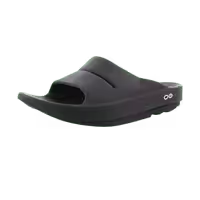
Good simple arch support orthotic. Great for overpronation.
Kaiback – Men’s Drifter Sport Flip Flops | Comfortable Durable Rubber and Heavy-Duty Tread
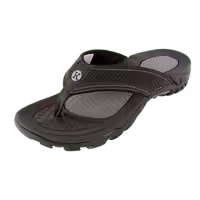
Less aggressive orthotic. If you are looking for an aggressive or even medium correction, look at some of the more expensive brands.
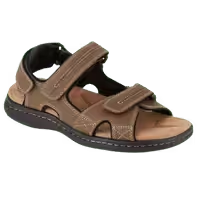
Dockers Men’s Newpage Sporty Outdoor Sandal Shoe
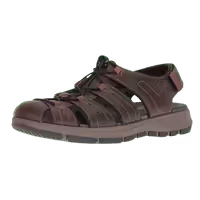
This is a larger sandal with straps, great reviews!
Crocs Men’s and Women’s Athens Flip Flop
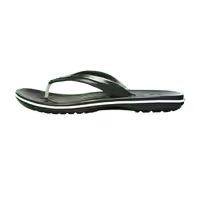
If you are flat footed, you may need more correction and a stronger arch.
Full Comparison: Arch Profile, Forefoot Room & Durability
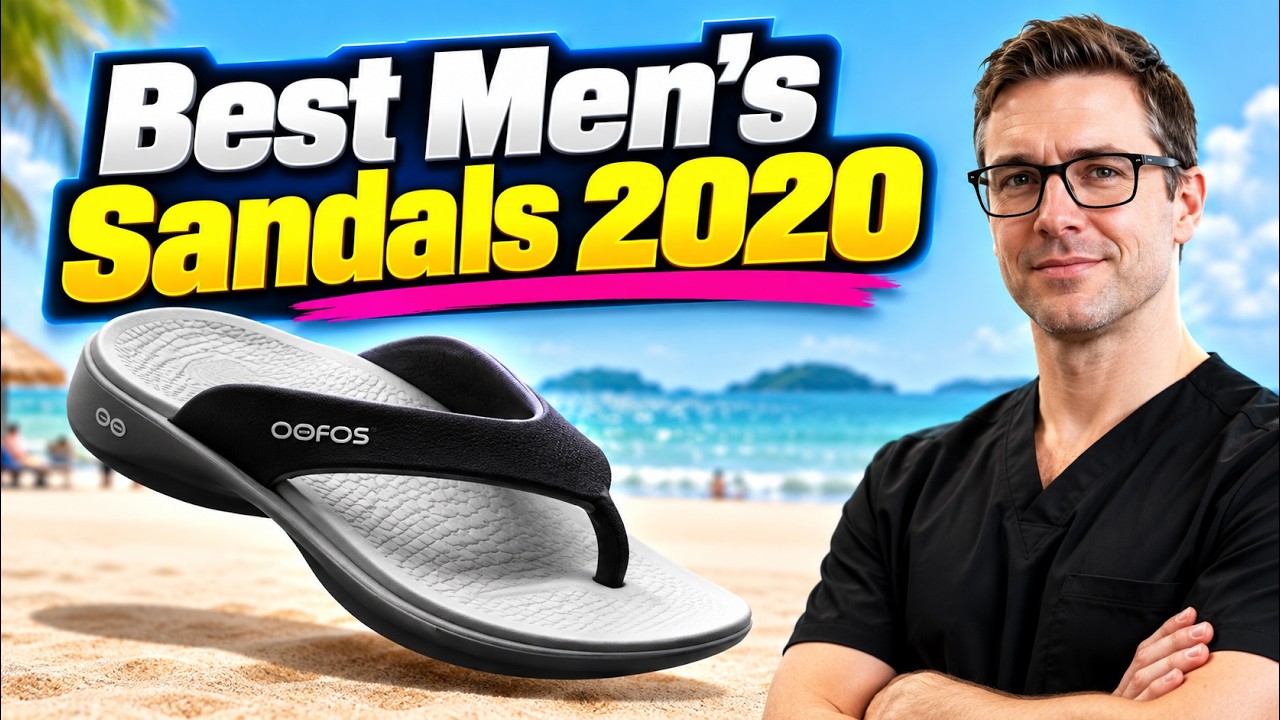
Do you need the best men’s sandals for spring and summer in 2020!
We’ve got you covered for wide feet, sandals for walking, and sandals for plantar fasciitis! These are the best men’s arch support sandals since 2019 and probably good until 2021! We go over research about arch supportive orthotics and orthotic sandals for men.
We then go over our top 5 sandals with reviews on them all.
What are Orthotic Sandals?
Orthotic sandals are designed to keep your foot supported straight while walking home. I have seen these make a huge difference while taking care of foot problems.
Getting good orthotic sandals for home purposes is a meager cost and effective solution for getting rid of foot conditions like:
- Plantar fasciitis.
- Morton’s neuroma pain.
- Arch pain.
- Bottom of the foot morning pain.
- Achilles tendon pain.
- Ball of the foot pain and many more!
So get yourself good supportive arch sandals at home and start getting rid of your foot pain!
Top 5 Picks: Tested in Our Michigan Practice


Sandal sizing is the least standardised in footwear — buy where a swap is free. Birkenstock sells in EU sizes and in Regular or Narrow, which catches out almost everyone the first time. Vionic and Orthofeet run closer to US shoe sizing but the footbed depth differs by model, and if you are dropping your own orthotic in, the sandal has to have a removable footbed to begin with. None of that is knowable from a photograph. Zappos lists width and footbed detail per model and takes returns free both ways: Birkenstock · Vionic · Orthofeet · OOFOS · Teva. The Amazon links above stay the faster checkout once you know which size that particular brand puts you in.
Those go to Zappos, not Amazon. Balance Foot & Ankle may earn a small commission if you buy through them, at no extra cost to you, and it does not change what is recommended here.
Expanded Picks: Specialty Use Cases & Foot Conditions
Vionic Men’s Sandals

Kaiback Men’s Sandals

Men’s Sandals (My Favorite)
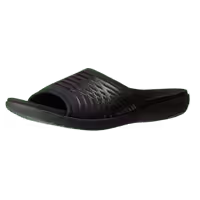
Oofos Men’s Sandals
Dockers Leather Men’s Sandals
Crocs Men’s Sandals
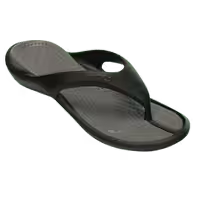
Best Men’s Orthotic Slippers:
Click the link to see the best rated Men’s orthotic slippers for home use!


Insole and Heel Problem?
Book Your Appointment or No-Obligation Consultation Today – Balance Foot & Ankle Specialist in Michigan.for
Final Thoughts from Dr. Tom Biernacki – Podiatrist, Balance Foot & Ankle Specialists
As a podiatrist, I’ve seen how the right pair of shoes can completely change a man’s quality of life. Whether you’re dealing with plantar fasciitis, flat feet, or just everyday discomfort, podiatrist-recommended men’s shoes offer the support, stability, and cushioning your feet truly need. Investing in proper footwear isn’t just about comfort—it’s about long-term foot health. If you’re unsure what’s best for your specific condition, I encourage you to reach out. At Balance Foot & Ankle Specialists here in Michigan, we’re always here to help you take the right steps—comfortably and confidently.
Best Men’s Sandals for Plantar Fasciitis
Plantar fasciitis is the single most common reason men end up in my chair after a summer in flat sandals. The mechanism is simple: an unsupported footbed lets the arch collapse on every step, which loads the plantar fascia where it inserts on the heel bone. Do that for three months and you get the classic first-step-in-the-morning heel pain. The fix is not to give up sandals — it is to wear a sandal that does the same structural job as a supportive shoe. Below are the three sandal categories I actually recommend to men with plantar fasciitis, and what separates a usable pair from a pair that will make you worse.
Across all three categories the non-negotiables are the same: a contoured footbed with a defined medial arch, a deep heel cup that keeps the fat pad under the heel bone, a midsole rigid enough that the sandal does not fold in half when you twist it, and a strap secure enough that your toes are not gripping to keep the sandal on. If a sandal rolls into a tube, it will not help your plantar fascia no matter what the marketing says.
Best Flip Flops for Men With Plantar Fasciitis
This is where men get the most confusing advice, so let me draw the line clearly. A standard drugstore flip flop is the single worst thing you can put on a plantar fasciitis foot: no arch, no heel cup, and a thong strap that forces the toes to claw with every stride. That clawing recruits the flexor tendons and adds tension straight through the fascia. When the FAQ below tells you to avoid flat flip flops, that is the product it means. A structured flip flop is a different category of object. It has a moulded EVA or cork footbed with a visible arch contour, a raised heel cup, and a thicker post that does not saw between the toes. The Kaiback Drifter Sport and the Crocs Athens covered above are built this way, which is what separates them from a flat rubber thong. The test is mechanical, not brand-based: if you can roll it up, it belongs in the trash, not on a plantar fasciitis foot.
Best Men’s Slides for Plantar Fasciitis
Slides are my preferred recovery sandal for men who are on their feet all day, because there is no toe post at all and the wide instep strap spreads pressure across the whole forefoot instead of loading one web space. The OOFOS OOahh is the one I hand out most often after a run or a long shift — the foam is deliberately soft underfoot, but the footbed is still moulded with a real arch and a real heel cup, so it unloads the fascia rather than simply cushioning the ground. Treat slides as a supplement rather than a solution: wear them around the house and after exercise, and keep a structured sandal or a proper shoe for any real walking distance.
Men’s Sandals With Removable Insoles for Orthotics
If you already wear custom orthotics, the highest-value sandal you can buy is one whose footbed lifts out, because that lets you carry your prescription correction into summer instead of abandoning it for three months. Among the sandals covered on this page, the removable-footbed candidates are the closed-toe sport styles — the Teva Hurricane and Keen Newport designs are the usual ones that accept a full-length device. Two common mistakes are worth naming: a Birkenstock cork footbed is not removable in most styles, so it functions as its own arch support and cannot be swapped for your orthotic; and a sandal like the Vionic Wave Slide already has an orthotic footbed built in, so it is a finished product rather than a carrier for your device.
Before you buy, check three things: that the footbed genuinely lifts out (many “cushioned” sandals are glued), that the straps adjust enough to regain the volume your orthotic takes up, and that the sidewalls are deep enough that the device does not slide underfoot. A full-length orthotic normally needs the sandal’s own insole removed entirely; a three-quarter device can often sit on top.
One caution I give every patient: a sandal with genuine arch support will feel strange for the first few days, exactly the way a new orthotic does. Break them in over about a week — an hour or two on day one, building up — rather than wearing them straight through a long day on your feet. If arch or heel pain is still waking you up after six weeks in properly supportive footwear, that is the point to have it looked at rather than keep experimenting on your own.
Podiatrist Tested, Dr. Biernacki’s independent shoe-review site, keeps a separate guide to sandals for plantar fasciitis, with the arch and heel-cup features that matter spelled out for each pick.
FAQ: Everything You Need to Know About Orthotics and Men’s Sandals
Can I wear orthotics with men’s sandals?
Yes! Many men’s sandals are designed with removable footbeds or built-in support to accommodate custom orthotics or over-the-counter inserts.
What are the best men’s sandals for orthotics?
Look for sandals with deep heel cups, arch support, and adjustable straps. Brands like Vionic, Birkenstock, and Aetrex are often recommended by podiatrists.
Are orthotic-friendly sandals good for plantar fasciitis?
Absolutely. Sandals with proper arch support and cushioning can help alleviate heel pain and reduce strain on the plantar fascia.
How do I know if a sandal is orthotic-compatible?
Check for features like removable insoles, contoured footbeds, and sturdy arch support. Podiatrist-recommended brands usually list this in their product description.
Can custom orthotics be trimmed to fit sandals?
Yes, many custom orthotics can be professionally adjusted to fit inside sandals, especially if the sandal design allows space and structure.

- Premium Leather Sandal: Durable leather upper delivers a rugged, warm-weather style built to handle daily wear from casual outings to light trails with ease.
- Three-Point Adjustable Fit: Front strap opens fully, instep strap adjusts from either side, and heel strap fine-tunes the hold for a secure, pressure-free fit all day.
- Designed for Relief: Cushioning and arch support help ease plantar fasciitis, diabetes, bunions, flat feet, heel pain, overpronation, and common pains every step.
- Includes premium orthotic insole with anatomical arch support for proper foot alignment, even weight distribution, and multilayered cushioning in every pair.
- Fit and Sizing: True to size with a wide toe box to accommodate your foot's natural shape comfortably.

- Men's thong sandal with premium upper materials
- Designed with leather trim
- Patterned tread provides traction across a range of surfaces
- Lightweight, flexible EVA midsole absorbs shock, reducing stress on feet, ankles, and knees
- Durable TPR outsole with patterned tread helps improve traction
As an Amazon Associate, Balance Foot and Ankle earns from qualifying purchases. Product links are affiliate links and we may earn a commission at no extra cost to you. This does not influence our clinical recommendations. Last update on 2026-09-18 / Images from Amazon Product Advertising API
Are there dress sandals that work with orthotics?
Yes, some orthopedic brands offer stylish, semi-formal sandals that still support foot health while complementing a more polished look.
Do orthotic sandals prevent foot fatigue?
Definitely. Orthotic-friendly sandals reduce pressure points, improve alignment, and offer long-lasting comfort—especially helpful if you’re on your feet all day.
Can I use over-the-counter insoles in men’s sandals?
Yes, as long as the sandal has space or a removable footbed. Gel and low-profile insoles often work best in open designs.
Related Treatment Guides
Looking for Foot-Friendly Sandals?
Our podiatrists help men find supportive sandals that protect feet while keeping them comfortable all summer long.
Clinical References
- Menz HB, Morris ME. Footwear characteristics and foot problems in older people. Gerontology. 2005;51(5):346-351.
- Buldt AK, Menz HB. Incorrectly fitted footwear, foot pain and foot disorders: a systematic search and narrative review. J Foot Ankle Res. 2018;11:43.
- Sherrington C, Menz HB. An evaluation of footwear worn at the time of fall-related hip fracture. Age Ageing. 2003;32(3):310-314.
Visit Balance Foot & Ankle — Same-Day Appointments Available
Our podiatry team serves patients throughout Michigan including Howell, Brighton, and Bloomfield Township. If you’re dealing with heel pain, ingrown toenails, or a foot injury, we have same-day appointment availability.
What sandals do podiatrists recommend for men?
Podiatrists recommend men’s sandals with three structural criteria: a contoured footbed with medial arch support (at least 3/4 inch of arch height), a deep heel cup of 14mm or more, and a rigid midsole that doesn’t fold in half. Top-rated picks: HOKA Hopara (rocker geometry + toe protection), OOFOS OOriginal (OOfoam cushion for post-activity recovery), Birkenstock Arizona in narrow/regular (cork-latex footbed with metatarsal support), and Teva Hurricane XLT2 (adjustable straps + EVA midsole) for active use.
Are arch support sandals actually worth it?
Yes — for patients with plantar fasciitis, flat feet, or metatarsalgia, arch support sandals reduce daily fascial load significantly compared to flat sandals. Studies show custom orthotics reduce plantar pressure by 25–40%; quality arch support sandals achieve 15–30% reduction without custom fabrication. The key is consistent wear throughout the day — wearing arch support sandals only during specific activities while going barefoot the rest of the day defeats the purpose. For recreational wear and around-the-house use, arch support sandals are one of the most effective tools in conservative foot pain management.
Can I wear sandals with custom orthotics?
Yes, but the sandal must have a removable footbed deep enough to accommodate your orthotic. Most quality arch support sandals (HOKA, Teva Hurricane, Keen Newport) have a removable insole that accommodates full-length custom orthotics. Birkenstock’s cork footbed is not removable in most styles, so it works as arch support itself but cannot be swapped for a custom device. For dress sandals, a full-length orthotic with a slim profile (Superfeet Carbon or Powerstep SlimTech) fits in open-toed designs that lack volume for standard orthotics.
What sandals are best for plantar fasciitis in men?
The best sandals for men with plantar fasciitis combine a deep heel cup (14–16mm) that locks the fat pad under the calcaneus, a rigid midsole, and a slight heel lift of 8–12mm to reduce tension on the plantar fascia at push-off. Top picks: OOFOS OOriginal (maximum impact absorption, recommended for post-activity recovery), HOKA Hopara (rocker geometry offloads forefoot), and Vionic Wave Slide (built-in orthotic footbed, podiatrist co-designed). Avoid completely flat sandals and unstructured flip-flops — no heel cup and uncontrolled foot motion worsen plantar fasciitis significantly.
What features should men’s sandals have for foot health?
The five structural features that matter most: (1) Contoured footbed with medial arch support — not flat; (2) Deep heel cup (12–16mm) to stabilize the calcaneus; (3) Rigid midsole — a quality sandal should not bend more than 30 degrees when flexed; (4) Adjustable straps to accommodate foot width variation and swelling; (5) A forefoot rocker or slight heel elevation to reduce forefoot load during push-off. Width is equally important — many men’s foot conditions (bunions, hammertoes, neuromas) are caused or worsened by narrow sandal lasts.
Are Birkenstocks actually good for men’s feet?
Birkenstocks are genuinely good for feet with normal or high arches — the cork-latex footbed molds to the foot shape over time, the deep heel cup is excellent (one of the best in any sandal), and the wide toe box allows proper toe splay. However, they are NOT ideal for severe flat feet, as the rigid cork arch can be uncomfortable if the arch height exceeds the foot’s natural medial arch. For plantar fasciitis, Birkenstocks help some patients and hurt others — the zero drop and firm cork bed work well for insertional PF but can aggravate non-insertional PF patients who need more heel cushion.
When should I see a podiatrist about foot pain from sandals?
See a podiatrist if: sandal-related foot pain persists more than 4 weeks after switching footwear; you develop numbness or tingling in the toes (possible nerve irritation); you notice swelling, redness, or bruising in the arch or heel; you’ve tried 2–3 arch support sandals without improvement; or you have diabetes, peripheral neuropathy, or poor circulation. Persistent arch pain in sandals despite proper support often indicates a structural issue (significant flat foot deformity, plantar fasciitis, or tarsal coalition) that requires a custom orthotic rather than OTC arch support.
Sandals cover summer — for the closed shoes we prescribe the rest of the year, organized by condition and profession, see Dr. Tom’s podiatrist-recommended shoes hub.
For a broader look beyond men’s styles, see our full podiatrist guide to the best sandals for plantar fasciitis, covering walking and all-day arch support for both men and women.
Related: Shopping for her instead? See a podiatrist’s picks for the best women’s sandals with genuine arch support.
When the right sandal is not enough
Footwear changes the load a sore heel takes, but it does not do the rehabilitation. If the pain has been going on for months, the missing piece is usually the loading work rather than another pair of shoes. Our stepwise guide to what actually treats heel pain, in order sets out what to do in the first three months and what the second-line options really offer.
A supportive sandal prevents a lot of summer foot pain, but it does not fix the underlying mechanics. If your arches are collapsing, if the first steps out of bed still hurt, or if you have flat feet that no off-the-shelf footbed seems to control, the durable answer is usually custom orthotics made from a cast of your own foot, which can be transferred between sandals and shoes.
Balance Foot & Ankle sees patients at two Michigan offices: our Howell podiatry office, serving Livingston County, and our Bloomfield Township podiatry office, serving Bloomfield Hills, Birmingham, Pontiac and the rest of Oakland County. Dr. Tom Biernacki sees patients at both. Call (810) 206-1402 to book an appointment.
Book an appointment with a podiatrist
Heel and arch pain that arrives every summer is usually the foot objecting to months of flat, unsupported wear rather than to one bad pair. If it returns each year, it is worth treating the pattern instead of replacing the sandals again. Balance Foot & Ankle sees patients at two offices — Howell in Livingston County, and Bloomfield Township in Oakland County.
Book online, 24/7: choose a real appointment time at Howell or Bloomfield Township. Prefer to speak with someone first? Call (810) 206-1402 or use the form below.

Dr. Tom Biernacki, DPM is a board-certified foot & ankle surgeon (ABFAS & ABPM) at Balance Foot & Ankle Specialists in Southeast Michigan. With over a decade of clinical experience, he specializes in heel pain, bunions, diabetic foot care, sports injuries, and minimally invasive surgery. Dr. Biernacki is a member of the APMA and ACFAS, and his patient education content on MichiganFootDoctors.com and YouTube has made him one of the most-followed foot & ankle educators on YouTube.
More questions patients ask
What should men look for in a supportive sandal?
Men's sandals recommended by podiatrists have a contoured footbed with arch support, a firm midsole (not flat), a deep heel cup, adjustable straps to secure the foot, and a non-slip sole. Avoid flat, flip-flop-style sandals with no arch support, which can worsen plantar fasciitis and flat feet.
What are the best men's sandals for plantar fasciitis?
Top podiatrist-recommended men's sandals for plantar fasciitis include Vionic (built-in orthotic footbed), HOKA Ora Recovery Slide (maximal cushioning), Birkenstock Arizona (contoured cork footbed), and OOFOS OOahh (energy-absorbing foam). All feature arch support and cushioning that reduce plantar fascia stress.
Are flip flops bad for your feet?
Yes — traditional flat flip flops provide no arch support, heel cushioning, or toe grip control, which forces the foot to work harder with every step. This can cause or worsen plantar fasciitis, Achilles tendonitis, and arch pain. Podiatrists recommend sandals with structured arch support and a firm footbed instead.
What features should men's sandals have for plantar fasciitis?
Look for: deep heel cup (≥14mm), raised arch support, rigid shank under the midfoot, adjustable straps for security, and a midsole that doesn't collapse with pressure. Avoid flat flip-flops — they increase plantar fascia stress.
Are Birkenstock sandals good for men with foot pain?
Yes. Birkenstock's contoured cork footbed with a heel cup and arch raise closely mimics custom orthotic geometry. The Arizona (open toe) and Boston (clog) are the most prescribed Birkenstock styles for plantar fasciitis and flat feet.
Are OOFOS sandals podiatrist-recommended?
OOFOS are recommended by many podiatrists for post-workout recovery and mild plantar fasciitis. The OOFOAM material absorbs more impact than EVA foam. They lack the rigid arch of a Birkenstock but excel in cushion and offloading.
When should I see a podiatrist for heel pain from sandals?
If heel pain persists more than 2 weeks despite supportive footwear, a DPM can assess for plantar fasciitis or Achilles pathology. Same-day appointments available at Balance Foot & Ankle — (810) 206-1402 — Howell & Bloomfield Township, MI.
Are arch support sandals worth it for men?
Yes — arch support sandals significantly reduce foot pain for men with plantar fasciitis, flat feet, or all-day standing demands. Look for built-in arch support (no need to remove insoles). Top picks: Vionic Tide, OOFOS Original, Birkenstock Arizona, Mephisto Match. Most patients notice less foot pain and back pain when switching from flat sandals.
Still have a question about coverage or cost? Book online and we will check your benefits before your visit: Book in Howell · Book in Bloomfield Township. Prefer to talk it through first? Call (810) 206-1402.