
![Diabetic Foot Care 101 [Diabetic Foot Pain: Podiatrist Treatment] | Balance Foot & Ankle](https://www.michiganfootdoctors.com/uploads/2021/05/diabetic-foot-care-101-diabetic-foot-pain-podiatrist-treatment.avif)

Quick answer: Podiatrist Recommended Diabetic Socks affects roughly 1 in 4 adults in our practice. Effective treatment starts with a targeted diagnosis, conservative-first treatment, and escalation only when needed. We treat this regularly at our Howell and Bloomfield Township practices. Call (810) 206-1402.
The most important clinical decision with Podiatrist Recommended Diabetic Socks isn’t which treatment to start with — it’s identifying the correct subtype. That changes everything. Call (810) 206-1402.
Quick Answer
The best diabetic socks are seamless, non-binding, moisture-wicking socks that protect numb feet from the blisters and pressure points that become diabetic ulcers. In my clinic I tell patients with peripheral neuropathy to look for four things: a true seamless toe (no ridge rubbing the toes), a non-elastic cuff that never leaves a ring mark on the calf, a wicking fiber like bamboo or merino rather than pure cotton, and light padding under the heel and ball of the foot. White or light colors help you spot drainage from a wound you may not feel. Skip firm compression socks unless your circulation has been checked — with peripheral arterial disease, compression can do harm. Change socks daily and inspect your feet each night. Concerns about a spot that isn’t healing? Call (810) 206-1402 — same-week diabetic foot checks at both offices.
Related Conditions
Medically reviewed by Dr. Tom Biernacki, DPM
Board-certified podiatric surgeon | Balance Foot & Ankle
Last reviewed: May 2026
In This Article
- More Podiatrist-Recommended Diabetic Essentials
- Explore More Podiatrist-Recommended Products
- When Should You See a Podiatrist?
- In-Office Treatment at Balance Foot & Ankle
- What is Diabetic foot?
- Symptoms and warning signs
- Conservative treatment options
- When is surgery considered?
- Recovery timeline and prevention
✅ Medically reviewed by Dr. Tom Biernacki, DPM — Board-Certified Podiatrist · Last updated April 6, 2026
Diabetic socks differ from regular socks in four critical ways: seamless toe construction eliminates friction points that cause blisters, non-binding tops prevent circulation restriction, moisture-wicking fabric prevents fungal infections, and light padding protects against pressure wounds. For patients with neuropathy who can’t feel pain, these features are essential protection.
Medicare’s Therapeutic Shoe Program may cover certain diabetic footwear. Ask your podiatrist if you qualify. Look for: seamless toe, non-binding top, moisture-wicking material, antimicrobial treatment, and light colors (so you can see blood or drainage on the sock).
Best Overall Diabetic Sock (Crew Length)
Seamless toe, non-binding top, moisture-wicking bamboo/cotton blend with antimicrobial treatment. Soft enough for daily wear by patients with sensitive diabetic feet and neuropathy.
Extremely soft, no friction seams, breathable, antimicrobial
May wear out faster than standard socks
Best Budget Diabetic Sock Multi-Pack
6-12 pair value pack with seamless toe and non-binding top. Perfect for patients who need daily sock rotation without overspending on each pair.
Great value, enough for full week rotation, comfortable
Less cushioning than premium options
Best Diabetic Ankle Sock
Ankle-height version with seamless construction and non-binding cuff. Ideal for warmer weather and patients who prefer low-cut styles.
Cooler in summer, fits all shoe types
Less calf protection than crew length
Best Diabetic Sock for Neuropathy (Extra Padded)
Extra-thick padding at ball of foot and heel for patients who cannot feel pressure due to severe neuropathy. Maximum protection against pressure point injuries.
Maximum cushion, prevents pressure wounds
Thicker sock requires roomier shoes
Best White Diabetic Sock (Drainage Detection)
White fabric allows early detection of blood or wound drainage — a key safety feature for high-risk diabetic patients and wound care protocols.
Allows early wound detection, seamless, non-binding
Shows dirt easily, requires frequent washing
More Podiatrist-Recommended Diabetic Essentials
Diabetic-Approved Walking Shoe
Orthofeet Sprint — seamless, extra-depth, designed for neuropathic feet.
Seamless Diabetic Sock

OS1st FS4 — non-binding, moisture-wicking, protects fragile diabetic skin.
Recovery Slide for Indoor Wear
HOKA Ora 3 — protects diabetic feet from barefoot injury at home.
As an Amazon Associate, Balance Foot & Ankle earns from qualifying purchases. Product recommendations are based on clinical experience; prices and availability shown above update live from Amazon.
When to See a Podiatrist
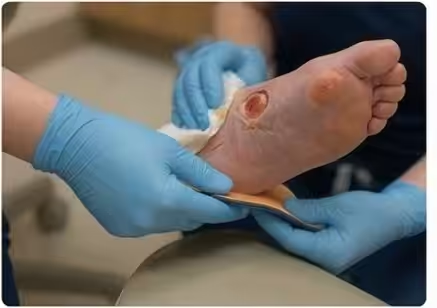
One unnoticed blister on a neuropathic foot can become a limb-threatening ulcer in under 14 days. Medicare covers diabetic shoes (A5500) and comprehensive foot exams annually for most diabetic patients with neuropathy or circulation concerns. Balance Foot & Ankle runs a dedicated diabetic limb-preservation program — vascular screening, offloading, ulcer care, and shoe fitting — all in one visit. Schedule your annual diabetic foot exam today.
Call Balance Foot & Ankle: (810) 206-1402 · Book online · Offices in Howell & Bloomfield Township
Frequently Asked Questions
What makes a sock ‘diabetic’?
Diabetic socks have seamless toes (no friction points), non-binding tops (no circulation restriction), moisture-wicking material (prevents fungal infection), and often extra padding to cushion pressure points.
Does Medicare cover diabetic socks?
Medicare’s Therapeutic Shoe Program covers certain diabetic footwear when prescribed by the physician managing your diabetes. Ask your podiatrist if you qualify — we can help at both our Howell and Bloomfield Township offices.
Can I wear compression socks if I have diabetes?
Only with your podiatrist’s approval. If you have peripheral artery disease (PAD) along with diabetes, compression can reduce blood flow and cause harm. Always get evaluated first.
How often should I replace diabetic socks?
Replace every 3-6 months or sooner if you notice wear, thinning of padding, or loss of elasticity. Worn-out socks lose their protective features.
Explore More Podiatrist-Recommended Products
When Should You See a Podiatrist?
Products work best as part of a complete plan. If symptoms persist, worsen, or you have diabetes — see a podiatrist promptly.
Blister-Prevention Socks and Products
- Darn Tough Merino Wool Socks — Lifetime Guarantee
- Balega Hidden Comfort — Ultra-Padded Running Socks
- Body Glide Anti-Blister Balm — Friction Prevention
Amazon affiliate links — we may earn a small commission at no extra cost to you.
📧 Get Dr. Tom’s Free Lab Test Guide
Discover the 5 lab tests every person over 35 should ask their doctor about — explained in plain English by a board-certified physician.
📍 Located in Michigan?
Our board-certified podiatrists treat this condition at two convenient locations. Same-day appointments often available.
Have Diabetes? Protect Your Feet With the Right Socks
Diabetic socks are a critical part of foot protection. Our podiatrists provide comprehensive diabetic foot care including footwear guidance, regular exams, and neuropathy monitoring.
Clinical References
- Bus SA, et al. IWGDF guidance on the prevention of foot ulcers in at-risk patients with diabetes. Diabetes Metab Res Rev. 2016;32(Suppl 1):16-24.
- Boulton AJ, et al. Comprehensive foot examination and risk assessment: a report of the Task Force of the Foot Care Interest Group. Diabetes Care. 2008;31(8):1679-1685.
- Veves A, et al. Reduction of foot pressures using special hosiery in the diabetic neuropathic foot. Diabetes Care. 1992;15(5):565-567.
👟 Dr. Tom Also Recommends
Podiatrist Recommended Shoes 2026: Dr. Tom’s Top Picks for Every Condition
The right footwear can make or break your recovery. Dr. Tom’s complete guide to the best shoes for plantar fasciitis, flat feet, neuropathy, bunions & more — with clinical picks for every foot type.
Dr. Tom’s overall top pick for pressure relief: PowerStep Pinnacle Maxx
Socks protect diabetic skin, but pressure is what breaks it down. For patients with early neuropathy I pair seamless socks with a supportive insole that spreads plantar pressure: the PowerStep Pinnacle Maxx is the insole I dispense first in clinic, and for lower-volume athletic shoes the CURREX RunPro is the slimmer alternative. If you have an active wound, an ulcer history, or Charcot changes, have your offloading prescribed in office rather than buying over the counter.
In-Office Treatment at Balance Foot & Ankle
If home treatment isn’t providing relief for your diabetic foot condition, our podiatry team at Balance Foot & Ankle can help with same-day evaluations and advanced in-office care.
Same-day appointments available. (810) 206-1402
Doctor Hoy’s Natural Pain Relief Gel
Natural topical pain relief I use in our clinic. Arnica + camphor formula — apply directly to the area 3–4x daily. ($20–25)
Diabetic Foot Care FAQs
Why is diabetic foot care so important?
Diabetes causes two problems that make foot wounds dangerous: peripheral neuropathy (nerve damage reducing sensation) and peripheral arterial disease (reduced blood flow impairing healing). A small blister or cut that a non-diabetic person would notice and treat can go undetected in a diabetic patient for days, become infected, and progress to osteomyelitis. Diabetic foot ulcers are the leading cause of non-traumatic lower limb amputations. A consistent foot care routine and regular podiatry visits prevent most amputations.
How often should diabetic patients see a podiatrist?
Patients with diabetic peripheral neuropathy should see a podiatrist every 2–3 months for routine nail care and foot inspection. Patients with active foot complications (ulcers, Charcot foot, severe PAD) need more frequent visits — often every 2–4 weeks until stable. Even well-controlled diabetics without neuropathy benefit from annual foot exams. Many amputations we see in consultation could have been prevented with earlier, consistent podiatric care.
What is diabetic peripheral neuropathy?
Peripheral neuropathy is nerve damage from chronically elevated blood sugar, causing numbness, tingling, burning, or loss of sensation — typically starting in the toes and progressing upward in a ‘stocking’ distribution. The dangerous aspect isn’t the pain — it’s the absence of pain. Patients with severe neuropathy don’t feel blisters, cuts, pressure sores, or early infections. A wound can reach bone before it’s noticed. Neuropathy screening with a 10-gram monofilament is part of every diabetic foot exam.
What are the warning signs of a diabetic foot problem?
Seek same-day evaluation for: any open wound or blister that isn’t healing within 1–2 weeks, redness, warmth, or swelling in any part of the foot (possible Charcot fracture or infection), a new blister or callus, any red streaking or warmth spreading up the leg (cellulitis), foot or ankle pain in a diabetic patient with neuropathy (could be Charcot without pain). Don’t wait to see if it improves — diabetic foot infections are medical emergencies.
What is the best foot cream for diabetic feet?
The goal of diabetic foot cream is restoring the skin’s moisture barrier to prevent fissuring and cracking — the entry points for infection. Look for urea-based creams (10–25% urea) or lactic acid formulations that actually penetrate thickened skin rather than sitting on the surface. AmLactin 12%, Eucerin Diabetics’ Dry Skin Relief, and Gold Bond Diabetics’ Dry Skin Relief are clinical-grade options. Avoid cream between the toes — moisture retention between toes promotes maceration and fungal infection.
Can diabetic patients get foot massages?
Light massage is generally safe for diabetic patients without active wounds, severe edema, or PAD. However, deep tissue massage or vigorous rubbing should be avoided — with neuropathy, patients can’t feel if tissue is being damaged. Foot massagers with rollers or intense vibration should be avoided entirely. If you enjoy foot massage, use gentle, light strokes with a diabetic-appropriate foot cream. Let your podiatrist know if you’re incorporating massage into your routine — we can advise based on your circulation status.
What type of socks should diabetic patients wear?
Diabetic socks: seamless (seams can create pressure sores over a neuropathic foot), non-binding at the top (circulation-restrictive socks worsen PAD), moisture-wicking (polyester/wool blend reduces bacterial environment), padded sole (cushions bony prominences). Avoid cotton socks for active patients — cotton retains moisture. Never wear socks with elastic bands that leave marks on the leg. Brands specifically designed for diabetic feet: Thorlos, Wigwam, and most major medical supply brands.
Should diabetic patients cut their own toenails?
It depends on neuropathy severity and vision. Patients with mild neuropathy and good vision can safely trim nails straight across without cutting the corners. Patients with moderate-to-severe neuropathy, poor vision, or thick nails should not self-trim — the risk of cutting the surrounding skin (which they may not feel) is too high. This is exactly what podiatry nail care visits are for. Medicare and most insurance plans cover routine foot care for diabetic patients with documented neuropathy.
What is Charcot foot and how serious is it?
Charcot neuroarthropathy is a serious diabetic complication where neuropathy allows repeated micro-fractures to occur without pain, leading to progressive bone and joint destruction and foot deformity. The classic presentation: a warm, swollen, red foot in a diabetic patient — often mistaken for cellulitis. Early Charcot (caught within weeks of onset) can be managed with a total contact cast to prevent further collapse. Late Charcot with significant arch destruction often requires reconstructive surgery. Missing the diagnosis is catastrophic — a single patient with missed Charcot can progress to a rocker-bottom deformity requiring amputation.
Does insurance cover diabetic foot care?
Medicare Part B covers routine foot care (nail trimming, callus debridement) for diabetic patients with documented peripheral neuropathy — one visit every 2 months. Most PPO and HMO plans follow similar coverage rules. Diabetic shoes and insoles are covered under Medicare’s Therapeutic Shoe Bill (one pair of shoes plus three pairs of custom insoles per year). Call us at (810) 206-1402 and we’ll verify your specific coverage before your first appointment.
Get Expert Care at Balance Foot & Ankle
Same-week appointments at our Howell and Bloomfield Township offices. Board-certified podiatric surgeons. Most insurance accepted.
Same-Week Appointments in Howell & Bloomfield Township
Three board-certified podiatric surgeons. 1,123+ five-star reviews. Most insurance accepted.
Ready for Expert Care?
Same-day appointments in Howell & Bloomfield Township, MI.
4.9★ | 1,123 Reviews | 3,000+ Surgeries
Or call: (810) 206-1402

Dr. Tom Biernacki, DPM is a board-certified foot & ankle surgeon (ABFAS & ABPM) at Balance Foot & Ankle Specialists in Southeast Michigan. With over a decade of clinical experience, he specializes in heel pain, bunions, diabetic foot care, sports injuries, and minimally invasive surgery. Dr. Biernacki is a member of the APMA and ACFAS, and his patient education content on MichiganFootDoctors.com and YouTube has made him one of the most-followed foot & ankle educators on YouTube.
More questions patients ask
What diabetic socks do podiatrists recommend?
Dr. Tom Biernacki DPM at Balance Foot & Ankle recommends: Physician's Choice Diabetic Socks (moisture-wicking, cushioned sole, non-binding top), Thorlo Diabetic Socks (thick cushioning, minimal seams), Smartwool PhD Medical Graduated Compression Socks for circulation, and Protective Knit Cushion socks (with silver for antimicrobial protection). Key features: seamless toe box (or hand-linked seams), non-binding top band (not elastic), moisture-wicking fabric, and extra cushioning at heel and ball.
What's the most important feature in diabetic socks?
The most critical feature is a non-binding, non-constrictive top band. Standard socks with tight elastic tops restrict circulation in diabetic patients with already-compromised peripheral blood flow. Second most important: seamless toe design eliminating the pressure points that can cause blisters and skin breakdown with neuropathy. Balance Foot & Ankle evaluates all patients' sock choice as part of diabetic foot exams — even the 'best' sock provides no protection if improperly fitted.
Do diabetic socks really make a difference?
Yes — research demonstrates that seamless diabetic socks reduce foot ulcer risk in diabetic patients. Pressure mapping studies show standard sock seams create concentrated force areas that, with repeated exposure over hours, can cause tissue breakdown invisible to insensate patients. Balance Foot & Ankle sees the downstream consequences of poor sock choice — diabetic ulcers requiring weeks of wound care that seamless sock use would have prevented. The investment is minimal for significant protection.
Should diabetics wear compression socks?
Diabetic patients can benefit from mild graduated compression (15–20 mmHg) for edema reduction and venous support, but only if they DON'T have peripheral arterial disease (PAD). PAD reduces arterial inflow — adding compression can critically worsen circulation. Balance Foot & Ankle performs ankle-brachial index (ABI) testing to confirm arterial sufficiency before prescribing compression for diabetic patients. Never assume compression is safe for diabetics without vascular assessment.
How many pairs of diabetic socks should a diabetic own?
Balance Foot & Ankle recommends at minimum 7–10 pairs of diabetic socks — enough to change socks when they become even slightly damp and to have fresh, dry pairs available daily. Cotton socks become wet and stay wet, creating friction and fungal risk. Rotating through quality diabetic socks ensures consistently protective coverage. Many patients wear through socks faster than they realize — annual replacement of the full collection is reasonable for daily wearers.
Still have a question about coverage or cost? Book online and we will check your benefits before your visit: Book in Howell · Book in Bloomfield Township. Prefer to talk it through first? Call (810) 206-1402.