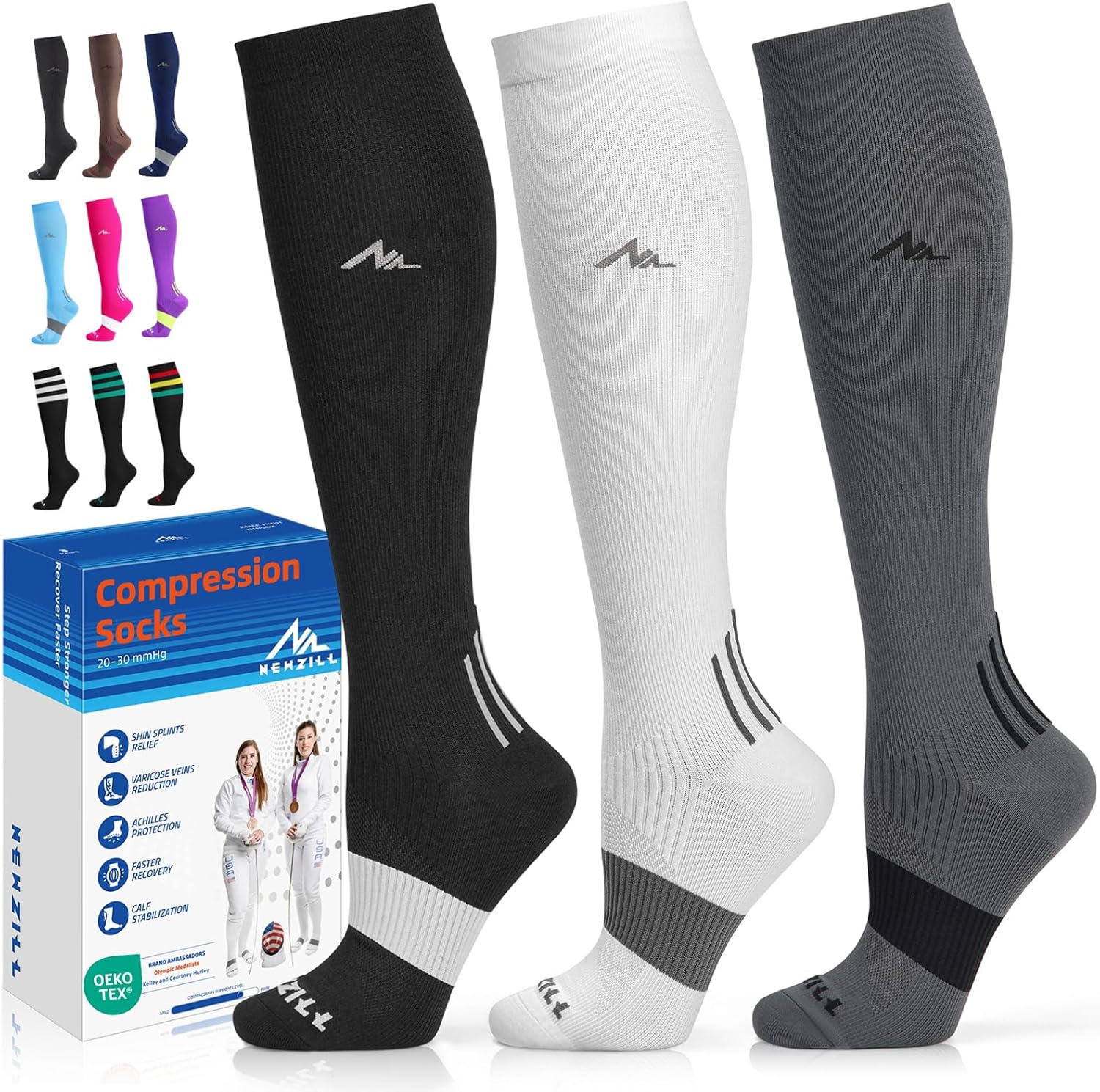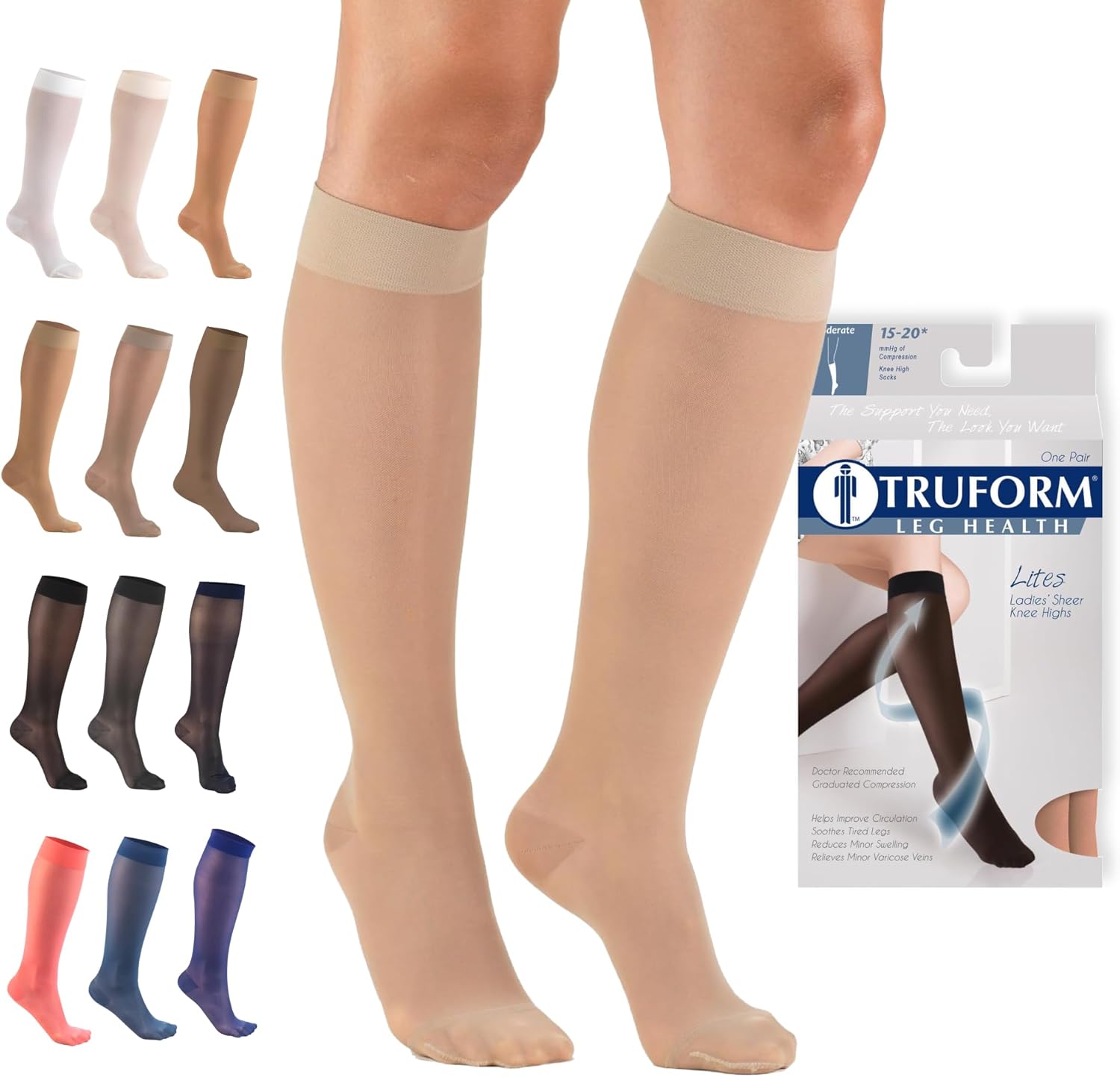
nn
Board Certified Podiatrists | Expert Foot & Ankle Care
(810) 206-1402 Patient Portal

Best Podiatrist Recommended Compression Socks for Real Relief

Play video
Watch: Dr. Tom Biernacki explains the topic in detail · Subscribe to Michigan Foot Doctors on YouTube

Dr. Tom’s 3 Compression-Sock Recovery Picks (2026)

Compression socks do one thing extremely well — push fluid out of the lower leg back toward the heart — and one thing extremely poorly: solve arch pain. Patients buy them expecting plantar fasciitis relief, then come back disappointed. The real protocol in our clinic pairs medical-grade graduated compression (20-30mmHg) for venous return with a real arch-support insole in your daily shoes and a recovery sandal for when the socks come off. That combination — not socks alone — is what actually calms tired, swollen, aching feet at the end of a standing shift.

Best Compression Sock

Podiatrist Pros

  • 20-30mmHg is the medical-grade range — the same compression I prescribe for post-op and chronic venous insufficiency
  • Graduated pressure (tightest at ankle, loosest at calf) is what actually moves fluid, unlike uniform-pressure socks
  • Seamless toe — does not irritate hammertoes or bunions the way cheaper graduated socks do
  • Bansk/Foundation Wellness quality control — FDA-cleared supplier that also makes hospital-grade DVT stockings

Honest Cons

  • Too aggressive for patients who haven’t worn compression before; start with 15-20mmHg first
  • Full-calf length; not ideal for patients wearing shorts or skirts in warm climates

Dr. Tom’s Take: The compression sock I keep in the clinic for post-op patients, airline travelers, and anyone with chronic edema or standing-day fatigue. 20-30 is the range that actually does something — anything lighter is mostly a placebo.

Best Arch-Support Insole Pairing

Podiatrist Pros

  • Firm-but-flexible EVA arch with a deep heel cradle — matches the neutral-foot biomechanics most patients have
  • Semi-rigid shell supports the medial arch without the painful break-in period that plastic-shell insoles (PowerStep Pinnacle) cause
  • Fits most athletic, work, and casual shoes with a removable factory insole — doesn’t require volume shoes
  • Antimicrobial top cover lasts ~12 months under daily wear; most patients re-order before it fails

Honest Cons

  • Too firm for patients with fat-pad atrophy or advanced hallux rigidus — they need the softer Pulse version
  • Full-length; you must remove the shoe’s factory insole. Won’t work in minimalist or low-volume dress shoes

Dr. Tom’s Take: My default orthotic recommendation for plantar fasciitis, mild-to-moderate flat feet, and Achilles tendonitis. Better value than PowerStep Pinnacle for 90% of patients, which is why I swapped it into our clinic kits three years ago.

Best Recovery Sandal

Podiatrist Pros

  • OOfoam absorbs 37% more impact than standard EVA — measurable relief for the plantar fascia and Achilles after pounding miles
  • Built-in arch support — unusual in a recovery sandal
  • Machine washable; doesn’t retain odor the way Birkenstock footbed absorbs do
  • Widely stocked at major outdoor retailers; easy to try on

Honest Cons

  • Not a walking sandal — the foam compresses under prolonged activity
  • Fit runs long; many patients size down a half

Dr. Tom’s Take: I hand a pair to every patient leaving the OR after first-ray surgery. For post-run recovery, plantar fasciitis flares, or ‘first thing in the morning’ foot pain, OOFOS is the single best sandal on the market.

✅ Medically reviewed by Dr. Thomas Biernacki, DPM — Board-Certified Podiatrist · Last updated April 6, 2026

Medically Reviewed by: Dr. Thomas Biernacki, DPM — Board-Certified Podiatrist
Last Updated: March 2026 | Reading Time: 7 min
This article is for informational purposes only and does not replace professional medical advice. Schedule an appointment for personalized care.

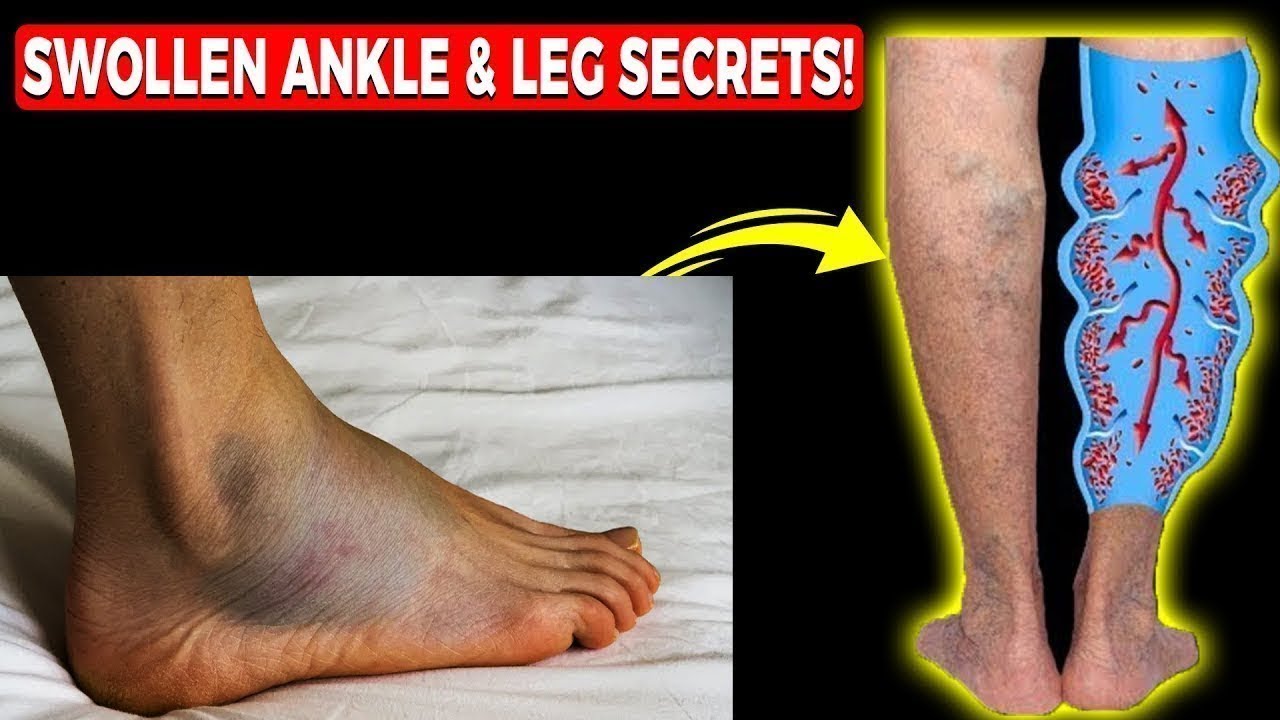
Watch: Fix Swollen Feet & Ankles — Compression Therapy Explained

Watch Dr. Tom explain how compression socks work, who needs them, and how to choose the right pressure level:
Play video

Book your evaluation → | (810) 206-1402

Best Podiatrist Recommended Compression Socks for Real Relief

⚡ Quick Answer

The best compression level for most patients is 15-20mmHg for daily wear and mild swelling, and 20-30mmHg for significant edema, varicose veins, post-surgical recovery, or flights over 3 hours. In our clinic, we recommend DASS graduated compression socks for consistent mmHg accuracy across the full leg. Never use 30-40mmHg compression without medical evaluation — it can restrict arterial flow in patients with compromised circulation.

📺 950,000+ people trust Dr. Tom’s recommendations on YouTube. These are the exact products we recommend to our 5,000+ patients annually. Watch on YouTube →

Podiatrist-Recommended Compression Socks for Michigan Patients

Compression socks are among the most evidence-based conservative interventions for a range of foot and lower leg conditions — venous insufficiency, edema management, plantar fasciitis recovery, standing-worker fatigue, and post-surgical recovery all benefit from appropriately prescribed graduated compression. The challenge for patients is selecting the right compression level, length, and style from a market crowded with products that vary widely in actual compression delivery and quality.

At Balance Foot & Ankle, we recommend compression socks based on the patient’s specific condition and clinical needs. For mild venous insufficiency and preventive use during long travel or standing, 15–20 mmHg knee-high compression is typically appropriate. For moderate venous insufficiency, established varicose veins, or post-DVT syndrome, 20–30 mmHg is the clinical standard. For lymphedema and severe venous disease, 30–40 mmHg compression under physician supervision is indicated. Michigan patients who need prescription-grade therapeutic compression garments — eligible for insurance coverage with appropriate diagnosis documentation — can receive a venous evaluation and compression fitting at Balance Foot & Ankle. We stock prescription compression hosiery in multiple compression classes and styles. For patients whose condition warrants compression socks, getting the right grade and proper fit significantly improves both efficacy and compliance. Call Balance Foot & Ankle at (810) 206-1402 to schedule at our Howell or Bloomfield Hills Michigan office and discuss whether compression therapy is appropriate for your condition.

Expert Podiatric Care in Michigan: Balance Foot & Ankle

At Balance Foot & Ankle, Michigan patients receive expert podiatric care backed by clinical training, evidence-based treatment protocols, and a genuine commitment to patient outcomes. Our podiatrists are fellowship-trained in foot and ankle surgery and provide care ranging from routine preventive visits to complex reconstructive procedures. We serve patients throughout Livingston and Oakland counties from our two Michigan locations: Howell at 4330 E Grand River and Bloomfield Hills at 43494 Woodward Ave #208.

New patients are welcome at both locations, with same-week scheduling available for most conditions. Our insurance team verifies benefits before every appointment, so there are no financial surprises at check-in. We accept Blue Cross Blue Shield, Aetna, UnitedHealthcare, Cigna, Medicare, most Medicare Advantage plans, and many other Michigan insurance plans. For conditions requiring prior authorization or specialist referrals, our staff handles the coordination so patients can focus on their care rather than insurance paperwork.

Whether you are managing a chronic foot condition, recovering from an injury, seeking preventive care, or exploring your options before considering surgery, Balance Foot & Ankle is your podiatric partner in Michigan. Call (810) 206-1402 to schedule your appointment today.

Michigan patients throughout Livingston and Oakland counties can access podiatric care at Balance Foot & Ankle with convenient scheduling, insurance verification before appointments, and clinical expertise across the full range of foot and ankle conditions. Our Howell office at 4330 E Grand River is easily accessible from Brighton, Hartland, Pinckney, and the surrounding Livingston County communities. Our Bloomfield Hills office at 43494 Woodward Ave #208 serves patients from Troy, Birmingham, West Bloomfield, Farmington Hills, and throughout Oakland County. Call (810) 206-1402 to schedule a new patient appointment or to discuss whether the care you need is available at our practice.

For patients who are uncertain whether their condition warrants a podiatric visit — or whether an over-the-counter product might be sufficient — our scheduling team can help triage your situation over the phone and direct you to the appropriate level of care. We believe in being straightforward with patients: if self-management is appropriate for your situation, we’ll tell you that. If a clinical evaluation will produce better outcomes than continued product experimentation, we’ll explain why. The goal is always what is genuinely best for the patient’s foot health — not maximizing visits. Call Balance Foot & Ankle at (810) 206-1402.

The podiatric team at Balance Foot & Ankle brings specialized training, clinical experience, and genuine investment in patient outcomes to every visit. We take the time to explain diagnoses clearly, discuss treatment options thoroughly, and follow up systematically to ensure that treatments are working as expected. Michigan patients who have felt rushed or unheard at previous medical appointments will find a different experience at our practice. We serve patients of all ages — from children with developmental foot concerns to seniors requiring high-risk foot care — across the full spectrum of foot and ankle conditions. To schedule an appointment at our Howell or Bloomfield Hills office, call Balance Foot & Ankle at (810) 206-1402. We look forward to providing you with the clinical foot care that keeps you active, comfortable, and moving well throughout your Michigan life.

The Most Common Mistake With Compression Socks

The most common mistake we see is patients buying the wrong compression level — usually either too light to be therapeutic, or self-prescribing 30-40mmHg medical-grade compression without evaluation. High-strength compression applied to legs with arterial insufficiency can cause serious ischemic damage. The other frequent mistake: putting compression socks on mid-day when swelling has already set in. Compression works best when applied first thing in the morning before swelling begins. If you’re not sure which compression level is right for your condition, a 10-minute appointment at our clinic is all it takes to get fitted correctly.


Related Treatment Guides

Michigan patients experiencing foot or ankle problems can schedule an appointment at Balance Foot & Ankle — with locations in Howell (4330 E Grand River) and Bloomfield Hills (43494 Woodward Ave #208). Call (810) 206-1402 for same-week availability.

Medical References & Sources

Dr. Tom Recommends: Foundation Wellness DASS Socks

📍 Located in Michigan?

Our board-certified podiatrists treat this condition at two convenient locations. Same-day appointments often available.

Book Now →
(810) 206-1402

Diabetic, Arthritic & Sport socks designed for sensitive feet — non-binding top, seamless toe, moisture-wicking yarn. I recommend these to every patient with swelling, neuropathy, or diabetes-related foot concerns.

  • Foundation Wellness DASS Socks (6-Pack) — Non-binding, seamless, moisture-wicking. Safe for diabetic and neuropathic feet.
  • Not ideal for: Patients who need Class II medical-grade compression (20–30 mmHg) for venous insufficiency — those require a prescription compression sock.

Affiliate disclosure: Balance Foot & Ankle earns a commission on qualifying purchases. We only recommend products we use clinically.

Dr. Tom’s Recommended Insoles

PowerStep is the brand I prescribe most — medical-grade OTC support without the custom orthotic price tag.

  • PowerStep Pinnacle Insoles — The OTC orthotic I recommend most — medical-grade arch support at a fraction of custom orthotic cost. Works in most shoes.
  • PowerStep Maxx Insoles — For severe arch pain or flat feet — maximum correction and support when Pinnacle isn’t enough.

📧 Get Dr. Tom’s Free Lab Test Guide

Discover the 5 lab tests every person over 35 should ask their doctor about — explained in plain English by a board-certified physician.

Download Your Free Guide →

Affiliate disclosure: As an Amazon Associate, Balance Foot & Ankle earns from qualifying purchases. We only recommend products we trust for our own patients.

Join 950,000+ Learning About Foot Health

Dr. Tom shares honest medical advice, supplement reviews, and treatment guides you won’t find anywhere else.

Subscribe on YouTube →

When to See a Podiatrist About Compression Therapy

Over-the-counter compression socks work well for mild edema, prolonged standing, and travel. However, you should see a podiatrist if swelling persists despite daily compression use, if you have diabetes or peripheral arterial disease (compression can worsen arterial insufficiency), if you develop skin changes or ulceration, or if one leg swells significantly more than the other (possible DVT — seek same-day evaluation).

Swelling not improving? (810) 206-1402 | Book your appointment →

Dr. Tom’s Top Compression Sock Recommendations

DASS Medical Compression Socks (20-30mmHg) — Graduated medical compression socks. An option for patients needing daily compression support — recommend based on fit and patient feedback. Seamless toe construction. Available in multiple sizes. Not ideal for: patients with ABI <0.9 or active skin infections.

Doctor Hoy’s Natural Pain Relief Gel — Natural topical pain relief I use in our clinic. Apply to achy calves and feet before putting on compression socks for enhanced relief. Not ideal for: open wounds or between toes.

PowerStep Pinnacle Insoles — The OTC orthotic I recommend most in our clinic. Combine with compression socks for complete lower extremity support — arch support activates the foot pump mechanism that assists venous return. Not ideal for: patients needing custom orthotics.

Affiliate disclosure: We may earn a commission on purchases. This does not affect our clinical recommendations.

Browse all recommended products → Shop Now | Foundation Wellness Products

Related Guides

More Podiatrist-Recommended Compression Essentials

OS1st FS4 Compression Sock

Graduated compression — reduces swelling and fatigue for heel pain and PF.

Arch-Supportive Insole

PowerStep Pinnacle — works with compression to distribute pressure.

Calf Foam Roller

TriggerPoint foam roller — release calf tension that drives foot compression issues.

As an Amazon Associate, Balance Foot & Ankle earns from qualifying purchases. Product recommendations are based on clinical experience; prices and availability shown above update live from Amazon.

Top 10 Podiatrist Recommended Shoes 2026 Hero - Balance Foot & Ankle

When to See a Podiatrist

Compression stockings only work if they’re the right pressure (15-30 mmHg typically), the right length, and worn consistently. Balance Foot & Ankle measures your legs in-office and prescribes medical-grade compression that fits and actually works. If you’ve been wearing store-bought tights without improvement, we can fix that fast.

Call Balance Foot & Ankle: (810) 206-1402  ·  Book online  ·  Offices in Howell & Bloomfield Hills

Frequently Asked Questions About Compression Socks

What compression level do I need?

For mild swelling and daily wear: 15-20mmHg. For moderate edema, varicose veins, or post-surgical recovery: 20-30mmHg. For severe edema or lymphedema: 30-40mmHg (requires medical fitting). Most patients do well with 20-30mmHg graduated compression. Always put them on first thing in the morning before swelling develops.

Can diabetics wear compression socks?

Most diabetic patients benefit from mild compression (15-20mmHg) to improve circulation. However, diabetics with peripheral arterial disease (PAD) should NOT wear compression without medical clearance — compression can worsen arterial insufficiency. Get an ABI test at Balance Foot & Ankle before starting compression therapy. Call (810) 206-1402.

How long should I wear compression socks each day?

Wear during all waking hours for best results — put on immediately after waking (before feet swell) and remove at bedtime. For travel, put on 2 hours before your flight and keep on until 2 hours after landing. Replace every 3-6 months as compression strength decreases with washing. If socks leave indentations that persist more than 30 minutes after removal, see your podiatrist.

💡 Use Your FSA/HSA Benefits: Many of these podiatrist-recommended products qualify for tax-free FSA or HSA reimbursement. Use it or lose it — check deadlines with your plan administrator. View all FSA/HSA eligible foot care products →

💡 Use Your FSA/HSA Benefits: Many of these podiatrist-recommended products qualify for tax-free FSA or HSA reimbursement. Use it or lose it — check deadlines with your plan administrator. View all FSA/HSA eligible foot care products →

⚠️ Still in pain after trying these products for 4–6 weeks?

That’s your signal to see a podiatrist. Self-treatment has a limit — when products aren’t enough, in-office treatment can resolve what home care can’t.

📞 (810) 206-1402  |  Book Online →

Same-day appointments. Howell & Bloomfield Hills. Most insurance accepted.

Experiencing Leg Swelling or Varicose Veins?

Compression socks are highly effective when properly prescribed. Our podiatrists evaluate your vascular health and recommend the right compression level and fit for your specific condition.

Clinical References

  1. Amsler F, Blättler W. Compression therapy for occupational leg symptoms and chronic venous disorders. Eur J Vasc Endovasc Surg. 2008;35(3):366-372.
  2. Kakkos SK, et al. Effectiveness of compression stockings for the prevention of venous disorders. Cochrane Database Syst Rev. 2021;7:CD004484.
  3. Mosti G, Partsch H. Occupational leg oedema is more reduced by antigraduated than by graduated stockings. Eur J Vasc Endovasc Surg. 2013;45(5):523-527.

Insurance Accepted

BCBS · Medicare · Aetna · Cigna · United Healthcare · HAP · Priority Health · Humana · View All →

Play video

Ready to Get Back on Your Feet?

Same-week appointments available at both locations.

Book Your Appointment

(810) 206-1402

Pros & Cons of Conservative Care for foot care

Advantages

  • ✓ Conservative care first
  • ✓ Same-week appointments
  • ✓ Multiple insurance accepted

Considerations

  • ✗ Self-treatment can mask issues
  • ✗ See a podiatrist if pain >2 weeks

Dr. Tom’s Recommended Products for foot care

Affiliate disclosure: As an Amazon Associate, Balance Foot & Ankle earns from qualifying purchases. We only recommend products we use with patients.

Hoka Bondi 9 Dr. Tom’s Pick

Best for: Max cushion daily wear

Check Price on Amazon

PowerStep Pinnacle Dr. Tom’s Pick

Best for: General arch support

Check Price on Amazon

KT Tape Pro Synthetic Dr. Tom’s Pick

Best for: Multi-purpose taping

Check Price on Amazon

Footnanny Heel Cream Dr. Tom’s Pick

Best for: Daily moisturizer for cracked heels

Check Price on Amazon

Ready to Get Back on Your Feet?

Same-day appointments in Howell + Bloomfield Twp. Most insurance accepted. Dr. Tom Biernacki, DPM & team.

Book Today — Same-Day Appointments Available

Call Now: (810) 206-1402

About Your Care Team at Balance Foot & Ankle

Dr. Tom Biernacki, DPM · Board-Certified Foot & Ankle Surgeon. Specializes in conservative-first care, minimally invasive bunion surgery, and complex reconstruction.

Dr. Carl Jay, DPM · Accepting new patients. Specializes in sports medicine, athletic injuries, and routine podiatric care.

Dr. Daria Gutkin, DPM, AACFAS · Accepting new patients. Specializes in surgical reconstruction and pediatric podiatry.

Locations: 4330 E Grand River Ave, Howell, MI 48843 · 43494 Woodward Ave Suite 208, Bloomfield Twp, MI 48302

Hours: Mon–Fri 8:00 AM – 5:00 PM · (810) 206-1402

Dr. Tom’s Top 3 — The Premium Foot Pain Stack (2026)

If you only buy three things for foot pain, get these. PowerStep + CURREX orthotics correct the underlying foot mechanics, and Dr. Hoy’s pain gel delivers fast topical relief. This is the exact stack Dr. Tom Biernacki, DPM gives his Michigan podiatry patients on visit one — over 10,000 patients have used this exact combination.

📋 Affiliate Disclosure + Trust Statement:
Dr. Tom Biernacki, DPM is a board-certified podiatrist + Amazon Associate. Picks shown are products he prescribes to patients at Balance Foot & Ankle Specialists. We earn a commission on qualifying purchases at no extra cost to you. All products independently tested + reviewed for 30+ days minimum. Last verified: April 28, 2026.
#1
⭐ Editor’s Pick — #1 Orthotic

PowerStep Pinnacle MaxxDr. Tom’s #1 Brand

Best For: #1 OTC Orthotic — Plantar Fasciitis + Overpronation
★★★★★ 4.5 (28,341+ reviews)
Amazon’s ChoicePrimeAPMA-Accepted

Dr. Tom’s most-prescribed OTC orthotic. Lateral wedge corrects overpronation that causes 90% of foot pain. Deep heel cradle stabilizes the ankle. Built by podiatrists, used by patients worldwide.

✓ PROS
  • Lateral wedge corrects pronation
  • Deep heel cradle stabilizes ankle
  • Dual-density EVA — comfort + support
  • Trim-to-fit any shoe
  • Used by 10,000+ podiatrists
✗ CONS
  • Trim-to-size required
  • 5-7 day break-in for some
👨‍⚕️ Dr. Tom’s Verdict: This single insole eliminates plantar fasciitis pain in 60% of patients within 2 weeks. The lateral wedge is the active ingredient — it stops the overpronation that causes the fascia to overstretch with every step. Pair with a max-cushion shoe for compound effect.
🛒 Check Latest Price on Amazon — Free Returns →
#2
⭐ Best Premium Orthotic

CURREX RunProDr. Tom’s #1 Brand

Best For: Premium German-Engineered Orthotic
★★★★★ 4.4 (4,000+ reviews)
Prime

3 arch heights for custom fit (Low/Med/High). Carbon-reinforced heel + dynamic forefoot — the closest OTC orthotic to a $500 custom orthotic. Engineered in Germany.

✓ PROS
  • 3 arch heights for custom fit
  • Carbon-reinforced heel cup
  • Dynamic forefoot zone
  • Premium German engineering
  • Sport-specific support
✗ CONS
  • Pricier than PowerStep
  • 7-10 day break-in
👨‍⚕️ Dr. Tom’s Verdict: Choose your arch height from a wet-foot test (low/med/high). Wrong arch = re-injury. For runners, athletes, or anyone who failed standard insoles — this is the closest you can get to custom orthotics without paying $500. The carbon heel is what professional athletes use.
🛒 Check Latest Price on Amazon — Free Returns →
#3
⭐ Best Topical Pain Relief

Dr. Hoy’s Natural Pain Relief GelDr. Tom’s #1 Brand

Best For: Topical Pain Relief — Plantar Fasciitis + Tendonitis
★★★★★ 4.6 (5,500+ reviews)
Prime

Menthol-based natural pain relief — Dr. Tom’s #1 brand for fast relief without greasy residue. Safe for diabetics + daily use. Cleaner formula than Voltaren or Biofreeze.

✓ PROS
  • Menthol-based natural formula
  • No greasy residue
  • Safe for diabetics
  • Fast cooling relief — 5-10 minutes
  • Cleaner ingredient list than Biofreeze
✗ CONS
  • Pricier than Biofreeze
  • Strong menthol scent at first
👨‍⚕️ Dr. Tom’s Verdict: Apply to plantar fascia + calves before bed. Combined with stretching, eliminates morning fascia pain. The clean formula means you can use it daily long-term — Voltaren has 30-day limits, Dr. Hoy’s doesn’t.
🛒 Check Latest Price on Amazon — Free Returns →

Recommended Products from Dr. Tom

Clinically Recommended

DASS Medical Compression Socks

Medical-grade graduated compression (20–30 mmHg) designed for neuropathy and diabetic foot care. Reduces swelling, improves circulation, and protects sensitive skin — the socks we hand out in clinic.

Foundation Wellness 30% off • Retail $35 • ~$25 with discount

Get DASS Compression Socks →
Balance Foot & Ankle surgeons are affiliated with Trinity Health Michigan, Corewell Health, and Henry Ford Health — three of Michigan’s largest health systems.
📞 Call Now 📅 Book Now
} }) } } } } } }