
The most important clinical decision with Sesamoiditis Treatment Big Toe Ball Foot isn't which treatment to start with — it's which subtype or underlying cause you actually have. Our podiatrists regularly see patients who've been treated for months for the wrong diagnosis. The correct identification changes the entire treatment path. Call (810) 206-1402 — Dr. Tom evaluates this condition at both Howell and Bloomfield Township locations.

Sesamoiditis treatment combines ice, taping, stiff-soled shoes, and metatarsal pads — and the right combination can clear the pain in 4-6 weeks while the wrong combination drags it out for months.
You’ve come to the right podiatry team. Dr. Tom Biernacki, DPM, FACFAS — board-certified foot & ankle surgeon with 3,000+ surgeries — explains exactly what sesamoiditis treatment means and what works. Call (810) 206-1402 for same-day appointment at Howell or Bloomfield Township.
Quick answer: Treatment for sesamoiditis treatment big toe ball foot follows a stepwise approach: 1) conservative care first (rest, ice, supportive footwear, OTC anti-inflammatories), 2) physical therapy and targeted exercises, 3) in-office treatments (injections, custom orthotics) if conservative fails at 4-6 weeks, 4) surgery for refractory cases. Most patients resolve at step 1 or 2. Call (810) 206-1402.
Medically reviewed by Dr. Tom Biernacki, DPM · Board-Certified Podiatric Surgeon · Last reviewed: April 2026 · Editorial Policy
The most important clinical decision with Sesamoiditis Treatment Big Toe Ball Foot isn’t which treatment to start with — it’s identifying the correct subtype. That changes everything. Call (810) 206-1402.
Quick Answer
Medically reviewed by Dr. Tom Biernacki, DPM
Board-certified podiatric surgeon | Balance Foot & Ankle
Last reviewed: May 2026
Sesamoiditis: Causes, Symptoms, and Treatment for Ball-of-Fo relates to toe deformity — typically caused by imbalanced muscles + footwear. Most patients improve in depends on severity with conservative care. Same-week appointments in Howell + Bloomfield Township: (810) 206-1402.
Medically reviewed by Dr. Tom Biernacki, DPM — Board-Certified Podiatric Surgeon — Balance Foot & Ankle, Howell & Bloomfield Township, MI. Last updated April 2026.
▶ Watch
👟 Dr. Tom Also Recommends
Podiatrist Recommended Shoes 2026: Dr. Tom’s Top Picks for Every Condition
The right footwear can make or break your recovery. Dr. Tom’s complete guide to the best shoes for plantar fasciitis, flat feet, neuropathy, bunions & more — with clinical picks for every foot type.
Medically Reviewed by Dr. Tom Biernacki, DPM — Board-Certified Podiatrist, Balance Foot & Ankle Specialists, Michigan. Last updated April 2026.
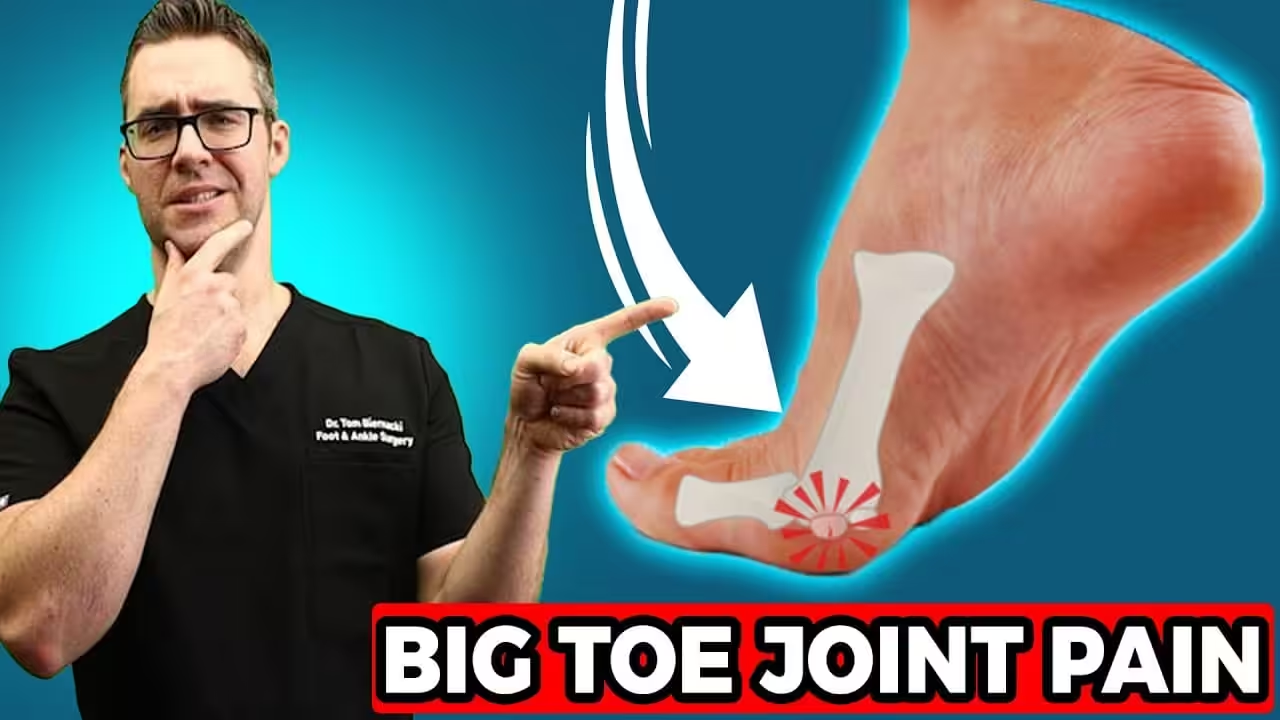
Sesamoiditis is inflammation of the sesamoid bones — two small, pea-sized bones embedded in the flexor hallucis brevis tendon under the big toe joint. These bones act as a pulley for the tendon and absorb the significant forces generated during push-off. When overloaded, they become inflamed, causing persistent pain in the ball of the foot near the big toe.
What Causes Sesamoiditis?
Sesamoiditis typically develops from repetitive overloading of the forefoot. Common causes include:
- Dancing and ballet — en pointe positions place extreme load on the sesamoids
- Running, particularly on hard surfaces — forefoot runners and sprinters are especially vulnerable
- High heels — shifts body weight onto the forefoot chronically
- High-arched (cavus) foot — creates a rigid foot that concentrates pressure under the ball of foot
- Sudden increase in activity — starting a new sport or training program without gradual progression
Sesamoiditis Symptoms
The hallmark of sesamoiditis is a gradual onset of pain directly under the big toe joint. Unlike a stress fracture (which causes sudden, sharp pain), sesamoiditis typically develops slowly over days to weeks. Key symptoms include:
- Dull, aching pain under the big toe that worsens with activity
- Swelling and tenderness directly over the sesamoid bones
- Pain with walking barefoot or in thin-soled shoes
- Difficulty bending the big toe downward (flexion)
- Occasional bruising around the big toe joint
Sesamoiditis vs. Sesamoid Fracture: How to Tell the Difference
Both conditions cause very similar pain, but the treatment differs significantly. A sesamoid stress fracture causes more acute, localized pain that intensifies with direct palpation. Sesamoiditis tends to be more diffuse and gradual. An X-ray is usually inconclusive (sesamoids can appear bipartite in 10-30% of normal people); MRI or bone scan provides definitive diagnosis. This distinction is critical — do not simply assume it’s “just inflammation” without imaging.
Treatment Options for Sesamoiditis
Conservative (First-Line) Treatment
- Rest and activity modification — avoiding activities that load the forefoot (4–6 weeks minimum)
- Padding and offloading orthotics — custom orthotics with a sesamoid cutout redistribute pressure away from the painful bones; this is one of the most effective interventions
- Low-heeled, stiff-soled footwear — reduces flexion at the first MTP joint
- Anti-inflammatory medications — oral NSAIDs for acute flares
- Corticosteroid injection — targeted injection into the sesamoid apparatus can provide significant relief when other conservative measures fail
Advanced Treatment
- PRP (Platelet-Rich Plasma) injection — an excellent option for chronic sesamoiditis that has not responded to cortisone; promotes regeneration of the inflamed tendon-bone interface
- Extracorporeal Shockwave Therapy (ESWT) — non-invasive energy delivery promotes healing in chronic cases
- Sesamoidectomy — surgical removal of the affected sesamoid bone is reserved for refractory cases and typically yields excellent outcomes, though recovery is 6–8 weeks
How Long Does Sesamoiditis Take to Heal?
With proper treatment, mild to moderate sesamoiditis typically resolves in 6–8 weeks. Severe cases or those involving a sesamoid stress fracture may require 3–6 months of recovery. The key is accurate diagnosis and strict offloading — athletes who try to “push through” sesamoiditis often progress to a complete stress fracture, significantly extending recovery time.
Ball-of-Foot Pain That Won’t Quit?
Dr. Biernacki at Balance Foot & Ankle diagnoses sesamoiditis and sesamoid fractures with on-site imaging and delivers targeted treatment. Serving Howell, Brighton, and Southeast Michigan.
or call (810) 206-1402
Ready to Get Expert Foot Care?
Dr. Biernacki and our team at Balance Foot & Ankle are accepting new patients in Howell and Bloomfield Township, MI. Most insurances accepted.
or call (810) 206-1402
Top Walking Shoes for Foot Health
- New Balance 928v3 — Therapeutic/Diabetic Walking Shoe
- Brooks Addiction Walker — Motion Control
- New Balance 840v5 — Everyday Walking
📧 Get Dr. Tom’s Free Lab Test Guide
Discover the 5 lab tests every person over 35 should ask their doctor about — explained in plain English by a board-certified physician.
Amazon affiliate links — we may earn a small commission at no extra cost to you.
📍 Located in Michigan?
Our board-certified podiatrists treat this condition at two convenient locations. Same-day appointments often available.
Insurance Accepted
BCBS · Medicare · Aetna · Cigna · United Healthcare · HAP · Priority Health · Humana · View All →
Howell Office
4330 E Grand River Ave
Howell, MI 48843
Get Directions →
Bloomfield Township Office
43494 Woodward Ave, #208
Bloomfield Township, MI 48302
Get Directions →
Your Board-Certified Podiatrists



Ready to Get Back on Your Feet?
Same-week appointments available at both locations.
More Podiatrist-Recommended Foot Health Essentials
Hoka Clifton 10

Watch: BEST Sesamoiditis Treatment [Sesamoid Bone Pain & Fracture FIX] — MichiganFootDoctors YouTube
Max-cushion everyday shoe — podiatrist favorite for walking and running.

OOFOS Recovery Slide

Impact-absorbing recovery sandal — wear after long days on your feet.
As an Amazon Associate, Balance Foot & Ankle earns from qualifying purchases. Product recommendations are based on clinical experience; prices and availability shown above update live from Amazon.
When to See a Podiatrist
If foot or ankle pain has been bothering you for more than a few weeks, home care alone may not be enough. Balance Foot & Ankle offers same-week appointments at our Howell and Bloomfield Township clinics — no referral needed in most cases. Bring your current shoes and a short list of symptoms and we’ll build you a treatment plan in one visit.
Call Balance Foot & Ankle: (810) 206-1402 · Book online · Offices in Howell & Bloomfield Township
Differential Diagnosis: What Else Could It Be?
Not every case of sesamoiditis is straightforward. In our clinic we routinely rule out three look-alike conditions before confirming the diagnosis. If your symptoms don’t match the classic presentation, one of these may explain the pain — which is why physical exam matters more than self-diagnosis.
| Condition | How It Differs |
|---|---|
| Sesamoid stress fracture | Acute or gradually worsening sharp pain, tender directly over one sesamoid, positive findings on MRI. |
| Hallux rigidus | Stiff, painful big toe joint with limited dorsiflexion — pain is AT the joint, not UNDER the ball. |
| Turf toe (plantar plate injury) | Acute hyperextension mechanism, diffuse swelling of the 1st MTP, positive 1st MTP drawer test. |
Red Flags — When to See a Podiatrist Now
Seek same-day evaluation at Balance Foot & Ankle if you notice any of the following:
- Sudden sharp onset (possible fracture)
- Bruising or swelling under the big toe
- Pain at rest or at night
- Inability to push off during gait
Call (810) 206-1402 or request an appointment. Our Howell and Bloomfield Township offices reserve same-day slots for urgent foot and ankle issues.
In Our Clinic: What We See
Clinical perspective from Dr. Tom Biernacki, DPM — Balance Foot & Ankle, Howell & Bloomfield Township, MI:
In our Balance Foot & Ankle clinic, sesamoiditis patients are usually dancers, runners, or women who have spent significant time in heels. They describe pain directly UNDER the big toe joint — not at the joint (that’s hallux rigidus) — which worsens with push-off. On exam we palpate each sesamoid separately (tibial and fibular) and assess for sensitivity. We always get X-rays to look for sesamoid fracture or bipartite sesamoid (a normal variant). Treatment uses a dancer’s pad to offload the sesamoid, stiff-soled footwear to reduce push-off stress, and activity modification.
Watch: Dr. Tom explains
Podiatrist-recommended products
As an Amazon Associate, Dr. Tom earns from qualifying purchases.
Dancer’s pad style offloading is the gold standard for sesamoiditis – place proximal to the sesamoid bones.
Rigid arch support reduces forefoot pressure during push-off – critical for sesamoiditis recovery.
Targeted cold therapy on the sesamoid area controls flares after weight-bearing activity.
Menthol-arnica safer than NSAIDs for long-term sesamoiditis – often a 3-6 month healing process.
Related resources
Ready to solve this? Book today.
Same-week appointments · Howell & Bloomfield Township · 4.9★ (1,123+ reviews)
Pros & Cons of Conservative Care for foot care
Advantages
- ✓ Conservative care first
- ✓ Same-week appointments
- ✓ Multiple insurance accepted
Considerations
- ✗ Self-treatment can mask issues
- ✗ See a podiatrist if pain >2 weeks
Dr. Tom’s Recommended Products for foot care
Affiliate disclosure: As an Amazon Associate, Balance Foot & Ankle earns from qualifying purchases. We only recommend products we use with patients.
Footnanny Heel Cream Dr. Tom’s Pick
Best for: Daily moisturizer for cracked heels
Ready to Get Back on Your Feet?
Same-day appointments in Howell + Bloomfield Township. Most insurance accepted. Dr. Tom Biernacki, DPM & team.
Book Today — Same-Day Appointments Available
Call Now: (810) 206-1402
About Your Care Team at Balance Foot & Ankle
Dr. Tom Biernacki, DPM · Board-Certified Foot & Ankle Surgeon. Specializes in conservative-first care, minimally invasive bunion surgery, and complex reconstruction.
Dr. Carl Jay, DPM · Accepting new patients. Specializes in sports medicine, athletic injuries, and routine podiatric care.
Dr. Daria Gutkin, DPM, AACFAS · Accepting new patients. Specializes in surgical reconstruction and pediatric podiatry.
Locations: 4330 E Grand River Ave, Howell, MI 48843 · 43494 Woodward Ave Suite 208, Bloomfield Township, MI 48302
Hours: Mon–Fri 8:00 AM – 5:00 PM · (810) 206-1402
Frequently Asked Questions
How long does treatment take to work?
Most patients see improvement in 4-8 weeks with consistent conservative care. Persistent symptoms after 8 weeks need imaging and escalation.
When is surgery needed?
Surgery is reserved for cases that fail 3-6 months of conservative care, structural deformities, or fractures requiring stabilization.
Is this covered by insurance?
Most diagnostic visits and conservative treatments are covered by Medicare and major insurers. Custom orthotics often require diabetic or post-surgical justification.
In-Office Treatment at Balance Foot & Ankle
If home treatment isn’t providing relief for your sesamoiditis, our podiatry team at Balance Foot & Ankle can help with same-day evaluations and advanced in-office care.
Ready to Get Relief?
Same-day appointments available in Howell & Bloomfield Township, MI
4.9★ | 1,123 Reviews | 3,000+ Surgeries
Or call: (810) 206-1402

Dr. Tom Biernacki, DPM is a board-certified foot & ankle surgeon (ABFAS & ABPM) at Balance Foot & Ankle Specialists in Southeast Michigan. With over a decade of clinical experience, he specializes in heel pain, bunions, diabetic foot care, sports injuries, and minimally invasive surgery. Dr. Biernacki is a member of the APMA and ACFAS, and his patient education content on MichiganFootDoctors.com and YouTube has made him one of the most-followed foot & ankle educators on YouTube.