
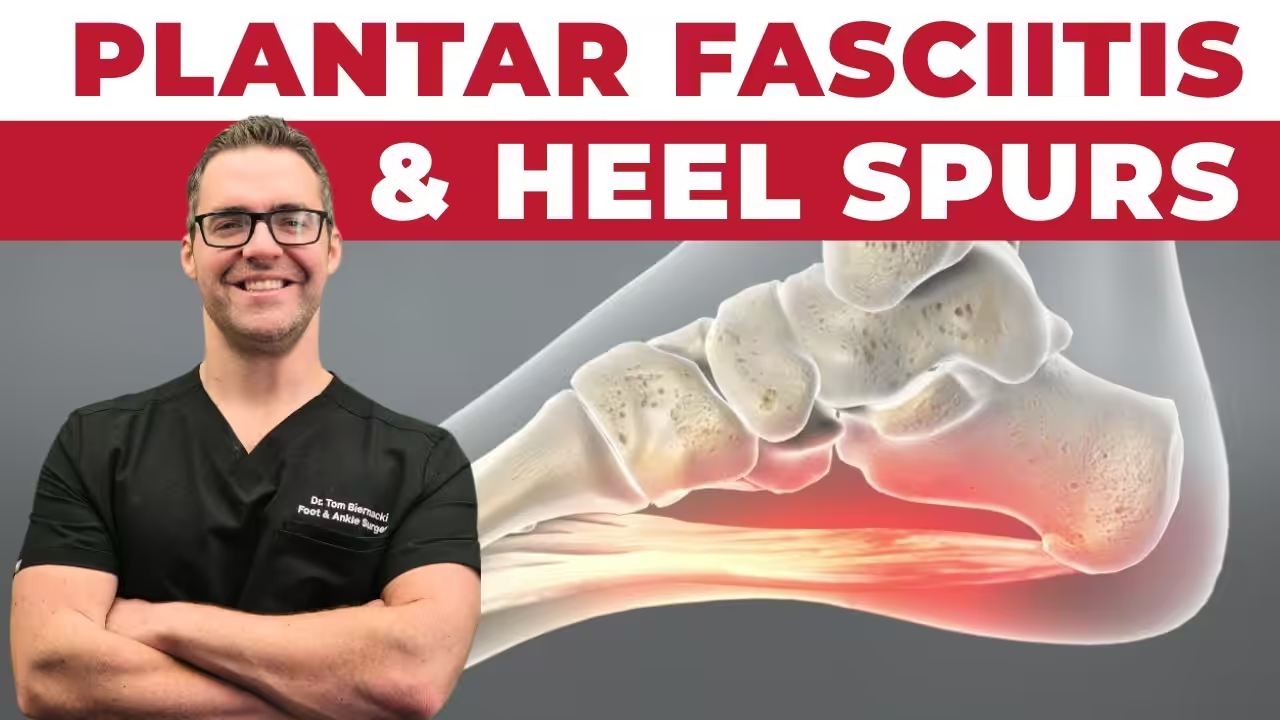
You are in the right place. Dr. Tom Biernacki, DPM, FACFAS — board-certified foot & ankle surgeon with 3,000+ surgeries — explains exactly what summer foot problems means and what actually works. Call (810) 206-1402 for a same-day appointment at our Howell or Bloomfield Township office.
Quick answer: Summer Foot Problems Sandals Barefoot Walking is a common foot/ankle topic that affects many patients. Effective treatment starts with a targeted diagnosis, conservative-first treatment, and escalation only when needed. We treat this regularly at our Howell and Bloomfield Township practices. Call (810) 206-1402.

Medically Reviewed by Dr. Tom Biernacki, DPM, FACFAS — Board-certified podiatrist & foot surgeon | Balance Foot & Ankle | Last updated: May 2026
Quick Answer: Summer Foot Problems
Summer creates a perfect storm for foot problems: heat increases swelling, sandals eliminate arch support, barefoot walking exposes skin to hard surfaces and fungi, and increased activity levels surface latent biomechanical issues. The most common summer foot complaints are plantar fasciitis flares, blisters, athlete’s foot, plantar warts, heel cracks, sunburn, and swelling from heat-related fluid retention. Most are preventable with footwear strategy and skin care.
Summer is consistently the busiest season in our podiatry offices in Howell and Bloomfield Township. The combination of warm weather, changed footwear habits, increased activity, and prolonged barefoot exposure creates conditions where foot problems that were manageable in winter suddenly become acutely painful. Understanding why summer is hard on feet helps patients prevent the problems rather than treat them.
Summer Foot Problem Reference Guide
| Problem | Summer Trigger | Prevention | Treatment |
|---|---|---|---|
| Plantar fasciitis flare | Flat sandals, flip-flops, barefoot | Supportive sandals only; stretch before first steps | Ice, orthotics, stretching, rest |
| Blisters | New sandals, wet feet, increased walking | Break in shoes gradually; Body Glide on friction areas | Drain if tense; cover; keep clean |
| Athlete’s foot | Pools, locker rooms, sweaty shoes | Flip-flops in communal areas; dry feet thoroughly | Antifungal cream 2–4 weeks |
| Plantar warts | HPV exposure via barefoot on pool decks | Footwear in public wet areas always | Salicylic acid; cryotherapy; clinic removal |
| Heel cracks | Open-back sandals, dry heat, hard surfaces | Daily urea-based heel cream; closed-heel shoes | Debridement + heel balm; seal deep fissures |
| Foot swelling | Heat vasodilation, prolonged standing/flying | Elevation; compression socks; hydration | Elevation, calf pumping; rule out DVT if unilateral |
| Sunburn on feet | Top-of-foot exposure in sandals | SPF 30+ on dorsum of foot; reapply after swimming | Cool compress; aloe; avoid tight shoes until healed |
The Flip-Flop Problem: Summer’s Most Damaging Footwear
Flip-flops are the single greatest contributor to summer podiatric complaints. The typical flip-flop provides zero arch support, no heel cushioning, no lateral stability, and forces the toes to grip with each step — creating forefoot tension that strains the plantar fascia. Wearing flip-flops as primary footwear during high-activity summer months reliably produces plantar fasciitis flares, Achilles tendinopathy, metatarsalgia, and neuromas in patients with underlying biomechanical vulnerabilities. The solution is not necessarily avoiding sandals entirely — it is selecting supportive sandals with arch contour and heel cup. Brands like Birkenstock, Vionic, and Ecco produce sandals that provide meaningful biomechanical support. I evaluate sandal choices during summer foot consultations.
Patients with plantar fasciitis frequently maintain their condition through winter by wearing supportive shoes consistently — then go barefoot in the house as soon as warm weather arrives. Barefoot walking on hard floors (tile, hardwood, concrete) provides zero fascial support and recreates the exact mechanical environment that caused the initial injury. The plantar fascia re-injuries itself stepping out of bed barefoot. Summer plantar fasciitis is almost always a footwear compliance problem. Wearing a supportive sandal or orthotic flip-flop in the house is the single highest-impact behavioral change I recommend to patients.
Watch: Best Sandals for Summer Foot Health — Dr. Tom Biernacki
Book a summer foot evaluation → | (810) 206-1402
Heel Crack Prevention and Treatment
Heel fissures — cracked heels — are one of the most common summer complaints I treat. The skin on the heel is naturally thicker than elsewhere on the body, and open-back sandals allow this skin to splay outward under body weight without the containment of a shoe heel counter. Combined with dry summer heat and reduced humidity, the heel skin desiccates, forms callus, and eventually cracks. Superficial fissures are cosmetic nuisances; deep fissures that bleed or become painful are actual wounds that can become infected, particularly in diabetic patients where healing is impaired. Treatment involves professional callus debridement, barrier emollients (urea 20–40% heel balms applied nightly under a sock), and switching to footwear with a heel counter. Diabetic patients with heel fissures should seek evaluation promptly — do not wait for pain.
Frequently Asked Questions
Why do my feet swell more in summer?
Heat causes peripheral vasodilation — blood vessels expand to release body heat, and fluid shifts from the vascular compartment into surrounding tissue. Prolonged standing amplifies this effect because dependent fluid pools in the feet and ankles. Physiologic summer swelling is typically bilateral and resolves overnight with elevation. Unilateral swelling, sudden swelling, or swelling accompanied by warmth and redness should prompt evaluation to rule out deep vein thrombosis, infection, or joint pathology.
How do I prevent blisters when wearing new sandals?
Break in new sandals gradually — wear them for 1–2 hours on day one, increasing by an hour each day. Apply a friction-reducing product (Body Glide, Vaseline, or specialized blister-prevention sticks) to known friction areas like the heel, ball of foot, and between toes before wearing. Thin moisture-wicking socks with sandals designed to accommodate them significantly reduce blister risk for long-distance walking. A formed blister should not be popped unless tense and painful — if you do drain it, keep the roof intact as a biological dressing and keep it clean.
Are Birkenstocks good for plantar fasciitis?
Birkenstocks are among the better sandal options for plantar fasciitis patients because their cork footbed provides arch contour and a slight heel cup — features absent in flat sandals. They are not equivalent to a custom orthotic, but represent a meaningful upgrade over flat flip-flops for everyday warm-weather wear. They work best for mild plantar fasciitis; patients with moderate to severe symptoms typically need custom orthotics that fit inside a closed-toe supportive shoe for the majority of their walking time. I discuss sandal selection specifically during plantar fasciitis consultations.
Can I swim if I have athlete’s foot?
Athlete’s foot is a contagious dermatophyte infection. Swimming with untreated athlete’s foot in shared pools or water parks is inconsiderate to other swimmers and may worsen your own infection through prolonged moisture exposure. Treatment with topical antifungal cream for 2–4 weeks typically clears the infection. While treating, wear flip-flops in communal areas and dry feet — especially between toes — thoroughly after swimming. If the infection involves the nails or does not respond to OTC treatment, see a podiatrist for prescription therapy.
When should summer foot problems be seen by a podiatrist?
Seek same-day care for: any foot wound that shows signs of infection (redness spreading beyond the wound, warmth, purulent drainage), diabetic patients with any skin break or wound on the foot, sudden severe heel or arch pain that prevents weightbearing, suspected fracture from impact or twisting injury. Schedule a routine appointment for: heel fissures that are painful or bleeding, plantar warts that are spreading or painful, persistent plantar fasciitis despite 4 weeks of supportive footwear, or any swelling that does not resolve overnight. Call Balance Foot & Ankle at (810) 206-1402 — same-day appointments available in Howell and Bloomfield Township.
Summer Foot Problems — Same-Day Care Available
Blisters, heel cracks, fungal infections, warts, swelling — Howell & Bloomfield Township, MI
Book Appointment (810) 206-1402Related: Plantar Fasciitis Treatment | Toenail Fungus Treatment | Podiatrist-Recommended Shoes

In-Office Treatment at Balance Foot & Ankle
If home treatment isn’t providing relief for your foot pain, our podiatry team at Balance Foot & Ankle can help with same-day evaluations and advanced in-office care.
Same-day appointments available. (810) 206-1402
Doctor Hoy’s Natural Pain Relief Gel
Natural topical pain relief I use in our clinic. Arnica + camphor formula — apply directly to the area 3–4x daily. ($20–25)
Shop Doctor Hoy’s →
Dr. Tom Biernacki, DPM is a board-certified foot & ankle surgeon (ABFAS & ABPM) at Balance Foot & Ankle Specialists in Southeast Michigan. With over a decade of clinical experience, he specializes in heel pain, bunions, diabetic foot care, sports injuries, and minimally invasive surgery. Dr. Biernacki is a member of the APMA and ACFAS, and his patient education content on MichiganFootDoctors.com and YouTube has made him one of the most-followed foot & ankle educators on YouTube.