
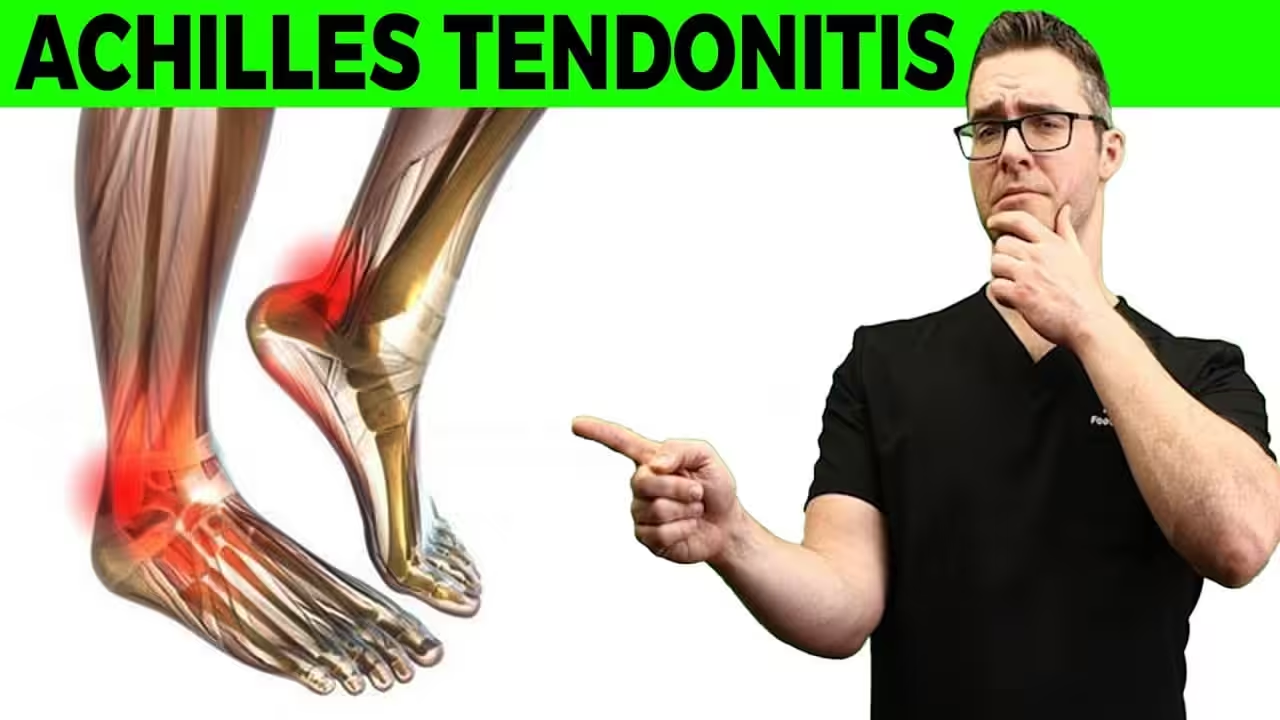

Tendinitis (acute inflammation) and tendinopathy (chronic degeneration) need completely different treatments — and most chronic foot/ankle tendon pain is actually tendinopathy being treated as if it were tendinitis.
Not sure which one you have? A podiatrist can tell in one visit — book a real appointment time online, 24/7: Howell or Bloomfield Township. Takes about a minute, 24/7.
You’ve come to the right podiatry team. Dr. Tom Biernacki, DPM, FACFAS — board-certified foot & ankle surgeon with 3,000+ surgeries — explains exactly what tendinitis vs tendinopathy means and what works. Call (810) 206-1402 to book at Howell or Bloomfield Township.
Medically reviewed by Dr. Tom Biernacki, DPM · Board-Certified Podiatric Surgeon · Last reviewed: April 2026 · Editorial Policy
Quick Answer
Tendinitis vs Tendinopathy 2026 Podiatrist relates to foot pain — typically caused by overuse, footwear, or biomechanics. Most patients improve in 6-12 weeks with conservative care. Appointments in Howell + Bloomfield Township: (810) 206-1402.

Medically reviewed by Dr. Tom Biernacki, DPM — Board-Certified Podiatric Surgeon — Balance Foot & Ankle, Howell & Bloomfield Township, MI. Last updated April 2026.
▶ Watch
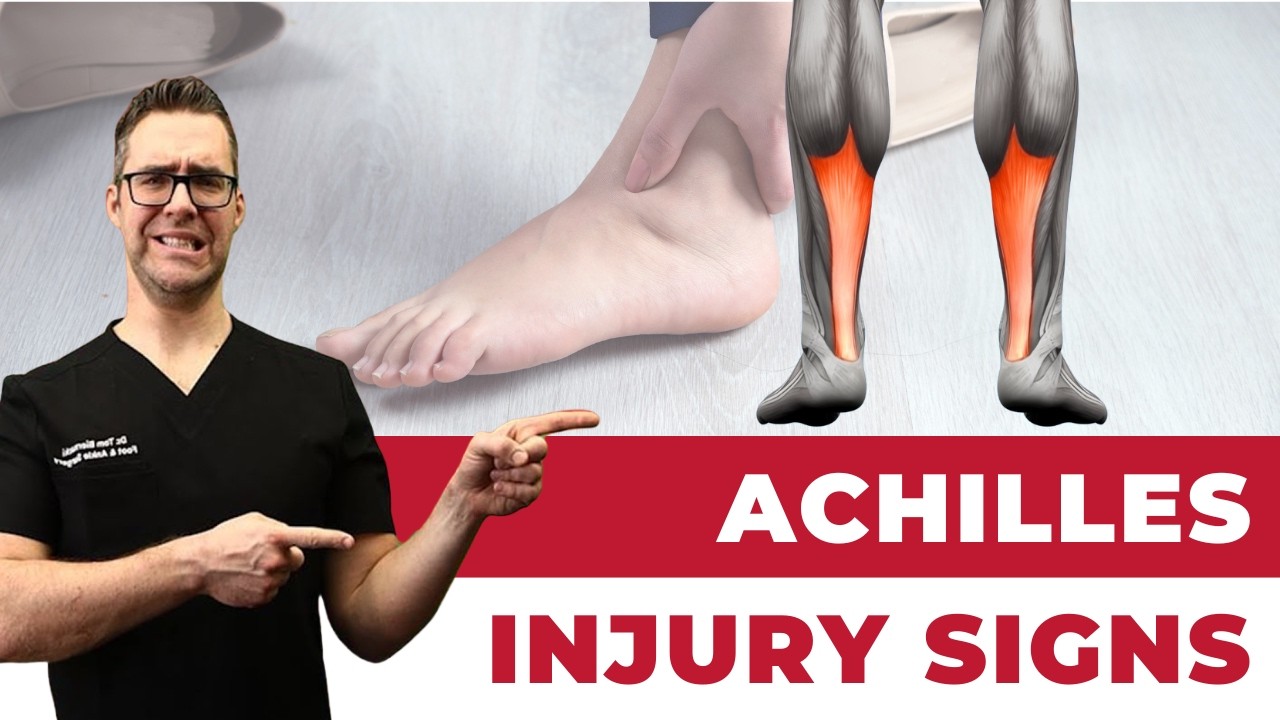
Medically Reviewed by Dr. Tom Biernacki, DPM — Board-Certified Podiatrist, Balance Foot & Ankle Specialists, Michigan. Last updated April 2026.
If you’ve been told you have “tendinitis” in your Achilles or ankle, you may have also heard the term “tendinopathy” — and wondered whether these are the same thing. The distinction is more than semantic: it changes how your condition is treated and how long recovery takes.
The Classic Definition: Tendinitis
Tendinitis literally means inflammation of a tendon (-itis = inflammation). For decades, any painful tendon was labeled tendinitis, and treatment focused on reducing acute inflammation: rest, ice, NSAIDs, and corticosteroid injections.
This approach works well for truly acute injuries — a sudden overload event that triggers an inflammatory response. The problem is that most painful tendons in adults are not acutely inflamed.
What Research Shows: Tendinopathy Is More Common
Biopsy studies of chronically painful tendons have consistently revealed a surprising finding: little to no inflammatory cells. Instead, the tissue shows disorganized collagen, failed healing attempts, and degenerative changes — a condition called tendinosis or, more broadly, tendinopathy.
Tendinopathy is a degenerative process, not an inflammatory one. Treating it as inflammation (with extended rest, corticosteroid injections, or NSAIDs alone) can actually impair tendon healing and accelerate degenerative change.
Common Foot & Ankle Tendons Affected
Achilles Tendon
Achilles tendinopathy is among the most prevalent running and athletic injuries. Non-insertional Achilles tendinopathy (mid-substance, ~2–6 cm above the heel) is almost always degenerative. Insertional Achilles tendinopathy (at the heel bone) may have a greater inflammatory component due to mechanical impingement from a Haglund’s deformity.
Peroneal Tendons
The two peroneal tendons (peroneus longus and brevis) run behind the lateral ankle. Peroneal tendinopathy causes lateral ankle pain and weakness, often misdiagnosed as a chronic ankle sprain. Tears in the peroneus brevis, particularly longitudinal split tears, are frequently degenerative in origin.
Posterior Tibial Tendon (PTT)
Posterior tibial tendon dysfunction (PTTD) is the leading cause of adult-acquired flatfoot. The degenerative process progresses through four stages — from tendinopathy without deformity (Stage I) to rigid flatfoot with arthritis (Stage IV). Catching PTTD early in Stage I or II dramatically improves non-surgical outcomes.
Flexor Hallucis Longus (FHL)
FHL tendinopathy causes pain deep in the posteromedial ankle and big toe, common in ballet dancers and runners. It is often associated with posterior ankle impingement.
Why the Distinction Matters for Treatment
If a tendon is truly inflamed (acute tendinitis), anti-inflammatory strategies are appropriate short-term. But for tendinopathy — the degenerative pattern — the most evidence-based intervention is progressive tendon loading: specific eccentric and heavy slow resistance exercises that stimulate collagen synthesis and reorganization.
- Eccentric loading: The Alfredson protocol for Achilles tendinopathy (heel drops off a step) has decades of clinical trial support.
- Heavy slow resistance (HSR): Newer research suggests HSR is equally effective and better tolerated than pure eccentric protocols.
- Platelet-Rich Plasma (PRP): PRP injections deliver concentrated growth factors directly into the degenerative tendon, promoting intrinsic healing — an approach supported by multiple randomized trials for Achilles and patellar tendinopathy.
- Extracorporeal Shockwave Therapy (ESWT): Shockwave delivers acoustic energy to stimulate neovascularization and cellular repair in tendinopathic tissue. Strong evidence for insertional and non-insertional Achilles tendinopathy.
- Corticosteroid injections: Provide short-term pain relief but are associated with accelerated tendon degeneration and increased rupture risk with repeated use — should be used cautiously and only in specific scenarios.
Diagnostic Imaging: Ultrasound Is Key
Musculoskeletal ultrasound allows real-time, dynamic visualization of tendon structure — identifying tendinosis (hypoechoic areas, loss of fibrillar pattern), neovascularization (Doppler signal), partial tears, and intratendinous calcification. Ultrasound also guides precisely targeted injections (PRP, corticosteroid, prolotherapy) into the affected tendon rather than surrounding soft tissue.
At Balance Foot & Ankle, diagnostic ultrasound is available at your first appointment, allowing same-visit diagnosis and treatment planning without a separate imaging referral.
Accurate Diagnosis Is the First Step
Many patients with chronic ankle or Achilles pain have spent months treating the wrong diagnosis. If you’ve had “tendinitis” that isn’t improving, the degenerative tendinopathy model — and the loading-based treatments that address it — may be what you need.
Tendon Pain That Won’t Heal? Get an Accurate Diagnosis.
Dr. Biernacki at Balance Foot & Ankle uses on-site diagnostic ultrasound to distinguish tendinitis from tendinopathy and develop a targeted treatment plan — including PRP, shockwave therapy, and loading protocols.
📞 (810) 206-1402 | Request an Appointment →
📍 Located in Michigan?
Our board-certified podiatrists treat this condition at two convenient locations. Book online 24/7 at either office.

Insurance Accepted
BCBS · Medicare · Aetna · Cigna · United Healthcare · HAP · Priority Health · Humana · View All →
Howell Office
4330 E Grand River Ave
Howell, MI 48843
Get Directions →
Bloomfield Township Office
43494 Woodward Ave, #208
Bloomfield Township, MI 48302
Get Directions →
More Podiatrist-Recommended Foot Health Essentials
Hoka Clifton 10

![Achilles Tendonitis & Back of Heel Pain [BEST Home Treatments 2024!]](https://www.michiganfootdoctors.com/wp-content/cache/flying-press/d645ea3f3d27024136b88a074b2b7894.jpg)
Watch: Achilles Tendonitis & Back of Heel Pain [BEST Home Treatments 2024!] — MichiganFootDoctors YouTube
Max-cushion everyday shoe — podiatrist favorite for walking and running.

OOFOS Recovery Slide

Impact-absorbing recovery sandal — wear after long days on your feet.
As an Amazon Associate, Balance Foot & Ankle earns from qualifying purchases. Product recommendations are based on clinical experience; prices and availability shown above update live from Amazon.
When to See a Podiatrist
If foot or ankle pain has been bothering you for more than a few weeks, home care alone may not be enough. Balance Foot & Ankle offers online booking 24/7 at our Howell and Bloomfield Township clinics — no referral needed in most cases. Bring your current shoes and a short list of symptoms and we’ll build you a treatment plan in one visit.
Call Balance Foot & Ankle: (810) 206-1402 · Book online · Offices in Howell & Bloomfield Township
Watch: Dr. Tom explains
Podiatrist-recommended products
As an Amazon Associate, Dr. Tom earns from qualifying purchases.
Foundation arch support for tendon recovery.
Check price →Dynamic support during rehab.
View on Amazon →Topical non-NSAID relief.
Check price →Reduces Achilles tension during rehab.
Check price →Related resources
Ready to solve this? Book today.
Book online 24/7 · Howell & Bloomfield Township · 4.9★ (1,200+ reviews)
☎ (810) 206-1402Book Online →Pros & Cons of Conservative Care for foot care
Advantages
- ✓ Conservative care first
- ✓ Book online 24/7
- ✓ Multiple insurance accepted
Considerations
- ✗ Self-treatment can mask issues
- ✗ See a podiatrist if pain >2 weeks
Dr. Tom’s Recommended Products for foot care
Affiliate disclosure: As an Amazon Associate, Balance Foot & Ankle earns from qualifying purchases. We only recommend products we use with patients.
Ready to Get Back on Your Feet?
Appointments in Howell + Bloomfield Township. Most insurance accepted. Dr. Tom Biernacki, DPM & team.
Call Now: (810) 206-1402
Frequently Asked Questions
Which is better for plantar fasciitis?
The shoe with more cushioning and a stronger rocker typically wins for plantar fasciitis. See full comparison for our specific verdict.
Which lasts longer?
Both options typically last 300-500 miles for runners or 9-12 months for daily walkers. Material durability varies; check our detailed comparison.
Which is better for flat feet?
Flat feet need stability or motion control. The neutral option is not ideal unless paired with a custom orthotic.
In-Office Treatment at Balance Foot & Ankle
If home treatment isn’t providing relief for your Achilles tendon conditions, our podiatry team at Balance Foot & Ankle can help with expert evaluations and advanced in-office care.
Book online 24/7. (810) 206-1402
Learn about our Achilles tendonitis treatment → | Book online →
Get Expert Care at Balance Foot & Ankle
Appointments at our Howell and Bloomfield Township offices. Board-certified podiatric surgeons. Most insurance accepted.
Ready for Expert Care?
Appointments in Howell & Bloomfield Township, MI.
4.9★ | 1,200+ Reviews | 3,000+ Surgeries
Or call: (810) 206-1402

Dr. Tom Biernacki, DPM is a board-certified foot & ankle surgeon (ABFAS & ABPM) at Balance Foot & Ankle Specialists in Southeast Michigan. With over a decade of clinical experience, he specializes in heel pain, bunions, diabetic foot care, sports injuries, and minimally invasive surgery. Dr. Biernacki is a member of the APMA and ACFAS, and his patient education content on MichiganFootDoctors.com and YouTube has made him one of the most-followed foot & ankle educators on YouTube.