
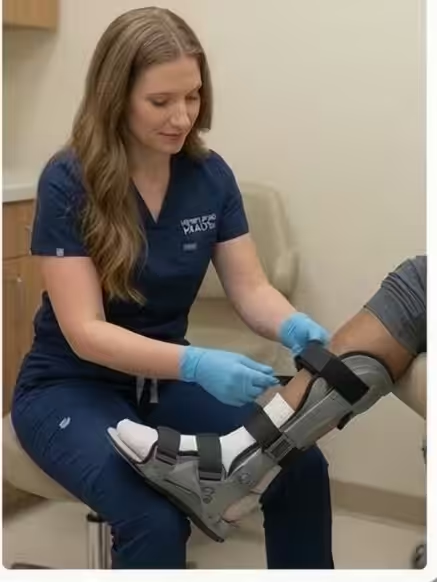
Walking boot vs cast for a foot injury — the right choice depends on whether your bones need protection from movement or protection from weight-bearing. The difference matters enormously.
You’ve come to the right podiatry team. Dr. Tom Biernacki, DPM, FACFAS — board-certified foot & ankle surgeon with 3,000+ surgeries — explains exactly what walking boot vs cast for foot injuries means and what works. Call (810) 206-1402 for same-week appointment at Howell or Bloomfield Township.
Board-Certified Podiatric Foot & Ankle Surgeon · Last reviewed: May 4, 2026
✅ Medically Reviewed by Dr. Tom Biernacki, DPM
Board-certified podiatric physician & surgeon | Balance Foot & Ankle | Updated April 2026
The most important clinical decision with Walking Boot Vs Cast Foot Injury Guide isn't which treatment to start with — it's which subtype or underlying cause you actually have. Our podiatrists regularly see patients who've been treated for months for the wrong diagnosis. The correct identification changes the entire treatment path. Call (810) 206-1402 — Dr. Tom evaluates this condition at both Howell and Bloomfield Township locations.
Medically reviewed by Dr. Tom Biernacki, DPM · Board-Certified Podiatric Surgeon · Last reviewed: April 2026 · Editorial Policy
Medically reviewed by Dr. Tom Biernacki, DPM — Board-Certified Podiatric Surgeon — Balance Foot & Ankle, Howell & Bloomfield Township, MI. Last updated April 2026.
▶ Watch
📋 Dr. Tom Also Recommends
Podiatrist Recommended Orthotics 2026: Dr. Tom’s Top 10 Insoles & Arch Supports
A podiatrist’s complete clinical guide to the best insoles — custom orthotics, OTC picks, and what actually works for plantar fasciitis, flat feet, neuropathy & more.
Read the Full Guide →Medically Reviewed by Dr. Tom Biernacki, DPM — Board-Certified Podiatrist, Balance Foot & Ankle Specialists, Michigan. Last updated April 2026.
The distinction between a removable walking boot (CAM walker) and a plaster or fiberglass cast — and which is appropriate for a given foot or ankle injury — is one of the most common questions at Balance Foot & Ankle in Southeast Michigan. The choice has important clinical implications: compliance, skin care, hygiene, rehabilitation timing, and patient quality of life all differ significantly. Dr. Tom Biernacki’s approach: use the minimum immobilization that safely achieves the clinical goal, and use a cast when compliance with immobilization is critical and a boot when controlled early mobility is beneficial.
Indications for a Non-Removable Cast
A short-leg fiberglass cast (non-removable) is indicated when: immobilization compliance is critical and non-negotiable — a cast cannot be removed by the patient; the clinical situation has a low tolerance for non-compliance errors. Specific indications: acute Jones fracture of the fifth metatarsal (non-union risk is high; weight-bearing violation is common with removable boots — cast reduces non-union rate to near zero with 6 weeks non-weight-bearing); calcaneal fractures managed non-operatively; Lisfranc injuries managed non-operatively; Charcot neuroarthropathy (total contact cast is the gold standard — Charcot patients cannot feel pain and will walk on the fracture without a boot regardless of instructions); post-surgical procedures requiring strict non-weight-bearing where a boot creates patient temptation to walk; specific stress fractures at high non-union risk (navicular, proximal fifth MT). The trade-off: casts cannot be removed for showering, skin inspection, or wound care — acceptable for most patients but problematic for diabetic patients with neuropathy where skin breakdown under a cast can go undetected. For diabetic patients requiring immobilization, the total contact cast applied by an experienced provider with frequent (weekly) cast changes is the clinical standard.
Indications for a Removable Walking Boot (CAM Walker)
A CAM walker boot is appropriate for: conditions where controlled early mobilization is beneficial (Achilles repair — early weight-bearing in a hinged boot produces equivalent outcomes to casting with better functional recovery); low-to-moderate compliance risk with an engaged patient; conditions where skin inspection or wound care access is needed; postoperative management after outpatient foot procedures (hallux procedures, metatarsal osteotomies); grade 2 ankle sprains with significant ligament injury; acute metatarsal fractures (2nd–4th shaft fractures with minimal displacement — controlled weight-bearing in a stiff-soled boot is appropriate); and plantar fasciitis management (night splint boot or pneumatic walker for severe cases). Advantages over cast: removable for hygiene; compatible with physical therapy in early rehabilitation phases; adjustable fit for swelling changes. Disadvantage: depends entirely on patient compliance — a boot removed “just to shower” and then placed back on incorrectly provides no immobilization at the critical moments.
More Podiatrist-Recommended Foot Health Essentials
Hoka Clifton 10

Max-cushion everyday shoe — podiatrist favorite for walking and running.

OOFOS Recovery Slide

Impact-absorbing recovery sandal — wear after long days on your feet.
As an Amazon Associate, Balance Foot & Ankle earns from qualifying purchases. Product recommendations are based on clinical experience; prices and availability shown above update live from Amazon.

When to See a Podiatrist
If foot or ankle pain has been bothering you for more than a few weeks, home care alone may not be enough. Balance Foot & Ankle offers same-week appointments at our Howell and Bloomfield Township clinics — no referral needed in most cases. Bring your current shoes and a short list of symptoms and we’ll build you a treatment plan in one visit.
Call Balance Foot & Ankle: (810) 206-1402 · Book online · Offices in Howell & Bloomfield Township
Frequently Asked Questions
Can I drive with a walking boot?
Driving with a walking boot on the right foot (gas/brake leg) is not safe and is illegal in most jurisdictions — the boot significantly impairs brake response time. Studies show right-foot CAM walker use increases brake reaction time to a level comparable to a blood alcohol of 0.06%. If your right foot is in a walking boot, you should not drive until the boot is removed or until cleared by your physician. Left-foot walking boot patients can drive automatic transmission vehicles (using right foot for all pedals), but should confirm this with their physician and check local driving regulations. Consider medical transport, rideshares, or having family members drive during the immobilization period.
How do I prevent calf pain and blood clots in a walking boot?
Lower extremity immobilization in a boot or cast increases DVT (deep vein thrombosis) risk — particularly in patients with prior DVT, clotting disorders, cancer, prolonged bedrest, or those who are non-weight-bearing for >4 weeks. Prevention: ankle pumps (20–30 repetitions hourly while awake — pumping the ankle against the boot compresses the calf veins and promotes venous return); compression stockings on the non-immobilized leg; activity to the extent permitted by the injury; aspirin 81–325mg daily if not contraindicated (ask your physician). For high-risk patients, pharmacologic anticoagulation (enoxaparin or rivaroxaban) may be prescribed. Report calf pain, swelling, warmth, or redness above the boot level immediately — these are DVT warning signs.
How do I keep my other leg from getting sore while using a walking boot?
Walking boots add 1–1.5 inches of height on the boot side, creating a leg-length discrepancy that loads the hip, knee, and lower back of the non-booted side. Prevention: use an “Even-Up” shoe balancer (a rocker attachment that clips to your regular shoe to equalize leg length) — they are available for $30–40 on Amazon and dramatically reduce back and hip pain during boot use. Alternatively, wear a thick-soled shoe on the non-booted foot. If significant hip or back pain develops despite equalization, a brief physical therapy referral for gait training during the immobilization period is appropriate.
Not sure what immobilization is right for your foot injury? Contact Balance Foot & Ankle in Southeast Michigan for same-week evaluation with Dr. Biernacki — (810) 206-1402.
Join 950,000+ Learning About Foot Health
Dr. Tom shares honest medical advice, supplement reviews, and treatment guides you won’t find anywhere else.
Subscribe on YouTube →📍 Located in Michigan?
Our board-certified podiatrists treat this condition at two convenient locations. Most new patients are seen the same week.
Insurance Accepted
BCBS · Medicare · Aetna · Cigna · United Healthcare · HAP · Priority Health · Humana · View All →
Howell Office
4330 E Grand River Ave
Howell, MI 48843
Get Directions →
Bloomfield Township Office
43494 Woodward Ave, #208
Bloomfield Township, MI 48302
Get Directions →
Your Board-Certified Podiatrists



Ready to Get Back on Your Feet?
Same-week appointments available at both locations.
Book Your Appointment👟 Dr. Tom’s Complete Footwear Library
Podiatrist-Approved Guides for Every Foot Type & Condition
Clinically reviewed by Dr. Tom Biernacki, DPM — Board-Certified Podiatrist
All guides are written and reviewed by licensed podiatrists. Schedule an appointment →
Watch: Dr. Tom explains
Podiatrist-recommended products
As an Amazon Associate, Dr. Tom earns from qualifying purchases.
Removable boot
View on Amazon →Return-to-shoe support
View on Amazon →Healing adjunct
View on Amazon →Swelling control
View on Amazon →Related resources
Ready to solve this? Book today.
Same-week appointments · Howell & Bloomfield Township · 4.9★ (1,123+ reviews)
☎ (810) 206-1402Book Online →In-Office Treatment at Balance Foot & Ankle
When conservative care isn’t enough, Dr. Tom Biernacki and the team at Balance Foot & Ankle offer advanced, same-day options — including Walking Boot Guide (CAM Boots) at our Howell and Bloomfield Township clinics.
Same-week appointments available. Call (810) 206-1402 or book online.
Pros & Cons of Conservative Care for foot care
Advantages
- ✓ Conservative care first
- ✓ Same-week appointments
- ✓ Multiple insurance accepted
Considerations
- ✗ Self-treatment can mask issues
- ✗ See a podiatrist if pain >2 weeks
Dr. Tom’s Recommended Products for foot care
Affiliate disclosure: As an Amazon Associate, Balance Foot & Ankle earns from qualifying purchases. We only recommend products we use with patients.
Footnanny Heel Cream Dr. Tom’s Pick
Best for: Daily moisturizer for cracked heels
Ready to Get Back on Your Feet?
Same-week appointments in Howell + Bloomfield Township. Most insurance accepted. Dr. Tom Biernacki, DPM & team.
Book Today — Same-Week Appointments Available
Call Now: (810) 206-1402
About Your Care Team at Balance Foot & Ankle
Dr. Tom Biernacki, DPM · Board-Certified Foot & Ankle Surgeon. Specializes in conservative-first care, minimally invasive bunion surgery, and complex reconstruction.
Dr. Carl Jay, DPM · Accepting new patients. Specializes in sports medicine, athletic injuries, and routine podiatric care.
Dr. Daria Gutkin, DPM, AACFAS · Accepting new patients. Specializes in surgical reconstruction and pediatric podiatry.
Locations: 4330 E Grand River Ave, Howell, MI 48843 · 43494 Woodward Ave Suite 208, Bloomfield Township, MI 48302
Hours: Mon–Fri 8:00 AM – 5:00 PM · (810) 206-1402
Related Foot Injury Recovery Guides
After choosing your boot or cast, here’s the complete recovery roadmap:
- Walking Boot for Fracture (Complete Guide)
- Tips for Wearing a Walking Boot
- How to Use a Knee Scooter
- Broken Big Toe
- Fractured Big Toe
- Ankle Sprain Treatment
- Calf Muscle Strain Recovery
- Foot Stress Fracture Treatment
- Calcaneus (Heel) Stress Fracture
- Big Toe Joint Fusion Recovery
- Best Ankle Braces
Frequently Asked Questions
How long does an ankle hairline fracture take to heal?
Typical recovery: 6-8 weeks for hairline (stress) fractures, 8-12 weeks for traumatic non-displaced fractures, and 12-16 weeks for displaced fractures requiring surgery. Healing varies based on age, nutrition, smoking status, and weight-bearing compliance. Athletes return to sport gradually over 2-4 additional weeks of progressive load.
Should I get a walking boot or a cast for my foot fracture?
Walking boots (CAM boots) are preferred for most stable fractures because they’re removable for hygiene, allow gentle range-of-motion, and let podiatrists serially examine the foot. Casts are used for unstable fractures, pediatric patients (compliance issues), or when complete immobilization is critical. Most modern fracture care uses boots.
Can I walk on a hairline fracture in a boot?
Usually yes — protected weight-bearing in a CAM boot is encouraged for most stable hairline fractures. The boot offloads stress to allow healing while permitting circulation and bone density preservation. Your podiatrist will specify weight-bearing status (full, partial, or non-weight-bearing) based on imaging and stability.
How tight should my walking boot be?
Snug but not painful. Velcro straps should compress evenly without creating pressure points. Wear a thick sock to prevent rubbing. Adjust laces 2-3 times daily — they loosen with walking. If the boot causes new pain, swelling, or color changes in the toes, see your podiatrist promptly.
When should I transition out of a walking boot?
Typically when: imaging shows healed bone, no tenderness at the fracture site, full pain-free range of motion, no swelling. Most patients transition gradually — wear the boot for activity, supportive sneaker for short periods, then phase out over 2-3 weeks. Stopping the boot too early risks re-fracture.
Frequently Asked Questions
Which is better for plantar fasciitis?
The shoe with more cushioning and a stronger rocker typically wins for plantar fasciitis. See full comparison for our specific verdict.
Which lasts longer?
Both options typically last 300-500 miles for runners or 9-12 months for daily walkers. Material durability varies; check our detailed comparison.
Which is better for flat feet?
Flat feet need stability or motion control. The neutral option is not ideal unless paired with a custom orthotic.
In-Office Treatment at Balance Foot & Ankle
If home treatment isn’t providing relief for your foot and ankle conditions, our podiatry team at Balance Foot & Ankle can help with same-week evaluations and advanced in-office care.
Same-week appointments available. (810) 206-1402
Get Expert Care at Balance Foot & Ankle
Same-week appointments at our Howell and Bloomfield Township offices. Board-certified podiatric surgeons. Most insurance accepted.
Same-Week Appointments in Howell & Bloomfield Township
Three board-certified podiatric surgeons. 1,123+ five-star reviews. Most insurance accepted.
Ready for Expert Care?
Same-week appointments in Howell & Bloomfield Township, MI.
4.9★ | 1,123 Reviews | 3,000+ Surgeries
Or call: (810) 206-1402

Dr. Tom Biernacki, DPM is a board-certified foot & ankle surgeon (ABFAS & ABPM) at Balance Foot & Ankle Specialists in Southeast Michigan. With over a decade of clinical experience, he specializes in heel pain, bunions, diabetic foot care, sports injuries, and minimally invasive surgery. Dr. Biernacki is a member of the APMA and ACFAS, and his patient education content on MichiganFootDoctors.com and YouTube has made him one of the most-followed foot & ankle educators on YouTube.
More questions patients ask
What is the difference between a walking boot and a cast?
A walking boot (CAM boot) is removable, allowing daily hygiene and easier skin monitoring, while a traditional plaster or fiberglass cast is non-removable and completely immobilizes the injury. Walking boots are used for many fractures and soft tissue injuries. Casts are reserved for injuries requiring absolute immobilization or when patient compliance is a concern.
Is a walking boot as effective as a cast?
For most non-displaced foot and ankle fractures, research shows walking boots achieve equivalent healing outcomes to casts with improved patient comfort and quality of life. Casts remain necessary for displaced fractures, post-surgical immobilization, or situations where removal could jeopardize healing.
Can I switch from a cast to a walking boot?
Yes—many patients transition from a cast to a walking boot as healing progresses, typically 2–4 weeks into recovery. Your podiatrist makes this decision based on X-ray evidence of healing, pain levels, and swelling. Premature transition can compromise healing, so always follow your podiatrist's guidance on timing.
Walking boot vs cast — which is better?
Walking boots win for: stable fractures (allow wash and skin care), patient comfort, ability to remove for sleep, easier transportation. Casts win for: complex/unstable fractures, swelling control, post-surgical immobilization, avoiding patient non-compliance. For most metatarsal fractures, ankle sprains, and Achilles tendinitis: walking boot. For tibial fractures or post-op cases needing rigid immobilization: cast.
How long do you wear a walking boot?
Walking boot duration depends on injury: Plantar fasciitis: 2-4 weeks; Metatarsal stress fracture: 4-8 weeks; Jones fracture: 6-12 weeks; Lisfranc injury: 6-12 weeks; Achilles tendinitis: 4-8 weeks; Ankle sprain Grade II: 3-6 weeks; Calcaneal stress fracture: 6-8 weeks. Always confirm with your podiatrist or orthopedic surgeon.
Can you sleep in a walking boot?
Generally no — remove the walking boot at night unless your surgeon specifically instructed otherwise (typically only first 2 weeks after surgery for unstable fractures). Sleep with the foot elevated on a pillow. Wear the boot anytime weight-bearing during the day. Some patients keep boot beside bed for safe overnight bathroom trips.
Still have a question about coverage or cost? Book online and we will check your benefits before your visit: Book in Howell · Book in Bloomfield Township. Prefer to talk it through first? Call (810) 206-1402.