
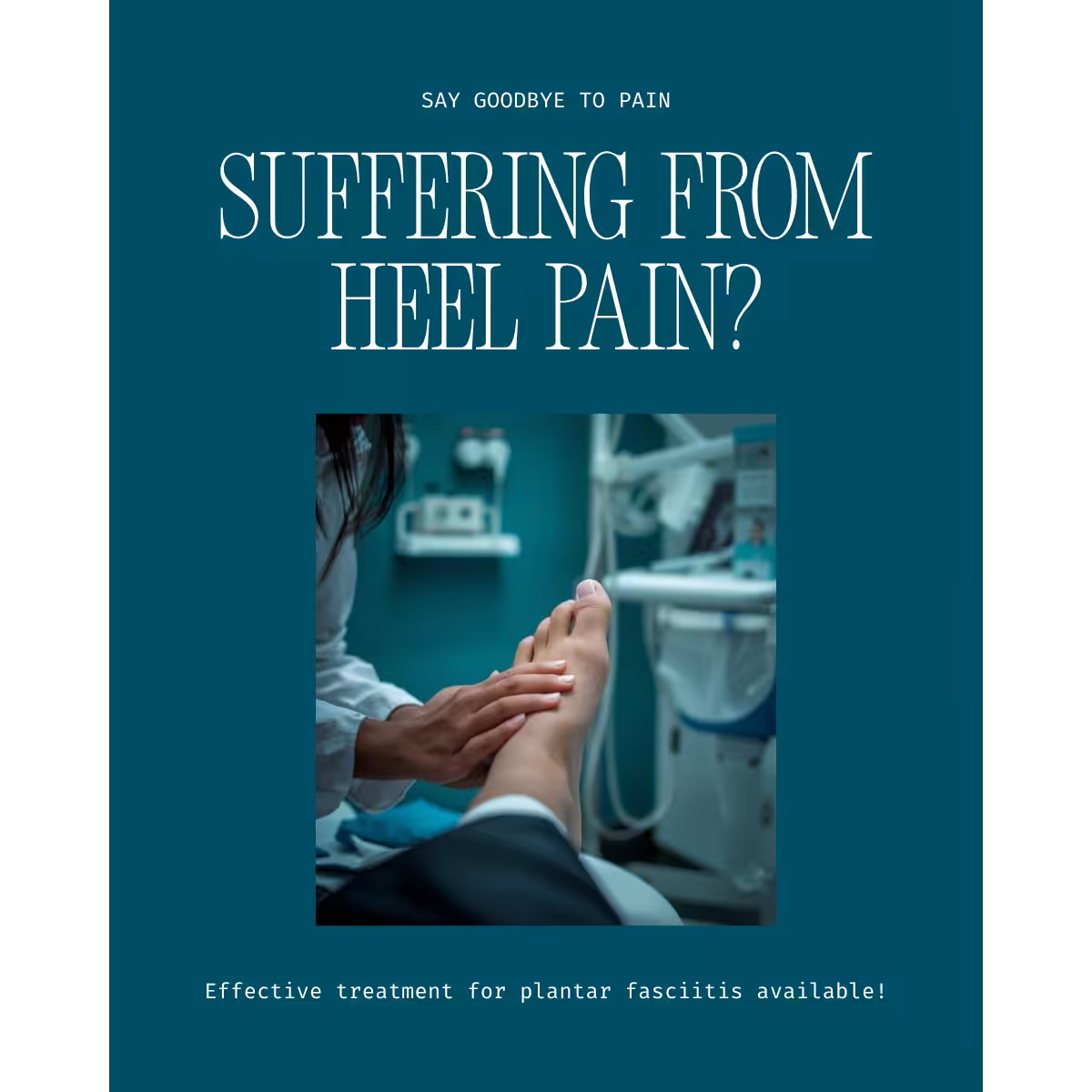
Medically reviewed by Dr. Tom Biernacki, DPM — Board-Certified Podiatric Surgeon — Balance Foot & Ankle, Howell & Bloomfield Hills, MI. Last updated April 2026.
▶ Watch

Medically Reviewed by Dr. Tom Biernacki, DPM — Board-Certified Podiatrist, Balance Foot & Ankle Specialists, Michigan. Last updated April 2026.
Treatment at Balance Foot & Ankle: EPAT Shockwave for Heel Pain →
Are You Making Your Plantar Fasciitis Worse?
Plantar fasciitis is the most common foot condition seen in podiatric practices, affecting approximately 2 million Americans annually. Despite its prevalence, many patients inadvertently make choices that slow recovery or cause the condition to become chronic. At Balance Foot & Ankle in Howell and Bloomfield Township, Michigan, we see these mistakes regularly — and help patients course-correct for faster, more complete recovery.
Mistake 1: Walking Barefoot at Home
This is perhaps the most common plantar fasciitis mistake. Hard floors provide zero arch support, and every barefoot step stretches the already-inflamed fascia with no cushioning. When patients report their foot “always hurts worst in the morning” and go straight to the kitchen floor without footwear, this is a major contributor. Solution: keep supportive slides or slippers right next to the bed and put them on before your first step. Never walk barefoot on hard floors during a plantar fasciitis flare.
Mistake 2: Stretching at the Wrong Time
Stretching immediately after a flare-up — or while standing on hard surfaces — can aggravate inflamed fascia rather than helping it. Static stretching is most beneficial when the fascia is warm and pre-warmed, not when it is acutely painful. Solution: the most effective stretching is seated, non-weight-bearing stretching before your first steps in the morning. Perform 10 repetitions of the plantar fascia stretch (pulling toes back while seated) before standing — this is the highest-yield intervention for morning pain.
Mistake 3: Using the Wrong Anti-Inflammatory Strategy
Plantar fasciitis in its chronic phase is not primarily inflammatory — it is degenerative (fasciosis). Chronic NSAID use has limited benefit for chronic heel pain and carries GI, cardiovascular, and renal risks with prolonged use. Solution: anti-inflammatories are most effective during acute flares. For chronic plantar fasciitis, eccentric loading exercises (stair stretch — standing on the step edge and slowly lowering the heel) are significantly more effective for degenerative tendinopathy-type presentations.
Mistake 4: Wearing Flat, Unsupportive Shoes “Because They’re Comfortable”
Ballet flats, flip flops, and many casual shoes feel comfortable because they are soft — but they provide no arch support and allow the foot to fully pronate with each step, maximally loading the plantar fascia. Perceived comfort and biomechanical appropriateness are not the same thing. Solution: shoes with a firm midsole, structured arch support, and a slight heel elevation (0.5-1 inch) reduce fascia loading. Even wearing a cushy, flat shoe feels comfortable initially but causes more fascia stress per step than a structured supportive shoe.
Mistake 5: Stopping Treatment When Pain Improves
The plantar fascia heals slowly — histological studies show fascial changes persist for months after clinical symptoms resolve. Many patients stop stretching, stop wearing orthotics, and return to previous footwear at the first sign of improvement, rapidly leading to recurrence. Solution: continue all conservative measures for at least 3 months after symptoms fully resolve. Transition footwear changes gradually. Custom orthotics are a long-term investment that prevents the biomechanical factors that caused the original injury from triggering recurrence.
Foot or Ankle Pain? We Can Help.
Balance Foot & Ankle — Howell & Bloomfield Township, MI
📅 Book Online
📞 (810) 206-1402
Making Plantar Fasciitis Worse? Learn What to Avoid
Many common habits actually worsen plantar fasciitis and delay healing. Dr. Tom Biernacki helps patients break the cycle of ineffective self-treatment and provides evidence-based solutions that actually resolve plantar fascia pain.
Learn About Effective Plantar Fasciitis Treatment | Book Your Appointment | Call (810) 206-1402
Clinical References
- DiGiovanni BF, et al. Tissue-specific plantar fascia-stretching exercise enhances outcomes in patients with chronic heel pain. Journal of Bone and Joint Surgery. 2003;85(7):1270-1277.
- Luffy L, et al. Plantar fasciitis: a review of treatments. Journal of the American Academy of Physician Assistants. 2018;31(1):20-24.
- Trojian T, Tucker AK. Plantar fasciitis. American Family Physician. 2019;99(12):744-750.
Insurance Accepted
BCBS · Medicare · Aetna · Cigna · United Healthcare · HAP · Priority Health · Humana · View All →
Howell Office
3980 E Grand River Ave, Suite 140
Howell, MI 48843
Get Directions →
Bloomfield Hills Office
43700 Woodward Ave, Suite 207
Bloomfield Hills, MI 48302
Get Directions →
Your Board-Certified Podiatrists



Ready to Get Back on Your Feet?
Same-week appointments available at both locations.
Book Your AppointmentWatch: Dr. Tom explains
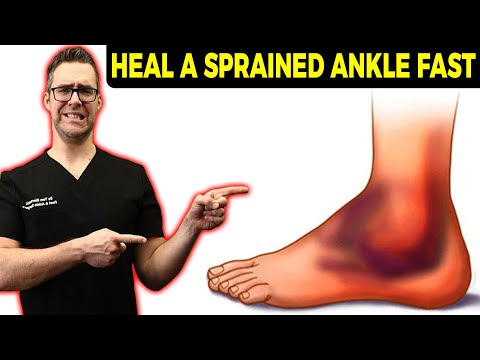
Podiatrist-recommended products
As an Amazon Associate, Dr. Tom earns from qualifying purchases.
Related resources
Ready to solve this? Book today.
Same-week appointments · Howell & Bloomfield Hills · 4.9★ (1,123+ reviews)
☎ (810) 206-1402Book Online →In Our Clinic
In our Balance Foot & Ankle clinic, the typical plantar fasciitis patient is a 40- to 60-year-old who noticed sharp heel pain on their very first steps in the morning or after sitting at a desk. Many arrive having already tried cheap shoe-store inserts and a week of ice without relief. On exam, we palpate the medial calcaneal tubercle, check for a positive windlass test, and rule out Baxter’s neuropathy and calcaneal stress fractures. Most of our plantar fasciitis patients respond to a custom orthotic + eccentric calf loading + night splinting protocol within 6–12 weeks — without injections or surgery.
More Podiatrist-Recommended Plantar Fasciitis Essentials
Best Night Splint
No products found.
Keeps fascia stretched overnight — the #1 intervention for morning heel pain.
Top Recovery Insole
No products found.
Deep heel cup + arch support unloads the plantar fascia all day.
Foot Massage Ball
No products found.
Roll under foot for 3 minutes morning/night to release fascia tightness.
As an Amazon Associate, Balance Foot & Ankle earns from qualifying purchases. Product recommendations are based on clinical experience; prices and availability shown above update live from Amazon.
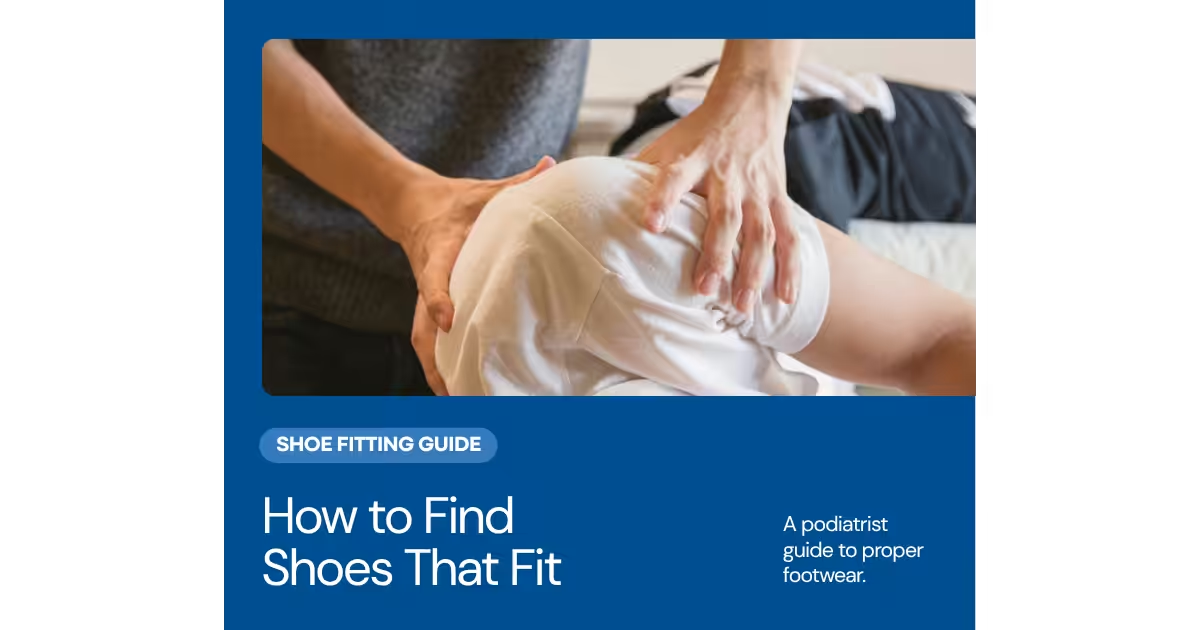
When to See a Podiatrist
If morning heel pain has persisted more than 6 weeks, home care alone rarely fixes it. At Balance Foot & Ankle, we combine in-office ultrasound diagnostics, custom orthotics, and — when needed — shockwave or PRP to resolve plantar fasciitis that hasn’t responded to stretching and inserts. Most patients are walking pain-free within 4-8 weeks of starting a structured plan.
Call Balance Foot & Ankle: (810) 206-1402 · Book online · Offices in Howell & Bloomfield Hills
In-Office Treatment at Balance Foot & Ankle
When conservative care isn’t enough, Dr. Tom Biernacki and the team at Balance Foot & Ankle offer advanced, same-day options — including Plantar Fasciitis Surgery Bloomfield Hills at our Howell and Bloomfield Hills clinics.
Same-day appointments available. Call (810) 206-1402 or book online.

Dr. Tom Biernacki, DPM is a double board-certified podiatrist and foot & ankle surgeon at Balance Foot & Ankle Specialists in Southeast Michigan. With over a decade of clinical experience, he specializes in heel pain, bunions, diabetic foot care, sports injuries, and minimally invasive surgery. Dr. Biernacki is a member of the APMA and ACFAS, and his patient education content on MichiganFootDoctors.com and YouTube has reached over one million views.
Frequently Asked Questions
What is the fastest way to cure plantar fasciitis?
Is plantar fasciitis covered by insurance?
Can plantar fasciitis go away on its own?
- Plantar Fasciitis: Diagnosis and Conservative Management (PubMed)
- Plantar Fasciitis (APMA)
- Diagnosis and Treatment of Plantar Fasciitis (PubMed / AAFP)
- Heel Pain (APMA)
Recommended Products from Dr. Tom