

You are in the right place. Dr. Tom Biernacki, DPM, FACFAS — board-certified foot & ankle surgeon with 3,000+ surgeries — explains exactly what accessory navicular syndrome extra bone arch ankle pain means and what works. Call (810) 206-1402 for same-day appointment at Howell or Bloomfield Township.
Quick answer: Accessory Navicular Syndrome Extra Bone Arch Ankle Pain has multiple potential causes including mechanical, neurological, vascular, and inflammatory. The most common causes we identify are overuse, ill-fitting shoes, and biomechanical imbalance. Red flags requiring urgent evaluation: warmth/redness (infection), inability to bear weight (fracture), and unilateral swelling without injury (DVT). Call (810) 206-1402.
Medically reviewed by Dr. Tom Biernacki, DPM — Board-Certified Podiatric Surgeon — Balance Foot & Ankle, Howell & Bloomfield Township, MI. Last updated April 2026.
Medically reviewed by Dr. Tom Biernacki, DPM | Board-certified podiatrist | 3,000+ surgeries performed
Last updated: April 2, 2026
The most important clinical decision with Accessory Navicular Syndrome Extra Bone Arch Ankle Pain isn’t which treatment to start with — it’s identifying the correct subtype. That changes everything. Call (810) 206-1402.
The most important clinical decision with Accessory Navicular Syndrome Extra Bone Arch Ankle Pain isn’t which treatment to start with — it’s identifying the correct subtype. That changes everything. Call (810) 206-1402.
What Is an Accessory Navicular and Why Does It Cause Pain?
Medically reviewed by Dr. Tom Biernacki, DPM
Board-certified podiatric surgeon | Balance Foot & Ankle
Last reviewed: May 2026
The accessory navicular is a congenital extra bone (ossicle) located on the medial side of the navicular bone in the midfoot. It is connected to the navicular by fibrous tissue or cartilage and serves as an additional attachment point for the posterior tibial tendon. Three types exist: Type I is a small sesamoid bone within the tendon, Type II is connected to the navicular by a synchondrosis (cartilage bridge), and Type III is a fully fused cornuate navicular creating a prominent medial eminence.
Type II accessory naviculars cause the most problems because the cartilaginous connection is inherently unstable. Repetitive stress, acute ankle sprains, or direct trauma can disrupt this synchondrosis, triggering inflammation, posterior tibial tendon dysfunction, and progressive medial arch pain. The prominent bone also creates pressure against shoe counters.
A 2024 study in Foot & Ankle Orthopaedics found that symptomatic accessory navicular syndrome affects women twice as often as men, with peak onset during adolescence when the ossicle begins ossifying and physical activity levels increase.
Symptoms and Diagnosis of Accessory Navicular Syndrome
The hallmark symptom is pain and tenderness over a visible or palpable bony prominence on the inner arch of the foot. Pain worsens with prolonged standing, walking, running, or wearing tight shoes that press against the bump. Some patients develop redness and swelling over the prominence, and the medial arch may appear flattened if the posterior tibial tendon is compromised.
Diagnosis involves clinical examination showing point tenderness over the medial navicular prominence with pain reproduced by resisted foot inversion. Weight-bearing foot radiographs confirm the accessory bone and classify its type. MRI is ordered when posterior tibial tendon pathology, stress fracture of the synchondrosis, or bone marrow edema is suspected.
Dr. Biernacki uses diagnostic ultrasound in-office to evaluate posterior tibial tendon integrity and guide treatment decisions. Differentiating accessory navicular syndrome from posterior tibial tendonitis, tarsal coalition, or navicular stress fracture is critical for appropriate management.
Conservative Treatment Options That Work
First-line treatment focuses on reducing pressure and inflammation. Immobilization in a CAM walker boot for 4-6 weeks allows the irritated synchondrosis and tendon to heal. Ice application, NSAIDs, and activity modification complement immobilization during the acute phase.
Custom orthotic therapy with a medial arch support and navicular pad redistributes pressure away from the prominence and supports the posterior tibial tendon. Footwear modifications to shoes with wide medial counters and soft uppers eliminate direct pressure on the bump. Physical therapy strengthens the posterior tibial tendon and intrinsic foot muscles.
Corticosteroid injection around the synchondrosis can provide temporary relief for acute flares but is used sparingly to avoid weakening the posterior tibial tendon. Conservative treatment succeeds in approximately 60-80% of patients, particularly those with Type I accessory naviculars and minimal tendon dysfunction.
Surgical Treatment: The Kidner Procedure and Modern Modifications
The modified Kidner procedure is the gold standard surgical treatment when conservative measures fail after 6+ months. The surgery involves excising the accessory navicular, debriding the synchondrosis site, and reattaching the posterior tibial tendon to the remaining navicular through a drill hole or suture anchor. The prominent medial eminence is shaved smooth to eliminate shoe pressure.
Percutaneous drilling of the synchondrosis is a newer minimally invasive option for Type II accessory naviculars in adolescents. Multiple drill holes across the cartilage bridge stimulate bony fusion (synostosis), converting the unstable connection into solid bone. This technique preserves the posterior tibial tendon insertion and requires shorter recovery.
Surgical outcomes are excellent, with a 2025 Journal of Pediatric Orthopaedics study reporting 90-95% good-to-excellent results and return to full sports participation within 3-4 months after the modified Kidner procedure in adolescent athletes.
Recovery After Accessory Navicular Surgery
Weeks 1-2 involve non-weight-bearing in a posterior splint with leg elevation and ice therapy. Sutures are removed at the 2-week visit. Weeks 3-6 transition to protected weight-bearing in a CAM boot with progressive loading as tolerated.
Weeks 7-12 involve transition to supportive shoes with custom orthotics and physical therapy focusing on posterior tibial tendon strengthening, proprioception, and gait retraining. Most patients return to desk work at 2-3 weeks and full sports at 3-4 months.
Long-term outcomes show that surgical correction of symptomatic accessory navicular syndrome provides lasting relief with less than 5% recurrence when the posterior tibial tendon is properly reattached and patients use appropriate orthotic support during the healing period.
Accessory Navicular in Children and Adolescents
Accessory navicular syndrome commonly presents during adolescence (ages 10-15) when the ossification center appears and physical activity demands increase. Young athletes in soccer, basketball, gymnastics, and dance are particularly susceptible due to repetitive midfoot loading and frequent ankle sprains.
Conservative treatment is preferred in growing patients whenever possible, as the synchondrosis may spontaneously fuse with skeletal maturity. Extended immobilization, activity modification, and custom orthotics are tried for at least 6 months before considering surgical intervention.
When surgery is necessary in adolescents, percutaneous drilling or the modified Kidner procedure both produce excellent results with high return-to-sport rates. Parents should understand that the accessory bone itself is not dangerous—surgery is only recommended when persistent pain limits the child’s daily activities and athletic participation.
The Most Common Mistake We See
The most common mistake is assuming medial arch pain in a teenager is simply flat feet or growing pains. Accessory navicular syndrome has a specific bony cause that requires targeted treatment—generic arch supports and rest alone won’t address the unstable synchondrosis or posterior tibial tendon irritation. A simple foot X-ray can diagnose the condition in minutes and guide appropriate treatment.
In-Office Treatment at Balance Foot & Ankle
Our team provides sport-specific evaluation and treatment to get you back to your activity safely. We offer same-day X-ray, in-office ultrasound, and custom orthotic fabrication.
Same-day appointments available. Call (810) 206-1402 or book online.
More Podiatrist-Recommended Foot Health Essentials
Hoka Clifton 10

Max-cushion everyday shoe — podiatrist favorite for walking and running.

OOFOS Recovery Slide

Impact-absorbing recovery sandal — wear after long days on your feet.
As an Amazon Associate, Balance Foot & Ankle earns from qualifying purchases. Product recommendations are based on clinical experience; prices and availability shown above update live from Amazon.
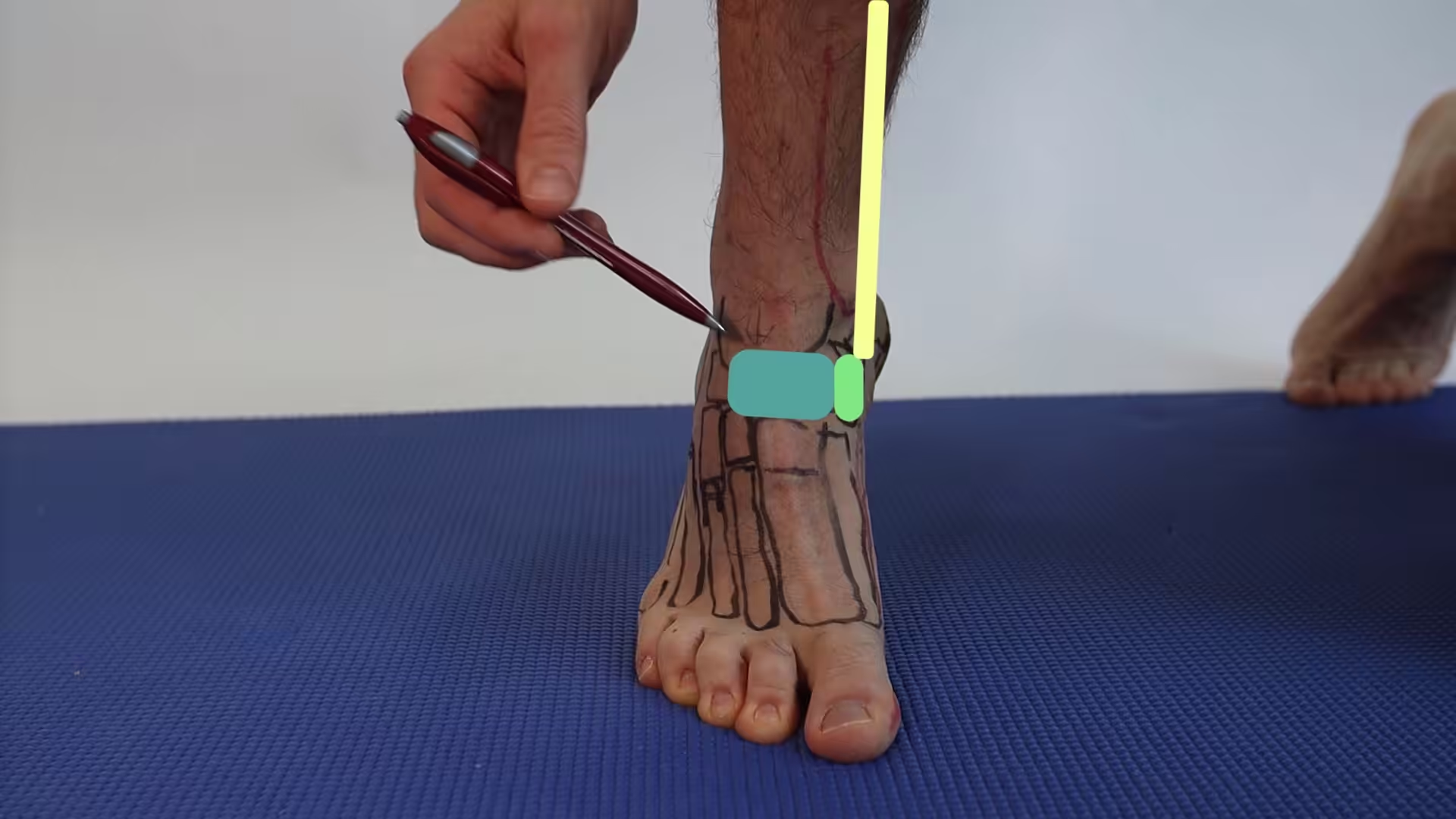
When to See a Podiatrist
If foot or ankle pain has been bothering you for more than a few weeks, home care alone may not be enough. Balance Foot & Ankle offers same-week appointments at our Howell and Bloomfield Township clinics — no referral needed in most cases. Bring your current shoes and a short list of symptoms and we’ll build you a treatment plan in one visit.
Call Balance Foot & Ankle: (810) 206-1402 · Book online · Offices in Howell & Bloomfield Township
Frequently Asked Questions
Is accessory navicular syndrome serious?
Accessory navicular syndrome is not dangerous but can cause significant pain that limits activity. Most cases respond to conservative treatment with orthotics and physical therapy. Surgery is only needed when persistent pain doesn’t improve after 6+ months of non-operative management.
Can you walk with accessory navicular syndrome?
Yes, most patients can walk but experience medial arch pain that worsens with prolonged activity. A CAM boot or supportive shoes with custom orthotics reduce pain during the treatment phase. Surgical correction allows return to full pain-free walking and sports.
Do you need surgery for an accessory navicular?
Not always. Conservative treatment succeeds in 60-80% of cases. Surgery is recommended when pain persists despite 6+ months of orthotics, immobilization, and physical therapy, or when the accessory bone causes posterior tibial tendon dysfunction and progressive flatfoot.
How common is accessory navicular bone?
Accessory navicular bones are present in 10-14% of the general population, but most never cause symptoms. Only a small percentage develop painful accessory navicular syndrome, typically triggered by trauma, overuse, or shoe irritation during adolescence or early adulthood.
The Bottom Line
Accessory navicular syndrome is a treatable cause of medial arch pain that affects adolescents and active adults. Conservative treatment with immobilization, orthotics, and physical therapy resolves most cases, while the modified Kidner procedure provides 90-95% success rates when surgery is needed. Early diagnosis with simple X-rays prevents unnecessary suffering and guides targeted treatment.
Differential Diagnosis: What Else Could It Be?
Not every case of accessory navicular syndrome is straightforward. In our clinic we routinely rule out three look-alike conditions before confirming the diagnosis. If your symptoms don’t match the classic presentation, one of these may explain the pain — which is why physical exam matters more than self-diagnosis.
| Condition | How It Differs |
|---|---|
| Posterior tibial tendon dysfunction | Pain along the tendon course with progressive flatfoot; may coexist. |
| Medial midfoot sprain | Ligamentous tenderness without a prominent bony bump. |
| Navicular stress fracture | Dorsal midfoot pain with impact; confirmed on MRI, not an accessory bone. |
Red Flags — When to See a Podiatrist Now
Seek same-day evaluation at Balance Foot & Ankle if you notice any of the following:
- Visible bony bump on the medial midfoot with redness
- Collapsing arch in a child or adolescent
- Pain preventing participation in sport
- Failed 6 weeks of orthotic and activity modification
Call (810) 206-1402 or request an appointment. Our Howell and Bloomfield Township offices reserve same-day slots for urgent foot and ankle issues.
In Our Clinic: What We See
Clinical perspective from Dr. Tom Biernacki, DPM — Balance Foot & Ankle, Howell & Bloomfield Township, MI:
Accessory navicular syndrome shows up in active adolescents and sometimes adults with a visible medial bump. In our clinic the exam finding is tenderness directly over the ossicle and pain with resisted inversion. X-rays confirm the accessory bone; MRI shows whether the ossicle is inflamed. Most patients respond to custom orthotics, activity modification, and short-term boot immobilization over 6-12 weeks. When conservative care fails, a Kidner procedure — excising the ossicle and re-attaching the posterior tibial tendon — restores arch function. Dr. Biernacki counsels families to try orthotics for 6 weeks first; surgery when needed is predictable but usually preventable.
Sources
- Foot & Ankle Orthopaedics 2024 — Epidemiology and risk factors for symptomatic accessory navicular syndrome
- Journal of Pediatric Orthopaedics 2025 — Modified Kidner procedure outcomes in adolescent athletes
- Foot & Ankle International 2024 — Percutaneous drilling vs excision for Type II accessory navicular
Expert Accessory Navicular Treatment in Michigan
Dr. Tom Biernacki has performed over 3,000 foot and ankle surgeries with a 4.9-star rating from 1,123 patient reviews.
Or call (810) 206-1402 for same-day appointments
Accessory Navicular Syndrome Treatment
An extra bone in the foot (accessory navicular) can cause chronic arch pain and posterior tibial tendon irritation. Dr. Tom Biernacki provides both conservative management and surgical excision for symptomatic cases.
Learn About Arch & Flatfoot Treatment → | Book Your Appointment | Call (810) 206-1402
Clinical References
- Chiu NT, et al. “The accessory navicular bone: clinical significance and management.” J Am Podiatr Med Assoc. 2000;90(7):357-366.
- Kidner FC. “The prehallux (accessory scaphoid) in its relation to flat-foot.” J Bone Joint Surg Am. 1929;11(4):831-837.
- Jasiewicz B, et al. “Results of the Kidner procedure in the treatment of painful accessory navicular.” Foot Ankle Surg. 2008;14(4):227-231.
Watch: Dr. Tom explains
Podiatrist-recommended products
As an Amazon Associate, Dr. Tom earns from qualifying purchases.
Medial arch support.
Immobilize during acute flare.
Reduce inflammation.
Topical arch relief.
Related resources
Ready to solve this? Book today.
Same-week appointments · Howell & Bloomfield Township · 4.9★ (1,123+ reviews)
Frequently Asked Questions
When should I see a doctor?
See a podiatrist if pain persists past 2 weeks, prevents normal activity, or is accompanied by red-flag symptoms (warmth, swelling, numbness, inability to bear weight).
Can I treat this at home?
Mild cases respond to RICE protocol (rest, ice, compression, elevation), supportive shoes, and OTC anti-inflammatories. Persistent symptoms need professional evaluation.
How long does it take to heal?
Most soft tissue injuries resolve in 2-6 weeks with appropriate care. Bone injuries take 6-12 weeks. Chronic conditions need longer-term management.

Dr. Tom Biernacki, DPM is a board-certified foot & ankle surgeon (ABFAS & ABPM) at Balance Foot & Ankle Specialists in Southeast Michigan. With over a decade of clinical experience, he specializes in heel pain, bunions, diabetic foot care, sports injuries, and minimally invasive surgery. Dr. Biernacki is a member of the APMA and ACFAS, and his patient education content on MichiganFootDoctors.com and YouTube has made him one of the most-followed foot & ankle educators on YouTube.