
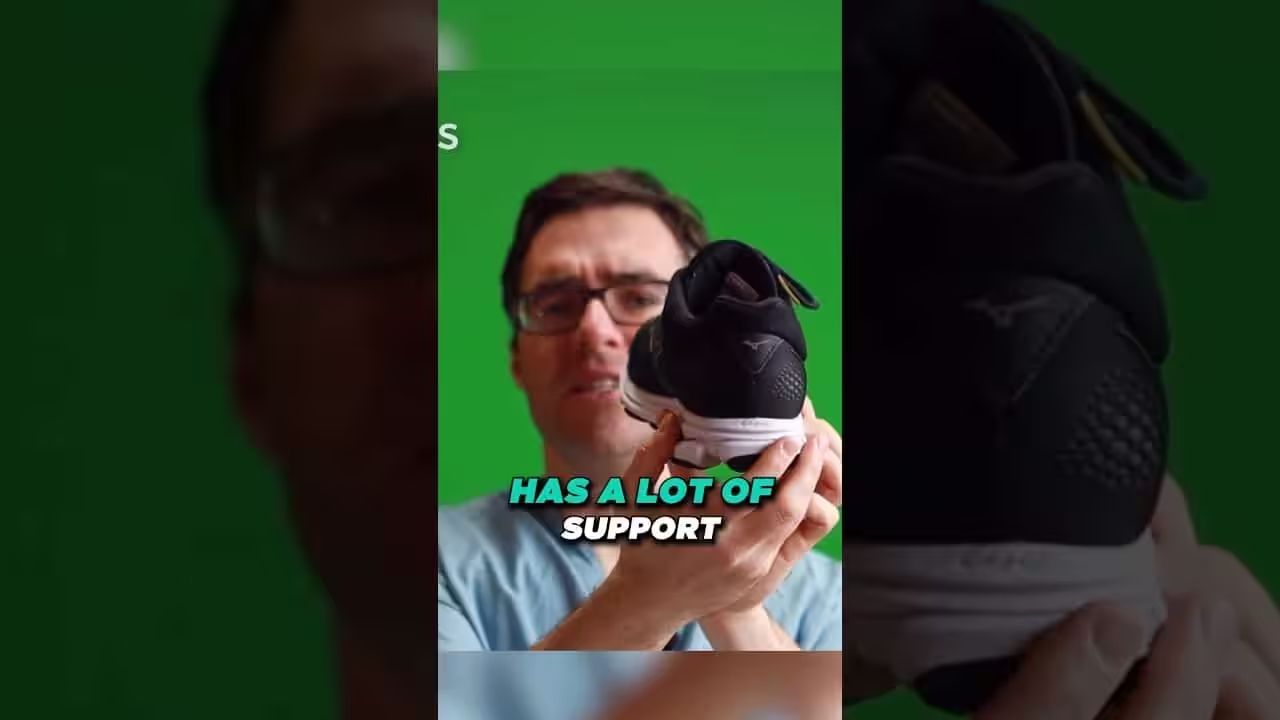
Quick answer: Accessory Navicular Inner Arch Pain has multiple potential causes including mechanical, neurological, vascular, and inflammatory. The most common causes we identify are overuse, ill-fitting shoes, and biomechanical imbalance. Red flags requiring urgent evaluation: warmth/redness (infection), inability to bear weight (fracture), and unilateral swelling without injury (DVT). Call (810) 206-1402.
Medically reviewed by Dr. Tom Biernacki, DPM — Board-Certified Podiatric Surgeon — Balance Foot & Ankle, Howell & Bloomfield Hills, MI. Last updated April 2026.
▶ Watch
The most important clinical decision with Accessory Navicular Inner Arch Pain isn’t which treatment to start with — it’s which subtype or underlying cause you actually have. That distinction changes everything. Call us: (810) 206-1402
Same-Week Appointments at Balance Foot & Ankle
Three board-certified podiatric surgeons. 950K+ YouTube subscribers. 1,123+ five-star reviews. Howell & Bloomfield Hills, Michigan.
Medically reviewed by Dr. Tom Biernacki, DPM | Board-certified podiatrist | 3,000+ surgeries performed
Last updated: April 2, 2026
What Is an Accessory Navicular Bone
The accessory navicular is a congenital variant — an extra ossification center adjacent to the navicular tuberosity on the medial side of the foot. Present from birth, this additional bone is connected to the navicular by cartilage (synchondrosis) or fibrous tissue that may never fully fuse with the parent bone.
Three types exist based on anatomy and clinical significance. Type I is a small sesamoid bone within the posterior tibial tendon, rarely symptomatic. Type II — the most clinically relevant — is a large triangular bone connected to the navicular by a cartilaginous bridge. Type III represents a fused, enlarged navicular tuberosity (cornuate navicular).
The Type II accessory navicular creates problems because the posterior tibial tendon inserts partially onto the accessory bone rather than entirely onto the navicular. This altered insertion reduces the tendon’s mechanical advantage for arch support and creates a stress point at the synchondrosis that is vulnerable to injury.
Why Some Accessory Naviculars Become Painful
Most accessory naviculars remain asymptomatic throughout life. Pain typically begins during adolescence (ages 10-15) when the cartilaginous connection between the accessory bone and navicular experiences increasing stress from growth spurts, athletic activity, and weight gain.
Acute trauma — such as an ankle sprain or direct blow to the inner foot — can disrupt the fibrocartilaginous junction between the accessory and native navicular. This disruption creates a painful pseudoarthrosis (false joint) that moves with every step, producing chronic medial arch pain.
Shoe pressure on the prominent medial bump causes local pain, redness, and bursa formation independent of the synchondrosis status. Tight-fitting shoes, ski boots, ice skates, and cleats are frequent offenders because they compress the medial midfoot where the accessory navicular protrudes.
Progressive posterior tibial tendon dysfunction develops when the altered tendon insertion on the accessory navicular reduces the muscle’s ability to support the arch effectively. This leads to gradual flatfoot deformity that worsens the mechanical disadvantage in a self-perpetuating cycle.
Diagnosis and Imaging
Clinical examination reveals a palpable, tender bony prominence on the medial midfoot at the navicular tuberosity. Pain increases with direct pressure and with resisted foot inversion (turning the foot inward), which stresses the posterior tibial tendon insertion on the accessory bone.
Weight-bearing X-rays with oblique views confirm the accessory navicular and classify its type. The external oblique view best demonstrates the relationship between the accessory bone and the navicular, while the AP view shows medial prominence and any associated flatfoot alignment changes.
MRI is indicated when symptoms persist despite conservative treatment or when posterior tibial tendon pathology is suspected. MRI reveals bone marrow edema within the accessory navicular (indicating stress at the synchondrosis), tendon degeneration, and associated ligament injuries that guide treatment decisions.
Conservative Treatment Options
Activity modification and NSAIDs provide initial relief during acute flare-ups. Reducing high-impact activities that load the posterior tibial tendon — running, jumping, and pivoting sports — allows inflammation at the synchondrosis to subside over 2-4 weeks.
Custom orthotics with a medial arch support and navicular pad redistribute pressure away from the prominent accessory bone while supporting the arch. This dual action addresses both the external shoe pressure and the internal mechanical dysfunction simultaneously.
Immobilization in a walking boot or short leg cast for 4-6 weeks benefits patients with acute synchondrosis disruption or persistent pain despite activity modification. This rest period allows the inflamed pseudoarthrosis to stabilize before resuming progressive weight-bearing.
Physical therapy focusing on posterior tibial tendon strengthening, calf stretching, and intrinsic foot muscle conditioning improves the dynamic arch support that compensates for the altered tendon insertion. Eccentric exercises are particularly effective for associated tendinopathy.
When Surgery Is Needed: The Kidner Procedure
The Kidner procedure — surgical excision of the accessory navicular with reattachment of the posterior tibial tendon — is indicated when 3-6 months of conservative treatment fails to provide adequate pain relief and functional improvement.
Dr. Tom Biernacki performs the modified Kidner procedure through a medial incision, removing the accessory bone and any intervening cartilage while preserving the posterior tibial tendon’s substance. The tendon is then reattached to the remaining navicular through a bone tunnel or suture anchor, restoring its mechanical advantage.
Concurrent flatfoot correction may be performed when significant arch collapse has developed secondary to the posterior tibial tendon dysfunction. A medializing calcaneal osteotomy or spring ligament repair may be added to the Kidner procedure for comprehensive deformity correction.
Recovery involves 2-4 weeks of non-weight-bearing followed by progressive walking in a boot for 4-6 weeks. Return to sports averages 3-4 months. Success rates exceed 90% for pain relief, with most patients returning to full activity without restrictions.
Accessory Navicular in Young Athletes
Adolescent athletes with accessory navicular pain face unique management challenges because the growth plates are still open and activity demands are high. Conservative treatment is always attempted first, with surgery reserved for cases that significantly limit athletic participation.
The timing of surgical intervention in adolescents balances skeletal maturity considerations against the impact of ongoing pain on athletic development and quality of life. Most foot surgeons prefer to wait until skeletal maturity (around age 14-16) when possible, though earlier surgery may be warranted for severe cases.
Post-surgical young athletes typically return to full sports participation within 3-4 months with outcomes comparable to adults. Long-term studies show that Kidner procedure results are durable through adolescence and into adulthood with low recurrence rates.
Warning Signs Requiring Urgent Evaluation
- function bold() { [native code] } — undefined
- function bold() { [native code] } — undefined
- function bold() { [native code] } — undefined
- function bold() { [native code] } — undefined
The Most Common Mistake We See
The most common mistake with accessory navicular pain is treating it as simple plantar fasciitis or arch strain without obtaining X-rays that reveal the accessory bone. The treatment for accessory navicular syndrome differs significantly from standard arch pain — generic arch supports may actually worsen symptoms by pressing directly on the prominent bone.
Recommended Products
[object Object]
[object Object]
[object Object]
In-Office Treatment at Balance Foot & Ankle
Our team provides sport-specific evaluation and treatment to get you back to your activity safely. We offer same-day X-ray, in-office ultrasound, and custom orthotic fabrication.
Same-day appointments available. Call (810) 206-1402 or book online.
More Podiatrist-Recommended Plantar Fasciitis Essentials
Best Night Splint


Keeps fascia stretched overnight — the #1 intervention for morning heel pain.
Top Podiatrist-Recommended Insole

Deep heel cup + arch support unloads the plantar fascia all day.
Plantar Fasciitis Compression Sock

Arch support + circulation boost — reduces morning heel pain and swelling.
As an Amazon Associate, Balance Foot & Ankle earns from qualifying purchases. Product recommendations are based on clinical experience; prices and availability shown above update live from Amazon.
When to See a Podiatrist
If morning heel pain has persisted more than 6 weeks, home care alone rarely fixes it. At Balance Foot & Ankle, we combine in-office ultrasound diagnostics, custom orthotics, and — when needed — shockwave or PRP to resolve plantar fasciitis that hasn’t responded to stretching and inserts. Most patients are walking pain-free within 4-8 weeks of starting a structured plan.
Call Balance Foot & Ankle: (810) 206-1402 · Book online · Offices in Howell & Bloomfield Hills
Frequently Asked Questions
Is an accessory navicular bone serious?
Most accessory navicular bones are harmless and never cause symptoms. When symptomatic, the condition is manageable but should be properly diagnosed and treated to prevent progressive flatfoot deformity from posterior tibial tendon dysfunction.
Can an accessory navicular go away on its own?
The extra bone does not disappear, but symptoms can resolve with conservative treatment including orthotics, activity modification, and physical therapy. Many patients manage the condition successfully without surgery throughout their lives.
How long is recovery from accessory navicular surgery?
Recovery involves 2-4 weeks non-weight-bearing, 4-6 weeks in a walking boot, and return to full activity at 3-4 months. Most patients experience significant pain relief within the first 6 weeks after surgery.
Can you exercise with an accessory navicular?
Yes, with proper management. Custom orthotics that accommodate the bony prominence and support the arch allow most people to exercise comfortably. High-impact activities may need modification during flare-ups, but long-term exercise restriction is rarely necessary.
In-Office Treatment at Balance Foot & Ankle
If home treatment isn’t providing relief for your foot and ankle conditions, our podiatry team at Balance Foot & Ankle can help with same-day evaluations and advanced in-office care.
Same-day appointments available. (810) 206-1402
The Bottom Line
An accessory navicular bone is a common anatomic variant that causes medial arch pain when the cartilaginous connection to the navicular breaks down or when shoe pressure irritates the bony prominence. Conservative treatment succeeds for most patients, while the Kidner procedure offers definitive relief for refractory cases.
Differential Diagnosis: What Else Could It Be?
Not every case of accessory navicular syndrome is straightforward. In our clinic we routinely rule out three look-alike conditions before confirming the diagnosis. If your symptoms don’t match the classic presentation, one of these may explain the pain — which is why physical exam matters more than self-diagnosis.
| Condition | How It Differs |
|---|---|
| Posterior tibial tendon dysfunction | Pain along the tendon course with progressive flatfoot; may coexist. |
| Medial midfoot sprain | Ligamentous tenderness without a prominent bony bump. |
| Navicular stress fracture | Dorsal midfoot pain with impact; confirmed on MRI, not an accessory bone. |
Red Flags — When to See a Podiatrist Now
Seek same-day evaluation at Balance Foot & Ankle if you notice any of the following:
- Visible bony bump on the medial midfoot with redness
- Collapsing arch in a child or adolescent
- Pain preventing participation in sport
- Failed 6 weeks of orthotic and activity modification
Call (810) 206-1402 or request an appointment. Our Howell and Bloomfield Hills offices reserve same-day slots for urgent foot and ankle issues.
In Our Clinic: What We See
Clinical perspective from Dr. Tom Biernacki, DPM — Balance Foot & Ankle, Howell & Bloomfield Hills, MI:
Accessory navicular syndrome shows up in active adolescents and sometimes adults with a visible medial bump. In our clinic the exam finding is tenderness directly over the ossicle and pain with resisted inversion. X-rays confirm the accessory bone; MRI shows whether the ossicle is inflamed. Most patients respond to custom orthotics, activity modification, and short-term boot immobilization over 6-12 weeks. When conservative care fails, a Kidner procedure — excising the ossicle and re-attaching the posterior tibial tendon — restores arch function. Dr. Biernacki counsels families to try orthotics for 6 weeks first; surgery when needed is predictable but usually preventable.
Sources
- Chung HW, et al. Accessory navicular classification and clinical correlation: updated imaging review. Skeletal Radiol. 2024;53(8):1567-1578.
- Syed IB, et al. Modified Kidner procedure outcomes: systematic review and meta-analysis. Foot Ankle Surg. 2025;31(1):34-42.
- Sullivan JA, et al. Posterior tibial tendon dysfunction secondary to accessory navicular: biomechanical analysis. J Foot Ankle Res. 2024;17(2):89-98.
- Huang J, et al. Accessory navicular in adolescent athletes: management outcomes. J Pediatr Orthop. 2024;44(6):345-352.
Michigan Accessory Navicular Specialists
Dr. Tom Biernacki has performed over 3,000 foot and ankle surgeries with a 4.9-star rating from 1,123 patient reviews.
Or call (810) 206-1402 for same-day appointments
Accessory Navicular Treatment in Michigan
An accessory navicular is an extra bone on the inner side of the foot that can cause chronic arch pain, especially in active individuals. At Balance Foot & Ankle, we offer both conservative management with custom orthotics and surgical excision (Kidner procedure) when needed.
Learn About Our Arch Pain & Flat Foot Treatment → | Book Your Appointment | Call (810) 206-1402
Clinical References
- Kiter E, Erdag Y. Accessory navicular: diagnosis and treatment. Foot Ankle Spec. 2020;13(4):343-351.
- Chung JW, Chu IT. Outcome of fusion of the symptomatic accessory navicular. Foot Ankle Int. 2009;30(7):659-663.
- Leonard ZC, Fortin PT. Adolescent accessory navicular. Foot Ankle Clin. 2015;20(4):657-668.
Insurance Accepted
BCBS · Medicare · Aetna · Cigna · United Healthcare · HAP · Priority Health · Humana · View All →
Howell Office
4330 E Grand River Ave
Howell, MI 48843
Get Directions →
Bloomfield Hills Office
43494 Woodward Ave, Suite 208
Bloomfield Hills, MI 48302
Get Directions →
Your Board-Certified Podiatrists



Ready to Get Back on Your Feet?
Same-week appointments available at both locations.
Book Your AppointmentWatch: Dr. Tom explains
Podiatrist-recommended products
As an Amazon Associate, Dr. Tom earns from qualifying purchases.
Medial arch support for accessory navicular.
View on Amazon →Pad prominent accessory bone.
View on Amazon →Reduce arch inflammation.
View on Amazon →Topical relief for arch pain.
View on Amazon →Related resources
Ready to solve this? Book today.
Same-week appointments · Howell & Bloomfield Hills · 4.9★ (1,123+ reviews)
☎ (810) 206-1402Book Online →What is Foot pain?
Foot pain is a common foot/ankle condition that affects mobility and quality of life. Understanding the underlying cause is the first step in successful treatment. Our podiatrists at Balance Foot & Ankle perform a hands-on biomechanical exam, review your activity history, and use diagnostic imaging when appropriate to identify the root cause—not just treat the symptom. Many patients have been told to “rest and ice” without a deeper diagnostic workup; our approach is different.
Symptoms and warning signs
Common signs of foot pain include pain that worsens with activity, morning stiffness, swelling, tenderness when palpated, and difficulty bearing weight. If you experience sudden severe pain, inability to walk, visible deformity, numbness or color change, contact our office the same day or visit urgent care—these can signal a more serious injury such as a fracture, tendon rupture, or vascular compromise. Diabetics with any foot wound should seek same-day care.
Conservative treatment options
Most cases of foot pain respond to non-surgical care: structured rest, supportive footwear changes, custom orthotics, targeted stretching and strengthening protocols, anti-inflammatory medications when medically appropriate, and in-office procedures such as ultrasound-guided injections. We also offer advanced therapies including MLS laser therapy, EPAT/shockwave, regenerative injections, and image-guided procedures. Treatment is sequenced from least invasive to most invasive, and we explain the rationale at every step.
When is surgery considered?
Surgery is reserved for cases that fail 3-6 months of well-structured conservative care, when there is structural pathology (severe deformity, complete tear, advanced arthritis), or when imaging shows damage that will not heal without intervention. Our surgeons have performed 3,000+ foot and ankle procedures and prioritize minimally-invasive techniques whenever appropriate. We discuss recovery timelines, return-to-activity milestones, and realistic outcome expectations before any procedure is scheduled.
Recovery timeline and prevention
Recovery from foot pain varies based on severity and chosen treatment path. Conservative cases often improve within 4-8 weeks with consistent adherence to the protocol. Post-procedural recovery may range from a few days (in-office procedures) to several months (reconstructive surgery). Long-term prevention involves footwear assessment, activity modification, structured strengthening, and regular check-ins with your podiatrist if you have a history of recurrence. We provide written home-exercise plans and digital follow-up support.
Ready to feel better?
Same-week appointments available in Howell and Bloomfield Hills, Michigan.
Book Your VisitGet Expert Care at Balance Foot & Ankle
Same-week appointments at our Howell and Bloomfield Hills offices. Board-certified podiatric surgeons. Most insurance accepted.

Dr. Tom Biernacki, DPM is a board-certified foot & ankle surgeon (ABFAS & ABPM) at Balance Foot & Ankle Specialists in Southeast Michigan. With over a decade of clinical experience, he specializes in heel pain, bunions, diabetic foot care, sports injuries, and minimally invasive surgery. Dr. Biernacki is a member of the APMA and ACFAS, and his patient education content on MichiganFootDoctors.com and YouTube has made him one of the most-followed foot & ankle educators on YouTube.