

Medically reviewed by Dr. Tom Biernacki, DPM
Board-certified podiatric surgeon | Balance Foot & Ankle, Howell & Bloomfield Hills, MI
Last reviewed: May 2026
| Grade | Ligament Damage | Structural Integrity | Swelling/Bruising | Weight-Bearing Ability | Recovery Timeline |
|---|---|---|---|---|---|
| Grade I (Mild) | Microscopic tears; ligament stretched | Intact; no laxity on stress testing | Mild swelling; minimal bruising | Painful but possible | 1–2 weeks |
| Grade II (Moderate) | Partial tear of ATFL ± CFL | Mild laxity on anterior drawer; end-point present | Moderate swelling; bruising within 24h | Limited; antalgic gait | 3–6 weeks |
| Grade III (Severe) | Complete ATFL tear; often CFL torn | Significant laxity; no end-point on anterior drawer | Severe swelling; diffuse ecchymosis within hours | Very difficult; may require crutches | 8–12 weeks; up to 6 months for sport |
| Phase | Timeframe | Interventions | Goals | Milestones |
|---|---|---|---|---|
| Acute / Protection | 0–72 hours | PRICE (Protection, Rest, Ice, Compression, Elevation); NSAIDs; ankle brace or splint | Reduce edema and pain; protect ligament | Pain <4/10; swelling stable |
| Early Mobilization | Days 3–14 | Range-of-motion exercises; peroneal activation; pool walking; Grade I–II joint mobilization | Restore dorsiflexion; prevent stiffness | Full ROM; pain-free ambulation in brace |
| Strengthening | Weeks 2–6 | Resistance band eversion; calf raises; proprioception board; balance training | Restore peroneal strength and proprioception | Single-leg balance >30 sec; full WB |
| Functional / Sport-Specific | Weeks 4–12 | Jogging; cutting drills; sport-specific agility; ankle brace during return | Return to full sport safely | Y-balance test symmetric; sport clearance |
| Chronic Instability Prevention | Ongoing | Lace-up brace for 12 months post-injury; peroneal strengthening maintenance; proprioception training | Prevent 40% re-sprain rate | No re-injury at 6-month follow-up |
Knowing your sprain grade tells you when you walk again, when you run again, and whether surgery is in the cards.
You are in the right place. Dr. Tom Biernacki, DPM, FACFAS — board-certified foot & ankle surgeon with 3,000+ surgeries — explains exactly what ankle sprain grades, treatment, and recovery timeline means and what works. Call (810) 206-1402 for same-day appointment at Howell or Bloomfield Hills.
Quick answer: Treatment for ankle sprain grades treatment recovery timeline follows a stepwise approach: 1) conservative care first (rest, ice, supportive footwear, OTC anti-inflammatories), 2) physical therapy and targeted exercises, 3) in-office treatments (injections, custom orthotics) if conservative fails at 4-6 weeks, 4) surgery for refractory cases. Most patients resolve at step 1 or 2. Call (810) 206-1402.
Medically Reviewed | Dr. Tom Biernacki, DPM | Board-Certified Podiatric Surgeon | Balance Foot & Ankle, Michigan

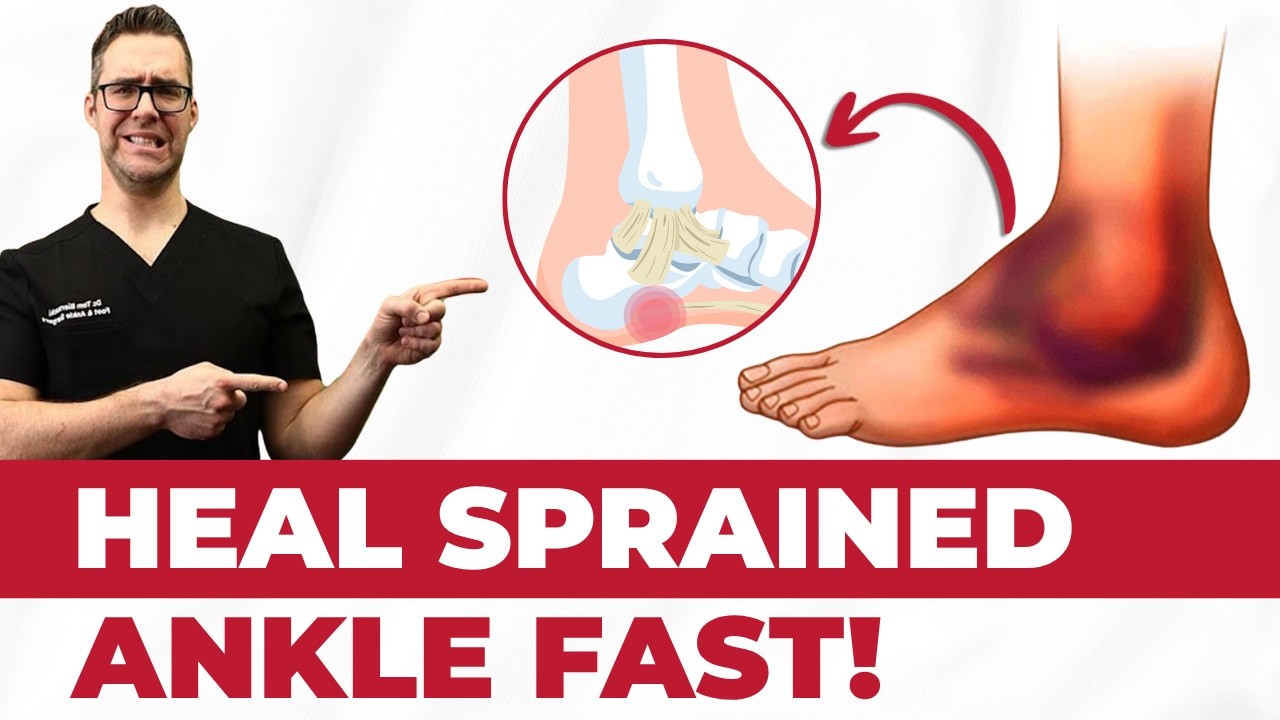
Watch: Fix TWISTED Ankle, ROLLED Ankle or SPRAINED Ankle Ligaments FASTER! — MichiganFootDoctors YouTube
The most important clinical decision with Ankle Sprain Grades Treatment Recovery Timeline isn’t which treatment to start with — it’s identifying the correct subtype. That changes everything. Call (810) 206-1402.
The most important clinical decision with Ankle Sprain Grades Treatment Recovery Timeline isn’t which treatment to start with — it’s identifying the correct subtype. That changes everything. Call (810) 206-1402.
Understanding Ankle Sprain Grades
Ankle sprains are among the most common musculoskeletal injuries — an estimated 25,000 occur daily in the United States. They most commonly involve the lateral (outer) ankle ligaments: the anterior talofibular ligament (ATFL), the calcaneofibular ligament (CFL), and occasionally the posterior talofibular ligament (PTFL). Grading the severity of the injury is critical because treatment and recovery timelines differ significantly by grade.
At Balance Foot & Ankle, Dr. Tom Biernacki performs a systematic ankle examination — including stress testing, palpation of each ligament, and assessment for associated injuries — to accurately grade ankle sprains and prescribe appropriate rehabilitation.
Grade 1 Ankle Sprain
A Grade 1 sprain involves stretching of the ATFL without macroscopic tearing. Symptoms include mild tenderness, minimal swelling, no instability on stress testing, and preserved ability to weight-bear. Recovery typically takes 1–2 weeks with RICE (Rest, Ice, Compression, Elevation), an elastic support brace, and progressive return to activity. Full rehabilitation of proprioception — often overlooked — is essential to prevent recurrence.
Grade 2 Ankle Sprain
A Grade 2 sprain involves partial tearing of the ATFL and possibly the CFL. Symptoms include moderate pain, significant swelling and bruising, mild to moderate instability on anterior drawer testing, and difficulty weight-bearing in the acute phase. A lace-up ankle brace or walking boot for 2–4 weeks is appropriate, followed by 4–6 weeks of structured physical therapy focusing on proprioception and peroneal strengthening. Return to sport occurs at 4–8 weeks.
Grade 3 Ankle Sprain
A Grade 3 sprain involves complete rupture of the ATFL, typically with CFL involvement as well. Symptoms include severe pain, marked swelling and ecchymosis, significant instability on stress testing, and inability to weight-bear without support. Treatment is typically conservative — a walking boot for 4–6 weeks, followed by aggressive physical therapy — with surgical ligament reconstruction (Brostrom-Gould) reserved for cases that develop chronic instability after 3–6 months of rehabilitation. Return to sport: 8–12 weeks conservatively, 4–6 months after surgery.
Associated Injuries to Rule Out
A thorough ankle sprain evaluation must rule out associated injuries frequently missed in the acute setting: fifth metatarsal fracture (Jones or avulsion), fibula fracture, osteochondral defect of the talus (lateral OCD lesion), peroneal tendon tear or subluxation, and syndesmosis (high ankle) sprain. These injuries require significantly different management and may be present without being clinically obvious in the acute phase.
Preventing Chronic Ankle Instability
The most important principle in ankle sprain management is completing proper rehabilitation — not just waiting for the pain to subside. Studies show that 40–75% of patients who do not complete proprioceptive rehabilitation after an ankle sprain develop chronic ankle instability within 12 months. A structured program addressing peroneal strength, single-leg balance, and sport-specific neuromuscular control is essential before return to play at any level.
Dr. Tom's Product Recommendations

Zamst A2-DX Strong Ankle Brace
⭐ Highly Rated
The highest-rated ankle brace for Grade 2–3 sprains — medial and lateral strapping mimics ligament support during rehabilitation.
Dr. Tom says: “Dr. Biernacki’s top recommendation for return-to-sport after significant ankle sprains.”
Best ankle sprain brace
Bulky — may not fit in all athletic shoes; lace-up braces work for Grade 1
Disclosure: We earn a commission at no extra cost to you.

BioFreeze Pain Relief Gel
⭐ Highly Rated
Topical analgesic for acute ankle sprain pain management between icing sessions.
Dr. Tom says: “Useful in the first 1–2 weeks for managing local pain without masking systemic inflammation.”
Best topical for ankle sprain pain
Not a substitute for proper RICE protocol in the acute phase
Disclosure: We earn a commission at no extra cost to you.
✅ Pros / Benefits
- M
- o
- s
- t
- a
- n
- k
- l
- e
- s
- p
- r
- a
- i
- n
- s
- —
- i
- n
- c
- l
- u
- d
- i
- n
- g
- G
- r
- a
- d
- e
- 3
- —
- r
- e
- s
- o
- l
- v
- e
- f
- u
- l
- l
- y
- w
- i
- t
- h
- a
- p
- p
- r
- o
- p
- r
- i
- a
- t
- e
- c
- o
- n
- s
- e
- r
- v
- a
- t
- i
- v
- e
- t
- r
- e
- a
- t
- m
- e
- n
- t
- a
- n
- d
- r
- e
- h
- a
- b
- i
- l
- i
- t
- a
- t
- i
- o
- n
- .
- G
- r
- a
- d
- e
- 1
- –
- 2
- s
- p
- r
- a
- i
- n
- s
- t
- y
- p
- i
- c
- a
- l
- l
- y
- r
- e
- t
- u
- r
- n
- t
- o
- s
- p
- o
- r
- t
- w
- i
- t
- h
- i
- n
- 4
- –
- 8
- w
- e
- e
- k
- s
- .
❌ Cons / Risks
- I
- n
- c
- o
- m
- p
- l
- e
- t
- e
- r
- e
- h
- a
- b
- i
- l
- i
- t
- a
- t
- i
- o
- n
- l
- e
- a
- d
- s
- t
- o
- c
- h
- r
- o
- n
- i
- c
- a
- n
- k
- l
- e
- i
- n
- s
- t
- a
- b
- i
- l
- i
- t
- y
- i
- n
- a
- s
- i
- g
- n
- i
- f
- i
- c
- a
- n
- t
- p
- r
- o
- p
- o
- r
- t
- i
- o
- n
- o
- f
- p
- a
- t
- i
- e
- n
- t
- s
- .
- A
- s
- s
- o
- c
- i
- a
- t
- e
- d
- i
- n
- j
- u
- r
- i
- e
- s
- (
- O
- C
- D
- l
- e
- s
- i
- o
- n
- ,
- p
- e
- r
- o
- n
- e
- a
- l
- t
- e
- a
- r
- )
- a
- r
- e
- c
- o
- m
- m
- o
- n
- l
- y
- m
- i
- s
- s
- e
- d
- a
- n
- d
- c
- o
- m
- p
- l
- i
- c
- a
- t
- e
- r
- e
- c
- o
- v
- e
- r
- y
- .
Dr. Tom Biernacki’s Recommendation
I always tell patients: ‘The pain going away is not the same as being ready to return to sport.’ A properly rehabbed ankle is strong and proprioceptively trained. An under-rehabbed ankle is just waiting to be sprained again — and each subsequent sprain stretches the ligaments further.
— Dr. Tom Biernacki, DPM | Board-Certified Podiatric Surgeon | Balance Foot & Ankle
Frequently Asked Questions
How do I know if my ankle sprain is Grade 1, 2, or 3?
Grade is determined by clinical examination — the amount of swelling and bruising, ability to bear weight, and stability on stress testing. Imaging rules out fracture and associated injuries. A podiatrist can accurately grade your sprain in a single visit.
Do I need X-rays for an ankle sprain?
The Ottawa Ankle Rules guide X-ray decisions — if there is tenderness over the bony prominences or inability to bear weight, X-rays are indicated. MRI is needed to evaluate ligament integrity and rule out OCD lesions in more significant sprains.
When should I see a doctor for an ankle sprain?
See a podiatrist if you cannot bear weight, if swelling is severe, if you have bruising on the bottom of the foot (possible fracture), if symptoms don’t improve within 5–7 days, or if you’ve had multiple ankle sprains.
Can an ankle sprain cause long-term problems?
Yes — undertreated ankle sprains are the primary cause of chronic ankle instability, which leads to recurrent sprains, cartilage damage, and peroneal tendon injury. Proper initial treatment and rehabilitation prevents these long-term sequelae.
Michigan Foot Pain? See Dr. Biernacki In Person
4.9★ rated | 1,123 Reviews | 3,000+ Surgeries
Same-week appointments · Howell & Bloomfield Hills
📞 (810) 206-1402 Book Online →Frequently Asked Questions
How long does treatment take to work?
Most patients see improvement in 4-8 weeks with consistent conservative care. Persistent symptoms after 8 weeks need imaging and escalation.
When is surgery needed?
Surgery is reserved for cases that fail 3-6 months of conservative care, structural deformities, or fractures requiring stabilization.
Is this covered by insurance?
Most diagnostic visits and conservative treatments are covered by Medicare and major insurers. Custom orthotics often require diabetic or post-surgical justification.
In-Office Treatment at Balance Foot & Ankle
If home treatment isn’t providing relief for your ankle sprains, our podiatry team at Balance Foot & Ankle can help with same-day evaluations and advanced in-office care.
OrthoInfo – AAOS: Sprained Ankle
Ready to Get Relief?
Same-day appointments available in Howell & Bloomfield Hills, MI
4.9★ | 1,123 Reviews | 3,000+ Surgeries
Or call: (810) 206-1402

Dr. Tom Biernacki, DPM is a board-certified foot & ankle surgeon (ABFAS & ABPM) at Balance Foot & Ankle Specialists in Southeast Michigan. With over a decade of clinical experience, he specializes in heel pain, bunions, diabetic foot care, sports injuries, and minimally invasive surgery. Dr. Biernacki is a member of the APMA and ACFAS, and his patient education content on MichiganFootDoctors.com and YouTube has made him one of the most-followed foot & ankle educators on YouTube.