
The most important clinical decision with Athletic Turf Toe Mechanism Grading Return To Play isn't which treatment to start with — it's which subtype or underlying cause you actually have. Our podiatrists regularly see patients who've been treated for months for the wrong diagnosis. The correct identification changes the entire treatment path. Call (810) 206-1402 — Dr. Tom evaluates this condition at both Howell and Bloomfield Township locations.

Athletic turf toe (first MTP sprain) classification and return-to-play timeline depend on grade — Grade I returns in 1-2 weeks, Grade III often needs 6-12 weeks plus a stiff carbon plate insert.
You’re in the right place. Dr. Tom Biernacki, DPM, FACFAS — board-certified foot & ankle surgeon with 3,000+ surgeries — explains exactly what athletic turf toe means and what works. Call (810) 206-1402 for same-day appointment at Howell or Bloomfield Township.
Medically reviewed by Dr. Tom Biernacki, DPM · Board-Certified Podiatric Surgeon · Last reviewed: April 2026 · Editorial Policy
The most important clinical decision with Athletic Turf Toe Mechanism Grading Return To Play isn’t which treatment to start with — it’s identifying the correct subtype. That changes everything. Call (810) 206-1402.
Quick Answer
Athletic Turf Toe: Mechanism, Grading System, and Return to relates to toe deformity — typically caused by imbalanced muscles + footwear. Most patients improve in depends on severity with conservative care. Same-week appointments in Howell + Bloomfield Township: (810) 206-1402.
Medically reviewed by Dr. Tom Biernacki, DPM — Board-certified foot & ankle surgeon, 3,000+ surgeries performed. Updated April 2026 with current clinical evidence. This article reflects real practice experience from Balance Foot & Ankle Specialists in Howell and Bloomfield Township, Michigan.
Quick Answer
Most foot and ankle problems respond to conservative care — proper footwear, supportive inserts, activity modification, and targeted stretching — within 4-8 weeks. Persistent pain beyond that window, or any symptom that prevents walking, warrants a podiatric evaluation to rule out fracture, tendon tear, or systemic cause.
Watch: Dr. Tom Biernacki, DPM
Medically reviewed by Dr. Tom Biernacki, DPM — Board-Certified Podiatric Surgeon — Balance Foot & Ankle, Howell & Bloomfield Township, MI. Last updated April 2026.
▶ Watch
Medically Reviewed by Dr. Tom Biernacki, DPM — Board-Certified Podiatrist, Balance Foot & Ankle Specialists, Michigan. Last updated April 2026.
Turf toe — a capsuloligamentous sprain of the first metatarsophalangeal (MTP) joint — is a common athletic injury that is frequently undertreated, producing chronic first MTP instability, hallux rigidus, and significant long-term functional impairment in athletes who return to play too quickly without adequate management. The injury’s relatively benign-sounding name belies its potential career impact — turf toe caused significant long-term impairment in over one-third of NFL players surveyed at 10-year follow-up in published series.
Mechanism
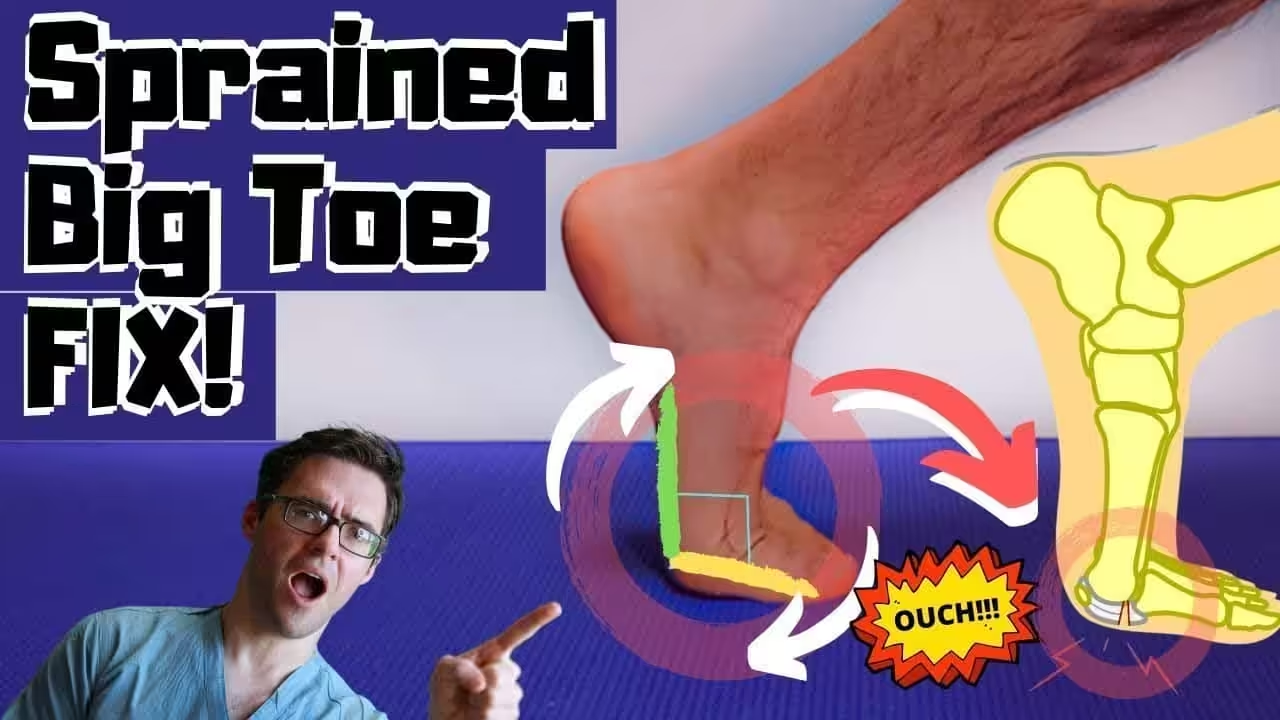
The classic turf toe mechanism is hyperextension of the first MTP joint beyond physiological range during loaded push-off — the forefoot is planted with the hallux in dorsiflexion (as occurs with linemen pushing off the line or receivers planting for a cut), and an axial load drives the MTP joint into further hyperextension, spraining or tearing the plantar capsuloligamentous complex (plantar plate, flexor hallucis brevis, and sesamoid ligamentous attachments). The injury occurs preferentially on artificial turf because the increased surface friction and stiffness of modern synthetic turf cleats prevent the forefoot from sliding, redirecting the ground reaction force into the MTP joint. Flexible athletic footwear compounds the risk by providing inadequate plate stiffness to limit dorsiflexion.
Grading and Implications
Grade 1 (stretch): plantar capsuloligamentous stretch without macroscopic tear — minimal swelling, tender to palpation, normal X-ray. Grade 2 (partial tear): partial plantar plate or capsuloligamentous tear — moderate swelling, ecchymosis, limited active dorsiflexion, MRI shows partial tear. Grade 3 (complete tear): complete plantar plate disruption, possible sesamoid fracture or diastasis — marked swelling, inability to weight-bear, MRI confirms complete tear and possible sesamoid injury. Sesamoid diastasis (separation of bipartite sesamoid fragments) and sesamoid fracture are associated injuries that significantly extend recovery and may require surgical management.
Treatment and Return to Play
Grade 1: taping in neutral position, stiff-soled shoe, return to play as symptoms allow (days). Grade 2: non-weight-bearing or protected weight-bearing for 1–2 weeks, rigid plate footwear, return to sport 2–4 weeks. Grade 3: non-weight-bearing for 4–6 weeks minimum, with consideration for surgical repair of complete plantar plate tears in high-level athletes — non-operative management of Grade 3 turf toe produces significant chronic instability and accelerated arthritis in a substantial proportion of professional athletes. Dr. Biernacki at Balance Foot & Ankle evaluates athletic first MTP injuries with on-site X-ray and MRI coordination for appropriate grading and management. Call (810) 206-1402 at our Bloomfield Township or Howell office.
📧 Get Dr. Tom’s Free Lab Test Guide
Discover the 5 lab tests every person over 35 should ask their doctor about — explained in plain English by a board-certified physician.
📍 Located in Michigan?
Our board-certified podiatrists treat this condition at two convenient locations. Same-day appointments often available.
Differential Diagnosis: What Else Could It Be?
Not every case of turf toe / first mtp sprain is straightforward. In our clinic we routinely rule out three look-alike conditions before confirming the diagnosis. If your symptoms don’t match the classic presentation, one of these may explain the pain — which is why physical exam matters more than self-diagnosis.
| Condition | How It Differs |
|---|---|
| Hallux rigidus | Chronic progressive stiffness, not a single hyperextension event; dorsal osteophyte on X-ray. |
| Sesamoiditis | Pain under the joint (at the sesamoid bones), not on top; worse with push-off. |
| Gout | Warm, erythematous, crystal-driven flare; elevated uric acid and crystal arthrocentesis. |
Red Flags — When to See a Podiatrist Now
Seek same-day evaluation at Balance Foot & Ankle if you notice any of the following:
- Inability to push off big toe
- Swelling and bruising across entire joint
- Grade 3 injury on MRI (complete plantar plate tear)
- Progressive hallux valgus after injury
Call (810) 206-1402 or request an appointment. Our Howell and Bloomfield Township offices reserve same-day slots for urgent foot and ankle issues.
In Our Clinic: What We See
Clinical perspective from Dr. Tom Biernacki, DPM — Balance Foot & Ankle, Howell & Bloomfield Township, MI:
Turf toe is the injury everyone remembers — a football cleat stuck in the turf, a yoga pose that forced the toe too far back, or a misstep off a curb. In our clinic we grade 1, 2, or 3. Grade 1 is taping, a stiff-soled shoe, and return to play in a week. Grade 2 frequently takes 4-6 weeks and may need a carbon-fiber plate inside the shoe. Grade 3 plantar-plate tears need imaging and often surgical repair. We have patients keep a photo of the toe in neutral so we can track swelling and bruising across follow-ups. Return-to-sport is earned, not timed.
In-Office Treatment at Balance Foot & Ankle
If home care isn’t resolving your your foot or ankle concern, a visit with a board-certified podiatrist is the fastest path to accurate diagnosis and a personalized plan. At Balance Foot & Ankle Specialists, Dr. Tom Biernacki, Dr. Carl Jay, and Dr. Daria Gutkin offer same-day and next-day appointments at both our Howell and Bloomfield Township offices. We perform on-site diagnostic ultrasound, digital X-ray, conservative care, advanced regenerative treatments, and minimally invasive surgery when indicated.
Call (810) 206-1402 or request an appointment online. Most insurance plans accepted, including Medicare, Blue Cross Blue Shield, Aetna, Cigna, and United Healthcare.
More Podiatrist-Recommended Sports Essentials
Hoka Clifton 10

Watch: #1 Big Toe Joint Pain Cure [Arthritis? Sesamoiditis? Turf Toe? Gout?] — MichiganFootDoctors YouTube
Max-cushion everyday shoe — podiatrist favorite for walking and running.

OOFOS Recovery Slide

Impact-absorbing recovery sandal — wear after long days on your feet.
As an Amazon Associate, Balance Foot & Ankle earns from qualifying purchases. Product recommendations are based on clinical experience; prices and availability shown above update live from Amazon.

When to See a Podiatrist
Athletic injuries heal faster with sport-specific rehab protocols — not generic rest and ice. Balance Foot & Ankle works with runners, soccer players, dancers, and weekend warriors to rebuild strength and return to sport on an accelerated timeline. Don’t let a foot injury keep you sidelined longer than necessary.
Call Balance Foot & Ankle: (810) 206-1402 · Book online · Offices in Howell & Bloomfield Township
Frequently Asked Questions
When should I see a podiatrist?
See a podiatrist for any foot or ankle pain that persists more than 2 weeks, doesn’t improve with rest, limits your daily activities, or is accompanied by swelling, numbness, or skin changes. People with diabetes or circulation problems should see a podiatrist regularly even without symptoms.
What does a podiatrist treat?
Podiatrists diagnose and treat all conditions of the foot, ankle, and lower leg including plantar fasciitis, bunions, hammertoes, toenail problems, heel pain, nerve pain, diabetic foot care, sports injuries, fractures, and foot deformities — both surgically and non-surgically.
What can I expect at my first podiatry visit?
Your first visit includes a full medical history, physical examination of your feet and gait, and in-office diagnostic imaging if needed (X-rays, ultrasound). We’ll discuss your diagnosis and create a plan tailored to your foot type. Most visits take 30–45 minutes.
Need Treatment at Balance Foot & Ankle?
Dr. Tom Biernacki, Dr. Carl Jay, and Dr. Daria Gutkin see patients at our Howell and Bloomfield Township offices.
Book Online or call (810) 206-1402
Insurance Accepted
BCBS · Medicare · Aetna · Cigna · United Healthcare · HAP · Priority Health · Humana · View All →
Howell Office
4330 E Grand River Ave
Howell, MI 48843
Get Directions →
Bloomfield Township Office
43494 Woodward Ave, #208
Bloomfield Township, MI 48302
Get Directions →
Your Board-Certified Podiatrists



Ready to Get Back on Your Feet?
Same-week appointments available at both locations.
Book Your AppointmentMost Common Mistake We See
The most common mistake we see is: Waiting too long before seeking care. Fix: any foot pain lasting more than 4 weeks, or any sudden severe symptom, deserves a professional evaluation rather than more rest.
Warning Signs That Need Same-Day Care
Seek immediate evaluation at Balance Foot & Ankle if you experience any of the following:
- Unable to bear weight
- Severe swelling with skin colour change
- Fever with foot pain (possible infection)
- Diabetes plus any new foot symptom
Call (810) 206-1402 — same-day and next-day appointments at our Howell and Bloomfield Township offices.
Watch: Dr. Tom explains
Podiatrist-recommended products
As an Amazon Associate, Dr. Tom earns from qualifying purchases.
First MTP stabilization.
View on Amazon →Restricts MTP motion.
View on Amazon →Return-to-play rehab.
View on Amazon →Swelling management.
View on Amazon →Related resources
Ready to solve this? Book today.
Same-week appointments · Howell & Bloomfield Township · 4.9★ (1,123+ reviews)
☎ (810) 206-1402Book Online →Pros & Cons of Conservative Care for foot care
Advantages
- ✓ Conservative care first
- ✓ Same-week appointments
- ✓ Multiple insurance accepted
Considerations
- ✗ Self-treatment can mask issues
- ✗ See a podiatrist if pain >2 weeks
Dr. Tom’s Recommended Products for foot care
Affiliate disclosure: As an Amazon Associate, Balance Foot & Ankle earns from qualifying purchases. We only recommend products we use with patients.
Footnanny Heel Cream Dr. Tom’s Pick
Best for: Daily moisturizer for cracked heels
Ready to Get Back on Your Feet?
Same-day appointments in Howell + Bloomfield Township. Most insurance accepted. Dr. Tom Biernacki, DPM & team.
Book Today — Same-Day Appointments Available
Call Now: (810) 206-1402
About Your Care Team at Balance Foot & Ankle
Dr. Tom Biernacki, DPM · Board-Certified Foot & Ankle Surgeon. Specializes in conservative-first care, minimally invasive bunion surgery, and complex reconstruction.
Dr. Carl Jay, DPM · Accepting new patients. Specializes in sports medicine, athletic injuries, and routine podiatric care.
Dr. Daria Gutkin, DPM, AACFAS · Accepting new patients. Specializes in surgical reconstruction and pediatric podiatry.
Locations: 4330 E Grand River Ave, Howell, MI 48843 · 43494 Woodward Ave Suite 208, Bloomfield Township, MI 48302
Hours: Mon–Fri 8:00 AM – 5:00 PM · (810) 206-1402
Frequently Asked Questions
When should I see a podiatrist?
If symptoms persist past 2 weeks, affect your normal activity, or are accompanied by red-flag symptoms (warmth, redness, swelling, inability to bear weight).
What does treatment cost?
Most diagnostic visits and conservative treatments are covered by Medicare and major insurers. Out-of-pocket costs vary by your specific plan.
How quickly can I get an appointment?
Most non-urgent cases see us within 5 business days. Urgent cases (sudden pain, possible fracture) typically same or next business day.
Doctor Hoy’s Natural Pain Relief Gel
Natural topical pain relief I use in our clinic. Arnica + camphor formula — apply directly to the area 3–4x daily. ($20–25)
Shop Doctor Hoy’s →Ready for Expert Care?
Same-day appointments in Howell & Bloomfield Township, MI.
4.9★ | 1,123 Reviews | 3,000+ Surgeries
Or call: (810) 206-1402

Dr. Tom Biernacki, DPM is a board-certified foot & ankle surgeon (ABFAS & ABPM) at Balance Foot & Ankle Specialists in Southeast Michigan. With over a decade of clinical experience, he specializes in heel pain, bunions, diabetic foot care, sports injuries, and minimally invasive surgery. Dr. Biernacki is a member of the APMA and ACFAS, and his patient education content on MichiganFootDoctors.com and YouTube has made him one of the most-followed foot & ankle educators on YouTube.