
Medically reviewed by Dr. Tom Biernacki, DPM · Board-Certified Podiatric Surgeon · Last reviewed: April 2026 · Editorial Policy
Quick Answer
Corns and Calluses: Pathomechanics, Conservative Care, and D relates to foot pain — typically caused by overuse, footwear, or biomechanics. Most patients improve in 6-12 weeks with conservative care. Same-week appointments in Howell + Bloomfield Twp: (810) 206-1402.

Medically reviewed by Dr. Tom Biernacki, DPM — Board-certified foot & ankle surgeon, 3,000+ surgeries performed. Updated April 2026 with current clinical evidence. This article reflects real practice experience from Balance Foot & Ankle Specialists in Howell and Bloomfield Hills, Michigan.
Quick Answer
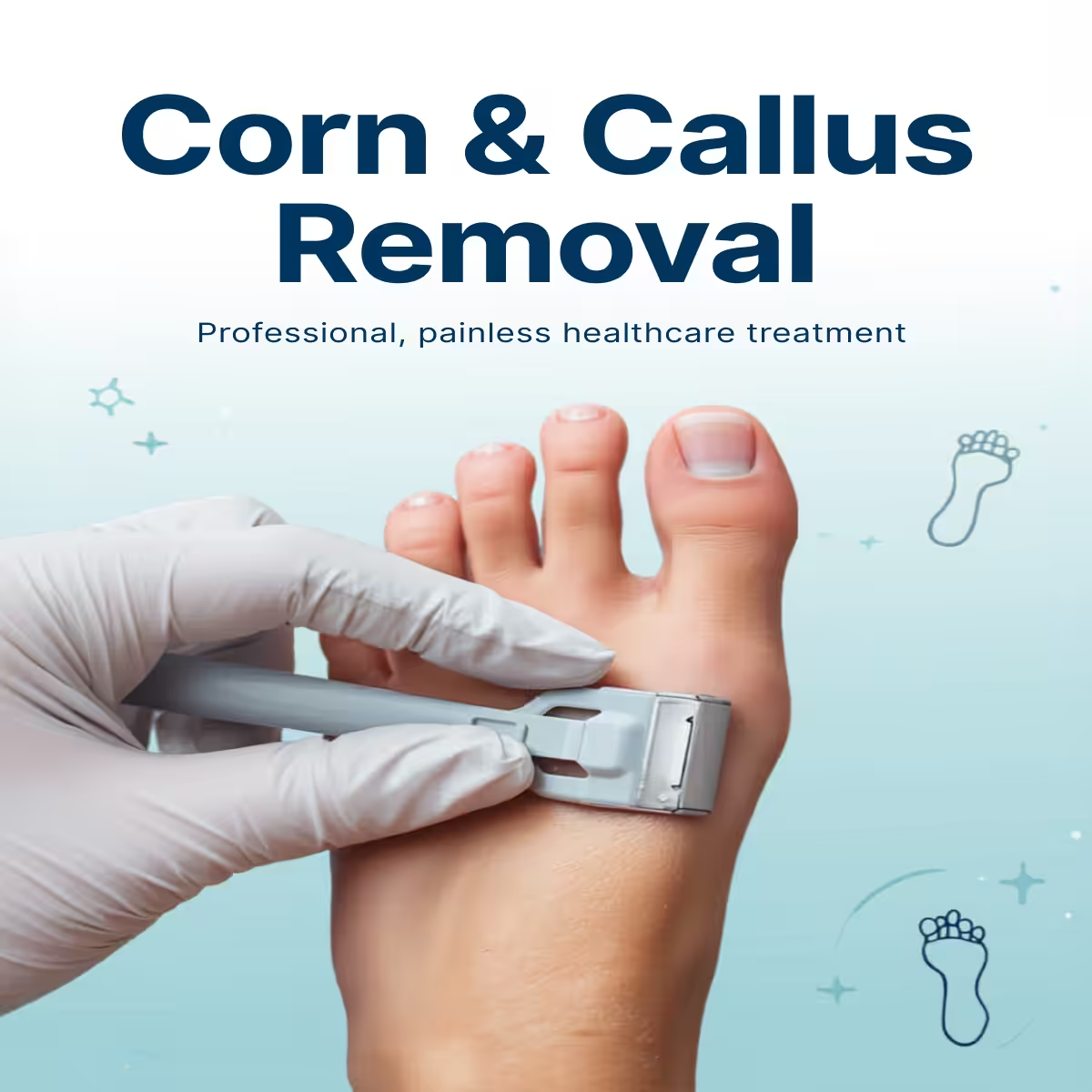
Corns are small round thickenings with a hard center that presses into deeper skin, causing focal pain. Calluses are larger, flatter, and usually painless. Most respond to soaking, pumice debridement, and 40% salicylic acid. See a podiatrist if diabetic, infected, or not improving after 4-6 weeks.
Watch: Dr. Tom Biernacki, DPM

Medically reviewed by Dr. Tom Biernacki, DPM — Board-Certified Podiatric Surgeon — Balance Foot & Ankle, Howell & Bloomfield Hills, MI. Last updated April 2026.
▶ Watch
Medically Reviewed by Dr. Tom Biernacki, DPM — Board-Certified Podiatrist, Balance Foot & Ankle Specialists, Michigan. Last updated April 2026.
Corns (heloma) and calluses (tyloma) are hyperkeratotic skin lesions produced by chronic mechanical pressure and friction — the skin’s protective response to repeated mechanical stress. While commonly dismissed as cosmetic nuisances, symptomatic corns and calluses cause significant pain and functional limitation, and in patients with diabetes or peripheral vascular disease they represent portal-of-entry risks for serious infection. Understanding the biomechanical drivers of corn and callus formation is essential for effective, durable management.
Corns vs. Calluses
A callus (tyloma) is a diffuse area of hyperkeratosis distributed over a broad pressure area — typically the plantar metatarsal heads, heel, or lateral fifth toe. Calluses are the skin’s response to distributed pressure. A corn (heloma durum on bony prominences, heloma molle between toes) is a focal, conical hyperkeratotic plug with a central nucleus that penetrates into the dermis, producing point tenderness under pressure. The corn nucleus is the key distinguishing feature — it is the concentrated apex of the pressure cone that produces the sharp, poking pain patients describe. Heloma molle (soft corns between the toes) are hydrated by perspiration in the web space, remaining soft and macerated rather than hard.
Biomechanical Causes
Callus formation under the metatarsal heads results from excessive plantar pressure — caused by prominent metatarsal heads (from hammertoe deformity elevating the proximal phalanx and plantarflexing the metatarsal head), abnormal foot mechanics increasing one metatarsal’s load share, or inadequate shoe padding. Dorsal toe corns result from the toe tip or interphalangeal joint pressing against the shoe upper — always caused by toe deformity (hammertoe, claw toe, mallet toe) combined with tight shoe wear. Fifth toe corns arise from prominent condyles of the fifth toe pressing against the shoe. The biomechanical driver must be identified for durable management.
Treatment: Conservative and Definitive
Conservative management: professional debridement (never self-trimming in diabetic or vascular patients) provides immediate symptom relief; padding and cushioning off-load the pressure area; properly fitted footwear with adequate toe box width and depth removes extrinsic pressure. Conservative management addresses symptoms but not the underlying biomechanical cause — recurrence is predictable without addressing the anatomic driver. Definitive treatment addresses the underlying deformity: custom orthotics with metatarsal padding for plantar callus; hammertoe correction for dorsal or distal toe corns; condylectomy for fifth toe condyle corns; and digital arthroplasty for symptomatic recurrent corns in appropriate patients. Dr. Biernacki at Balance Foot & Ankle provides professional corn and callus debridement and addresses the underlying foot deformity for lasting resolution. Call (810) 206-1402 at our Bloomfield Hills or Howell office.
📧 Get Dr. Tom’s Free Lab Test Guide
Discover the 5 lab tests every person over 35 should ask their doctor about — explained in plain English by a board-certified physician.
📍 Located in Michigan?
Our board-certified podiatrists treat this condition at two convenient locations. Same-day appointments often available.
In-Office Treatment at Balance Foot & Ankle
If home care isn’t resolving your corns or calluses, a visit with a board-certified podiatrist is the fastest path to accurate diagnosis and a personalized plan. At Balance Foot & Ankle Specialists, Dr. Tom Biernacki, Dr. Carl Jay, and Dr. Daria Gutkin offer same-day and next-day appointments at both our Howell and Bloomfield Hills offices. We perform on-site diagnostic ultrasound, digital X-ray, conservative care, advanced regenerative treatments, and minimally invasive surgery when indicated.
Call (810) 206-1402 or request an appointment online. Most insurance plans accepted, including Medicare, Blue Cross Blue Shield, Aetna, Cigna, and United Healthcare.
More Podiatrist-Recommended Foot Health Essentials
Hoka Clifton 10

Max-cushion everyday shoe — podiatrist favorite for walking and running.

OOFOS Recovery Slide

Impact-absorbing recovery sandal — wear after long days on your feet.
As an Amazon Associate, Balance Foot & Ankle earns from qualifying purchases. Product recommendations are based on clinical experience; prices and availability shown above update live from Amazon.

When to See a Podiatrist
If foot or ankle pain has been bothering you for more than a few weeks, home care alone may not be enough. Balance Foot & Ankle offers same-week appointments at our Howell and Bloomfield Hills clinics — no referral needed in most cases. Bring your current shoes and a short list of symptoms and we’ll build you a treatment plan in one visit.
Call Balance Foot & Ankle: (810) 206-1402 · Book online · Offices in Howell & Bloomfield Hills
Frequently Asked Questions
What is the difference between a corn and a callus?
Calluses are diffuse areas of thickened skin that typically form under weight-bearing areas (ball of foot, heel). Corns are smaller, more focal, with a central hard core, often between or on top of toes. Both are caused by friction and pressure.
Can I remove a corn at home?
Over-the-counter corn pads with salicylic acid can help soften corns, but they can be dangerous for diabetics and people with poor circulation. A podiatrist can safely debride corns and calluses and address the underlying cause to prevent recurrence.
Why do corns and calluses keep coming back?
Corns and calluses recur because the underlying cause — pressure, friction, or bony deformities like hammertoes or bunions — hasn’t been corrected. Custom orthotics and proper footwear reduce recurrence; addressing bone deformities provides more permanent relief.
Need Treatment at Balance Foot & Ankle?
Dr. Tom Biernacki, Dr. Carl Jay, and Dr. Daria Gutkin see patients at our Howell and Bloomfield Township offices.
Book Online or call (810) 206-1402

Insurance Accepted
BCBS · Medicare · Aetna · Cigna · United Healthcare · HAP · Priority Health · Humana · View All →
Howell Office
3980 E Grand River Ave, Suite 140
Howell, MI 48843
Get Directions →
Bloomfield Hills Office
43700 Woodward Ave, Suite 207
Bloomfield Hills, MI 48302
Get Directions →
Your Board-Certified Podiatrists



Ready to Get Back on Your Feet?
Same-week appointments available at both locations.
Book Your AppointmentDifferential Diagnosis: What Else Could It Be?
Several conditions share symptoms with Corns and Calluses and are commonly misdiagnosed in the first office visit. Considering these alternatives is part of every Balance Foot & Ankle exam:
- Plantar wart. Skin lines interrupted, black-dot capillaries, pain with side-pinch.
- Porokeratosis. Thin keratotic rim with central plug, painful pinpoint center.
- Foreign body granuloma. History of penetrating injury, ultrasound finds the object.
If your symptoms don’t fit the textbook pattern, ask your podiatrist which differentials they ruled out — that conversation often shortcuts months of trial-and-error treatment.
In Our Clinic
The typical corn or callus patient at Balance Foot & Ankle has been trimming them at home for years with limited success. We pare the lesion to see what’s underneath — a well-demarcated central core distinguishes a corn from a diffuse callus, and a plantar wart interrupts the skin lines instead of following them. The real question we ask is WHY the callus formed: a bony prominence (bunion, hammertoe), a biomechanical imbalance, or an ill-fitting shoe. Correct the cause — with custom orthotics, a metatarsal pad, or footwear change — and the callus stops coming back. Otherwise it’s a lifelong re-trim cycle.
Most Common Mistake We See
The most common mistake we see is: Cutting corns at home with scissors or razor blades. Fix: professional podiatric enucleation with sterile instruments — safer and prevents recurrence.
Warning Signs That Need Same-Day Care
Seek immediate evaluation at Balance Foot & Ankle if you experience any of the following:
- Spreading redness (infection)
- Diabetic patient with any corn
- Not healing after 4-6 weeks of conservative care
- Ulceration beneath the corn
Call (810) 206-1402 — same-day and next-day appointments at our Howell and Bloomfield Hills offices.
Watch: Dr. Tom explains
Podiatrist-recommended products
As an Amazon Associate, Dr. Tom earns from qualifying purchases.
Safe home callus management.
View on Amazon →Addresses callus root cause.
View on Amazon →Padded offloading.
View on Amazon →Reduces friction.
View on Amazon →Related resources
Ready to solve this? Book today.
Same-week appointments · Howell & Bloomfield Hills · 4.9★ (1,123+ reviews)
☎ (810) 206-1402Book Online →Pros & Cons of Conservative Care for foot care
Advantages
- ✓ Conservative care first
- ✓ Same-week appointments
- ✓ Multiple insurance accepted
Considerations
- ✗ Self-treatment can mask issues
- ✗ See a podiatrist if pain >2 weeks
Dr. Tom’s Recommended Products for foot care
Affiliate disclosure: As an Amazon Associate, Balance Foot & Ankle earns from qualifying purchases. We only recommend products we use with patients.


Footnanny Heel Cream Dr. Tom’s Pick
Best for: Daily moisturizer for cracked heels
Ready to Get Back on Your Feet?
Same-day appointments in Howell + Bloomfield Twp. Most insurance accepted. Dr. Tom Biernacki, DPM & team.
Book Today — Same-Day Appointments Available
Call Now: (810) 206-1402
About Your Care Team at Balance Foot & Ankle
Dr. Tom Biernacki, DPM · Board-Certified Foot & Ankle Surgeon. Specializes in conservative-first care, minimally invasive bunion surgery, and complex reconstruction.
Dr. Carl Jay, DPM · Accepting new patients. Specializes in sports medicine, athletic injuries, and routine podiatric care.
Dr. Daria Gutkin, DPM, AACFAS · Accepting new patients. Specializes in surgical reconstruction and pediatric podiatry.
Locations: 4330 E Grand River Ave, Howell, MI 48843 · 43494 Woodward Ave Suite 208, Bloomfield Twp, MI 48302
Hours: Mon–Fri 8:00 AM – 5:00 PM · (810) 206-1402

Dr. Tom Biernacki, DPM is a double board-certified podiatrist and foot & ankle surgeon at Balance Foot & Ankle Specialists in Southeast Michigan. With over a decade of clinical experience, he specializes in heel pain, bunions, diabetic foot care, sports injuries, and minimally invasive surgery. Dr. Biernacki is a member of the APMA and ACFAS, and his patient education content on MichiganFootDoctors.com and YouTube has reached over one million views.
- Diagnosis and Treatment of Plantar Fasciitis (PubMed / AAFP)
- Heel Pain (APMA)
- Hallux Valgus (Bunions): Evaluation and Management (PubMed)
- Bunions (Mayo Clinic)
Recommended Products from Dr. Tom