
Medically reviewed by Dr. Tom Biernacki, DPM — Board-certified podiatric surgeon | Balance Foot & Ankle | Last reviewed: May 2026
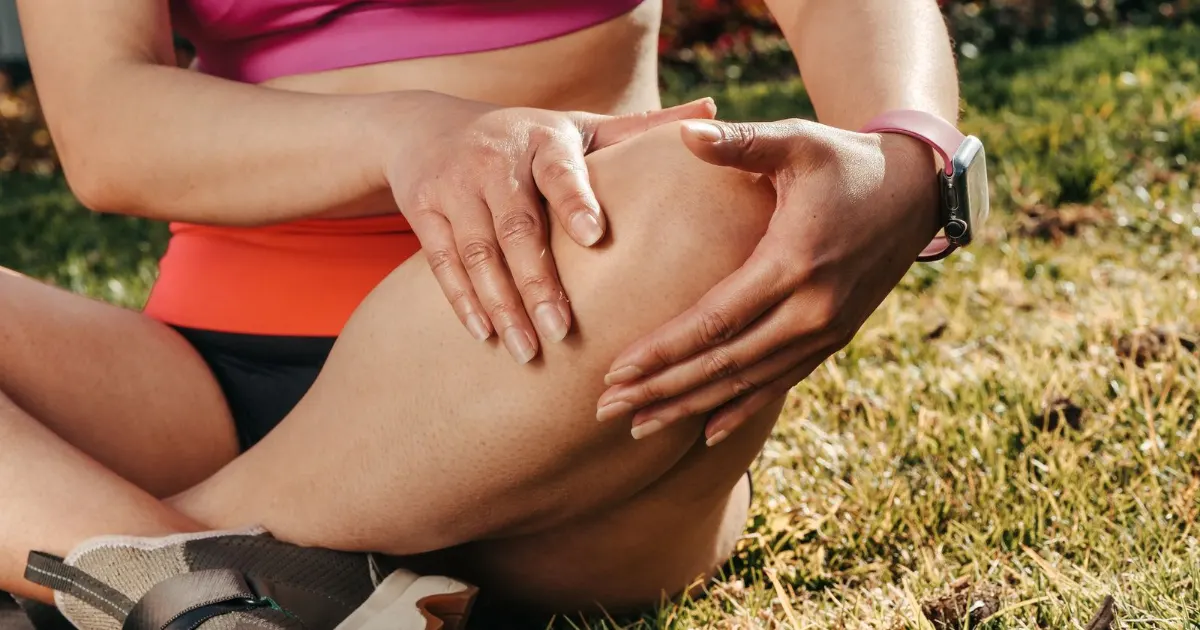
Knee pain in runners is almost always a foot problem in disguise. The foot is the foundation of the kinetic chain — every degree of overpronation (inward rolling) rotates the tibia internally, increasing patellofemoral (kneecap) stress. Every degree of supination (underpronation) reduces natural shock absorption, transmitting more impact force through the knee. In 15 years of podiatric practice in Howell and Bloomfield Township, Michigan, I’ve consistently found that correcting foot mechanics through proper shoe selection and orthotics resolves or significantly improves most runner’s knee pain — often without any knee-specific treatment.
The Foot-Knee Connection: Why Shoes Matter
Overpronation and Patellofemoral Pain
Overpronation — excessive inward rolling of the foot after heel strike — causes the tibia to internally rotate with every step. This internal rotation shifts the patella (kneecap) laterally relative to the trochlear groove, creating the uneven cartilage loading that produces patellofemoral pain syndrome (runner’s knee). Research consistently shows that motion-control footwear and medial post orthotics reduce tibial internal rotation and patellofemoral stress in overpronating runners.
Impact Loading and Knee Osteoarthritis
Each running step generates 2.5–3x bodyweight impact force. In a runner logging 20 miles per week, that’s millions of impact events annually loading the knee joint. Maximum-cushion shoes — particularly Hoka’s thick-stack platform — measurably reduce vertical ground reaction force, which is directly linked to tibial stress and knee joint loading. For runners with knee osteoarthritis or meniscal pathology, maximum cushioning is not a comfort preference — it’s a clinical necessity.
IT Band Syndrome and Hip Drop
Iliotibial band syndrome — lateral knee pain from IT band friction over the lateral femoral condyle — is often perpetuated by shoes that allow excessive hip drop (contralateral pelvic drop) and overpronation. The biomechanical chain: overpronation → internal tibial rotation → femoral adduction → increased IT band tension at the knee. Motion-control shoes reduce this cascade. Hip strengthening (gluteus medius) addresses the top of the chain; proper footwear addresses the bottom.
Best Running Shoes for Bad Knees 2026
1. Hoka Bondi 9 — Best Maximum Cushion for Knee Protection
The Bondi 9’s 37mm heel stack is the highest in mainstream running footwear — and for runners with knee pain from impact loading (osteoarthritis, meniscal injury, patellofemoral syndrome), that cushion depth translates directly to reduced knee joint load. The meta-rocker geometry propels the foot through gait without requiring knee flexion under load — particularly valuable for runners with anterior knee pain on downhills. The wide base also improves lateral stability compared to narrower neutral shoes.
→ Hoka Bondi 9 (Men’s) on Amazon · Women’s
- Best for: Knee osteoarthritis, meniscal injury, high-impact knee pain, heavy runners
- Heel drop: 4mm | Stack height: 37mm heel / 33mm forefoot
- Width options: D, 2E (men’s); B, D (women’s) | Price: $165–$175
2. Brooks Adrenaline GTS 24 — Best for Overpronation-Related Knee Pain
The Adrenaline GTS is the most clinically validated stability running shoe for overpronation — the GuideRails system provides medial and lateral support that reduces excessive movement in either direction, specifically protecting the knee from tibial rotation. Unlike older medial-post shoes that only prevent inward rolling, the GTS holistically guides the foot through a more neutral gait cycle. For runners with patellofemoral syndrome driven by overpronation, this is my first-line recommendation before custom orthotics.
→ Brooks Adrenaline GTS 24 on Amazon
- Best for: Patellofemoral syndrome from overpronation, IT band syndrome
- Heel drop: 12mm | Support system: GuideRails (holistic motion control)
- Width options: D, 2E, 4E (men’s); B, D (women’s) | Price: $130–$145
3. ASICS Gel-Kayano 31 — Best Motion Control
The Gel-Kayano is the motion-control benchmark for severe overpronators. The medial post (denser foam on the arch side) mechanically limits tibial internal rotation more aggressively than the Adrenaline’s GuideRails. For runners with significant flat-foot pronation causing knee valgus (inward collapse at the knee), the Kayano provides the most direct mechanical correction available in a running shoe without custom orthotics. The 4D Guidance System in the 31st version adds adaptive support that responds to individual gait mechanics.
→ ASICS Gel-Kayano 31 (Men’s) on Amazon · Women’s
- Best for: Severe overpronation, knee valgus, flat feet with knee pain
- Heel drop: 10mm | Width options: D, 2E (men’s); B, D (women’s) | Price: $160–$170
4. New Balance Fresh Foam X 1080v13 — Best Neutral Option for Knee Pain
For runners with knee pain who don’t overpronate — neutral or supinating gait patterns — the 1080v13’s maximum-cushion Fresh Foam X compound provides exceptional impact absorption without the medial post that would overcorrect a neutral runner. High arches cause supination (underpronation), which reduces the foot’s natural shock absorption and transmits more force through the ankle, knee, and hip. The 1080v13 compensates with foam cushioning. The 8mm heel drop strikes the right balance between Achilles offloading and forefoot protection.
→ New Balance Fresh Foam X 1080v13 on Amazon
- Best for: Neutral/supinating runners with knee pain, high arches, IT band syndrome
- Heel drop: 8mm | Width options: D, 2E, 4E (men’s); B, D (women’s) | Price: $160–$175
When Shoes Aren’t Enough: Custom Orthotics for Knee Pain
For a meaningful subset of runners, even the best stability shoe doesn’t fully correct the foot mechanics driving knee pain — because the required correction is more precise than any mass-produced shoe can provide. Custom orthotics prescribed by a podiatrist address individual foot mechanics with millimeter-level precision. Research shows custom orthotics reduce patellofemoral pain in runners when pronation is a contributing factor — and they can be used in any running shoe with a removable insole.
If you’ve tried two or three of the shoes on this list and knee pain persists, custom orthotics are the logical next step before more invasive interventions. We perform gait analysis and orthotic casting at both our Howell and Bloomfield Township locations.
When Knee Pain from Running Needs Evaluation
- Knee pain that persists at rest, not just during running
- Knee swelling after runs — may indicate meniscal injury or cartilage damage
- Sharp or catching sensation in the knee — possible meniscal tear
- Knee pain despite 4–6 weeks in proper stability footwear
- Any knee pain with a clear mechanism of injury (fall, twist, collision)
Frequently Asked Questions
Is running bad for your knees?
The research consistently shows that recreational running is protective of knee health, not damaging. Multiple large studies show lower rates of knee osteoarthritis in recreational runners than in sedentary populations. The caveat: high-mileage competitive running and running with poor biomechanics or inadequate footwear does increase knee injury risk. Recreational runners with proper shoes and reasonable mileage progression have healthy, well-supported knees.
Does heel drop affect knee pain?
Yes, meaningfully. Higher heel drop (10–12mm) reduces Achilles and calf demand but increases patellofemoral stress in some runners by extending the knee at heel strike. Lower heel drop (4–6mm) increases Achilles and calf demand but may reduce patellofemoral load by encouraging a more midfoot strike pattern. For most runners with knee pain, a moderate drop of 8–10mm is a reasonable starting point — avoid extreme drop changes in either direction without a gradual transition period.
The Bottom Line
Knee pain in runners is rarely just a knee problem — it’s usually a foot mechanics problem presenting at the knee. The right shoe addresses the root cause. For overpronation-driven knee pain (the most common pattern), the Brooks Adrenaline GTS 24 or ASICS Gel-Kayano 31. For impact-driven knee pain with arthritis or meniscal pathology, the Hoka Bondi 9. For neutral or supinating runners, the New Balance 1080v13. If proper footwear alone doesn’t resolve it within 6–8 weeks, custom orthotics are the next step.
Call Balance Foot & Ankle at (810) 206-1402 for gait analysis and orthotic fitting in Howell or Bloomfield Township.
Gait Analysis & Orthotic Fitting — Balance Foot & Ankle
Howell & Bloomfield Township, Michigan | (810) 206-1402
4.9★ | 1,123 Reviews | 3,000+ Surgeries Performed
Sources
- Nigg BM, et al. “Running shoes and running injuries: mythbusting and a proposal for two new paradigms.” Br J Sports Med. 2015;49(20):1290–1294.
- Almeida MO, et al. “Are prefabricated or custom foot orthoses more effective at treating patellofemoral pain syndrome?” Br J Sports Med. 2019;53(11):656–661.
- Taunton JE, et al. “A retrospective case-control analysis of 2002 running injuries.” Br J Sports Med. 2002;36(2):95–101.
- Lo GH, et al. “Running does not increase symptoms or structural progression in people with knee osteoarthritis.” Clin Rheumatol. 2018;37(9):2497–2504.

Dr. Tom Biernacki, DPM is a board-certified foot & ankle surgeon (ABFAS & ABPM) at Balance Foot & Ankle Specialists in Southeast Michigan. With over a decade of clinical experience, he specializes in heel pain, bunions, diabetic foot care, sports injuries, and minimally invasive surgery. Dr. Biernacki is a member of the APMA and ACFAS, and his patient education content on MichiganFootDoctors.com and YouTube has made him one of the most-followed foot & ankle educators on YouTube.