
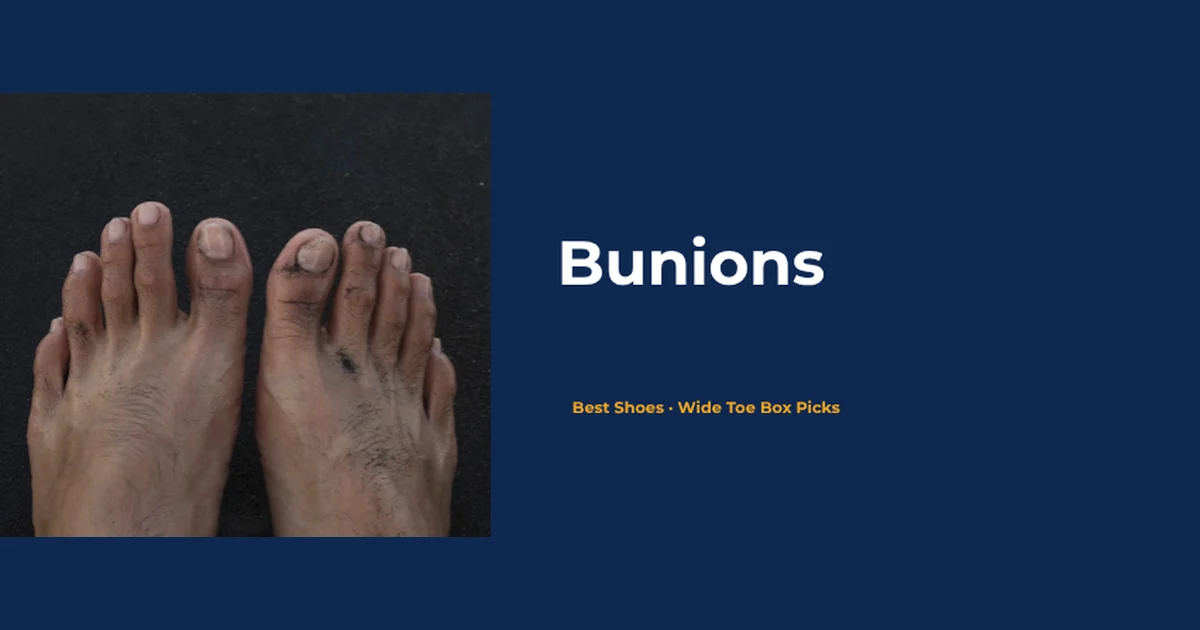
When to See a Podiatrist About Your Bunion
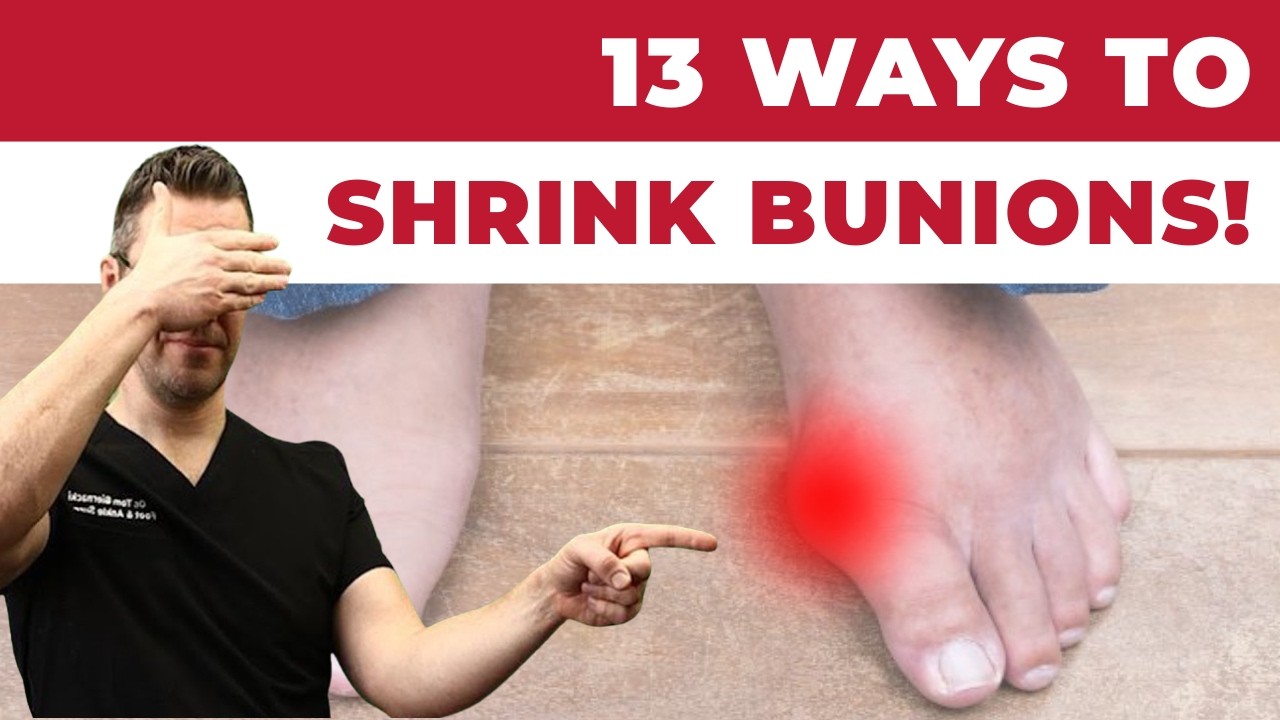
![9 BEST Bunion Treatments (NO Surgery)! [Splints, Correctors & Pads]](https://www.michiganfootdoctors.com/wp-content/cache/flying-press/412775b811df719f370402a96972f1ec.jpg)
When to see a podiatrist about your bunion:
- Bunion pain persists despite switching to wider shoes for 4 or more weeks
- The big toe is overlapping or pushing under the second toe
- You develop numbness or tingling around the bunion joint
- A callus or open sore forms over the bunion
- Difficulty walking or standing limits your daily activities
Best Shoes for Bunions 2026: Podiatrist-Recommended Wide Toe Box Picks
Updated March 2026 — Every shoe on this page has been personally evaluated by Dr. Tom Biernacki, DPM, for bunion-friendliness using our clinical 4-point assessment framework plus one additional criterion: adequate hallux valgus accommodation.


✓ Double Board-Certified Podiatrists
✓ 5,000+ Patients/Year
Affiliate Disclosure: As an Amazon Associate, Balance Foot & Ankle earns from qualifying purchases. Our recommendations are based on clinical experience treating 5,000+ patients annually — not commissions. We only recommend products we trust for our own patients.
What Makes a Shoe Bunion-Friendly? A true bunion shoe must have a wide toe box (extra volume at the first MTP joint), a non-rigid upper that doesn’t press against the medial eminence, and a low heel-to-toe drop to reduce forefoot loading. A standard “wide width” is not enough — the shoe must be anatomically shaped, not just wider everywhere.
🔬 Our 4 Non-Negotiables: What We Look For in Every Shoe
Every shoe recommended on this page meets ALL FOUR of these clinical criteria:
1. Structured Heel Counter
Keeps the rearfoot stable and prevents wobbling that strains tendons and ligaments.
2. Torsional Rigidity
The midfoot shouldn’t twist easily. Rigidity prevents arch collapse during gait.
3. Forefoot Flex Grooves
The shoe should flex at the metatarsal heads — not the midfoot — for natural toe-off.
4. Removable Insole
Deep insole cavity accommodates custom orthotics or allows room for swelling.
Quick Answer
The best shoes for bunions are wide toe box shoes with soft, stretch-knit uppers that take pressure off the big toe joint. In my clinic, patients with hallux valgus do best in foot-shaped lasts (Altra being the classic example), New Balance styles in 2E–4E widths, or a rocker-sole maximum-cushion shoe like the Hoka Bondi when the joint is arthritic. Avoid tapered toe boxes, rigid leather uppers over the bunion, and heels over two inches — all three drive the deformity forward and inflame the joint. A shoe fix alone controls pain in most mild-to-moderate bunions; pairing it with a toe spacer or bunion sleeve helps day-to-day comfort. If the joint stays painful in the right shoe, that is when I evaluate for bunion correction at Balance Foot & Ankle — call (810) 206-1402 or book a bunion evaluation online.
Our Top Picks for Bunions
🏆 #1 Best Overall for BunionsAPMA Accepted
HOKA Bondi 9

- ENGINEERED MESH
- Lining Textile
DROP5mm
STACK38/33mm
TYPEMax Cushion
WIDTHSB/D/2E
Why We Recommend It: The Bondi 9’s extended forefoot width and rocker geometry offload pressure from the first MTP joint. The plush foam doesn’t compress over the bunion, and the early-stage rocker sole allows toe-off without full hallux dorsiflexion — critical for patients with stiff, painful bunion joints.
✅ Best For:
Moderate to large bunions, hallux limitus/rigidus, patients post-bunionectomy returning to activity
⚠️ Not Ideal For:
Patients who need a very structured motion control shoe or prefer a firm ride
👟 Sizing Note: Size up half a size and choose a wider width if your bunion is prominent.
🥇 #2 Best for Active Bunion Patients
Brooks Ghost 17

- THIS MEN’S SHOE IS FOR: The Ghost 17 is for runners and walkers alike looking for an everyday companion that provides smooth, reliable comfort. Now featuring an extra 1mm of DNA LOFT v3 in the heel and 3mm in the forefoot to help every mile feel as good as the first. This Brooks Ghost 17 is a certified PDAC A5500 Diabetic shoe and has been granted the APMA Seal of Acceptance. The Ghost 17 is a certified carbon neutral product. Predecessor: Ghost 16.
- SOFT & DYNAMIC CUSHIONING: The Ghost 17 offers neutral support with premium nitrogen-infused DNA Loft v3 cushioning to deliver lightweight softness and feel-good comfort after every mile. Ideal for road running, walking, cross training, travel, and the gym.
- SMOOTH TRANSITIONS: The newly designed midsole incorporates precise flex grooves that enhance the shoe’s ability to promote smooth transitions. This innovative feature allows for a more natural flow during toe-off, enabling runners to maintain speed and momentum with ease.
- COMFORT & BREATHABILITY: The double jacquard air mesh upper provides premium comfort and breathability, while the kick-back collar adds support and structure. This design ensures optimal airflow, keeping your feet cool and dry during intense activities, while adapting to your foot’s natural movements for a comfortable snug fit.
- RUBBER OUTSOLE: The innovative rubber compound, crafted with recycled silica, offers a perfect balance of durability, lightweight performance, and responsive rebound, making it ideal for any terrain.
DROP12mm
STACK33/21mm
TYPENeutral
WIDTHSB/D/2E/4E
Why We Recommend It: Available in four widths including 4E, the Ghost 17 accommodates most bunion sizes. The mesh upper has no restrictive overlays near the toe box, so it conforms to the medial eminence without creating pressure points. Pair with a custom orthotic for best results.
✅ Best For:
Daily walking, mild to moderate bunions, patients who prefer a firmer cushioned feel
⚠️ Not Ideal For:
Severe bunions where a wider shoe or surgical-grade accommodation is needed
👟 Sizing Note: Try the 2E or 4E width before going up a full size.
🥈 #3 Best Orthopedic PickMedicare A5500 Compatible
New Balance 928v3

- Leather or Natural Cork Upper
- Microfiber Wrapped EVA Footbed
- Durable Rubber Outsole
- APMA Seal of Acceptance
- Vionic offers innovative biomechanical technology concealed in every style, so you can enjoy all life’s occasions with confidence and comfort – all day, every day.
DROP12mm
STACKN/A
TYPEMotion Control
WIDTHSB/D/2E/4E/6E
Why We Recommend It: The 928v3 is one of the widest therapeutic shoes available off-the-shelf. Its ROLLBAR technology controls overpropulsion that worsens bunion formation, and the extra-deep toe box with 6E width option is essential for patients with severe first-ray deformity or post-surgical edema.
✅ Best For:
Severe bunions, hallux valgus with overpronation, post-bunion surgery recovery
⚠️ Not Ideal For:
Patients seeking a lighter athletic shoe or significant stack height
👟 Sizing Note: This shoe runs narrow in standard width — always choose wide.
DOES THIS DESCRIBE YOU?
✗ Your bunion pain is 6/10 or worse despite wide shoes and padding
✗ Your big toe is crossing over or under your second toe
✗ You have significant joint stiffness or can no longer push off normally when walking
✗ You have a bunion AND diabetes, neuropathy, or circulation problems
→ Progressive bunion deformity eventually requires surgical correction. Early evaluation can slow progression and delay or prevent surgery.
📞 (810) 206-1402 | Book a Bunion Evaluation →
Howell & Bloomfield Township, MI | Same-day appointments available⚕️ DR. TOM’S COMPLETE BUNION MANAGEMENT PROTOCOL:
Step 1: RIGHT SHOE → Wide (2E-4E) toe box shoe — Altra, New Balance Wide, or Orthofeet
Step 2: BUNION PAD → Gel bunion sleeve or moleskin pad to reduce friction at the joint
Step 3: TOE SPACER → Gel toe spacer worn 30-60 min daily to slow alignment drift
Step 4: ORTHOTIC → Custom or semi-rigid orthotic to address underlying overpronation driver
[These measures slow bunion progression — they cannot reverse it. Early intervention matters most.]
Clinical Note: A 62-year-old patient had tried 6 different shoes without relief. A biomechanical exam revealed severe overpronation was accelerating her bunion. Custom orthotics to correct the root cause allowed her to wear wide shoes comfortably.
Clinical Note: A 55-year-old nurse with bunion pain on 12-hour shifts switched from narrow nursing clogs to New Balance 4E width shoes. Her end-of-shift pain dropped from 8/10 to 2/10 within 2 weeks.
Clinical Note: A 48-year-old teacher with moderate bunions was scheduled for surgery. After switching to Altra Torin wide-toe-box shoes + gel toe spacers + custom orthotics, she delayed surgery for 3+ years with acceptable pain levels.
Quick Comparison: Best Wide Toe Box Shoes for Bunions
| Shoe | Toe Box | Width Options | Best For | Price |
|---|---|---|---|---|
| Altra Torin 7 | Foot-shaped | Standard only | Maximum toe splay | $$$ |
| New Balance 990v6 | Roomy | 2E, 4E | Work/casual, all-day | $$$$ |
| Orthofeet Proven Pain Relief | Extra wide | Medium, Wide, XW | Severe bunions | $$$ |
| HOKA Bondi 8 | Roomy | 2E wide | Cushion + bunion | $$$ |
| Brooks Adrenaline GTS Wide | Wide | 2E wide | Walking + running | $$ |
More Podiatrist-Recommended Bunion Essentials
Bunion-Friendly Stability Shoe
Brooks Adrenaline GTS 25 — wide toe box reduces bunion pressure.
Wide-Toe-Box Walking Shoe
New Balance 990v6 — roomy forefoot accommodates bunions and reduces rubbing.
Orthotic Insole

PowerStep arch support — realigns foot mechanics that drive bunion progression.
As an Amazon Associate, Balance Foot & Ankle earns from qualifying purchases. Product recommendations are based on clinical experience; prices and availability shown above update live from Amazon.
When to See a Podiatrist
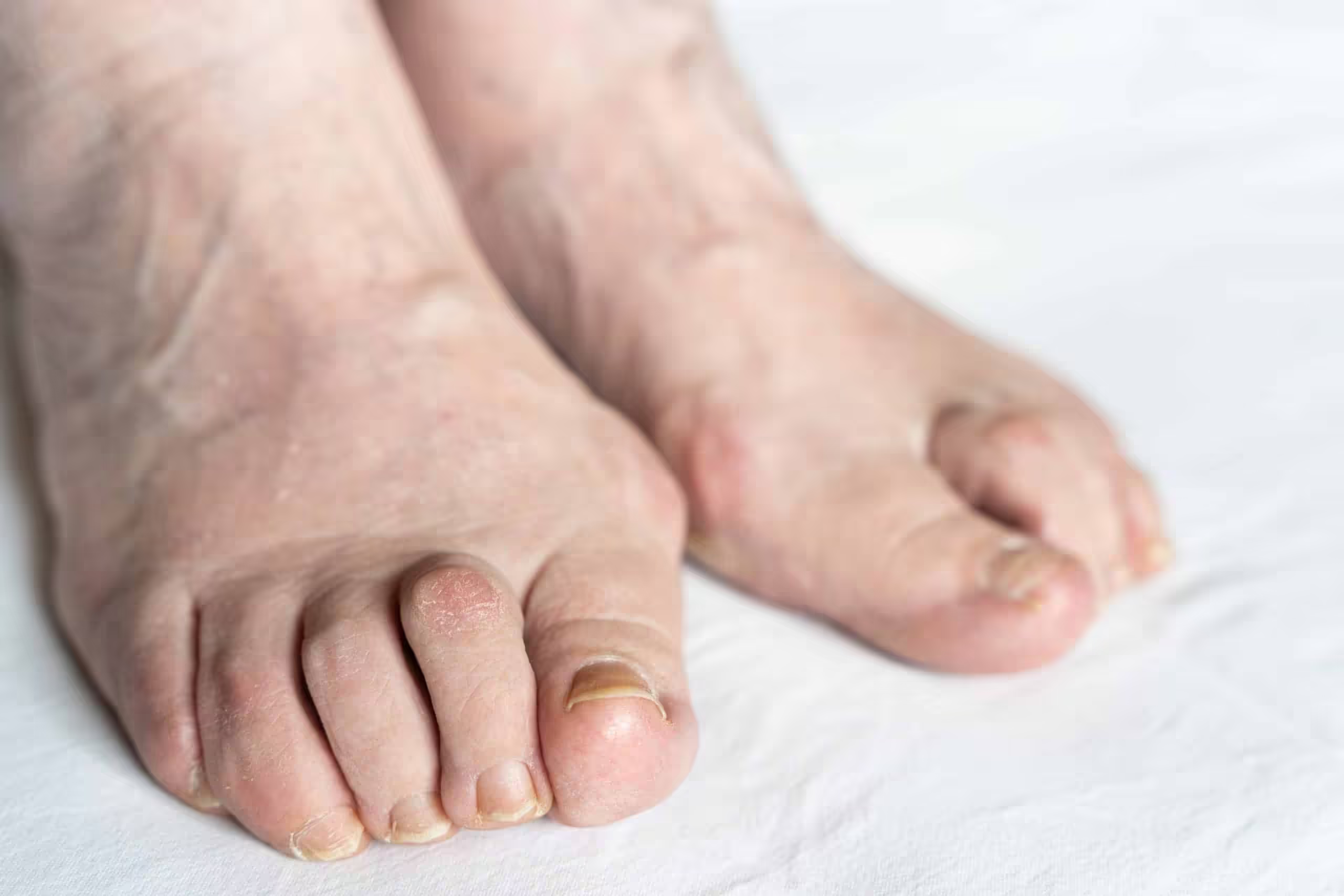
A bunion is a progressive joint deformity — padding and splints reduce pain but don’t reverse the bone shift. If the big toe angle is worsening, shoes no longer fit, or pain is disrupting sleep or activity, schedule a consult at Balance Foot & Ankle. Our surgeons perform minimally-invasive bunion correction with faster recovery than traditional osteotomy. We’ll review X-rays with you and explain exactly what the joint needs.
Call Balance Foot & Ankle: (810) 206-1402 · Book online · Offices in Howell & Bloomfield Township
Dr. Tom’s Insole Upgrade — Works With Any Shoe
The right shoe is step one. Step two is pairing it with a proper insole — the factory footbeds in most athletic shoes offer minimal arch support. These are the two I recommend most in clinic.
Shop PowerStep →
Shop CURREX RunPro →
Affiliate disclosure: Balance Foot & Ankle earns a commission from qualifying Amazon purchases.
Foot Petals Comfort Inserts — Dr. Tom’s Pick for Women’s Footwear
Women’s dress shoes and heels rarely fit the foot correctly — too narrow, no arch support, and thin insoles. Foot Petals’ Tip Toes and Heavenly Heelz inserts slip into any shoe to cushion high-pressure zones, prevent slipping, and reduce forefoot and heel pain without changing shoe size.
Shop Foot Petals on Amazon →Affiliate disclosure: Balance Foot & Ankle earns a commission from qualifying Amazon purchases.
Frequently Asked Questions
Do wider shoes actually help bunions?
Yes — a properly wide toe box reduces direct pressure on the medial eminence and slows progression. However, just buying a ‘wide’ width in a poorly shaped shoe may not help. The key is anatomical shaping: the shoe needs more volume at the ball of the foot, not just the heel.
Can shoes reverse a bunion?
Shoes cannot reverse a bunion (the bony prominence is structural), but they can significantly reduce pain, slow progression, and delay the need for surgery. Combined with custom orthotics, proper footwear is the cornerstone of conservative bunion management.
When do I need surgery for a bunion?
Surgery is indicated when conservative care (proper shoes, orthotics, padding) no longer controls pain, or when the bunion is severe enough to affect the lesser toes. Dr. Biernacki recommends exhausting all conservative options first.
📚 Complete Podiatrist Shoe Guide Library
📧 Get Dr. Tom’s Free Lab Test Guide
Discover the 5 lab tests every person over 35 should ask their doctor about — explained in plain English by a board-certified physician.
Every guide is written by Dr. Tom Biernacki, DPM — Double Board-Certified Podiatrist with 950,000+ YouTube subscribers and 5,000+ patients treated annually.
🏠 Complete Shoe Guide Hub
🦶 Best Shoes for Plantar Fasciitis
⚡ Best Shoes for Neuropathy & Diabetes
🏥 Best Shoes for Nurses
🏃 Best Running Shoes
👟 Women’s Running Shoes
👠 Women’s Shoes for Plantar Fasciitis
📍 🦶 Best Shoes for Bunions
You are here
📐 Best Shoes for Flat Feet
🚶 Best Walking Shoes
🧍 Best Shoes for Standing All Day
💥 Best Shoes for Heel Pain
🩴 Best Sandals with Arch Support
⬆️ Best Shoes for High Arches
👞 Best Dress Shoes for Foot Pain
🏛️ Diabetic Shoes & Medicare
🔧 Best Shoes for Achilles Tendonitis
🧩 Best Orthotic-Friendly Shoes
🏠 Best Slippers with Arch Support
🔴 Best Shoes for Morton’s Neuroma
🥾 Best Work Boots for Foot Support
🧩 Podiatrist Recommended Orthotics

Dr. Tom Biernacki, DPM
Double Board-Certified Podiatric Surgeon · Balance Foot & Ankle · Michigan
Dr. Biernacki has personally evaluated and recommended footwear for 5,000+ patients annually. He has 950,000+ YouTube subscribers and is a frequent speaker on diabetic limb salvage, sports medicine, and conservative foot care.
Recommended Next Step
Bunion Treatment Guide: From Padding to Surgery
Shoes help manage bunion pain, but they don’t fix the deformity. See when surgery is — and isn’t — the right call.
Still Not Sure Which Shoe Is Right for You?
Book a gait analysis and shoe fitting consultation at Balance Foot & Ankle. Dr. Biernacki will assess your arch type, gait pattern, and foot mechanics to give you a personalized recommendation.
📞 Call us at (810) 206-1402 · Serving Southeast Michigan
📚 Related Conditions — Patients Who Read This Also Found Helpful:
- Bunions change how shoes should fit — read our fitting guide.
How to Find Your Perfect Shoe Fit: A Podiatrist’s Complete Guide → - Finding orthotic-friendly shoes is especially important with bunions.
Best Orthotic-Friendly Shoes → - Need dress shoes for bunions? We have podiatrist picks.
Best Dress Shoes for Foot Pain →
Related Treatment Guides
⚠️ Most Common Shoe Mistake We See in Bunion Patients
The most common mistake is choosing “comfortable” shoes that still have a narrow, tapered toe box. Many patients come in wearing stylish sneakers or dress shoes they think are fine — but any shoe that compresses the big toe joint will accelerate bunion progression. A bunion-safe shoe needs a toe box wide enough to fit your widest toe without squeezing. In our clinic, we also recommend adding PowerStep Pinnacle insoles to redistribute pressure away from the bunion joint.
- Bunion Treatment
- Plantar Fasciitis & Heel Pain Treatment
- Custom 3D Orthotics
- Sports Foot & Ankle Injury Treatment
Related Guides
Bunion Treatment in Howell → | Bloomfield Township → | Bunion Without Surgery Guide → | Custom Orthotics →
The Bottom Line
Proper footwear will not reverse a bunion, but it is the most effective non-surgical way to manage pain and slow progression. Prioritize wide toe boxes, flexible uppers, removable insoles, and supportive midsoles. Avoid narrow shoes, pointed toes, and heels above 2 inches. At Balance Foot & Ankle, we see bunion patients every day in Howell and Bloomfield Township and can help determine whether conservative shoe changes are sufficient or if surgical correction would provide better long-term relief.
Dr. Tom’s Picks: Complete Bunion Shoe System
The best bunion shoe still needs a clinical insole. Pinnacle’s semi-rigid arch prevents the foot spreading that accelerates bunion deformity.
Read Review
For daily bunion joint soreness. Apply to the medial first MTP joint 3-4x daily. Natural arnica + menthol — no greasy residue on dress or casual shoes.
Check Price
As an Amazon Associate I earn from qualifying purchases. As a Foundation Wellness partner I may also earn commission.
Ready to Get Relief?
Same-day appointments available in Howell & Bloomfield Township, MI
4.9★ | 1,123 Reviews | 3,000+ Surgeries
Or call: (810) 206-1402
Medical References & Sources
- American Orthopaedic Foot & Ankle Society — Bunions
- American Podiatric Medical Association — Bunions
- PubMed Research — Hallux Valgus Treatment
In-Office Treatment Available
When conservative bunion care isn’t enough, Dr. Tom offers advanced treatment including custom orthotics to slow progression and, when indicated, minimally invasive bunion surgery with fast recovery. Most patients return to normal shoes in 8–12 weeks.
Watch Dr. Tom Review Shoes and Insoles
Doctor Hoy’s Natural Pain Relief Gel
Natural topical pain relief — apply directly to bunion 3-4x daily. Arnica + camphor reduces inflammation from shoe friction.
→ Check price
PowerStep Pinnacle Orthotic Insoles
Medical-grade arch support controls overpronation that worsens bunion progression.
→ Check price
Foot Petals Tip Toes
Discreet ball-of-foot cushioning for women’s dress shoes where full insoles won’t fit.
→ Check price
In-Office
Bunion surgery and custom orthotics at Balance Foot & Ankle. (810) 206-1402.
Related
FAQ
What shoe features matter most for bunions?
Wide toe box is the single most important feature — the bunion needs room to sit without pressure. Next: soft, flexible upper material (mesh or leather, not synthetic). Then: removable insole (to swap in custom or OTC orthotics). Avoid pointy shoes, heels over 2 inches, and any shoe that squeezes the forefoot.
⚠️ Even the best shoes can’t fix a worsening bunion. Get evaluated.
📞 (810) 206-1402 | Book Online →
Same-day appointments. Howell & Bloomfield Township. Most insurance accepted.
Bunion Pain Slowing You Down?
Our board-certified podiatrists offer both conservative bunion treatments and advanced surgical options to eliminate pain and restore foot function.
Clinical References
- Nix SE, Vicenzino BT, Collins NJ, Smith MD. Characteristics of foot structure and footwear associated with hallux valgus: a systematic review. Osteoarthritis and Cartilage. 2012;20(10):1059-1074.
- Glasoe WM, Nuckley DJ, Ludewig PM. Hallux valgus and the first metatarsal arch segment: a theoretical biomechanical perspective. Physical Therapy. 2010;90(1):110-120.
- Ferrari J, Higgins JP, Prior TD. Interventions for treating hallux valgus (abductovalus) and bunions. Cochrane Database of Systematic Reviews. 2004;(1):CD000964.
Podiatrist-Recommended Bunion Shoes & Accessories
Bunions need three things: a wide toe box that doesn’t push the big toe medially, a stretchable upper over the bump, and gel spacers to slow progression. Our practice standards:
Altra Torin Shoes (Wide Toe Box)
FootShape toe box lets bunions spread naturally — our #1 pick for everyday wear.
Check Amazon Price →Hoka Bondi (Wide Width)
Max cushion + wide width — for bunion patients who also have arthritis.
Check Amazon Price →Gel Bunion Toe Spreaders
Wear at night to gently realign the big toe — slows progression.
Check Amazon Price →Bunion Bootie Splint
Daytime gentle splinting without bulk — fits in most shoes.
Check Amazon Price →Affiliate disclosure: Amazon links are affiliate links — we earn a small commission if you buy through them, at no cost to you. We only recommend products we actually prescribe to patients at Balance Foot & Ankle.
Related from Balance Foot & Ankle
👟 Dr. Tom’s Complete Footwear Library
Podiatrist-Approved Guides for Every Foot Type & Condition
Clinically reviewed by Dr. Tom Biernacki, DPM — Board-Certified Podiatrist
All guides are written and reviewed by licensed podiatrists. Schedule an appointment →


Dr. Tom Biernacki, DPM is a board-certified foot & ankle surgeon (ABFAS & ABPM) at Balance Foot & Ankle Specialists in Southeast Michigan. With over a decade of clinical experience, he specializes in heel pain, bunions, diabetic foot care, sports injuries, and minimally invasive surgery. Dr. Biernacki is a member of the APMA and ACFAS, and his patient education content on MichiganFootDoctors.com and YouTube has made him one of the most-followed foot & ankle educators on YouTube.
More questions patients ask
What features should shoes for bunions have?
Bunion-friendly shoes must have: a wide, deep toe box with no pointed tip; soft, flexible upper material (leather or mesh) that stretches over the bunion; no seams or stitching over the bunion area; removable insoles for custom orthotics; and a stable, supportive sole. Avoid narrow-toed shoes, high heels over 1 inch, and stiff uppers that press on the bunion.
Can shoes make bunions worse?
Yes — tight, narrow, or high-heeled shoes are a primary cause of bunion progression. While bunions have a genetic component, footwear dramatically affects how quickly they worsen. Switching to wide, supportive shoes can significantly slow bunion progression and reduce pain, even if the structural deformity doesn't reverse. See a podiatrist if pain limits your daily activities.
Do bunion correctors or spacers help?
Bunion splints and toe separators can relieve pain and temporarily realign the toe, but they don't correct the underlying bone deformity. They work best for mild bunions and mild pain relief during activity. For moderate to severe bunions causing significant pain, a podiatrist can discuss all non-surgical options and, when appropriate, minimally invasive bunion surgery.
When should I consider bunion surgery?
Bunion surgery is considered when: pain persists despite supportive shoes and orthotics; the bunion affects your ability to walk, exercise, or work; the toe is severely misaligned or arthritic; or conservative care has failed for 6+ months. Modern minimally invasive bunion surgery at Balance Foot & Ankle offers smaller incisions, faster recovery, and less pain than traditional procedures. Call (810) 206-1402.
What are the best shoes for bunions?
Balance Foot & Ankle recommends bunion shoes with wide, round toe boxes that do not compress the prominent first metatarsal head, adequate toe box depth, soft or stretchy uppers, and lace or Velcro adjustability. Top choices include Altra (naturally wide toe box), New Balance in extra-wide width, Hoka (wide options), Dansko clogs, and Vionic wide-width dress shoes. Never wear pointed or narrow shoes with bunions. Call (810) 206-1402.
Can shoes slow bunion progression?
Appropriate footwear can significantly slow bunion progression by eliminating the friction and compression that accelerate deformity worsening. Balance Foot & Ankle emphasizes footwear modification as essential bunion management. Wide, non-compressive shoes combined with custom orthotics addressing the underlying biomechanical drivers (usually hypermobile first ray) provide the best non-surgical bunion management strategy.
Do custom orthotics help bunion pain?
Yes. Custom orthotics from Balance Foot & Ankle help bunion pain by redistributing pressure away from the painful first metatarsal head and controlling the excessive pronation that drives bunion progression. While orthotics cannot straighten the deformity, they significantly reduce symptoms and may slow progression. Many patients achieve comfortable daily function without surgery using orthotics plus appropriate footwear.
What should I avoid wearing with bunions?
Balance Foot & Ankle advises bunion patients to strictly avoid: pointed-toe shoes (all styles), shoes narrower than the widest part of your foot, high heels above 1 inch (shifts weight onto the bunion), sandals with straps crossing the bunion, stiff leather shoes without break-in period, and anything causing pressure or friction on the bunion. These footwear types cause pain and accelerate progression.
Where can I get bunion-friendly shoes and treatment in Michigan?
Balance Foot & Ankle provides comprehensive bunion management including footwear guidance and custom orthotics at our Howell office (4330 E Grand River, Howell, MI 48843) and Bloomfield Township office (43494 Woodward Ave #208, Bloomfield Twp, MI 48302). When conservative treatment is insufficient, surgical correction is available. Dr. Biernacki, Dr. Jay, and Dr. Gutkin provide all levels of bunion care. Call (810) 206-1402.
What is a bunion?
A bunion (hallux valgus) is a progressive bony deformity where the big toe joint shifts outward. It results from an unstable metatarsal bone. Dr. Biernacki specializes in both conservative management and Lapiplasty 3D bunion correction.
Can bunions be corrected without surgery?
Conservative treatments can manage pain and slow progression: custom orthotics, toe spacers, wider shoes, and padding. Surgery is recommended only when conservative measures fail.
What is Lapiplasty bunion surgery?
Lapiplasty corrects the root cause by realigning the metatarsal in all three dimensions. Patients can bear weight within days, with recurrence rates under 3% vs 12-15% for traditional procedures.
Still have a question about coverage or cost? Book online and we will check your benefits before your visit: Book in Howell · Book in Bloomfield Township. Prefer to talk it through first? Call (810) 206-1402.