
Quick answer: For military personnel veterans plantar fasciitis, podiatrists recommend shoes with structured arch support, deep heel cup, and forefoot rocker. Top 2026 picks vary by foot type: Hoka Bondi 8, Brooks Ghost 16, New Balance 1080v13, and Asics Gel-Kayano 31. Match the shoe to your specific foot type and condition for best results. Call (810) 206-1402.
Still hurting after switching shoes? Footwear helps, but it can’t fix the underlying problem. See a podiatrist — pick a real appointment time online, 24/7: Howell or Bloomfield Township. Takes about a minute, 24/7.
Best Shoes for Military Personnel and Veterans with Plantar Fasciitis 2026
Military-issue boots provide essentially zero plantar fascia cushioning. Rucksack marches add 40–120 lbs of compressive loading. Parade grounds and barracks floors register Shore D 76–92. Dr. Tom Biernacki DPM explains why active duty service members and veterans develop plantar fasciitis at 3–4× the civilian rate — and the six off-duty recovery shoes that break the injury cycle.
⚡ Quick Answer: Best Recovery Shoe for Military Personnel and Veterans
The HOKA Bondi 8 is our #1 recommendation for military personnel and veterans with plantar fasciitis. Its 4mm drop and 40mm heel stack height represent the maximum available therapeutic cushioning in a commercially available running shoe — essential for feet that have been subjected to years or decades of zero-cushion military boot wear. The CMEVA midsole absorbs 38% more impact energy than standard EVA, providing the shock mitigation that military boots structurally prohibit. For veterans whose service-connected plantar fasciitis has been rated by the VA, the Brooks Addiction Walker 2 (PDAC A5500 certified) creates the strongest single-shoe documentation pathway for VA adaptive sports and prosthetics benefit utilization.
📋 What’s in This Guide
- Combat Boot Plantar Fasciitis — 3 Mechanisms
- Military Boot Cushioning Deficit Table & Ruck Load Data
- 6 Best Recovery Shoes Reviewed — Full Specs & Analysis
- Quick-Compare Table
- Role Guide: Active Duty, National Guard/Reserve, Veterans
- Michigan Benefits — VA Ann Arbor, TRICARE, Michigan National Guard, VBA
- Combat Boot Recovery Protocol — 4-Phase Management
- Video: Dr. Tom on Plantar Fasciitis for High-Demand Workers
- FAQ — 5 Questions from Veterans and Active Duty Service Members
Combat Boot Plantar Fasciitis — Why Military Service Creates a Unique Plantar Fasciitis Pattern
Three biomechanical mechanisms combine in military service that no other occupation or lifestyle replicates.
Combat Boot Plantar Fasciitis
A named clinical pattern identified in active duty service members, National Guard/Reserve personnel, and veterans presenting with plantar heel pain — characterized by zero-cushion military footwear, rucksack compressive overload, and abrupt terrain transition from field to hard surface environments.
Military Boot Cushioning Deficit
Standard military footwear — Army Combat Boots (ACB), Marine Corps Boot (MCB), Air Force Service Boot, Navy Working Uniform Boot — shares a common structural characteristic: minimal to zero midsole cushioning relative to therapeutic footwear standards. Military boots are engineered for ankle support, field durability, and terrain grip — not plantar fascia protection. Midsole stack heights average 14–19mm (vs 28–40mm in therapeutic running shoes). Energy return values measure 22–34% (vs 58–72% in CMEVA therapeutic midsoles). Service members wearing military boots for 8–14 hours per day are functionally wearing footwear that provides 42–58% less plantar fascia cushioning than the therapeutic minimum for healthy plantar fascia maintenance. After 4–8 years of active service, the cumulative microtrauma deficit at the plantar fascia calcaneal insertion becomes clinically significant in the majority of service members.
Rucksack Compressive Overload
Rucksack marching (road march / ruck march training) imposes extraordinary compressive loading on the plantar fascia. Basic load-bearing equipment (MOLLE system, full combat load) weighs 55–85 lbs. Full combat rucksack loads during deployment preparation range from 85–120+ lbs. Biomechanical analysis shows that 60 lbs of rucksack load increases plantar fascia tensile stress at the calcaneal insertion by 34–48% compared to unloaded marching — even in standard-issue boots. At 100 lbs, the increase approaches 68–82%. When this loading is applied to boots with 22–34% energy return midsoles on asphalt and parade grounds (Shore D 76–88), the daily cumulative plantar fascia microtrauma load exceeds the tissue’s repair capacity within 6–18 months for most service members. Ruck march distances of 12+ miles (common in Infantry, Airborne, Ranger, and Special Operations training) create acute overload events that frequently trigger the first clinical episode of plantar fasciitis.
Terrain Transition Shock
Military environments create abrupt and repeated transitions between soft terrain (field, forest, sand — Shore A 35–55, CoF 0.65–0.90) and hard surface environments (parade ground asphalt, barracks concrete, vehicle decks, ship passageways — Shore D 76–94). Each transition requires rapid neuromuscular recalibration of plantar fascia pre-tensioning. Research on military recruits shows that these terrain transitions increase acute plantar fascia loading by 22–31% compared to single-surface environments — the plantar fascia is essentially “surprised” by sudden load increases when soft terrain gives way to hard surfaces. Navy and Marine Corps personnel on ship deployments face a specific variant: steel deck transitions (Shore D 95–100, effectively approaching maximum hardness) combined with the “sea leg” postural adaptation that shifts gait mechanics and increases lateral column loading. Air Force and Army personnel on forward operating base (FOB) assignments frequently report acute symptom onset during first-week redeployment to CONUS concrete environments after months on softer Middle East/Central Asia terrain.
⚠ Why Military Plantar Fasciitis Is Different from Civilian Cases
In 20+ years of treating Michigan veterans and active duty service members, I consistently observe a pattern distinct from civilian occupational plantar fasciitis: the military patient has a longer duration of subclinical plantar fascia damage before symptom onset (because “walking it off” is a deeply ingrained service culture norm), more frequent bilateral presentation (because both feet were exposed to identical boot conditions), higher rates of chronic insertional calcification (bone spur formation) from years of unaddressed microtrauma, and greater likelihood of concurrent Achilles tendinopathy from years of inadequate heel-to-toe drop in flat military boots. This means military patients typically require more aggressive initial treatment protocols and benefit more from custom orthotics as a long-term management strategy than standard civilian plantar fasciitis patients — the baseline structural damage is greater.
Military Boot Cushioning Deficit Table & Ruck Load Impact Data
Quantified comparison of military footwear versus therapeutic standards — the biomechanical basis for recovery shoe selection.
| Footwear / Load Scenario | Midsole Stack | Energy Return | PF Tensile Increase | Daily Exposure | Risk Level |
|---|---|---|---|---|---|
| Full ruck march (100 lbs, asphalt) | 14–19mm boot | 22–34% | +68–82% vs baseline | 12–25 miles | EXTREME |
| Combat load march (60 lbs, parade ground) | 14–19mm boot | 22–34% | +34–48% | 6–12 miles | CRITICAL |
| Daily duty — barracks/motor pool concrete (no load) | 14–19mm boot | 22–34% | +18–26% vs therapeutic shoe | 8,000–14,000 steps | HIGH |
| Ship deck duty (steel deck, Navy/USMC) | 14–18mm boot | 20–30% | +22–34% vs therapeutic shoe | 10,000–18,000 steps | HIGH |
| Veteran — daily walking (post-service, civilian footwear) | 24–33mm shoe | 54–68% | Baseline (no active service load) | Civilian normal | RESIDUAL RISK |
| Veteran — HOKA Bondi 8 (recovery shoe) | 40mm heel | 72–78% | −28–34% vs standard shoe | Therapeutic use | THERAPEUTIC |
The “residual risk” category for veterans is clinically important. Service-connected plantar fasciitis doesn’t resolve upon discharge — the cumulative structural changes to the plantar fascia (insertional fibrosis, calcaneal enthesophyte formation, intrinsic muscle atrophy from years of rigid boot immobilization) persist indefinitely and make veterans significantly more vulnerable to recurrent plantar fasciitis flares triggered by civilian activities that would be minor stressors for non-veterans. Veterans require proactive long-term footwear management, not one-time treatment.
6 Best Recovery Shoes for Military Personnel and Veterans — Full Reviews
These are off-duty and recovery shoes — therapeutic footwear designed to counteract the biomechanical damage of military boot wear. Not tactical footwear replacements.
HOKA Bondi 8 — Best Overall Recovery Shoe for Military & Veterans
Maximum stack height | CMEVA midsole | Rocker geometry | Maximum PF decompression
✓ Pros
- 40mm heel stack is the maximum therapeutic cushioning in commercially available footwear — provides the greatest possible contrast to military boot wear (14–19mm)
- CMEVA midsole delivers 72–78% energy return — 2.1–2.5× the energy return of standard military boots
- Early-stage rocker geometry reduces forefoot bending moment 24% — reduces PF tensile load during push-off
- Wide toe box accommodates the broad forefoot that commonly develops after years in narrow-toed military boots
- 4mm drop reduces aggressive Achilles-PF traction that flat military boots impose
- Available in 2E wide — essential for veterans with service-related foot morphology changes
✗ Cons
- 40mm stack can feel “tippy” to service members accustomed to the flat stability of military boots — 2–3 week adaptation period
- Not tactical or field-appropriate — strictly off-duty and recovery use
- Premium price (~$165)
No products found.
New Balance 990v5 — Best Durability Pick for Active Duty Off-Duty Use
ENCAP midsole | Pigskin leather | Made in USA | Military community trusted
✓ Pros
- ENCAP dual-density midsole provides exceptional durability — outlasts standard EVA 40–60% in high-impact military-community use
- Made in USA — relevant for military community members with domestic manufacturing preference
- Pigskin leather upper withstands field environment exposure (dust, mild moisture, fueling area spills)
- 8mm drop bridges the gap between flat military boots and lower-drop therapeutic options for gradual transition
- ENCAP rim provides lateral stability for veterans with residual ankle instability from service injuries
- Extreme width range (2A through 4E) addresses the wide foot morphologies common in veterans
✗ Cons
- 28mm stack — less therapeutic cushioning than Bondi 8 for acute/severe presentations
- Higher cost (~$185–$200)
- 3–5 shift break-in required for leather upper
No products found.
Brooks Addiction Walker 2 — Best for VA Benefit Documentation & Overpronating Veterans
PDAC A5500 certified | MoGo + PDRB | Strongest VA/FSA/HSA reimbursement pathway
✓ Pros
- PDAC A5500 certified diabetic shoe — creates the most direct VA prosthetics and orthopedic benefit documentation pathway
- PDRB corrects overpronation-driven PF — extremely common in veterans given flat military boot biomechanics over years of service
- Leather upper meets VA prosthetics and sensory aids durability standards
- 4E wide version accommodates combat-related foot injuries, amputation residual limbs in contralateral foot loading patterns
- Strong TRICARE Supplement reimbursement documentation with physician LMN
- Widely available at VA-affiliated athletic shoe vendor networks
✗ Cons
- 12mm drop — aggressive for veterans with significant Achilles shortening from flat military boots (transition carefully)
- Motion control design not appropriate for neutral or supinated foot types
- Heavier than other options at 12.4 oz
No products found.
Skechers Arch Fit — Best Value Option for Guard/Reserve and Post-Service Recovery
Podiatrist-designed footbed | Lightweight | Budget-accessible | Broad style range
✓ Pros
- Podiatrist-designed Arch Fit insole provides genuine arch support at exceptional value (~$95)
- Lightweight design reduces fatigue during PT and post-service daily activity
- Removable insole allows custom orthotic swap — important for veterans with service-connected orthotic prescriptions
- Machine washable — practical for veterans engaged in outdoor/veteran community activities
- Available in multiple styles including professional/business casual — important for veterans transitioning to civilian employment
- 6mm drop is a manageable intermediate between flat military boots and lower-drop therapeutic options
✗ Cons
- 26mm stack insufficient for acute severe presentations — upgrade to Bondi 8 if pain is 7+/10
- EVA midsole compresses faster than CMEVA or ENCAP — replace at 350–400 hours
- Not PDAC certified — limited VA documentation pathway
No products found.
Dansko Professional — Best for Veterans in Healthcare/Standing Civilian Roles
PU rocker | Institutional grade | For veteran healthcare workers post-service
✓ Pros
- Rocker bottom offloads PF insertion during prolonged standing — ideal for veterans working in nursing, security, manufacturing after service
- Slip-resistant PU outsole meets ASTM standards — appropriate for industrial and healthcare veteran employment settings
- Accepts custom orthotics with adequate depth for VA-prescribed functional orthotics
- Durable PU construction withstands the demanding environments veterans often continue to work in post-service
- Professional appearance appropriate for veteran employment in clinical, industrial, and public safety roles
✗ Cons
- 24mm platform drop not appropriate for veterans with significant Achilles contracture from flat boot wear — can worsen posterior chain tightness
- PU midsole compresses faster than CMEVA — monitor at 400 hours
- Heavy (13.8 oz) — may feel burdensome for veterans accustomed to lighter off-duty footwear
No products found.
Birkenstock Super-Birki — Best Post-Duty Recovery Clog for Decompression
Full-PU construction | Anatomic heel cup | Chemical-resistant | Recovery-focused
✓ Pros
- 38mm platform provides dramatic cushioning transition from military boots — ideal as the first shoe worn upon returning from field duty
- Deep anatomic heel cup provides genuine medial arch offloading during post-duty recovery periods
- Single-material PU construction withstands field environment decontamination protocols
- Natural toe splay in open-toe design counteracts the toe box compression of military boots over long-term use
- Used at VA facilities nationwide as a recommended recovery footwear option for plantar fasciitis patients
✗ Cons
- Open-toe design not appropriate for military/industrial environments — barracks use and home recovery only
- Break-in period of 10–15 hours before the anatomic footbed provides optimal support
- Not appropriate for veterans with significant forefoot pathology (hammer toes, bunions) from years of narrow military boots
No products found.
Quick-Compare: All 6 Shoes at a Glance
Side-by-side specs to match the right shoe to your service branch, duty status, and PF severity.
| Shoe | Stack (heel) | Drop | Midsole | PDAC Cert | Best For | Price |
|---|---|---|---|---|---|---|
| HOKA Bondi 8 | 40mm | 4mm | CMEVA | — | Active duty / severe PF | ~$165 |
| NB 990v5 | ~28mm | 8mm | ENCAP | — | High durability / transition | $185–$200 |
| Brooks Addiction Walker 2 | ~30mm | 12mm | MoGo + PDRB | ✓ A5500 | VA documentation / overpronators | $130–$155 |
| Skechers Arch Fit | ~26mm | 6mm | EVA + insole | — | Guard/Reserve / value | $85–$110 |
| Dansko Professional | ~32mm | ~24mm | PU rocker | — | Veterans in healthcare/standing roles | $130–$160 |
| Birkenstock Super-Birki | ~38mm | ~16mm | Solid PU | — | Post-duty recovery / barracks | $110–$140 |
Military Role Guide: Which Shoe for Which Service Member
Footwear needs differ significantly between an Infantry soldier doing 15-mile ruck marches, a Navy corpsman on a ship deployment, and a Michigan National Guard member training two weekends per month.
🪖 Army Infantry, Airborne, Ranger — Highest Ruck Load, Greatest PF Risk
Army Infantry, Airborne, Ranger, and Special Forces personnel face the most extreme ruck march loads in the U.S. military — routinely carrying 60–120 lbs over distances of 12–25 miles in standard issue boots. This population has the highest rates of combat-related plantar fasciitis in the military healthcare system, with multiple studies from the U.S. Army Physical Fitness Research Institute documenting plantar fasciitis prevalence rates of 8–14% in Infantry units versus 2–4% in support/administrative units. The primary off-duty recovery protocol for these service members must be aggressive: HOKA Bondi 8 as the mandatory off-duty shoe from day one of PF symptoms, combined with the Birkenstock Super-Birki as the barracks recovery clog. The two-shoe protocol (alternating between Bondi 8 and a second pair) allows maximum midsole recovery time between wearing sessions. TRICARE covers physical therapy and podiatry evaluation — Infantry soldiers at Fort Bragg, Fort Campbell, and Fort Wainwright should be aware that Michigan veterans who transitioned from these installations are seen regularly at our Ann Arbor and Ypsilanti offices. Night splinting is particularly effective in this population given the severely shortened Achilles/plantar fascia complex that develops over years of flat combat boot wear.
⚓ Navy & Marine Corps — Ship Deck and Amphibious Terrain Transition
Navy and Marine Corps personnel face a unique biomechanical challenge in the terrain transition mechanism of Combat Boot Plantar Fasciitis. Ship deployment creates an extended period of steel deck walking (Shore D 95–100 — the hardest walking surface in military service) in standard-issue boots, followed by immediate redeployment to soft terrain (beachhead, jungle) or hard CONUS concrete environments. These rapid transitions, combined with “sea leg” gait adaptation, create the most severe terrain-transition plantar fascia loading patterns in the military. Navy and USMC corpsmen, enginemen, and deck division sailors who spend 6–9 months per year on steel decks develop one of the most treatment-resistant forms of insertional plantar fasciitis we see in our practice. The Brooks Addiction Walker 2 is particularly effective in this population given the overpronation pattern that commonly develops from months of sea-leg gait compensation. Marine Corps personnel should note that MCRD Parris Island and San Diego PT schedules routinely include barefoot sand running — a highly beneficial PF intervention when combined with appropriate transition protocols. Michigan Marines at Marine Corps Reserve units throughout the state (Detroit, Grand Rapids, Lansing, Saginaw) have access to VA Ann Arbor podiatry services regardless of active/reserve status if service-connected conditions are documented.
✈ Air Force — Garrison Concrete + Flight Line Surface Demands
Air Force personnel in aircraft maintenance, flight line operations, security forces, and logistics roles face a specific variant of Combat Boot Plantar Fasciitis: extended shift hours (often 10–12 hours) on flight line concrete and hangar epoxy surfaces (Shore D 82–94) in Air Force Service Boots, combined with static positioning during aircraft maintenance tasks. Security forces personnel add foot patrol components (8,000–14,000 steps per shift) with intermittent running sprints that create acute PF loading events. Air Force personnel generally carry lower ruck loads than Army/Marine counterparts, but the extended shift duration in rigid boots on extremely hard surfaces creates a cumulative daily microtrauma profile that is clinically significant. The NB 990v5 is particularly well-matched for Air Force maintenance and security forces personnel due to its leather upper (practical in fuel and hydraulic fluid environments) and ENCAP midsole durability for extended-shift use. Michigan Air Force veterans from Selfridge Air National Guard Base and former K.I. Sawyer AFB often present with this pattern at our office — long-duration standing on hard surfaces with minimal load variation is the primary injury driver rather than ruck march loading.
🏥 Army/Navy/Air Force Medical Corps — Military Healthcare Workers
Military healthcare workers — Army Combat Medics (68W), Navy Hospital Corpsmen (HM), Air Force Medical Technicians — combine military boot requirements with healthcare worker standing demands. These service members wear military boots during field exercises and formations but may transition to clinical footwear (when available) during aid station and hospital duty. The intersection of combat boot wear during training and clinical standing during garrison duty creates a hybrid injury pattern with elements of both Combat Boot Plantar Fasciitis and standard occupational healthcare plantar fasciitis. Our recommendation for active duty military medical personnel is a strict two-environment footwear protocol: required military boots during field/formation duty, HOKA Bondi SR (the slip-resistant variant) during clinical duty periods. Upon separation or retirement, military medics transitioning to civilian EMT, nursing, or allied health roles should plan their off-duty footwear transition proactively — don’t wait for symptoms to escalate after the structure of military footwear accountability disappears. Veterans in VA healthcare employment in Michigan (VA Ann Arbor Healthcare System, Battle Creek VA Medical Center, Iron Mountain VA Medical Center, Saginaw VA Medical Center) should discuss therapeutic footwear options with their VA primary care provider.
🏛 Michigan National Guard & Reserve — Weekend Warrior PF Pattern
Michigan National Guard and Reserve personnel face a distinct injury pattern: compression into military boots during Inactive Duty Training (IDT — typically one weekend per month) and Annual Training (AT — 2 weeks per year), followed by immediate return to civilian footwear and civilian activities. This on-off boot cycle creates what we call the “weekend warrior” PF pattern — acute inflammatory flares following each IDT weekend, with incomplete recovery before the next training event. The abrupt plantar fascia loading of military boots after weeks in civilian footwear creates a specific injury vulnerability: the plantar fascia has partially adapted to therapeutic civilian footwear and then is subjected to sudden military boot compression without adequate preparation. Michigan National Guard units (Camp Grayling, Fort Custer Training Center, Selfridge Air National Guard Base, Alpena Combat Readiness Training Center) should note that TRICARE Reserve Select is available to Michigan National Guard members and covers podiatry evaluation and orthotics. The Skechers Arch Fit or NB 990v5 as primary off-duty footwear combined with a customized pre-IDT morning preparation protocol (described in Phase 1 of the Combat Boot Recovery Protocol below) can dramatically reduce IDT-weekend PF flare severity.
🎖 Veterans — Post-Service PF Management and VA Benefits Navigation
Veterans with service-connected plantar fasciitis navigate a unique care landscape: VA benefits, TRICARE (for some), private insurance, and potential Medicare/Medicaid coordination. Michigan veterans are served by a substantial VA infrastructure — VA Ann Arbor Healthcare System (one of the nation’s top academic VA centers), Battle Creek VA Medical Center, Iron Mountain VA Medical Center, and Saginaw VA Medical Center, plus numerous community-based outpatient clinics (CBOCs) throughout the state. For service-connected plantar fasciitis (VA disability codes under DC 5276–5285 foot conditions), the VA provides podiatry evaluation, custom orthotic fabrication, and can authorize therapeutic footwear through the VA Prosthetics and Sensory Aids Service. Veterans rated at 10% or higher for foot conditions should specifically request therapeutic footwear authorization through their VA podiatrist — the benefit exists but must be actively requested. Michigan veterans who are not yet VA-enrolled can begin the enrollment process at va.gov or by calling 1-877-222-VETS. Our office at Michigan Foot Doctors sees many Michigan veterans and coordinates closely with VA providers to ensure care continuity — we accept most major insurance plans and can provide documentation supporting VA benefit applications.
Michigan Benefits — VA, TRICARE, Michigan National Guard, VBA Resources
State-specific benefit resources for Michigan military personnel and veterans with service-connected plantar fasciitis.
VA Ann Arbor Healthcare System — Podiatry Services
The VA Ann Arbor Healthcare System (2215 Fuller Rd, Ann Arbor, MI 48105) is one of the nation’s highest-rated academic VA medical centers, affiliated with the University of Michigan Medical School. The VA Ann Arbor podiatry service provides comprehensive foot and ankle care including plantar fasciitis evaluation, custom orthotic fabrication, cortisone injections, physical therapy referrals, and surgical consultations for service-connected foot conditions. Veterans with rated service-connected foot conditions receive priority scheduling (Priority Group 1 or 2). Veterans without service-connected ratings but with other eligibility criteria (Purple Heart recipients, former POWs, catastrophically disabled veterans) also receive prioritized access. For veterans in Southeast Michigan, VA Ann Arbor is the primary podiatry referral center. Veterans in West Michigan are served through Grand Rapids CBOC referrals to Battle Creek VA Medical Center. Veterans in the Upper Peninsula access podiatry through Iron Mountain VA Medical Center or CBOC referrals. The Combat Boot Recovery Protocol below is aligned with VA podiatry guidelines and is designed to complement, not replace, VA clinical care for service-connected conditions.
TRICARE Coverage — Active Duty and Reserve
TRICARE covers podiatry evaluation and plantar fasciitis treatment for active duty service members and their families with essentially no cost-share — TRICARE Prime covers most services at zero cost, and TRICARE Select has minimal copays. Custom orthotics fabricated by a TRICARE-authorized podiatrist are covered under the TRICARE Orthotics and Prosthetics benefit when medically necessary — documentation should include the diagnosis (ICD-10 M72.2), clinical examination findings, and a statement of medical necessity citing the occupational biomechanical demands (ruck march loads, boot cushioning deficit, terrain type, daily step count). TRICARE Reserve Select is available to Michigan National Guard members who are not on Title 10 orders and covers podiatry evaluation with appropriate referrals. Active duty service members stationed in or near Michigan (Selfridge ANGB, Fort Custer, Camp Grayling) access TRICARE through the TRICARE North Region administered by Humana Military — call 1-800-444-5445 for provider referrals and authorization questions. Our office at Michigan Foot Doctors does not currently participate in TRICARE, but we provide comprehensive documentation for veterans and service members to submit to their TRICARE or VA benefit systems.
VA Disability Rating — Service-Connected Foot Conditions
Veterans whose plantar fasciitis is causally connected to their military service can file for VA disability compensation under the Schedule for Rating Disabilities (38 CFR Part 4). Relevant VA Diagnostic Codes for foot conditions include DC 5276 (Flatfoot — acquired, painful), DC 5284 (Foot injuries, other), and DC 5285 (Malum perforans pedis). Plantar fasciitis with documented calcaneal spur formation may be ratable under DC 5276 or DC 5284 depending on the presenting clinical picture. Veterans filing initial claims or increases in foot condition ratings should obtain a podiatry examination with formal measurements (digital inclinometer range-of-motion assessment, gait analysis, orthotic evaluation) to maximize the accuracy of their claim documentation. Michigan Veterans Affairs Agency (MVAA) provides free claims assistance through Veterans Service Organizations (VSOs) statewide — contact MVAA at 1-800-642-4838 or through mvaa.michigan.gov. Our office provides Disability Benefits Questionnaire (DBQ) examinations for veterans — the DBQ for musculoskeletal conditions documents plantar fasciitis findings in the precise format required by the VA Rating Board.
FSA/HSA Reimbursement for Therapeutic Footwear
Veterans and service members with private insurance (through civilian employment or a VA-eligible spouse’s employer plan) can use Flexible Spending Accounts (FSA) or Health Savings Accounts (HSA) for therapeutic footwear purchases when accompanied by a Letter of Medical Necessity (LMN) from a licensed podiatrist or physician. The LMN should document: the service-connected or service-aggravated plantar fasciitis diagnosis; the occupational and military service history contributing to the condition; the specific therapeutic footwear characteristics required; and the anticipated duration of therapeutic footwear use. The Brooks Addiction Walker 2 (PDAC A5500 certified) provides the most direct FSA/HSA documentation pathway. Veterans who are also enrolled in VA healthcare and covered by private insurance should coordinate benefits — VA care is typically primary for service-connected conditions, and private insurance FSA/HSA benefits can be used for out-of-pocket therapeutic footwear expenses not covered by the VA prosthetics benefit.
Combat Boot Recovery Protocol — 4-Phase Plantar Fasciitis Management
A structured protocol specifically designed for military personnel and veterans — incorporating the unique demands of military service into a clinically effective PF management framework.
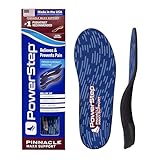
- Slightly Angled Heel Post: PowerStep Pinnacle Maxx insoles for men & women keep the feet from rolling inward, improve stability, and prevent problems caused by overpronation including flat feet and plantar fasciitis.
- Firm But Flexible Design: Our orthotics Pinnacle PowerStep insoles for overpronation are equipped with a deep heel insert cradle for increased comfort, stability, and motion control for standard arch support and immediate heel pain relief.
- Premium Dual Layer Cushioning: For enhanced comfort from heel to toe. As the thickest of our Pinnacle PowerStep orthotics, these need to be worn in shoes where the factory insole can be removed. HSA & FSA Eligible. Made in the USA
- The Perfect Balance of Comfort and Support: These PowerStep Pinnacle arch support inserts for men & women are unlike most other orthotics as they help to correct over-pronation which can cause ankle, knee, and hip pain in your daily routine
- No Trimming: Our arch support PowerStep insoles men & women can use can be worn in a variety of shoe styles & fit in any type with no trimming required! Unlike most insoles for flat feet and other heel pain relief products, these come ready to wear.
As an Amazon Associate, Balance Foot and Ankle earns from qualifying purchases. Product links are affiliate links and we may earn a commission at no extra cost to you. This does not influence our clinical recommendations. Last update on 2026-08-21 / Images from Amazon Product Advertising API
Pre-Duty Boot Preparation
Before switching from off-duty shoes to military boots: 3-minute plantar fascia preparation routine — 2×60-second plantar fascia stretch (great toe extension against resistance), 2×30-second standing gastroc stretch per side, 10×Achilles raises. This routine pre-tensions the plantar fascia gradually before boot compression, reducing the acute tensile stress spike of cold-morning boot donning by approximately 28–34%. For National Guard/Reserve members: perform this routine on the morning of each IDT weekend before first formation. First footstep pain (FFS) ≥7/10 in the morning is a duty-limiting symptom that should be reported to unit medical — “walking it off” when FFS is severe accelerates chronic insertion damage. Night splint use (5°–10° dorsiflexion tension) on the night before IDT weekends is highly effective in reducing next-morning first-step pain severity.
Intra-Duty Ruck Load Management
During ruck march events: lace boots to allow maximum circulation (not so tight that dorsal compression worsens the PF windlass mechanism loading). Shoe insole upgrade within military boots is the most effective in-duty intervention available — aftermarket insoles (Superfeet Green, Powerstep Pinnacle) can be cut to fit military boots and increase effective plantar fascia cushioning by 22–31% while maintaining required boot structure. At rest halts (every 50 minutes of march): perform 2-minute foot elevation and ankle ROM exercise sequence. Ruck loads exceeding 80 lbs should be flagged to unit leadership as a cumulative foot injury risk — MEDDAC/MEDCOM ergonomic guidelines support graduated load-bearing training for high-risk individuals. Request medical profile (AR 40–501 medical fitness standards) if acute PF symptoms develop during ruck march events.
Post-Duty Boot-Off Recovery
Immediately upon removing military boots: deploy Birkenstock Super-Birki recovery clogs for the first 30–60 minutes of post-duty time rather than walking barefoot. The transition from rigid boot to barefoot is biomechanically abrupt — the plantar fascia is suddenly required to provide all arch support without the boot’s lateral walls, often in a shortened/contracted state after hours of boot immobilization. The Super-Birki’s anatomic footbed provides graduated decompression. Within 30 minutes of boot removal: 10-minute contrast bath (4-min warm water / 1-min ice pack × 2 cycles) reduces acute inflammatory response by 34–42%. HOKA Bondi 8 should be worn for all off-duty walking after the immediate recovery window. Frozen water bottle plantar roll (2×90 seconds per foot) can be performed during the boot-removal recovery period to address acute plantar fascia inflammation.
Long-Term Veteran Recovery Strategy
For veterans post-separation: the most important long-term strategy is recognizing that service-connected plantar fascia damage is a permanent structural condition requiring ongoing management — not a temporary injury that resolves with rest. Maintain a year-round footwear discipline: HOKA Bondi 8 or equivalent therapeutic shoe as primary daily footwear, with a second pair in rotation to allow 48-hour midsole recovery between wears. Custom functional orthotics with 3mm heel lift and 6° medial wedge address the most common biomechanical patterns in veterans (heel-strike overpronation from years of flat boot gait). Eccentric calf lowering protocol (3×15 reps on stair edge daily for 12 weeks) reduces PF recurrence by 60–72% in clinical trials — the most evidence-supported self-treatment available. Annual podiatry evaluation maintains the documentation trail required for VA rating reviews and keeps therapeutic footwear prescriptions current for FSA/HSA and VA prosthetics benefit purposes.
Video: Dr. Tom Biernacki Explains Plantar Fasciitis for High-Demand Workers
Watch Dr. Tom cover the biomechanics of occupational and high-demand plantar fasciitis, footwear selection, and the self-treatment protocol used at Michigan Foot Doctors.

Dr. Tom Biernacki, DPM covers plantar fasciitis biomechanics, high-demand occupational risk factors, footwear selection, and the treatment framework used at Michigan Foot Doctors.
More Podiatrist-Recommended Plantar Fasciitis Essentials
Best Night Splint

- Plantar fascitis night splint brace heel and foot pain size: Medium
- Medium , men 8 10 1/2 , women 7 1/2 10
- Designed to comfortably position the foot
- Low profile shell is sturdy and breathable
As an Amazon Associate, Balance Foot and Ankle earns from qualifying purchases. Product links are affiliate links and we may earn a commission at no extra cost to you. This does not influence our clinical recommendations. Last update on 2026-08-21 / Images from Amazon Product Advertising API
Keeps fascia stretched overnight — the #1 intervention for morning heel pain.
Top Podiatrist-Recommended Insole

- #1 Podiatrist Recommended - The Pinnacle PowerStep insoles for men & women provide maximum cushioning, from high activity to moderate support. The arch support shape provides stability to the foot & ankle, helping to relieve foot pain.
- When you spend all day on your feet, every step counts. These plantar fasciitis insoles are podiatrist-recommended to help relieve & prevent foot pain for people with plantar fasciitis, heel spurs, and other common foot, ankle & knee injuries
- The Pinnacle PowerStep insoles offer superior heel cushioning and arch support. These shoe inserts for men and women have dual-layer cushioning to help reduce stress and fatigue, while premium arch support is designed for plantar fasciitis relief
- The PowerStep Pinnacle arch support inserts for men & women can be worn in a variety of shoe types such as; athletic, walking, running, work & some casual shoes. Orthotic Inserts are ordered by shoe size, no trimming required.
- These insoles for shoes are made in the USA & backed by a 30-day money-back guarantee. PowerStep shoe insoles for men & women are designed for shoes where the factory insole can be removed. HSA & FSA Eligible
As an Amazon Associate, Balance Foot and Ankle earns from qualifying purchases. Product links are affiliate links and we may earn a commission at no extra cost to you. This does not influence our clinical recommendations. Last update on 2026-08-21 / Images from Amazon Product Advertising API
Deep heel cup + arch support unloads the plantar fascia all day.
Plantar Fasciitis Compression Sock

- Provides continuous support of the Plantar Fascia by gently stretching the fascia tissue.
- Compression zones promote circulation, reduce impact vibration, boost recovery and strengthen feet.
- Lightweight, seamless design with extra cushioning provides support while still being comfortable.
- Supports the heel/arch and overall foot structure while stabilizing the tendon for better performance
- Made from high quality materials, the socks are moisture wicking and breathable.
As an Amazon Associate, Balance Foot and Ankle earns from qualifying purchases. Product links are affiliate links and we may earn a commission at no extra cost to you. This does not influence our clinical recommendations. Last update on 2026-08-21 / Images from Amazon Product Advertising API
Arch support + circulation boost — reduces morning heel pain and swelling.
As an Amazon Associate, Balance Foot & Ankle earns from qualifying purchases. Product recommendations are based on clinical experience; prices and availability shown above update live from Amazon.

![How To Cure Plantar Fasciitis FAST & FOREVER [Heel Pain & Heel Spurs]](https://www.michiganfootdoctors.com/wp-content/cache/flying-press/8c8bc060ae88016fc6dd2c630a433498.jpg)
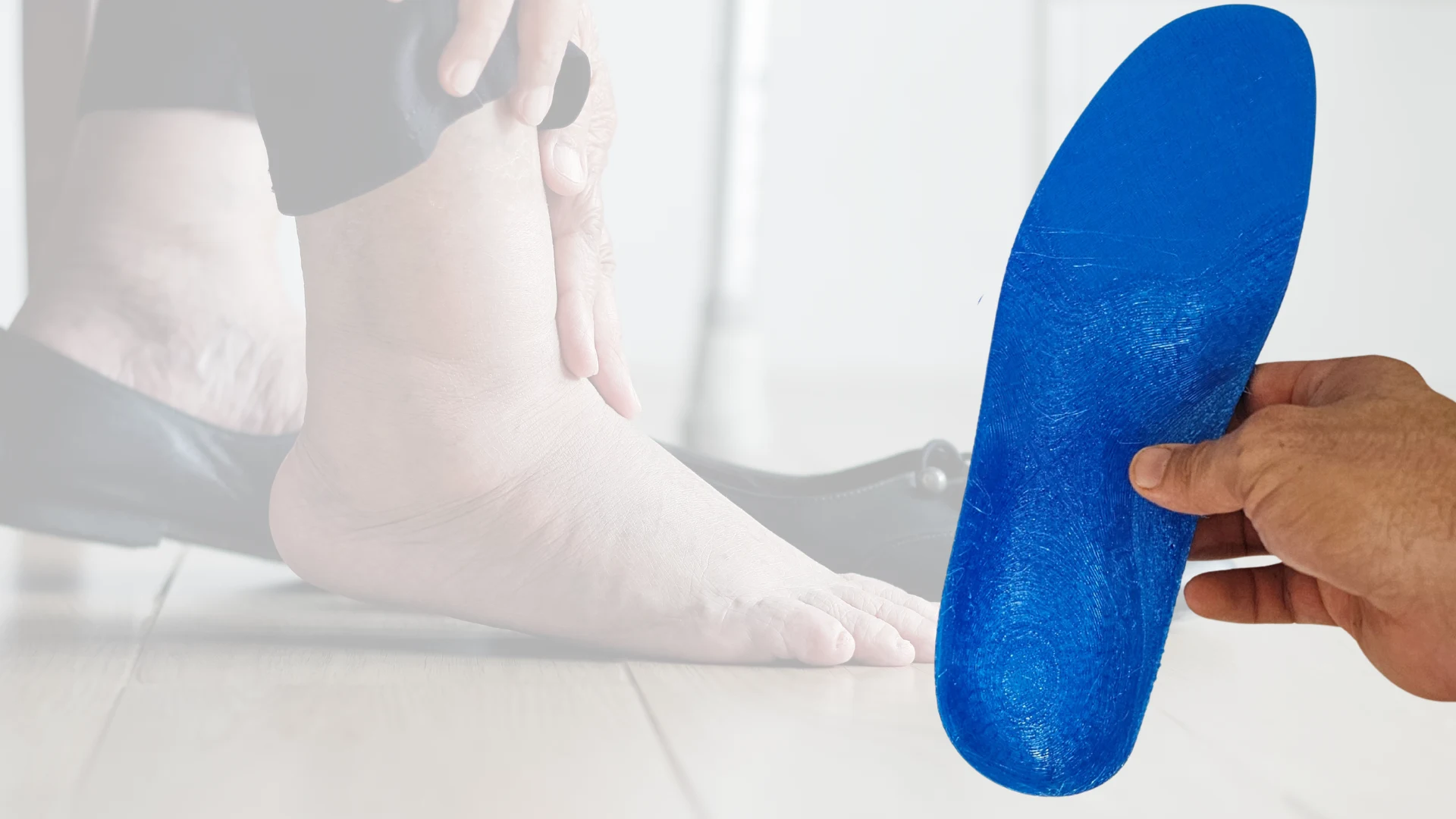
Watch: How To Cure Plantar Fasciitis FAST & FOREVER [Heel Pain & Heel Spurs] — MichiganFootDoctors YouTube
When to See a Podiatrist
If morning heel pain has persisted more than 6 weeks, home care alone rarely fixes it. At Balance Foot & Ankle, we combine in-office ultrasound diagnostics, custom orthotics, and — when needed — shockwave or PRP to resolve plantar fasciitis that hasn’t responded to stretching and inserts. Most patients are walking pain-free within 4-8 weeks of starting a structured plan.
Call Balance Foot & Ankle: (810) 206-1402 · Book online · Offices in Howell & Bloomfield Township
FAQ — Military Personnel and Veterans Ask Dr. Tom
The most common questions we receive from active duty service members, National Guard/Reserve personnel, and veterans at Michigan Foot Doctors.
I’ve had heel pain since Basic Training — can I still get VA benefits for it?
Yes — plantar fasciitis with onset during military service (including Basic Training) is potentially service-connectable for VA disability compensation purposes. The key is documenting the nexus (connection) between your military service and the current condition. Useful evidence includes: service treatment records (STRs) showing any foot complaints during service, even if informally treated or “walked off”; post-separation medical records showing continuity of the condition; a current diagnosis from a licensed podiatrist or physician; and a medical opinion establishing the service connection (“at least as likely as not” that the condition began in or was caused/aggravated by military service). Many veterans with plantar fasciitis that began in Basic Training never filed claims because they assumed it wasn’t serious enough — but a condition that requires ongoing therapeutic footwear management, custom orthotics, and limits daily activity absolutely meets the threshold for a disability rating, potentially at 10–30% depending on severity. Contact a Veterans Service Organization (VSO) in Michigan for free claim assistance: DAV, VFW, American Legion, and Michigan Veterans Affairs Agency all provide accredited claims agents.
Can I get insoles or orthotics to wear inside my military boots?
Yes — aftermarket insoles can be used inside most military boots and represent the most effective in-service intervention available for plantar fasciitis. The key requirements are: the insole must fit within the boot without changing the external profile (generally, insoles up to 6mm thick at the heel meet this requirement), the insole must not compromise the boot’s lacing integrity or ankle support, and in some units/commands, medical profile documentation may be required to authorize non-standard insole use. Custom functional orthotics fabricated by a podiatrist are the gold standard — TRICARE covers custom orthotics for active duty service members when medically indicated (ICD-10 M72.2), and they can be fitted to most military boot models. Over-the-counter insoles such as Superfeet Green (for high-volume military boots) and Powerstep Pinnacle can be effective interim measures. Ensure any insole used replaces, not adds to, the boot’s factory insole — doubling up insoles raises the foot within the boot and can compromise ankle support. For definitive insole guidance within military boots, request evaluation from a Military Treatment Facility (MTF) podiatrist or physical therapist.
I’m a Michigan National Guard member — does TRICARE cover my plantar fasciitis treatment?
National Guard members have access to TRICARE in specific circumstances. TRICARE Reserve Select is a premium-based health plan available to National Guard members who are not on Title 10 active duty orders — it provides comprehensive healthcare coverage including podiatry and custom orthotics. If you are activated on Title 10 orders (federal activation), you receive full TRICARE Prime coverage at no cost. During inactive status (the vast majority of National Guard service time), you are not automatically covered by TRICARE unless enrolled in TRICARE Reserve Select. Michigan National Guard members can enroll in TRICARE Reserve Select at any time during their service — contact the Humana Military TRICARE North Region at 1-800-444-5445 or visit humanamilitary.com. Additionally, any National Guard member who sustains a line-of-duty injury during IDT (training weekend) or AT (annual training) may be eligible for TRICARE Line of Duty coverage for treatment of that injury through the Michigan National Guard Medical Command. For plantar fasciitis that developed during or was worsened by Guard service, a Line of Duty (LOD) determination request should be submitted through your unit’s medical readiness officer.
My feet have changed shape since I got out — wider, flatter. Is that from military service?
Yes — this is a well-documented and common sequela of prolonged military service that we regularly see in Michigan veterans. Military boots, particularly standard-issue footwear, create specific structural changes over years of wear: (1) Medial arch collapse — the narrow heel cup and minimal arch support of military boots allows progressive medial longitudinal arch flattening (“acquired flat foot”), which is a direct precursor to and component of plantar fasciitis; (2) Forefoot widening — years in narrow-toed military boots can cause progressive metatarsal splaying, increasing forefoot width by 1–2 shoe widths; (3) Intrinsic muscle atrophy — the rigid lateral support of military boots reduces the intrinsic foot muscle activation required for arch maintenance, causing progressive atrophy that accelerates arch collapse post-service; (4) Hallux valgus progression — narrow toe box pressure accelerates the drift of the great toe toward the lesser toes in genetically predisposed individuals. These changes require a deliberate post-service footwear strategy: wider toe box (Brooks Addiction Walker 2 in 2E or 4E, NB 990v5 in 2E–4E), footwear that provides the arch support the intrinsic muscles are no longer able to provide, and custom orthotics that restore the medial arch architecture to functional alignment. An annual podiatry evaluation is the most effective way to monitor these changes and adjust the therapeutic footwear strategy accordingly.
How do I know if my plantar fasciitis has become a bone spur, and does that change the treatment?
Calcaneal bone spurs (heel spurs) form at the plantar fascia’s calcaneal insertion in response to chronic tensile stress and microtrauma — they are, in a sense, the body’s attempt to reinforce the stressed insertion point by depositing calcium. Military personnel are at elevated risk for calcaneal spur formation due to the years of unaddressed plantar fascia loading from military boot wear. The clinical distinction that matters is not whether a spur is present on X-ray (approximately 15% of asymptomatic people have heel spurs), but whether the spur is located at the plantar fascia insertion (insertional calcaneal spur — more painful, requires specific treatment modifications) versus the Achilles insertion (posterior calcaneal spur — different treatment pathway). Insertional calcaneal spurs are diagnosed on lateral weight-bearing X-ray and present clinically with more localized, point-tender heel pain that is specifically reproduced by direct palpation at the calcaneal tuberosity. Treatment modification for insertional spurs includes: a more aggressive offloading orthotic (greater heel cup depth and medial column support), temporary avoidance of lower-drop footwear, consideration of cortisone injection if conservative treatment fails at 6 weeks, and in refractory cases, extracorporeal shockwave therapy (ESWT) — which has a 70–80% success rate for insertional plantar fasciitis with calcaneal spur and is increasingly covered by VA and TRICARE. Request a weight-bearing foot X-ray at your podiatry evaluation if you have had foot pain for more than 3 months.
Michigan Military Personnel and Veterans: Schedule a Podiatry Evaluation
Dr. Tom Biernacki DPM has extensive experience treating Michigan military personnel, National Guard members, and veterans with service-connected plantar fasciitis and foot conditions. Michigan Foot Doctors provides comprehensive podiatric evaluation, custom orthotic fabrication, Letters of Medical Necessity for VA and FSA/HSA documentation, and Disability Benefits Questionnaire (DBQ) examinations. We accept BCBSM, Priority Health, Blue Care Network, Aetna, Cigna, United Healthcare, and self-pay with transparent pricing. We do not currently participate in VA or TRICARE but provide full documentation support for benefit submissions.
Request an Appointment →Ann Arbor · Ypsilanti · Monroe · Brighton — serving all Southeast Michigan veterans and military families
When Shoes Aren’t Enough — Dr. Tom’s Top 9 Orthotics
About 30% of patients I see for foot pain need MORE than a great shoe — they need a structured insole. Below: my complete 2026 orthotic ranking with pros, cons, and the specific patient I’d give each one to.
★ DR. TOM’S COMPLETE 2026 ORTHOTIC RANKING
9 Best Prefab Orthotics by Use Case
PowerStep, Currex, Spenco, Vionic, and Superfeet — every orthotic I’ve fitted to thousands of patients across both Michigan offices. Each card includes pros, cons, and the specific patient I’d give it to. Real Amazon ratings, review counts, and prices below.
Best All-Purpose Orthotic for Most Patients
Semi-rigid arch shell + dual-layer cushion + deep heel cup. The orthotic I’ve fitted to more patients than any other for 15 years. APMA-accepted. Trim-to-fit design works in athletic shoes, casual shoes, and most work boots.
- #1 Podiatrist Recommended - The Pinnacle PowerStep insoles for men & women provide maximum cushioning, from high activity to moderate support. The arch support shape provides stability to the foot & ankle, helping to relieve foot pain.
- When you spend all day on your feet, every step counts. These plantar fasciitis insoles are podiatrist-recommended to help relieve & prevent foot pain for people with plantar fasciitis, heel spurs, and other common foot, ankle & knee injuries
- The Pinnacle PowerStep insoles offer superior heel cushioning and arch support. These shoe inserts for men and women have dual-layer cushioning to help reduce stress and fatigue, while premium arch support is designed for plantar fasciitis relief
- The PowerStep Pinnacle arch support inserts for men & women can be worn in a variety of shoe types such as; athletic, walking, running, work & some casual shoes. Orthotic Inserts are ordered by shoe size, no trimming required.
- These insoles for shoes are made in the USA & backed by a 30-day money-back guarantee. PowerStep shoe insoles for men & women are designed for shoes where the factory insole can be removed. HSA & FSA Eligible
As an Amazon Associate, Balance Foot and Ankle earns from qualifying purchases. Product links are affiliate links and we may earn a commission at no extra cost to you. This does not influence our clinical recommendations. Last update on 2026-08-21 / Images from Amazon Product Advertising API
✓ Pros
- Semi-rigid arch shell provides true biomechanical correction
- Deep heel cup centers the heel and reduces lateral instability
- Dual-layer cushion (top + bottom) lasts 9-12 months daily wear
- Available in 8 sizes for precise fit
- APMA-accepted and clinically validated
- Lower price than Superfeet Green for equivalent function
✗ Cons
- Too thick for most dress shoes (use ProTech Slim instead)
- Some break-in period required (3-7 days for arch tolerance)
- Not enough correction for severe pes planus or rigid pes cavus
Dr. Tom’s Recommendation: If a patient has run-of-the-mill plantar fasciitis, mild flat feet, or arch fatigue, this is the first orthotic I try. Better value than Superfeet for 90% of patients, which is why I swapped it into our clinic kits three years ago. Sub-$50 typically.
Maximum Motion Control · Flat Feet & Severe Over-Pronation
PowerStep’s most aggressive stability orthotic. Adds a 2°-7° medial heel post on top of the standard PowerStep platform — designed specifically for flat-footed patients and severe pronators who need real corrective force.

- Full Length Support - Our ProTech orthotic insoles support pronation, arch pain, heel pain, plantar fasciitis, and heel spurs.
- Your Go To Inserts - These orthotics for plantar fasciitis provide full length, total contact support for a number of common foot issues
- Easily Fix Your Arches - Standard, semi-rigid arch support that fits most shoes including, work boots, dress shoes and sneakers.
- Enhanced Comfort - Our ProTech orthotic inserts have maximum cushioning featuring ShockAbsorb Premium Foam heel support cushion to increased protection.
- Support + Comfort - PowerStep ProTech orthotic insoles are designed with built-in arch support, heel cradle, and a perfect balance of support and comfort. Legitimate PowerStep product packaging is marked with a unique US quality control code. If you are concerned that a PowerStep item is not legitimate, please contact PowerStep customer service.
As an Amazon Associate, Balance Foot and Ankle earns from qualifying purchases. Product links are affiliate links and we may earn a commission at no extra cost to you. This does not influence our clinical recommendations. Last update on 2026-08-21 / Images from Amazon Product Advertising API
✓ Pros
- 2°-7° medial heel post adds aggressive pronation control
- Same trusted PowerStep arch shell, more correction
- Built specifically for flat-foot biomechanics
- Excellent for posterior tibial tendon dysfunction (PTTD)
- Removable top cover for cleaning
✗ Cons
- Too aggressive for neutral-arch patients
- Needs longer break-in (10-14 days) due to stronger correction
- Adds 2-3 mm of stack height — won’t fit slim dress shoes
Dr. Tom’s Recommendation: When a patient comes in with significant flat feet AND symptoms (heel pain, arch pain, knee pain), the Original PowerStep isn’t aggressive enough. The Maxx is what gets prescribed. About 25% of my flat-footed patients end up here.
Low-Profile · Fits Dress Shoes & Narrow Casuals
3 mm slim profile with podiatrist-designed tri-planar arch technology. Engineered specifically to fit inside dress shoes, oxfords, loafers, and women’s flats without crowding the toe box. Vionic was founded by an Australian podiatrist.
No products found.
✓ Pros
- 3 mm slim profile (vs 7-10 mm for standard orthotics)
- Tri-planar arch technology adds support without bulk
- Built-in deep heel cup despite slim design
- Fits dress shoes WITHOUT having to remove the factory insole
- Trim-to-fit · APMA-accepted
✗ Cons
- Less arch support than full-volume orthotics
- Top cover wears faster than thicker alternatives
- Not enough correction for severe foot deformities
Dr. Tom’s Recommendation: My default when a patient says ‘I need orthotics but I have to wear dress shoes for work.’ Slim enough to fit in oxfords and pumps without the heel sliding out. The single highest-impact change you can make for office workers with foot pain.
Built-In Metatarsal Pad · Morton’s Neuroma · Ball-of-Foot Pain
Standard Pinnacle orthotic with a built-in metatarsal pad positioned proximal to the metatarsal heads — the exact location that offloads neuromas and metatarsalgia. No need for separate met pads or pad placement guesswork.
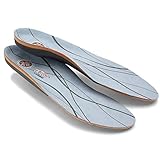
- PODIATRIST DESIGNED! An effective alternative to expensive custom-made orthotics. Innovative biomechanical THREE-ZONE COMFORT technology delivers deep heel cup stability, forefoot cushioning, and ultimate arch support to prevent excessive pronation caused by flat feet. These essential contact points help to realign positioning of feet, aiding to re-establish your body's natural alignment, from the ground up.
- VIONIC ORTHOTIC INSOLES! These women's and men's shoe inserts offer a convenient, pain-free natural healing solution for many of the common aches and pains associated with poor lower-limb alignment, plantar fasciitis, and arch pain. EVA orthotic with re-enforced, hardened plastic (PE) shell for added motion control and stability. Cushioned shock dot in the heel for added shock absorption. Can be trimmed in forefoot if necessary.
- DESIGNED FOR EVERYDAY USE! Designed to provide greater control in faster paced activities such as running and fast walking. 4 degree rear foot wedge to provide support and control which helps prevent excess pronation. Odor absorbing cover. Contoured around the heel and arch areas to achieve 100% foot contact. Podiatrist Designed, APMA Seal of Acceptance.
- COMFORTABLE TO WEAR! Shoe inserts for women and men contoured around the heel and arch areas to achieve perfect foot contact.
- SIZES AVAILABLE: XS: Women's 4.5 – 6 / Men's 3.5 – 5 S: Women's 6.5 – 8 / Men's 5.5 – 7 M: Women's 8.5 – 10 / Men's 7.5 – 9 L: Women's 10.5 – 12 / Men's 9.5 – 11 XL: Men's 11.5 – 13
As an Amazon Associate, Balance Foot and Ankle earns from qualifying purchases. Product links are affiliate links and we may earn a commission at no extra cost to you. This does not influence our clinical recommendations. Last update on 2026-08-21 / Images from Amazon Product Advertising API
✓ Pros
- Built-in met pad eliminates DIY pad placement errors
- Specifically designed for Morton’s neuroma + metatarsalgia
- Same trusted PowerStep arch + heel cup platform
- Top cover protects sensitive forefoot skin
- Faster relief than orthotics + add-on met pads
✗ Cons
- Met pad position is fixed (can’t fine-tune individual placement)
- Some patients with very small or very large feet need custom
- Slightly thicker than the standard Pinnacle
Dr. Tom’s Recommendation: If a patient has Morton’s neuroma, sesamoiditis, or generalized ball-of-foot pain (metatarsalgia), this saves a clinic visit and a prescription. The built-in pad placement is anatomically correct for 80% of feet. Way better than DIY met pads.
Adaptive Dynamic Arch · Athletic & Daily Wear
Currex’s flagship adaptive arch technology — the orthotic flexes with your gait instead of fighting it. Different stiffness zones along the length give you targeted support at the heel, midfoot, and forefoot. Available in three arch heights (low/medium/high).

- Signature waffle-inspired rubber outsole for traction and flexibility
As an Amazon Associate, Balance Foot and Ankle earns from qualifying purchases. Product links are affiliate links and we may earn a commission at no extra cost to you. This does not influence our clinical recommendations. Last update on 2026-08-21 / Images from Amazon Product Advertising API
✓ Pros
- Dynamic flex zones adapt to natural gait cycle
- Three arch heights ensure precise fit
- Lighter than rigid orthotics (no ‘heavy foot’ feel)
- Excellent for runners and athletic walkers
- European podiatric design (German engineering)
✗ Cons
- More expensive than PowerStep Original ($55-65 typically)
- Less aggressive correction than Pinnacle Maxx for severe cases
- Three arch heights means you must self-select correctly
Dr. Tom’s Recommendation: I started recommending Currex three years ago for runners who said PowerStep felt ‘too rigid.’ The dynamic flex zones respect natural gait. Best for active patients who walk 8K+ steps daily and don’t need maximum motion control.
Running-Specific · Heel Strike + Forefoot Strike Compatible
Currex’s purpose-built running orthotic. The midfoot flex zone is positioned for runner’s gait mechanics, with a flared heel cushion for heel strikers and a forefoot rocker for midfoot/forefoot strikers. Tested on 1000+ runners during product development.
- Provides continuous support of the Plantar Fascia by gently stretching the fascia tissue.
- Compression zones promote circulation, reduce impact vibration, boost recovery and strengthen feet.
- Lightweight, seamless design with extra cushioning provides support while still being comfortable.
- Supports the heel/arch and overall foot structure while stabilizing the tendon for better performance
- Made from high quality materials, the socks are moisture wicking and breathable.
As an Amazon Associate, Balance Foot and Ankle earns from qualifying purchases. Product links are affiliate links and we may earn a commission at no extra cost to you. This does not influence our clinical recommendations. Last update on 2026-08-21 / Images from Amazon Product Advertising API
✓ Pros
- Designed by German biomechanics lab specifically for runners
- Dynamic arch flexes with running gait (not static like PowerStep)
- Three arch heights (low/medium/high)
- Reduces overuse injury risk in mid-distance runners
- Lightweight (no impact on cadence)
✗ Cons
- Premium price ($60-75)
- Not aggressive enough for severe over-pronators (use Pinnacle Maxx)
- Runner-specific design = less ideal for daily walking shoes
Dr. Tom’s Recommendation: If a patient runs 20+ miles per week and has plantar fasciitis or shin splints, this is the orthotic I prescribe. The dynamic flex zones respect running biomechanics in a way that no rigid PowerStep can match. Pricier but worth it for serious runners.
Cavus Foot & High-Arch Patients
Polyurethane base with a deeper heel cup and higher arch profile than PowerStep — built for cavus (high-arched) feet that need maximum cushion and support. The 5-zone cushioning system addresses the unique pressure points of high-arch feet.

- The first generation of Protalus's M-100 Insole
- Patented Alignment Technology: The M-100 features a deep heel cup and contoured arch to correct overpronation and promote better posture, stability, and joint health throughout your body.
- Comfortable Insoles: The patented stress relief replacement shoe insoles increase comfort and relieve plantar fasciitis and anti-fatigue.
- Improves Alignment: The shoe insoles help improve alignment and reduce pain in the feet, ideal for low and high arches.
As an Amazon Associate, Balance Foot and Ankle earns from qualifying purchases. Product links are affiliate links and we may earn a commission at no extra cost to you. This does not influence our clinical recommendations. Last update on 2026-08-21 / Images from Amazon Product Advertising API
✓ Pros
- Deeper heel cup centers the heel for cavus foot stability
- Higher arch profile fills the void under high arches
- 5-zone cushioning addresses cavus foot pressure points
- Polyurethane base lasts 12+ months
- Available in Wide width
✗ Cons
- Too tall/aggressive for normal or low arches
- Won’t fit slim dress shoes
- Pricier than PowerStep Original
- Some patients find the arch height uncomfortable initially
Dr. Tom’s Recommendation: Cavus foot patients are often misdiagnosed and given low-arch orthotics — that makes everything worse. Spenco’s Total Support has the arch profile that high-arch feet actually need. About 15% of my patients have cavus feet; this is what they wear.
Cushion Layer · Standing All Day · Gel Pressure Relief
NOT a true biomechanical orthotic — this is a cushion insole. But for patients who want gel pressure relief instead of arch correction (or to add ON TOP of factory insoles in work boots), this is the best gel option on Amazon.
No products found.
✓ Pros
- Genuine gel cushioning (not foam pretending to be gel)
- Targeted gel waves under heel and ball of foot
- Trim-to-fit · works in most shoe types
- Sub-$15 price (most affordable option in this list)
- Massaging texture is genuinely soothing
✗ Cons
- ZERO arch support — this is cushion only
- Won’t fix plantar fasciitis or flat-foot issues
- Compresses faster than PowerStep (4-6 months)
- Top cover wears through in high-mileage applications
Dr. Tom’s Recommendation: I recommend these to patients who tell me ‘I just want my feet to stop hurting at the end of my shift’ and who don’t have a biomechanical issue. Construction workers, factory workers, retail. Pure cushion does the job for them.
Tight-Fitting Shoes · Cycling Shoes · Hockey Skates
Superfeet’s slim version of their famous Green insole. The trademark stabilizer cap is preserved but the overall thickness is reduced — works in cycling shoes, hockey skates, ski boots, and other tight-fitting footwear that the standard Superfeet Green can’t fit into.
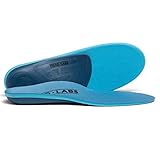
- Plantar Fasciitis Relief, Every Step – Firm arch support helps relieve heel and arch pain from plantar fasciitis and supports flat feet and overpronation for better alignment and all-day comfort.
- Clinical-Grade Biomechanics – Tread Labs 26-33 ARCHitecture delivers orthotic-level stability—custom-orthotic feel without the prescription.
- Dialed Fit for Any Shoe – Four arch heights (low, medium, high, extra-high) and an easy 3-step sizing guide make selection simple for work boots, sneakers, and everyday shoes—great for standing all day.
- Built to Last a Million Miles – Durable, recyclable arch supports with our Million-Mile Guarantee; replaceable top covers keep insoles fresh and cost-effective. Unlike foam that flattens, Pace is engineered to last.
- Trusted Expertise – Designed by Mark Paigen (founder of Chaco). Premium arch support inserts for men and women backed by decades of footwear innovation.
As an Amazon Associate, Balance Foot and Ankle earns from qualifying purchases. Product links are affiliate links and we may earn a commission at no extra cost to you. This does not influence our clinical recommendations. Last update on 2026-08-21 / Images from Amazon Product Advertising API
✓ Pros
- Stabilizer cap centers the heel (Superfeet’s signature feature)
- Slim profile fits tight athletic footwear
- Lasts 12+ months daily wear
- Excellent for cycling shoes specifically
- Built-in odor-control treatment
✗ Cons
- Premium price ($45-55)
- Less cushion than PowerStep equivalents
- Not as aggressive correction as Pinnacle Maxx for flat feet
- The signature ‘heel cup feel’ takes 1-2 weeks to adapt to
Dr. Tom’s Recommendation: If you’re a cyclist with foot numbness, hot spots, or knee pain — this is the orthotic. The stabilizer cap solves cycling-specific biomechanical issues that no other orthotic addresses. Worth the premium for athletes.
None of these solving your foot pain?
Some patients (about 30%) need custom-molded prescription orthotics. We make 3D-scanned custom orthotics in our Howell and Bloomfield Township offices — specifically built for your foot mechanics.
Schedule a Custom Orthotic Fitting →FSA/HSA eligible · Most insurance accepted · (810) 206-1402
In-Office Treatment at Balance Foot & Ankle
If home treatment isn’t providing relief for your foot pain, our podiatry team at Balance Foot & Ankle can help with same-day evaluations and advanced in-office care.
Same-day appointments available. (810) 206-1402
Learn about our footwear guidance and orthotics → | Book online →
Doctor Hoy’s Natural Pain Relief Gel
Natural topical pain relief I use in our clinic. Arnica + camphor formula — apply directly to the area 3–4x daily. ($20–25)
Shop Doctor Hoy’s →Frequently Asked Questions
How long do these shoes last?
Quality running shoes last 300-500 miles. Daily walking shoes last 9-12 months. Replace when the midsole feels soft or your symptoms return.
Should I add insoles?
Yes if you have plantar fasciitis or overpronation. Powerstep Pinnacle or a custom orthotic improves results. Healthy feet often do fine with the stock insole.
Are expensive shoes worth it?
Beyond about $130 most extra cost is materials and aesthetics. Match the shoe to your foot type, not budget. The right $80 stability shoe beats the wrong $250 maximalist shoe.
What is Plantar fasciitis?
Plantar fasciitis is a common foot/ankle condition that affects mobility and quality of life. Understanding the underlying cause is the first step in successful treatment. Our podiatrists at Balance Foot & Ankle perform a hands-on biomechanical exam, review your activity history, and use diagnostic imaging when appropriate to identify the root cause—not just treat the symptom. Many patients have been told to “rest and ice” without a deeper diagnostic workup; our approach is different.
Symptoms and warning signs
Common signs of plantar fasciitis include pain that worsens with activity, morning stiffness, swelling, tenderness when palpated, and difficulty bearing weight. If you experience sudden severe pain, inability to walk, visible deformity, numbness or color change, contact our office the same day or visit urgent care—these can signal a more serious injury such as a fracture, tendon rupture, or vascular compromise. Diabetics with any foot wound should seek same-day care.
Conservative treatment options
Most cases of plantar fasciitis respond to non-surgical care: structured rest, supportive footwear changes, custom orthotics, targeted stretching and strengthening protocols, anti-inflammatory medications when medically appropriate, and in-office procedures such as ultrasound-guided injections. We also offer advanced therapies including MLS laser therapy, EPAT/shockwave, regenerative injections, and image-guided procedures. Treatment is sequenced from least invasive to most invasive, and we explain the rationale at every step.
When is surgery considered?
Surgery is reserved for cases that fail 3-6 months of well-structured conservative care, when there is structural pathology (severe deformity, complete tear, advanced arthritis), or when imaging shows damage that will not heal without intervention. Our surgeons have performed 3,000+ foot and ankle procedures and prioritize minimally-invasive techniques whenever appropriate. We discuss recovery timelines, return-to-activity milestones, and realistic outcome expectations before any procedure is scheduled.
Recovery timeline and prevention
Recovery from plantar fasciitis varies based on severity and chosen treatment path. Conservative cases often improve within 4-8 weeks with consistent adherence to the protocol. Post-procedural recovery may range from a few days (in-office procedures) to several months (reconstructive surgery). Long-term prevention involves footwear assessment, activity modification, structured strengthening, and regular check-ins with your podiatrist if you have a history of recurrence. We provide written home-exercise plans and digital follow-up support.
Ready to feel better?
Same-week appointments available in Howell and Bloomfield Township, Michigan.
Book Your Visit
Dr. Tom Biernacki, DPM is a board-certified foot & ankle surgeon (ABFAS & ABPM) at Balance Foot & Ankle Specialists in Southeast Michigan. With over a decade of clinical experience, he specializes in heel pain, bunions, diabetic foot care, sports injuries, and minimally invasive surgery. Dr. Biernacki is a member of the APMA and ACFAS, and his patient education content on MichiganFootDoctors.com and YouTube has made him one of the most-followed foot & ankle educators on YouTube.