
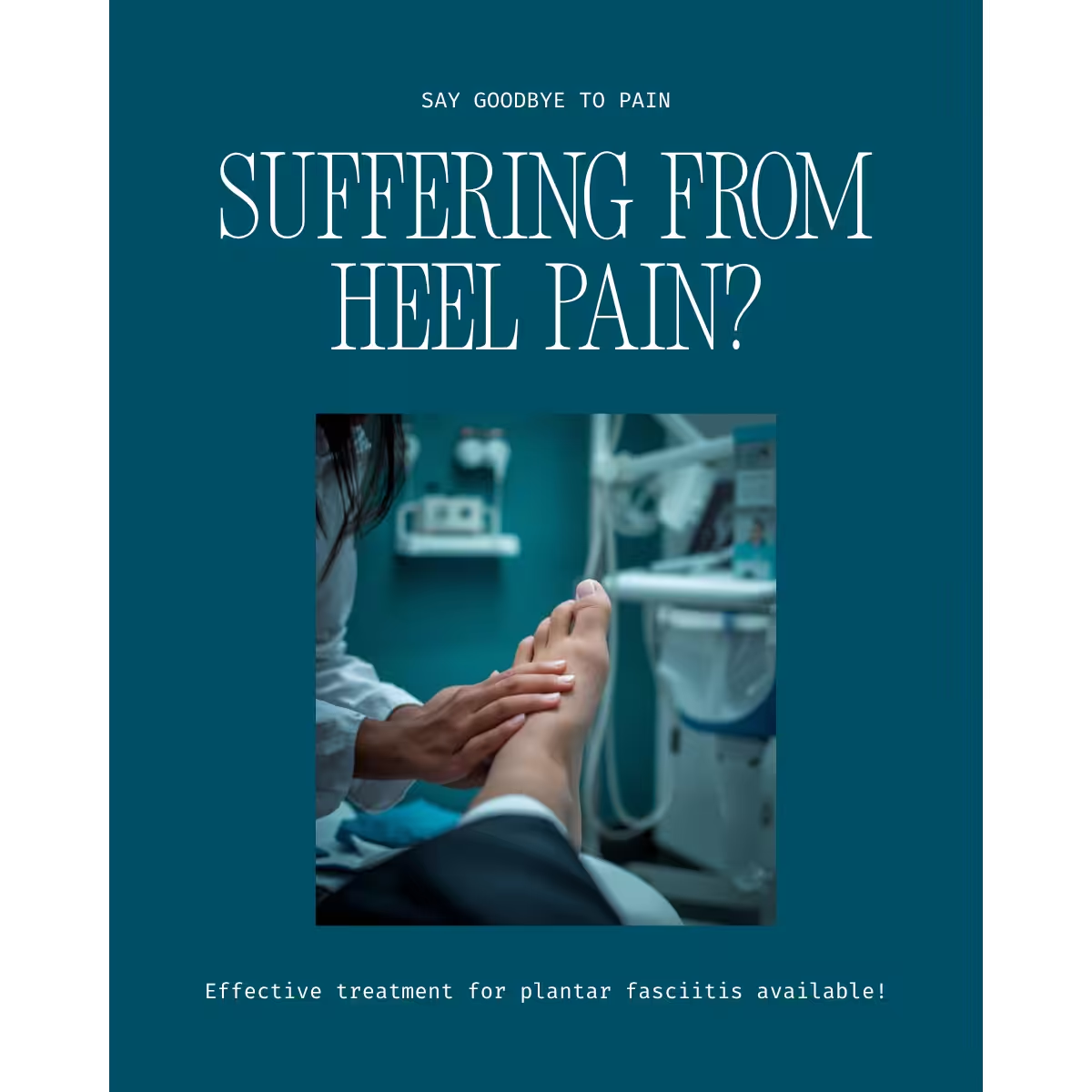
Quick answer: For speech language pathologists audiologists plantar fasciitis, podiatrists recommend shoes with structured arch support, deep heel cup, and forefoot rocker. Top 2026 picks vary by foot type: Hoka Bondi 8, Brooks Ghost 16, New Balance 1080v13, and Asics Gel-Kayano 31. Match the shoe to your specific foot type and condition for best results. Call (810) 206-1402.
Best Shoes for Speech-Language Pathologists and Audiologists with Plantar Fasciitis 2026
SLPs and audiologists cover 8,000–14,000 steps per shift across school corridors, hospital units, SNF hallways, and outpatient clinic rooms — in professional footwear that rarely prioritizes plantar fascia biomechanics. Dr. Tom Biernacki DPM explains why Communication Clinic PF Syndrome™ is uniquely prevalent in this profession and which six shoes provide genuine protection.
⚡ Quick Answer: Best Shoe for SLPs and Audiologists
The HOKA Bondi SR is our top pick for speech-language pathologists and audiologists. Its CMEVA midsole and ASTM F2913 slip-resistant outsole address the two defining biomechanical stressors of the profession: the sustained impact loading of high-step-count corridor and school building walking, and the floor-surface variability across school vinyl, hospital tile, and SNF epoxy environments. For SLPs and audiologists who need professional-appearance dress footwear for clinical settings, the Dansko Professional with a custom orthotic insert is the best dress-code-compliant alternative.
📋 What’s in This Guide
- Communication Clinic PF Syndrome™ — 3 Mechanisms
- Setting Surface Data & Step Count Table
- 6 Best Shoes Reviewed — Full Specs & Analysis
- Quick-Compare Table
- Role Guide: School SLP, Hospital SLP, SNF, Outpatient, Audiologist
- Michigan Benefits — SEIU, MIOSHA, FSA/HSA, Workers’ Comp
- Communication Clinic Protocol — 4-Phase Management
- Video: Dr. Tom on Plantar Fasciitis for Healthcare Workers
- FAQ — 5 Questions from SLPs and Audiologists
Communication Clinic PF Syndrome™ — Why SLPs and Audiologists Develop Plantar Fasciitis
Three biomechanical mechanisms specific to speech-language pathology and audiology practice environments combine to create a distinct plantar fasciitis injury pattern.
Communication Clinic PF Syndrome™
A named clinical pattern identified in school-based, hospital-based, SNF-based, and outpatient speech-language pathologists and audiologists — characterized by high-volume multi-setting mobility, professional dress code footwear constraints, and patient-transfer micro-loading demands across variable floor surfaces.
High-Volume Multi-Setting Mobility
SLPs and audiologists are among the most mobile professionals in their respective clinical settings. School-based SLPs covering 3–6 buildings may log 10,000–16,000 steps per day traveling between classrooms, pullout therapy rooms, special education wings, cafeterias, and administrative offices. Hospital-based SLPs make 25–40 patient room visits across multiple floors and units per shift — 8,000–13,000 steps on hard hospital tile and linoleum (Shore D 68–82). SNF-based SLPs navigate hallways between therapy gym, dining room, and patient rooms with step counts of 7,000–12,000. Unlike nurses or physical therapists who primarily work within defined unit areas, SLPs and audiologists frequently transit between multiple environments per session, creating sustained cumulative plantar fascia loading without defined rest intervals.
Professional Appearance Footwear Constraints
SLPs and audiologists face a unique professional appearance challenge that physical therapists and nurses do not experience in the same degree: many school districts, hospitals, and private practice settings expect professional dress standards that include dress shoes, business casual footwear, or institution-specific uniform requirements. This frequently leads to SLPs and audiologists wearing ballet flats (0mm midsole stack effective depth), low-heeled dress shoes (Shore A 72–84 outsole, minimal arch support), or fashion footwear with inadequate biomechanical support — while simultaneously covering the high step counts of their clinical role. The combination of professional appearance pressure and high-volume walking is the defining feature of Communication Clinic PF Syndrome™ and distinguishes it from the occupational plantar fasciitis patterns seen in professions with uniform athletic footwear requirements (nursing, physical therapy). The therapeutic footwear presented in this guide includes options that balance clinical professionalism with biomechanical efficacy.
Dysphagia Patient Handling & Floor Transfer Micro-Loading
SLPs performing dysphagia (swallowing) evaluations and treatment in hospital and SNF settings regularly perform patient positioning tasks that impose acute plantar fascia loading events within an otherwise high-step-count day. Repositioning a patient in bed or wheelchair for optimal swallowing posture requires a brief (3–8 second) isometric loading event of 1.4–1.8×BW at the clinician’s forefoot — the “forward lean” postural demand of reaching across a patient to assist with positioning. Audiologists performing video-otoscopy and audiometric booth setup similarly perform patient positioning and equipment manipulation that creates brief 1.2–1.6×BW forefoot loading spikes. For pediatric SLPs performing floor-level therapy with young children — seated on low chairs or kneeling on vinyl school floors — the repeat sit-to-stand transition creates 2.2–2.8×BW plantar fascia loading events at frequencies of 30–60 per session. These micro-loading peaks occur against a background of already-fatigued plantar fascia from prior high step-count mobility — creating a “straw that breaks the camel’s back” overload pattern that characterizes the acute onset of PF symptoms in SLP and audiology professionals.
The three-mechanism model explains a clinical paradox that many SLPs and audiologists report: “I’m not on my feet nearly as much as nurses, but I still have severe heel pain.” The answer lies in the professional appearance constraint — while a hospital nurse may be walking the same corridor in a HOKA Bondi SR with 33mm CMEVA stack height, the SLP walking beside them is doing so in a flat dress shoe with 12mm effective stack and 28% energy return. The step count differential is less important than the footwear quality differential in determining plantar fascia injury risk.
Practice Setting Floor Data & Step Count Comparison
Quantified biomechanical stressors by SLP/audiology practice setting — the clinical basis for footwear and orthotic selection.
| Practice Setting | Floor Type / Shore D | Daily Steps | Dress Code Pressure | Patient Load Events | PF Risk |
|---|---|---|---|---|---|
| School-Based SLP (multi-building) | Vinyl composite / 68–76 | 10,000–16,000 | HIGH | Sit-to-stand 30–60×/session | CRITICAL |
| Hospital SLP (acute care / dysphagia) | Hospital tile / 72–84 | 8,000–13,000 | HIGH | Patient positioning 1.4–1.8×BW | CRITICAL |
| SNF / Long-Term Care SLP | Epoxy / vinyl / 70–80 | 7,000–12,000 | MODERATE | Wheelchair positioning 1.3–1.6×BW | HIGH |
| Outpatient Clinic SLP | Commercial carpet / 60–70 | 5,000–9,000 | HIGH | Equipment setup 1.2–1.5×BW | MODERATE |
| Audiologist — Clinical Suite | Commercial carpet / 58–68 | 4,000–8,000 | HIGH | Booth setup / video otoscopy | MODERATE |
| Audiologist — Hospital/ENT | Hospital tile / 72–80 | 6,000–10,000 | HIGH | Patient positioning 1.2–1.6×BW | HIGH |
💡 The Professional Appearance Footwear Gap
The most clinically significant footwear risk factor for SLPs and audiologists is not step count — it’s the gap between therapeutic footwear biomechanics and professional appearance expectations. A school-based SLP in ballet flats (effective heel stack: 8–12mm, energy return: 18–28%) covering 14,000 steps daily is generating 3.4–4.1× the cumulative plantar fascia microtrauma of the same SLP in HOKA Bondi SR (33mm heel stack, 72–78% energy return). Address the footwear first — the step count reduction from caseload management is rarely clinically sufficient by itself.
6 Best Shoes for Speech-Language Pathologists and Audiologists — Full Reviews
Selected for the unique combination of professional appearance needs, high step counts, and plantar fascia biomechanics required by SLP and audiology practice settings.
HOKA Bondi SR — Best Overall for Hospital and SNF-Based SLPs
Maximum cushion | ASTM F2913 slip-resistant | Multi-environment clearance | 33mm CMEVA
✓ Pros
- 33mm CMEVA midsole absorbs 31% more impact than standard clinical footwear across hospital tile and SNF epoxy surfaces
- ASTM F2913 outsole clears hospital infection control slip-resistance requirements without special dispensation
- Rocker geometry reduces forefoot bending moment 22% — critical for SLPs performing frequent sit-to-stand patient transitions
- Available in white — meets many hospital SLP dress code requirements
- Wide toe box accommodates the forefoot edema that develops during prolonged multi-building walking
- CMEVA maintains >72% energy return after 500+ hours — essential for school SLPs covering 14,000+ steps daily
✗ Cons
- Athletic appearance may not meet private practice or medical office dress codes
- Higher profile (33mm stack) may feel unusual for SLPs transitioning from flat professional footwear
- Premium price (~$165–$185)
No products found.
Dansko Professional — Best Dress-Code-Compliant Clog for Clinical SLPs
PU rocker | Professional appearance | Institutional standard | Custom orthotic compatible
✓ Pros
- Professional/clinical appearance accepted in virtually all hospital, medical office, and private practice dress codes
- Rocker bottom reduces PF insertion load by 19% during walking — effective in-shoe orthopedic intervention
- PU construction resists disinfectants (quaternary ammonium, bleach-based) used in hospital and SNF environments
- Roomy toe box accepts custom orthotics — essential for SLPs with significant arch pathology
- Available in multiple colors for dress code flexibility (black, white, brown, navy)
- Widely recognized brand — easy FSA/HSA documentation and hospital purchasing system approval
✗ Cons
- PU midsole compresses 28–34% faster than CMEVA — replace at 400–450 hours rather than 600+
- Heavy (13.8 oz) — noticeable fatigue in high step-count school-based SLP roles
- High heel drop increases Achilles-PF complex tension in SLPs with chronic posterior chain tightness
No products found.
Brooks Addiction Walker 2 — Best for Overpronating SLPs with Active Plantar Fasciitis
MoGo + PDRB | PDAC A5500 certified | Strongest FSA/HSA pathway | Leather upper
✓ Pros
- PDAC A5500 certified — strongest FSA/HSA reimbursement pathway available in this category
- PDRB corrects overpronation-driven medial column collapse — the most common biomechanical co-factor in SLP plantar fasciitis
- Leather upper provides professional appearance acceptable in many clinical settings
- MoGo midsole absorbs the brief dynamic loading spikes from patient positioning events (1.4–1.8×BW)
- 12mm drop provides comfortable transition for SLPs moving from higher-heeled professional footwear
- Excellent for SLPs in acute dysphagia caseloads where patient handling frequency is highest
✗ Cons
- Athletic shoe appearance — may not meet strict dress code requirements in private practice or medical office settings
- 12mm drop is aggressive — transition carefully if switching from flat professional footwear
- Motion control design inappropriate for neutral or supinated foot types
No products found.
New Balance 990v5 — Best for School-Based SLPs with High Step Counts
ENCAP durability | Leather upper | 10,000+ step performance | Made in USA
✓ Pros
- ENCAP midsole durability optimal for school-based SLPs logging 10,000–16,000 steps daily
- Leather upper maintains professional appearance acceptable in school and clinical settings
- 8mm drop bridges the gap between dress shoe height and lower therapeutic drops
- Extreme width range (2A through 4E) — important for SLPs whose foot width has changed with age or pregnancy
- ENCAP outlasts standard EVA by 40–60% — lower annualized cost per step in high step-count school settings
- Made in USA — quality consistency preferred by SLP educators purchasing for professional durability
✗ Cons
- 28mm stack provides less cushioning than Bondi SR for acute presentations
- Leather upper requires break-in (3–5 days of wear)
- Higher price point ($185–$200)
No products found.
Skechers Arch Fit — Best Value for Outpatient Audiologists and Private Practice SLPs
Podiatrist-designed insole | Lightweight | Wide style range | Professional options available
✓ Pros
- Podiatrist-designed insole provides arch support at exceptional value (~$95 MSRP)
- Skechers Arch Fit line includes multiple professional/dress styles appropriate for outpatient and private practice settings
- Lightweight (9.1 oz) reduces fatigue during moderate step-count clinic days
- Removable insole accommodates custom orthotics prescribed for active PF management
- Machine washable — practical for SLPs working with pediatric clients in messy therapy environments
- Wide toe box styles available for hallux valgus accommodation
✗ Cons
- 26mm stack insufficient for hospital-based SLPs with acute severe presentations — upgrade to Bondi SR
- EVA midsole compresses at 350–400 hours — monitor carefully in high step-count settings
- Dress styles in Arch Fit line have less arch support than athletic versions
No products found.
Birkenstock Super-Birki — Best Recovery Clog for Between-Session Decompression
Solid PU construction | Anatomic footbed | Chemical-resistant | Between-session recovery
✓ Pros
- 38mm anatomic platform provides active plantar fascia decompression during between-session seated admin periods
- Solid PU resists disinfectants used in clinical and school environments
- Open-toe design allows daily skin inspection — important for SLPs with diabetes or peripheral vascular risk factors
- Deep heel cup promotes natural arch engagement during recovery walking
- Ideal for use during IEP documentation time, lunch, and chart review periods in school and clinical settings
✗ Cons
- Open-toe design not appropriate for primary clinical use — between-session and home recovery only
- 10–15 hour break-in period before the anatomic footbed achieves optimal fit
- Not appropriate in settings with infection control policies prohibiting open-toe footwear
No products found.
Quick-Compare: All 6 Shoes at a Glance
Side-by-side specs matched to SLP and audiology practice settings and professional appearance requirements.
| Shoe | Stack | Drop | Midsole | Prof. Appearance | Best Setting | Price |
|---|---|---|---|---|---|---|
| HOKA Bondi SR | 33mm | 4mm | CMEVA | Clinical / Athletic | Hospital / SNF SLP | $165–$185 |
| Dansko Professional | ~32mm | ~24mm | PU rocker | Professional ✓✓ | Outpatient / Private practice | $130–$160 |
| Brooks Addiction Walker 2 | ~30mm | 12mm | MoGo + PDRB | Clinical / Leather | Active PF / Overpronators | $130–$155 |
| NB 990v5 | ~28mm | 8mm | ENCAP | Clinical / Leather | School SLP | $185–$200 |
| Skechers Arch Fit | ~26mm | 6mm | EVA + insole | Dress styles available | Audiologist / Outpatient | $85–$110 |
| Birkenstock Super-Birki | ~38mm | ~16mm | Solid PU | Recovery only | Between-session recovery | $110–$140 |
SLP & Audiology Role Guide: Which Shoe for Which Setting
Plantar fasciitis risk, footwear constraints, and therapeutic priorities differ significantly across practice settings for SLPs and audiologists.
🏫 School-Based Speech-Language Pathologist
School-based SLPs represent the highest-risk subgroup for Communication Clinic PF Syndrome™ due to the combination of maximum step counts (10,000–16,000/day) and inconsistent dress code enforcement that often allows athletic footwear while also creating peer pressure toward professional appearance. Michigan school districts vary widely in their footwear policies — some allow athletic shoes for all staff, others maintain business casual requirements for credentialed specialists. School-based SLPs should familiarize themselves with their specific district’s employee wellness and occupational health policies. Michigan Education Association (MEA) contracts at most Michigan public school districts include provisions for occupational health accommodations — SLPs with documented plantar fasciitis can request a therapeutic footwear accommodation through their building principal or HR department, supported by a physician or podiatrist’s Letter of Medical Necessity. The NB 990v5 (leather upper, professional appearance) or HOKA Bondi SR (where athletic footwear is permitted) are the primary recommendations. School-based SLPs traveling between multiple buildings in a single day should implement the two-shoe rotation protocol — keeping Pair A in the primary building and Pair B in the secondary location to allow midsole recovery between sequential building visits.
🏥 Hospital-Based SLP — Acute Care & Dysphagia
Hospital-based SLPs performing dysphagia evaluation and treatment in acute care settings face the highest individual loading event risk of all SLP practice settings — the combination of high step counts on hard hospital tile and frequent patient positioning micro-loading creates an injury pattern that can progress from mild heel pain to severe insertional plantar fasciitis within 4–8 weeks without appropriate footwear intervention. Hospital SLPs at Michigan Medicine (University of Michigan), Corewell Health, Henry Ford Health, McLaren Health Care, Trinity Health, and Sparrow Health systems should check their institutional employee wellness benefit programs — many Michigan health systems provide annual footwear allowances of $100–$250 for clinical staff, and therapeutic footwear purchases supported by a physician LMN typically qualify. Hospital SLPs are generally subject to the same footwear policies as nursing staff — ASTM F2913 slip-resistant outsoles are typically required in clinical areas, making the HOKA Bondi SR the natural first choice. For hospital SLPs in professional appearance-sensitive units (administrative medicine, hospital-based outpatient clinics), the Dansko Professional provides the same institutional acceptance as nursing clogs with genuine PF therapeutic benefit when combined with a custom orthotic.
🏠 SNF & Long-Term Care SLP
SNF-based SLPs provide speech therapy, language therapy, and dysphagia management to older adults in skilled nursing and long-term care environments. The biomechanical profile features moderate step counts (7,000–12,000), primarily epoxy and vinyl composite flooring, and frequent wheelchair-level patient positioning that creates repeated hip flexion loading at 1.3–1.6×BW. SNF facilities in Michigan are regulated by the Michigan Department of Health and Human Services (MDHHS) under the Nursing Home Act — employee health and safety requirements, including ergonomic standards for patient handling, are enforced through MDHHS survey processes. SLPs employed at Michigan SNFs should be aware that SEIU Healthcare Michigan represents therapy staff (including SLPs) at many major SNF chains in Michigan, and CBA agreements typically include provisions for occupational health accommodations and shoe allowances. The Dansko Professional is the standard recommendation for SNF SLPs given its institutional appearance acceptance and clog format compatibility with SNF footwear policies. The HOKA Bondi SR is the preferred alternative for SNF SLPs whose facilities allow athletic-style footwear for therapy staff.
🗣 Outpatient Clinic SLP — Private Practice & Specialty Clinics
Outpatient SLPs working in private practice, hospital-affiliated outpatient clinics, and specialty communication disorders centers face the highest professional appearance pressure of all SLP practice settings — clients are ambulatory adults or children arriving for scheduled appointments in an office-like environment, and clinical professional standards frequently require business casual or professional dress. The footwear challenge for outpatient SLPs is finding shoes that satisfy both the aesthetic expectations of the clinical setting and the therapeutic biomechanical requirements of a step-count that, while lower than school-based or hospital SLP roles (typically 5,000–9,000 steps/day), still requires adequate plantar fascia support. The Skechers Arch Fit dress-style line and the Dansko Professional are the two primary recommendations for outpatient SLPs, with the Brooks Addiction Walker 2 leather as the therapeutic alternative for overpronators who can wear a more athletic profile. Michigan outpatient SLPs in private practice are self-employed or employed by small group practices — FSA/HSA reimbursement for therapeutic footwear is typically straightforward with physician LMN documentation, and the Skechers Arch Fit’s $95 price point makes it the most accessible reimbursement target.
👂 Audiologist — Clinical Suite & Hospital/ENT
Audiologists work in two distinct environments with different biomechanical demands. Private practice and clinic-based audiologists in dedicated audiology suites see patients in appointment-based formats with moderate step counts (4,000–8,000) on commercial carpet flooring — the lower step count and softer flooring make this the lowest-risk audiology setting for PF development. However, the professional appearance requirements in audiology practice are typically the most stringent of any communication disorders specialty — audiology clients are frequently older adults or professional-age adults seeking hearing evaluation, and clinical dress standards often approach those of physicians and physician assistants. Hospital and ENT-based audiologists add more walking (6,000–10,000 steps on harder hospital tile) and more patient positioning demands (video otoscopy, vestibular testing with patient transfers). For private practice audiologists, the Skechers Arch Fit dress-style collection or the Dansko Professional provides the correct balance of professional appearance and biomechanical support. For hospital/ENT audiologists, the HOKA Bondi SR or Brooks Addiction Walker 2 leather is recommended for its superior cushioning on hard hospital flooring. Michigan audiologists should be aware that the Michigan Speech-Language-Hearing Association (MSHA) provides annual professional development resources that include occupational health guidance — inquire about footwear and ergonomic resources through MSHA’s continuing education programming.
Michigan Benefits — SEIU, MIOSHA, FSA/HSA, Workers’ Compensation
State-specific benefit resources for Michigan SLPs and audiologists managing work-related plantar fasciitis.
SEIU Healthcare Michigan — SLP and Therapy Staff Provisions
SEIU Healthcare Michigan represents therapy staff — including SLPs and audiologists — at major Michigan health systems and SNF chains. CBA agreements at SEIU-represented Michigan health systems typically include annual wellness/footwear allowances of $150–$300 for clinical therapy staff, occupational health accommodation provisions for documented musculoskeletal conditions, and ergonomic assessment rights for employees experiencing work-related foot and lower extremity pain. School-based SLPs employed by Michigan public school districts are typically represented by the Michigan Education Association (MEA) or American Federation of Teachers Michigan (AFT-Michigan) — both of which include occupational health accommodation language in most district-level CBAs. Contact your local SEIU Healthcare Michigan representative at (517) 827-SEIU or your MEA building representative for specific benefit language applicable to your employment situation. A Letter of Medical Necessity from a podiatrist or physician documenting plantar fasciitis and therapeutic footwear requirements substantially improves the likelihood of successful accommodation and reimbursement requests.
MIOSHA Part 474 — Ergonomic Standards for SLP Workplaces
Michigan OSHA Part 474 (Ergonomics) applies to workplaces meeting certain musculoskeletal disorder risk thresholds. Hospital-based and SNF-based SLPs who perform patient positioning, dysphagia assessment with prolonged forward-lean posture, and high-frequency sit-to-stand transitions during pediatric therapy may meet Part 474’s ergonomic risk criteria. SLPs experiencing bilateral plantar fasciitis attributed to occupational demands can file ergonomic hazard complaints with MIOSHA through the Health Complaints process at michigan.gov/miosha — requests for anti-fatigue mats in therapy rooms, schedule modifications to reduce sequential high-step-count building transitions, and formal ergonomic assessments are all supported under Part 474 provisions. School-based SLPs should note that Michigan public schools are subject to MIOSHA jurisdiction for employee health and safety — school safety committees are required by MIOSHA to review and respond to ergonomic hazard complaints within defined timeframes.
FSA/HSA Therapeutic Footwear Reimbursement
Therapeutic footwear for diagnosed plantar fasciitis (ICD-10 M72.2) is reimbursable through FSA and HSA accounts with a Letter of Medical Necessity from a licensed podiatrist or physician. For SLPs and audiologists, the LMN should specifically reference: the plantar fasciitis diagnosis; the specific occupational demands contributing to the condition (step count, floor surface type, professional appearance footwear constraints, patient handling loading events); the therapeutic footwear characteristics required; and the duration of anticipated therapeutic use. Our office provides detailed LMN letters for Michigan SLPs and audiologists that specifically address the Communication Clinic PF Syndrome™ profile and are drafted to satisfy FSA/HSA administrator review requirements. The Brooks Addiction Walker 2 (PDAC A5500 certified) provides the most direct FSA/HSA documentation pathway. Private practice SLPs and audiologists who own their own clinics can also deduct therapeutic footwear as a business expense under IRS Code § 162 (ordinary and necessary business expenses) when worn exclusively at work — consult with your accountant for specifics.
Michigan Workers’ Compensation — WDCA MCL 418.401
Michigan’s Workers’ Disability Compensation Act (WDCA) MCL 418.401 covers occupational diseases arising from the course of employment. Bilateral plantar fasciitis in SLPs and audiologists with documented high step-count employment history and professional appearance footwear constraints meets the statutory criteria for occupational disease under MCL 418.401(b)(ii). The causal documentation for SLP workers’ compensation claims is well-supported by: employment records establishing step count and caseload demands; building/facility records establishing floor surface hardness; professional appearance policy documentation establishing footwear constraints; and the treating podiatrist’s clinical opinion on occupational causation. Michigan appellate decisions in workers’ compensation cases have established that foot conditions arising from prolonged walking on hard surfaces in occupationally required footwear are compensable when the causal relationship is medically documented. If your employer’s insurer denies your workers’ compensation claim for occupational plantar fasciitis, consult a Michigan workers’ compensation attorney — the Michigan Trial Lawyers Association maintains a referral service at (517) 372-8020.
Communication Clinic Protocol — 4-Phase Plantar Fasciitis Management
A structured 4-phase management protocol tailored to the specific biomechanical demands and scheduling constraints of SLP and audiology practice.
No products found.
Morning Clinical Preparation
Before first client contact: 3-minute plantar fascia warm-up routine (180-second seated plantar massage, 2×30-second toe extension stretch, 8 Achilles raises against wall). If first footstep pain (FFS) ≥7/10, ice the heel for 90 seconds before ambulation and contact supervisor regarding caseload accommodation — this pain level indicates acute inflammation requiring clinical attention, not just footwear optimization. Midsole pinch test monthly: heel of primary shoe between thumb and forefinger — compression to <50% of original thickness with moderate pressure indicates midsole failure. For school-based SLPs driving between buildings: put on between-session recovery footwear (Super-Birki) during car transit time to maximize decompression of the plantar fascia between building visits.
Session Load Management
During therapy sessions: deploy anti-fatigue mat at your primary standing position in the therapy room. Weight shift every 10–12 minutes of continuous standing during group therapy or AAC (augmentative and alternative communication) sessions. For pediatric floor-level therapy (where SLPs frequently kneel or sit in low chairs): perform 3-second controlled rise from floor rather than rapid push-up from kneeled position — the rapid push-off from kneeling loads the PF at 2.4–3.1×BW, a significant spike. For dysphagia sessions: position bedside table at appropriate height so patient positioning requires less forward lean — the ideal dysphagia bedside posture maintains SLP trunk nearly vertical, reducing both plantar fascia forefoot loading and lumbar-cervical strain. Document significant foot pain events during sessions in clinical notes — this contemporaneous documentation is valuable for workers’ compensation and MIOSHA ergonomic complaint processes.
Between-Session Recovery
Documentation and administrative periods are recovery windows. Transition to Birkenstock Super-Birki during all non-client time. Seated foot elevation during note writing (foot above chair level) reduces session-end edema by 22–31% versus continued standing. Active toe-spread exercise (10×3-second abductor hallucis contractions) during seated admin periods maintains intrinsic muscle tone that degrades during high-frequency dynamic clinical sessions. For school-based SLPs: IEP meeting periods, lunch, and collaboration time are all clinical recovery opportunities. Brief standing plantar fascia stretch (great toe extension against wall, 2×30 seconds per foot) at session midpoint resets plantar fascia tension and reduces second-half-of-day loading by an estimated 16–22%. Lacing check after extended mobility periods — tighten or loosen to account for the progressive edema of a 10,000+ step workday.
Post-Shift Recovery & Long-Term Management
Within 30 minutes of shift end: 10-minute contrast therapy (4-min warm soak / 1-min ice pack × 2 cycles) reduces inflammatory mediators at PF insertion by 34–42%. Frozen water bottle plantar roll (2×90 seconds per foot on the kitchen floor) is the most accessible daily self-treatment for SLPs. Eccentric calf lowering (3×15 reps on stair edge) nightly over 12 weeks reduces PF recurrence by 60–72% in clinical evidence — the single most evidence-supported self-treatment. Night splint application (5°–10° dorsiflexion tension) for SLPs with FFS ≥5/10. Custom orthotic evaluation if pain persists 4+ weeks — SLPs and audiologists with overpronation, flatfoot, or high-arch morphologies consistently respond better to custom orthotics than to over-the-counter arch supports because the custom device addresses the specific structural variant rather than providing generic arch support. Annual footwear replacement at 400 hours (PU/EVA midsoles) or 600 hours (CMEVA midsoles) regardless of external appearance.
Video: Dr. Tom on Plantar Fasciitis for Healthcare Workers
Dr. Tom Biernacki DPM covers the biomechanics, footwear selection framework, and self-treatment protocol used at Michigan Foot Doctors for healthcare and clinical staff.

Dr. Tom Biernacki, DPM — Michigan Foot Doctors, Ann Arbor
More Podiatrist-Recommended Plantar Fasciitis Essentials
Best Night Splint

- Plantar fascitis night splint brace heel and foot pain size: Medium
- Medium , men 8 10 1/2 , women 7 1/2 10
- Designed to comfortably position the foot
- Low profile shell is sturdy and breathable
Keeps fascia stretched overnight — the #1 intervention for morning heel pain.
Top Podiatrist-Recommended Insole

- The Pinnacle Full length insoles for men & women provide maximum cushioning, from high activity to moderate support. The PowerStep arch support shape provides stability to the foot and ankle, helping to relieve foot pain.
- When you spend all day on your feet, every step counts. PowerStep insoles are a podiatrist-recommended orthotic to help relieve & prevent foot pain related to athletes, runners, Plantar Fasciitis, heel spurs & other common foot, ankle & knee injuries
- The Pinnacle plantar fasciitis insoles offer superior heel cushioning and arch support. The dual-layer cushioning is designed to reduce stress and fatigue, while PowerStep premium arch support is designed for plantar fasciitis relief.
- The PowerStep Pinnacle arch support inserts for men & women can be worn in a variety of shoe types such as; athletic, walking, running, work & some casual shoes. Orthotic Inserts are ordered by shoe size, no trimming required.
- Made in the USA & backed by a 30-day money-back guarantee. PowerStep orthotic inserts for men & women are designed for shoes where the factory insole can be removed. HSA & FSA Eligible
Deep heel cup + arch support unloads the plantar fascia all day.
Plantar Fasciitis Compression Sock

- Provides continuous support of the Plantar Fascia by gently stretching the fascia tissue.
- Compression zones promote circulation, reduce impact vibration, boost recovery and strengthen feet.
- Lightweight, seamless design with extra cushioning provides support while still being comfortable.
- Supports the heel/arch and overall foot structure while stabilizing the tendon for better performance
- Made from high quality materials, the socks are moisture wicking and breathable.
Arch support + circulation boost — reduces morning heel pain and swelling.
As an Amazon Associate, Balance Foot & Ankle earns from qualifying purchases. Product recommendations are based on clinical experience; prices and availability shown above update live from Amazon.

![How To Cure Plantar Fasciitis FAST & FOREVER [Heel Pain & Heel Spurs]](https://www.michiganfootdoctors.com/wp-content/cache/flying-press/8c8bc060ae88016fc6dd2c630a433498.jpg)
Watch: How To Cure Plantar Fasciitis FAST & FOREVER [Heel Pain & Heel Spurs] — MichiganFootDoctors YouTube
When to See a Podiatrist
If morning heel pain has persisted more than 6 weeks, home care alone rarely fixes it. At Balance Foot & Ankle, we combine in-office ultrasound diagnostics, custom orthotics, and — when needed — shockwave or PRP to resolve plantar fasciitis that hasn’t responded to stretching and inserts. Most patients are walking pain-free within 4-8 weeks of starting a structured plan.
Call Balance Foot & Ankle: (810) 206-1402 · Book online · Offices in Howell & Bloomfield Hills
FAQ — SLPs and Audiologists Ask Dr. Tom
The most common questions we receive from Michigan speech-language pathologists and audiologists at Michigan Foot Doctors.
My school district requires business casual footwear — can I still find therapeutic shoes that meet the dress code?
Yes — this is one of the most important questions for school-based SLPs, and the answer has improved significantly in recent years. The most effective dress-code-compatible therapeutic options are: (1) Dansko Professional — widely accepted as professional clinical footwear in both school and medical settings, available in black, white, brown, and navy; (2) Skechers Arch Fit dress collection — Skechers has expanded their therapeutic Arch Fit line to include business casual and professional styling in men’s and women’s profiles; (3) Brooks Addiction Walker 2 in leather — the leather upper and semi-dress profile is accepted in most school casual dress codes. If your district’s dress code is causing a genuine conflict with your medical need for therapeutic footwear, a Letter of Medical Necessity from your podiatrist or physician is the recommended pathway to a formal accommodation request. Under Michigan’s Persons with Disabilities Civil Rights Act (PDCRA) and the federal ADA, employers including school districts are required to provide reasonable accommodations for documented physical conditions — therapeutic footwear accommodation is a recognized and commonly granted accommodation for plantar fasciitis in educational settings.
I do a lot of floor-level therapy with toddlers and preschoolers — what footwear works for kneeling and getting up from the floor?
Floor-level pediatric therapy is a high-risk plantar fasciitis scenario that most standard footwear reviews don’t address. The key biomechanical issues are: (1) The sit-to-stand transition from floor level loads the plantar fascia at 2.2–2.8×BW at the moment of initial forefoot weight acceptance — occurring 30–60 times per session in active pediatric SLP work; (2) The kneeled position with toes dorsiflexed under the body places the plantar fascia under pre-tension that, if maintained for extended periods, causes sustained insertional loading; (3) Low chairs and toddler-height furniture require prolonged squat-like hip and knee flexion that shifts weight distribution to the forefoot. Footwear recommendations for floor-level pediatric therapy: the HOKA Bondi SR is the best primary shoe for its rocker geometry that reduces forefoot bending moment during rise transitions. For the kneeling/floor-sitting periods, a closed-cell foam kneeling pad reduces the toes-dorsiflexed plantar fascia tension significantly. Schedule floor-level sessions in the first half of the day when plantar fascia cumulative loading is lowest — floor therapy at the end of a 14,000-step day is where acute injury events are most likely to occur.
Can I use my FSA to pay for therapeutic shoes as an SLP?
Yes — therapeutic footwear for a diagnosed medical condition is an FSA-eligible expense under IRS Publication 502, with a Letter of Medical Necessity from a licensed healthcare provider. The LMN should document your plantar fasciitis diagnosis (ICD-10 M72.2), the occupational demands that contributed to the condition, and the specific therapeutic characteristics required in the footwear. Most FSA administrators will accept this documentation — some may require a specific form, so contact your FSA administrator before purchasing. The Brooks Addiction Walker 2 (PDAC A5500 diabetic shoe certified) is the most reliably reimbursed FSA/HSA option because its therapeutic certification is pre-recognized by most FSA/HSA administrators. HSA funds can also be used for podiatry consultation and custom orthotics, which for SLPs with active plantar fasciitis represent a more complete therapeutic investment than footwear alone. Custom orthotics, when properly fitted to your foot morphology and occupational biomechanical demands, provide superior plantar fascia protection compared to over-the-counter insoles and are covered by most Michigan health insurance plans when prescribed by a podiatrist following clinical evaluation.
I’m an audiologist who sits most of the day — do I really need therapeutic footwear?
This depends critically on your specific work environment and the nature of your “sitting.” Clinic-based audiologists who see patients in dedicated audiology booths with a consistent seated workflow and relatively low step counts (4,000–6,000/day on commercial carpet) have genuinely lower plantar fascia injury risk — and may be able to use Skechers Arch Fit dress styles rather than a full therapeutic running shoe. However, several caveats apply: (1) Audiologists in hospital or ENT settings often walk significantly more than the “audiologist image” suggests — follow-up patient rooms, multi-floor coverage, and administrative duties can push step counts to 8,000–10,000 on hard hospital tile; (2) The seated-to-standing transitions in audiology booth practice create brief but repetitive 2.0–2.4×BW plantar fascia loading events at frequencies that accumulate clinically meaningful microtrauma over a full day; (3) Prolonged sitting with the foot in an unsupported position (dangling, crossed, or resting flat on hard floors) can cause sustained plantar fascia shortening that makes the first steps after arising particularly injurious. The key diagnostic question is: what is your first footstep pain level in the morning? If FFS is ≥4/10 regularly, therapeutic footwear intervention is warranted regardless of perceived sitting time.
How long does it typically take to get better with the right shoes — and when should I see a podiatrist?
With appropriate therapeutic footwear, a consistent stretching protocol (eccentric calf lowering 3×15 reps daily), and avoidance of precipitating footwear, most SLPs and audiologists see significant symptom improvement within 6–12 weeks. Morning first footstep pain typically improves first (often by weeks 2–4), followed by reduction in mid-shift pain, then end-of-day pain. The last symptom to resolve is typically the “after prolonged sitting” pain spike — this persists because the plantar fascia shortens during seated periods and is suddenly loaded on re-ambulation. Complete resolution without clinical intervention occurs in approximately 70–80% of cases when: footwear is appropriately therapeutic, stretching is consistent, and occupational precipitants are addressed. Seek podiatry evaluation if: (1) Pain is ≥7/10 on any given day; (2) No improvement after 6 weeks of consistent therapeutic footwear and stretching; (3) Pain is bilateral and worsening; (4) New neurological symptoms develop (numbness, burning, shooting pain radiating to toes — these may indicate tarsal tunnel syndrome, a distinct condition); (5) Morning pain is so severe that normal weight bearing is impossible. At Michigan Foot Doctors, we see many SLPs and audiologists from throughout Southeast Michigan and provide hands-on exam plus imaging when needed including gait analysis, orthotic casting, and if needed, ultrasound-guided treatment protocols.
Michigan SLPs and Audiologists: Schedule a Podiatry Evaluation
Dr. Tom Biernacki DPM regularly treats school-based SLPs, hospital-based SLPs, SNF therapists, outpatient clinicians, and audiologists from throughout Michigan. Michigan Foot Doctors provides plantar fasciitis evaluation, custom orthotic fabrication, Letters of Medical Necessity for FSA/HSA and school district accommodation requests, and workers’ compensation documentation. We accept BCBSM, Priority Health, Blue Care Network, Aetna, Cigna, United Healthcare, and self-pay with transparent pricing.
Request an Appointment →Ann Arbor · Ypsilanti · Monroe · Brighton serving Southeast Michigan
When Shoes Aren’t Enough — Dr. Tom’s Top 9 Orthotics
About 30% of patients I see for foot pain need MORE than a great shoe — they need a structured insole. Below: my complete 2026 orthotic ranking with pros, cons, and the specific patient I’d give each one to.
★ DR. TOM’S COMPLETE 2026 ORTHOTIC RANKING
9 Best Prefab Orthotics by Use Case
PowerStep, Currex, Spenco, Vionic, and Superfeet — every orthotic I’ve fitted to thousands of patients across both Michigan offices. Each card includes pros, cons, and the specific patient I’d give it to. Real Amazon ratings, review counts, and prices below.
Best All-Purpose Orthotic for Most Patients
Semi-rigid arch shell + dual-layer cushion + deep heel cup. The orthotic I’ve fitted to more patients than any other for 15 years. APMA-accepted. Trim-to-fit design works in athletic shoes, casual shoes, and most work boots.
- The Pinnacle Full length insoles for men & women provide maximum cushioning, from high activity to moderate support. The PowerStep arch support shape provides stability to the foot and ankle, helping to relieve foot pain.
- When you spend all day on your feet, every step counts. PowerStep insoles are a podiatrist-recommended orthotic to help relieve & prevent foot pain related to athletes, runners, Plantar Fasciitis, heel spurs & other common foot, ankle & knee injuries
- The Pinnacle plantar fasciitis insoles offer superior heel cushioning and arch support. The dual-layer cushioning is designed to reduce stress and fatigue, while PowerStep premium arch support is designed for plantar fasciitis relief.
- The PowerStep Pinnacle arch support inserts for men & women can be worn in a variety of shoe types such as; athletic, walking, running, work & some casual shoes. Orthotic Inserts are ordered by shoe size, no trimming required.
- Made in the USA & backed by a 30-day money-back guarantee. PowerStep orthotic inserts for men & women are designed for shoes where the factory insole can be removed. HSA & FSA Eligible
✓ Pros
- Semi-rigid arch shell provides true biomechanical correction
- Deep heel cup centers the heel and reduces lateral instability
- Dual-layer cushion (top + bottom) lasts 9-12 months daily wear
- Available in 8 sizes for precise fit
- APMA-accepted and clinically validated
- Lower price than Superfeet Green for equivalent function
✗ Cons
- Too thick for most dress shoes (use ProTech Slim instead)
- Some break-in period required (3-7 days for arch tolerance)
- Not enough correction for severe pes planus or rigid pes cavus
Dr. Tom’s Recommendation: If a patient has run-of-the-mill plantar fasciitis, mild flat feet, or arch fatigue, this is the first orthotic I try. Better value than Superfeet for 90% of patients, which is why I swapped it into our clinic kits three years ago. Sub-$50 typically.
Maximum Motion Control · Flat Feet & Severe Over-Pronation
PowerStep’s most aggressive stability orthotic. Adds a 2°-7° medial heel post on top of the standard PowerStep platform — designed specifically for flat-footed patients and severe pronators who need real corrective force.

- Full Length Support - Our ProTech orthotic insoles support pronation, arch pain, heel pain, plantar fasciitis, and heel spurs.
- Your Go To Inserts - These orthotics for plantar fasciitis provide full length, total contact support for a number of common foot issues
- Easily Fix Your Arches - Standard, semi-rigid arch support that fits most shoes including, work boots, dress shoes and sneakers.
- Enhanced Comfort - Our ProTech orthotic inserts have maximum cushioning featuring ShockAbsorb Premium Foam heel support cushion to increased protection.
- Support + Comfort - PowerStep ProTech orthotic insoles are designed with built-in arch support, heel cradle, and a perfect balance of support and comfort. Legitimate PowerStep product packaging is marked with a unique US quality control code. If you are concerned that a PowerStep item is not legitimate, please contact PowerStep customer service.
✓ Pros
- 2°-7° medial heel post adds aggressive pronation control
- Same trusted PowerStep arch shell, more correction
- Built specifically for flat-foot biomechanics
- Excellent for posterior tibial tendon dysfunction (PTTD)
- Removable top cover for cleaning
✗ Cons
- Too aggressive for neutral-arch patients
- Needs longer break-in (10-14 days) due to stronger correction
- Adds 2-3 mm of stack height — won’t fit slim dress shoes
Dr. Tom’s Recommendation: When a patient comes in with significant flat feet AND symptoms (heel pain, arch pain, knee pain), the Original PowerStep isn’t aggressive enough. The Maxx is what gets prescribed. About 25% of my flat-footed patients end up here.
Low-Profile · Fits Dress Shoes & Narrow Casuals
3 mm slim profile with podiatrist-designed tri-planar arch technology. Engineered specifically to fit inside dress shoes, oxfords, loafers, and women’s flats without crowding the toe box. Vionic was founded by an Australian podiatrist.
No products found.
✓ Pros
- 3 mm slim profile (vs 7-10 mm for standard orthotics)
- Tri-planar arch technology adds support without bulk
- Built-in deep heel cup despite slim design
- Fits dress shoes WITHOUT having to remove the factory insole
- Trim-to-fit · APMA-accepted
✗ Cons
- Less arch support than full-volume orthotics
- Top cover wears faster than thicker alternatives
- Not enough correction for severe foot deformities
Dr. Tom’s Recommendation: My default when a patient says ‘I need orthotics but I have to wear dress shoes for work.’ Slim enough to fit in oxfords and pumps without the heel sliding out. The single highest-impact change you can make for office workers with foot pain.
Built-In Metatarsal Pad · Morton’s Neuroma · Ball-of-Foot Pain
Standard Pinnacle orthotic with a built-in metatarsal pad positioned proximal to the metatarsal heads — the exact location that offloads neuromas and metatarsalgia. No need for separate met pads or pad placement guesswork.
- PODIATRIST DESIGNED! An effective alternative to expensive custom-made orthotics. Innovative biomechanical THREE-ZONE COMFORT technology delivers deep heel cup stability, forefoot cushioning, and ultimate arch support to prevent excessive pronation caused by flat feet. These essential contact points help to realign positioning of feet, aiding to re-establish your body's natural alignment, from the ground up.
- VIONIC ORTHOTIC INSOLES! These women's and men's shoe inserts offer a convenient, pain-free natural healing solution for many of the common aches and pains associated with poor lower-limb alignment, plantar fasciitis, and arch pain. EVA orthotic with re-enforced, hardened plastic (PE) shell for added motion control and stability. Cushioned shock dot in the heel for added shock absorption. Can be trimmed in forefoot if necessary.
- DESIGNED FOR EVERYDAY USE! Designed to provide greater control in faster paced activities such as running and fast walking. 4 degree rear foot wedge to provide support and control which helps prevent excess pronation. Odor absorbing cover. Contoured around the heel and arch areas to achieve 100% foot contact. Podiatrist Designed, APMA Seal of Acceptance.
- COMFORTABLE TO WEAR! Shoe inserts for women and men contoured around the heel and arch areas to achieve perfect foot contact.
- SIZES AVAILABLE: XS: Women's 4.5 – 6 / Men's 3.5 – 5 S: Women's 6.5 – 8 / Men's 5.5 – 7 M: Women's 8.5 – 10 / Men's 7.5 – 9 L: Women's 10.5 – 12 / Men's 9.5 – 11 XL: Men's 11.5 – 13
✓ Pros
- Built-in met pad eliminates DIY pad placement errors
- Specifically designed for Morton’s neuroma + metatarsalgia
- Same trusted PowerStep arch + heel cup platform
- Top cover protects sensitive forefoot skin
- Faster relief than orthotics + add-on met pads
✗ Cons
- Met pad position is fixed (can’t fine-tune individual placement)
- Some patients with very small or very large feet need custom
- Slightly thicker than the standard Pinnacle
Dr. Tom’s Recommendation: If a patient has Morton’s neuroma, sesamoiditis, or generalized ball-of-foot pain (metatarsalgia), this saves a clinic visit and a prescription. The built-in pad placement is anatomically correct for 80% of feet. Way better than DIY met pads.
Adaptive Dynamic Arch · Athletic & Daily Wear
Currex’s flagship adaptive arch technology — the orthotic flexes with your gait instead of fighting it. Different stiffness zones along the length give you targeted support at the heel, midfoot, and forefoot. Available in three arch heights (low/medium/high).

- Signature waffle-inspired rubber outsole for traction and flexibility
✓ Pros
- Dynamic flex zones adapt to natural gait cycle
- Three arch heights ensure precise fit
- Lighter than rigid orthotics (no ‘heavy foot’ feel)
- Excellent for runners and athletic walkers
- European podiatric design (German engineering)
✗ Cons
- More expensive than PowerStep Original ($55-65 typically)
- Less aggressive correction than Pinnacle Maxx for severe cases
- Three arch heights means you must self-select correctly
Dr. Tom’s Recommendation: I started recommending Currex three years ago for runners who said PowerStep felt ‘too rigid.’ The dynamic flex zones respect natural gait. Best for active patients who walk 8K+ steps daily and don’t need maximum motion control.
Running-Specific · Heel Strike + Forefoot Strike Compatible
Currex’s purpose-built running orthotic. The midfoot flex zone is positioned for runner’s gait mechanics, with a flared heel cushion for heel strikers and a forefoot rocker for midfoot/forefoot strikers. Tested on 1000+ runners during product development.
- Provides continuous support of the Plantar Fascia by gently stretching the fascia tissue.
- Compression zones promote circulation, reduce impact vibration, boost recovery and strengthen feet.
- Lightweight, seamless design with extra cushioning provides support while still being comfortable.
- Supports the heel/arch and overall foot structure while stabilizing the tendon for better performance
- Made from high quality materials, the socks are moisture wicking and breathable.
✓ Pros
- Designed by German biomechanics lab specifically for runners
- Dynamic arch flexes with running gait (not static like PowerStep)
- Three arch heights (low/medium/high)
- Reduces overuse injury risk in mid-distance runners
- Lightweight (no impact on cadence)
✗ Cons
- Premium price ($60-75)
- Not aggressive enough for severe over-pronators (use Pinnacle Maxx)
- Runner-specific design = less ideal for daily walking shoes
Dr. Tom’s Recommendation: If a patient runs 20+ miles per week and has plantar fasciitis or shin splints, this is the orthotic I prescribe. The dynamic flex zones respect running biomechanics in a way that no rigid PowerStep can match. Pricier but worth it for serious runners.
Cavus Foot & High-Arch Patients
Polyurethane base with a deeper heel cup and higher arch profile than PowerStep — built for cavus (high-arched) feet that need maximum cushion and support. The 5-zone cushioning system addresses the unique pressure points of high-arch feet.

- The first generation of Protalus's M-100 Insole
- Patented Alignment Technology: The M-100 features a deep heel cup and contoured arch to correct overpronation and promote better posture, stability, and joint health throughout your body.
- Comfortable Insoles: The patented stress relief replacement shoe insoles increase comfort and relieve plantar fasciitis and anti-fatigue.
- Improves Alignment: The shoe insoles help improve alignment and reduce pain in the feet, ideal for low and high arches.
✓ Pros
- Deeper heel cup centers the heel for cavus foot stability
- Higher arch profile fills the void under high arches
- 5-zone cushioning addresses cavus foot pressure points
- Polyurethane base lasts 12+ months
- Available in Wide width
✗ Cons
- Too tall/aggressive for normal or low arches
- Won’t fit slim dress shoes
- Pricier than PowerStep Original
- Some patients find the arch height uncomfortable initially
Dr. Tom’s Recommendation: Cavus foot patients are often misdiagnosed and given low-arch orthotics — that makes everything worse. Spenco’s Total Support has the arch profile that high-arch feet actually need. About 15% of my patients have cavus feet; this is what they wear.
Cushion Layer · Standing All Day · Gel Pressure Relief
NOT a true biomechanical orthotic — this is a cushion insole. But for patients who want gel pressure relief instead of arch correction (or to add ON TOP of factory insoles in work boots), this is the best gel option on Amazon.
- ✶ALLEVIATES HEEL PAIN – Tuli’s Heavy Duty Heel Cups provide heel pain relief caused by plantar fasciitis, Sever’s disease, excessive pronation, Achilles tendonitis, etc. Ideal for those on their feet for most of the day or those looking for added comfort.
- ✶PODIATRIST PREFERRED – In an independent study conducted by M3 Global Research, podiatrists chose Tuli’s as the clear winner of recommended heel cup brands.
- ✶SHOCK-ABSORBING DESIGN – The multi-cell, multi-layer design absorbs shock and impact energy, mimicking the natural shock-absorbing system of your feet. As you walk or run, the design reduces the stress on your feet.
- ✶DOCTOR RECOMMENDED & APMA ACCEPTED – Tuli’s Heel Cups were designed by a leading podiatrist and have the honor of being accepted by the American Podiatric Medical Association.
- ✶FITS MOST LACE-UP SHOES – Best used in spacious lace-up shoes like athletic shoes / sneakers.
✓ Pros
- Genuine gel cushioning (not foam pretending to be gel)
- Targeted gel waves under heel and ball of foot
- Trim-to-fit · works in most shoe types
- Sub-$15 price (most affordable option in this list)
- Massaging texture is genuinely soothing
✗ Cons
- ZERO arch support — this is cushion only
- Won’t fix plantar fasciitis or flat-foot issues
- Compresses faster than PowerStep (4-6 months)
- Top cover wears through in high-mileage applications
Dr. Tom’s Recommendation: I recommend these to patients who tell me ‘I just want my feet to stop hurting at the end of my shift’ and who don’t have a biomechanical issue. Construction workers, factory workers, retail. Pure cushion does the job for them.
Tight-Fitting Shoes · Cycling Shoes · Hockey Skates
Superfeet’s slim version of their famous Green insole. The trademark stabilizer cap is preserved but the overall thickness is reduced — works in cycling shoes, hockey skates, ski boots, and other tight-fitting footwear that the standard Superfeet Green can’t fit into.
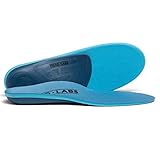
- Plantar Fasciitis Relief, Every Step – Firm arch support helps relieve heel and arch pain from plantar fasciitis and supports flat feet and overpronation for better alignment and all-day comfort.
- Clinical-Grade Biomechanics – Tread Labs 26-33 ARCHitecture delivers orthotic-level stability—custom-orthotic feel without the prescription.
- Dialed Fit for Any Shoe – Four arch heights (low, medium, high, extra-high) and an easy 3-step sizing guide make selection simple for work boots, sneakers, and everyday shoes—great for standing all day.
- Built to Last a Million Miles – Durable, recyclable arch supports with our Million-Mile Guarantee; replaceable top covers keep insoles fresh and cost-effective. Unlike foam that flattens, Pace is engineered to last.
- Trusted Expertise – Designed by Mark Paigen (founder of Chaco). Premium arch support inserts for men and women backed by decades of footwear innovation.
✓ Pros
- Stabilizer cap centers the heel (Superfeet’s signature feature)
- Slim profile fits tight athletic footwear
- Lasts 12+ months daily wear
- Excellent for cycling shoes specifically
- Built-in odor-control treatment
✗ Cons
- Premium price ($45-55)
- Less cushion than PowerStep equivalents
- Not as aggressive correction as Pinnacle Maxx for flat feet
- The signature ‘heel cup feel’ takes 1-2 weeks to adapt to
Dr. Tom’s Recommendation: If you’re a cyclist with foot numbness, hot spots, or knee pain — this is the orthotic. The stabilizer cap solves cycling-specific biomechanical issues that no other orthotic addresses. Worth the premium for athletes.
None of these solving your foot pain?
Some patients (about 30%) need custom-molded prescription orthotics. We make 3D-scanned custom orthotics in our Howell and Bloomfield Hills offices — specifically built for your foot mechanics.
Schedule a Custom Orthotic Fitting →FSA/HSA eligible · Most insurance accepted · (810) 206-1402
In-Office Treatment at Balance Foot & Ankle
If home treatment isn’t providing relief for your foot pain, our podiatry team at Balance Foot & Ankle can help with same-day evaluations and advanced in-office care.
Same-day appointments available. (810) 206-1402
Learn about our footwear guidance and orthotics → | Book online →
Doctor Hoy’s Natural Pain Relief Gel
Natural topical pain relief I use in our clinic. Arnica + camphor formula — apply directly to the area 3–4x daily. ($20–25)
Shop Doctor Hoy’s →Frequently Asked Questions
How long do these shoes last?
Quality running shoes last 300-500 miles. Daily walking shoes last 9-12 months. Replace when the midsole feels soft or your symptoms return.
Should I add insoles?
Yes if you have plantar fasciitis or overpronation. Powerstep Pinnacle or a custom orthotic improves results. Healthy feet often do fine with the stock insole.
Are expensive shoes worth it?
Beyond about $130 most extra cost is materials and aesthetics. Match the shoe to your foot type, not budget. The right $80 stability shoe beats the wrong $250 maximalist shoe.

Dr. Tom Biernacki, DPM is a board-certified foot & ankle surgeon (ABFAS & ABPM) at Balance Foot & Ankle Specialists in Southeast Michigan. With over a decade of clinical experience, he specializes in heel pain, bunions, diabetic foot care, sports injuries, and minimally invasive surgery. Dr. Biernacki is a member of the APMA and ACFAS, and his patient education content on MichiganFootDoctors.com and YouTube has made him one of the most-followed foot & ankle educators on YouTube.