

You are in the right place. Dr. Tom Biernacki, DPM, FACFAS — board-certified foot & ankle surgeon with 3,000+ surgeries — explains exactly what best shoes for neuropathy means and what actually works. Call (810) 206-1402 to book an appointment at our Howell or Bloomfield Township office.
Medically reviewed by Dr. Tom Biernacki, DPM · Board-Certified Podiatric Surgeon · Last reviewed: April 2026 · Editorial Policy
Quick Answer
Medically reviewed by Dr. Tom Biernacki, DPM
Board-certified podiatric surgeon | Balance Foot & Ankle
Last reviewed: May 2026
Best Shoes for Neuropathy 2026 Podiatrist relates to foot neuropathy — typically caused by nerve compression or systemic. Most patients improve in varies by cause with conservative care. Appointments in Howell + Bloomfield Township: (810) 206-1402.
Medically reviewed by Dr. Tom Biernacki, DPM — Board-certified foot & ankle surgeon, 3,000+ surgeries performed. Updated April 2026 with current clinical evidence. This article reflects real practice experience from Balance Foot & Ankle Specialists in Howell and Bloomfield Township, Michigan.
Quick Answer
Diabetic peripheral neuropathy is nerve damage from prolonged hyperglycaemia, causing burning, tingling, numbness, or loss of protective sensation in the feet. It will not reverse without addressing glucose control. Daily foot checks, proper footwear, and annual monofilament testing prevent ulceration.
Watch: Dr. Tom Biernacki, DPM
Medically reviewed by Dr. Tom Biernacki, DPM — Board-Certified Podiatric Surgeon — Balance Foot & Ankle, Howell & Bloomfield Township, MI. Last updated April 2026.
▶ Watch
📋 Dr. Tom Also Recommends
Podiatrist Recommended Orthotics 2026: Dr. Tom’s Top 10 Insoles & Arch Supports
A podiatrist’s complete clinical guide to the best insoles — custom orthotics, OTC picks, and what actually works for plantar fasciitis, flat feet, neuropathy & more.
Quick Answer
The best shoes for neuropathy have extra-depth construction, seamless interiors to prevent friction injuries, firm soles that protect against puncture wounds, and rocker-bottom profiles that reduce forefoot pressure. board-qualified podiatrist recommendations include the New Balance 928v3 (Medicare-approved diabetic shoe), Dr. Comfort Performance (extra depth + removable insole), and HOKA Bondi (maximum cushion with wide sizing). Always pair neuropathy shoes with diabetic-grade insoles and inspect feet daily for injuries you may not feel.
Medically Reviewed by Dr. Tom Biernacki, DPM · Board-Qualified Podiatrist · Balance Foot & Ankle Specialists, Howell & Bloomfield Township, MI · Last updated March 2026
Neuropathy changes the rules of footwear. When sensation is diminished, the wrong shoe doesn’t just cause blisters — it causes wounds that can take months to heal. Here are Dr. Tom Biernacki DPM’s top picks for 2025.
What Makes a Shoe Neuropathy-Safe?
- Extra depth — at least 5mm more room for orthotics
- No internal seams — smooth interior prevents pressure ulcers on numb feet
- Wide toe box — prevents digital compression
- Firm rocker sole — reduces metatarsal head pressure
- Adjustable closure — accommodates fluctuating edema
Top Picks for 2025
1. Propét Stability Walker — Best Medicare-Covered Option
Meets DMEPOS A5500 diabetic shoe code. Often covered 100% by Medicare’s therapeutic shoe benefit. Available in widths 2A through 5E.
View Propét Stability Walker →
2. New Balance 928v3 — Best for Active Neuropathy Patients
Roll bar technology, wide toe box, available in widths 4A-6E. Passes Dr. Biernacki’s “thumb press” test with over 1.5cm of toe clearance.
3. Hoka Bondi 8 — Best Cushioning for Neuropathic Pain
The maximalist platform protects hypersensitive neuropathic feet from hard-surface impact. One of my most-prescribed shoes for burning neuropathy.
Medicare’s Therapeutic Shoe Benefit
If you have diabetes, Medicare covers one pair of therapeutic shoes plus three custom insoles per year. At Balance Foot & Ankle, we manage the entire prescription process for our patients.
📞 (810) 206-1402 | Howell & Bloomfield Township, MI
🔗 Related Care & Resources
Treated by Dr. Tom Biernacki DPM — Board-certified podiatric surgeon at Balance Foot & Ankle in Howell & Bloomfield Township, MI.
Schedule an Appointment →
or call (810) 206-1402
📍 Located in Michigan?
Our board-certified podiatrists treat this condition at two convenient locations. Book online 24/7 at either office.
When Home Care Isn’t Enough: Professional Neuropathy Treatment
Supportive shoes help manage neuropathy symptoms, but if you’re experiencing numbness, burning, or tingling in your feet, professional evaluation is essential to prevent complications. At Balance Foot & Ankle, our Peripheral Neuropathy Treatment program addresses the root cause while protecting your feet from injury.
View all treatment services → | What to expect at your first visit →
We accept most insurance plans and offer online booking 24/7 at our Howell and Bloomfield Township, MI locations. Call (810) 206-1402 to schedule.
Neuropathy Shoe FAQs
What type of shoes should you wear if you have neuropathy?
People with neuropathy should wear extra-depth shoes with seamless interiors, firm protective soles, and wide toe boxes. Diabetic-rated shoes (Medicare therapeutic shoe category) provide the best combination of protection and comfort. Avoid going barefoot, wearing sandals, or using shoes with interior seams that can cause undetected friction injuries.
Are HOKA shoes good for neuropathy?
Yes — HOKA shoes, particularly the Bondi and Arahi models, are frequently recommended for neuropathy patients due to their maximum cushioning, rocker-bottom soles that reduce forefoot pressure, and wide sizing availability. The thick midsole also provides excellent ground-feel protection for patients with reduced sensation.
Should neuropathy patients wear orthotics?
In most cases, yes. Custom orthotics designed for neuropathy redistribute plantar pressure away from high-risk areas (metatarsal heads, heel), reducing the risk of ulceration. Diabetic-specific insoles use materials like Plastazote and Poron that accommodate bony prominences. Your podiatrist can prescribe orthotics covered under Medicare’s Therapeutic Shoe Program.
How often should neuropathy patients replace their shoes?
Neuropathy patients should replace walking shoes every 3–4 months or 300–400 miles, whichever comes first. Because reduced sensation prevents you from feeling when cushioning has broken down, using a calendar-based replacement schedule is safer than relying on how the shoes feel. Inspect insoles monthly for compression and wear patterns.
Related Foot Care Resources
- Peripheral Neuropathy Treatment — in-office treatment options including MLS laser therapy
- Diabetic Foot Care — comprehensive diabetic foot management program
- Custom Orthotics — pressure-redistribution insoles for neuropathy patients
- PAD & Circulation Screening — vascular assessment for numbness and tingling
- New Patient Information — what to expect at your first visit
Insurance Accepted
BCBS · Medicare · Aetna · Cigna · United Healthcare · HAP · Priority Health · Humana · View All →
Howell Office
4330 E Grand River Ave
Howell, MI 48843
Get Directions →
Bloomfield Township Office
43494 Woodward Ave, #208
Bloomfield Township, MI 48302
Get Directions →
Ready to Get Back on Your Feet?
Book online 24/7 at either office.
Differential Diagnosis: What Else Could It Be?
Several conditions share symptoms with Diabetic Neuropathy and are commonly misdiagnosed in the first office visit. Considering these alternatives is part of every Balance Foot & Ankle exam:
- Tarsal tunnel syndrome. Burning radiating into the arch with positive Tinel’s at the medial ankle.
- Peripheral artery disease. Pain with walking that resolves with rest, weak pulses, hair loss on toes.
- Lumbar radiculopathy. Symptoms following a dermatome, often with back pain — MRI of spine, not foot.
If your symptoms don’t fit the textbook pattern, ask your podiatrist which differentials they ruled out — that conversation often shortcuts months of trial-and-error treatment.
In Our Clinic
Diabetic neuropathy patients in our clinic often don’t realize they have it until we put a 10-gram Semmes-Weinstein monofilament to the plantar foot and they can’t feel it. Many arrive for an unrelated concern — an ingrown toenail, a callus — and we catch the neuropathy on screening. The conversation then shifts: we need to discuss daily foot inspections, appropriate footwear, the urgency of any blister or open area, and the timing of vascular referral if pulses are diminished. Comprehensive diabetic foot exams are covered by Medicare annually. If you have diabetes, we want to see you once a year even if nothing hurts.
Most Common Mistake We See
The most common mistake we see is: Stopping B-vitamin supplementation as soon as symptoms improve. Fix: maintain supplementation for 6-18 months alongside strict glucose control.
Warning Signs That Need Same-Day Care
Seek immediate evaluation at Balance Foot & Ankle if you experience any of the following:
- Sudden loss of sensation on one side
- Wound on the foot not felt by the patient
- One-sided symptoms (rule out compression)
- Back pain plus leg symptoms (possible radiculopathy)
Call (810) 206-1402 — appointments at our Howell and Bloomfield Township offices.
More Podiatrist-Recommended Diabetic Essentials
Diabetic-Approved Walking Shoe
Orthofeet Sprint — seamless, extra-depth, designed for neuropathic feet.
Seamless Diabetic Sock


Watch: Peripheral Neuropathy Home Remedies [Leg & Foot Nerve Pain Treatment] — MichiganFootDoctors YouTube
OS1st FS4 — non-binding, moisture-wicking, protects fragile diabetic skin.
Recovery Slide for Indoor Wear
HOKA Ora 3 — protects diabetic feet from barefoot injury at home.
As an Amazon Associate, Balance Foot & Ankle earns from qualifying purchases. Product recommendations are based on clinical experience; prices and availability shown above update live from Amazon.
When to See a Podiatrist
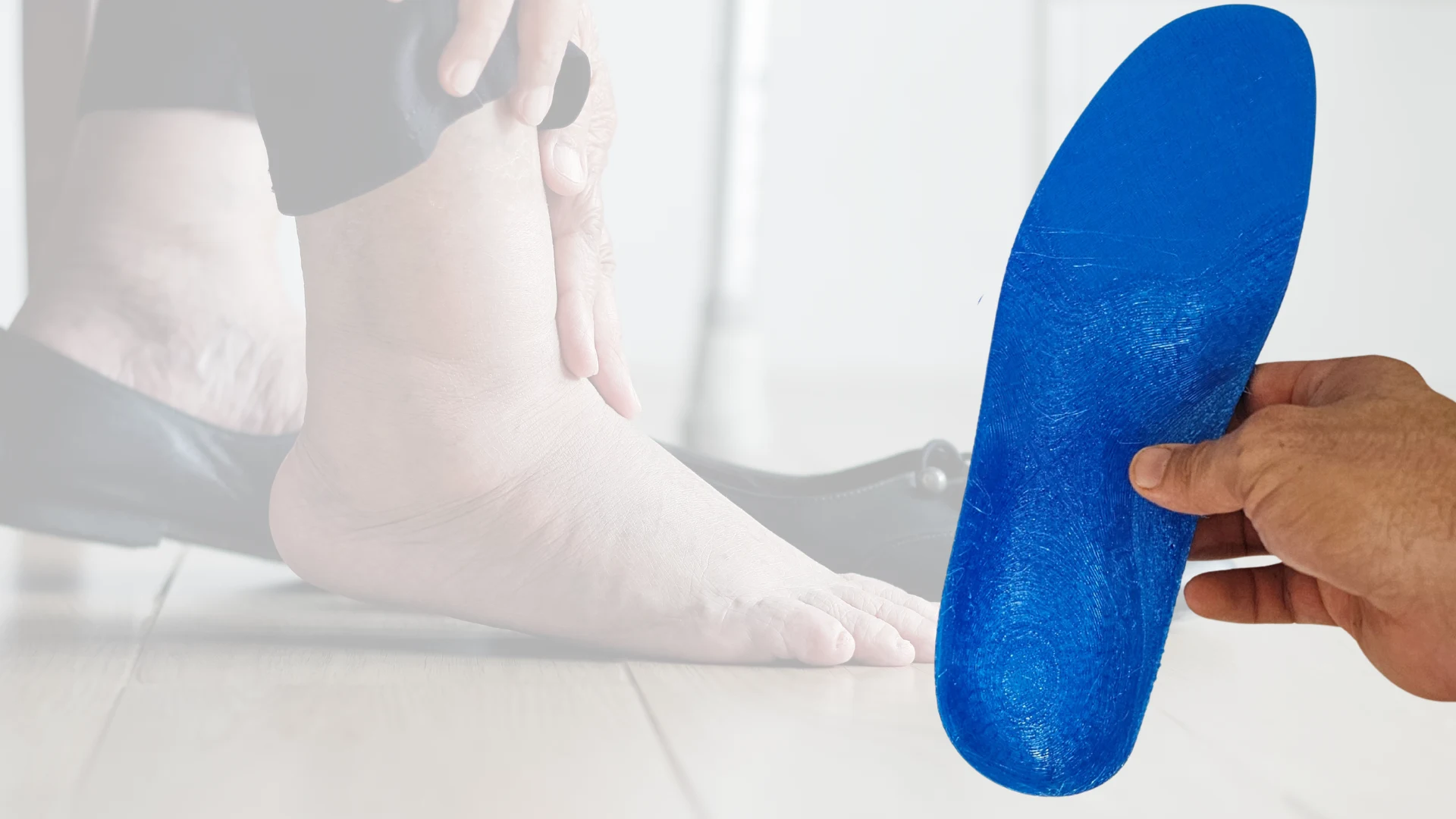
One unnoticed blister on a neuropathic foot can become a limb-threatening ulcer in under 14 days. Medicare covers diabetic shoes (A5500) and comprehensive foot exams annually for most diabetic patients with neuropathy or circulation concerns. Balance Foot & Ankle runs a dedicated diabetic limb-preservation program — vascular screening, offloading, ulcer care, and shoe fitting — all in one visit. Schedule your annual diabetic foot exam today.
Call Balance Foot & Ankle: (810) 206-1402 · Book online · Offices in Howell & Bloomfield Township
Watch: Dr. Tom explains
Podiatrist-recommended products
As an Amazon Associate, Dr. Tom earns from qualifying purchases.
Neuropathy adjunct
Diabetic-safe support
Neuropathy pain relief
Flare icing
Related resources
Ready to solve this? Book today.
Book online 24/7 · Howell & Bloomfield Township · 4.9★ (1,200+ reviews)
In-Office Treatment at Balance Foot & Ankle
When conservative care isn’t enough, Dr. Tom Biernacki and the team at Balance Foot & Ankle offer advanced treatment options — including Peripheral Neuropathy Treatment Michigan at our Howell and Bloomfield Township clinics.
Book online 24/7. Call (810) 206-1402 or book online.
Pros & Cons of Conservative Care for diabetic foot care
Advantages
- ✓ Daily inspection prevents amputation
- ✓ Most insurance covers DME
- ✓ Custom orthotics help
Considerations
- ✗ Daily commitment required
- ✗ Slow wound healing
- ✗ Charcot risk if neuropathy
Dr. Tom’s Recommended Products for diabetic foot care
Affiliate disclosure: As an Amazon Associate, Balance Foot & Ankle earns from qualifying purchases. We only recommend products we use with patients.
Drew Moonwalker Diabetic Shoe Dr. Tom’s Pick
Best for: Medicare-covered diabetic footwear
Diabetic Compression Socks Dr. Tom’s Pick
Best for: Daily protection + circulation
Ready to Get Back on Your Feet?
Appointments in Howell + Bloomfield Township. Most insurance accepted. Dr. Tom Biernacki, DPM & team.
Call Now: (810) 206-1402
In-Office Treatment at Balance Foot & Ankle
If home treatment isn’t providing relief for your neuropathy, our podiatry team at Balance Foot & Ankle can help with expert evaluations and advanced in-office care.
Book online 24/7. (810) 206-1402
Learn about our peripheral neuropathy treatment → | Book online →
Ready to feel better?
Appointments available in Howell and Bloomfield Township, Michigan.
Ready to fix this for good?
Reading goes only so far. The fastest path to relief is a 30-minute office visit with Dr. Biernacki — Howell or Bloomfield Township. Call (810) 206-1402 or use our online booking.
Ready for Expert Care?
Appointments in Howell & Bloomfield Township, MI.
4.9★ | 1,200+ Reviews | 3,000+ Surgeries
Or call: (810) 206-1402

Dr. Tom Biernacki, DPM is a board-certified foot & ankle surgeon (ABFAS & ABPM) at Balance Foot & Ankle Specialists in Southeast Michigan. With over a decade of clinical experience, he specializes in heel pain, bunions, diabetic foot care, sports injuries, and minimally invasive surgery. Dr. Biernacki is a member of the APMA and ACFAS, and his patient education content on MichiganFootDoctors.com and YouTube has made him one of the most-followed foot & ankle educators on YouTube.
More questions patients ask
How often should diabetics check their feet?
Diabetic patients should perform daily self-examinations of both feet, checking for cuts, blisters, redness, swelling, calluses, and temperature changes. Professional diabetic foot exams should occur at least annually, or every 3-6 months for patients with neuropathy, peripheral artery disease, or history of foot ulcers. Dr. Biernacki provides comprehensive diabetic foot care programs.
Why do diabetics have foot problems?
Diabetes causes peripheral neuropathy (nerve damage reducing sensation), peripheral artery disease (reduced blood flow), and impaired immune function. This combination means injuries go unnoticed, heal slowly, and are prone to infection. Approximately 15% of diabetics will develop a foot ulcer, and diabetic foot complications are the leading cause of non-traumatic amputation. Prevention through regular podiatric care is essential.
What are the signs of diabetic neuropathy in feet?
Early signs include tingling, burning, or numbness starting in the toes and progressing upward. Other symptoms include sensitivity to touch, muscle weakness, balance problems, and loss of reflexes. If you experience any of these symptoms, schedule an evaluation with Dr. Biernacki at 810-206-1402 for nerve conduction testing and a comprehensive neuropathy management plan.
Still have a question about coverage or cost? Book online and we will check your benefits before your visit: Book in Howell · Book in Bloomfield Township. Prefer to talk it through first? Call (810) 206-1402.