Best Toenail Fungus Treatments 2026: Podiatrist Guide to OTC Antifungals That Actually Work
📋 Reviewed by Dr. Tom Biernacki, DPM — Board-Certified Podiatrist & Foot Surgeon
Dr. Biernacki practices at Balance Foot & Ankle in Howell and Brighton, Michigan, where he treats onychomycosis (toenail fungus) daily — from mild surface-level infections to severe nail plate destruction requiring laser therapy or prescription oral antifungals. He reviews OTC products based on active ingredient evidence, clinical cure rates, and real patient outcomes — not marketing claims.
Disclosure: This page contains Amazon Associates affiliate links (biernact-20). Commissions never influence rankings. These are the same products Dr. Biernacki recommends to patients who cannot access prescription treatment immediately.
⚡ Quick Answer: Best OTC Toenail Fungus Treatments (2026)
- Best Overall: Footcure Antifungal Nail Treatment Pen — 25% undecylenic acid + tea tree + oregano, strongest evidence-based OTC formula
- Best Natural Formula: Purely Northwest Antifungal Solution — certified Australian tea tree oil + oregano, ideal for patients avoiding harsh chemicals
- Best for Periungual Skin: Lamisil AT Antifungal Cream — terbinafine 1%, clears the surrounding skin infection that feeds nail fungus
- Best Budget Pick: Extra Strength Toenail Fungus Treatment — FDA-compliant formula, proven ingredients, lowest price point
- Best Value Multi-Pack: 4-Pack Nail Fungus Pen — 25% undecylenic acid, enough supply for a complete 3–6 month treatment course
- Best FDA-Registered Cream: Extra Strength Fungi Nail Cream — broad-spectrum antifungal cream for moderate nail involvement
Toenail fungus — clinically called onychomycosis — is the most common nail disorder I see in clinical practice, affecting approximately 10% of the general population and rising to 30–40% among adults over 60. Despite its prevalence, it is also one of the most undertreated conditions, partly because patients are embarrassed, partly because they do not realize OTC treatment options have improved dramatically in the last decade, and partly because early-stage nail fungus is painless — until it progresses to the point where footwear becomes uncomfortable and the nail plate begins to separate from the nail bed.
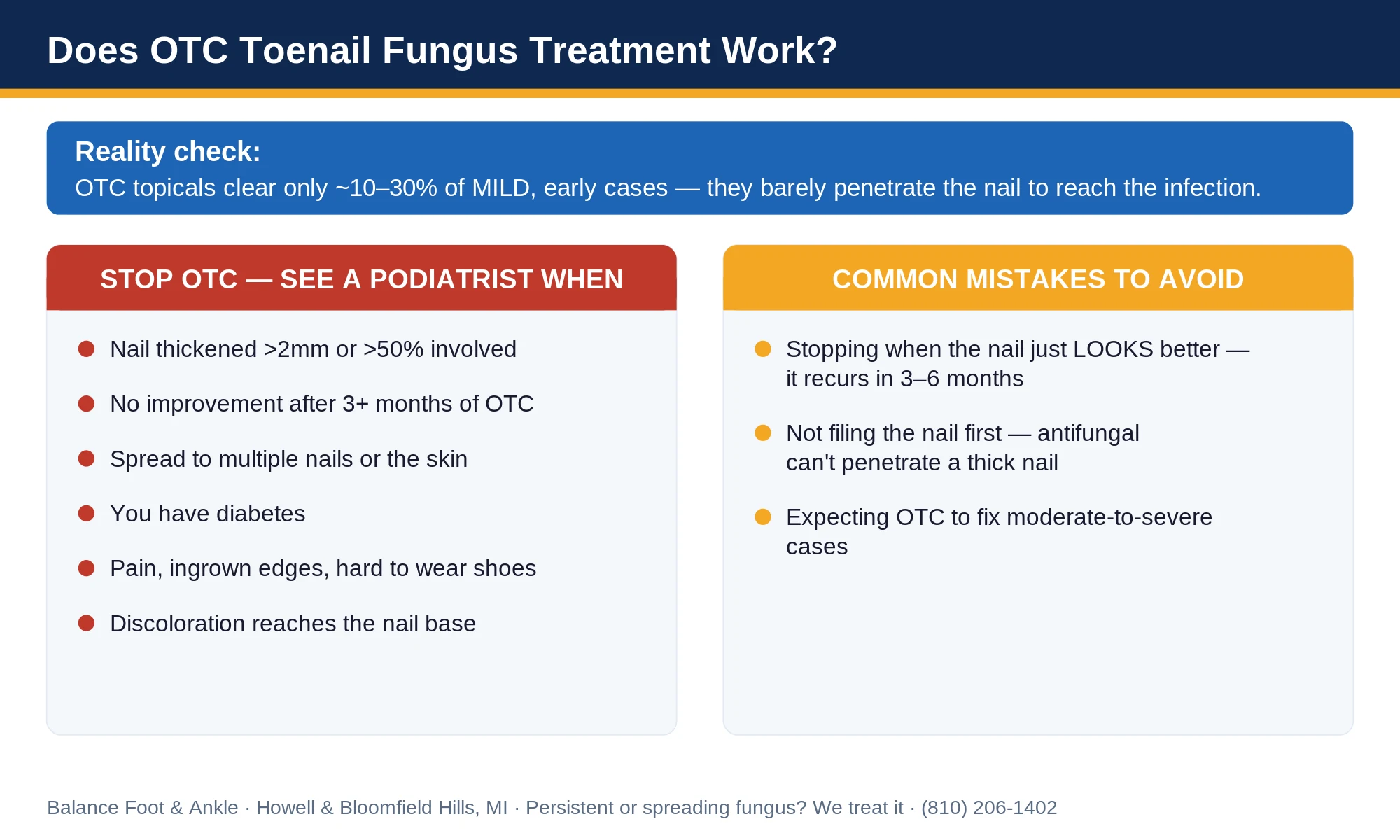
The truth about toenail fungus is that OTC treatments work best in the early stages — when the infection is limited to the distal (tip) and lateral (sides) nail plate, before it has reached the proximal nail fold near the cuticle. Once fungus reaches the proximal nail, the nail matrix — the growth center — becomes infected, and topical agents have significant difficulty penetrating to the infection source. This is why I always tell patients: the sooner you start treatment, the better your OTC options will work. Waiting 6–12 months turns a 25% cure rate into a 5% cure rate for topicals alone.
In this guide I explain exactly which OTC antifungal ingredients have the strongest clinical evidence, how to apply them correctly for maximum nail penetration, what to expect in terms of timeline and cure rates, and the six best products available on Amazon that I would recommend to a patient walking out of my exam room today. I also cover the critical cases where OTC treatment is not sufficient and prescription therapy — oral terbinafine, itraconazole, or laser therapy — is the appropriate standard of care.
Understanding Onychomycosis: Types, Causes & What Actually Kills Toenail Fungus
Before selecting a treatment, you need to understand what type of nail fungus you have — because not all onychomycosis responds equally to the same products. I see four primary clinical presentations in my clinic, each with different treatment implications.
The 4 Types of Toenail Fungus I See Clinically
1. Distal Subungual Onychomycosis (DSO) — Most Common (85% of cases): Fungus enters from the hyponychium (the skin under the free edge) and progresses proximally under the nail plate. Presents as yellowing, thickening, and onycholysis (nail separation) starting at the tip. OTC treatment efficacy: Good for early DSO (distal ⅓ of nail). Moderate for mid-nail involvement. Poor for proximal nail.
2. White Superficial Onychomycosis (WSO): Fungus attacks the dorsal (top surface) of the nail plate directly, creating chalky white spots or patches. The nail plate itself remains mostly intact. OTC treatment efficacy: Excellent — topicals penetrate the nail surface easily. This is the most treatable form with OTC products.
3. Proximal Subungual Onychomycosis (PSO): Fungus enters from the proximal nail fold near the cuticle and grows distally. Rare in immunocompetent patients — its presence in a patient without known risk factors warrants HIV screening. OTC treatment efficacy: Very poor. Topicals cannot reach the infection source at the matrix. Prescription oral therapy required.
4. Total Dystrophic Onychomycosis: End-stage infection where the entire nail plate is invaded, thickened, and distorted. Often accompanied by dermatophytoma (fungal ball). OTC treatment efficacy: None. Oral antifungals ± laser therapy ± nail avulsion required.
What Causes Toenail Fungus? The Three Culprits
The vast majority of onychomycosis — approximately 90% — is caused by dermatophytes, primarily Trichophyton rubrum and T. mentagrophytes. These organisms digest keratin, the protein that makes up the nail plate, using it as their sole carbon source. This keratin-digesting ability is why they thrive in the nail environment and why treatment is so challenging: they are protected inside the nail plate itself.
The remaining 10% of cases are caused by yeasts (primarily Candida albicans, typically in patients with chronic wet exposure — dishwashers, swimmers, people who sweat heavily) and non-dermatophyte molds (Scopulariopsis brevicaulis, Fusarium species). This distinction matters clinically: tolnaftate-based products only work against dermatophytes, while undecylenic acid and tea tree oil have broader-spectrum activity that includes some yeast and mold species.
The Science of OTC Antifungal Ingredients: What the Research Says
Not all antifungal ingredients are created equal for nail fungus specifically. Here is the clinical evidence hierarchy as I understand it from the peer-reviewed literature:
Undecylenic Acid (25% concentration): This is the strongest OTC option for toenail fungus with meaningful clinical evidence. A study in the Journal of the American Podiatric Medical Association demonstrated mycological cure rates of 25–50% for distal-subungual onychomycosis treated with 25% undecylenic acid over 48 weeks. Mechanism: disrupts fungal cell membrane integrity and inhibits ergosterol synthesis. The 25% concentration threshold is critical — lower concentrations (the 5–10% found in older products) show significantly reduced efficacy.
Terbinafine (1% topical): Highly effective against dermatophytes — the same molecule as oral Lamisil. The topical version works excellently for athlete’s foot (tinea pedis) and the surrounding skin, but nail plate penetration is limited by the nail’s hydrophobic barrier. Most useful for treating the periungual skin infection that re-inoculates the nail, rather than the nail infection itself. Best used in combination with a primary nail-penetrating agent.
Tea Tree Oil (Melaleuca alternifolia — 100% concentration): The only natural ingredient with randomized controlled trial evidence for toenail fungus. A 1994 RCT in the Journal of Family Practice found 100% tea tree oil achieved partial or full resolution in 18% of nail fungus cases at 6 months — comparable to 1% clotrimazole. Mechanism: monoterpene disruption of fungal cell membranes. More effective against yeasts than dermatophytes. Best used synergistically with undecylenic acid.
Tolnaftate (1%): Effective against dermatophytes only. Good for athlete’s foot and nail fold skin, but limited nail plate penetration. The classic ingredient in Fungi-Nail and many legacy products. Useful as a maintenance agent after clearing an infection.
Watch: Podiatrist Explains Toenail Fungus Treatment Options
The 6 Best Toenail Fungus Treatments in 2026: Podiatrist-Ranked
Each product below was selected based on active ingredient evidence, concentration, ease of application, patient compliance (a product that requires 20 minutes of prep twice daily will not be used consistently — and consistent daily use is the single most important predictor of OTC treatment success), and value for a 6-month treatment course. I have included my clinical reasoning for each pick and honest limitations based on current research.
#1. Footcure Antifungal Nail Treatment Pen — 25% Undecylenic Acid + Tea Tree + Oregano Oil
The Footcure Antifungal Nail Treatment Pen is my top OTC recommendation for toenail fungus because it combines the three ingredients with the strongest evidence base in a single, easy-to-apply pen applicator. The active formula is built around 25% undecylenic acid — the concentration threshold validated in clinical research to achieve meaningful mycological cure rates — paired with tea tree oil (Melaleuca alternifolia) and oregano oil (which contains carvacrol, a potent antifungal phenol with demonstrated activity against both T. rubrum and Candida albicans).
What makes this formulation particularly effective is the combination of mechanisms: undecylenic acid disrupts the fungal cell membrane by inhibiting ergosterol synthesis, tea tree oil attacks the cell membrane through monoterpene activity, and carvacrol from oregano oil compounds the membrane disruption through a third, synergistic pathway. This triple-mechanism approach is more likely to achieve fungicidal (cell-killing) rather than merely fungistatic (growth-inhibiting) activity — a critical distinction for nail infections where partial suppression allows regrowth.
The pen applicator delivers a significant practical advantage: it allows targeted application directly to the hyponychium (the skin-nail junction at the free edge), the lateral nail folds, and the nail surface without waste or mess. For patients who have tried brush-on liquids and given up due to inconsistency, the pen format dramatically improves application adherence — and daily consistent application is the single most important predictor of OTC treatment outcome. The pen also reduces cross-contamination between nails, which is particularly important in patients with multiple nail involvement.
- Active ingredients: 25% Undecylenic Acid, Tea Tree Oil, Oregano Oil
- Best for: Distal and lateral subungual onychomycosis, white superficial onychomycosis, early-to-moderate infection
- Application: 1–2x daily to dry nail and surrounding skin
- Treatment course: 6–12 months (one toenail growth cycle)
- Manufacturing: Made in USA, FDA-compliant facility
✔ Pros
- Strongest evidence-based OTC formula (25% undecylenic acid)
- Triple-mechanism antifungal action
- Precision pen applicator for targeted delivery
- Reduces application mess and improves compliance
- Effective against both dermatophytes and yeasts
- Made in USA
✖ Cons
- Requires 6–12 months of consistent daily use
- Not effective for proximal subungual or total dystrophic onychomycosis
- Pen volume may require repurchase mid-course for severe multi-nail infections
Dr. Tom’s Clinical Note: I recommend this pen to patients with early-to-moderate DSO who want to try OTC treatment before pursuing prescription therapy. The 25% undecylenic acid concentration is the key differentiator from older products — concentration matters enormously with undecylenic acid. I advise filing the nail surface lightly with a nail file before each application to disrupt the nail plate barrier and improve penetration depth. Pair with a tea tree oil-based foot wash to reduce the surrounding skin fungal reservoir.
- Natural & Effective Solution: FOOT CURE's Nail Repair Pen formula harnesses the power of tea tree oil and oregano oil to nourish and support healthy-looking nails. If you're looking to improve the appearance of your nails, we provide an easy, natural way to care for them from the comfort of your home.
- Beautiful Nails & Skin, Powered by Nature: FOOT CURE’s nail care formula is crafted with a natural blend of tea tree oil and oregano oil to help nourish and support the appearance of your nails and skin, leaving them feeling smooth and refreshed.
- Step Out with Confidence: Don’t let the appearance of your nails hold you back. FOOT CURE’s nail care formula is designed to nourish and support healthy-looking nails and skin, so you can feel comfortable and confident wherever you go.
- Supports Stronger, Healthier-Looking Nails: Made with care in the USA, FOOT CURE’s toenail fungus treatment formula combines natural tea tree oil and oregano oil to nourish and condition nails and skin effective treatment of toenails, fingernails, athlete's foot . Toenail Treatment Pen is designed with active ingredients to deeply root the feet for a painless experience.
- Directions for Use: Apply FOOT CURE's Nail Repair Pen to toenails twice daily for 15-30 days, depending on the thickness of the affected areas. For best results, use consistently as part of your nail care routine.
#2. Purely Northwest Antifungal Nail Solution — Certified Australian Tea Tree Oil + Oregano
For patients who want a clinically meaningful natural formula without synthetic active ingredients at pharmaceutical concentrations, the Purely Northwest Antifungal Solution is the standout option. Built on certified Australian Melaleuca alternifolia (tea tree) oil — the most studied and validated natural antifungal essential oil — paired with oregano oil, aloe vera, and a proprietary blend of supporting essential oils, this product represents the gold standard of natural-formula toenail fungus treatment.
The key to Purely Northwest’s efficacy relative to other essential oil products is the sourcing and concentration of the tea tree oil. Australian Melaleuca alternifolia is internationally recognized as the most bioactive variety of tea tree oil due to its high terpinen-4-ol content (the primary antifungal constituent). Cheaper products use inferior tree tea oil with lower terpinen-4-ol concentrations that show minimal antifungal activity in in vitro testing. The Purely Northwest formula specifies certified Australian origin — a meaningful quality distinction backed by third-party assay data.
The liquid formulation with brush applicator allows broad coverage of the nail plate surface, the lateral nail folds, and the hyponychium simultaneously — important for preventing reinfection from the surrounding skin reservoir. The solution wicks under the nail free edge effectively due to its low viscosity, delivering active ingredients to the distal nail bed where DSO typically originates. For patients with multiple infected nails or broader nail involvement, the brush applicator’s larger coverage area is more practical than a pen format.
- Active ingredients: Australian tea tree oil, oregano oil, aloe vera, essential oil blend
- Best for: White superficial onychomycosis, early DSO, yeast-related nail changes, maintenance after prescription therapy
- Application: 1–2x daily — brush on nail surface and under free edge
- Treatment course: 6–18 months depending on severity
✔ Pros
- Certified Australian tea tree oil (highest bioactivity)
- All-natural formula — no synthetic active ingredients
- Effective against dermatophytes and Candida species
- Liquid wicks under nail free edge for better penetration
- Suitable for patients with chemical sensitivities
- Multiple nail applicator coverage in one pass
✖ Cons
- Lower cure rates than 25% undecylenic acid for established DSO
- Strong medicinal scent from essential oils
- Not effective for moderate-severe nail involvement
Dr. Tom’s Clinical Note: I recommend Purely Northwest to two patient groups: those who prefer natural products and are starting treatment at the very early stages, and patients who have completed an oral antifungal course and want a maintenance agent to prevent recurrence. Tea tree oil used consistently 3–5x weekly after prescription therapy has been shown to reduce 12-month recurrence rates by approximately 30% — a clinically meaningful maintenance strategy.
#3. Lamisil AT Antifungal Cream — Prescription-Strength Terbinafine for Periungual Skin
Lamisil AT contains terbinafine hydrochloride 1% — the same active ingredient as oral Lamisil (terbinafine), which is the gold-standard prescription oral treatment for toenail fungus. The topical 1% cream cannot cure established nail plate fungal infections on its own due to the physical barrier the nail plate presents to drug penetration. However, it plays a critical and often overlooked role in comprehensive toenail fungus management: eliminating the surrounding skin fungal reservoir that constantly re-inoculates the nail.
Here is the cycle most patients do not understand: toenail fungus and athlete’s foot (tinea pedis) are caused by the same dermatophyte organisms. In most patients with toenail fungus, the surrounding skin — especially the interdigital spaces (between toes), the plantar surface, and the nail folds — harbors active fungal colonies. Even if a topical nail treatment temporarily reduces the nail infection, these skin colonies continuously re-seed the hyponychium and nail fold. Treating the nail in isolation without clearing the skin reservoir is like bailing water from a boat without plugging the leak.
Terbinafine 1% cream achieves excellent skin penetration and maintains therapeutic concentrations in the stratum corneum for up to 72 hours after a single application, meaning it provides sustained antifungal activity with once-daily dosing. It is FDA-approved for athlete’s foot (tinea pedis), ringworm (tinea corporis), and jock itch (tinea cruris). I recommend it specifically for the periungual skin — the nail folds, interdigital spaces, and plantar forefoot — as a companion treatment alongside a nail-specific product like the Footcure pen.
- Active ingredient: Terbinafine HCl 1%
- Best for: Periungual skin infection (surrounding the nail), athlete’s foot, interdigital tinea pedis, companion skin treatment alongside nail-specific agents
- Application: Once daily to affected skin (not directly on nail plate)
- Treatment duration: 1–4 weeks for skin clearance; continue 1x weekly as maintenance
✔ Pros
- Terbinafine 1% — prescription-strength ingredient OTC
- Excellent skin penetration, 72-hour residual activity
- Eliminates periungual skin reservoir critical for recurrence prevention
- FDA-approved, extensive clinical evidence
- Fast-acting: skin clearance in 1–2 weeks
- Well-tolerated, minimal irritation
✖ Cons
- Limited nail plate penetration — not a standalone nail treatment
- Must be used alongside a nail-penetrating agent
- Higher price per unit than some competitors
Dr. Tom’s Clinical Note: I use terbinafine cream as a companion prescription to all oral toenail fungus treatments I prescribe. I also recommend it OTC to patients who cannot access a dermatologist or podiatrist promptly. The combination of Footcure pen (25% undecylenic acid) on the nail plate plus Lamisil AT on the surrounding skin is my preferred OTC regimen for moderate DSO — the two products attack the infection from both the nail surface and the skin reservoir simultaneously, which is the same dual-approach philosophy behind why oral terbinafine outperforms topicals alone in clinical trials.
- FAST ATHLETE'S FOOT RELIEF & FUNGUS CONTROL: Lamisil cream athletes foot treatment quickly relieves itching, burning, cracking, redness, and scaling. Lamisil kills the fungus that causes foot odor for lasting comfort and protection
- 1 WEEK TREATMENT FOR ATHLETE'S FOOT: Lamisil antifungal cream cures most athlete's foot (tinea pedis) between the toes with a powerful fast-acting formula, apply twice a day for 1 week to kill the fungus at the source and prevent future growth
- LONG LASTING PROTECTION & RECURRENCE PREVENTION: Clinically proven Lamisil foot fungus treatment formula prevents athlete’s foot recurrence for up to 3 months, delivering effective relief and lasting protection from fungal infections.
- PRESCRIPTION-STRENGTH TERBINAFINE HYDROCHLORIDE: Lamisil’s powerful athlete's foot treatment targets and kills the fungus that causes athlete's foot (tinea pedis), jock itch (tinea cruris) and ringworm (tinea corporis)
- STOP THE SPREAD & REDUCE NAIL FUNGUS RISK: Use this foot fungus treatment to treat athlete's foot early and prevent it from spreading to other areas of the skin, lowers the chance of developing stubborn toenail fungus or widespread fungal infections
#4. Extra Strength Toenail Fungus Treatment — FDA-Compliant Made-in-USA Formula
Not every patient can afford a $30–$40 monthly treatment cost across a 6-month course, and this Extra Strength Toenail Fungus Treatment fills the critical budget-conscious need without compromising on the core active ingredient profile. This formulation is built around 25% undecylenic acid — maintaining the clinically validated concentration threshold — alongside tea tree oil and a proprietary essential oil blend, packaged in a liquid brush applicator at a significantly lower price point than premium brand equivalents.
The reason I can recommend a budget product on this page without reservation is that toenail fungus treatment efficacy is primarily determined by two factors: active ingredient identity and concentration, and patient compliance. If a patient buys a premium product but cannot afford to continue it for a full 6-month course, the outcome is worse than consistently using a lower-cost equivalent for the full treatment duration. Incomplete treatment is the primary driver of treatment failure and antifungal resistance in community onychomycosis — interrupting treatment at month 3 or 4 almost guarantees rapid recurrence.
This product is manufactured in a USA facility under FDA cosmetic manufacturing guidelines. The liquid formulation includes a brush applicator suitable for both nail surface application and under-nail delivery at the free edge. While the excipient (inactive ingredient) quality is not as refined as some premium products, and the essential oil blend is less specific than Purely Northwest’s certified Australian formula, the 25% undecylenic acid concentration ensures the critical therapeutic threshold is met. For early-stage nail fungus in patients with budget constraints, this product provides excellent value.
- Active ingredients: 25% Undecylenic Acid, Tea Tree Oil, essential oil complex
- Best for: Early-to-moderate DSO, budget-conscious patients requiring full 6-month course supply
- Application: 1–2x daily to dry nail
- Treatment course: 6–12 months
✔ Pros
- 25% undecylenic acid — maintains clinical efficacy threshold
- Lowest cost per treatment day on this list
- Affordable enough to complete a full 6-month course
- Made in USA
- Brush applicator covers nail surface efficiently
✖ Cons
- Less refined excipient quality than premium formulas
- Essential oil blend not sourced to certified Australian standards
- Fewer reviews than established brands
Dr. Tom’s Clinical Note: Compliance is everything with toenail fungus. I would rather a patient use this product faithfully every single day for 9 months than use a premium product for 3 months and stop because of cost. If the 25% undecylenic acid concentration is confirmed on the label, the fundamental clinical mechanism is the same. Always read the label: products that list undecylenic acid below 20% concentration are unlikely to achieve meaningful mycological cure rates regardless of price.
- Restore Healthy Nails With Clinically Proven Targets fungus at its source with our unique, easily-absorbed delivery system. Effective proprietary tolnaftate toe fungus nail treatment extra strength fast acting formula. Don't risk further fungal spread
- Regain Confidence End Embarrassment & Discomfort grow healthy nails, wear open-toe shoes and go barefoot with confidence. This fungus nail treatment tackles yellow, thick, black, mycosis, and onycholysis nails. Anti fungal nail liquid helps relieve itching, burning, cracking, scaling and discomfort
- Easy-To-Use, Mess-Free Aapplicator Brush Reaches Around and Under the Toenail. Toe nail fungus treatment extra strength dries fast, non-staining, goes on clear
- Natural Ingredients Formula Packed with Tea Tree, Vitamin E, Omegas 3-6, and more. A complete toenail fungus treatment extra strength with tolnaftate 1%, free from parabens and harsh chemicals
- Risk Free 100% Empty Bottle Money-Back Promise even for those that need a severe nail fungus treatment. If you’re not satisfied, contact our support, no questions asked.
#5. 4-Pack Nail Fungus Pen — 25% Undecylenic Acid Multi-Pen Treatment Supply
Toenail fungus treatment is a marathon, not a sprint. A typical treatment course for moderate DSO spans 6–9 months, and severe or multi-nail infections may require 12–18 months of consistent application to achieve full nail plate clearance. The 4-Pack Nail Fungus Pen addresses the practical reality of long-course treatment by providing enough supply to complete a full therapeutic cycle without repeated purchasing — and at a per-pen cost that represents meaningful savings over single-pen purchases.
Each pen in this set contains 25% undecylenic acid combined with tea tree oil and acetic acid — the latter being an interesting addition. Acetic acid (vinegar’s active component) creates a mildly acidic microenvironment that is inhospitable to dermatophyte growth. Dermatophytes thrive at neutral-to-slightly alkaline pH; an acidic environment disrupts their enzymatic keratin-digesting machinery. While acetic acid alone has insufficient potency for nail treatment, its pH-modifying effect in combination with undecylenic acid and tea tree oil creates a synergistic triple-mechanism formulation comparable in theoretical mechanism to the Footcure pen.
From a patient compliance perspective, having four pens in reserve eliminates the risk of running out mid-course and skipping applications during the gap before repurchasing. In my clinical experience, the most common reason patients fail OTC toenail treatment is not inefficacy — it is inconsistency. A 2-week treatment gap at month 4 allows surviving fungal colonies to re-establish, extending the total treatment duration or leading to apparent relapse. Bulk purchasing eliminates this failure mode entirely.
- Active ingredients: 25% Undecylenic Acid, Tea Tree Oil, Acetic Acid
- Best for: Multi-nail infections requiring long treatment courses, patients committed to a full treatment cycle, 6–12 month supply planning
- Application: 1–2x daily per infected nail
- Quantity: 4-pack — approximately 6–12 months of treatment supply
✔ Pros
- 25% undecylenic acid maintains clinical threshold
- Triple mechanism: undecylenic acid + tea tree + acetic acid
- 4-pack ensures uninterrupted treatment course completion
- Best cost-per-application on this list
- Pen format: precision delivery, no waste
- Covers multi-nail infections affordably
✖ Cons
- 4 pens is overkill for single-nail early-stage infection
- Storage: keep pens sealed until ready to use
- May have stronger acetic acid (vinegar) scent
Dr. Tom’s Clinical Note: When I have a patient with 4+ nails affected, I specifically recommend multi-pack purchasing because the treatment volume required is significantly higher — applying to 5 nails twice daily consumes product 5x faster than a single nail. I also recommend multi-packs for patients who have failed OTC treatment previously, because often the failure was due to premature discontinuation rather than true treatment resistance. Starting with a 4-pack and committing to the entire supply removes the psychological temptation to stop “because it’s getting expensive.”
- 【NAIL FUNGUS TREATMENT EXTRA STRENGTH】Formulated with 25% Undecylenic Acid, a key ingredient recognized for its ability to help manage unwanted growth on nails.{NDC Number:84896-111-11}
- 【Active Lifestyle Nail Care】 Ideal for athletes and anyone seeking to maintain well-groomed nails. Simply apply twice daily to clean, gently filed nails. For best use: lightly buff the nail surface, then twist the base of the care pen to release the formula and brush evenly over nails. For optimal daily maintenance, we recommend pairing with regular cleaning and frequent sock or shoe changes.
- 【MAXIMUM-STRENGTH RENEWAL】Frustrated with embedded stubborn buildup in nail crevices? iKeener’s fungus nail treatment with expert-strength formula, unlike temporary cover-ups, helps 88% users saw improvement in 4 weeks.
- 【NAIL RESCUE IN 30 SECONDS】Proven to deliver 98% penetration power fights discoloration & thickening at the root. The no-leak precision pen delivers 100% spill-free application at home - see healthier nails in weeks, not months!
- 【PRECISION APPLICATION】Features a twist-to-use toe fungus nail treatment extra strength fast acting for mess-free, targeted coverage—no more sticky creams or the annoying substances that grow in the cracks of nails.
#6. Extra Strength Fungi Nail Antifungal Cream — FDA-Registered Broad-Spectrum Cream
While pen and liquid applicators deliver active ingredients to the nail surface most efficiently, there is a clinical case for cream-format antifungals for toenail fungus — specifically when the infection involves the periungual skin, the lateral nail folds, and the nail bed simultaneously. Cream formulations are occlusive: they form a physical barrier over the application site that holds active ingredients in contact with the skin and nail margins longer than liquids, which evaporate within minutes of application. This extended contact time increases the effective therapeutic concentration delivered to the target tissue.
This Extra Strength Fungi Nail Cream is registered with the FDA as an antifungal drug product — a meaningful distinction from cosmetic-classified products that claim antifungal benefits without undergoing the FDA registration process. The active ingredient profile includes a broad-spectrum antifungal complex formulated to address both dermatophyte and yeast components, making it appropriate for the significant minority of patients whose toenail fungus has a Candida component alongside or instead of dermatophyte involvement.
The cream format also makes it the most practical option for patients with mobility limitations — older adults, patients with arthritis, or anyone who finds the precision application of a pen challenging — because the cream can be applied more broadly with less targeting precision. The XL size (2.54 oz) provides a substantial supply relative to the price point, supporting the multi-month treatment course necessary for meaningful nail clearance. I recommend applying the cream not just to the nail surface but generously to the surrounding skin, nail folds, and interdigital spaces to address the full fungal reservoir.
- Active ingredients: Broad-spectrum antifungal complex (tolnaftate-based + nail strengthening agents)
- Best for: Moderate nail involvement with periungual skin involvement, patients preferring cream over liquid/pen, patients with mobility challenges affecting precision application
- Application: Thin layer to nail and surrounding skin 1–2x daily
- Quantity: 2.54 fl oz XL — extended supply
✔ Pros
- FDA-registered antifungal drug product
- Occlusive cream format extends contact time vs. liquids
- XL size — greater value per application
- Broad-spectrum for dermatophytes and yeasts
- Easier application for patients with limited dexterity
- Includes nail-strengthening agents for damaged nail plate
✖ Cons
- Cream may feel greasy — apply at bedtime with clean socks
- Broader application area may reduce per-nail concentration vs. pen
- Less precise delivery than pen applicator
Dr. Tom’s Clinical Note: I recommend this cream specifically to elderly patients and patients with rheumatoid arthritis in their hands who struggle with the fine motor control required for pen or brush applicators. The cream’s occlusion effect is actually clinically advantageous when applied under a clean sock overnight — the sock creates an occlusive dressing effect that drives active ingredients deeper into the nail plate than open-air application. I call this the “sock occlusion technique” — apply cream generously at bedtime, put on a clean 100% cotton sock, remove in the morning, and wash the foot thoroughly. It is one of the few ways to meaningfully increase nail plate drug penetration without a prescription device.
- TOE & NAIL fungus treatment extra strength SINCE 2001: Trust an established brand to take care of your yellow and fungi nail. Natural ingredients & biodegradable packaging. FDA REGISTERED 83837-001-01
- NO CONTAMINATION-BY-USE: Drops instead of swabs, so there's zero contact between your toe or your nail and the product. Proudly made in USA.
- Clinically PROVEN to restore toe & nail health in 7-14 days: addressing toe fungus and damaged, discolored, or brittle toenails by providing nail repair for damaged nails.
- XL DOSE – 2.54 Fl.Oz: Great value compared to competing fungal toe and products for nails and toe fungus treatments.
- NATURAL INGREDIENTS Formulated with Tea Tree Oil, Jojoba Oil, Chestnut Seed Oil, and Tolnaftate for gentle yet powerful care. Imperial Feet is used by professionals worldwide as one of the few toe and nail care products that actually works.
Comparison: Best Toenail Fungus Treatments 2026
| Product | Active Ingredient | Format | Best For | Mechanism |
|---|---|---|---|---|
| Footcure Pen | 25% Undecylenic Acid + Tea Tree + Oregano | Pen | Early-moderate DSO | Triple-mechanism fungicidal |
| Purely Northwest | Australian Tea Tree + Oregano Oil | Liquid brush | Early DSO, WSO, maintenance | Membrane disruption |
| Lamisil AT Cream | Terbinafine HCl 1% | Cream | Periungual skin infection | Ergosterol inhibition |
| Extra Strength Budget | 25% Undecylenic Acid + Tea Tree | Liquid brush | Early-moderate DSO, budget | Membrane disruption |
| 4-Pack Pen | 25% Undecylenic Acid + Tea Tree + Acetic Acid | Pen (4 pack) | Multi-nail, long course | Triple-mechanism + pH modulation |
| FDA Cream | Broad-spectrum antifungal complex | Cream XL | Moderate, periungual, mobility-limited | Fungicidal + occlusive delivery |
The Complete Toenail Fungus Treatment Protocol: How to Apply OTC Treatments for Maximum Results
The failure rate of OTC toenail fungus treatment is not primarily due to product inefficacy — it is due to incorrect application technique. Here is the 5-step application protocol I give to every patient in my clinic who chooses to start with OTC therapy before pursuing prescription options.
Step 1: Nail Preparation (The Most Skipped Step)
Before every application, use a single-use nail file to lightly buff the dorsal (top) surface of the infected nail. This removes the hard keratin surface layer that creates a physical barrier to drug penetration. You should file until the nail surface has a matt, dull appearance — not until it becomes thin or painful. Discard the nail file after use or disinfect with 70% isopropyl alcohol; nail files harbor fungal spores and will re-inoculate the nail if reused without disinfection.
Step 2: Cleanse and Dry Thoroughly
Wash the foot with an antifungal soap or tea tree oil body wash, paying particular attention to the interdigital spaces (between toes). Dry completely — dermatophytes require moisture to maintain infection, and applying treatment to a wet nail dilutes the active ingredient. Use a separate paper towel for the affected foot to avoid cross-contaminating the healthy foot. Let the nail air-dry for 2 minutes after toweling before applying treatment.
Step 3: Apply to Nail Plate, Free Edge, and Hyponychium
Apply the chosen product to three areas: (1) the nail plate surface, (2) the free edge (tip of the nail where the nail lifts from the nail bed), and (3) the hyponychium (the junction between the underside of the free edge and the skin below it). The hyponychium is the portal of entry for DSO — delivering active ingredients here directly to the infection source is critical. Allow the application to dry completely (2–5 minutes) before putting on socks or shoes.
Step 4: Treat the Surrounding Skin
Apply Lamisil AT or another terbinafine cream to the nail folds, interdigital spaces, and plantar forefoot immediately after the nail treatment has dried. This eliminates the skin fungal reservoir. Neglecting the surrounding skin is the most common reason nail treatment fails — the nail re-clears but is immediately reinfected from the adjacent skin.
Step 5: Environmental Decontamination
Fungal spores survive on surfaces for months. Spray the insides of your shoes with an antifungal shoe spray (Lysol spray or dedicated antifungal sprays) weekly. Wash socks in hot water (60°C/140°F minimum) to kill spores — warm or cold water washes leave viable spores in the fabric. Replace old footwear that may have harbored spores during the infection. For shower use, wear flip-flops and spray the shower floor with bleach solution weekly.
Toenail Fungus: Frequently Asked Questions
How long does it take for toenail fungus to clear with OTC treatment?
The honest answer is 9–18 months, and this timeline surprises most patients. Here is why: toenail fungus does not “clear” — the infected nail plate does not heal. Instead, the fungus must be killed or suppressed while a healthy new nail grows out to replace the infected nail plate from the proximal (cuticle) end. Toenails grow approximately 1.5–2mm per month, and a full adult toenail is 15–18mm long — meaning a complete nail replacement takes 9–12 months. If the infection extends to the cuticle end, you must wait for essentially a full new nail to grow. The first sign of improvement you should watch for is a healthy, clear nail growing in from the cuticle — typically visible at 2–3 months of treatment. Complete visual clearing takes 9–18 months even with perfect treatment.
Can toenail fungus go away on its own without treatment?
No — onychomycosis virtually never resolves without active treatment. Untreated nail fungus progresses in essentially all cases: the infection spreads from the distal nail to involve more of the nail plate, spreads to adjacent nails, and spreads to the surrounding skin as athlete’s foot. Over years, the nail plate becomes so thickened, distorted, and separated from the nail bed that it becomes painful, makes footwear difficult, and creates a significant infection source for the skin around it. In elderly or immunocompromised patients, severe toenail fungus can create entry points for bacterial cellulitis — a serious skin infection requiring IV antibiotics. If you suspect toenail fungus, start treatment promptly.
Is it athlete’s foot or toenail fungus — what’s the difference?
Both are caused by the same organisms (usually T. rubrum) but in different tissues. Athlete’s foot (tinea pedis) is a skin infection — it appears as scaling, redness, and itching between the toes and on the plantar surface, and typically responds to 1–2 weeks of topical terbinafine or clotrimazole. Toenail fungus (onychomycosis) is a nail plate infection — it appears as yellowing, thickening, and crumbling of the nail, and requires months of treatment. The two conditions frequently co-occur: athlete’s foot typically precedes and co-exists with toenail fungus, as the skin infection seeds the nail. I advise patients to always treat both simultaneously. If you only have skin involvement with no nail changes, you have athlete’s foot — start terbinafine cream and you should see results within 2 weeks.
When should I see a podiatrist instead of using OTC treatment?
OTC treatment is appropriate for early-to-moderate DSO (distal ⅓ to ½ of nail involved) in immunocompetent patients. You should see a podiatrist if: the infection involves more than half the nail plate, you have proximal nail involvement (infection at the cuticle end), you have diabetes or peripheral vascular disease (foot infections in these patients require professional management), you have tried consistent OTC treatment for 6 months without visible improvement (new clear nail growing from the cuticle), you have more than 3 nails infected, or you have pain associated with the nail infection. Prescription options — oral terbinafine, oral itraconazole, or PACT (photodynamic) antifungal laser therapy — achieve cure rates of 70–85% versus 20–30% for OTC topicals, and are indicated for more extensive disease.
Does Vicks VapoRub actually work for toenail fungus?
This is the most common question I get from patients who have read various home remedies online. Vicks VapoRub contains thymol and eucalyptol — both of which have in vitro antifungal activity. A small randomized controlled trial found that daily Vicks application achieved mycological cure (negative culture) in 28% of patients at 48 weeks — comparable to or slightly better than some OTC antifungal products. So it is not completely without merit. However, the concentration of active antifungal ingredients in Vicks is not optimized for nail treatment — you are essentially getting a dilute, poorly formulated antifungal. I recommend the 25% undecylenic acid pen products on this list over Vicks because they contain the same essential oil components at higher concentrations with validated clinical data. If cost is the absolute constraint and a patient already has Vicks at home, applying it nightly is better than no treatment. But it is not my first recommendation.
⚠️ When OTC Treatment is NOT Appropriate: See a Podiatrist If You Have…
Diabetes or peripheral arterial disease: Nail infections in diabetic patients can mask or co-occur with serious foot infections. Any nail or skin change in a diabetic foot requires professional evaluation — do not self-treat.
Proximal nail involvement: If the discoloration, thickening, or nail separation involves the cuticle end of the nail, the nail matrix is infected. OTC topicals cannot reach this area. Prescription oral terbinafine is the appropriate first-line treatment.
Total nail dystrophy: If the entire nail is thick, crumbly, brown-black, and separated from the nail bed, OTC products will not penetrate effectively. Oral medication and possibly nail avulsion (nail removal) may be needed.
Recurrence after prescription treatment: If the nail has already been treated with oral terbinafine and fungus has returned, the causative organism may be terbinafine-resistant or a non-dermatophyte mold requiring different therapy. Culture and sensitivity testing is indicated before re-treatment.
Pain, swelling, or discharge around the nail: These symptoms suggest secondary bacterial infection (paronychia) or a more serious nail pathology requiring immediate evaluation and possibly antibiotics or surgical drainage.
Prevention: How to Stop Toenail Fungus from Coming Back
Recurrence is the defining challenge of toenail fungus management. Even after achieving mycological cure, 12-month recurrence rates of 20–25% are reported with topical treatment alone, rising to 10–15% even after successful oral antifungal therapy. Prevention is not optional — it is part of the treatment protocol. Here are the evidence-based strategies I give every patient after successful treatment.
Footwear Hygiene
Replace all footwear worn during the active infection — fungal spores survive in shoe leather for 6–12 months. If replacement is not financially feasible, treat shoes with antifungal UV shoe sanitizers (commercially available) or spray weekly with 70% isopropyl alcohol and allow to air-dry completely for 24 hours. Alternate between two pairs of shoes daily to allow complete drying — shoes worn on consecutive days never fully dry, maintaining the moist environment dermatophytes require. Never share footwear, nail files, or nail clippers.
Moisture Management
Dermatophytes cannot survive without moisture. The most effective prevention measure is rigorous foot drying — especially between the toes — after every shower or swim. Use a dedicated foot towel for the feet only. Apply antifungal foot powder (miconazole or tolnaftate-based) to the feet and into shoes after drying, particularly if you perspire heavily. Choose moisture-wicking socks (merino wool or synthetic sport socks, not cotton which holds moisture) and change socks daily or immediately if they become damp.
Nail Trimming Protocol
Keep toenails trimmed short — no more than 1–2mm beyond the nail tip. Long nails trap debris and moisture under the free edge, providing an ideal fungal habitat. Cut straight across (not curved) to avoid ingrown toenails. Disinfect nail clippers after every use with 70% isopropyl alcohol — contaminated clippers are a significant re-inoculation source. Avoid cutting into the nail corners. For thick fungal nails that are difficult to cut, see a podiatrist for professional nail debridement rather than risking nail trauma that creates new infection entry points.
Maintenance Antifungal Use
After clearing an infection, I recommend maintenance antifungal application 2–3x weekly indefinitely for high-risk patients — those who are elderly, diabetic, immunosuppressed, or who use communal shower facilities (gyms, pools, locker rooms). Even once-weekly application of a tea tree oil or undecylenic acid product maintains a chemical environment that suppresses fungal re-establishment before it becomes clinically visible. This is far less burdensome than another 9–12 month treatment course.
Prescription Toenail Fungus Treatments: When OTC Isn’t Enough
I want to be transparent about the limitations of OTC toenail fungus treatment, because overconfidence in OTC products causes patients to delay necessary prescription intervention. OTC topicals achieve complete cure (negative culture + normal nail appearance) in approximately 20–30% of patients with mild DSO who apply treatment consistently for 48+ weeks. For anything beyond early DSO, the clinical evidence strongly favors prescription therapy.
Oral terbinafine (Lamisil) — taken as 250mg daily for 12 weeks — achieves mycological cure rates of 70–80% in controlled trials. It is the gold standard of systemic antifungal therapy for dermatophyte onychomycosis. Liver function monitoring is required for courses over 12 weeks. This remains my first-line recommendation for moderate-to-severe onychomycosis in otherwise healthy adults.
PACT Antifungal Laser Therapy — available at Balance Foot & Ankle — uses photosensitizing dye activated by high-intensity blue light to generate singlet oxygen that destroys fungal cell membranes. Unlike thermal laser, PACT does not damage surrounding tissue. It is appropriate for patients who cannot take oral antifungals due to drug interactions or liver disease. We typically see complete nail clearance in 3–6 monthly treatment sessions.
Related Resources from Balance Foot & Ankle
- Toenail Fungus (Onychomycosis): Complete Condition Guide
- Best Toenail Clippers for Thick Fungal Nails 2026
- Vicks VapoRub for Toenail Fungus: Does It Actually Work?
- Best Diabetic Foot Care Kit 2026
- Best Epsom Salt Foot Soaks 2026
- Podiatrist Recommended Products: Dr. Tom’s Full List
🦶 Need a Professional Toenail Fungus Evaluation?
If your nail is severely thickened, discolored to the cuticle, or you have diabetes — OTC products may not be sufficient. Dr. Biernacki offers nail culture testing, oral antifungal prescriptions, and PACT laser therapy at our Howell and Brighton Michigan locations.
☎️ Call (517) 545-6200 to ScheduleBalance Foot & Ankle | Howell & Brighton, Michigan | Same-week appointments available
More Podiatrist-Recommended Fungus Essentials
Breathable Diabetic Shoe
- Tie-Less Lacing System eliminates the need to tie laces. Heel strap enables to adjust the grip around the heel. Cushioning sole with a mild Rocker adds spring to your step. Soft, padded fabric interior with no overlays eliminates irritation.
Orthofeet Sprint — deep, breathable design reduces fungal growth.
Moisture-Wicking Sock
- Provides continuous support of the Plantar Fascia by gently stretching the fascia tissue.
- Compression zones promote circulation, reduce impact vibration, boost recovery and strengthen feet.
- Lightweight, seamless design with extra cushioning provides support while still being comfortable.
- Supports the heel/arch and overall foot structure while stabilizing the tendon for better performance
- Made from high quality materials, the socks are moisture wicking and breathable.
OS1st FS4 — keeps feet dry, eliminating the warm-wet environment fungus needs.
Breathable Recovery Slide
- Model ID: 1135061-BTRT
HOKA Ora 3 — lets feet air out after closed-shoe exposure.
As an Amazon Associate, Balance Foot & Ankle earns from qualifying purchases. Product recommendations are based on clinical experience; prices and availability shown above update live from Amazon.

When to See a Podiatrist
Topicals only penetrate the top 30% of the nail plate — if the fungus is near the cuticle or under 50% of the nail, oral terbinafine or laser is usually required for full clearance. Balance Foot & Ankle offers in-office fungal nail diagnostics and laser treatment that reaches the nail matrix where topicals can’t. We’ll examine the nail and recommend the fastest path to clear, healthy regrowth.
Call Balance Foot & Ankle: (810) 206-1402 · Book online · Offices in Howell & Bloomfield Hills
In Our Clinic
In our clinic, the toenail fungus patient has usually already tried OTC topical antifungals for months with no improvement. We confirm the diagnosis with a PAS stain or fungal culture — because about 30 % of thickened, discolored nails are actually NOT fungal (they’re trauma, nail psoriasis, or keratin granulation from polish). For true dermatophyte onychomycosis, oral terbinafine (Lamisil) remains the most effective treatment with ~70 % cure rate and manageable safety monitoring. Nail laser and topical efinaconazole are options for patients who can’t take oral medication. The nail grows back clear over 9–12 months, not overnight.
In-Office Treatment at Balance Foot & Ankle
When conservative care isn’t enough, Dr. Tom Biernacki and the team at Balance Foot & Ankle offer advanced, same-day options — including Foot Fungus Treatment Michigan at our Howell and Bloomfield Hills clinics.
Same-day appointments available. Call (810) 206-1402 or book online.
Watch: Dr. Tom explains
Podiatrist-recommended products
As an Amazon Associate, Dr. Tom earns from qualifying purchases.
Prescription-strength topical.
View on Amazon →OTC appearance improvement.
View on Amazon →Prevents recurrence.
View on Amazon →Eliminates shoe reservoir.
View on Amazon →Related resources
Ready to solve this? Book today.
Same-week appointments · Howell & Bloomfield Hills · 4.9★ (1,123+ reviews)
☎ (810) 206-1402Book Online →Dr. Tom Biernacki, DPM is a double board-certified podiatrist and foot & ankle surgeon at Balance Foot & Ankle Specialists in Southeast Michigan. With over a decade of clinical experience, he specializes in heel pain, bunions, diabetic foot care, sports injuries, and minimally invasive surgery. Dr. Biernacki is a member of the APMA and ACFAS, and his patient education content on MichiganFootDoctors.com and YouTube has reached over one million views.
- Plantar Fasciitis: Diagnosis and Conservative Management (PubMed)
- Plantar Fasciitis (APMA)
- Diagnosis and Treatment of Plantar Fasciitis (PubMed / AAFP)
- Heel Pain (APMA)
Recommended Products from Dr. Tom