
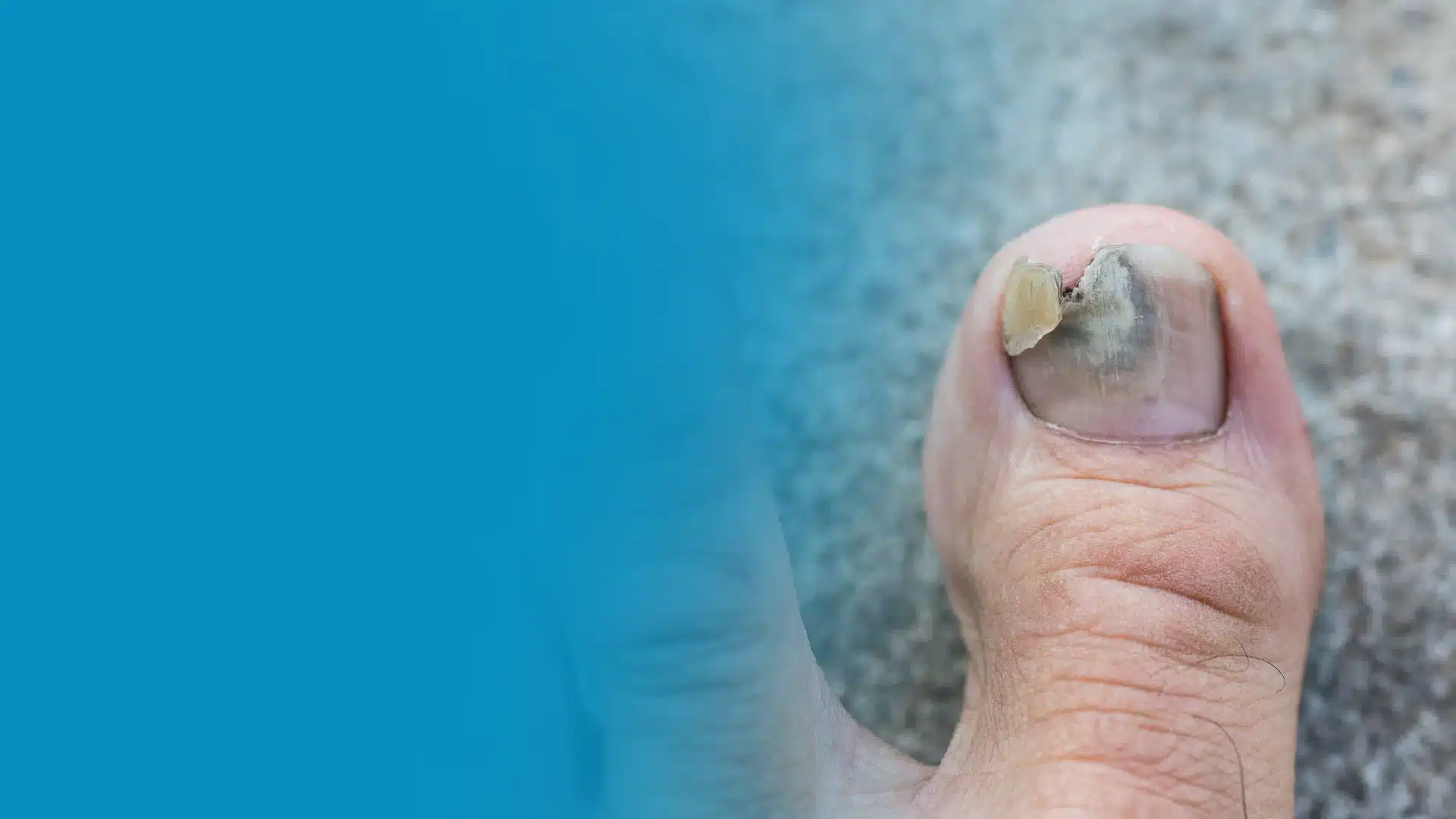
This page covers the clinical evaluation, evidence-based treatment options, and recovery timeline for black toenail runner’s guide: causes, treatment & prevention at Balance Foot & Ankle in Michigan. For same-week appointments at our Howell or Bloomfield Hills offices, call (810) 206-1402.
You are in the right place. Dr. Tom Biernacki, DPM, FACFAS — board-certified foot & ankle surgeon with 3,000+ surgeries — explains exactly what black toenail in runners means and what actually works. Call (810) 206-1402 for a same-day appointment at our Howell or Bloomfield Hills office.

Medically reviewed by Dr. Tom Biernacki, DPM
Board-certified podiatric surgeon | Balance Foot & Ankle
Last reviewed: May 2026
The most important clinical decision with Black Toenail Runner isn’t which treatment to start with — it’s identifying the correct subtype. That changes everything. Call (810) 206-1402.
The most important clinical decision with Black Toenail Runner isn’t which treatment to start with — it’s identifying the correct subtype. That changes everything. Call (810) 206-1402.
Frequently Asked Questions
When should I see a podiatrist?
See a podiatrist if: foot or ankle pain has lasted more than 2–4 weeks without improvement, you’re changing your gait to avoid pain, you have an open wound or sore that isn’t healing, you notice nail discoloration or thickening, you have diabetes and any foot concern, or pain is severe enough to wake you at night. Most foot conditions are easier and cheaper to treat early — what starts as a minor issue can become a surgical problem with months of delay.
What is the difference between a podiatrist and an orthopedic surgeon?
Podiatrists (DPM — Doctor of Podiatric Medicine) specialize exclusively in the foot, ankle, and lower leg. Orthopedic surgeons (MD/DO) have broader musculoskeletal training but variable foot/ankle subspecialization. For foot and ankle-specific problems, a podiatrist often has more focused training and experience. For injuries involving the leg above the ankle, complex pediatric cases, or multi-level reconstruction, orthopedic consultation may be appropriate. We frequently co-manage patients with orthopedic colleagues.
How do I know if my foot pain is serious?
Signs that warrant same-day or next-day evaluation: severe pain that appeared suddenly without clear cause, swelling, redness, and warmth that appeared suddenly (possible gout, infection, or Charcot fracture), an open wound that looks infected (redness spreading, pus, warmth), inability to bear weight, or any foot problem in a diabetic patient. Pain that’s been present for weeks and is stable is important but not an emergency — schedule within 1–2 weeks.
Can foot problems cause back and knee pain?
Yes — this is a kinetic chain effect. Abnormal foot mechanics (overpronation, supination, leg length discrepancy) cause compensatory changes in knee, hip, and lumbar alignment. Roughly 30% of patients presenting to our clinic with knee pain have a treatable foot-level biomechanical cause. Correcting foot mechanics with orthotics or appropriate footwear often provides significant knee and back relief. If you have chronic knee or back pain and haven’t had your foot mechanics evaluated, it’s worth a consult.
Are orthotics worth it?
For the right conditions, yes — custom orthotics are among the most cost-effective interventions in podiatry. They’re most effective for: plantar fasciitis, flat feet with secondary knee/back pain, leg length discrepancy, metatarsalgia, posterior tibial tendon dysfunction, and diabetic foot pressure management. Quality OTC orthotics ($35–60) resolve symptoms for 60% of patients with mild-to-moderate conditions. Custom orthotics are appropriate when OTC options have failed or when the biomechanical problem is complex. We cast custom orthotics in-office.
How do I choose the right running shoes?
Start with your foot type (flat, neutral, high arch) and running pattern (overpronator, neutral, supinator). Flat feet and overpronators do best in stability or motion-control shoes. Neutral feet do well in neutral-cushioned shoes. High arches need maximum cushioning with flexible soles. Always buy running shoes at the end of the day (foot swelling peaks then), get properly fitted by a specialist, and replace every 300–500 miles. If you’ve been injured repeatedly, a gait analysis can identify the mechanical flaw driving your injury pattern.
What is the difference between a sprain and a fracture?
A sprain is a ligament injury (the tissue connecting bones); a fracture is a break in the bone itself. Both can occur with the same trauma (ankle roll, fall). The old test — ‘if you can walk, it’s not broken’ — is wrong; many fractures are initially weight-bearable. Key differences: a fracture typically produces localized bone tenderness along the bone itself, while a sprain is tender over the ligament. X-ray is the standard to differentiate. High-grade sprains without proper treatment can be as disabling as fractures.
How do I prevent foot and ankle injuries?
The four most impactful prevention strategies: (1) Supportive, appropriately fitted footwear for your foot type and activity. (2) Gradual activity progression — the 10% rule (never increase weekly mileage or intensity by more than 10%). (3) Regular calf and ankle mobility work. (4) Strengthening the posterior tibial tendon, peroneals, and intrinsic foot muscles. Most overuse injuries are preventable; most acute injuries are not — but ankle sprain recurrence (60–70% without rehab) is prevented by balance and proprioception training.
Related Conditions
Most common foot condition we treat
Progressive deformity — early care prevents surgery
Root cause of many downstream foot conditions
Forefoot burning and electric pain between toes
In This Article
- What Causes Black Toenail in Runners?
- When to Treat a Black Runner’s Toenail
- Preventing Black Toenails When Running
- Frequently Asked Questions
- The Bottom Line
- Sources
- What is Foot pain?
- Symptoms and warning signs
- Conservative treatment options
- When is surgery considered?
- Recovery timeline and prevention

If you’ve logged serious running miles, you’ve probably earned at least one black toenail. It’s practically a rite of passage in the running community — but that doesn’t mean you should ignore it. Understanding why it happens, when to treat it, and how to prevent it from ruining your next race will save you a lot of discomfort and some genuinely unpleasant toenail experiences.
What Causes Black Toenail in Runners?
The medical term is subungual hematoma — a blood collection beneath the nail plate caused by trauma. In runners, the mechanism is nearly always repetitive microtrauma: the toe strikes the shoe’s front or toe box with each downhill stride, or the foot slides forward during long descents. Over thousands of steps, capillaries under the nail plate rupture, pooling blood causes pressure and discoloration, and if severe enough, the hematoma can cause the nail to detach entirely (onycholysis).
The big toe (first) and second toe are most commonly affected. Contributing factors include shoes that are too short (less than one thumb width at the tip), shoes that are too wide (allowing the foot to slide forward), poor lacing that allows foot sliding, and steep downhill running — a notorious black-toenail generator.
Key takeaway: Shoes that feel ‘right’ in the store often aren’t long enough once you’re running — your foot elongates slightly with repeated impact and heat-induced swelling. Run-specific shoe sizing should be 0.5–1 full size larger than your casual shoe size.
When to Treat a Black Runner’s Toenail
Small, painless hematomas covering less than 25–50% of the nail — observe and wait. The blood will reabsorb or the nail will grow out over several months. No treatment is needed and drainage isn’t worth the infection risk for minor cases.
Large, painful hematomas — particularly those involving more than 50% of the nail or causing intense pressure — benefit from trephination: a podiatrist creates a small hole through the nail plate with a heated cautery instrument (nearly painless as the nail plate has no nerve supply) to allow blood drainage and immediate pressure relief. Pain usually resolves within hours. This is a simple in-office procedure; don’t try to do this at home with a paper clip.
Nail separation (the nail lifting off the nail bed): if the nail is attached at the base, leave it in place as a protective cover while the new nail grows beneath it. If fully detached, gently trim loose edges. Protect the exposed nail bed with a non-adherent dressing until the new nail grows in (3–6 months for toenails).
⚠️ When a Black Toenail Needs a Podiatry Evaluation
- Intense throbbing pain from hematoma pressure that prevents running or sleeping
- Signs of infection under the nail: pus, warmth spreading beyond the nail, fever
- A black area that did not develop after trauma and is not improving (possible melanoma — rare but must be excluded)
- Repeatedly losing the same toenail every training cycle (footwear or biomechanical issue)
- Any nail problem with diabetes — even minor nail injuries can escalate quickly
- Nail has been completely detached and the nail bed appears injured or infected
Preventing Black Toenails When Running
Proper shoe sizing is the most impactful prevention strategy. At a running store, verify one thumb width (approximately 12–15mm) of space between the longest toe and the shoe tip when standing. On downhills, adopt a slightly shorter stride and dorsiflexion-controlled descent technique to reduce toe-box impact. Moisture-wicking socks reduce the slippage that worsens toe striking. Lace-locking techniques (runner’s loop) reduce forward foot slide within the shoe during descents. Keep toenails trimmed straight across and short — long nails have more surface area to impact the shoe’s interior.
Frequently Asked Questions
Will a black toenail fall off?
If the hematoma separates the nail from the nail bed significantly, yes — the nail will eventually detach. A new nail grows underneath over 3–6 months. You can continue running with an appropriate protective dressing.
Should I be worried if my toenail turns black without running?
A black discoloration under the nail without a history of trauma can occasionally represent subungual melanoma (rare) or other nail pathology. If you have a dark streak or discoloration that didn’t develop after a known injury, see a podiatrist or dermatologist for evaluation.
Can I run with a black toenail?
Yes — most runners continue training with black toenails. If the nail is painful, draining the hematoma relieves pressure. Protect the toe with a toe cap or bandage to prevent catching on the sock.
How long does it take a runner’s toenail to grow back after falling off?
Toenails grow approximately 1–2mm per month. A full toenail regrowth takes 6–12 months for most people. The new nail is typically healthy if the nail matrix (root) was not damaged.
The Bottom Line
Black toenail in runners is caused by repetitive toe-box trauma — almost always preventable with proper shoe sizing (one thumb width at the tip), lace-locking techniques, and short nails. Small painless hematomas need only observation; large painful ones benefit from podiatric drainage. If nail discoloration develops without trauma history, get it evaluated to rule out serious causes.
Ready to Get Relief?
Same-day appointments available in Howell & Bloomfield Hills, MI
4.9★ | 1,123 Reviews | 3,000+ Surgeries
Or call: (810) 206-1402
Sources
- Hannaford R, Bharat M. “Subungual hematoma.” J Am Podiatr Med Assoc. 2019.
- Knapik JJ et al. “Toe trauma in running athletes.” Military Medicine. 2012.
- American College of Foot and Ankle Surgeons. Nail disorders clinical guideline. 2023.
⚕ Doctor Recommended
CURREX RunPro Insoles
Biomechanical insoles for runners & athletes
What is Foot pain?
Foot pain is a common foot/ankle condition that affects mobility and quality of life. Understanding the underlying cause is the first step in successful treatment. Our podiatrists at Balance Foot & Ankle perform a hands-on biomechanical exam, review your activity history, and use diagnostic imaging when appropriate to identify the root cause—not just treat the symptom. Many patients have been told to “rest and ice” without a deeper diagnostic workup; our approach is different.
Symptoms and warning signs
Common signs of foot pain include pain that worsens with activity, morning stiffness, swelling, tenderness when palpated, and difficulty bearing weight. If you experience sudden severe pain, inability to walk, visible deformity, numbness or color change, contact our office the same day or visit urgent care—these can signal a more serious injury such as a fracture, tendon rupture, or vascular compromise. Diabetics with any foot wound should seek same-day care.
Conservative treatment options
Most cases of foot pain respond to non-surgical care: structured rest, supportive footwear changes, custom orthotics, targeted stretching and strengthening protocols, anti-inflammatory medications when medically appropriate, and in-office procedures such as ultrasound-guided injections. We also offer advanced therapies including MLS laser therapy, EPAT/shockwave, regenerative injections, and image-guided procedures. Treatment is sequenced from least invasive to most invasive, and we explain the rationale at every step.
When is surgery considered?
Surgery is reserved for cases that fail 3-6 months of well-structured conservative care, when there is structural pathology (severe deformity, complete tear, advanced arthritis), or when imaging shows damage that will not heal without intervention. Our surgeons have performed 3,000+ foot and ankle procedures and prioritize minimally-invasive techniques whenever appropriate. We discuss recovery timelines, return-to-activity milestones, and realistic outcome expectations before any procedure is scheduled.
Recovery timeline and prevention
Recovery from foot pain varies based on severity and chosen treatment path. Conservative cases often improve within 4-8 weeks with consistent adherence to the protocol. Post-procedural recovery may range from a few days (in-office procedures) to several months (reconstructive surgery). Long-term prevention involves footwear assessment, activity modification, structured strengthening, and regular check-ins with your podiatrist if you have a history of recurrence. We provide written home-exercise plans and digital follow-up support.
Ready to feel better?
Same-week appointments available in Howell and Bloomfield Hills, Michigan.
Ready to fix this for good?
Reading goes only so far. The fastest path to relief is a 30-minute office visit with Dr. Biernacki — same-day Howell or Bloomfield Hills. Call (810) 206-1402 or use our online booking.
In-Office Treatment at Balance Foot & Ankle
If home treatment isn’t providing relief for your foot and ankle conditions, our podiatry team at Balance Foot & Ankle can help with same-day evaluations and advanced in-office care.
Same-day appointments available. (810) 206-1402
Doctor Hoy’s Natural Pain Relief Gel
Natural topical pain relief I use in our clinic. Arnica + camphor formula — apply directly to the area 3–4x daily. ($20–25)
Get Expert Care at Balance Foot & Ankle
Same-week appointments at our Howell and Bloomfield Hills offices. Board-certified podiatric surgeons. Most insurance accepted.

Dr. Tom Biernacki, DPM is a double board-certified podiatrist and foot & ankle surgeon at Balance Foot & Ankle Specialists in Southeast Michigan. With over a decade of clinical experience, he specializes in heel pain, bunions, diabetic foot care, sports injuries, and minimally invasive surgery. Dr. Biernacki is a member of the APMA and ACFAS, and his patient education content on MichiganFootDoctors.com and YouTube has reached over one million views.
Dr. Tom Biernacki, DPM is a board-certified foot & ankle surgeon (ABFAS & ABPM) at Balance Foot & Ankle Specialists in Southeast Michigan. With over a decade of clinical experience, he specializes in heel pain, bunions, diabetic foot care, sports injuries, and minimally invasive surgery. Dr. Biernacki is a member of the APMA and ACFAS, and his patient education content on MichiganFootDoctors.com and YouTube has made him one of the most-followed foot & ankle educators on YouTube.