
Medically reviewed by Dr. Tom Biernacki, DPM · Board-Certified Podiatric Surgeon · Last reviewed: April 2026 · Editorial Policy
Quick Answer
Children’s Flat Feet: When Are Treatment and Orthotics relates to arch concerns — typically caused by foot structure or fatigue. Most patients improve in 6-12 weeks with intervention with conservative care. Same-week appointments in Howell + Bloomfield Twp: (810) 206-1402.

Medically reviewed by Dr. Tom Biernacki, DPM — Board-Certified Podiatric Surgeon — Balance Foot & Ankle, Howell & Bloomfield Hills, MI. Last updated April 2026.
Treatment at Balance Foot & Ankle: Custom 3D Orthotics →
▶ Watch

Medically Reviewed by Dr. Tom Biernacki, DPM — Board-Certified Podiatrist, Balance Foot & Ankle Specialists, Michigan. Last updated April 2026.
Flat feet in children generate a significant amount of parental concern — and an equally significant amount of unnecessary treatment. The reality is nuanced: the vast majority of children with flat feet have a normal variant that requires no intervention whatsoever, while a small but important subset have pathological flatfoot that benefits significantly from early management. The key is accurate differentiation between these two categories.
Normal Arch Development in Children
All infants and toddlers have flat feet. The arch is obscured by a fat pad in the inner foot during the first 2–3 years of life, and the arch does not fully develop until ages 6–8 years in most children. This is completely normal and requires no treatment. Parents who notice their 2-year-old has flat feet when standing are observing a physiological norm, not pathology.
By school age, approximately 15–20% of children retain physiologic flexible flatfoot. The majority of these children will be asymptomatic throughout childhood and adult life.
Flexible vs. Rigid Flatfoot — The Essential Distinction
The most important clinical distinction in pediatric flatfoot evaluation is whether the deformity is flexible or rigid:
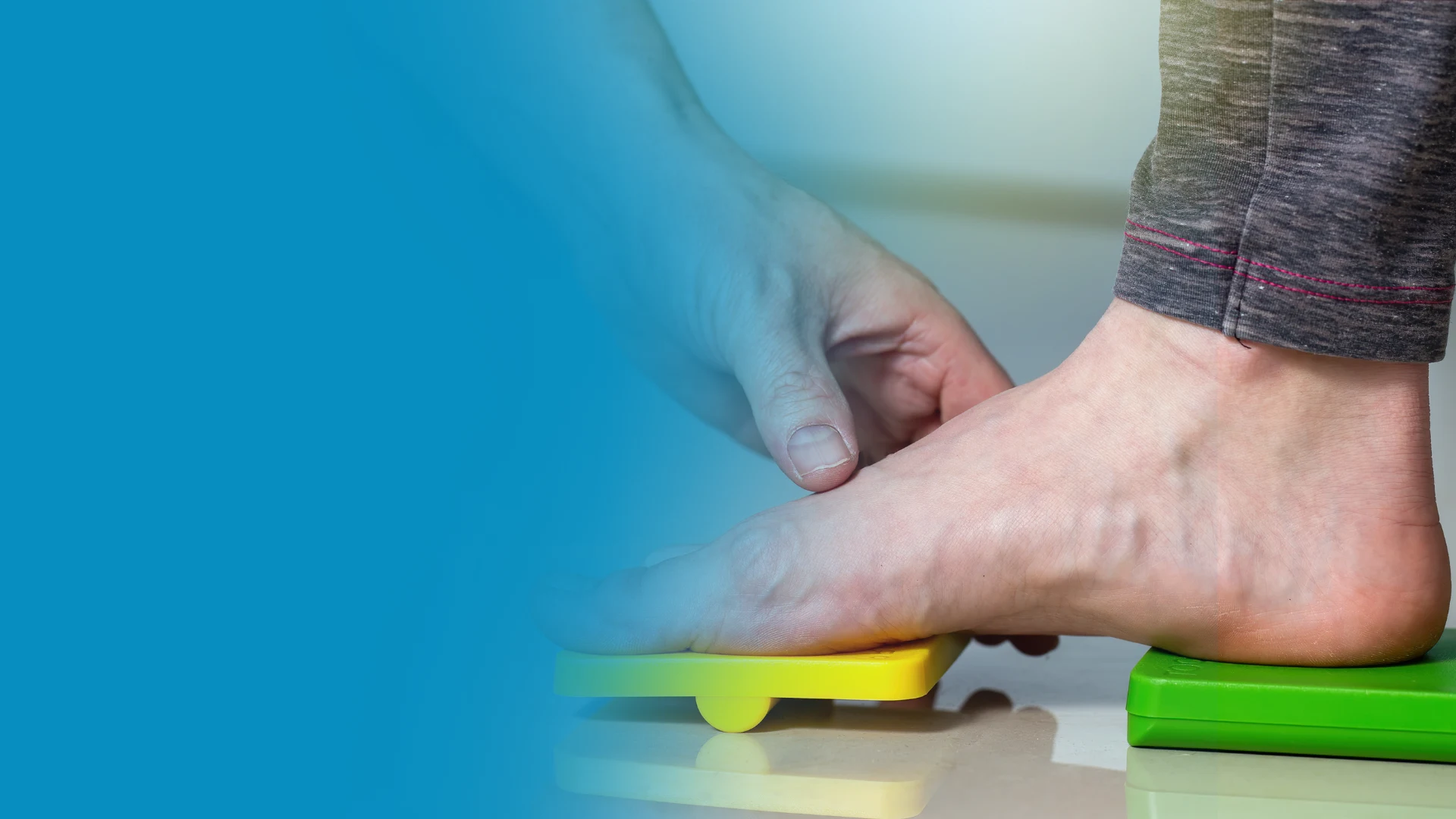
- Flexible flatfoot: The arch disappears when weight bearing but reconstitutes (appears) when the child stands on tip-toes or sits with feet dangling. This is the common, usually benign form of pediatric flat foot. Treatment is only needed if the child is symptomatic.
- Rigid flatfoot: The arch is absent both weight bearing and non-weight bearing. The foot remains flat even when the child rises on tip-toes. This category raises concern for an underlying structural cause — most importantly tarsal coalition (abnormal bony or cartilaginous fusion between foot bones), vertical talus, or neuromuscular conditions. Rigid flatfoot warrants imaging and further evaluation regardless of symptoms.
When Does Pediatric Flatfoot Need Treatment?
Treatment is indicated in children with flexible flatfoot who:
- Report foot, arch, ankle, knee, or hip pain that limits activity or causes them to avoid physical activity
- Fatigue rapidly during walking or refuse to participate in sports due to foot discomfort
- Show excessive shoe wear on the medial heel and inner sole
- Have associated Achilles tightness (equinus) contributing to flatfoot severity
- Have a family history of adult flatfoot-related disability (posterior tibial tendon dysfunction)
Asymptomatic flexible flatfoot in an otherwise active child does not require treatment. Research consistently shows that orthotics do not correct flexible flatfoot or accelerate arch development — they manage symptoms when present.
Treatment Options
For symptomatic pediatric flatfoot, the primary treatment is custom orthotics — medical-grade devices designed from a 3D digital foot scan that provide medial longitudinal arch support, hindfoot control, and intrinsic muscle activation. Unlike over-the-counter arch supports (which are too soft and generic to provide meaningful biomechanical correction), custom orthotics are fabricated to the child’s specific foot morphology.
Achilles stretching is an important adjunct when equinus (tight calf) contributes to flatfoot severity — calf and Achilles flexibility exercises prevent the Achilles from pulling the heel bone into valgus (inward tilt) under load.
In adolescents with severe symptomatic flatfoot that fails conservative management, minimally invasive subtalar arthroereisis (insertion of a small implant into the sinus tarsi to limit excessive hindfoot pronation) is an option that avoids the more extensive reconstruction required in adults.
When to See Dr. Biernacki
Bring your child to Balance Foot & Ankle for evaluation if they complain of foot or lower extremity pain, have a rigid flatfoot, show a rapidly worsening flatfoot deformity, or have unilateral flatfoot (one flat foot but not the other — asymmetry is a red flag for underlying pathology). Proactive evaluation at the right time prevents the more complex adult reconstruction that results from years of untreated, progressive flatfoot.
Concerned About Your Child’s Flat Feet?
Dr. Biernacki provides expert pediatric flatfoot evaluation and custom orthotics at Balance Foot & Ankle — Bloomfield Hills and Howell, MI.
📞 (810) 206-1402 |
📧 Get Dr. Tom’s Free Lab Test Guide
Discover the 5 lab tests every person over 35 should ask their doctor about — explained in plain English by a board-certified physician.
📍 Located in Michigan?
Our board-certified podiatrists treat this condition at two convenient locations. Same-day appointments often available.

Insurance Accepted
BCBS · Medicare · Aetna · Cigna · United Healthcare · HAP · Priority Health · Humana · View All →
Howell Office
3980 E Grand River Ave, Suite 140
Howell, MI 48843
Get Directions →
Bloomfield Hills Office
43700 Woodward Ave, Suite 207
Bloomfield Hills, MI 48302
Get Directions →
Your Board-Certified Podiatrists



Ready to Get Back on Your Feet?
Same-week appointments available at both locations.
Book Your AppointmentMore Podiatrist-Recommended Flat Feet Essentials
PowerStep Pinnacle Insole

Top orthotic for flat feet — lifts the collapsed arch and controls pronation.
Stability Running Shoe
New Balance Fresh Foam X 860 — designed for overpronators with flat feet.
Supportive Stability Shoe
Brooks Adrenaline GTS 25 — gold-standard stability shoe for flat feet.
As an Amazon Associate, Balance Foot & Ankle earns from qualifying purchases. Product recommendations are based on clinical experience; prices and availability shown above update live from Amazon.

When to See a Podiatrist
Painful flat feet in adults can signal posterior tibial tendon dysfunction — a progressive condition that needs early intervention to avoid surgery. Balance Foot & Ankle evaluates adult flatfoot with weight-bearing imaging and custom orthotic prescriptions. Catching PTTD at stage 1-2 makes the difference between a brace and a reconstruction.
Call Balance Foot & Ankle: (810) 206-1402 · Book online · Offices in Howell & Bloomfield Hills
In Our Clinic
In our clinic, the flat-footed patient who actually needs intervention is the one whose arch is collapsing progressively in adulthood — not the person who was born flat-footed and has been running 5Ks pain-free for 20 years. We evaluate for posterior tibial tendon dysfunction (PTTD) with single-heel-rise testing, check for the “too many toes” sign from behind, and get weight-bearing X-rays. Early PTTD responds well to a custom orthotic with a medial heel skive + short course of boot immobilization. Stage 2+ PTTD is a different conversation — we discuss tendon transfers and calcaneal osteotomy candidates.
In-Office Treatment at Balance Foot & Ankle
When conservative care isn’t enough, Dr. Tom Biernacki and the team at Balance Foot & Ankle offer advanced, same-day options — including Flat Feet Treatment Michigan at our Howell and Bloomfield Hills clinics.
Same-day appointments available. Call (810) 206-1402 or book online.
Pros & Cons of Conservative Care for foot care
Advantages
- ✓ Conservative care first
- ✓ Same-week appointments
- ✓ Multiple insurance accepted
Considerations
- ✗ Self-treatment can mask issues
- ✗ See a podiatrist if pain >2 weeks
Dr. Tom’s Recommended Products for foot care
Affiliate disclosure: As an Amazon Associate, Balance Foot & Ankle earns from qualifying purchases. We only recommend products we use with patients.


Footnanny Heel Cream Dr. Tom’s Pick
Best for: Daily moisturizer for cracked heels
Ready to Get Back on Your Feet?
Same-day appointments in Howell + Bloomfield Twp. Most insurance accepted. Dr. Tom Biernacki, DPM & team.
Book Today — Same-Day Appointments Available
Call Now: (810) 206-1402
About Your Care Team at Balance Foot & Ankle
Dr. Tom Biernacki, DPM · Board-Certified Foot & Ankle Surgeon. Specializes in conservative-first care, minimally invasive bunion surgery, and complex reconstruction.
Dr. Carl Jay, DPM · Accepting new patients. Specializes in sports medicine, athletic injuries, and routine podiatric care.
Dr. Daria Gutkin, DPM, AACFAS · Accepting new patients. Specializes in surgical reconstruction and pediatric podiatry.
Locations: 4330 E Grand River Ave, Howell, MI 48843 · 43494 Woodward Ave Suite 208, Bloomfield Twp, MI 48302
Hours: Mon–Fri 8:00 AM – 5:00 PM · (810) 206-1402

Dr. Tom Biernacki, DPM is a double board-certified podiatrist and foot & ankle surgeon at Balance Foot & Ankle Specialists in Southeast Michigan. With over a decade of clinical experience, he specializes in heel pain, bunions, diabetic foot care, sports injuries, and minimally invasive surgery. Dr. Biernacki is a member of the APMA and ACFAS, and his patient education content on MichiganFootDoctors.com and YouTube has reached over one million views.
Frequently Asked Questions
Do flat feet need to be treated?
What is the best insole for flat feet?
- Diagnosis and Treatment of Plantar Fasciitis (PubMed / AAFP)
- Heel Pain (APMA)
- Hallux Valgus (Bunions): Evaluation and Management (PubMed)
- Bunions (Mayo Clinic)
Recommended Products from Dr. Tom