
Same-Week Appointments at Balance Foot & Ankle
Three board-certified podiatric surgeons. 950K+ YouTube subscribers. 1,123+ five-star reviews. Howell & Bloomfield Hills, Michigan.
Medically reviewed by Dr. Tom Biernacki, DPM
Board-certified podiatric surgeon | Balance Foot & Ankle
Last reviewed: April 2026
Quick answer: Compression socks improve blood circulation, reduce swelling, and relieve foot and leg pain by applying graduated pressure from the ankle upward. Most patients benefit from 15–20 mmHg for daily wear or 20–30 mmHg for medical conditions like plantar fasciitis, edema, or post-surgical recovery.
🩺 Medical Review: This article was written and reviewed by Dr. Thomas Biernacki, DPM, board-qualified podiatric surgeon at Balance Foot & Ankle Specialists. Last updated April 2026.
Quick Answer: Compression socks improve foot and leg health by applying graduated pressure that promotes venous return, reduces swelling, prevents blood pooling, and supports tissue recovery. Compression levels range from 15-20 mmHg for daily wellness to 30-40 mmHg for medical conditions. Choosing the right compression level, style, and fit depends on your specific condition, activity level, and medical history.
Compression socks are one of the most versatile tools in foot and leg health — I recommend them for conditions ranging from post-surgical recovery to diabetic swelling to athletic performance. But the sheer number of options makes choosing the right pair confusing. This guide breaks down compression levels, styles, conditions, and how to select exactly the right product for your needs.
I recommend compression socks to patients in our clinic almost every day — for plantar fasciitis, post-surgical recovery, diabetic foot care, and chronic swelling. The right compression level and fit make all the difference. This guide covers everything you need to know to choose the right pair based on your specific foot condition.
Table of Contents
- How Compression Therapy Works
- Compression Levels Explained
- Graduated vs. Uniform Compression
- Compression Sock Styles and Lengths
- Compression for Venous Insufficiency
- Compression for Edema and Swelling
- DVT Prevention with Compression
- Compression and Diabetic Foot Health
- Post-Surgical Recovery Compression
- Compression for Athletic Performance
- Compression During Pregnancy
- Compression for Travel
- How to Get Proper Fit and Sizing
- When NOT to Wear Compression Socks
- Recommended Products
- Complete Compression Kit
- Most Common Mistake
- Warning Signs
- FAQ
- Sources
- Video
How Compression Therapy Works
Compression therapy works by applying external pressure to the leg tissues, which produces several physiological benefits. The pressure narrows vein diameter, increasing blood flow velocity and improving venous return to the heart. This counteracts the effects of gravity that cause blood to pool in the lower extremities. Compression also reduces the space available for fluid to accumulate in the interstitial tissues, preventing and reducing edema. At the cellular level, compression improves lymphatic drainage, reduces inflammatory mediator concentration, and supports tissue oxygenation. The result is less swelling, less pain, faster healing, and reduced risk of complications like blood clots. Understanding these mechanisms helps you appreciate why compression level, fit, and consistency of wear matter so much for results.
Compression Levels Explained
Compression is measured in millimeters of mercury (mmHg) and categorized into clinical grades. Light compression (8-15 mmHg) provides mild support for tired, achy legs and is available without prescription — this level suits travelers and people who stand for long periods. Moderate compression (15-20 mmHg) treats mild edema, minor varicose veins, and provides athletic recovery support — this is the most commonly recommended over-the-counter level. Firm compression (20-30 mmHg) treats moderate edema, significant varicose veins, post-surgical swelling, and DVT prevention — this often requires a healthcare provider’s recommendation. Extra-firm compression (30-40 mmHg) manages severe venous insufficiency, lymphedema, and post-thrombotic syndrome — this level requires medical supervision and proper fitting. Higher levels (40-50+ mmHg) exist for severe lymphedema and are always prescribed and custom-fitted.
Key takeaway: Graduated compression socks are clinically proven to reduce swelling, improve venous return, and speed recovery. For most foot conditions, 15–20 mmHg is ideal for prevention and daily comfort, while 20–30 mmHg provides therapeutic-grade support for plantar fasciitis, post-op recovery, and chronic edema.
Graduated vs. Uniform Compression
Graduated compression is the medical standard — pressure is highest at the ankle and gradually decreases up the leg. This gradient design works with gravity to push blood upward toward the heart, mimicking the natural muscle pump action. A properly graduated sock might provide 30 mmHg at the ankle, 20 mmHg at mid-calf, and 10 mmHg at the knee. Uniform compression provides equal pressure throughout, which is less effective for venous return and can actually restrict blood flow if applied too tightly at the top. The DASS Original Dynamic Ankle Stabilizing System uses graduated compression principles specifically designed for ankle-to-midfoot support, making it an excellent complement to knee-high compression socks for comprehensive lower extremity management.
Compression Sock Styles and Lengths
Compression garments come in multiple lengths, each suited for different conditions. Knee-high socks are the most common, treating calf and lower leg swelling while being the easiest to apply. Thigh-high stockings extend coverage for patients with extensive varicose veins or post-surgical needs above the knee. Pantyhose-style compression provides full lower extremity coverage and is often used during pregnancy or for lymphedema management. Ankle-length sleeves like the DASS compression system target the foot and ankle specifically, ideal for conditions like plantar fasciitis, ankle instability, and localized foot edema. Open-toe styles accommodate foot orthotics and sandals while still providing leg compression. The right length depends on where your swelling or symptoms are located — if swelling is primarily in the ankle and foot, ankle-focused compression is sufficient, while calf and knee swelling requires at least knee-high coverage.
Compression for Chronic Venous Insufficiency
Chronic venous insufficiency (CVI) occurs when leg vein valves fail to close properly, allowing blood to flow backward and pool in the lower legs. Symptoms include aching, heaviness, swelling, skin discoloration, and eventually venous ulcers. Compression therapy is the cornerstone of CVI management — 20-30 mmHg graduated compression reduces venous reflux, improves calf muscle pump efficiency, and prevents the skin changes that lead to ulceration. Patients with CVI should wear compression daily, applying stockings first thing in the morning before swelling accumulates and removing them at bedtime. Consistent compression use reduces venous ulcer recurrence by approximately 50% compared to no compression. For patients with both CVI and foot conditions requiring orthotics, combining knee-high compression stockings with PowerStep Pinnacle insoles addresses both the venous and biomechanical components simultaneously.
Compression for Edema and Swelling
Lower extremity edema has many causes — heart failure, kidney disease, medication side effects, prolonged standing, and lymphatic insufficiency among them. Compression therapy manages edema by preventing fluid from accumulating in the interstitial spaces and promoting its return through the venous and lymphatic systems. The appropriate compression level depends on the severity: mild edema responds to 15-20 mmHg, moderate edema requires 20-30 mmHg, and severe edema may need 30-40 mmHg. For ankle and foot-specific swelling, DASS compression sleeves provide targeted graduated compression exactly where fluid tends to accumulate most. Important: identifying and treating the underlying cause of edema is essential — compression manages the symptom but doesn’t address conditions like heart failure that require separate medical treatment.
DVT Prevention with Compression
Deep vein thrombosis (DVT) occurs when a blood clot forms in a deep leg vein, potentially leading to pulmonary embolism — a life-threatening emergency. Compression reduces DVT risk by maintaining blood flow velocity and preventing the venous stasis that promotes clot formation. High-risk situations include post-surgical immobility, long-distance travel (flights over 4 hours), and extended bed rest. For DVT prevention, 15-20 mmHg compression is standard for travel and low-risk situations, while 20-30 mmHg is recommended for post-surgical prevention. Wearing compression socks during long flights reduces the incidence of DVT significantly in clinical studies. Compression should be combined with regular movement — ankle pumps, calf raises, and walking when possible — for maximum protection.
Compression and Diabetic Foot Health
Compression therapy in diabetic patients requires careful consideration. Diabetes often causes both peripheral edema (which benefits from compression) and peripheral arterial disease (which can be worsened by compression). The key is assessing arterial blood flow before recommending compression — an ankle-brachial index (ABI) above 0.8 generally indicates safe compression use. For diabetic patients with adequate circulation, 15-20 mmHg compression helps manage the edema that contributes to skin breakdown and slow wound healing. Diabetic compression socks should have seamless toe construction to prevent friction injuries, moisture-wicking fabric to reduce fungal infection risk, and light colors for easy detection of drainage or bleeding. Never start compression therapy for diabetic swelling without first having your circulation evaluated by your podiatrist or physician.
Post-Surgical Recovery Compression
Compression therapy after foot and ankle surgery serves dual purposes: DVT prevention during the immobility period and swelling reduction for faster healing. Post-surgical compression typically starts at 15-20 mmHg during the initial healing period and may increase to 20-30 mmHg once surgical wounds are healed. The DASS compression system is particularly effective after foot and ankle surgery because it provides graduated compression specifically in the surgical area without extending to the knee where it might interfere with walking boot mechanics. I recommend DASS sleeves to most of my surgical patients once dressings are removed because the compression directly addresses the foot and ankle swelling that delays recovery and causes discomfort.
Compression for Athletic Performance and Recovery
Athletes use compression during and after exercise for two distinct purposes. During activity, compression reduces muscle oscillation, improves proprioception, and may improve running economy through enhanced venous return. After activity, compression accelerates recovery by reducing exercise-induced inflammation and promoting metabolite clearance. For runners and court sport athletes, DASS compression sleeves provide ankle-specific support during activity while full-length compression socks support post-workout recovery. Research supports compression for recovery more strongly than for performance enhancement — wearing compression for 12-24 hours after intense exercise reduces delayed-onset muscle soreness (DOMS) and perceived fatigue. Combining compression with Doctor Hoy’s Arnica Boost cream amplifies recovery by addressing both mechanical and inflammatory aspects of exercise-induced tissue stress.
Compression During Pregnancy
Pregnancy dramatically increases the risk of lower extremity swelling and varicose veins due to increased blood volume, hormonal changes affecting vein wall elasticity, and uterine pressure on the pelvic veins restricting venous return. Compression stockings during pregnancy reduce edema, decrease varicose vein progression, and lower DVT risk. Most pregnant women benefit from 15-20 mmHg knee-high compression starting in the second trimester. Women with pre-existing varicose veins or previous DVT may need 20-30 mmHg under medical supervision. Maternity compression pantyhose with belly panels provide additional support. Apply compression before getting out of bed each morning for maximum effectiveness. Compression is safe throughout pregnancy when properly fitted and is one of the most effective interventions for pregnancy-related leg discomfort.
Compression for Travel
Long-distance travel — particularly air travel — creates a perfect storm for lower extremity problems. Prolonged sitting restricts calf muscle pump activity, dehydration concentrates the blood, and low cabin pressure promotes fluid shift into tissues. Studies consistently show that wearing 15-20 mmHg compression socks during flights of 4+ hours significantly reduces leg swelling, discomfort, and DVT risk. Put compression socks on before departing for the airport and keep them on throughout your travel day. Combine with regular ankle pumping exercises (20 repetitions every 30 minutes), adequate hydration, and aisle walks every 1-2 hours. For travelers who also have foot conditions, wearing compression with PowerStep Pinnacle insoles in supportive travel shoes provides comprehensive protection.
How to Get Proper Fit and Sizing
Proper sizing is critical for compression therapy effectiveness and safety. Measure your legs first thing in the morning when swelling is minimal. For knee-high socks, measure ankle circumference at the narrowest point, calf circumference at the widest point, and leg length from the floor to the bend of the knee. For thigh-highs, also measure thigh circumference and full leg length. Use the manufacturer’s sizing chart — different brands have different size ranges. Compression should feel snug but not painful. If you experience numbness, tingling, skin color changes, or increased pain, the compression is too tight or contraindicated. The sock should be smoothly applied without wrinkles, folds, or tourniquet effects. If donning is difficult, compression aids (donning frames, silk slip socks, or rubber gloves for grip) make application much easier.
When NOT to Wear Compression Socks
Compression therapy has important contraindications that must be respected. Do not wear compression if you have peripheral arterial disease (PAD) with an ankle-brachial index below 0.5 — compression on ischemic legs can cause tissue death. Active skin infections, cellulitis, or open wounds in the compression area are contraindications until resolved. Congestive heart failure patients should consult their cardiologist before starting compression, as the fluid mobilized by compression must be processed by the heart. Peripheral neuropathy patients may not feel dangerous compression, requiring careful monitoring. Skin allergies to compression materials require hypoallergenic alternatives. Deep vein thrombosis requires medical anticoagulation before compression — never apply compression to a suspected acute DVT without medical evaluation. When in doubt, have your podiatrist or physician assess your suitability for compression therapy.
Recommended Compression and Foot Care Products
These products represent the compression and foot care solutions I recommend most frequently in clinical practice for comprehensive lower extremity health.
DASS Original Dynamic Ankle Stabilizing System
The DASS Original Dynamic Ankle Stabilizing System is my primary recommendation for ankle and foot-specific compression needs. Unlike full-length compression socks that may be overkill for localized foot and ankle swelling, DASS provides targeted graduated compression precisely where most podiatric patients need it most. The DASS system excels for plantar fasciitis support, post-surgical ankle recovery, athletic ankle protection, and everyday foot edema management. I recommend DASS compression sleeves more than any other single compression product because they address the specific foot and ankle conditions I treat daily while being comfortable enough for all-day wear.
PowerStep Pinnacle Orthotic Insoles
Compression therapy works best when combined with proper biomechanical support. PowerStep Pinnacle orthotic insoles provide the arch support and cushioning that reduces the mechanical stress contributing to foot swelling. For patients wearing compression for plantar fasciitis, edema from prolonged standing, or post-surgical recovery, PowerStep Pinnacle insoles address the biomechanical factors while compression addresses the fluid management — together they’re more effective than either alone.
PowerStep Pinnacle Maxx Orthotic Insoles
For patients with flat feet or overpronation who need compression therapy, PowerStep Pinnacle Maxx insoles provide maximum motion control that complements compression’s fluid management benefits. Flat feet create excessive stress on the posterior tibial tendon and medial ankle, contributing to swelling that compression alone can’t fully address. PowerStep Maxx insoles correct the mechanical cause while compression manages the resulting edema.
Doctor Hoy’s Natural Pain Relief Gel
Many conditions requiring compression also involve pain. Doctor Hoy’s Natural Pain Relief Gel can be applied before putting on compression garments to provide additional pain relief through menthol-based topical therapy. Doctor Hoy’s gel absorbs quickly and doesn’t leave residue that would compromise compression garment grip or material integrity. The combination of topical pain relief under compression therapy provides significantly more comfort than either approach alone.
Doctor Hoy’s Arnica Boost Recovery Cream
Doctor Hoy’s Arnica Boost Recovery Cream complements compression therapy by addressing inflammation at the tissue level. Apply Doctor Hoy’s arnica cream at night after removing compression garments to support overnight tissue recovery. The arnica-menthol combination reduces residual inflammation while the compression-free nighttime period allows tissues to normalize. This alternating approach maximizes the benefits of both therapies.
FLAT SOCKS
FLAT SOCKS provide a thin moisture-wicking layer that works under or over compression garments. For patients wearing ankle-length DASS compression with separate knee-high compression socks, FLAT SOCKS prevent bunching and friction between layers. Their minimal profile doesn’t add bulk inside shoes already occupied by orthotic insoles and compression garments.
Complete Lower Extremity Compression Kit
🏥 Dr. Biernacki’s Complete Compression Therapy Kit:
For comprehensive lower extremity support, I recommend:
• DASS Compression Sleeves — targeted ankle-to-midfoot graduated compression
• PowerStep Pinnacle Insoles — biomechanical support with compression therapy
• PowerStep Pinnacle Maxx Insoles — maximum support for flatfoot and pronation
• Doctor Hoy’s Pain Relief Gel — pre-compression pain management
• Doctor Hoy’s Arnica Boost Cream — nighttime anti-inflammatory recovery
• FLAT SOCKS — friction-free interface under compression
This combination provides 24-hour lower extremity care: compression and support during the day, anti-inflammatory recovery at night.
The Most Common Compression Therapy Mistake
🔑 Key Takeaway: I treated a 63-year-old Royal Oak woman with chronic bilateral leg swelling who had been wearing the same pair of “compression socks” she bought at a pharmacy for 3 years. The socks had lost all compression — stretched-out compression fabric provides zero therapeutic benefit. She also wore a size too large because “they’re easier to put on.” After proper fitting with medical-grade 20-30 mmHg knee-high compression, combined with DASS sleeves for her ankle edema and PowerStep Pinnacle insoles for her flat feet, her daily swelling reduced by roughly 60% within two weeks. Compression socks should be replaced every 3-6 months as the elastic fibers degrade, and proper sizing — even if initially harder to put on — is essential for therapeutic benefit.
Warning Signs While Using Compression
⚠️ Remove compression immediately and seek evaluation if you experience:
1. Numbness, tingling, or color change in toes — compression may be too tight or circulation is compromised
2. Increased pain while wearing compression — possible arterial insufficiency where compression is contraindicated
3. Skin breakdown, blistering, or rash under compression — material allergy or excessive pressure on fragile skin
4. Sudden severe calf pain with swelling — possible acute DVT requiring emergency evaluation, not compression
5. Shortness of breath with leg swelling — may indicate heart failure or pulmonary embolism requiring urgent care
6. Worsening swelling despite consistent compression use — underlying condition may be progressing and needs medical reassessment
7. Red streaking up the leg — possible cellulitis or lymphangitis requiring antibiotic treatment before resuming compression
8. Rolling or bunching of compression garment creating a tourniquet — reapply correctly or switch to a different size/style
More Podiatrist-Recommended Compression Essentials
OS1st FS4 Compression Sock

- Provides continuous support of the Plantar Fascia by gently stretching the fascia tissue.
- Compression zones promote circulation, reduce impact vibration, boost recovery and strengthen feet.
- Lightweight, seamless design with extra cushioning provides support while still being comfortable.
- Supports the heel/arch and overall foot structure while stabilizing the tendon for better performance
- Made from high quality materials, the socks are moisture wicking and breathable.
Graduated compression — reduces swelling and fatigue for heel pain and PF.
Arch-Supportive Insole

- The Pinnacle Full length insoles for men & women provide maximum cushioning, from high activity to moderate support. The PowerStep arch support shape provides stability to the foot and ankle, helping to relieve foot pain.
- When you spend all day on your feet, every step counts. PowerStep insoles are a podiatrist-recommended orthotic to help relieve & prevent foot pain related to athletes, runners, Plantar Fasciitis, heel spurs & other common foot, ankle & knee injuries
- The Pinnacle plantar fasciitis insoles offer superior heel cushioning and arch support. The dual-layer cushioning is designed to reduce stress and fatigue, while PowerStep premium arch support is designed for plantar fasciitis relief.
- The PowerStep Pinnacle arch support inserts for men & women can be worn in a variety of shoe types such as; athletic, walking, running, work & some casual shoes. Orthotic Inserts are ordered by shoe size, no trimming required.
- Made in the USA & backed by a 30-day money-back guarantee. PowerStep orthotic inserts for men & women are designed for shoes where the factory insole can be removed. HSA & FSA Eligible
PowerStep Pinnacle — works with compression to distribute pressure.
Calf Foam Roller

- Patented foam roller design offers a superior, multi-density exterior constructed over a rigid, hollow core
- Constructed from quality materials that won’t break down or lose shape from repeated use
- Includes access to free online instructional video library on foam rolling best practices from the experts at trigger point
- Trusted foam roller of physical and massage therapists, coaches, trainers and athletes
- Original Grid: Standard density, 13 x 5.5 inches, 500 pound weight limit; 1 year manufacturer's warranty

TriggerPoint foam roller — release calf tension that drives foot compression issues.
As an Amazon Associate, Balance Foot & Ankle earns from qualifying purchases. Product recommendations are based on clinical experience; prices and availability shown above update live from Amazon.
When to See a Podiatrist
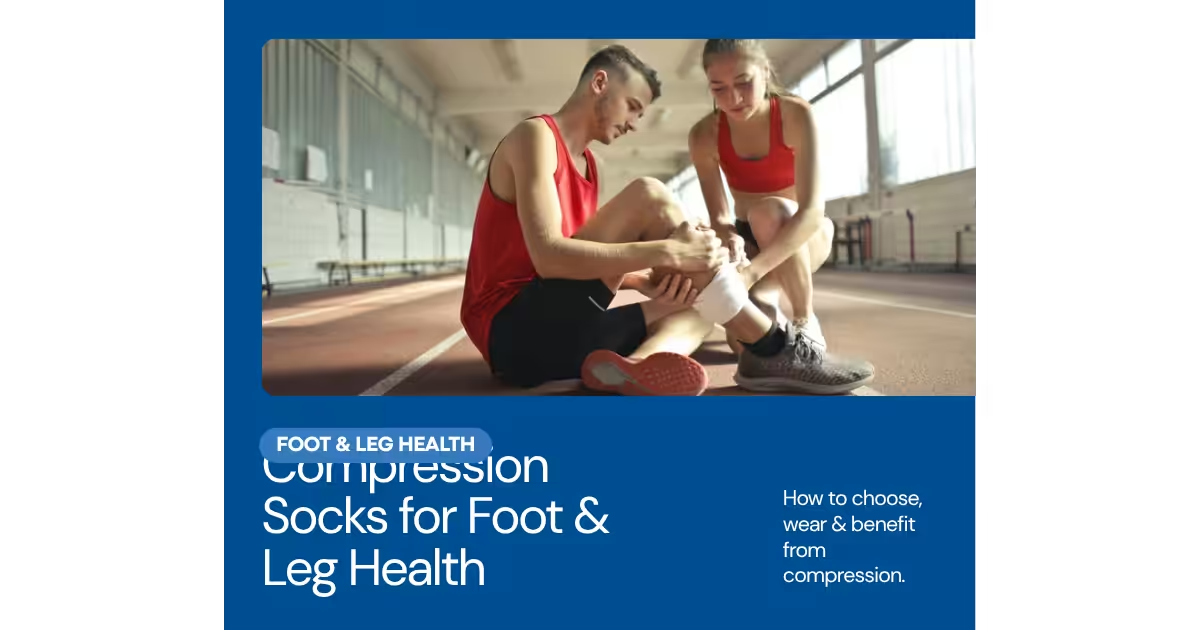
Compression stockings only work if they’re the right pressure (15-30 mmHg typically), the right length, and worn consistently. Balance Foot & Ankle measures your legs in-office and prescribes medical-grade compression that fits and actually works. If you’ve been wearing store-bought tights without improvement, we can fix that fast.
Call Balance Foot & Ankle: (810) 206-1402 · Book online · Offices in Howell & Bloomfield Hills
Frequently Asked Questions About Compression Socks
How many hours per day should I wear compression socks?
For most conditions, wear compression during all waking hours — apply them first thing in the morning before your feet touch the floor and remove at bedtime. This prevents swelling from accumulating throughout the day. For athletic recovery, wear compression for 12-24 hours after intense exercise. For travel, wear throughout your travel day. Sleeping in compression is generally not recommended unless specifically instructed by your physician.
Can I wear compression socks with orthotics?
Absolutely — combining compression with PowerStep Pinnacle insoles addresses both the fluid management and biomechanical aspects of foot health simultaneously. Open-toe compression socks work particularly well with orthotics because they don’t add bulk in the toe box. FLAT SOCKS can be worn as a liner to prevent friction between compression garments and orthotic insoles.
How often should I replace my compression socks?
Replace compression socks every 3-6 months with regular daily use. Elastic fibers gradually lose their ability to maintain proper compression levels through repeated wear, washing, and stretching. If your socks slide down easily, feel loose, or have visible thinning, they’ve lost their therapeutic compression. Having 2-3 pairs in rotation extends the lifespan of each pair while ensuring you always have a clean pair ready.
Are DASS compression sleeves the same as compression socks?
DASS compression sleeves provide targeted ankle-to-midfoot graduated compression, while compression socks cover the entire lower leg to the knee or higher. DASS sleeves are ideal when your compression needs are focused on the foot and ankle — plantar fasciitis, ankle instability, foot edema, or post-foot surgery. Full-length compression socks are better for whole-leg conditions like varicose veins, DVT prevention, or calf swelling. Many patients benefit from both.
Do I need a prescription for compression socks?
Compression up to 20 mmHg is available over-the-counter without a prescription. Compression levels of 20-30 mmHg and above are considered medical grade and are best selected with healthcare guidance, though they can often be purchased without a prescription. Insurance may cover medical-grade compression with a prescription. Getting properly measured and fitted by a healthcare provider is recommended for all compression levels above 15-20 mmHg to ensure safety and effectiveness.
Sources
- Lim CS, Davies AH. Graduated compression stockings. CMAJ. 2014;186(10):E391-E398.
- Partsch H. Compression therapy: clinical and experimental evidence. Ann Vasc Dis. 2012;5(4):416-422.
- Rabe E, Partsch H, Morrison N, et al. Risks and contraindications of medical compression treatment. Phlebology. 2020;35(7):447-460.
- Clarke MJ, Broderick C, Hopewell S, Juszczak E, Eisinga A. Compression stockings for preventing deep vein thrombosis in airline passengers. Cochrane Database Syst Rev. 2016;9:CD004002.
- Born DP, Sperlich B, Holmberg HC. Bringing light into the dark: effects of compression clothing on performance and recovery. Int J Sports Physiol Perform. 2013;8(1):4-18.
Watch: How to Choose the Right Compression Level

Schedule Your Compression Therapy Evaluation
Swelling, Varicose Veins, or Leg Discomfort?
Dr. Biernacki at Balance Foot & Ankle Specialists provides comprehensive lower extremity evaluations including vascular assessment, compression fitting recommendations, and personalized treatment plans.
Book Your Evaluation →
📍 Serving Southeast Michigan from our Novi office — most insurance plans accepted
Related Foot & Ankle Guides
- Best Foot Care Products
- Foot Pain Conditions
- Podiatrist Recommended Shoes
- Sports Foot Care
- Complete Foot Care Product Guide
The Bottom Line
Compression socks are one of the simplest, most effective tools for improving foot and leg health — whether you’re managing plantar fasciitis, recovering from surgery, dealing with diabetic swelling, or spending long hours on your feet. The key is choosing the right compression level and ensuring proper fit. At Balance Foot & Ankle, we can measure your legs and recommend the exact compression grade for your condition.
Ready to Get Relief?
Same-day appointments available at Balance Foot & Ankle in Howell & Bloomfield Hills, MI
4.9★ | 1,123 Reviews | 3,000+ Surgeries
Or call: (810) 206-1402
Dr. Tom’s Recommended Products: See our clinically tested product recommendations for this condition. View Dr. Tom’s recommended products →
Insurance Accepted
BCBS · Medicare · Aetna · Cigna · United Healthcare · HAP · Priority Health · Humana · View All →
Howell Office
3980 E Grand River Ave, Suite 140
Howell, MI 48843
Get Directions →
Bloomfield Hills Office
43700 Woodward Ave, Suite 207
Bloomfield Hills, MI 48302
Get Directions →
Your Board-Certified Podiatrists



Ready to Get Back on Your Feet?
Same-week appointments available at both locations.
Book Your AppointmentWhen Shoes Aren’t Enough — Dr. Tom’s Top 9 Orthotics
About 30% of patients I see for foot pain need MORE than a great shoe — they need a structured insole. Below: my complete 2026 orthotic ranking with pros, cons, and the specific patient I’d give each one to.
★ DR. TOM’S COMPLETE 2026 ORTHOTIC RANKING
9 Best Prefab Orthotics by Use Case
PowerStep, Currex, Spenco, Vionic, and PowerStep Pinnacle — every orthotic I’ve fitted to thousands of patients across both Michigan offices. Each card includes pros, cons, and the specific patient I’d give it to. Real Amazon ratings, review counts, and prices below.
Best All-Purpose Orthotic for Most Patients
Semi-rigid arch shell + dual-layer cushion + deep heel cup. The orthotic I’ve fitted to more patients than any other for 15 years. APMA-accepted. Trim-to-fit design works in athletic shoes, casual shoes, and most work boots.
- The Pinnacle Full length insoles for men & women provide maximum cushioning, from high activity to moderate support. The PowerStep arch support shape provides stability to the foot and ankle, helping to relieve foot pain.
- When you spend all day on your feet, every step counts. PowerStep insoles are a podiatrist-recommended orthotic to help relieve & prevent foot pain related to athletes, runners, Plantar Fasciitis, heel spurs & other common foot, ankle & knee injuries
- The Pinnacle plantar fasciitis insoles offer superior heel cushioning and arch support. The dual-layer cushioning is designed to reduce stress and fatigue, while PowerStep premium arch support is designed for plantar fasciitis relief.
- The PowerStep Pinnacle arch support inserts for men & women can be worn in a variety of shoe types such as; athletic, walking, running, work & some casual shoes. Orthotic Inserts are ordered by shoe size, no trimming required.
- Made in the USA & backed by a 30-day money-back guarantee. PowerStep orthotic inserts for men & women are designed for shoes where the factory insole can be removed. HSA & FSA Eligible
✓ Pros
- Semi-rigid arch shell provides true biomechanical correction
- Deep heel cup centers the heel and reduces lateral instability
- Dual-layer cushion (top + bottom) lasts 9-12 months daily wear
- Available in 8 sizes for precise fit
- APMA-accepted and clinically validated
- Lower price than PowerStep Pinnacle for equivalent function
✗ Cons
- Too thick for most dress shoes (use ProTech Slim instead)
- Some break-in period required (3-7 days for arch tolerance)
- Not enough correction for severe pes planus or rigid pes cavus
Dr. Tom’s Recommendation: If a patient has run-of-the-mill plantar fasciitis, mild flat feet, or arch fatigue, this is the first orthotic I try. Better value than PowerStep Pinnacle for 90% of patients, which is why I swapped it into our clinic kits three years ago. Sub-$50 typically.
Maximum Motion Control · Flat Feet & Severe Over-Pronation
PowerStep’s most aggressive stability orthotic. Adds a 2°-7° medial heel post on top of the standard PowerStep platform — designed specifically for flat-footed patients and severe pronators who need real corrective force.

- Full Length Support - Our ProTech orthotic insoles support pronation, arch pain, heel pain, plantar fasciitis, and heel spurs.
- Your Go To Inserts - These orthotics for plantar fasciitis provide full length, total contact support for a number of common foot issues
- Easily Fix Your Arches - Standard, semi-rigid arch support that fits most shoes including, work boots, dress shoes and sneakers.
- Enhanced Comfort - Our ProTech orthotic inserts have maximum cushioning featuring ShockAbsorb Premium Foam heel support cushion to increased protection.
- Support + Comfort - PowerStep ProTech orthotic insoles are designed with built-in arch support, heel cradle, and a perfect balance of support and comfort. Legitimate PowerStep product packaging is marked with a unique US quality control code. If you are concerned that a PowerStep item is not legitimate, please contact PowerStep customer service.
✓ Pros
- 2°-7° medial heel post adds aggressive pronation control
- Same trusted PowerStep arch shell, more correction
- Built specifically for flat-foot biomechanics
- Excellent for posterior tibial tendon dysfunction (PTTD)
- Removable top cover for cleaning
✗ Cons
- Too aggressive for neutral-arch patients
- Needs longer break-in (10-14 days) due to stronger correction
- Adds 2-3 mm of stack height — won’t fit slim dress shoes
Dr. Tom’s Recommendation: When a patient comes in with significant flat feet AND symptoms (heel pain, arch pain, knee pain), the Original PowerStep isn’t aggressive enough. The Maxx is what gets prescribed. About 25% of my flat-footed patients end up here.
Low-Profile · Fits Dress Shoes & Narrow Casuals
3 mm slim profile with podiatrist-designed tri-planar arch technology. Engineered specifically to fit inside dress shoes, oxfords, loafers, and women’s flats without crowding the toe box. Vionic was founded by an Australian podiatrist.
No products found.
✓ Pros
- 3 mm slim profile (vs 7-10 mm for standard orthotics)
- Tri-planar arch technology adds support without bulk
- Built-in deep heel cup despite slim design
- Fits dress shoes WITHOUT having to remove the factory insole
- Trim-to-fit · APMA-accepted
✗ Cons
- Less arch support than full-volume orthotics
- Top cover wears faster than thicker alternatives
- Not enough correction for severe foot deformities
Dr. Tom’s Recommendation: My default when a patient says ‘I need orthotics but I have to wear dress shoes for work.’ Slim enough to fit in oxfords and pumps without the heel sliding out. The single highest-impact change you can make for office workers with foot pain.
Built-In Metatarsal Pad · Morton’s Neuroma · Ball-of-Foot Pain
Standard Pinnacle orthotic with a built-in metatarsal pad positioned proximal to the metatarsal heads — the exact location that offloads neuromas and metatarsalgia. No need for separate met pads or pad placement guesswork.
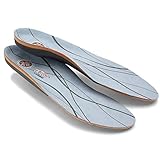
- PODIATRIST DESIGNED! An effective alternative to expensive custom-made orthotics. Innovative biomechanical THREE-ZONE COMFORT technology delivers deep heel cup stability, forefoot cushioning, and ultimate arch support to prevent excessive pronation caused by flat feet. These essential contact points help to realign positioning of feet, aiding to re-establish your body's natural alignment, from the ground up.
- VIONIC ORTHOTIC INSOLES! These women's and men's shoe inserts offer a convenient, pain-free natural healing solution for many of the common aches and pains associated with poor lower-limb alignment, plantar fasciitis, and arch pain. EVA orthotic with re-enforced, hardened plastic (PE) shell for added motion control and stability. Cushioned shock dot in the heel for added shock absorption. Can be trimmed in forefoot if necessary.
- DESIGNED FOR EVERYDAY USE! Designed to provide greater control in faster paced activities such as running and fast walking. 4 degree rear foot wedge to provide support and control which helps prevent excess pronation. Odor absorbing cover. Contoured around the heel and arch areas to achieve 100% foot contact. Podiatrist Designed, APMA Seal of Acceptance.
- COMFORTABLE TO WEAR! Shoe inserts for women and men contoured around the heel and arch areas to achieve perfect foot contact.
- SIZES AVAILABLE: XS: Women's 4.5 – 6 / Men's 3.5 – 5 S: Women's 6.5 – 8 / Men's 5.5 – 7 M: Women's 8.5 – 10 / Men's 7.5 – 9 L: Women's 10.5 – 12 / Men's 9.5 – 11 XL: Men's 11.5 – 13
✓ Pros
- Built-in met pad eliminates DIY pad placement errors
- Specifically designed for Morton’s neuroma + metatarsalgia
- Same trusted PowerStep arch + heel cup platform
- Top cover protects sensitive forefoot skin
- Faster relief than orthotics + add-on met pads
✗ Cons
- Met pad position is fixed (can’t fine-tune individual placement)
- Some patients with very small or very large feet need custom
- Slightly thicker than the standard Pinnacle
Dr. Tom’s Recommendation: If a patient has Morton’s neuroma, sesamoiditis, or generalized ball-of-foot pain (metatarsalgia), this saves a clinic visit and a prescription. The built-in pad placement is anatomically correct for 80% of feet. Way better than DIY met pads.
Adaptive Dynamic Arch · Athletic & Daily Wear
Currex’s flagship adaptive arch technology — the orthotic flexes with your gait instead of fighting it. Different stiffness zones along the length give you targeted support at the heel, midfoot, and forefoot. Available in three arch heights (low/medium/high).

- Signature waffle-inspired rubber outsole for traction and flexibility
✓ Pros
- Dynamic flex zones adapt to natural gait cycle
- Three arch heights ensure precise fit
- Lighter than rigid orthotics (no ‘heavy foot’ feel)
- Excellent for runners and athletic walkers
- European podiatric design (German engineering)
✗ Cons
- More expensive than PowerStep Original ($55-65 typically)
- Less aggressive correction than Pinnacle Maxx for severe cases
- Three arch heights means you must self-select correctly
Dr. Tom’s Recommendation: I started recommending Currex three years ago for runners who said PowerStep felt ‘too rigid.’ The dynamic flex zones respect natural gait. Best for active patients who walk 8K+ steps daily and don’t need maximum motion control.
Running-Specific · Heel Strike + Forefoot Strike Compatible
Currex’s purpose-built running orthotic. The midfoot flex zone is positioned for runner’s gait mechanics, with a flared heel cushion for heel strikers and a forefoot rocker for midfoot/forefoot strikers. Tested on 1000+ runners during product development.
- Provides continuous support of the Plantar Fascia by gently stretching the fascia tissue.
- Compression zones promote circulation, reduce impact vibration, boost recovery and strengthen feet.
- Lightweight, seamless design with extra cushioning provides support while still being comfortable.
- Supports the heel/arch and overall foot structure while stabilizing the tendon for better performance
- Made from high quality materials, the socks are moisture wicking and breathable.
✓ Pros
- Designed by German biomechanics lab specifically for runners
- Dynamic arch flexes with running gait (not static like PowerStep)
- Three arch heights (low/medium/high)
- Reduces overuse injury risk in mid-distance runners
- Lightweight (no impact on cadence)
✗ Cons
- Premium price ($60-75)
- Not aggressive enough for severe over-pronators (use Pinnacle Maxx)
- Runner-specific design = less ideal for daily walking shoes
Dr. Tom’s Recommendation: If a patient runs 20+ miles per week and has plantar fasciitis or shin splints, this is the orthotic I prescribe. The dynamic flex zones respect running biomechanics in a way that no rigid PowerStep can match. Pricier but worth it for serious runners.
Cavus Foot & High-Arch Patients
Polyurethane base with a deeper heel cup and higher arch profile than PowerStep — built for cavus (high-arched) feet that need maximum cushion and support. The 5-zone cushioning system addresses the unique pressure points of high-arch feet.

- The first generation of Protalus's M-100 Insole
- Patented Alignment Technology: The M-100 features a deep heel cup and contoured arch to correct overpronation and promote better posture, stability, and joint health throughout your body.
- Comfortable Insoles: The patented stress relief replacement shoe insoles increase comfort and relieve plantar fasciitis and anti-fatigue.
- Improves Alignment: The shoe insoles help improve alignment and reduce pain in the feet, ideal for low and high arches.
✓ Pros
- Deeper heel cup centers the heel for cavus foot stability
- Higher arch profile fills the void under high arches
- 5-zone cushioning addresses cavus foot pressure points
- Polyurethane base lasts 12+ months
- Available in Wide width
✗ Cons
- Too tall/aggressive for normal or low arches
- Won’t fit slim dress shoes
- Pricier than PowerStep Original
- Some patients find the arch height uncomfortable initially
Dr. Tom’s Recommendation: Cavus foot patients are often misdiagnosed and given low-arch orthotics — that makes everything worse. Spenco’s Total Support has the arch profile that high-arch feet actually need. About 15% of my patients have cavus feet; this is what they wear.
Cushion Layer · Standing All Day · Gel Pressure Relief
NOT a true biomechanical orthotic — this is a cushion insole. But for patients who want gel pressure relief instead of arch correction (or to add ON TOP of factory insoles in work boots), this is the best gel option on Amazon.
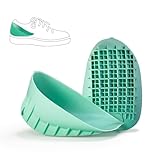
- ✶ALLEVIATES HEEL PAIN – Tuli’s Heavy Duty Heel Cups provide heel pain relief caused by plantar fasciitis, Sever’s disease, excessive pronation, Achilles tendonitis, etc. Ideal for those on their feet for most of the day or those looking for added comfort.
- ✶PODIATRIST PREFERRED – In an independent study conducted by M3 Global Research, podiatrists chose Tuli’s as the clear winner of recommended heel cup brands.
- ✶SHOCK-ABSORBING DESIGN – The multi-cell, multi-layer design absorbs shock and impact energy, mimicking the natural shock-absorbing system of your feet. As you walk or run, the design reduces the stress on your feet.
- ✶DOCTOR RECOMMENDED & APMA ACCEPTED – Tuli’s Heel Cups were designed by a leading podiatrist and have the honor of being accepted by the American Podiatric Medical Association.
- ✶FITS MOST LACE-UP SHOES – Best used in spacious lace-up shoes like athletic shoes / sneakers.
✓ Pros
- Genuine gel cushioning (not foam pretending to be gel)
- Targeted gel waves under heel and ball of foot
- Trim-to-fit · works in most shoe types
- Sub-$15 price (most affordable option in this list)
- Massaging texture is genuinely soothing
✗ Cons
- ZERO arch support — this is cushion only
- Won’t fix plantar fasciitis or flat-foot issues
- Compresses faster than PowerStep (4-6 months)
- Top cover wears through in high-mileage applications
Dr. Tom’s Recommendation: I recommend these to patients who tell me ‘I just want my feet to stop hurting at the end of my shift’ and who don’t have a biomechanical issue. Construction workers, factory workers, retail. Pure cushion does the job for them.
Tight-Fitting Shoes · Cycling Shoes · Hockey Skates
PowerStep Pinnacle’s slim version of their famous Green insole. The trademark stabilizer cap is preserved but the overall thickness is reduced — works in cycling shoes, hockey skates, ski boots, and other tight-fitting footwear that the standard PowerStep Pinnacle can’t fit into.
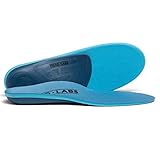
- Plantar Fasciitis Relief, Every Step – Firm arch support helps relieve heel and arch pain from plantar fasciitis and supports flat feet and overpronation for better alignment and all-day comfort.
- Clinical-Grade Biomechanics – Tread Labs 26-33 ARCHitecture delivers orthotic-level stability—custom-orthotic feel without the prescription.
- Dialed Fit for Any Shoe – Four arch heights (low, medium, high, extra-high) and an easy 3-step sizing guide make selection simple for work boots, sneakers, and everyday shoes—great for standing all day.
- Built to Last a Million Miles – Durable, recyclable arch supports with our Million-Mile Guarantee; replaceable top covers keep insoles fresh and cost-effective. Unlike foam that flattens, Pace is engineered to last.
- Trusted Expertise – Designed by Mark Paigen (founder of Chaco). Premium arch support inserts for men and women backed by decades of footwear innovation.
✓ Pros
- Stabilizer cap centers the heel (PowerStep Pinnacle’s signature feature)
- Slim profile fits tight athletic footwear
- Lasts 12+ months daily wear
- Excellent for cycling shoes specifically
- Built-in odor-control treatment
✗ Cons
- Premium price ($45-55)
- Less cushion than PowerStep equivalents
- Not as aggressive correction as Pinnacle Maxx for flat feet
- The signature ‘heel cup feel’ takes 1-2 weeks to adapt to
Dr. Tom’s Recommendation: If you’re a cyclist with foot numbness, hot spots, or knee pain — this is the orthotic. The stabilizer cap solves cycling-specific biomechanical issues that no other orthotic addresses. Worth the premium for athletes.
None of these solving your foot pain?
Some patients (about 30%) need custom-molded prescription orthotics. We make 3D-scanned custom orthotics in our Howell and Bloomfield Hills offices — specifically built for your foot mechanics.
Schedule a Custom Orthotic Fitting →FSA/HSA eligible · Most insurance accepted · (810) 206-1402

Dr. Tom Biernacki, DPM is a double board-certified podiatrist and foot & ankle surgeon at Balance Foot & Ankle Specialists in Southeast Michigan. With over a decade of clinical experience, he specializes in heel pain, bunions, diabetic foot care, sports injuries, and minimally invasive surgery. Dr. Biernacki is a member of the APMA and ACFAS, and his patient education content on MichiganFootDoctors.com and YouTube has reached over one million views.
- Plantar Fasciitis: Diagnosis and Conservative Management (PubMed)
- Plantar Fasciitis (APMA)
- Diagnosis and Treatment of Plantar Fasciitis (PubMed / AAFP)
- Heel Pain (APMA)
Recommended Products from Dr. Tom