

You are in the right place. Dr. Tom Biernacki, DPM, FACFAS — board-certified foot & ankle surgeon with 3,000+ surgeries — explains exactly what cuboid syndrome lateral midfoot pain after sprain means and what works. Call (810) 206-1402 for same-day appointment at Howell or Bloomfield Hills.
Quick answer: Cuboid Syndrome Lateral Midfoot Pain After Sprain has multiple potential causes including mechanical, neurological, vascular, and inflammatory. The most common causes we identify are overuse, ill-fitting shoes, and biomechanical imbalance. Red flags requiring urgent evaluation: warmth/redness (infection), inability to bear weight (fracture), and unilateral swelling without injury (DVT). Call (810) 206-1402.
Medically reviewed by Dr. Tom Biernacki, DPM — Board-Certified Podiatric Surgeon — Balance Foot & Ankle, Howell & Bloomfield Hills, MI. Last updated April 2026.
▶ Watch

Medically reviewed by Dr. Tom Biernacki, DPM | Board-certified podiatrist | 3,000+ surgeries performed
Last updated: April 2, 2026
The most important clinical decision with Cuboid Syndrome Lateral Midfoot Pain After Sprain isn’t which treatment to start with — it’s identifying the correct subtype. That changes everything. Call (810) 206-1402.
Understanding Cuboid Syndrome and Lateral Foot Anatomy
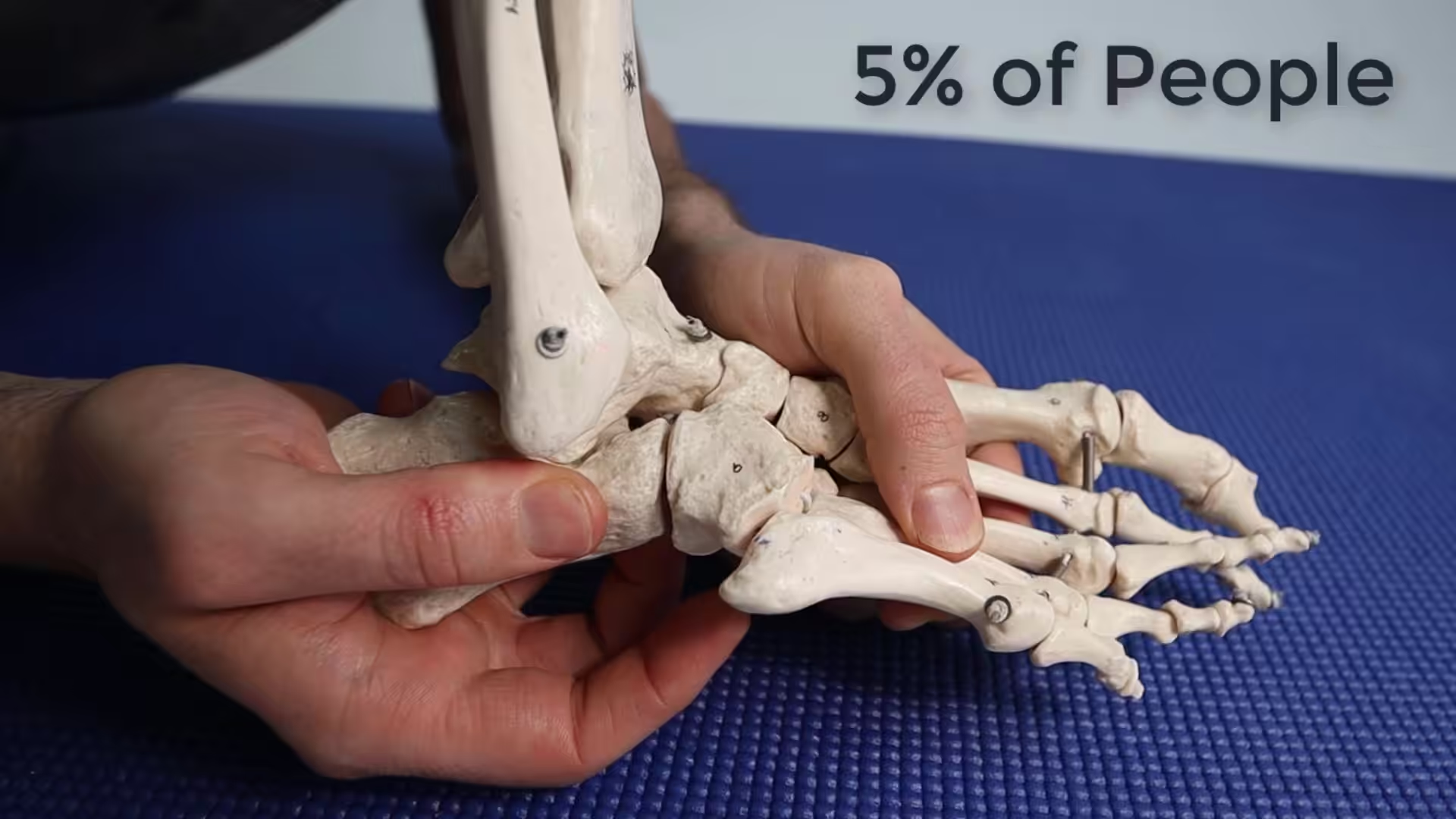
The cuboid bone sits on the lateral column of the midfoot, articulating with the calcaneus proximally, the fourth and fifth metatarsals distally, and the lateral cuneiform and navicular medially. This keystone position means even subtle displacement disrupts the biomechanical chain that transfers force from the hindfoot through the lateral column during the push-off phase of gait.
Cuboid syndrome describes a condition where the cuboid bone shifts slightly out of its normal alignment — typically rotating plantarward — creating pain along the lateral midfoot and sometimes radiating toward the fourth and fifth toes. The peroneus longus tendon, which runs through a groove on the cuboid’s plantar surface, becomes irritated by the displacement, compounding the dysfunction.
This condition accounts for approximately 4 percent of all foot injuries in the general population but up to 17 percent in dancers and athletes who perform repetitive lateral movements. Despite its prevalence in active populations, cuboid syndrome remains one of the most frequently misdiagnosed foot conditions because standard X-rays often appear normal.
What Causes Cuboid Syndrome?
The most common cause of cuboid syndrome is inversion ankle sprains. During a lateral ankle sprain, the calcaneocuboid ligament and surrounding soft tissues stretch or tear, allowing the cuboid to shift out of its normal position. Up to 40 percent of ankle sprain patients develop residual lateral foot pain attributable to cuboid subluxation that goes unrecognized during initial treatment.
Overuse and repetitive stress represent the second major cause, particularly in runners, ballet dancers, and athletes who perform cutting movements. Excessive pronation forces the peroneus longus tendon to pull the cuboid plantarward with each step, gradually destabilizing the joint. Training surface changes, sudden mileage increases, and worn-out footwear accelerate this process.
Less common causes include midfoot trauma from falls or heavy objects, post-surgical compensation patterns that alter lateral column loading, and ligamentous laxity conditions that predispose joints to subluxation. Obesity increases cuboid syndrome risk by amplifying forces across the lateral midfoot during every step.
Symptoms and Clinical Diagnosis
The hallmark symptom of cuboid syndrome is sharp or aching pain along the lateral midfoot that worsens with weight-bearing and push-off activities. Patients typically point to the area just behind the base of the fourth and fifth metatarsals. The pain often appears suddenly after an ankle sprain or develops gradually with increasing activity levels.
Clinical examination reveals tenderness over the dorsal and plantar surfaces of the cuboid, pain with passive adduction and plantarflexion of the midfoot, and sometimes a palpable prominence on the plantar-lateral aspect of the foot where the cuboid has displaced. The midtarsal adduction test, where the examiner stabilizes the calcaneus while adducting the forefoot, reproduces the characteristic lateral midfoot pain.
Standard weight-bearing X-rays may appear normal because the displacement is often too subtle for plain film detection. However, comparison views sometimes reveal subtle disruption of the normal cyma line — the smooth S-shaped curve formed by the talonavicular and calcaneocuboid joints on oblique radiographs. MRI can confirm peroneus longus tendinopathy and surrounding soft tissue edema when the diagnosis remains uncertain.
The Cuboid Manipulation Technique
The cuboid whip manipulation is the primary treatment for acute cuboid syndrome and achieves immediate relief in approximately 90 percent of cases when performed correctly. Dr. Biernacki performs this technique by stabilizing the patient’s ankle, applying a quick low-amplitude thrust to the plantar surface of the cuboid, effectively dorsiflexing the bone back into its anatomic position.
An audible or palpable pop often accompanies successful manipulation, followed by immediate pain reduction. Patients frequently describe the relief as dramatic, going from significant pain with walking to near-normal comfort within minutes. The procedure is performed in the office without anesthesia and takes approximately 30 seconds.
For patients who cannot tolerate the thrust manipulation, a gentler sustained pressure technique called the cuboid squeeze achieves similar results through gradual mobilization over 30-60 seconds. This approach works well for patients with acute inflammation, anxiety about manipulation, or hypermobility syndromes where aggressive thrust techniques could cause excessive joint laxity.
Comprehensive Treatment Beyond Manipulation
While cuboid manipulation provides immediate symptom relief, addressing the underlying causes prevents recurrence. Patients with residual ankle instability from prior sprains benefit from peroneal strengthening exercises and proprioceptive training to restore lateral ankle stability and protect the calcaneocuboid joint.
Custom orthotics with a cuboid pad provide ongoing support by maintaining the cuboid in its corrected position during weight-bearing activities. The cuboid pad — a small felt or foam elevation placed beneath the cuboid — prevents plantarward displacement during the push-off phase when lateral column forces peak.
Activity modification during the acute phase includes avoiding barefoot walking on hard surfaces, temporarily reducing running mileage or dance training, and wearing supportive shoes with adequate lateral stability. Most patients return to full activity within 2-4 weeks after successful manipulation combined with supportive measures.
Prevention Strategies for Athletes and Active Individuals
Proper ankle sprain rehabilitation is the single most effective prevention strategy for cuboid syndrome. Completing a full rehabilitation program after any lateral ankle sprain — including peroneal strengthening, balance training, and gradual return to sport — dramatically reduces the risk of developing secondary cuboid subluxation.
Footwear selection matters significantly for cuboid syndrome prevention. Shoes with firm midsoles, adequate lateral support, and appropriate torsional rigidity protect the midfoot from excessive motion. Dancers should use properly fitted shoes specific to their discipline, and runners should replace shoes every 300-500 miles before midsole cushioning degrades.
Gradual training progression following the 10-percent rule — increasing weekly mileage or training intensity by no more than 10 percent — prevents the overuse pattern that destabilizes the calcaneocuboid joint. Cross-training with low-impact activities like swimming or cycling during high-volume training periods reduces cumulative lateral foot stress.
Warning Signs Requiring Urgent Evaluation
- function bold() { [native code] } — undefined
- function bold() { [native code] } — undefined
- function bold() { [native code] } — undefined
- function bold() { [native code] } — undefined
The Most Common Mistake We See
The most common mistake is treating cuboid syndrome as a simple ankle sprain and relying solely on rest and ice. While these help reduce inflammation, they do not address the underlying cuboid subluxation. Without proper manipulation to restore bone alignment, patients endure weeks or months of unnecessary lateral foot pain that resolves within minutes once the cuboid is correctly repositioned.
Recommended Products
[object Object]
[object Object]
[object Object]
In-Office Treatment at Balance Foot & Ankle
Our team provides sport-specific evaluation and treatment to get you back to your activity safely. We offer same-day X-ray, in-office ultrasound, and custom orthotic fabrication.
Same-day appointments available. Call (810) 206-1402 or book online.
More Podiatrist-Recommended Ankle Sprain Essentials
Stability Walking/Running Shoe
Brooks Adrenaline GTS 25 — lateral support during recovery walking.
KT Tape for Ankle Support
KT Tape — proprioceptive support for athletic return-to-play.
Supportive Insole


![How to Cure Plantar Fasciitis in One Week? [FAST Heel Pain Relief!]](https://www.michiganfootdoctors.com/wp-content/cache/flying-press/b5600c3bfb9845a6095da8266d8b5363.jpg)
Watch: How to Cure Plantar Fasciitis in One Week? [FAST Heel Pain Relief!] — MichiganFootDoctors YouTube
PowerStep Pinnacle — arch support reduces re-injury risk during recovery.
As an Amazon Associate, Balance Foot & Ankle earns from qualifying purchases. Product recommendations are based on clinical experience; prices and availability shown above update live from Amazon.
When to See a Podiatrist
A sprain that hasn’t fully recovered after 6 weeks often has residual ligament laxity or occult fracture that keeps the ankle unstable. Balance Foot & Ankle X-rays and stress-tests every lingering sprain — if the ligament is torn, we offer bracing, PRP, and (for chronic instability) minimally-invasive repair. Don’t keep re-rolling the same ankle; let us stabilize it properly.
Call Balance Foot & Ankle: (810) 206-1402 · Book online · Offices in Howell & Bloomfield Hills
Frequently Asked Questions
How long does cuboid syndrome take to heal?
With proper manipulation, most patients experience immediate pain relief and return to normal activities within 2-4 weeks. Without manipulation, cuboid syndrome can persist for months. Recurrence rates decrease significantly when patients complete ankle strengthening exercises and use supportive orthotics after initial treatment.
Can cuboid syndrome heal on its own without treatment?
Mild cases may gradually improve over several weeks as soft tissues tighten and the cuboid slowly migrates back toward its normal position. However, most cases do not fully resolve without manipulation, and prolonged displacement leads to chronic lateral foot pain, peroneal tendon dysfunction, and compensatory gait changes that affect the entire lower extremity.
Is cuboid syndrome the same as a stress fracture?
No. Cuboid syndrome involves subluxation (partial displacement) of the cuboid bone, while a stress fracture is a microscopic crack in the bone itself. Both cause lateral foot pain, which is why they are sometimes confused. Imaging studies and specific clinical tests help distinguish between the two conditions, as treatment approaches differ significantly.
Why does my lateral foot still hurt months after an ankle sprain?
Persistent lateral foot pain after an ankle sprain is a hallmark presentation of undiagnosed cuboid syndrome. Up to 40 percent of ankle sprain patients develop cuboid subluxation that goes unrecognized during initial treatment. If your lateral midfoot pain hasn’t resolved after standard sprain recovery, ask your podiatrist specifically about cuboid syndrome evaluation.
The Bottom Line
Cuboid syndrome is a treatable and often instantly correctable cause of lateral midfoot pain that frequently goes misdiagnosed. The key to resolution is accurate identification followed by skilled cuboid manipulation, which provides dramatic relief in the majority of cases. If you have persistent lateral foot pain — especially after an ankle injury — schedule an evaluation so we can determine whether cuboid subluxation is the underlying cause.
Differential Diagnosis: What Else Could It Be?
Not every case of cuboid syndrome is straightforward. In our clinic we routinely rule out three look-alike conditions before confirming the diagnosis. If your symptoms don’t match the classic presentation, one of these may explain the pain — which is why physical exam matters more than self-diagnosis.
| Condition | How It Differs |
|---|---|
| Peroneal tendonitis | Pain proximal along the tendon course rather than deep at the cuboid. |
| Midfoot sprain | Diffuse dorsal pain, not lateral midfoot; tenderness varies by ligament involved. |
| Stress fracture of cuboid | Confirmed on MRI; mechanical symptoms do not respond to manipulation. |
Red Flags — When to See a Podiatrist Now
Seek same-day evaluation at Balance Foot & Ankle if you notice any of the following:
- Mechanical locking or popping in the lateral midfoot
- Inability to bear weight on lateral column
- Failure to respond to cuboid whip/squeeze manipulation
- History of frequent ankle sprains plus lateral midfoot pain
Call (810) 206-1402 or request an appointment. Our Howell and Bloomfield Hills offices reserve same-day slots for urgent foot and ankle issues.
In Our Clinic: What We See
Clinical perspective from Dr. Tom Biernacki, DPM — Balance Foot & Ankle, Howell & Bloomfield Hills, MI:
Cuboid syndrome is the lateral-midfoot pain that lingers after an ankle sprain. The patient says the pain moved from the outside of the ankle to the top or outside of the midfoot. In our clinic, cuboid whip or cuboid squeeze manipulation can relieve pain within a single visit when the diagnosis is correct. We tape the cuboid, add a cuboid pad inside the shoe, and progress to strengthening of the peroneus longus. Dr. Biernacki emphasizes: if lateral foot pain doesn’t respond within 2-3 visits, we image — sometimes what looks like cuboid syndrome is really a subtle Jones or cuboid stress fracture.
Sources
- Durall CJ. Examination and treatment of cuboid syndrome: a literature review. Sports Health. 2011;3(6):514-519.
- Marshall P, Hamilton WG. Cuboid subluxation in ballet dancers. Am J Sports Med. 1992;20(2):169-175.
- Jennings J, Davies GJ. Treatment of cuboid syndrome secondary to lateral ankle sprains: a case series. J Orthop Sports Phys Ther. 2005;35(7):409-415.
- Blakeslee TJ, Morris JL. Cuboid syndrome and the significance of midtarsal joint stability. J Am Podiatr Med Assoc. 1987;77(12):638-642.
Get Expert Diagnosis for Lateral Foot Pain
Dr. Tom Biernacki has performed over 3,000 foot and ankle surgeries with a 4.9-star rating from 1,123 patient reviews.
Or call (810) 206-1402 for same-day appointments
Cuboid Syndrome Treatment in Michigan
Cuboid syndrome is a frequently overlooked cause of lateral midfoot pain, especially after ankle sprains. At Balance Foot & Ankle, we accurately diagnose and treat cuboid subluxation to resolve persistent foot pain.
Learn About Our Foot Pain Treatments | Book Your Appointment | Call (810) 206-1402
Clinical References
- Jennings J, Davies GJ. “Treatment of cuboid syndrome secondary to lateral ankle sprains: a case series.” J Orthop Sports Phys Ther. 2005;35(7):409-415.
- Durall CJ. “Examination and treatment of cuboid syndrome: a literature review.” Sports Health. 2011;3(6):514-519.
- Marshall P, Hamilton WG. “Cuboid subluxation in ballet dancers.” Am J Sports Med. 1992;20(2):169-175.
Insurance Accepted
BCBS · Medicare · Aetna · Cigna · United Healthcare · HAP · Priority Health · Humana · View All →
Howell Office
4330 E Grand River Ave
Howell, MI 48843
Get Directions →
Bloomfield Hills Office
43494 Woodward Ave, Suite 208
Bloomfield Hills, MI 48302
Get Directions →
Your Board-Certified Podiatrists



Ready to Get Back on Your Feet?
Same-week appointments available at both locations.
Book Your AppointmentWatch: Cuboid Syndrome: Lateral Midfoot Pain
Dr. Tom on cuboid syndrome — “cuboid whip” manipulation, post-inversion sprain misdiagnosis, calcaneocuboid joint irritation, lateral midfoot tenderness, orthotic cuboid pad.

Cuboid Support Kit
Lateral midfoot support. Dr. Tom’s kit:
As an Amazon Associate, Balance Foot & Ankle earns from qualifying purchases. This supports our free patient education content.
Lateral midfoot support.
Post-sprain stability.
Flare inflammation.
Topical lateral midfoot relief.
Related: Ankle Sprain · Sinus Tarsi · Book Cuboid Eval
In-Office Treatment at Balance Foot & Ankle
If home treatment isn’t providing relief for your foot and ankle injuries, our podiatry team at Balance Foot & Ankle can help with same-day evaluations and advanced in-office care.
Same-day appointments available. (810) 206-1402
Frequently Asked Questions
When should I see a doctor?
See a podiatrist if pain persists past 2 weeks, prevents normal activity, or is accompanied by red-flag symptoms (warmth, swelling, numbness, inability to bear weight).
Can I treat this at home?
Mild cases respond to RICE protocol (rest, ice, compression, elevation), supportive shoes, and OTC anti-inflammatories. Persistent symptoms need professional evaluation.
How long does it take to heal?
Most soft tissue injuries resolve in 2-6 weeks with appropriate care. Bone injuries take 6-12 weeks. Chronic conditions need longer-term management.
What is Ankle sprain?
Ankle sprain is a common foot/ankle condition that affects mobility and quality of life. Understanding the underlying cause is the first step in successful treatment. Our podiatrists at Balance Foot & Ankle perform a hands-on biomechanical exam, review your activity history, and use diagnostic imaging when appropriate to identify the root cause—not just treat the symptom. Many patients have been told to “rest and ice” without a deeper diagnostic workup; our approach is different.
Symptoms and warning signs
Common signs of ankle sprain include pain that worsens with activity, morning stiffness, swelling, tenderness when palpated, and difficulty bearing weight. If you experience sudden severe pain, inability to walk, visible deformity, numbness or color change, contact our office the same day or visit urgent care—these can signal a more serious injury such as a fracture, tendon rupture, or vascular compromise. Diabetics with any foot wound should seek same-day care.
Conservative treatment options
Most cases of ankle sprain respond to non-surgical care: structured rest, supportive footwear changes, custom orthotics, targeted stretching and strengthening protocols, anti-inflammatory medications when medically appropriate, and in-office procedures such as ultrasound-guided injections. We also offer advanced therapies including MLS laser therapy, EPAT/shockwave, regenerative injections, and image-guided procedures. Treatment is sequenced from least invasive to most invasive, and we explain the rationale at every step.
When is surgery considered?
Surgery is reserved for cases that fail 3-6 months of well-structured conservative care, when there is structural pathology (severe deformity, complete tear, advanced arthritis), or when imaging shows damage that will not heal without intervention. Our surgeons have performed 3,000+ foot and ankle procedures and prioritize minimally-invasive techniques whenever appropriate. We discuss recovery timelines, return-to-activity milestones, and realistic outcome expectations before any procedure is scheduled.
Recovery timeline and prevention
Recovery from ankle sprain varies based on severity and chosen treatment path. Conservative cases often improve within 4-8 weeks with consistent adherence to the protocol. Post-procedural recovery may range from a few days (in-office procedures) to several months (reconstructive surgery). Long-term prevention involves footwear assessment, activity modification, structured strengthening, and regular check-ins with your podiatrist if you have a history of recurrence. We provide written home-exercise plans and digital follow-up support.
Ready to feel better?
Same-week appointments available in Howell and Bloomfield Hills, Michigan.
Book Your VisitReady to fix this for good?
Reading goes so far. The fastest path is a 30-minute office visit. Same-day Howell or Bloomfield Hills. Call (810) 206-1402.
Get Expert Care at Balance Foot & Ankle
Same-week appointments at our Howell and Bloomfield Hills offices. Board-certified podiatric surgeons. Most insurance accepted.

Dr. Tom Biernacki, DPM is a board-certified foot & ankle surgeon (ABFAS & ABPM) at Balance Foot & Ankle Specialists in Southeast Michigan. With over a decade of clinical experience, he specializes in heel pain, bunions, diabetic foot care, sports injuries, and minimally invasive surgery. Dr. Biernacki is a member of the APMA and ACFAS, and his patient education content on MichiganFootDoctors.com and YouTube has made him one of the most-followed foot & ankle educators on YouTube.