

Some diabetic foot infections need IV antibiotics and admission — here are the warning signs we never ignore.
You are in the right place. Dr. Tom Biernacki, DPM, FACFAS — board-certified foot & ankle surgeon with 3,000+ surgeries — explains exactly what diabetic foot infection — when hospitalization is needed means and what works. Call (810) 206-1402 for same-week appointment at Howell or Bloomfield Township.
Medically reviewed by Dr. Tom Biernacki, DPM · Board-Certified Podiatric Surgeon · Last reviewed: April 2026 · Editorial Policy
Quick Answer
Diabetic foot infection is graded by severity, and the IDSA criteria identify which patients need hospitalization and intravenous antibiotics rather than oral treatment at home. Same-week appointments in Howell + Bloomfield Township: (810) 206-1402.

Quick Answer
Diabetic peripheral neuropathy is nerve damage from prolonged hyperglycemia, causing burning, tingling, numbness, or loss of protective sensation in the feet. It will not reverse without addressing glucose control. Daily foot checks, proper footwear, and annual monofilament testing prevent ulceration.
Medically Reviewed by Dr. Tom Biernacki, DPM — Board-Certified Podiatrist, Balance Foot & Ankle Specialists, Michigan. Last updated April 2026.
Diabetic foot infection (DFI) — the leading cause of diabetes-related hospitalization and lower extremity amputation in the United States — requires accurate severity classification (IDSA/IWGDF grading) to determine the appropriate treatment setting, antibiotic route and duration, and surgical urgency. Moderate-to-severe DFI requires hospitalization for IV antibiotics, surgical debridement, and multidisciplinary limb salvage care — and the treating podiatrist’s decision about hospitalization can directly determine whether the patient loses their limb.
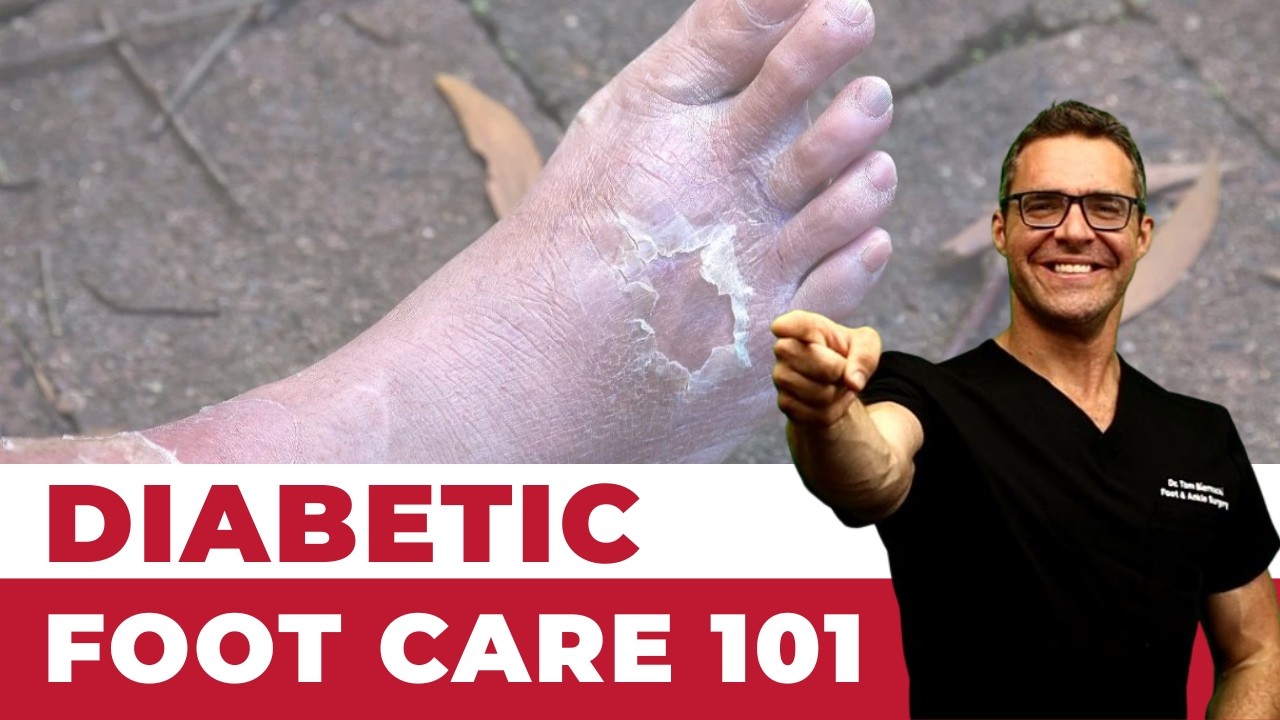
Watch: Dr. Tom Biernacki, DPM
IDSA Severity Classification and Hospitalization Criteria
IDSA/IWGDF Diabetic Foot Infection Classification: Grade 1 (uninfected) — no signs of infection; wound requires local wound care only; outpatient. Grade 2 (mild infection) — local infection of skin and subcutaneous tissue; erythema <2cm around wound; no systemic signs; cellulitis, superficial abscess; outpatient oral antibiotics appropriate. Grade 3 (moderate infection) — local infection with erythema >2cm, lymphangitis, fasciitis, deep abscess, osteomyelitis, or septic joint; OR systemic signs absent; REQUIRES hospitalization; IV antibiotics and surgical evaluation. Grade 4 (severe infection) — any DFI with systemic inflammatory response syndrome (SIRS): fever >38°C or <36°C, HR >90, RR >20, WBC >12,000 or <4,000; sepsis; IMMEDIATE hospitalization, IV antibiotics, urgent surgical debridement within 24 hours. Hospitalization criteria in addition to severity: metabolic instability (uncontrolled glucose, ketoacidosis, AKI); inability to manage wound or take oral antibiotics at home; failed outpatient oral antibiotic trial; deep space infection or gas in soft tissues (necrotizing fasciitis — surgical emergency); limb-threatening ischemia concurrent with infection. Osteomyelitis diagnosis: calcaneal or metatarsal osteomyelitis changes the treatment trajectory — requires 4–6 weeks IV antibiotics (or oral bioavailability agents) AND surgical debridement of infected bone; probe-to-bone test, ESR >70, MRI, or bone biopsy culture confirms osteomyelitis.
Antibiotic Selection
Empiric IV regimens for moderate-severe DFI (pre-culture): Gram-positive MSSA coverage (most DFI) — ampicillin/sulbactam (Unasyn) or piperacillin/tazobactam; MRSA risk (prior MRSA, prior antibiotic exposure, IV drug use) — add vancomycin; Pseudomonas risk (macerated wounds, water exposure, immunocompromised) — piperacillin/tazobactam or cefepime; Anaerobic organisms (ischemic necrotic tissue) — metronidazole or carbapenem. Culture-directed therapy: deep tissue culture (not surface swab — the latter reflects colonization not infection) guides de-escalation; operative debridement provides the best culture specimens; duration — mild (1–2 weeks oral), moderate (2–4 weeks, may transition to oral after clinical improvement), severe with osteomyelitis (4–6 weeks). Dr. Biernacki at Balance Foot & Ankle evaluates diabetic foot infection severity and coordinates hospitalization and IV antibiotic therapy at our Bloomfield Township and Howell offices. Call (810) 206-1402.
📍 Located in Michigan?
Our board-certified podiatrists treat this condition at two convenient locations. Most new patients are seen the same week.
More Podiatrist-Recommended Diabetic Essentials
Diabetic-Approved Walking Shoe
Orthofeet Sprint — seamless, extra-depth, designed for neuropathic feet.
Seamless Diabetic Sock


![Diabetes Peripheral Neuropathy Treatment [Diabetic Nerve Pain Remedy]](https://www.michiganfootdoctors.com/wp-content/cache/flying-press/83886306c119511909f4e50d00e25908.jpg)
Watch: Diabetes Peripheral Neuropathy Treatment [Diabetic Nerve Pain Remedy] — MichiganFootDoctors YouTube
OS1st FS4 — non-binding, moisture-wicking, protects fragile diabetic skin.
Recovery Slide for Indoor Wear
HOKA Ora 3 — protects diabetic feet from barefoot injury at home.
As an Amazon Associate, Balance Foot & Ankle earns from qualifying purchases. Product recommendations are based on clinical experience; prices and availability shown above update live from Amazon.

When to See a Podiatrist
One unnoticed blister on a neuropathic foot can become a limb-threatening ulcer in under 14 days. Medicare covers diabetic shoes (A5500) and comprehensive foot exams annually for most diabetic patients with neuropathy or circulation concerns. Balance Foot & Ankle runs a dedicated diabetic limb-preservation program — vascular screening, offloading, ulcer care, and shoe fitting — all in one visit. Schedule your annual diabetic foot exam today.
Call Balance Foot & Ankle: (810) 206-1402 · Book online · Offices in Howell & Bloomfield Township
Frequently Asked Questions
How often should diabetics have their feet checked by a podiatrist?
People with diabetes should have a thorough foot examination by a podiatrist at least once per year, and more frequently (every 1–3 months) if they have neuropathy, poor circulation, history of foot ulcers, or active foot problems.
What is the biggest foot danger for diabetics?
Loss of protective sensation (neuropathy) combined with poor circulation creates a dangerous combination — minor injuries can go unnoticed and become infected. Foot ulcers affect 15–25% of diabetics over their lifetime and are the leading cause of non-traumatic amputations.
Does Medicare cover diabetic foot care?
Yes. Medicare covers annual diabetic foot exams for patients with peripheral neuropathy, as well as therapeutic shoes and inserts under the Diabetic Shoe Bill. Balance Foot & Ankle accepts Medicare.
Need Treatment at Balance Foot & Ankle?
Dr. Tom Biernacki, Dr. Carl Jay, and Dr. Daria Gutkin see patients at our Howell and Bloomfield Township offices.
Book Online or call (810) 206-1402
Differential Diagnosis: What Else Could It Be?
Several conditions share symptoms with Diabetic Neuropathy and are commonly misdiagnosed in the first office visit. Considering these alternatives is part of every Balance Foot & Ankle exam:
- Tarsal tunnel syndrome. Burning radiating into the arch with positive Tinel’s at the medial ankle.
- Peripheral artery disease. Pain with walking that resolves with rest, weak pulses, hair loss on toes.
- Lumbar radiculopathy. Symptoms following a dermatome, often with back pain — MRI of spine, not foot.
If your symptoms don’t fit the textbook pattern, ask your podiatrist which differentials they ruled out — that conversation often shortcuts months of trial-and-error treatment.
In Our Clinic
Diabetic neuropathy patients in our clinic often don’t realize they have it until we put a 10-gram Semmes-Weinstein monofilament to the plantar foot and they can’t feel it. Many arrive for an unrelated concern — an ingrown toenail, a callus — and we catch the neuropathy on screening. The conversation then shifts: we need to discuss daily foot inspections, appropriate footwear, the urgency of any blister or open area, and the timing of vascular referral if pulses are diminished. Comprehensive diabetic foot exams are covered by Medicare annually. If you have diabetes, we want to see you once a year even if nothing hurts.
Most Common Mistake We See
The most common mistake we see is: Stopping B-vitamin supplementation as soon as symptoms improve. Fix: maintain supplementation for 6-18 months alongside strict glucose control.
Warning Signs That Need Same-Day Care
Seek immediate evaluation at Balance Foot & Ankle if you experience any of the following:
- Sudden loss of sensation on one side
- Wound on the foot not felt by the patient
- One-sided symptoms (rule out compression)
- Back pain plus leg symptoms (possible radiculopathy)
Call (810) 206-1402 — same-week appointments at our Howell and Bloomfield Township offices.
In-Office Treatment at Balance Foot & Ankle
When conservative care isn’t enough, Dr. Tom Biernacki and the team at Balance Foot & Ankle offer advanced, same-day options — including Diabetic Foot Care Michigan at our Howell and Bloomfield Township clinics.
Same-week appointments available. Call (810) 206-1402 or book online.
Pros & Cons of Conservative Care for diabetic foot care
Advantages
- ✓ Daily inspection prevents amputation
- ✓ Most insurance covers DME
- ✓ Custom orthotics help
Considerations
- ✗ Daily commitment required
- ✗ Slow wound healing
- ✗ Charcot risk if neuropathy
Dr. Tom’s Recommended Products for diabetic foot care
Affiliate disclosure: As an Amazon Associate, Balance Foot & Ankle earns from qualifying purchases. We only recommend products we use with patients.
Drew Moonwalker Diabetic Shoe Dr. Tom’s Pick
Best for: Medicare-covered diabetic footwear
Diabetic Compression Socks Dr. Tom’s Pick
Best for: Daily protection + circulation
Ready to Get Back on Your Feet?
Same-week appointments in Howell + Bloomfield Township. Most insurance accepted. Dr. Tom Biernacki, DPM & team.
Book Today — Same-Week Appointments Available
Call Now: (810) 206-1402
About Your Care Team at Balance Foot & Ankle
Dr. Tom Biernacki, DPM · Board-Certified Foot & Ankle Surgeon. Specializes in conservative-first care, minimally invasive bunion surgery, and complex reconstruction.
Dr. Carl Jay, DPM · Accepting new patients. Specializes in sports medicine, athletic injuries, and routine podiatric care.
Dr. Daria Gutkin, DPM, AACFAS · Accepting new patients. Specializes in surgical reconstruction and pediatric podiatry.
Locations: 4330 E Grand River Ave, Howell, MI 48843 · 43494 Woodward Ave Suite 208, Bloomfield Township, MI 48302
Hours: Mon–Fri 8:00 AM – 5:00 PM · (810) 206-1402
In-Office Treatment at Balance Foot & Ankle
If home treatment isn’t providing relief for your diabetic foot conditions, our podiatry team at Balance Foot & Ankle can help with same-week evaluations and advanced in-office care.
Same-week appointments available. (810) 206-1402
Doctor Hoy’s Natural Pain Relief Gel
Natural topical pain relief I use in our clinic. Arnica + camphor formula — apply directly to the area 3–4x daily. ($20–25)
Shop Doctor Hoy’s →Ready for Expert Care?
Same-week appointments in Howell & Bloomfield Township, MI.
4.9★ | 1,123 Reviews | 3,000+ Surgeries
Or call: (810) 206-1402

Dr. Tom Biernacki, DPM is a board-certified foot & ankle surgeon (ABFAS & ABPM) at Balance Foot & Ankle Specialists in Southeast Michigan. With over a decade of clinical experience, he specializes in heel pain, bunions, diabetic foot care, sports injuries, and minimally invasive surgery. Dr. Biernacki is a member of the APMA and ACFAS, and his patient education content on MichiganFootDoctors.com and YouTube has made him one of the most-followed foot & ankle educators on YouTube.
More questions patients ask
How often should diabetics check their feet?
Diabetic patients should perform daily self-examinations of both feet, checking for cuts, blisters, redness, swelling, calluses, and temperature changes. Professional diabetic foot exams should occur at least annually, or every 3-6 months for patients with neuropathy, peripheral artery disease, or history of foot ulcers. Dr. Biernacki provides comprehensive diabetic foot care programs.
Why do diabetics have foot problems?
Diabetes causes peripheral neuropathy (nerve damage reducing sensation), peripheral artery disease (reduced blood flow), and impaired immune function. This combination means injuries go unnoticed, heal slowly, and are prone to infection. Approximately 15% of diabetics will develop a foot ulcer, and diabetic foot complications are the leading cause of non-traumatic amputation. Prevention through regular podiatric care is essential.
What are the signs of diabetic neuropathy in feet?
Early signs include tingling, burning, or numbness starting in the toes and progressing upward. Other symptoms include sensitivity to touch, muscle weakness, balance problems, and loss of reflexes. If you experience any of these symptoms, schedule an evaluation with Dr. Biernacki at 810-206-1402 for nerve conduction testing and a comprehensive neuropathy management plan.
Still have a question about coverage or cost? Book online and we will check your benefits before your visit: Book in Howell · Book in Bloomfield Township. Prefer to talk it through first? Call (810) 206-1402.