


Diabetic peripheral neuropathy testing — monofilament, vibration, ankle reflexes — should happen annually for every diabetic. Catching neuropathy early opens up the prevention window for ulcers and amputations.
You’re in the right place. Dr. Tom Biernacki, DPM, FACFAS — board-certified foot & ankle surgeon with 3,000+ surgeries — explains exactly what diabetic peripheral neuropathy testing means and what works. Call (810) 206-1402 to book at Howell or Bloomfield Township.
Medically reviewed by Dr. Tom Biernacki, DPM · Board-Certified Podiatric Surgeon · Last reviewed: April 2026 · Editorial Policy
Quick Answer
Regular foot testing detects loss of protective sensation before an ulcer forms. Monitoring frequency is set by risk category, because an insensate foot cannot warn you it is injured. Appointments in Howell + Bloomfield Township: (810) 206-1402.
Medically reviewed by Dr. Tom Biernacki, DPM — Board-Certified Podiatric Surgeon — Balance Foot & Ankle, Howell & Bloomfield Township, MI. Last updated April 2026.
▶ Watch
Medically Reviewed by Dr. Tom Biernacki, DPM — Board-Certified Podiatrist, Balance Foot & Ankle Specialists, Michigan. Last updated April 2026.
Diabetic peripheral neuropathy (DPN) affects approximately 50% of people with diabetes over the course of their disease and is the single most important risk factor for diabetic foot ulceration and lower extremity amputation. The loss of protective sensation — the warning system that normally prompts withdrawal from pain and tissue damage — allows repetitive mechanical trauma to proceed undetected until tissue destruction and ulceration are established. Annual podiatric foot screening combined with patient education on preventive self-care significantly reduces ulceration and amputation risk in this population.
Neurological Assessment: Semmes-Weinstein Monofilament and Vibration Testing
The Semmes-Weinstein 10-gram monofilament test is the validated clinical standard for screening for loss of protective sensation. A 10-gram monofilament is applied to multiple sites on the plantar foot (typically 1st, 3rd, and 5th metatarsal heads, plantar hallux, and heel) with sufficient force to buckle the monofilament. Inability to perceive the monofilament at 4 or more of 10 tested sites correlates with a 10-fold increased risk of foot ulceration and is the clinical threshold for “loss of protective sensation” triggering high-risk foot care protocols, therapeutic footwear prescription, and more frequent monitoring intervals. Vibration perception threshold testing — using a tuning fork at the dorsal hallux interphalangeal joint or quantitative vibration threshold testing with a biothesiometer — detects early large-fiber neuropathy before loss of protective sensation is measurable with monofilament. Ankle reflex loss (especially Achilles reflex) is an additional clinical marker of established distal sensorimotor neuropathy.
Risk Stratification and Visit Frequency
The International Working Group on the Diabetic Foot (IWGDF) risk stratification guides monitoring interval: Risk 0 (no neuropathy, no PAD, no deformity — annual screening), Risk 1 (neuropathy or PAD without deformity — every 6 months), Risk 2 (neuropathy with PAD and/or foot deformity — every 3–6 months), Risk 3 (prior ulcer or amputation history — every 1–3 months). Risk 3 patients account for the majority of new amputations despite representing a minority of the diabetic population — the prior ulcer or amputation history is the strongest predictor of future events.
Therapeutic Footwear and Preventive Self-Care Education
Medicare’s Therapeutic Shoe Bill (Section 4149) provides coverage for one pair of custom-molded or depth shoes and three pairs of custom inserts annually for diabetic patients with qualifying neuropathy, foot deformity, or prior foot complications — prescribed by a podiatric or medical physician. Therapeutic footwear dramatically reduces plantar pressure at high-risk sites and prevents recurrent ulceration. Patient education essentials: daily self-inspection of the entire plantar and interdigital foot using a mirror, avoiding bare-foot walking on any surface, checking shoe interiors for foreign objects before donning, wearing seamless non-binding socks, and calling the podiatrist immediately upon noticing any skin breakdown, blister, or wound. Dr. Biernacki at Balance Foot & Ankle provides comprehensive diabetic foot screening, neuropathy testing, therapeutic footwear, and custom orthotics for high-risk diabetic patients. Call (810) 206-1402 for annual diabetic foot examination.
📍 Located in Michigan?
Our board-certified podiatrists treat this condition at two convenient locations. Book online 24/7 at either office.
Why Regular Podiatric Care Is Essential for Diabetics
Diabetes affects the feet in two critical ways that work together to create risk: neuropathy (loss of protective sensation) and peripheral arterial disease (reduced circulation). Together, these mean that small injuries can go unnoticed and heal poorly — creating a pathway to serious infection.
The Numbers That Matter for Your Feet
- HbA1c below 7%: The ADA goal for most diabetics — higher levels accelerate neuropathy and circulation damage
- Annual comprehensive foot exam: Standard of care for all diabetics
- Daily foot inspections: Check for cuts, blisters, redness, swelling, or changes in skin color
- Never barefoot: Loss of sensation means you may step on something without feeling it
At Balance Foot & Ankle, we see diabetic patients for comprehensive foot care including neuropathy screening, nail care, wound assessment, and diabetic orthotics.
Related Conditions & Resources
Ready to Get Relief? We’re Here to Help.
Board-certified podiatrists Dr. Tom Biernacki, Dr. Carl Jay, and Dr. Daria Gutkin see patients daily at our Howell and Bloomfield Township, MI offices.
📅 Book Online 📞 (810) 206-1402Insurance Accepted
BCBS · Medicare · Aetna · Cigna · United Healthcare · HAP · Priority Health · Humana · View All →
Howell Office
4330 E Grand River Ave
Howell, MI 48843
Get Directions →
Bloomfield Township Office
43494 Woodward Ave, #208
Bloomfield Township, MI 48302
Get Directions →
Watch: Dr. Tom explains
Podiatrist-recommended products
As an Amazon Associate, Dr. Tom earns from qualifying purchases.
Related resources
Ready to solve this? Book today.
Book online 24/7 · Howell & Bloomfield Township · 4.9★ (1,200+ reviews)
☎ (810) 206-1402Book Online →In Our Clinic
Diabetic neuropathy patients in our clinic often don’t realize they have it until we put a 10-gram Semmes-Weinstein monofilament to the plantar foot and they can’t feel it. Many arrive for an unrelated concern — an ingrown toenail, a callus — and we catch the neuropathy on screening. The conversation then shifts: we need to discuss daily foot inspections, appropriate footwear, the urgency of any blister or open area, and the timing of vascular referral if pulses are diminished. Comprehensive diabetic foot exams are covered by Medicare annually. If you have diabetes, we want to see you once a year even if nothing hurts.
More Podiatrist-Recommended Diabetic Essentials
Diabetic-Approved Walking Shoe
Orthofeet Sprint — seamless, extra-depth, designed for neuropathic feet.
Seamless Diabetic Sock

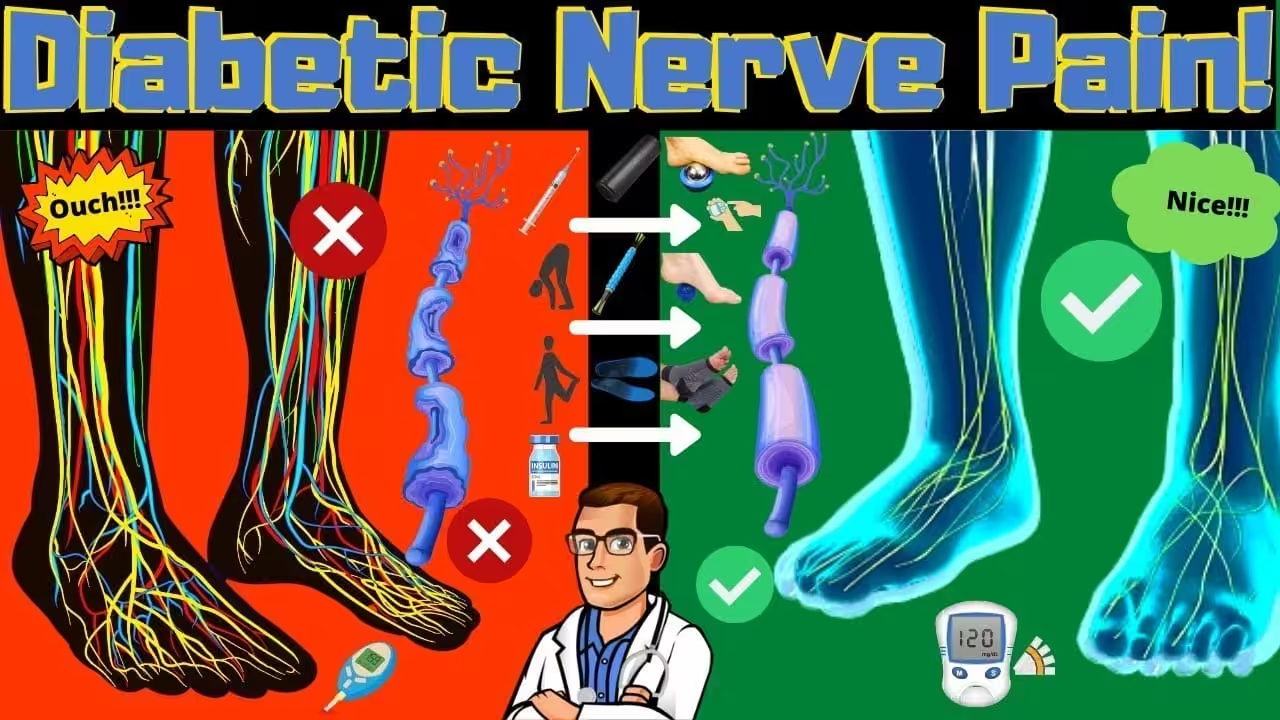
Watch: Peripheral Neuropathy Home Remedies [Leg & Foot Nerve Pain Treatment] — MichiganFootDoctors YouTube
OS1st FS4 — non-binding, moisture-wicking, protects fragile diabetic skin.
Recovery Slide for Indoor Wear
HOKA Ora 3 — protects diabetic feet from barefoot injury at home.
As an Amazon Associate, Balance Foot & Ankle earns from qualifying purchases. Product recommendations are based on clinical experience; prices and availability shown above update live from Amazon.
When to See a Podiatrist
One unnoticed blister on a neuropathic foot can become a limb-threatening ulcer in under 14 days. Medicare covers diabetic shoes (A5500) and comprehensive foot exams annually for most diabetic patients with neuropathy or circulation concerns. Balance Foot & Ankle runs a dedicated diabetic limb-preservation program — vascular screening, offloading, ulcer care, and shoe fitting — all in one visit. Schedule your annual diabetic foot exam today.
Call Balance Foot & Ankle: (810) 206-1402 · Book online · Offices in Howell & Bloomfield Township
In-Office Treatment at Balance Foot & Ankle
When conservative care isn’t enough, Dr. Tom Biernacki and the team at Balance Foot & Ankle offer advanced treatment options — including Peripheral Neuropathy Treatment Michigan at our Howell and Bloomfield Township clinics.
Book online 24/7. Call (810) 206-1402 or book online.
Pros & Cons of Conservative Care for diabetic foot care
Advantages
- ✓ Daily inspection prevents amputation
- ✓ Most insurance covers DME
- ✓ Custom orthotics help
Considerations
- ✗ Daily commitment required
- ✗ Slow wound healing
- ✗ Charcot risk if neuropathy
Dr. Tom’s Recommended Products for diabetic foot care
Affiliate disclosure: As an Amazon Associate, Balance Foot & Ankle earns from qualifying purchases. We only recommend products we use with patients.
Drew Moonwalker Diabetic Shoe Dr. Tom’s Pick
Best for: Medicare-covered diabetic footwear
Diabetic Compression Socks Dr. Tom’s Pick
Best for: Daily protection + circulation
Ready to Get Back on Your Feet?
Appointments in Howell + Bloomfield Township. Most insurance accepted. Dr. Tom Biernacki, DPM & team.
Call Now: (810) 206-1402
Ready to feel better?
Appointments available in Howell and Bloomfield Township, Michigan.
Book Your VisitIn-Office Treatment at Balance Foot & Ankle
If home treatment isn’t providing relief for your neuropathy, our podiatry team at Balance Foot & Ankle can help with expert evaluations and advanced in-office care.
Book online 24/7. (810) 206-1402
Learn about our peripheral neuropathy treatment → | Book online →
Ready for Expert Care?
Appointments in Howell & Bloomfield Township, MI.
4.9★ | 1,200+ Reviews | 3,000+ Surgeries
Or call: (810) 206-1402

Dr. Tom Biernacki, DPM is a board-certified foot & ankle surgeon (ABFAS & ABPM) at Balance Foot & Ankle Specialists in Southeast Michigan. With over a decade of clinical experience, he specializes in heel pain, bunions, diabetic foot care, sports injuries, and minimally invasive surgery. Dr. Biernacki is a member of the APMA and ACFAS, and his patient education content on MichiganFootDoctors.com and YouTube has made him one of the most-followed foot & ankle educators on YouTube.
More questions patients ask
How often should diabetics check their feet?
Diabetic patients should perform daily self-examinations of both feet, checking for cuts, blisters, redness, swelling, calluses, and temperature changes. Professional diabetic foot exams should occur at least annually, or every 3-6 months for patients with neuropathy, peripheral artery disease, or history of foot ulcers. Dr. Biernacki provides comprehensive diabetic foot care programs.
Why do diabetics have foot problems?
Diabetes causes peripheral neuropathy (nerve damage reducing sensation), peripheral artery disease (reduced blood flow), and impaired immune function. This combination means injuries go unnoticed, heal slowly, and are prone to infection. Approximately 15% of diabetics will develop a foot ulcer, and diabetic foot complications are the leading cause of non-traumatic amputation. Prevention through regular podiatric care is essential.
What are the signs of diabetic neuropathy in feet?
Early signs include tingling, burning, or numbness starting in the toes and progressing upward. Other symptoms include sensitivity to touch, muscle weakness, balance problems, and loss of reflexes. If you experience any of these symptoms, schedule an evaluation with Dr. Biernacki at 810-206-1402 for nerve conduction testing and a comprehensive neuropathy management plan.
Still have a question about coverage or cost? Book online and we will check your benefits before your visit: Book in Howell · Book in Bloomfield Township. Prefer to talk it through first? Call (810) 206-1402.