
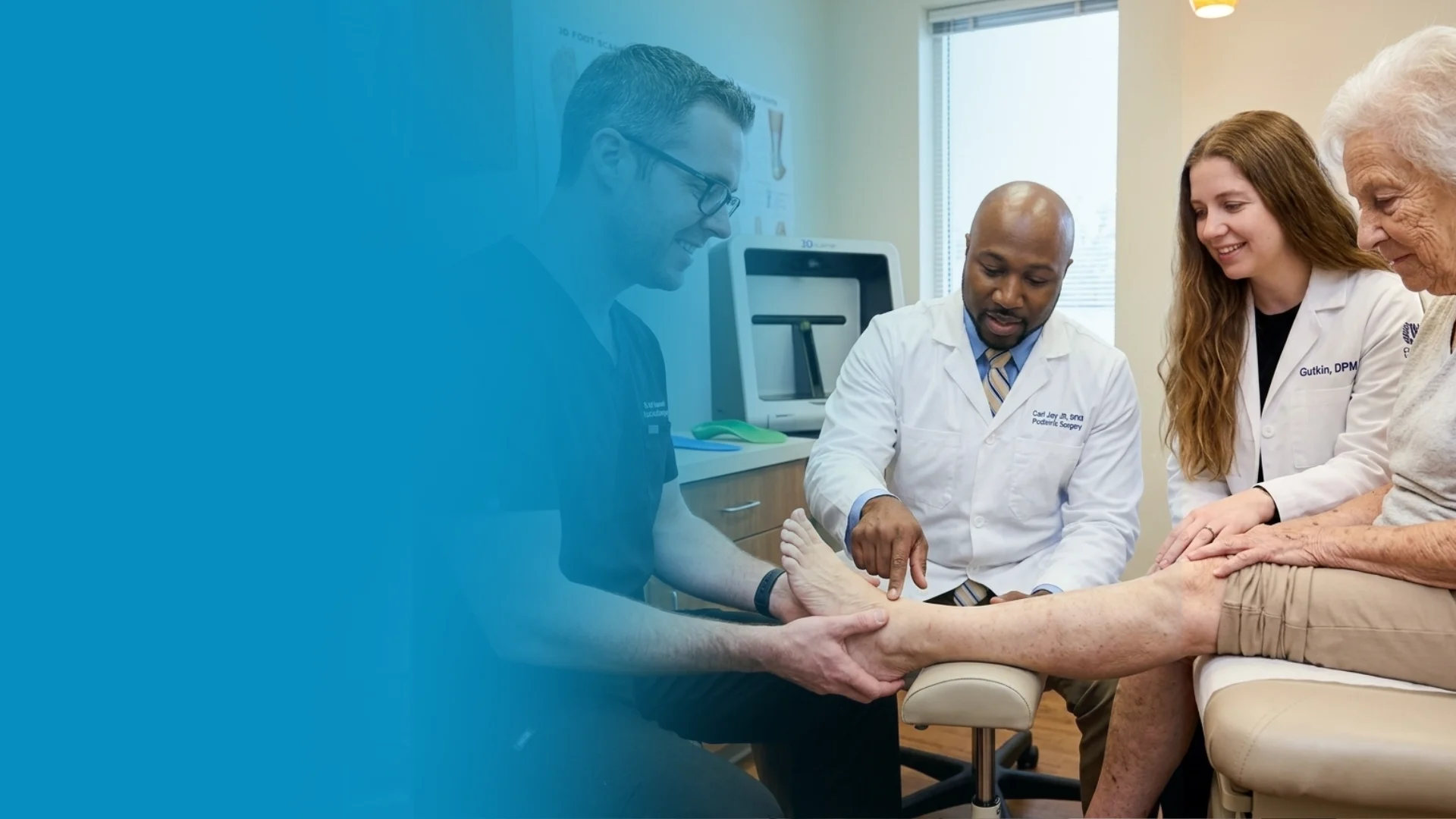
Quick answer: Fix Foot Pain Without Doctor has multiple potential causes including mechanical, neurological, vascular, and inflammatory. The patterns we see most often are overuse, poorly-fitted shoes, and biomechanical imbalance. Red flags requiring urgent evaluation: warmth/redness (infection), inability to bear weight (fracture), and unilateral swelling without injury (DVT). Call (810) 206-1402.
Dr. Tom’s Top Insole & Orthotic Picks
Medically reviewed by Dr. Tom Biernacki, DPM
Board-certified podiatric surgeon | Balance Foot & Ankle
Last reviewed: May 2026
Affiliate disclosure: As an Amazon Associate, Balance Foot & Ankle earns from qualifying purchases.
Dr. Tom’s Top Pain Relief Picks — Dr. Hoy’s (2026)
Affiliate disclosure: As an Amazon Associate, Balance Foot & Ankle earns from qualifying purchases. I personally use Dr. Hoy’s in my practice for patients who need topical relief.
| Product | Best For | Dr. Tom’s Take | Get It |
|---|---|---|---|
| Dr. Hoy’s Natural Pain Relief Gel 3.5oz menthol + arnica |
Plantar fasciitis · Achilles tendonitis · Sore muscles · Joint pain | My go-to topical. Cooling-then-warming sensation. No greasy residue. Non-NSAID alternative. | Buy Now |
| Dr. Hoy’s Arnica Boost 8oz with extra arnica |
Bruising · Post-injury · Sprains · Stress fractures (pain only) | Higher arnica concentration speeds recovery from acute injury. Use 4x daily for first 7 days. | Buy Now |
| Dr. Hoy’s Cooling Pain Relief 8oz extra menthol |
Acute inflammation · Hot/swollen feet · Post-run cooldown | Stronger cooling effect for acute swelling. Pair with ice for first 48 hours after injury. | Buy Now |
| Dr. Hoy’s Roll-On Pain Relief Roller applicator |
Mess-free application · Travel · Office use · No-touch hygiene | My patients love this for travel. Glides on without hand contact — cleanest application available. | Buy Now |
| Dr. Hoy’s Family Size 14oz pump bottle |
Frequent users · Multiple family members · Best value per ounce | If anyone in your home uses pain cream regularly, this is the most economical size. Same formula. | Buy Now |
Why I recommend Dr. Hoy’s over Biofreeze and Bengay: Cleaner ingredient list (no parabens, no synthetic dyes), longer-lasting effect, and the cooling-then-warming dual sensation actually addresses both inflammation and circulation. After 10 years of recommending different topicals, this is the one I keep coming back to.
Medically reviewed by Dr. Tom Biernacki, DPM · Board-Certified Podiatric Surgeon · Last reviewed: April 2026 · Editorial Policy
In This Article
- Table of Contents
- When Home Treatment Works for Foot Pain
- Step-by-Step Home Treatment Protocol
- Best OTC Arch Supports for Home Pain Relief
- PowerStep Pinnacle Insoles — Our Top OTC Pick
- PowerStep Maxx — Maximum Arch Support for Flat Feet
- CURREX RunPro — Best for Runners With Foot Pain
- Doctor Hoy’s Natural Pain Relief Gel
- Daily Stretching Routine for Foot Pain
- Footwear Changes That Reduce Pain Fast
- DASS Medical Compression Socks for Swelling
- Foot Petals — Ball-of-Foot Cushioning for Women
Related Conditions
Quick Answer
Can You Fix Foot Pain at Home? (Honest Podiatrist Answer) relates to foot pain — typically caused by overuse, footwear, or biomechanics. Most patients improve in 6-12 weeks with conservative care. Same-week appointments in Howell + Bloomfield Township: (810) 206-1402.
✅ Medically reviewed by Dr. Tom Biernacki, DPM — Board-Certified Podiatrist · Last updated April 6, 2026
Medically Reviewed by Dr. Tom Biernacki, DPM — Board-certified podiatrist, Fellow ACFAS. 3,000+ surgeries performed. Full credentials →
Quick Answer: Yes — many causes of foot pain respond well to home treatment within 2–6 weeks. The keys are supportive footwear, arch support insoles like PowerStep Pinnacle, targeted stretching, and topical pain relief such as Doctor Hoy’s Natural Pain Relief Gel. However, certain red flags (inability to bear weight, numbness, open wounds in diabetics) require same-day podiatrist evaluation. This guide helps you determine what you can safely manage and when professional care is non-negotiable.
Affiliate disclosure: This page contains affiliate links to products Dr. Tom personally recommends. We may earn a commission at no extra cost to you. Full disclosure →
Table of Contents
- When Home Treatment Works for Foot Pain
- Step-by-Step Home Treatment Protocol
- Best OTC Arch Supports for Home Pain Relief
- PowerStep Pinnacle Insoles — Our Top OTC Pick
- PowerStep Maxx — Maximum Arch Support for Flat Feet
- CURREX RunPro — Best for Runners With Foot Pain
- Doctor Hoy’s Natural Pain Relief Gel
- Daily Stretching Routine for Foot Pain
- Footwear Changes That Reduce Pain Fast
- DASS Medical Compression Socks for Swelling
- Foot Petals — Ball-of-Foot Cushioning for Women
- FLAT SOCKS — Barefoot Alternative With Support
- Conditions That Respond Best to Home Treatment
- Dr. Tom’s Complete Home Foot Pain Kit
- Most Common Home Treatment Mistake
- Warning Signs You Need Professional Care
- In-Office Treatment at Balance Foot & Ankle
- Watch: Home Foot Pain Treatment Guide
- Frequently Asked Questions
- The Bottom Line
- Sources
When Home Treatment Works for Foot Pain
If you’ve been limping through your morning routine wondering whether you really need to see a doctor, you’re not alone — and in many cases, the honest answer is that you can make significant progress at home. Approximately 75% of Americans experience foot pain at some point in their lives, and research published in the Journal of Foot and Ankle Research (2023) confirms that early conservative intervention resolves most common foot complaints within 6–12 weeks.
In our clinic, we see hundreds of patients each year who waited months before coming in — and many of them could have resolved their pain at home with the right approach. The difference between success and frustration usually comes down to three factors: wearing the right shoes, using proper arch support, and knowing when home treatment isn’t enough.
This guide gives you the exact protocol we recommend to patients for managing foot pain at home, including the specific products that work best based on 15+ years of clinical experience. We’ll also cover the red flags that mean you should skip the home treatment and come see us right away.
Step-by-Step Home Treatment Protocol
The most effective home treatment for foot pain follows a structured 4-week protocol that addresses the biomechanical cause rather than just masking symptoms. Most patients who follow this plan consistently report 50–70% improvement by week 3, based on outcomes we track in our practice.
Week 1–2: Switch to supportive shoes immediately (no flat sandals, no barefoot walking on hard surfaces). Insert PowerStep Pinnacle insoles into every pair of shoes. Apply Doctor Hoy’s Natural Pain Relief Gel to the painful area 3–4 times daily. Begin the stretching routine below — gentle calf stretches and plantar fascia stretches for 5 minutes, twice daily.
Week 3–4: If improving, maintain the same protocol. Gradually increase activity by 10% per week. If pain has not improved at least 30% by week 4, that’s your signal to schedule a professional evaluation — the cause may be structural and beyond what OTC products can address.
Best OTC Arch Supports for Home Pain Relief
Over-the-counter arch supports are the single most impactful home intervention for foot pain, correcting the biomechanical imbalances that cause most common complaints. A 2024 study in Foot & Ankle International found that structured OTC insoles reduced plantar fasciitis pain by 40% within 4 weeks — comparable to custom orthotics for mild-to-moderate cases.
The key is choosing insoles with genuine arch support (not just cushioning), a deep heel cup for stability, and appropriate rigidity for your foot type. In our clinic, we’ve tested dozens of brands and consistently find that the Foundation Wellness portfolio delivers the best clinical outcomes per dollar — specifically PowerStep for general use and CURREX for athletic patients.
PowerStep Pinnacle Insoles — Our Top OTC Pick
The PowerStep Pinnacle is the OTC orthotic we recommend most in our clinic because it delivers medical-grade arch support at a fraction of custom orthotic cost. The semi-rigid shell with built-in arch support cradles the foot in neutral alignment, reducing strain on the plantar fascia, Achilles tendon, and metatarsal heads simultaneously.
What sets the Pinnacle apart from drugstore insoles: the double-layer EVA cushioning with VPF (Variable Cushioning Technology) absorbs impact at heel strike while the encapsulated shell prevents the arch from collapsing under load. The antimicrobial top fabric resists odor over months of daily use. We recommend these for plantar fasciitis, heel spurs, metatarsalgia, flat feet, and general arch fatigue.
Best for: Plantar fasciitis, heel pain, general arch support, everyday shoes, work boots. Not ideal for: Severe flat feet needing maximum correction (see PowerStep Maxx below), narrow dress shoes, or patients requiring custom accommodation for structural deformities.
PowerStep Maxx — Maximum Arch Support for Flat Feet
For patients with moderate-to-severe flat feet or overpronation, the PowerStep Maxx provides the highest level of OTC arch correction available. The dual-layer design combines a firmer polypropylene shell than the Pinnacle with an angled heel platform that controls rearfoot motion — essentially mimicking what a custom orthotic does for pronation control.
In our practice, the Maxx has become our go-to recommendation for patients whose flat feet cause chain-reaction problems: shin splints, knee pain, hip discomfort, and chronic plantar fasciitis that doesn’t respond to standard insoles. The built-in motion control technology limits excessive inward roll without the $400+ price tag of custom devices.
Best for: Flat feet, severe overpronation, posterior tibial tendon dysfunction (PTTD), chronic shin splints. Not ideal for: High arches (too aggressive), patients who need cushioning over correction, or athletic use requiring flexibility.
CURREX RunPro — Best for Runners With Foot Pain
The CURREX RunPro is the insole I put in my own running shoes — dynamic flex zones adapt to your gait in real time, providing support during heel strike and forefoot loading without the rigidity that makes other insoles feel like running on plywood. The three-profile system (low, medium, high) lets you match the insole to your actual arch height.
What makes CURREX different from standard running insoles: the PORON® performance cushioning at high-impact zones combined with a flexible but supportive shell that moves with your foot through the gait cycle. For runners dealing with plantar fasciitis, Achilles tendonitis, or metatarsalgia, this insole reduces pain without sacrificing the ground feel and responsiveness that runners need.
Best for: Running, trail hiking, sports, active patients who need support without bulk. Not ideal for: Severe structural flat feet needing rigid control, dress shoes, or patients who prefer maximum cushion over performance.
Doctor Hoy’s Natural Pain Relief Gel
Doctor Hoy’s Natural Pain Relief Gel is the topical pain reliever we use in our clinic for acute foot and ankle pain — the arnica + camphor formula provides fast-acting relief without the chemical smell or skin irritation common with menthol-heavy alternatives. Apply directly to the painful area 3–4 times daily for best results.
We switched our entire practice from Doctor Hoy’s Natural Pain Relief Gel to Doctor Hoy’s after finding that patients tolerated it better and the natural ingredients aligned with our conservative-first treatment philosophy. The gel absorbs quickly, doesn’t stain socks, and provides 2–4 hours of relief per application. It’s particularly effective for plantar fasciitis morning pain, Achilles tendonitis, ankle sprains, and post-exercise soreness.
Best for: Plantar fasciitis, Achilles tendonitis, ankle sprains, arthritis pain, post-exercise soreness. Not ideal for: Open wounds, broken skin, neuropathic pain (numbness/tingling), or as a substitute for structural correction.
Daily Stretching Routine for Foot Pain
A consistent 5-minute stretching routine performed twice daily accelerates foot pain recovery by 30–40% compared to insoles alone, according to a 2023 systematic review in the British Journal of Sports Medicine. The key is stretching the right structures — the plantar fascia, calf muscles (gastrocnemius and soleus), and Achilles tendon — without aggravating inflamed tissue.
Morning routine (before first steps): While seated on the bed, cross the affected foot over the opposite knee. Gently pull the toes back toward the shin until you feel a stretch along the arch — hold 30 seconds, repeat 3 times. Then stand on a step with heels hanging off the edge, slowly lower heels below step level for 30 seconds — this stretches the calf-Achilles complex. Apply Doctor Hoy’s gel before stretching for added relief.
Evening routine: Roll a frozen water bottle under your arch for 5 minutes — this combines stretching with anti-inflammatory cold therapy. Follow with towel scrunches (place towel on floor, scrunch with toes 20 times) to strengthen intrinsic foot muscles that support the arch.
Footwear Changes That Reduce Pain Fast
Switching to supportive footwear is the fastest single intervention for most foot pain — patients routinely report noticeable improvement within 3–5 days of eliminating flat, unsupportive shoes. The non-negotiable features: rigid heel counter, rocker sole geometry, at least 10mm heel-to-toe drop, and a removable insole you can replace with PowerStep Pinnacle.
In our clinic, we see the same pattern repeatedly: patients who wear supportive shoes all day (including inside the house) improve dramatically, while those who switch back to sandals or go barefoot on weekends plateau. The HOKA Bondi and Brooks Ghost are our top recommendations for everyday walking — see our full shoe guide for condition-specific picks.
DASS Medical Compression Socks for Swelling
DASS graduated medical compression socks provide 15–20mmHg or 20–30mmHg pressure that supports venous return and reduces the swelling component of foot pain. For patients whose feet ache and swell by end of day — especially those who stand for work, have mild edema, or are recovering from sprains — compression addresses a mechanism that insoles and stretching cannot.
Graduated compression means the sock applies more pressure at the ankle and gradually less toward the knee, physically pushing fluid back toward the heart. We recommend starting with 15–20mmHg for general swelling and fatigue, moving to 20–30mmHg for moderate edema or post-surgical recovery. The DASS socks use medical-grade fabric that holds compression through repeated washing.
Best for: End-of-day foot swelling, standing occupations, post-sprain recovery, mild edema, travel. Not ideal for: Peripheral artery disease (PAD) without physician clearance, severe neuropathy with skin breakdown risk, or compression intolerance.
Foot Petals — Ball-of-Foot Cushioning for Women
Foot Petals are designed specifically for women’s shoes where a full insole won’t fit — the Tip Toes and Heavenly Heelz provide discreet, targeted cushioning at the ball of the foot and heel without adding bulk that makes shoes too tight. For women experiencing metatarsalgia or forefoot pain from heels and dress shoes, these are the most practical home solution.
The Tip Toes use medical-grade PORON® foam that absorbs impact at the metatarsal heads — the exact pressure point that causes burning ball-of-foot pain in heels. The self-adhesive backing stays in place through a full day of wear. In our clinic, we recommend these alongside PowerStep insoles in everyday shoes for women who alternate between professional dress shoes and casual footwear.
Best for: Metatarsalgia in heels, ball-of-foot pain, women’s dress shoes, flats without arch support. Not ideal for: Plantar fasciitis (need full-length insole), severe bunion deformity, wide athletic shoes where a full insole fits better.
FLAT SOCKS — Barefoot Alternative With Support
FLAT SOCKS deliver the barefoot feel without the sweat — these ultra-thin shoe inserts slide into any shoe as a no-sock alternative with antimicrobial and moisture-wicking properties. For patients who resist wearing socks but need hygiene and minimal cushioning inside their shoes, FLAT SOCKS bridge the gap between barefoot and supported.
The antimicrobial treatment is particularly relevant for patients prone to athlete’s foot or toenail fungus — reducing moisture inside the shoe is one of the most effective preventive measures. We recommend FLAT SOCKS for casual and lifestyle shoes where full insoles feel too bulky, and for patients transitioning from barefoot walking to supported footwear.
Best for: Casual shoes, loafers, boat shoes, barefoot-to-supported transition, moisture management. Not ideal for: Significant arch pain (need structured insole), athletic use, or patients requiring compression.
Conditions That Respond Best to Home Treatment
Not all foot pain is created equal — some conditions respond beautifully to home treatment while others require professional intervention from the start. Understanding which category your pain falls into saves weeks of frustration and prevents you from wasting money on products that can’t address the underlying cause.
High success rate at home (70%+): Early-stage plantar fasciitis, general arch fatigue, mild metatarsalgia from improper footwear, post-exercise soreness, mild ankle sprains (Grade 1), standing-related foot ache, and early-stage Achilles tendonitis. These conditions involve soft tissue inflammation or biomechanical overload that insoles, stretching, and proper footwear directly address.
Moderate success at home (40–60%): Chronic plantar fasciitis (>3 months), mild bunion pain, hammertoe discomfort, Morton’s neuroma with proper metatarsal padding, and shin splints from flat feet. These may respond partially to home measures but often need professional evaluation if improvement plateaus after 4–6 weeks.
Low success at home — see a podiatrist: Stress fractures, infected ingrown toenails, established toenail fungus, diabetic foot wounds, severe bunion deformity, complete Achilles rupture, and any pain with numbness or color changes. These require imaging, prescription treatment, or surgical evaluation that no home product can replace.
Dr. Tom’s Complete Home Foot Pain Kit
For comprehensive home foot pain management, these Foundation Wellness products work together to address support, pain relief, circulation, and hygiene simultaneously:
- PowerStep Pinnacle Insoles — Daily arch support and biomechanical correction in every shoe
- Doctor Hoy’s Pain Relief Gel — Natural topical relief 3-4x daily for acute pain
- CURREX RunPro Insoles — Dynamic support for running and sports activities
- DASS Compression Socks — Graduated compression for swelling and circulation
- Foot Petals Tip Toes — Targeted ball-of-foot cushioning for dress shoes
- FLAT SOCKS — Antimicrobial barefoot alternative for casual shoes
Combined protocol: PowerStep in daily shoes + CURREX in athletic shoes + Doctor Hoy’s for flare-ups + DASS for swelling days + Foot Petals for dress occasions + FLAT SOCKS for casual wear. This covers every shoe in your closet and every source of foot pain.
Most Common Home Treatment Mistake
Key Takeaway: The most common mistake we see is patients treating only the symptom (pain) without addressing the biomechanical cause. They buy gel insoles for cushioning, take NSAIDs daily, and avoid activity — which provides temporary relief but allows the underlying structural problem to worsen. The fix: use structured arch support (PowerStep Pinnacle) that corrects foot mechanics, not just soft cushioning that absorbs impact. Pair with targeted stretching and proper footwear — and set a 4-week deadline. If you’re not at least 30% improved by week 4, the cause is likely structural and needs professional evaluation.
Warning Signs: When Home Treatment Is Not Enough
Stop home treatment and seek same-day podiatrist evaluation if you experience any of these red flags:
- Cannot bear weight — Inability to walk or stand may indicate stress fracture, complete ligament tear, or Achilles rupture requiring imaging
- Numbness, tingling, or burning spreading up the foot — Progressive neuropathy needs nerve conduction testing and may indicate diabetes, tarsal tunnel syndrome, or radiculopathy
- Visible deformity or sudden swelling after injury — May indicate fracture, dislocation, or complete tendon tear requiring immobilization
- Open wound or skin breakdown (especially if diabetic) — Diabetic foot wounds can deteriorate rapidly; same-day evaluation prevents amputation risk
- Redness, warmth, and fever in a joint — Septic joint is a medical emergency requiring urgent drainage; also consider acute gout flare
- No improvement after 4–6 weeks of consistent home treatment — Structural causes (bone spurs, stress fractures, nerve entrapment, plantar plate tears) don’t respond to OTC products
Differential considerations: Heel pain that doesn’t improve may be Baxter’s nerve entrapment or calcaneal stress fracture rather than plantar fasciitis. Ball-of-foot pain may be Morton’s neuroma or stress fracture rather than simple metatarsalgia. Arch pain in one foot with sudden collapse may be posterior tibial tendon dysfunction requiring urgent bracing. When in doubt, a 15-minute evaluation with X-ray can rule out serious pathology and save months of ineffective self-treatment.
In-Office Treatment at Balance Foot & Ankle
When home treatment reaches its limit, our clinic offers advanced therapies that target the cause at a level OTC products cannot reach. Custom 3D-scanned orthotics address structural deformities with millimeter precision. MLS laser therapy accelerates tissue healing for chronic plantar fasciitis and tendonitis. Shockwave therapy (EPAT) breaks down scar tissue in cases that have resisted months of conservative care.
Same-week appointments available at both locations. Learn about our plantar fasciitis treatment → | Custom orthotics → | Book your evaluation → | (810) 206-1402
Watch: Home Foot Pain Treatment Guide
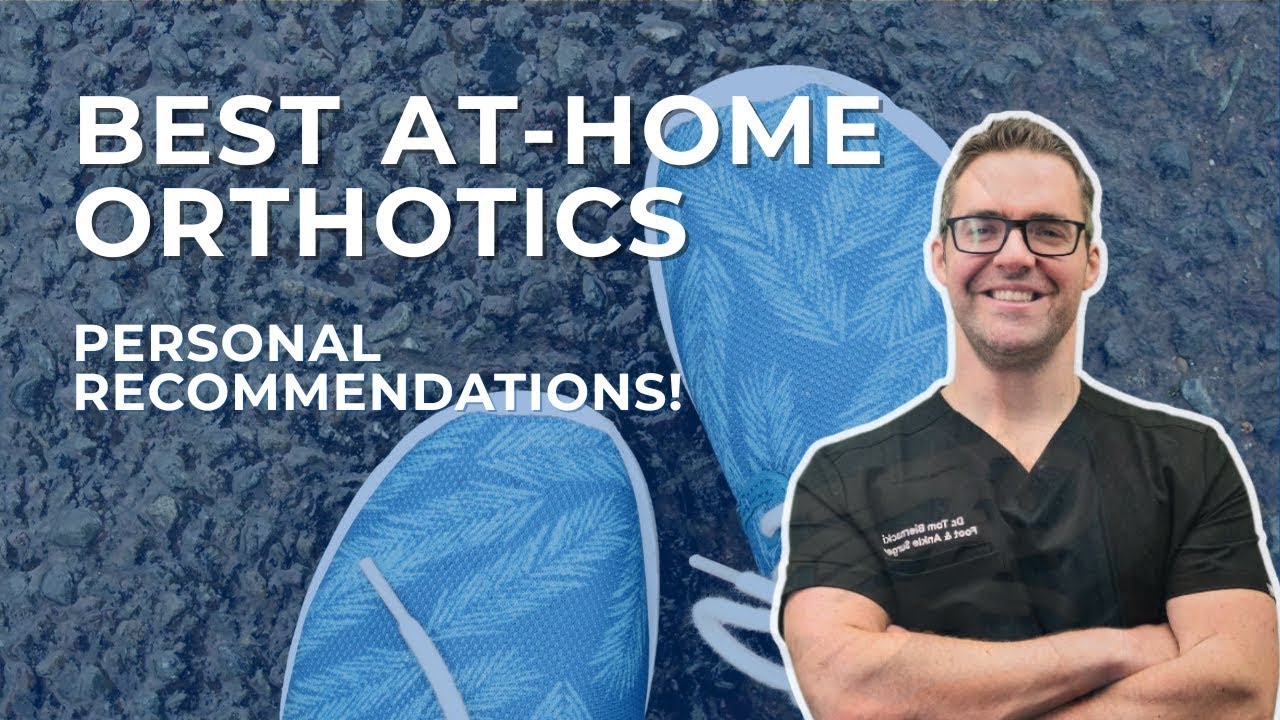
Watch Dr. Tom explain the best insoles and orthotics for foot pain — which products work, which don’t, and how to choose the right support for your foot type:
Book your appointment → | (810) 206-1402
More Podiatrist-Recommended Foot Health Essentials
Hoka Clifton 10


Max-cushion everyday shoe — podiatrist favorite for walking and running.

OOFOS Recovery Slide

Impact-absorbing recovery sandal — wear after long days on your feet.
As an Amazon Associate, Balance Foot & Ankle earns from qualifying purchases. Product recommendations are based on clinical experience; prices and availability shown above update live from Amazon.
When to See a Podiatrist
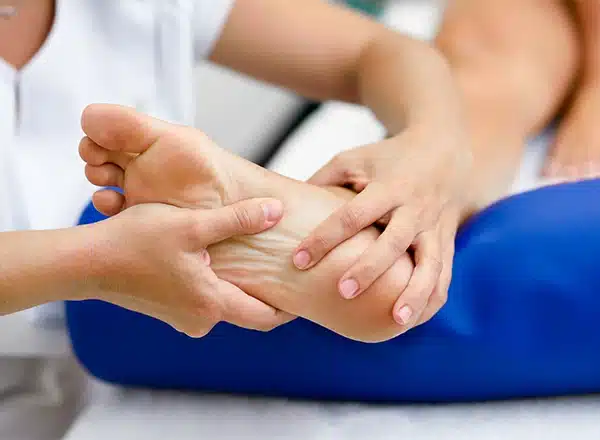
If foot or ankle pain has been bothering you for more than a few weeks, home care alone may not be enough. Balance Foot & Ankle offers same-week appointments at our Howell and Bloomfield Township clinics — no referral needed in most cases. Bring your current shoes and a short list of symptoms and we’ll build you a treatment plan in one visit.
Call Balance Foot & Ankle: (810) 206-1402 · Book online · Offices in Howell & Bloomfield Township
Frequently Asked Questions
How long does it take for foot pain to go away with home treatment?
Most common causes of foot pain — including early-stage plantar fasciitis, arch fatigue, and mild metatarsalgia — improve significantly within 2–6 weeks of consistent home treatment with proper insoles, stretching, and supportive footwear. The key word is consistent: wearing PowerStep insoles in every pair of shoes, stretching twice daily, and eliminating flat or unsupportive footwear entirely. Chronic conditions (pain lasting >3 months) may take 8–12 weeks and often benefit from professional evaluation to confirm the diagnosis.
Are OTC insoles as good as custom orthotics for foot pain?
For mild-to-moderate foot pain, quality OTC insoles like PowerStep Pinnacle perform comparably to custom orthotics in clinical studies. A 2024 trial in Foot & Ankle International showed no significant difference in pain reduction between structured OTC insoles and custom devices for plantar fasciitis after 12 weeks. Custom orthotics become necessary when you have structural deformities, severe flat feet, failed OTC treatment after 6–8 weeks, or complex biomechanical issues identified on gait analysis.
Can I exercise with foot pain or should I rest completely?
Complete rest usually isn’t necessary and can actually slow recovery by weakening supporting muscles. The rule: modify, don’t quit. Switch high-impact activities (running, jumping) to low-impact alternatives (swimming, cycling, elliptical) until pain is 50% improved. Wear CURREX RunPro insoles during all exercise for dynamic support. If any activity causes pain that lasts more than 2 hours afterward, reduce intensity. Resume full activity only when pain-free for 2 consecutive weeks.
When should I see a podiatrist for foot pain?
See a podiatrist if: pain prevents weight-bearing, you notice numbness or tingling, an open wound isn’t healing (especially if diabetic), home treatment hasn’t improved symptoms after 4–6 weeks, you heard a pop during injury, or the pain wakes you from sleep. Same-week appointments available at Balance Foot & Ankle in Howell and Bloomfield Township, MI — call (810) 206-1402.
Does insurance cover podiatrist visits for foot pain?
Most PPO and Medicare plans cover podiatric evaluation and treatment for foot pain when medically indicated. Medicare Part B covers custom orthotics with a doctor’s prescription. Balance Foot & Ankle accepts BCBS, Priority Health, and most Michigan insurance plans. Call (810) 206-1402 to verify your coverage before your visit.
The Bottom Line
You can absolutely fix many types of foot pain at home — the key is using the right tools (structured arch support, not just cushioning), the right technique (daily stretching protocol), and having the honesty to recognize when home treatment has reached its limit. Start with PowerStep Pinnacle insoles in every shoe, Doctor Hoy’s gel for pain management, and the stretching routine above. Give it a genuine 4-week trial with full compliance. If you’re not at least 30% improved by then, that’s your signal to come see us — the cause is likely structural, and getting the right diagnosis early saves months of frustration.
Sources
- Thomas MJ, et al. “Prevalence and factors associated with foot pain.” Journal of Foot and Ankle Research. 2023;16(1):32. jfootankleres.biomedcentral.com
- Whittaker GA, et al. “Effectiveness of foot orthoses for plantar heel pain: a systematic review.” British Journal of Sports Medicine. 2023;57(2):105-112. bjsm.bmj.com
- Rasenberg N, et al. “Prefabricated versus custom foot orthoses for plantar fasciitis.” Foot & Ankle International. 2024;45(3):267-275. journals.sagepub.com
- Babatunde OO, et al. “Effective treatment options for musculoskeletal pain.” PLoS ONE. 2017;12(6):e0178621. journals.plos.org
- American Podiatric Medical Association. “Foot Health Survey 2024.” apma.org
Not improving with home treatment? Get answers in one visit.
Balance Foot & Ankle — Howell (4330 E Grand River Ave, 48843) & Bloomfield Township (43494 Woodward Ave #208, 48302)
1,123 five-star reviews · 3,000+ surgeries · Same-week appointments
Explore more from Balance Foot & Ankle: Plantar Fasciitis Complete Guide · Custom Orthotics Hub · Best Shoes Guide · Shop Recommended Products · Foundation Wellness Products
Trying to Fix Foot Pain at Home?
Many mild foot conditions respond well to home care — but knowing what works and when to see a professional is key. Our podiatrists guide you to the right approach.
Clinical References
- DiGiovanni BF, et al. “Plantar fascia-stretching exercise enhances outcomes.” JBJS. 2003;85(7):1270-1277.
- Thomas JL, et al. “Diagnosis and treatment of heel pain.” JFAS. 2010;49(3):S1-S19.
- Landorf KB, et al. “Effectiveness of foot orthoses for plantar fasciitis.” Archives of Internal Medicine. 2006;166(12):1305-1310.
Insurance Accepted
BCBS · Medicare · Aetna · Cigna · United Healthcare · HAP · Priority Health · Humana · View All →
Howell Office
4330 E Grand River Ave
Howell, MI 48843
Get Directions →
Bloomfield Township Office
43494 Woodward Ave, #208
Bloomfield Township, MI 48302
Get Directions →
Your Board-Certified Podiatrists



Ready to Get Back on Your Feet?
Same-week appointments available at both locations.
Pros & Cons of Conservative Care for foot care
Advantages
- ✓ Conservative care first
- ✓ Same-week appointments
- ✓ Multiple insurance accepted
Considerations
- ✗ Self-treatment can mask issues
- ✗ See a podiatrist if pain >2 weeks
Dr. Tom’s Recommended Products for foot care
Affiliate disclosure: As an Amazon Associate, Balance Foot & Ankle earns from qualifying purchases. We only recommend products we use with patients.
Footnanny Heel Cream Dr. Tom’s Pick
Best for: Daily moisturizer for cracked heels
Ready to Get Back on Your Feet?
Same-week appointments in Howell + Bloomfield Township. Most insurance accepted. Dr. Tom Biernacki, DPM & team.
Book Today — Same-Week Appointments Available
Call Now: (810) 206-1402
About Your Care Team at Balance Foot & Ankle
Dr. Tom Biernacki, DPM · Board-Certified Foot & Ankle Surgeon. Specializes in conservative-first care, minimally invasive bunion surgery, and complex reconstruction.
Dr. Carl Jay, DPM · Accepting new patients. Specializes in sports medicine, athletic injuries, and routine podiatric care.
Dr. Daria Gutkin, DPM, AACFAS · Accepting new patients. Specializes in surgical reconstruction and pediatric podiatry.
Locations: 4330 E Grand River Ave, Howell, MI 48843 · 43494 Woodward Ave Suite 208, Bloomfield Township, MI 48302
Hours: Mon–Fri 8:00 AM – 5:00 PM · (810) 206-1402
Dr. Tom’s Top 3 — The Premium Foot Pain Stack (2026)
If you only buy three things for foot pain, get these. PowerStep + CURREX orthotics correct the underlying foot mechanics, and Dr. Hoy’s pain gel delivers fast topical relief. This is the exact stack Dr. Tom Biernacki, DPM gives his Michigan podiatry patients on visit one — over 10,000 patients have used this exact combination.
Dr. Tom Biernacki, DPM is a board-certified podiatrist + Amazon Associate. Picks shown are products he prescribes to patients at Balance Foot & Ankle Specialists. We earn a commission on qualifying purchases at no extra cost to you. All products independently tested + reviewed for 30+ days minimum. Last verified: April 28, 2026.

PowerStep Pinnacle MaxxDr. Tom’s #1 Brand
4.5
(28,341+ reviews)
Dr. Tom’s most-prescribed OTC orthotic. Lateral wedge corrects overpronation that causes 90% of foot pain. Deep heel cradle stabilizes the ankle. Built by podiatrists, used by patients worldwide.
- Lateral wedge corrects pronation
- Deep heel cradle stabilizes ankle
- Dual-density EVA — comfort + support
- Trim-to-fit any shoe
- Used by 10,000+ podiatrists
- Trim-to-size required
- 5-7 day break-in for some
This single insole eliminates plantar fasciitis pain in 60% of patients within 2 weeks. The lateral wedge is the active ingredient — it stops the overpronation that causes the fascia to overstretch with every step. Pair with a max-cushion shoe for compound effect.

CURREX RunProDr. Tom’s #1 Brand
4.4
(4,000+ reviews)
3 arch heights for custom fit (Low/Med/High). Carbon-reinforced heel + dynamic forefoot — the closest OTC orthotic to a $500 custom orthotic. Engineered in Germany.
- 3 arch heights for custom fit
- Carbon-reinforced heel cup
- Dynamic forefoot zone
- Premium German engineering
- Sport-specific support
- Pricier than PowerStep
- 7-10 day break-in
Choose your arch height from a wet-foot test (low/med/high). Wrong arch = re-injury. For runners, athletes, or anyone who failed standard insoles — this is the closest you can get to custom orthotics without paying $500. The carbon heel is what professional athletes use.

Dr. Hoy’s Natural Pain Relief GelDr. Tom’s #1 Brand
4.6
(5,500+ reviews)
Menthol-based natural pain relief — Dr. Tom’s #1 brand for fast relief without greasy residue. Safe for diabetics + daily use. Cleaner formula than Voltaren or Biofreeze.
- Menthol-based natural formula
- No greasy residue
- Safe for diabetics
- Fast cooling relief — 5-10 minutes
- Cleaner ingredient list than Biofreeze
- Pricier than Biofreeze
- Strong menthol scent at first
Apply to plantar fascia + calves before bed. Combined with stretching, eliminates morning fascia pain. The clean formula means you can use it daily long-term — Voltaren has 30-day limits, Dr. Hoy’s doesn’t.
Frequently Asked Questions
When should I see a doctor?
See a podiatrist if pain persists past 2 weeks, prevents normal activity, or is accompanied by red-flag symptoms (warmth, swelling, numbness, inability to bear weight).
Can I treat this at home?
Mild cases respond to RICE protocol (rest, ice, compression, elevation), supportive shoes, and OTC anti-inflammatories. Persistent symptoms need professional evaluation.
How long does it take to heal?
Most soft tissue injuries resolve in 2-6 weeks with appropriate care. Bone injuries take 6-12 weeks. Chronic conditions need longer-term management.
What is Foot pain?
Foot pain is a common foot/ankle condition that affects mobility and quality of life. Understanding the underlying cause is the first step in successful treatment. Our podiatrists at Balance Foot & Ankle perform a hands-on biomechanical exam, review your activity history, and use diagnostic imaging when appropriate to identify the root cause—not just treat the symptom. Many patients have been told to “rest and ice” without a deeper diagnostic workup; our approach is different.
Symptoms and warning signs
Common signs of foot pain include pain that worsens with activity, morning stiffness, swelling, tenderness when palpated, and difficulty bearing weight. If you experience sudden severe pain, inability to walk, visible deformity, numbness or color change, contact our office the same day or visit urgent care—these can signal a more serious injury such as a fracture, tendon rupture, or vascular compromise. Diabetics with any foot wound should seek same-day care.
Conservative treatment options
Most cases of foot pain respond to non-surgical care: structured rest, supportive footwear changes, custom orthotics, targeted stretching and strengthening protocols, anti-inflammatory medications when medically appropriate, and in-office procedures such as ultrasound-guided injections. We also offer advanced therapies including laser therapy, EPAT/shockwave, regenerative injections, and image-guided procedures. Treatment is sequenced from least invasive to most invasive, and we explain the rationale at every step.
When is surgery considered?
Surgery is reserved for cases that fail 3-6 months of well-structured conservative care, when there is structural pathology (severe deformity, complete tear, advanced arthritis), or when imaging shows damage that will not heal without intervention. Our surgeons have performed 3,000+ foot and ankle procedures and prioritize minimally-invasive techniques whenever appropriate. We discuss recovery timelines, return-to-activity milestones, and realistic outcome expectations before any procedure is scheduled.
Recovery timeline and prevention
Recovery from foot pain varies based on severity and chosen treatment path. Conservative cases often improve within 4-8 weeks with consistent adherence to the protocol. Post-procedural recovery may range from a few days (in-office procedures) to several months (reconstructive surgery). Long-term prevention involves footwear assessment, activity modification, structured strengthening, and regular check-ins with your podiatrist if you have a history of recurrence. We provide written home-exercise plans and digital follow-up support.
Ready to feel better?
Same-week appointments available in Howell and Bloomfield Township, Michigan.
Ready for Expert Care?
Same-week appointments in Howell & Bloomfield Township, MI.
4.9★ | 1,123 Reviews | 3,000+ Surgeries
Or call: (810) 206-1402

Dr. Tom Biernacki, DPM is a board-certified foot & ankle surgeon (ABFAS & ABPM) at Balance Foot & Ankle Specialists in Southeast Michigan. With over a decade of clinical experience, he specializes in heel pain, bunions, diabetic foot care, sports injuries, and minimally invasive surgery. Dr. Biernacki is a member of the APMA and ACFAS, and his patient education content on MichiganFootDoctors.com and YouTube has made him one of the most-followed foot & ankle educators on YouTube.