
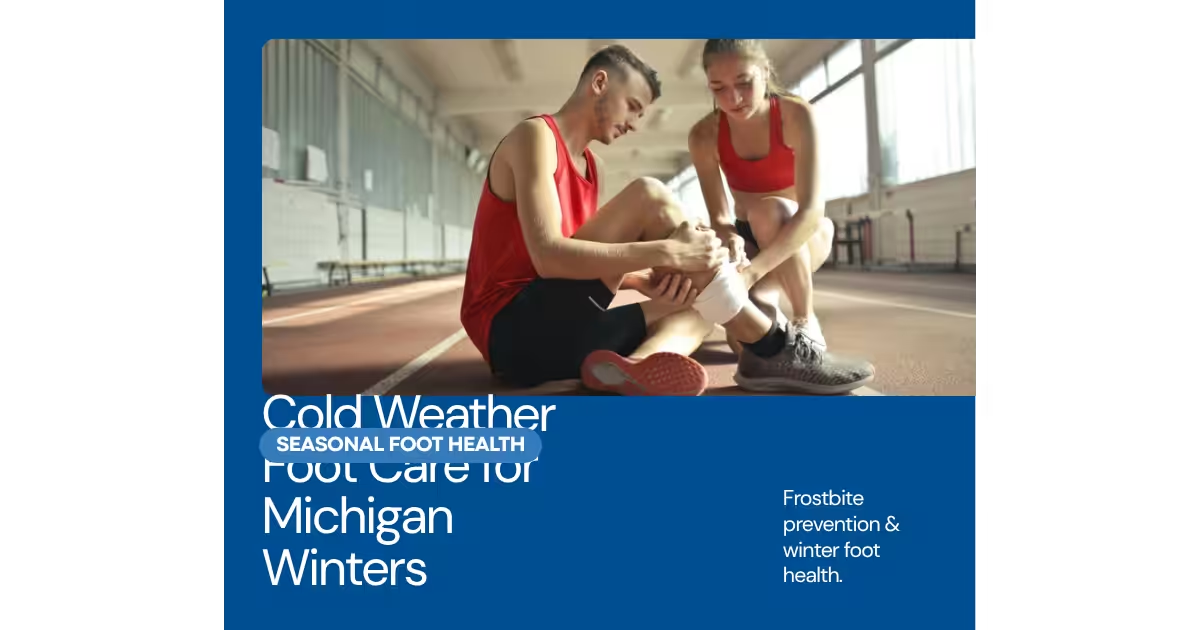
Quick answer: Foot Care Michigan Winter Summer Seasonal Changes Tips is a common foot/ankle topic that affects many patients. Effective treatment starts with a targeted diagnosis, conservative-first treatment, and escalation only when needed. We treat this regularly at our Howell and Bloomfield Township practices. Book online, or call (810) 206-1402.

Medically Reviewed by Dr. Tom Biernacki, DPM, FACFAS — Board-certified podiatrist & foot surgeon | Balance Foot & Ankle | Last updated: May 2026
Quick Answer: Michigan Seasonal Foot Care
Michigan’s climate creates distinct seasonal foot health challenges: winter brings dry cracked heels, frostbite risk, ice-related ankle injuries, and poor circulation symptoms; summer brings athlete’s foot, plantar warts, sunburned feet, and heat-related swelling. Proactive seasonal foot care — moisturizing in winter, antifungal hygiene in summer, appropriate footwear year-round — prevents the majority of seasonal foot complaints. Diabetic and neuropathic patients require heightened vigilance in both seasons due to impaired protective responses.
Michigan is one of the most seasonally variable states in the country — sub-zero January windchills and 90-degree August humidity create foot health challenges at opposite extremes. After more than a decade treating patients across Livingston and Oakland Counties, I’ve developed a clear seasonal pattern in the foot conditions we see. Here’s the practical guide to keeping your feet healthy through all four Michigan seasons.
Michigan Seasonal Foot Health Calendar
| Season | Top Foot Risks | At-Risk Groups | Key Prevention |
|---|---|---|---|
| Winter (Dec–Feb) | Dry cracked heels, frostbite, ice falls, chilblains | Diabetic, elderly, outdoor workers | Daily moisturizing, insulated boots, ice cleats |
| Early Spring (Mar–Apr) | Plantar fasciitis flares, wet terrain ankle sprains | Runners, outdoor enthusiasts | Gradual activity return, trail-appropriate footwear |
| Summer (Jun–Aug) | Athlete’s foot, plantar warts, sunburn, swelling | Pool/beach goers, diabetic patients | Flip-flop hygiene, antifungal, sunscreen on feet |
| Fall (Sep–Nov) | Transition footwear issues, stress fractures from activity | Athletes returning to indoor sports | Gradual footwear transitions, mileage management |
Winter Foot Care in Michigan
Michigan winters are hard on feet. Low humidity combined with indoor heat strips moisture from skin, causing heel fissures that progress from cosmetic annoyance to painful cracks that can reach the dermis and become infected. Prevention requires urea-based heel creams (10–25% urea) applied nightly with sock occlusion — far more effective than standard lotions. Insulated, waterproof footwear is essential for extended outdoor exposure; at temperatures below 10°F, inadequately insulated footwear creates frostbite risk in the toes within 30 minutes, particularly in those with peripheral arterial disease or Raynaud’s phenomenon. Ice cleats attached to boots or shoes reduce fall risk on icy surfaces — ankle fractures from winter falls are among the most common cold-weather foot injuries we treat.
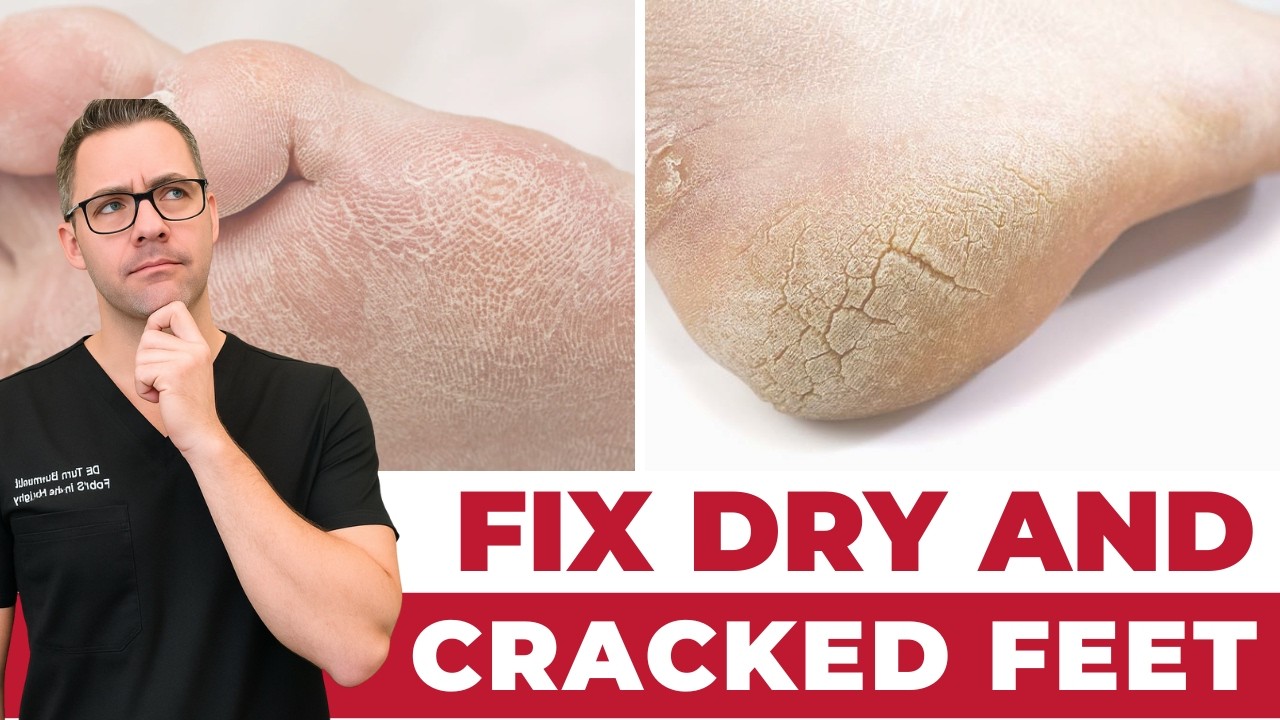
Watch Dr. Tom explain dry cracked heel treatment and prevention — essential for Michigan winters.
Summer Foot Care in Michigan
Summer brings its own set of foot problems. Public pools, locker rooms, and lake beach areas around Howell, Brighton, and the Livingston County lakes are high-risk environments for tinea pedis (athlete’s foot) and plantar warts, both of which thrive in warm, moist communal surfaces. Protective footwear (flip-flops) in shared wet areas and twice-daily foot washing with thorough drying significantly reduce transmission risk. Heat-related foot swelling occurs when ambient temperatures cause venous dilation — compression socks, elevation, and hydration reduce this. Importantly, the tops of the feet are one of the most commonly missed areas in sunscreen application, and the foot has a proportionally high rate of acral lentiginous melanoma — include your feet in routine SPF application.
⚠ Most Common Michigan Seasonal Foot Mistake
The most common mistake I see is transitioning directly from winter boots to minimal sandals or flip-flops in May without a gradual footwear transition period. Plantar fascia and Achilles tendon adapt to the heel elevation and support of winter boots over months of daily wear. Suddenly switching to flat flip-flops for all-day wear dramatically increases plantar fascia tension, causing flares that take 6–10 weeks to resolve. Transition gradually — sandals for 1–2 hours initially, paired with supported footwear for the remainder of the day, gradually extending sandal time over 2–3 weeks.
Spring Foot Care: Returning to Activity Safely
Spring in Michigan triggers a surge in outdoor activity after months of reduced movement, and the foot and ankle musculoskeletal system pays the price when the transition is too abrupt. Plantar fasciitis, posterior tibial tendon issues, Achilles tendinopathy, and metatarsal stress reactions all peak in April–May as runners and outdoor enthusiasts resume activity on unfamiliar terrain. The 10% rule applies: don’t increase weekly mileage or activity time by more than 10% per week. Wet spring trail conditions in Michigan create ankle sprain risk — trail footwear with ankle support and aggressive tread significantly reduces this on muddy surfaces.
Frequently Asked Questions
Why do my feet crack so badly every Michigan winter?
Cracked heels in Michigan winters result from the combination of low outdoor humidity, forced-air indoor heating that further reduces humidity, and reduced sebaceous gland activity that naturally decreases skin oil production in cold temperatures. The heel is particularly vulnerable because it bears concentrated body weight with each step and has a thicker stratum corneum that loses moisture rapidly. Prevention: apply a 10–25% urea cream or ammonium lactate lotion to heels nightly, cover with cotton socks, and run a humidifier in your bedroom. Established heel fissures with pain require podiatric debridement to remove callused tissue before moisturizers can penetrate effectively.
How can I prevent athlete’s foot at Michigan lakes and public pools?
Always wear sandals or flip-flops in shared wet areas including pool decks, locker rooms, and lake beach changing areas. After water activities, dry between the toes thoroughly — fungal growth requires moisture, and residual wetness between toes is the primary infection site. Use antifungal powder in shoes and socks if you’re prone to infection. If athlete’s foot develops, topical antifungal (clotrimazole, terbinafine) applied twice daily for 2–4 weeks clears most cases. Recurrent infections or infections involving the nails require evaluation for toenail fungus, which doesn’t respond to topical treatment.
Is it safe to run or hike in Michigan in the winter?
Yes, with appropriate preparation. Insulated, waterproof footwear with aggressive tread is essential for winter running and hiking. Ice cleats (Yaktrax, Kahtoola MICROspikes) attach to running shoes for icy conditions and dramatically reduce fall risk. Limit exposed skin time at temperatures below 10°F; synthetic wool toe socks provide the best warmth-to-weight ratio for cold-weather foot protection. Patients with peripheral arterial disease, Raynaud’s, or diabetic neuropathy should consult their podiatrist before winter outdoor activity — reduced sensation and circulation impair the normal warning signals that prevent cold injury.
Why do my feet swell more in Michigan summers?
Heat-related foot and ankle swelling (dependent edema) worsens in summer because elevated temperatures cause peripheral vasodilation — blood vessels in the lower extremities dilate to dissipate heat, and the increased blood volume pools in tissues under gravity’s influence. This is typically benign in healthy individuals. Reduce swelling by: staying hydrated, wearing compression socks (15–20 mmHg), elevating feet above heart level for 15–20 minutes in the evening, and avoiding prolonged standing in heat. Unilateral swelling (one foot only), rapid onset, or swelling accompanied by pain, redness, or warmth warrants evaluation to exclude DVT or infection.
When should I see a podiatrist for a seasonal foot problem?
See a podiatrist for cracked heels with pain or bleeding, any heel fissure in a diabetic patient, athlete’s foot that hasn’t cleared after 3–4 weeks of OTC treatment, new swelling that doesn’t resolve overnight, or any ankle injury from a fall. Balance Foot & Ankle offers same-week appointments in Howell and Bloomfield Township — call (810) 206-1402 or book online.
Year-Round Foot Care — Howell & Bloomfield Township, MI
Dr. Tom Biernacki DPM FACFAS | Same-week appointments available | (810) 206-1402
Book Appointment Call (810) 206-1402Related Resources
- Athlete’s Foot Treatment — Causes, Symptoms & Cures
- Ankle Sprains — First Aid, Treatment & Recovery
- Diabetic Foot Care — Seasonal Risk Management
- New Patient Information — Balance Foot & Ankle
Visit Balance Foot & Ankle — Same-Week Appointments Available

Our podiatry team serves patients throughout Michigan including Howell, Brighton, and Bloomfield Township. If you’re dealing with heel pain, ingrown toenails, or a foot injury, we have same-week appointment availability.
Same-week appointments available. (810) 206-1402
VitaMedica Arnica Gel
Arnica gel plus 15 plant compounds for sore feet, plantar fasciitis flares and post-activity soreness. Apply a thin layer to the sore area.
Shop VitaMedica Arnica Gel →Seen at both offices — Howell and Bloomfield Township.

Dr. Tom Biernacki, DPM is a board-certified foot & ankle surgeon (ABFAS & ABPM) at Balance Foot & Ankle Specialists in Southeast Michigan. With over a decade of clinical experience, he specializes in heel pain, bunions, diabetic foot care, sports injuries, and minimally invasive surgery. Dr. Biernacki is a member of the APMA and ACFAS, and his patient education content on MichiganFootDoctors.com and YouTube has made him one of the most-followed foot & ankle educators on YouTube.