
Medically reviewed by Dr. Tom Biernacki, DPM
Board-certified podiatric surgeon | Balance Foot & Ankle, Howell & Bloomfield Hills, MI
Last reviewed: May 2026
Foot cramps near Brighton that strike at night or during rest aren’t random — they follow a specific pattern that tells podiatrists whether the cause is neurological, vascular, or biomechanical, and those three types need completely different treatments. Most people treat all three the same way and get no relief. Call (810) 206-1402 — foot cramp evaluations in Brighton.

Medically Reviewed by: Dr. Tom Biernacki DPM · Board-Certified Podiatrist · Balance Foot & Ankle PLLC · Updated 2026
Foot Cramps Treatment Near Brighton, MI
Foot cramps and muscle spasm treatment near Brighton, MI is available at Balance Foot & Ankle in Howell. Dr. Biernacki DPM identifies the cause of recurrent foot and arch cramps — from electrolyte deficiency and dehydration to neuropathy, structural deformity, and medication side effects — and addresses the underlying driver, not just the symptom. Call (810) 206-1402.
Why Foot Cramps Happen — and What They’re Telling You
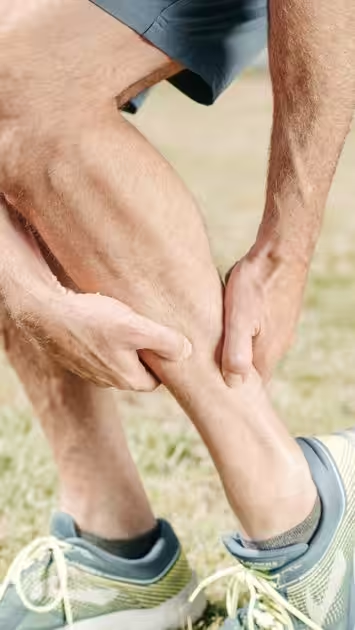
A foot cramp — the sudden, painful involuntary contraction of the intrinsic foot muscles or the extrinsic muscles of the calf — is one of the most common complaints in podiatric practice, but it is frequently dismissed as benign when it may be signaling something specific and treatable. Occasional foot cramps in an otherwise healthy adult are usually related to dehydration, electrolyte imbalance (low magnesium, potassium, or calcium), prolonged unusual positions, or fatigue after high-activity days. Recurrent, frequent foot cramps — especially those occurring at rest, at night, or in multiple toes simultaneously — warrant evaluation for underlying causes: peripheral neuropathy (diabetic, alcoholic, or idiopathic), peripheral arterial disease (cramping with walking = claudication), structural foot deformity (flatfoot and high arch create chronic intrinsic muscle overload), diuretic or statin medications (both deplete electrolytes), and thyroid dysfunction (hypothyroidism causes cramps). In our Howell-area patients, the most commonly missed cause is early peripheral neuropathy — the cramps precede sensory symptoms and are the first clinical signal that nerve function is deteriorating.
Key Takeaway: Occasional cramps after activity = likely benign (hydration, electrolytes). Recurrent cramps at rest or at night = evaluation needed for neuropathy, vascular, medication, thyroid causes. Flatfoot or high arch driving muscle overload = the structural cause that orthotics resolve. Cramping with walking = claudication/PAD until proven otherwise.
Treatment
For activity-related or benign cramps: Calf and plantar fascia stretching before and after activity. Adequate hydration (not just water — electrolytes). Magnesium glycinate 300–400mg daily (best evidence for nocturnal leg cramps). Review medications with prescriber for diuretics or statins depleting electrolytes. For structural-driven cramps (flatfoot/high arch): Custom orthotics correcting mechanical overload on the intrinsic muscles. Appropriate footwear with adequate arch support. Intrinsic muscle strengthening exercises (toe curls, marble pickups, short-foot exercise). For neuropathy-associated cramps: Peripheral nerve evaluation including EMG/NCS. Glycemic optimization for diabetic neuropathy. Vitamin B12 assessment and supplementation if deficient. Gabapentin or pregabalin for neuropathic cramping in severe cases. For claudication (PAD): Supervised exercise program. ABI measurement. Vascular surgical referral for revascularization evaluation.
⚠️ See a Podiatrist If:
- Foot cramps occurring frequently at night or at rest — not just after activity
- Cramps in all toes simultaneously or spreading up the leg
- Cramping in the calf or foot during walking that stops with rest — possible claudication
- Cramps with numbness, tingling, or weakness — possible peripheral neuropathy
- Cramps that started after beginning a new medication (diuretic, statin, ACE inhibitor)
Recommended Products for Foot Cramp Relief
Foot cramps are often triggered by electrolyte imbalances, dehydration, or nerve irritation. Dr. Biernacki recommends these supplements and supports for patients experiencing frequent cramping in the feet and calves.

Magnesium Glycinate 400mg — Muscle Cramp Prevention
Magnesium deficiency is the most common nutritional cause of muscle cramping, and it’s remarkably prevalent — studies estimate over 50% of Americans don’t meet the daily requirement. Magnesium glycinate is the best-absorbed form (unlike magnesium oxide, which causes GI upset). In our clinical experience, patients who take 400mg at bedtime see significant reduction in nighttime foot and calf cramps within 2–4 weeks. Also improves sleep quality. Take with dinner for best absorption.

TheraBand Resistance Bands — Intrinsic Foot Strengthening
Weak intrinsic foot muscles are a frequently overlooked cause of foot cramping — the small muscles that control toe movement fatigue easily and go into spasm. Daily resistance band exercises (towel scrunches, toe spreads, ankle circles) strengthen these muscles and improve the neuromuscular coordination that prevents cramping. TheraBand is the clinical-grade standard used in physical therapy. Start with yellow (lightest) and progress as strength improves. 5 minutes daily is enough to see results.
PubMed: Nocturnal Leg Cramps — A Review
Getting to Our Office From Brighton
Our Howell office at 4330 E Grand River Ave, Howell, MI 48843 is about 10 minutes from Brighton via US-23 N. We accept most major insurance. Call (810) 206-1402 or book online.
Recurrent Foot Cramps? Find the Cause
Balance Foot & Ankle · Serving Brighton & Michigan
Book Your Appointment →Ready to Get Relief?
Same-day appointments available in Howell & Bloomfield Hills, MI
4.9★ | 1,123 Reviews | 3,000+ Surgeries
Or call: (810) 206-1402
📋 Dr. Tom Biernacki, DPM, FACFAS answers:
Foot cramps near Brighton are involuntary muscle contractions that can be caused by dehydration, electrolyte imbalances, overuse, poor circulation, nerve compression, or ill-fitting footwear. Our podiatrist serving Brighton takes a comprehensive approach — reviewing medical history, medications, activity levels, and footwear — to identify contributing factors. Magnesium, potassium, and calcium deficiencies are common treatable causes. Custom orthotics improve foot mechanics and reduce muscular strain that triggers cramping. Stretching protocols for the intrinsic foot muscles, calf, and Achilles tendon are highly effective. For patients near Brighton with frequent nocturnal cramps, we evaluate for peripheral vascular disease or neuropathy. Most patients see improvement quickly once the underlying cause is identified and addressed.

Dr. Tom Biernacki, DPM is a board-certified foot & ankle surgeon (ABFAS & ABPM) at Balance Foot & Ankle Specialists in Southeast Michigan. With over a decade of clinical experience, he specializes in heel pain, bunions, diabetic foot care, sports injuries, and minimally invasive surgery. Dr. Biernacki is a member of the APMA and ACFAS, and his patient education content on MichiganFootDoctors.com and YouTube has made him one of the most-followed foot & ankle educators on YouTube.