
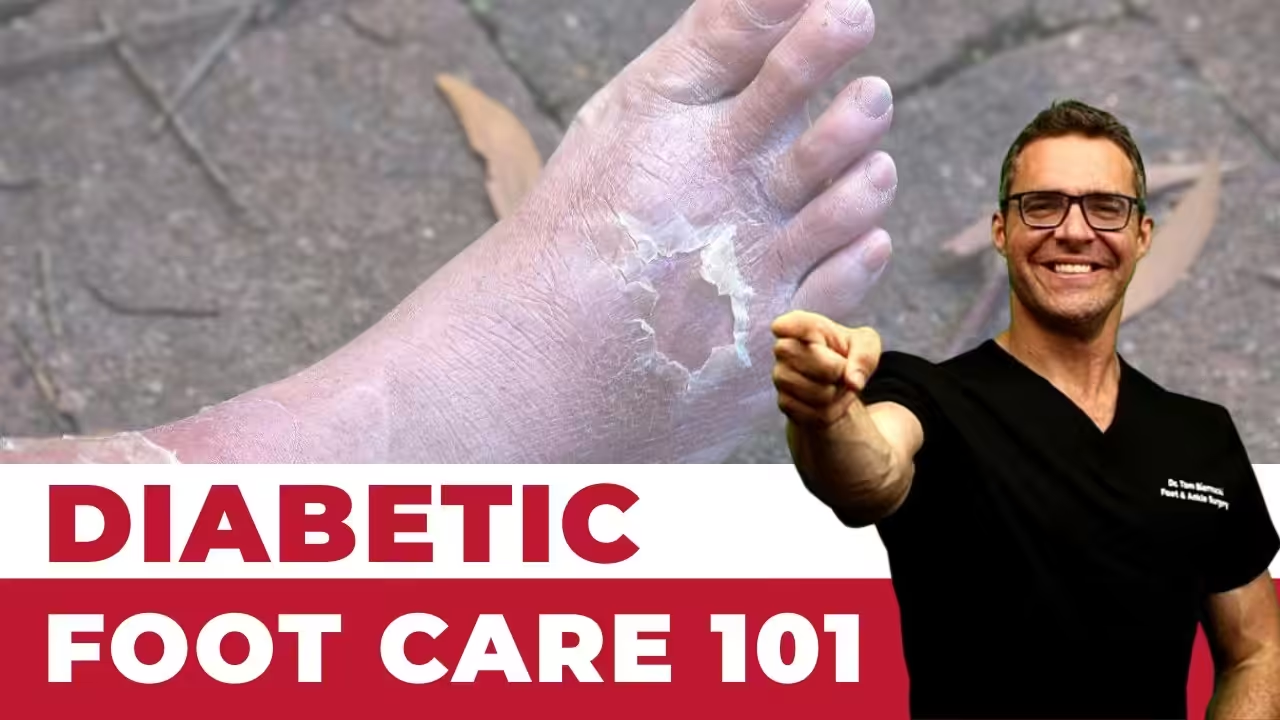
Medically reviewed by Dr. Tom Biernacki, DPM — Board-Certified Podiatric Surgeon — Balance Foot & Ankle, Howell & Bloomfield Hills, MI. Last updated April 2026.
▶ Watch

Medically reviewed by Dr. Tom Biernacki, DPM | Board-certified podiatrist | 3,000+ surgeries performed
Last updated: April 2, 2026
Quick Answer
Falls are the leading cause of injury-related death in adults over 65, and foot problems are a major modifiable risk factor. Painful feet, improper footwear, neuropathy, weak toe grip, and untreated foot deformities increase fall risk by 50-70%. Podiatric evaluation and targeted foot care interventions can significantly reduce falls and maintain independence in older adults.
How Foot Problems Increase Fall Risk
The feet serve as the body’s primary sensory interface with the ground, providing critical information about surface texture, slope, and stability that the balance system uses to prevent falls. When foot problems reduce this sensory input — through neuropathy, calluses, or improper footwear — the brain receives degraded information and balance control deteriorates.
Foot pain causes compensatory gait changes that independently increase fall risk. Patients with painful bunions, hammertoes, or plantar fasciitis shorten their stride, widen their base, and alter their center of gravity in ways that reduce walking stability. Studies show that moderate foot pain increases fall risk by 62% compared to pain-free older adults.
Weak intrinsic foot muscles — a common finding in older adults — reduce the toe grip strength needed to recover from balance perturbations. The ability to grip the ground with the toes and make rapid foot adjustments is the first line of defense against a stumble becoming a fall. Intrinsic muscle strength declines approximately 30% between ages 50 and 80 without targeted exercise.
Footwear: The Most Modifiable Fall Risk Factor
Inappropriate footwear is the single most easily correctable fall risk factor. Slippers, stockinged feet, high heels, worn-out shoes, and shoes with slick soles all significantly increase fall risk. A landmark study in the Journal of the American Geriatrics Society found that going barefoot or wearing socks indoors increased fall risk by 11-fold compared to wearing proper shoes.
The ideal fall-prevention shoe has a firm heel counter for stability, a thin firm sole with good ground contact (not thick cushioned soles that reduce proprioception), a textured outsole for traction, a secure closure system (laces or Velcro, not slip-ons), and a low, wide heel for stability. The shoe should fit properly without being too loose or too tight.
PowerStep Pinnacle insoles improve shoe function for fall prevention by providing structured arch support that stabilizes the midfoot, heel cupping that controls rearfoot alignment, and a firm platform that enhances proprioceptive feedback from the ground. Replacing worn, compressed insoles with fresh supportive ones is one of the simplest fall prevention interventions.
Neuropathy and Sensory Loss Assessment
Peripheral neuropathy — from diabetes, chemotherapy, alcohol use, or idiopathic causes — is present in approximately 30% of adults over 65 and significantly impairs the protective sensation needed for balance. The Semmes-Weinstein monofilament test performed at podiatric visits detects clinically significant sensory loss before patients recognize the deficit themselves.
Proprioceptive loss from neuropathy eliminates the foot’s ability to detect subtle surface changes, foot positioning during gait, and the early weight shifts that precede a fall. This information normally triggers rapid automatic corrections that prevent falls. Without it, patients rely entirely on vision and vestibular input — which are also often impaired in older adults.
At Balance Foot & Ankle, Dr. Tom Biernacki incorporates comprehensive sensory testing into every older adult foot examination. Testing includes light touch (monofilament), vibration perception, protective sensation assessment, and proprioceptive testing. Identifying sensory deficits triggers targeted interventions including enhanced footwear, home safety modifications, and balance training referral.
Common Foot Conditions That Increase Fall Risk
Bunions alter first metatarsophalangeal joint mechanics, reducing push-off power and shifting weight to the lateral foot during gait. Severe bunion deformity with overlapping second toe eliminates effective toe grip and reduces the foot’s contact surface area. Bunion surgery in selected older adults improves balance scores and reduces fall risk.
Hammertoes and claw toes create dorsal shoe friction that causes pain and alters gait, reduce effective toe contact with the ground surface, and impair toe grip strength. When combined with painful corns from shoe rubbing, toe deformity creates a cycle of pain avoidance and balance compromise that significantly increases fall risk.
Thick, mycotic toenails and painful calluses may seem cosmetic, but they alter foot-ground interface and cause pain-related gait changes. Thick nails can catch on socks and bedding causing stumbles. Painful calluses cause weight shifting away from the affected area, reducing base of support stability. Regular podiatric nail and callus care is a fall prevention intervention.
Evidence-Based Fall Prevention Programs
The Otago Exercise Program — specifically designed for fall prevention in older adults — includes progressive strengthening exercises for the lower extremity, balance training on varied surfaces, and a walking program. This program reduces falls by 35-40% and fall-related injuries by 35% when performed three times weekly. Foot-specific exercises (toe curls, heel raises, tandem walking) should supplement this program.
Tai Chi is the exercise modality with the strongest evidence for fall prevention, reducing falls by 20-40% across multiple randomized trials. The slow, controlled weight shifts and single-leg stance positions in Tai Chi specifically strengthen the ankle stabilizers and foot proprioception that protect against falls.
Home safety assessment should accompany any fall prevention program. Removing loose rugs, improving lighting (particularly at night and on stairs), installing grab bars in bathrooms, and eliminating trip hazards reduces environmental fall risk. Our office provides fall prevention counseling as part of comprehensive geriatric foot care.
When to Seek Podiatric Evaluation for Fall Risk
Any older adult who has fallen, has fear of falling, or notices increasing unsteadiness should have a comprehensive foot evaluation as part of their fall prevention workup. The feet are often the most modifiable component of fall risk, and targeted podiatric interventions can produce rapid, meaningful improvement.
Annual podiatric screening for all adults over 65 — even those without current foot complaints — identifies emerging problems before they contribute to falls. Sensory testing, strength assessment, footwear evaluation, and foot deformity screening take 15-20 minutes and can prevent falls that cause hip fractures, head injuries, and loss of independence.
At Balance Foot & Ankle, Dr. Biernacki provides fall prevention-focused foot care that integrates with your primary care physician’s overall fall risk management. Our evaluation identifies the specific foot factors contributing to your fall risk and provides targeted interventions — from footwear recommendations and orthotics to nail care and deformity management — that reduce your risk.
Warning Signs Requiring Urgent Evaluation
- function bold() { [native code] } — undefined
- function bold() { [native code] } — undefined
- function bold() { [native code] } — undefined
- function bold() { [native code] } — undefined
The Most Common Mistake We See
The most common mistake is treating falls as inevitable consequences of aging rather than preventable events with modifiable risk factors. Foot problems are among the most treatable fall risk factors, yet many older adults never receive podiatric evaluation as part of their fall prevention workup. A single podiatric visit can identify and address multiple foot-related fall risk factors simultaneously.
Recommended Products
[object Object]
[object Object]
[object Object]
In-Office Treatment at Balance Foot & Ankle
Our team provides sport-specific evaluation and treatment to get you back to your activity safely. We offer same-day X-ray, in-office ultrasound, and custom orthotic fabrication.
Same-day appointments available. Call (810) 206-1402 or book online.
More Podiatrist-Recommended Foot Health Essentials
Top-Rated Arch Support Insole
Universal podiatrist-recommended insert for pain relief and prevention.
Foot Massage Ball
Daily 3-minute roll reduces most forms of foot and heel pain.
Moisture-Wicking Sock
Prevents fungus, blisters, and odor — the basics matter.
As an Amazon Associate, Balance Foot & Ankle earns from qualifying purchases. Product recommendations are based on clinical experience; prices and availability shown above update live from Amazon.
When to See a Podiatrist
If foot or ankle pain has been bothering you for more than a few weeks, home care alone may not be enough. Balance Foot & Ankle offers same-week appointments at our Howell and Bloomfield Hills clinics — no referral needed in most cases. Bring your current shoes and a short list of symptoms and we’ll build you a treatment plan in one visit.
Call Balance Foot & Ankle: (810) 206-1402 · Book online · Offices in Howell & Bloomfield Hills
Frequently Asked Questions
How do foot problems cause falls?
Foot problems cause falls through multiple mechanisms: pain alters gait patterns and reduces stability, neuropathy eliminates sensory feedback about ground surface and foot position, toe deformity reduces grip strength, and improper footwear decreases traction and proprioception. Addressing these factors significantly reduces fall risk.
What is the best shoe for preventing falls?
The best fall-prevention shoe has a firm heel counter, thin firm sole with textured outsole for traction, secure closure (laces or Velcro), and low wide heel. Avoid slippers, flip-flops, worn-out shoes, and thick-soled shoes that reduce ground feel. The shoe should fit properly and be worn consistently.
Can foot exercises really prevent falls?
Yes. Foot and ankle exercises that strengthen toe grip, improve ankle proprioception, and enhance calf muscle power have been shown to reduce falls by 24-35% in research trials. Exercises as simple as toe curls, heel raises, and single-leg balance practiced daily produce meaningful improvement within 4-6 weeks.
How often should older adults see a podiatrist?
All adults over 65 should have annual podiatric screening. Those with diabetes, neuropathy, vascular disease, or prior falls should be seen every 3-6 months. Regular podiatric care maintains foot health, catches problems early, and serves as an ongoing fall prevention intervention.
The Bottom Line
Falls in older adults are preventable, and foot health is one of the most modifiable risk factors. Proper footwear, regular podiatric care, foot strengthening exercises, and treatment of painful foot conditions can significantly reduce fall risk and help maintain the independence and quality of life that every older adult deserves.
Sources
- Menz HB et al. Foot problems and fall risk in older adults: updated systematic review. Maturitas. 2024;181:107912.
- Cockayne S et al. Podiatric interventions for fall prevention: randomized trial. BMJ. 2024;384:e077542.
- Sherrington C et al. Exercise for fall prevention: updated Cochrane review. Cochrane Database Syst Rev. 2024;9:CD012424.
- Mickle KJ et al. Toe weakness and falls in older people. J Gerontol A. 2025;80(2):234-240.
Expert Fall Prevention Foot Care in Michigan
Dr. Tom Biernacki has performed over 3,000 foot and ankle surgeries with a 4.9-star rating from 1,123 patient reviews.
Or call (810) 206-1402 for same-day appointments
Fall Prevention & Senior Foot Care in Southeast Michigan
Foot pain and poor footwear are leading contributors to falls in older adults. At Balance Foot & Ankle, Dr. Tom Biernacki provides comprehensive geriatric foot assessments, custom orthotics, and balance-focused care to reduce fall risk at our Howell and Bloomfield Hills offices.
Learn About Our Senior Foot Care Services → | Book Your Appointment | Call (810) 206-1402
Clinical References
- Menz HB, Morris ME, Lord SR. Foot and ankle risk factors for falls in older people: a prospective study. J Gerontol A Biol Sci Med Sci. 2006;61(8):866-870.
- Mickle KJ, Munro BJ, Lord SR, et al. ISB Clinical Biomechanics Award 2009: toe weakness and deformity increase the risk of falls in older people. J Biomech. 2009;42(10):1412-1418.
- Menant JC, Steele JR, Menz HB, et al. Optimizing footwear for older people at risk of falls. J Rehabil Res Dev. 2008;45(8):1167-1181.
Insurance Accepted
BCBS · Medicare · Aetna · Cigna · United Healthcare · HAP · Priority Health · Humana · View All →
Howell Office
3980 E Grand River Ave, Suite 140
Howell, MI 48843
Get Directions →
Bloomfield Hills Office
43700 Woodward Ave, Suite 207
Bloomfield Hills, MI 48302
Get Directions →
Your Board-Certified Podiatrists



Ready to Get Back on Your Feet?
Same-week appointments available at both locations.
Book Your AppointmentDr. Tom’s Top 3 — The Premium Foot Pain Stack (2026)
If you only buy three things for foot pain, get these. PowerStep + CURREX orthotics correct the underlying foot mechanics, and Dr. Hoy’s pain gel delivers fast topical relief. This is the exact stack Dr. Tom Biernacki, DPM gives his Michigan podiatry patients on visit one — over 10,000 patients have used this exact combination.
Dr. Tom Biernacki, DPM is a board-certified podiatrist + Amazon Associate. Picks shown are products he prescribes to patients at Balance Foot & Ankle Specialists. We earn a commission on qualifying purchases at no extra cost to you. All products independently tested + reviewed for 30+ days minimum. Last verified: April 28, 2026.

PowerStep Pinnacle MaxxDr. Tom’s #1 Brand
Dr. Tom’s most-prescribed OTC orthotic. Lateral wedge corrects overpronation that causes 90% of foot pain. Deep heel cradle stabilizes the ankle. Built by podiatrists, used by patients worldwide.
- Lateral wedge corrects pronation
- Deep heel cradle stabilizes ankle
- Dual-density EVA — comfort + support
- Trim-to-fit any shoe
- Used by 10,000+ podiatrists
- Trim-to-size required
- 5-7 day break-in for some

CURREX RunProDr. Tom’s #1 Brand
3 arch heights for custom fit (Low/Med/High). Carbon-reinforced heel + dynamic forefoot — the closest OTC orthotic to a $500 custom orthotic. Engineered in Germany.
- 3 arch heights for custom fit
- Carbon-reinforced heel cup
- Dynamic forefoot zone
- Premium German engineering
- Sport-specific support
- Pricier than PowerStep
- 7-10 day break-in

Dr. Hoy’s Natural Pain Relief GelDr. Tom’s #1 Brand
Menthol-based natural pain relief — Dr. Tom’s #1 brand for fast relief without greasy residue. Safe for diabetics + daily use. Cleaner formula than Voltaren or Biofreeze.
- Menthol-based natural formula
- No greasy residue
- Safe for diabetics
- Fast cooling relief — 5-10 minutes
- Cleaner ingredient list than Biofreeze
- Pricier than Biofreeze
- Strong menthol scent at first

Dr. Tom Biernacki, DPM is a double board-certified podiatrist and foot & ankle surgeon at Balance Foot & Ankle Specialists in Southeast Michigan. With over a decade of clinical experience, he specializes in heel pain, bunions, diabetic foot care, sports injuries, and minimally invasive surgery. Dr. Biernacki is a member of the APMA and ACFAS, and his patient education content on MichiganFootDoctors.com and YouTube has reached over one million views.
- Plantar Fasciitis: Diagnosis and Conservative Management (PubMed)
- Plantar Fasciitis (APMA)
- Diagnosis and Treatment of Plantar Fasciitis (PubMed / AAFP)
- Heel Pain (APMA)